KANSAS CITY, Mo. (AP) — The NFL said Friday that it would not discipline Rashee Rice after a former girlfriend posted images of bruises and wounds on social media earlier this year and alleged that they were caused by the Kansas City Chiefs wide receiver.
The league said in a statement that Rice “has not engaged in conduct that violates the personal conduct policy.”
The Chiefs did not have an immediate comment on the decision, but Rice's attorney, Sean Lindsey, said in a statement that "Mr. Rice wants to thank the NFL for their thorough investigation, and looks forward to the start of the 2026-27 NFL season.”
The 25-year-old Rice missed the first six games of last season after the NFL found that he had violated its personal conduct policy when he caused a multi-car crash on a Dallas highway while driving erratically in speeds nearing 120 mph. Rice left the scene of the accident before police arrived, then took responsibility for the wreck in a statement a couple of weeks later.
Rice turned himself in when an arrest warrant was issued and he subsequently pleaded guilty to two third-degree felony charges last July — collision involving serious bodily injury and racing on a highway causing bodily injury — and was sentenced to 30 days in jail and five years’ probation. He also was required to pay victims’ medical expenses.
The latest off-the-field issue involving Rice came after former girlfriend Dakoda Jones alleged in a lawsuit filed in February in Dallas County, Texas, that he had physically assaulted her multiple times, causing injuries that included bleeding and bruising.
The lawsuit said Rice “grabbed, choked, strangled, pushed, thrown, scratched, hit, and headbutted” Jones, in addition to hitting her with objects. The lawsuit also said Rice had thrown objects, punched walls and broken furniture, and many of these incidents occurred when Jones, who has two children with Rice, was pregnant.
Rice had 53 catches for 571 yards and five touchdowns last season as Kansas City went 6-11 and missed the playoffs.
AP NFL: https://apnews.com/hub/nfl
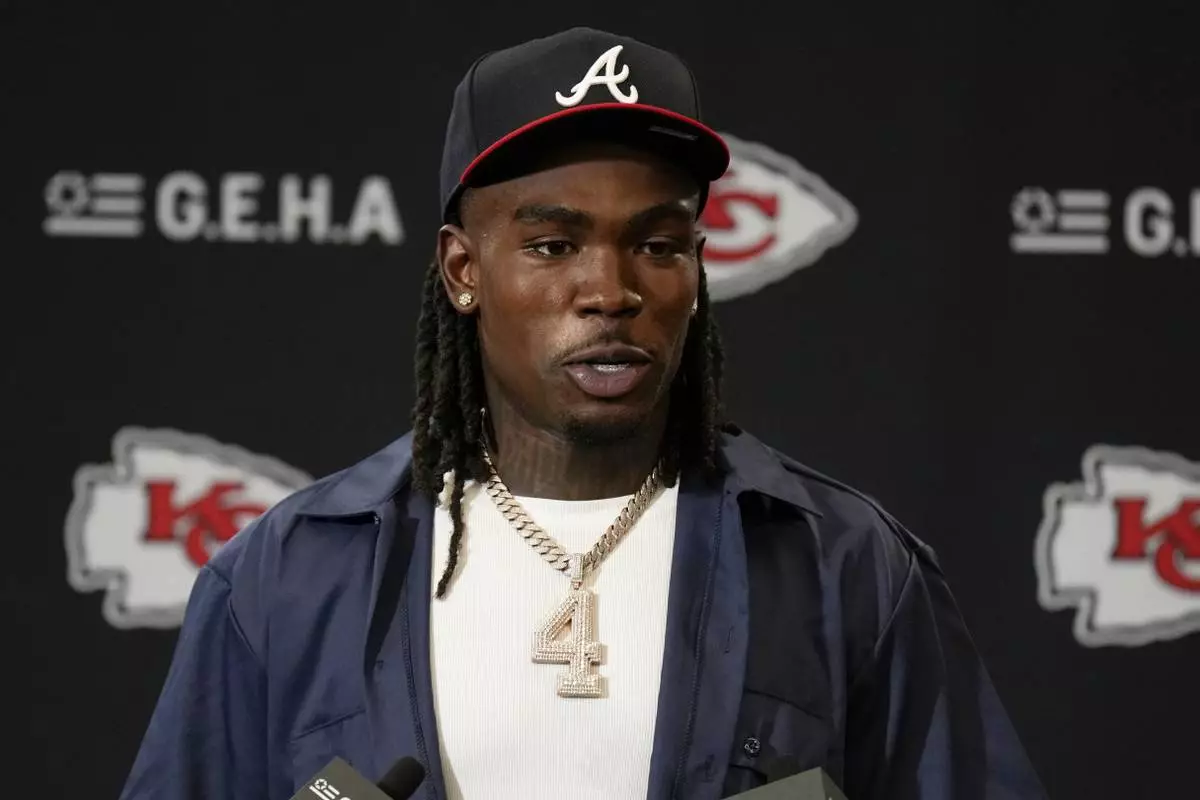
FILE - Kansas City Chiefs wide receiver Rashee Rice speaks during a news conference following an NFL football game against the Indianapolis Colts, Nov. 23, 2025, in Kansas City, Mo. (AP Photo/Charlie Riedel, File)

FILE - Kansas City Chiefs wide receiver Rashee Rice (4) lines up for the snap during a NFL football game against the Dallas Cowboys, Nov. 27, 2025, in Arlington, Texas. (AP Photo/Matt Patterson, File)
ATLANTA (AP) — The Georgia General Assembly ended its annual session early Friday without a plan for new equipment to overhaul the state's voting system by a July deadline, plunging into doubt the future of elections in the political battleground.
The lawmakers' failure to offer a solution after months of debate raises uncertainty about how Georgians will vote in November and leaves confusion that could end in the courts or a special legislative session.
“They’ve abdicated their responsibility,” Democratic state Rep. Saira Draper said of inaction by Republicans who control the legislature.
Currently, voters make their choices on Dominion Voting machines, which then print ballots with a QR code that scanners read to tally votes. Those machines have been repeatedly targeted by President Donald Trump following his 2020 election loss, and Trump’s Georgia supporters responded by enacting a law in 2024 that bans using barcodes to count votes.
But state law still requires counties to use the machines. No money has been allocated to reprogram them, and lawmakers failed to agree on a replacement.
“We’ll have an unresolvable statutory conflict come July 1,” said House Governmental Affairs Committee Chairman Victor Anderson, a Cornelia Republican who backed a proposal to keep using the machines in 2026 that Senate Republicans declined to consider.
Republican House Speaker Jon Burns said he would meet with Gov. Brian Kemp and “take his temperature” on the possibility of a special session.
Kemp spokesperson Carter Chapman said he Republican governor will examine the situation.
“We’ll analyze all bills, as well as the consequence of those that did not pass,” Chapman said Friday.
House Republicans and Democrats backed Anderson's plan, which would have required that Georgia choose a voting process that didn't use QR codes by 2028. Election officials preferred that solution.
“The Senate has shown that they’re not responsible actors,” Draper said. She added that Lt. Gov. Burt Jones, a Trump-endorsed Republican running for governor, seemed more interested in keeping Trump's backing than “doing right by Georgia voters.”
Jones said in a statement the Senate has proven its commitment to secure elections by passing legislation that includes banning barcodes on ballots.
“Like President Trump, I have been a staunch defender of safe and secure elections and my record speaks for itself," Jones said.
A spokesperson for Jones didn't immediately respond to a request for comment early Friday.
Joseph Kirk, Bartow County election supervisor and president of the Georgia Association of Voter Registration and Election Officials, said he’ll look to the secretary of state for guidance and assumes a judge will rule to instruct election officials how to proceed.
“This is uncharted territory,” he said.
Robert Sinners, a spokesperson for Republican Secretary of State Brad Raffensperger, who is also running for governor, said officials are “ready to follow the law and follow the Constitution.”
Burns told reporters that his chamber was seeking to minimize changes this year.
“You can’t change horses in the middle of the stream,” Burns said.
Anderson said without action, the state could be required to use hand-marked and hand-counted paper ballots in November.
Election officials say switching to a new system within just a few months, as advocated by some Republicans, would be nearly impossible.
“They made no way for this to happen except putting a deadline on it," Cherokee County elections director Anne Dover said of the switch away from barcodes. Dover said one problem under some plans is that a very large number of ballots would have to be printed.
Lawmakers seemed more concerned about scoring political points than making practical plans, Paulding County Election Supervisor Deidre Holden said.
“If anyone is resilient and can get the job done, it’s all of us election officials, but the legislators need to work with us, and they need to understand what we do before they go making laws that are basically unachievable for us,” Holden said.
Supporters of hand-marked paper ballots say voters are more likely to trust in an accurate count if they can see what gets read by the scanner.
Right-wing election activists lobbied lawmakers for an immediate switch to hand-marked paper ballots, but the House turned away from a Senate proposal to do so.
Anderson said he wasn’t sure if a special session could escape those political crosswinds, but said Georgia lawmakers must fix the problem.
“This is a legislative problem,” Anderson said. “It’s a legislative solution that has to happen.”
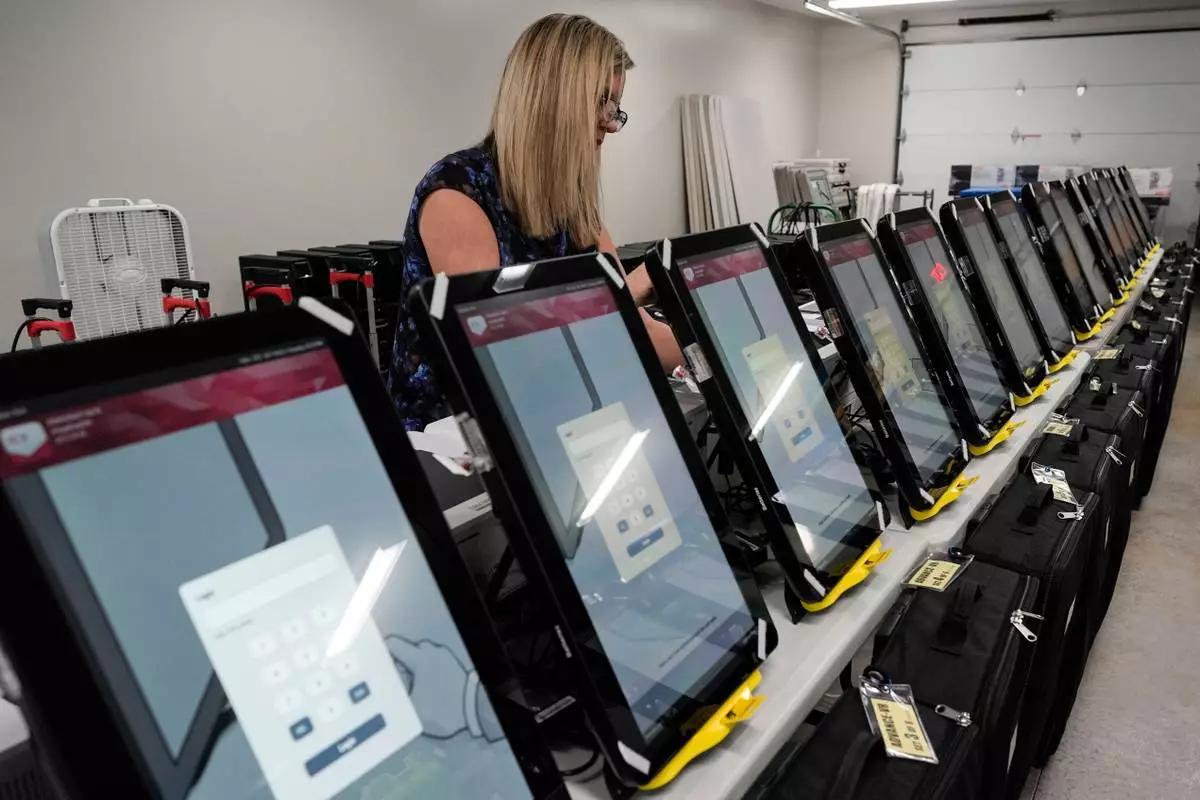
FILE - Voting machines are seen at the Bartow County Election office, Jan. 25, 2024, in Cartersville, Ga. (AP Photo/Mike Stewart, File)