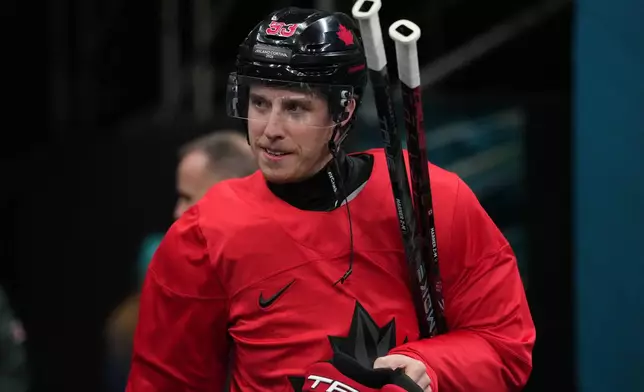
MILAN (AP) — There will be a big visual difference between hockey at the Milan Cortina Olympics and the version played in the NHL: Every player is required to wear a neck guard.
"I haven’t worn a neck guard since youth hockey," U.S. forward Brady Tkachuk said. “But it's good.”
Click to Gallery
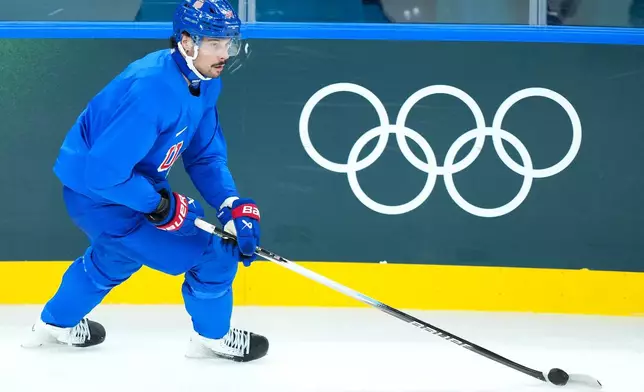
United States forward Auston Matthews takes part in a men's ice hockey practice during the 2026 Winter Olympics in Milan, Italy, Sunday, Feb. 8, 2026. (Nathan Denette/The Canadian Press via AP)
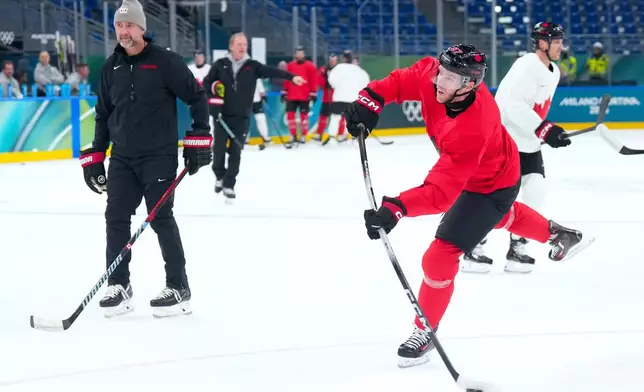
Canada forward Connor McDavid, front right, takes part in a men's ice hockey practice during the 2026 Winter Olympics in Milan, Italy, Sunday, Feb. 8, 2026. (Nathan Denette/The Canadian Press via AP)
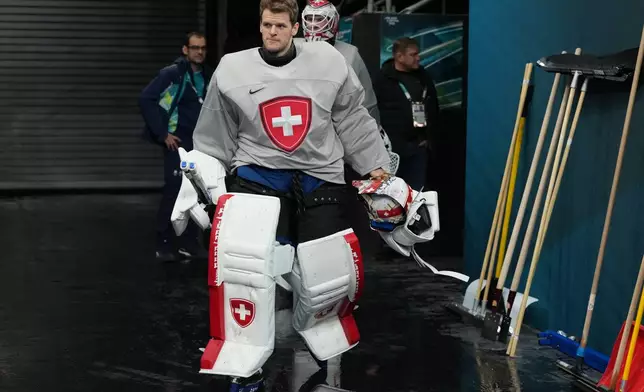
Switzerland's goalkeeper Leonardo Genoni arrives for men's ice hockey practice at the 2026 Winter Olympics, in Milan, Italy, Sunday, Feb. 8, 2026. (AP Photo/Carolyn Kaster)
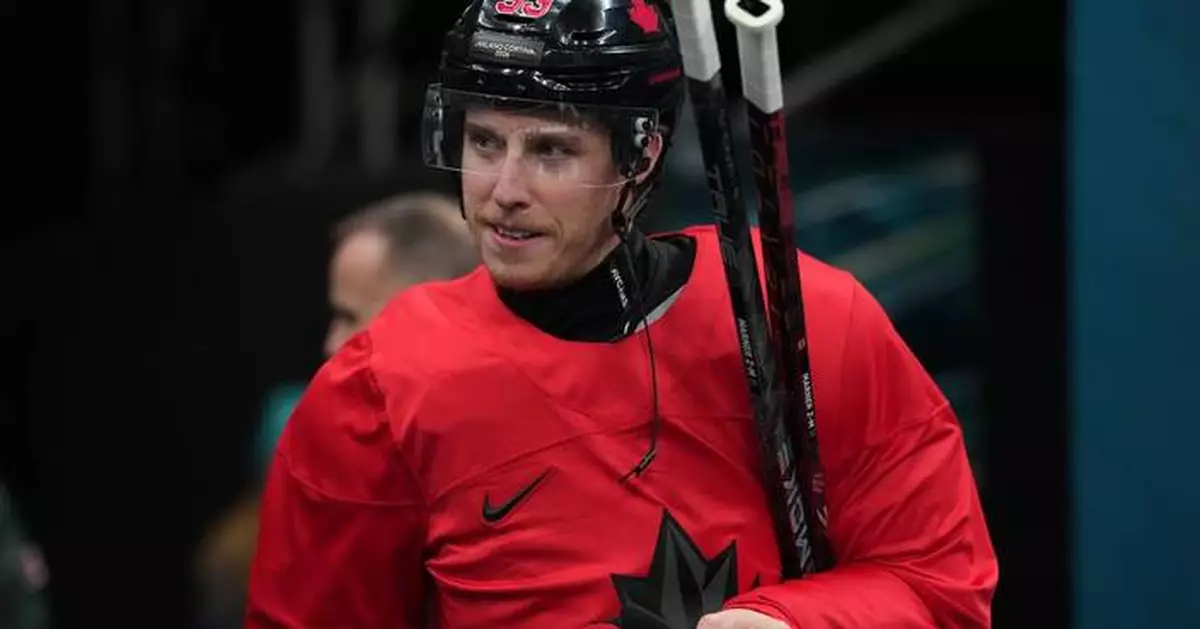
Canada's Mitch Marner arrives for men's ice hockey practice at the 2026 Winter Olympics, in Milan, Italy, Sunday, Feb. 8, 2026. (AP Photo/Carolyn Kaster)
The sport's governing body, the International Ice Hockey Federation, voted in December 2023 to make them mandatory at all international events in the aftermath of the death of Adam Johnson from a skate cut to the neck during a game in England that October.
“You’ve seen some horrible, horrible incidents around the globe,” Canada's Mark Stone said. “The game has gotten so fast, so stuff happens at a high pace. ... We’re very fortunate in the league that we play, our staffs are very, very prepared, which I am very, very grateful for.”
The NHL and the NHL Players’ Association agreed to grandfather in the use of neck guards for incoming players starting next season as part of their most recent collective bargaining agreement. It's the same thing they did with helmet visors in 2013; just four players remain without one.
Stone said he thinks neck guards will become the norm, just like visors, and before that helmets in a sport known for its stubbornness to equipment changes. For now, the vast majority of players have chosen not to wear neck guards voluntarily, so the Olympics will be something new.
“It can be an adjustment," U.S. captain Auston Matthews said. “It’s not bad, honestly. I don’t think many guys love it, but I think once you kind of get out there and you’re moving around, you don’t really notice it as a much.”
The American Hockey League, one tier under the NHL, is in its second season with mandatory neck guards. USA Hockey in 2024 implemented a mandate for players under 18.
From Erik Karlsson's Achilles tendon to Evander Kane's wrist, there have been skate cut injuries over the years that caused players to miss significant time. Longer ago, goaltender Clint Malarchuk survived a skate cut to the neck, as did forward Richard Zednik.
“You see some of the incidents that have happened,” Matthews said. "I wear the cut-proof stuff on your wrists and your ankles and feet and stuff like that. ... It’s obviously important to be protected at all times.”
Players coming off the ice following their first or second practice at the Olympics had varying reviews on what it felt like to put a neck guard back on. Nathan MacKinnon acknowledged it made him hotter — while, like Tkachuk, maintaining it's all good — and Canada teammate Tom Wilson proudly wore one made by Warroad Hockey, the company of fellow 2018 Washington Capitals Stanley Cup champion T.J. Oshie.
“A little warmer,” Wilson said. "Nothing too crazy, but everyone’s trying to get used to it. Everyone’s in the same boat.”
U.S. defenseman Zach Werenski is a little more accustomed to wearing a neck guard because he did so at the world championships last spring, on the way to helping the country win the tournament for the first time since 1933. He wore a full cut-proof shirt at worlds and ditched that for a neck-only piece.
“That was too hot,” Werenski said. “This isn’t bad at all, though. It’s a little bit warmer maybe, but it feels fine.”
Matthews said U.S. players have a few options to consider, including full shirts. Stone liked what he wore for Canada's first skate, preferring a slide-on version to the Velcro he tried with the Vegas Golden Knights.
“I’ll see if I like it,” Stone said. “I’ll probably try without it when I get back, and if I don’t notice a difference, I’ll probably leave it on. But if I do notice a difference, I’ll probably keep it off.”
Canada captain Sidney Crosby still has his old neck guard but is also auditioning other possibilities before games start for real.
“We haven’t worn them, so I’m just trying to figure out which one feels the most comfortable. You’re just trying to balance having protection and obviously what feels comfortable. That’s basically it.”
AP Olympics: https://apnews.com/hub/milan-cortina-2026-winter-olympics
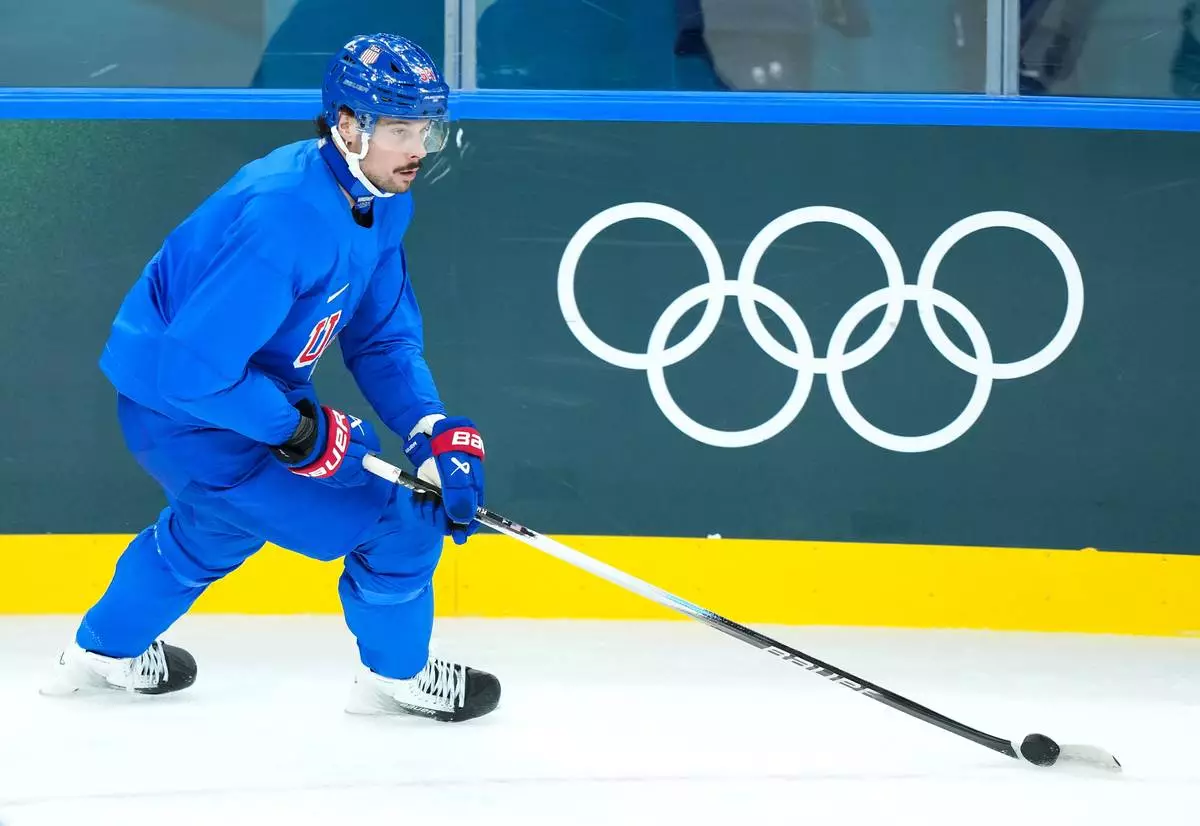
United States forward Auston Matthews takes part in a men's ice hockey practice during the 2026 Winter Olympics in Milan, Italy, Sunday, Feb. 8, 2026. (Nathan Denette/The Canadian Press via AP)
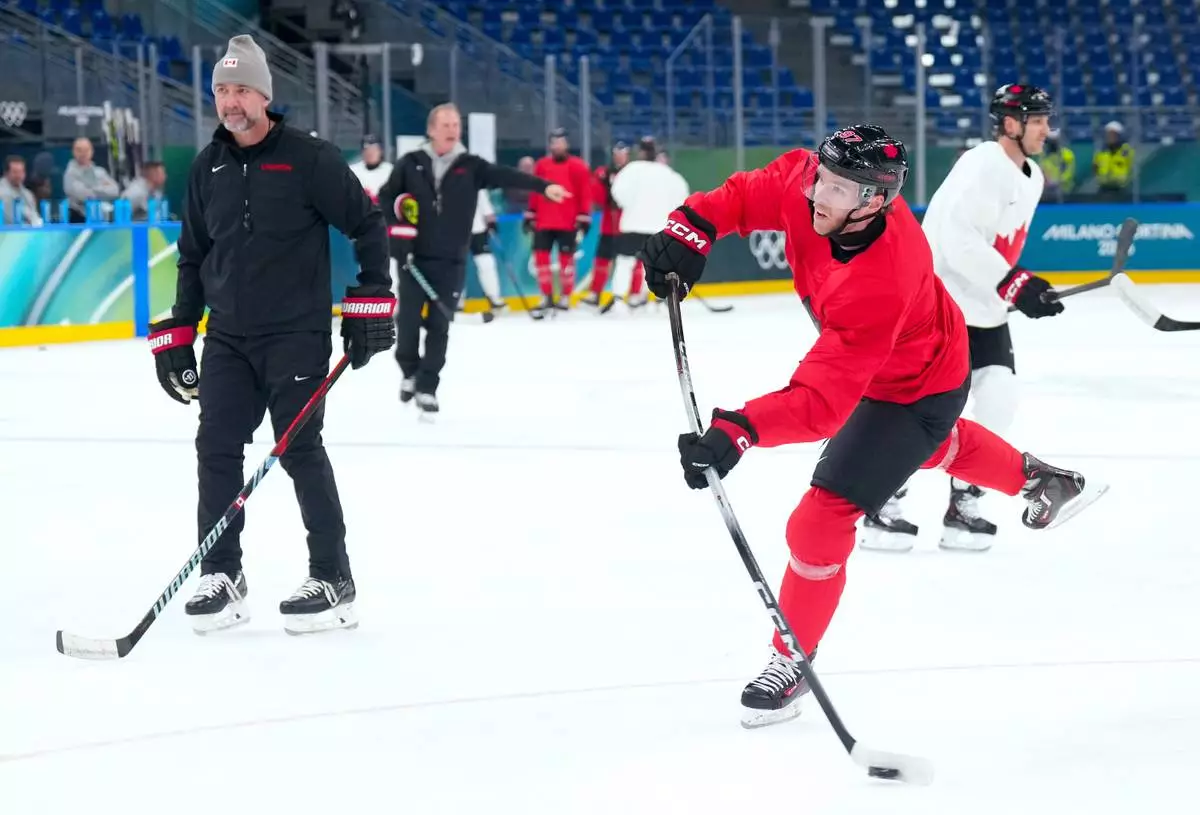
Canada forward Connor McDavid, front right, takes part in a men's ice hockey practice during the 2026 Winter Olympics in Milan, Italy, Sunday, Feb. 8, 2026. (Nathan Denette/The Canadian Press via AP)
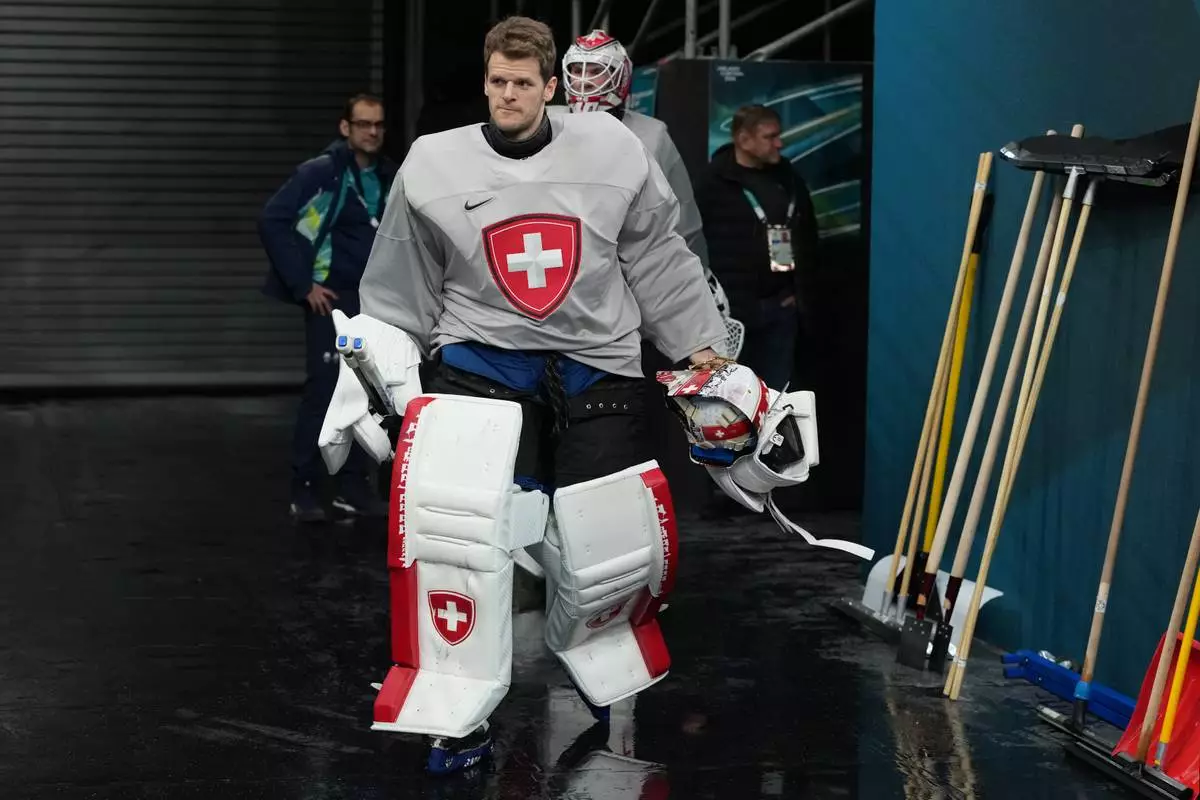
Switzerland's goalkeeper Leonardo Genoni arrives for men's ice hockey practice at the 2026 Winter Olympics, in Milan, Italy, Sunday, Feb. 8, 2026. (AP Photo/Carolyn Kaster)
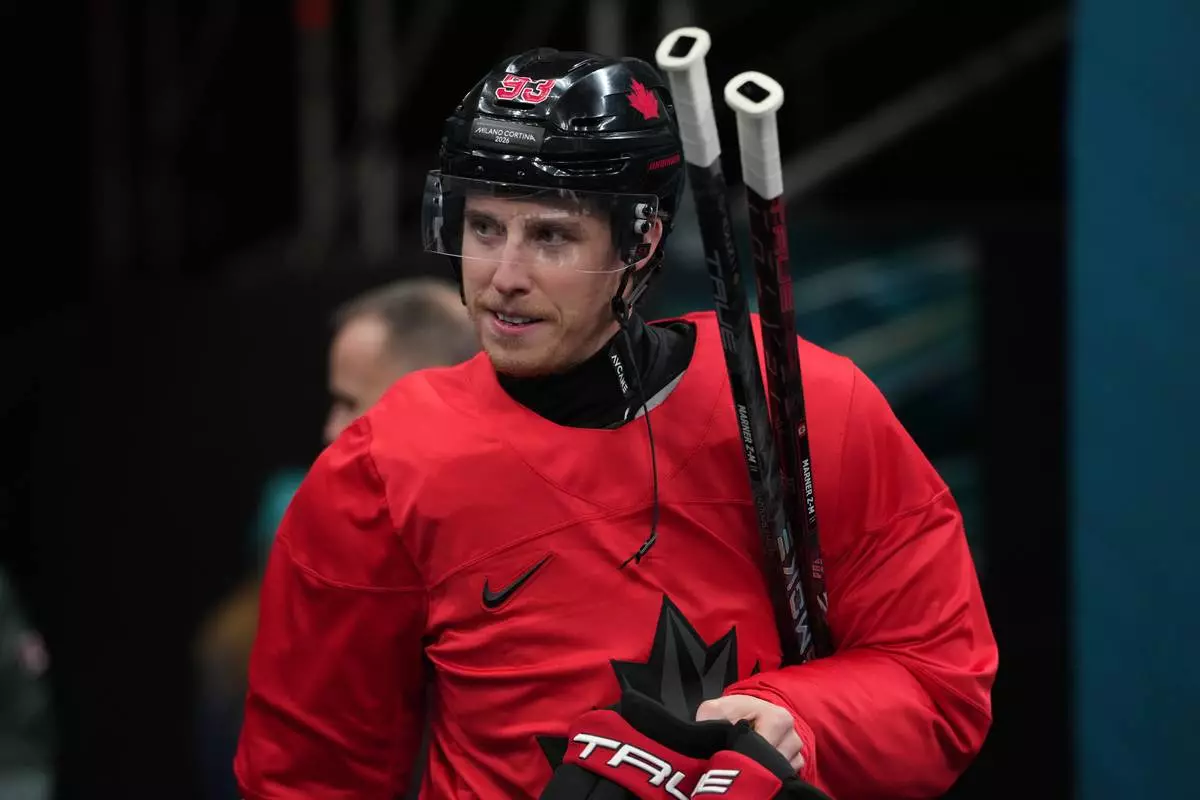
Canada's Mitch Marner arrives for men's ice hockey practice at the 2026 Winter Olympics, in Milan, Italy, Sunday, Feb. 8, 2026. (AP Photo/Carolyn Kaster)
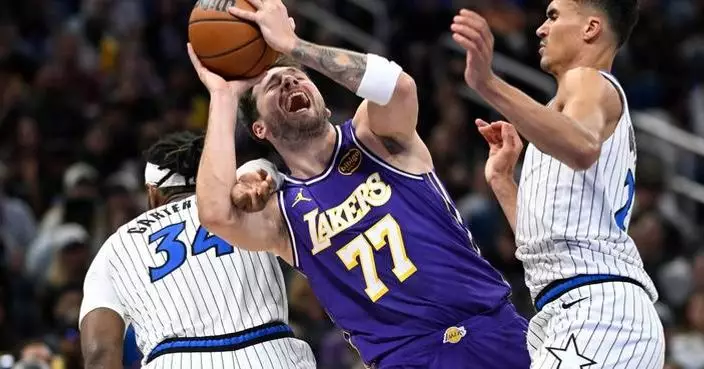
Luka Doncic is almost certainly going to win the NBA scoring title this season. And it's now very possible that he doesn't make the All-NBA team.
That's rare, but it might be this season's reality.
The roster of award-caliber players who won't be winning awards this season continues to grow, with Doncic — the Los Angeles Lakers standout guard and MVP candidate — now out with a Grade 2 left hamstring strain that will force him to miss the rest of the regular season. Minnesota guard Anthony Edwards is certain to miss the league's 65-game award eligibility threshold as well after he was held out Thursday because of illness.
Doncic has played 64 games, one shy of the threshold. It's worth noting that BetMGM Sportsbook, among others, took Doncic off the list of MVP betting options following his injury Thursday.
“At this juncture of the season, it’s the last thing you want to see,” Lakers star LeBron James told reporters in Oklahoma City after Thursday's game, long before an MRI was performed Friday to determine the extent of Doncic's injury. “Especially anybody on our team, but when you have an MVP candidate on your team, the last thing you want to see is somebody go down with a hamstring injury."
Edwards can now only reach a maximum of 64 games as well, so he won’t be on the ballot for most major NBA awards either.
It was collectively bargained — meaning the league and the players association agreed on the terms — and this is the third season of it being part of the NBA rules.
It applies to player eligibility for five awards — MVP, Defensive Player of the Year, Most Improved Player, the All-NBA Team and the All-Defensive Team. Players have to either play in 65 regular-season games (with some minutes-played minimums in there as well), or at least 62 games before suffering a “season-ending injury."
But even with Doncic's hamstring hurt badly enough that he'll miss the rest of the regular season, it wouldn't be classified as “season-ending” unless a doctor — jointly selected by the NBA and the National Basketball Players Association — says he wouldn't be able to play again through May 31.
There is a grievance process and even a way to challenge the rule citing extraordinary circumstances, but neither would be easily utilized.
Five of the league's six highest-paid players this season — Golden State's Stephen Curry and Jimmy Butler, Philadelphia's Joel Embiid, Milwaukee's Giannis Antetokounmpo and Boston's Jayson Tatum — aren't eligible for awards. Denver's Nikola Jokic is the exception on the highest-paid list, and he'd likely be ineligible if he misses more than one more game down the stretch.
There were 23 players on the list of those winning MVP, MIP, DPOY, All-NBA and All-Defense last season. Of those, at least 10 are out of the running for honors this season: Antetokounmpo, Curry, Edwards, James, Tatum, Detroit's Cade Cunningham, Indiana teammates Tyrese Haliburton and Ivica Zubac, Utah's Jaren Jackson Jr. and Oklahoma City's Jalen Williams. (Most of those 10 have been out of the awards mix because of injuries for some time; Tatum and Haliburton both tore Achilles in last season's playoffs and it was obvious then that they wouldn't hit 65-game marks this year.)
Another four award winners from a year ago — Jokic, Oklahoma City's Lu Dort, Golden State's Draymond Green and Cleveland's Evan Mobley — aren't at 65 games yet this season but, for now anyway, seem on pace to get there.
Never say never. The union wants changes to the policy, and it's certain to come up in their conversations with the league office. But many players — and even Andre Iguodala, now the head of the players' association — have said in recent years that the 65-game rule is a good thing.
The league doesn't seem inclined to make a change based solely on what would appear to be an extraordinary number of award candidates not hitting the threshold in one year.
“I think it is working,” NBA Commissioner Adam Silver said last month. “I think if you look at the numbers, the pre-implementation of this rule, numbers were going in the wrong direction. I may have this a little bit off: I think the three years before we adopted this rule, almost a third of the All-NBA players had not played 80% of the games. That was a huge issue for the league.”
As we said, it's rare, but it has happened. Twice, to be exact.
— 1968-69: Elvin Hayes won the scoring title as a rookie, then wasn't even All-NBA — and didn't win Rookie of the Year, either.
— 1975-76: Bob McAdoo won his third consecutive scoring title and was second in the MVP race — but didn't make All-NBA. Players voted for MVP in those days, and McAdoo was an extremely close second behind Kareem Abdul-Jabbar. Dave Cowens was third in the MVP vote but got the second-team All-NBA nod at center, with Abdul-Jabbar the first-team pick.
Doncic now seems likely to join that list. It's not mathematically certain yet that he wins the scoring title, but it would take something extraordinary for it not to happen.
He's averaging 33.5 points per game, with Gilgeous-Alexander at 31.6 per game. For Gilgeous-Alexander — last season's scoring champion — to overtake Doncic, he would need to go on an unbelievable run. An example: He'd need to score 292 points over the final five games to take over the top spot, and nobody other than Wilt Chamberlain has had a five-game run like that.
Of the previous 79 scoring champions, 64 were first-team All-NBA and 13 were second-team.
Jokic is going to win the league's rebounding and assist titles, while averaging a triple-double yet again. But he's also not assured yet of being on the award ballots.
The thresholds are different.
While the award mandate is 65 games in most cases, players are eligible for most statistical awards if they play in 58 games (or 70% of the season). There are different standards for some stat awards, such as field-goal percentage (minimum 300 made), free-throw percentage (minimum 125 made) and 3-point percentage (minimum 82 made).
A player can win a stat award while appearing in less than 58 games.
For example, last season, San Antonio's Victor Wembanyama played only 46 games but still won the blocked shot title. Even if he played in the minimum 58 games and recorded no blocks in the 12 games needed to reach that number he still would have been ahead of the runner-up, Utah's Walker Kessler.
AP NBA: https://www.apnews.com/hub/NBA
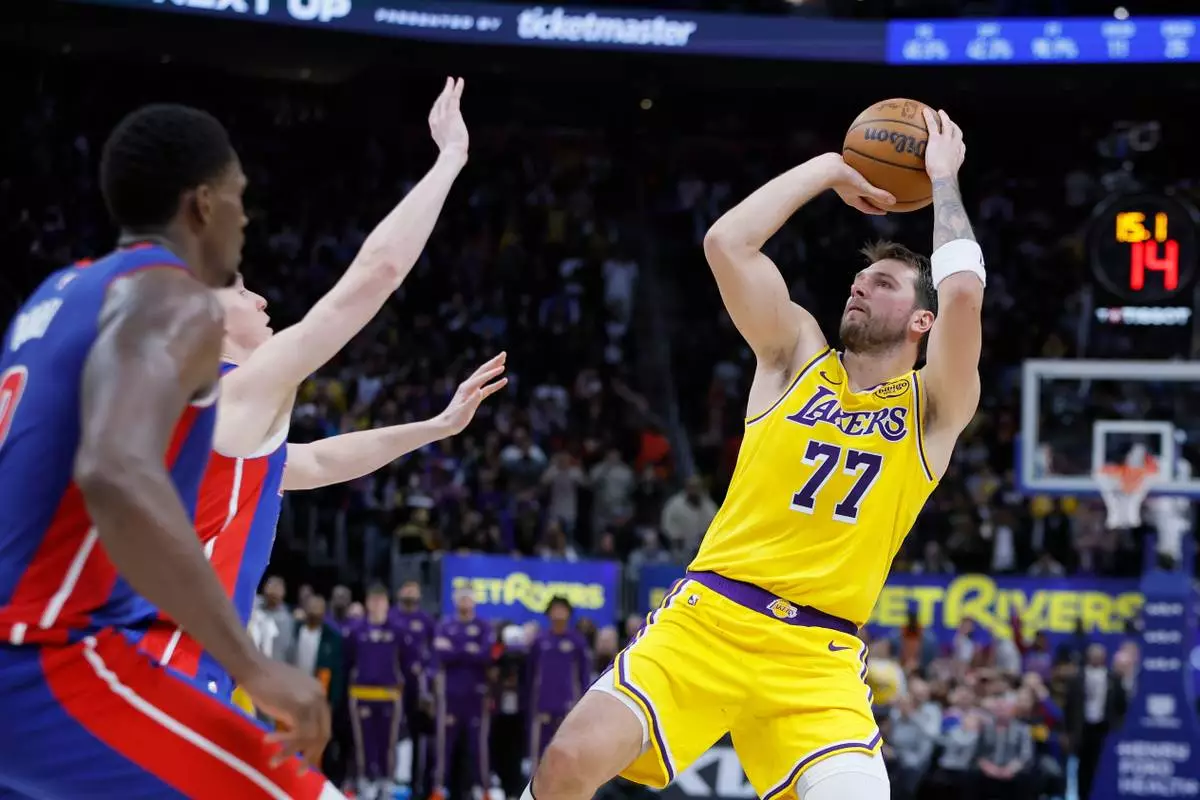
Los Angeles Lakers guard Luka Doncic (77) looks to make a shot-attempt in the fourth quarter of a loss to the Detroit Pistons in an NBA basketball game Monday, March 23, 2026, in Detroit. (AP Photo/Duane Burleson)
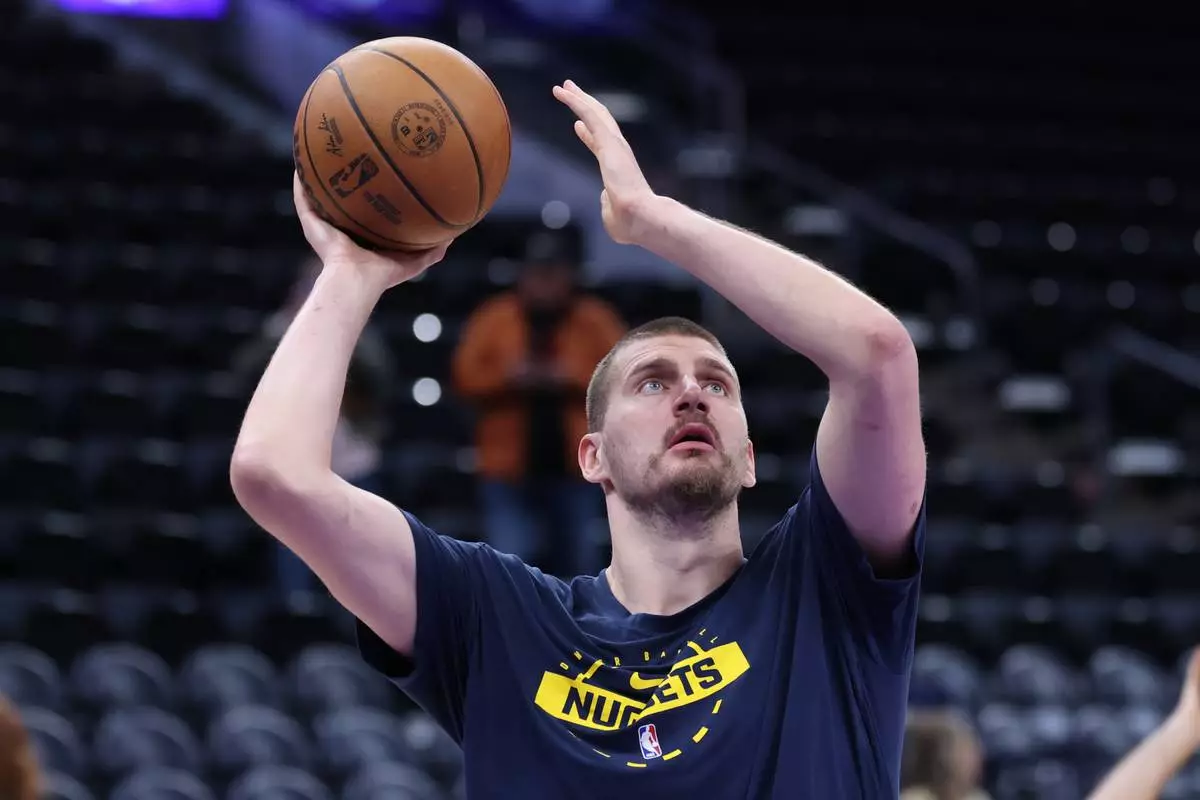
Denver Nuggets center Nikola Jokic warms up before an NBA basketball game against the Utah Jazz, Wednesday, April 1, 2026, in Salt Lake City. (AP Photo/Rob Gray)
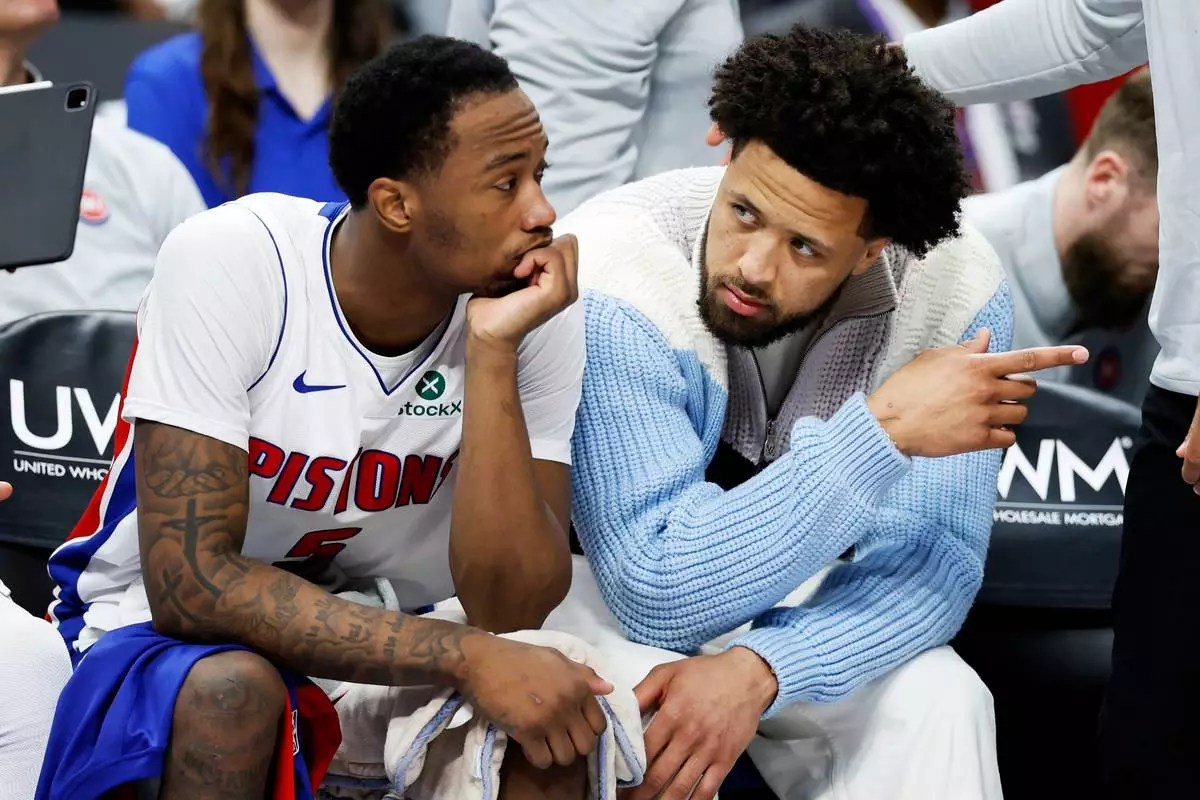
Detroit Pistons forward Ronald Holland II (5) talks with guard Cade Cunningham (2), who did not play due to an injury, during the second half of an NBA basketball game against the Toronto Raptors Tuesday, March 31, 2026, in Detroit. (AP Photo/Duane Burleson)
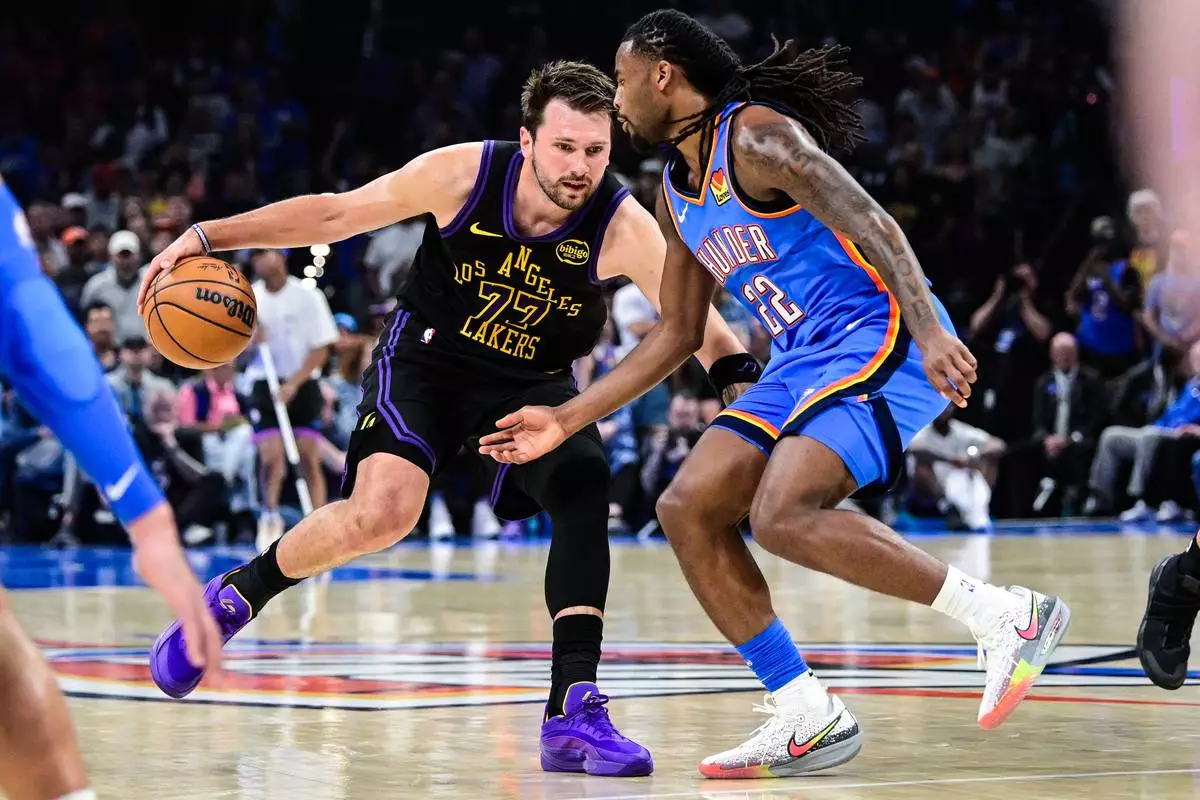
Los Angeles Lakers forward/guard Luka Dončić (77) drives against Oklahoma City Thunder guard Cason Wallace (22) during the first half of an NBA basketball game Thursday, April. 2, 2026, in Oklahoma City. (AP Photo/Gerald Leong)