Skip to Content Facebook Feature Image

Two Filipino illegal workers sentenced to 22 months for violating employment laws in Hong Kong.

HK

Two Filipino illegal workers sentenced to 22 months for violating employment laws in Hong Kong.
HK

HK

Two Filipino illegal workers sentenced to 22 months for violating employment laws in Hong Kong.

2026-02-10 18:55 Last Updated At:19:13

Two illegal workers jailed

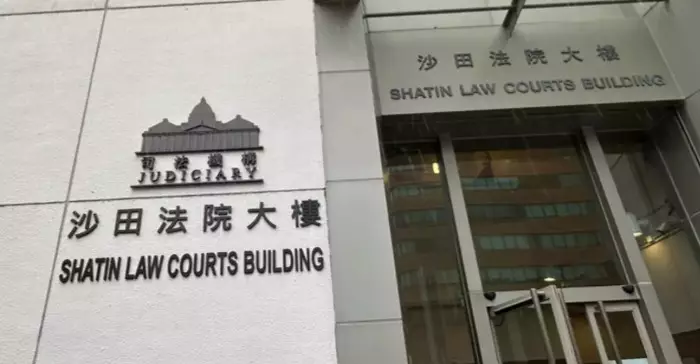
Two Filipino illegal workers, holding recognisance forms, were jailed by the Shatin Magistrates' Courts yesterday (February 9).
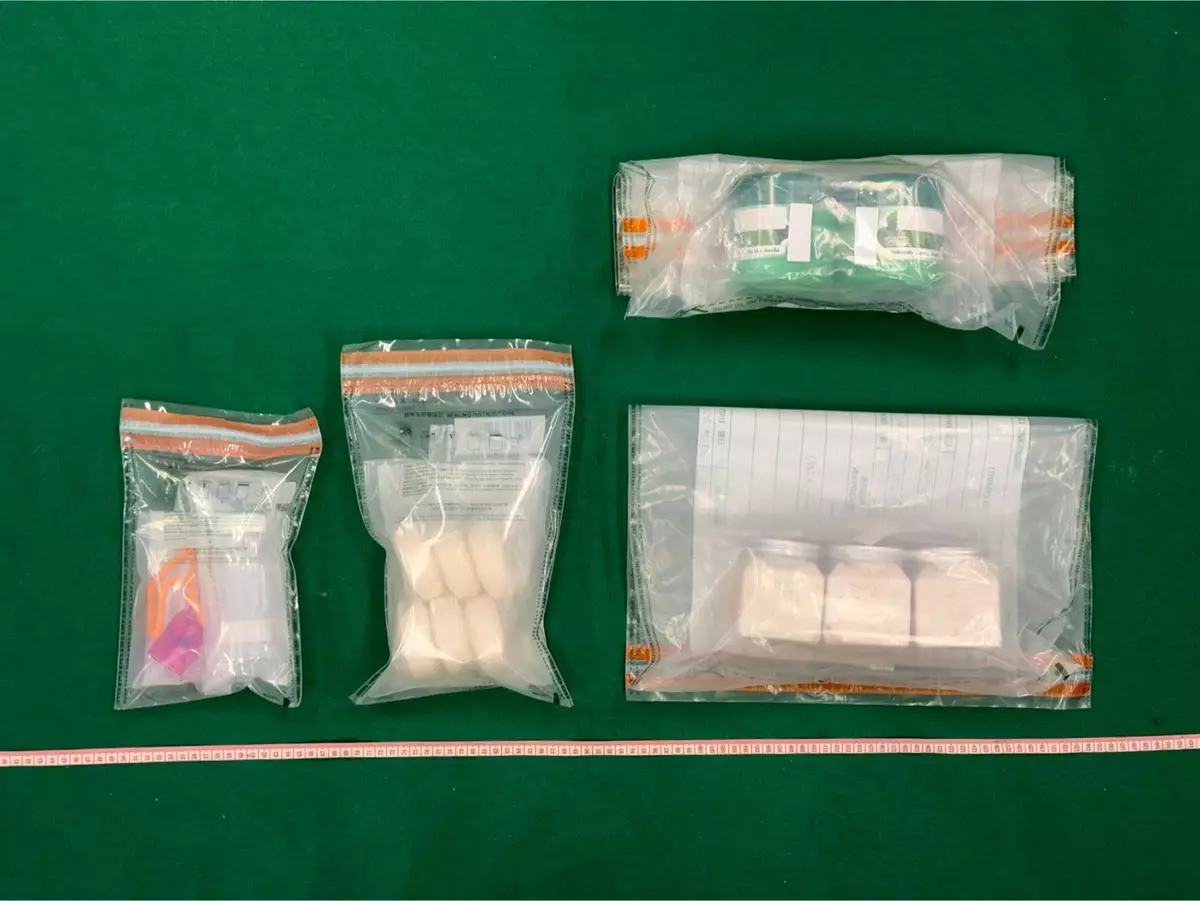
During an anti-illegal worker operation conducted by the Immigration Department (ImmD) on March 4, 2025, investigators raided an industrial building in Kwai Chung. Two Filipino men, aged 42 and 45, were arrested while loading goods. Upon identity checking, they produced for inspection recognisance forms issued by the ImmD, which prohibit them from taking employment. Further investigation revealed that they were non-refoulement claimants.

The illegal workers were charged at the Shatin Magistrates' Courts yesterday with taking employment while being a person in respect of whom a removal order or deportation order was in force. After trial, they were both sentenced to 22 months and 15 days' imprisonment.

The spokesman warned, "As stipulated in section 38AA of the Immigration Ordinance, an illegal immigrant, a person who is the subject of a removal order or a deportation order, an overstayer or a person who was refused permission to land is prohibited from taking any employment, whether paid or unpaid, or establishing or joining any business. Offenders are liable upon conviction to a maximum fine of $50,000 and up to three years' imprisonment. As stipulated in section 20(1)(a) of the Immigration Ordinance, the Chief Executive may make a deportation order against an immigrant, prohibiting the immigrant from being in Hong Kong at any time thereafter if the immigrant has been found guilty in Hong Kong of an offence punishable by imprisonment for not less than two years."

The spokesman stressed that it is a serious offence to employ people who are not lawfully employable. Under the Immigration Ordinance, the maximum penalty for an employer employing a person who is not lawfully employable, i.e. an illegal immigrant, a person who is the subject of a removal order or a deportation order, an overstayer or a person who was refused permission to land, has been significantly increased from a fine of $350,000 and three years' imprisonment to a fine of $500,000 and 10 years' imprisonment to reflect the gravity of such offences. The director, manager, secretary, partner, etc, of the company concerned may also bear criminal liability. The High Court has laid down sentencing guidelines that the employer of an illegal worker should be given an immediate custodial sentence.

According to the court sentencing, employers must take all practicable steps to determine whether a person is lawfully employable prior to employment. Apart from inspecting a prospective employee's identity card, the employer has the explicit duty to make enquiries regarding the person and ensure that the answers would not cast any reasonable doubt concerning the lawful employability of the person. The court will not accept failure to do so as a defence in proceedings. It is also an offence if an employer fails to inspect the job seeker's valid travel document if the job seeker does not have a Hong Kong permanent identity card. Offenders are liable upon conviction to a maximum fine of $150,000 and to imprisonment for one year. In that connection, the spokesman would like to remind all employers not to defy the law by employing illegal workers. The ImmD will continue to take resolute enforcement action to combat such offences.

Under the existing mechanism, the ImmD will, as a standard procedure, conduct an initial screening of vulnerable persons, including illegal workers, illegal immigrants, sex workers and foreign domestic helpers, who are arrested during any operation with a view to ascertaining whether they are trafficking in persons (TIP) and/or forced labour victims. When any TIP and/or forced labour indicator is revealed in the initial screening, the ImmD officers will conduct a full debriefing and identification by using a standardised checklist to ascertain the presence of TIP and/or forced labour elements. Identified TIP and/or forced labour victims will be provided with various forms of support and assistance, including urgent intervention, medical services, counselling, shelter or temporary accommodation and other supporting services. The ImmD calls on TIP and/or forced labour victims to report crimes to the relevant departments immediately.

Source: AI-found images

Source: AI-found images

Speech by CE at SCMP China Conference: Southeast Asia 2026 (with video)

Following is the video speech by the Chief Executive, Mr John Lee, at theSCMP China Conference: Southeast Asia 2026 today (February 10):

Your Excellency Hashim Djojohadikusumo (Special Envoy of the President of the Republic of Indonesia for Climate and Energy), Honourable Mr C Y Leung (Vice-Chairman of the National Committee of the Chinese People's Political Consultative Conference), Ms Tammy Tam (Publisher of the South China Morning Post), distinguished guests, officials and friends from Indonesia, ladies and gentlemen,

Hello from Hong Kong. I am glad to join you today at the China Conference: Southeast Asia 2026 organised by the South China Morning Post.

Held for the very first time in Jakarta, this conference brings together 500 guests coming from some 20 countries and regions, as well as over 40 speakers from the government, the industry, and various different sectors. As you would agree with me, this year's conference has addressed some of the most pressing issues shaping Asia's future, like global supply chains, digital innovation and wealth management.

I congratulate the South China Morning Post for bringing this meaningful conference to Indonesia, which is home to the Association of Southeast Asian Nations (ASEAN) Secretariat and a key power in the vibrant ASEAN community, which now counts 11 member states.

ASEAN has long been a close friend of Hong Kong. Since 2010, ASEAN has been our second-largest merchandise trade partner. Our merchandise trade saw a robust 14 per cent growth in 2024. And in just the first 11 months of 2025, our merchandise trade had grown by 28 per cent, year on year. At last count, in 2023, our bilateral services trade with ASEAN hit a record high, amounting to US$18.4 billion. That makes ASEAN our third-largest trading partner in services.

That's certainly helped by the Free Trade Agreement and Investment Agreement between Hong Kong and ASEAN. Since entering into force in 2021, the agreements have provided the certainty, and protection, that businesses look for. Indeed, since the signing of the agreements, Hong Kong's outward investment into ASEAN has recorded a 54 per cent growth. Meanwhile, the number of offices in Hong Kong with parent companies located in ASEAN has risen by 42 per cent.

All these healthy figures demonstrate the success of our shared commitment to deepening regional co-operation. I'm pleased to add that we will increase our annual contribution to the Economic and Technical Co-operation Work Programme, under the FTA (free trade agreement), by 20 per cent, to better support our small and medium-sized enterprises. We are also looking into how Hong Kong and ASEAN could connect our trade single windows, to facilitate electronic exchange of trade documents.

The resounding success of our FTA with ASEAN is testament to our shared commitment to free trade. Ladies and gentlemen, Hong Kong is both committed, and most ready, to bring our relationship with ASEAN to the next level. We look forward to Hong Kong's early accession to the Regional Comprehensive Economic Partnership (RCEP) - the largest free trade agreement in the world.

Last year, member economies have adopted the terms of reference of the Accession Working Group. At the 5th RCEP Summit held last October, RCEP leaders, including ASEAN's, unanimously pledged to advance the RCEP accession process.

Hong Kong warmly welcomes the progress. As the world's freest economy, Hong Kong has plenty to contribute to the Partnership. Under the "one country, two systems" principle, Hong Kong is the only world city that maintains unparalleled connectivity with both the Chinese Mainland and the world. We boast a long tradition of the rule of law, a common law system that resembles most global financial hubs, a simple and law tax regime, and a versatile and professional workforce.

I am thankful to Indonesia, as well as other ASEAN states, for the unwavering support to us in driving forward the accession process. We look forward to the RCEP's next major milestone in setting up the Accession Working Group, and your continuous support in Hong Kong's accession bid.

Amid mounting geopolitical tensions, the world is seeking safe and stable sources of investments and economic partners. Meanwhile, many enterprises in China, our country, are looking to expand their business in overseas markets.

That's why Hong Kong has set up a GoGlobal Task Force last October, to help Mainland enterprises tap into the global market. It will connect Mainland enterprises with emerging markets, those in Southeast Asia very much included, and enhance two-way investment flow. All while leveraging Hong Kong's global network and world-class professional services. Yes, we are happy to do our part in promoting regional co-operation, and bringing about prosperity for all.

In a week, we will be celebrating the Year of the Horse. The horse symbolises vitality and bravery. I wish you all a successful, and energetic, break from the gate in the new year. Enjoy the conference. Thank you.

Source: AI-found images

Source: AI-found images

Recommended Articles