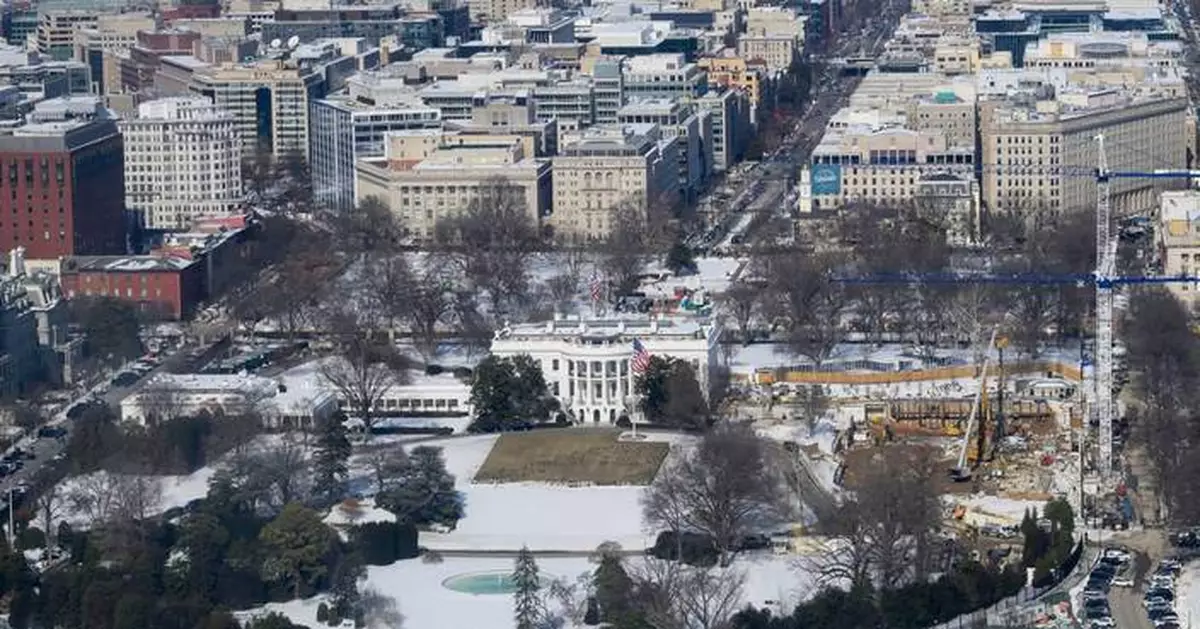
WASHINGTON (AP) — Americans’ hope for their future has fallen to a new low, according to new polling.
In 2025, only about 59% of Americans gave high ratings when asked to evaluate how good their life will be in about five years, the lowest annual measure since Gallup began asking this question almost 20 years ago.
It's a warning about the depth of the gloom that has fallen over the country over the past few years. In the data, Gallup’s “current” and “future” lines have tended to move together over time — when Americans are feeling good about the present, they tend to feel optimistic about the future. But the most recent measures show that while current life satisfaction has declined over the last decade, future optimism has dropped even more.
The finding comes from a longstanding Gallup question that asks Americans to rate their current and future lives on a scale from 0 to 10. Those who give themselves an 8 or higher on the question about the future are categorized as optimists.
“While current life is eroding, it’s that optimism for the future that has eroded almost twice as much over the course of about that last 10 years or so,” said Dan Witters, the research director of the Gallup National Health and Well-Being Index.
Gallup assesses people who rate their current life at a 7 or higher and their anticipated future at an 8 or higher as “thriving.” Fewer than half of Americans, about 48%, are now in that category.
Democrats and Hispanic Americans, in particular, were in a darker mood last year. But even with President Donald Trump back in the White House and his party in control of both houses of Congress, Republicans aren’t feeling nearly as good about the future as they were in the last year of Trump’s first term.
Americans’ attitudes toward the future tend to shift when a new political party enters the White House — generally, the party in power grows more optimistic, while the party without control is more down. For instance, Democrats became more positive about the future after Joe Biden won the presidency, while Republicans’ outlook soured.
Witters notes that these changes typically happen “by roughly the same amount, same level of magnitude, so they cancel each other out.”
That didn’t happen in 2025.
Toward the end of Biden’s term and the start of Trump’s second term, Democrats’ optimism fell from 65% to 57%. Republicans grew more hopeful, but not enough to offset Democrats’ drop.
“The regime change in the White House almost certainly was a big driving factor in what’s happened,” Witters said. “And a lot of that was just because the people who identified as Democrats really took it in the chops.”
But Republicans are still quite a bit gloomier about the future than they were in the last year of Trump's first term. A January AP-NORC poll found that while the vast majority of Republicans are still behind the president, his work on the economy hasn’t lived up to many people’s expectations.
Hispanic adults’ optimism for the near future also declined during Trump’s first year in office, dropping from 69% to 63%.
That decrease was sharper than among white and Black Americans, something that Witters said could be tied to overall cost concerns, health care worries or alarm about Trump’s recent immigration policies.
Last year, a survey by the American Communities Project found that people living in heavily Hispanic areas were feeling less hopeful about their future than in 2024. Trump’s favorability fell among Hispanics over the course of 2025, according to AP-NORC polling, which also found that Hispanic adults reported higher levels of economic stress than other groups.
A Pew Research Center poll conducted in October found that the administration’s tough immigration enforcement is highly visible in Hispanic communities. About 6 in 10 Latinos said they had seen or heard of Immigration and Customs Enforcement raids or arrests in their community in the past six months.
“(Deportations are) something that everybody can see and look at with their own eyes,” Witters added. “But if you’re Hispanic, I think it’s fair to think that that might hit a little closer to home.”
This data is a part of the Gallup National Health and Well-Being Index. The 2025 results are based on data collected over four quarterly measurement periods, totaling 22,125 interviews with U.S. adults who are part of the probability-based Gallup Panel.
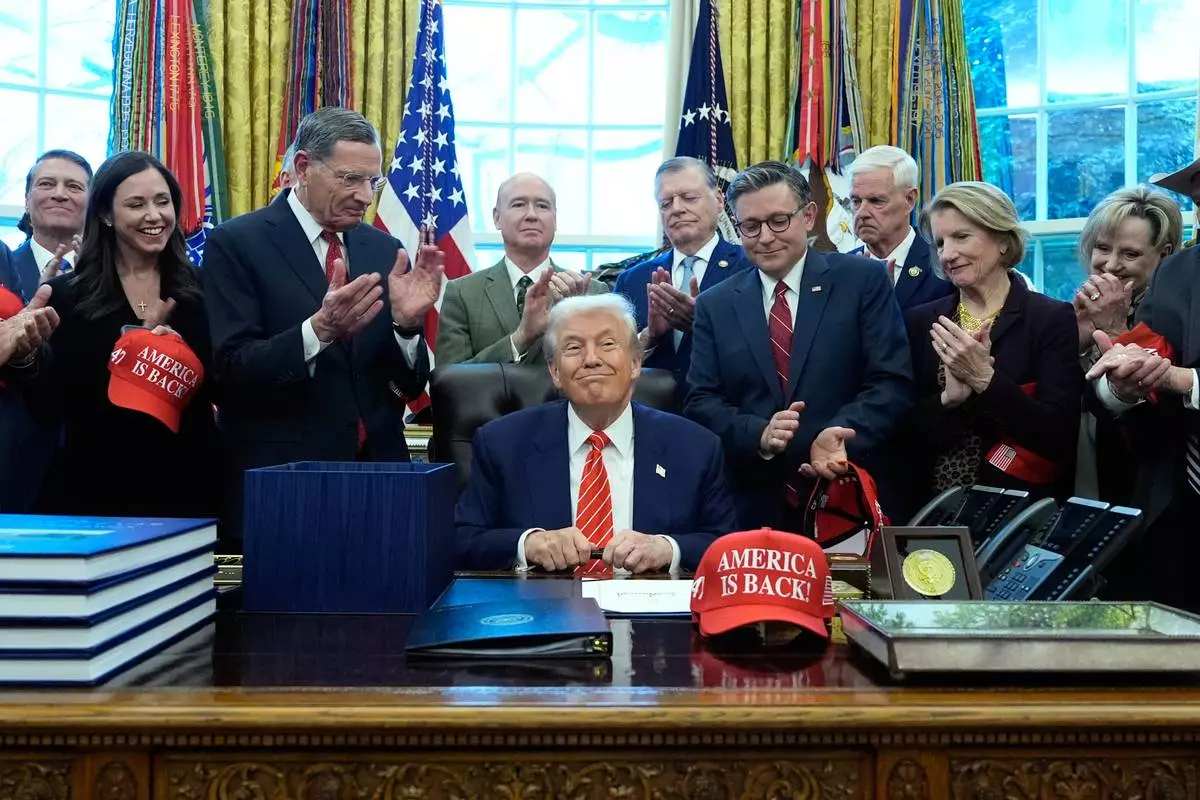
President Donald Trump smiles after signing a spending bill that ends a partial shutdown of the federal government in the Oval Office of the White House, Tuesday, Feb. 3, 2026, in Washington. (AP Photo/Alex Brandon)
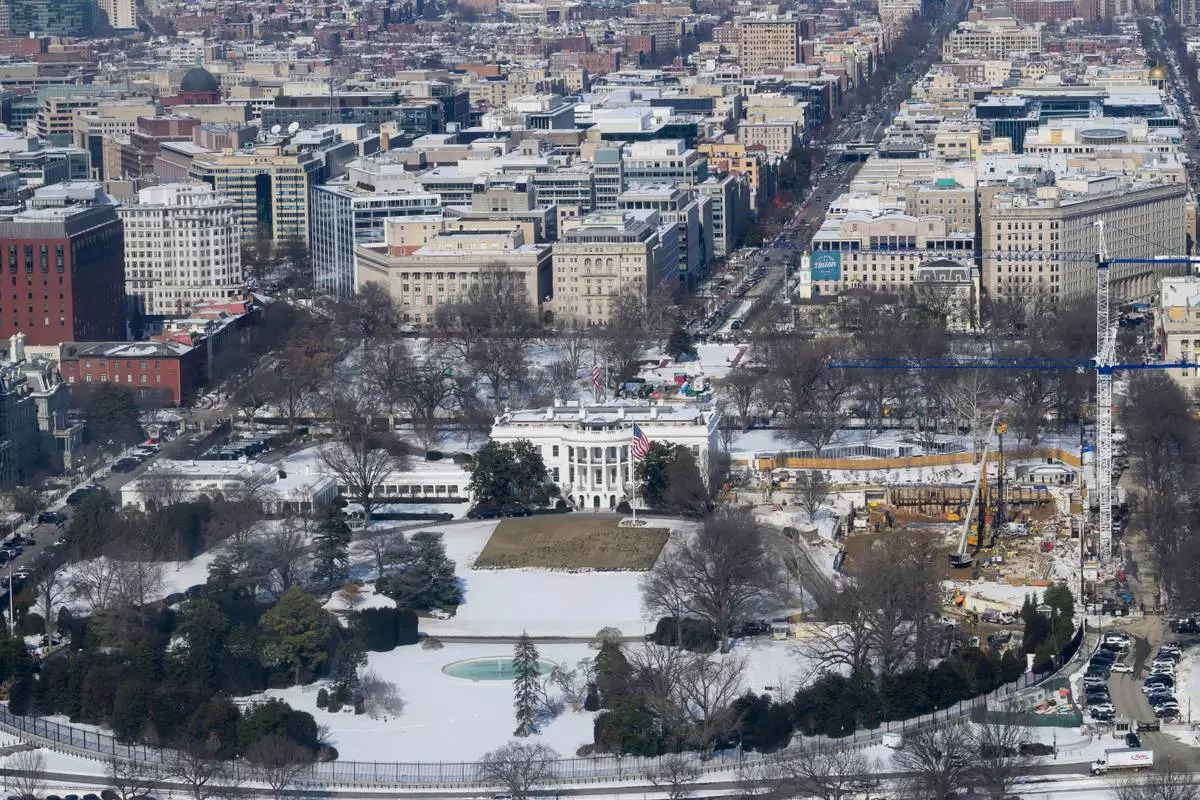
FILE - The White House is seen from the Washington Monument Feb. 4, 2026,, in Washington. (AP Photo/Rod Lamkey, Jr., File)

NEW YORK (AP) — Stocks are stalling on Wall Street after a report showed U.S. retailers made less money at the end of last year than economists expected. The S&P 500 edged up 0.1% in early trading Tuesday and remains close to its all-time high set a couple weeks ago. The Dow Jones Industrial Average rose 254 points, and the Nasdaq composite rose 0.1%. Treasury yields fell in the bond market following the weaker-than-expected report on retail sales. Coca-Cola fell after reporting revenue that came in below forecasts and giving an outlook that disappointed investors. Japanese stocks rose to another record.

THIS IS A BREAKING NEWS UPDATE. AP’s earlier story follows below.
Wall Street shifted from small gains to losses early Tuesday amid another deluge of corporate earnings while Japan’s benchmark set another record after a historic election win for the nation’s first female prime minister.
Futures for the S&P 500 fell 0.1% before the opening bell, while Dow Jones Industrial Average futures were down 0.2%. Nasdaq futures were down less than 0.2%.
Coca-Cola slid nearly 4% after the beverage giant topped Wall Street's profit expectations but fell short on revenue targets. Coke's revenue rose 2% from the same quarter last year, helped by 4% price hikes in North America.
Spotify jumped 9.7% after it the streaming music and podcast platform reported that its monthly active users and subscribers each grew by double-digit percentages in the fourth quarter.
Ford Motor Co. releases its latest financial results after the closing bell Tuesday.
Coming later Tuesday morning is the government's latest retail sales data.
Also this week, the government on Wednesday issues its January jobs report, while Friday will bring the latest monthly reading of inflation at the consumer level.
Either report could sway expectations for what the Federal Reserve will do with interest rates. The Fed has put its cuts to interest rates on hold, but a weakening of the job market could push it to resume more quickly.
Too-hot inflation could keep it on hold for longer. One of the reasons the U.S. stock market remains close to records is the expectation that the Fed will continue cutting interest rates.
In Asian trading, Japan's benchmark Nikkei 225 jumped 2.3% to finish at 57,650.54, a record close. It jumped 3.9% to a record Monday after the landslide victory for Sanae Takaichi’s political party in Sunday's parliamentary election. Takaichi is expected to push through reforms intended to boost the economy and stock market.
“Japan’s fiscal stance could loosen further because the LDP’s supermajority will enable the new government to implement policies with few obstacles,” Fitch Ratings said in a report following the election, referring to Takaichi's Liberal Democratic Party.
“Policy choices under the new government are likely to focus on tax relief and growth-oriented investment spending, reflecting voter concerns over higher inflation and low income growth,” it said.
Hong Kong’s Hang Seng surged 0.6% to 27,183.15, while the Shanghai Composite added 0.1% to 4,128.37.
Australia's S&P/ASX 200 declined less than 0.1% to 8,867.40. South Korea's Kospi gained less than 0.1% to 5,301.69.
In Europe at midday, France’s CAC 40 was unchanged, while Britain’s FTSE 100 slipped 0.5%. Germany’s DAX was down 0.2%.
In energy markets, benchmark U.S. crude rose 21 cents to $64.57 a barrel. Brent crude, the international standard, advanced 31 cents to $69.35 a barrel.
The U.S. dollar fell to 155.08 Japanese yen from 155.88 yen. The euro cost $1.1894, down from $1.1918.
Yuri Kageyama is on Threads: https://www.threads.com/@yurikageyama
Trader Chris Lagana works on the floor of the New York Stock Exchange, Friday, Feb. 6, 2026, as the Dow Jones industrial average closed above the 50,000 level for the first time. (AP Photo/Richard Drew)
Specialist Anthony Matesic works at his post on the floor of the New York Stock Exchange, Friday, Feb. 6, 2026. (AP Photo/Richard Drew)
Currency traders watch monitors near a screen showing the Korea Composite Stock Price Index (KOSPI), top center, and the foreign exchange rate between U.S. dollar and South Korean won, top center left, at the foreign exchange dealing room of the Hana Bank headquarters in Seoul, South Korea, Tuesday, Feb. 10, 2026. (AP Photo/Ahn Young-joon)
Currency traders work near a screen showing the Korea Composite Stock Price Index (KOSPI), top right, and the foreign exchange rate between U.S. dollar and South Korean won at the foreign exchange dealing room of the Hana Bank headquarters in Seoul, South Korea, Tuesday, Feb. 10, 2026. (AP Photo/Ahn Young-joon)
A person walks in front of an electronic stock board showing Japan's Nikkei index at a securities firm Monday, Feb. 9, 2026, in Tokyo. (AP Photo/Eugene Hoshiko)
Currency traders work near a screen showing the Korea Composite Stock Price Index (KOSPI), top center, and the foreign exchange rate between U.S. dollar and South Korean won, top left, at the foreign exchange dealing room of the Hana Bank headquarters in Seoul, South Korea, Tuesday, Feb. 10, 2026. (AP Photo/Ahn Young-joon)