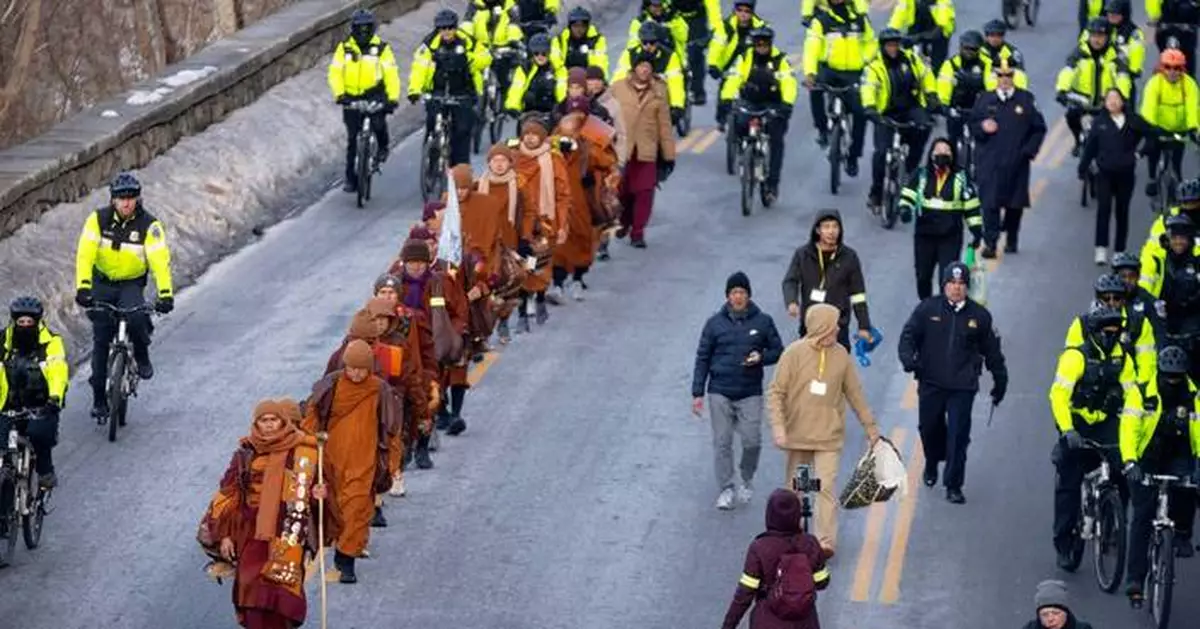
WASHINGTON (AP) — A group of Buddhist monks — bearing a message of peace — walked into the heart of Washington, D.C., on Tuesday, greeted by large, joyful crowds as they completed their 15-week trek from Texas.
In their saffron and maroon robes, the monks became fixtures on social media as they made their way through the southeastern United States, along with their rescue dog Aloka.
Click to Gallery
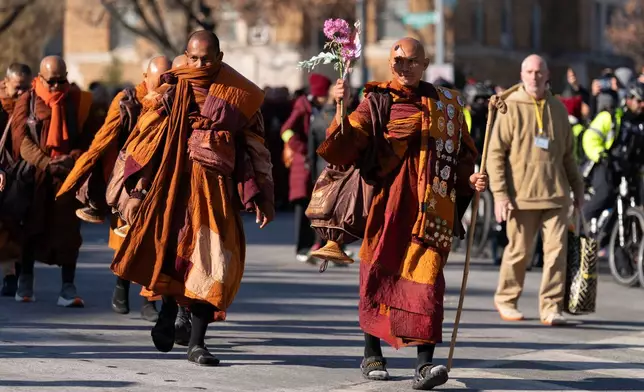
Monk Bhikkhu Pannakara waves as Buddhist monks who are participating in a Walk For Peace walk through a the streets of Washington, Tuesday, Feb. 10, 2026. (AP Photo/Jose Luis Magana)
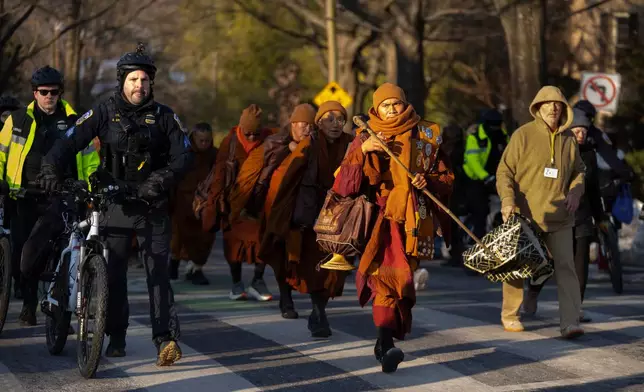
Buddhist monks who are participating in a Walk For Peace walk through a neighborhood on Tuesday, Feb. 10, 2026, in Washington. (AP Photo/Mark Schiefelbein)
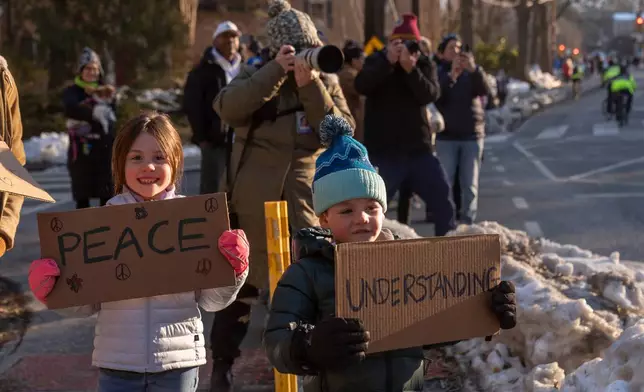
Spectators watch as Buddhist monks who are participating in a Walk For Peace walk through a neighborhood on Tuesday, Feb. 10, 2026, in Washington. (AP Photo/Mark Schiefelbein)
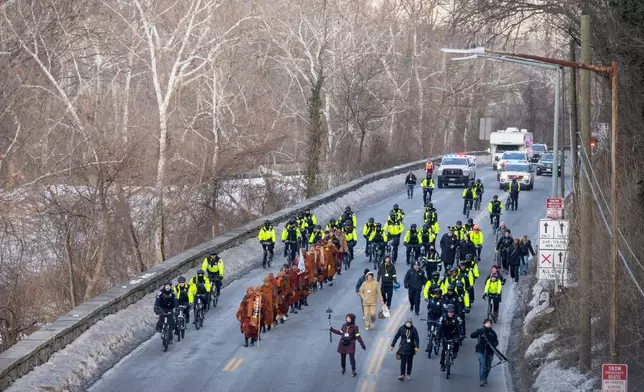
Buddhist monks who are participating in a Walk For Peace are escorted by Metropolitan Police Department officers as they walk along the C&O Canal and Potomac River on Tuesday, Feb. 10, 2026, in Washington. (AP Photo/Mark Schiefelbein)
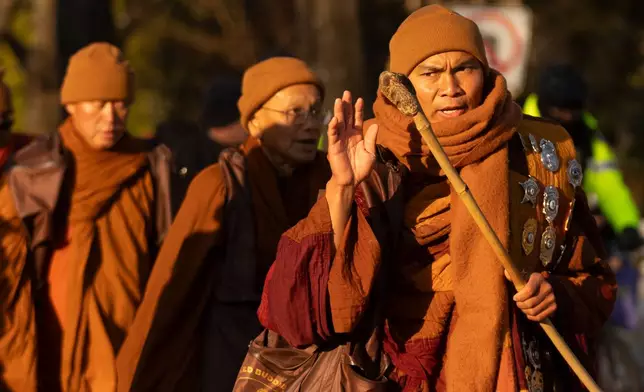
Monk Bhikkhu Pannakara waves as Buddhist monks who are participating in a Walk For Peace walk through a neighborhood on Tuesday, Feb. 10, 2026, in Washington. (AP Photo/Mark Schiefelbein)
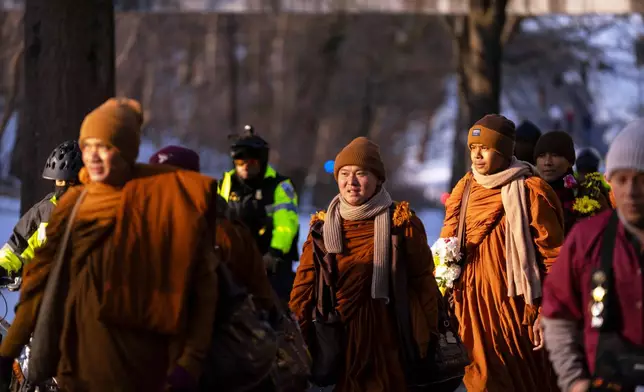
Buddhist monks who are participating in a Walk For Peace walk through a neighborhood on Tuesday, Feb. 10, 2026, in Washington. (AP Photo/Mark Schiefelbein)
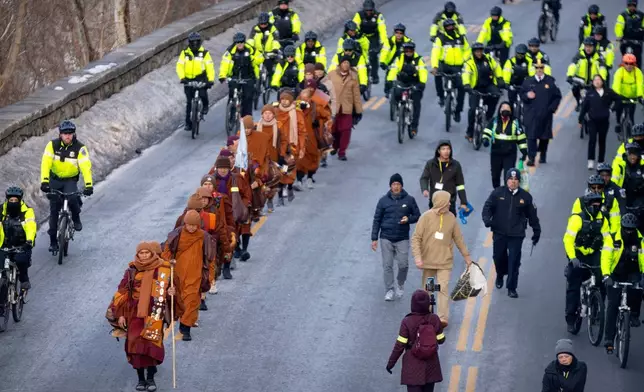
Buddhist monks who are participating in a Walk For Peace are escorted by Metropolitan Police officers as they walk along the C&O Canal and Potomac River on Tuesday, Feb. 10, 2026, in Washington. (AP Photo/Mark Schiefelbein)
Their simple mission, to advocate for peace, has resonated across a beleaguered country — and appeared especially welcome in a city at the center of political strife and power.
Thousands gathered along icy sidewalks to watch the monks’ quiet procession that began in late October.
In the afternoon, the monks stopped at the Washington National Cathedral, where they were joined by more than 100 other Buddhist monks and nuns.
“It is overwhelming for us,” said the Venerable Bhikkhu Pannakara, the group’s charismatic and soft-spoken leader, on the steps of the cathedral.
Flanked by dozens of faith leaders across traditions — including Washington Episcopal Bishop Mariann Budde, who helped host the interfaith gathering — Pannakara was visibly moved by their shared cause for peace.
“This is the moment I will remember for the rest of my life,” he said. “And I hope you do the same.”
As the monks walked single-file down city streets, people cheered them. Some shushed the crowds, urging them to be silent and reverent. But the monks acknowledged the people’s enthusiasm with subtle nods and smiled at those calling out “Sadhu!” — an expression in Buddhism that means “well done.”
Nearly 3,500 people packed American University’s Bender Arena for the monks’ first public stop in Washington. But no raucous sports cheers greeted them: Spectators remained silent as they walked into the arena, as a sign of respect for the monks and their quest for peace.
The trek has had its perils. In November outside Houston, the monks were walking on the side of a highway when their escort vehicle was hit by a truck. Two monks were injured; Venerable Maha Dam Phommasan had his leg amputated.
Phommasan, abbot of a temple in Snellville, Georgia, rejoined the monks near Washington and entered American University’s arena in a wheelchair.
Phommasan’s return was moving for Jackson Vaughn, 33, who's used a wheelchair since 2024. He has been traveling beside the monks for a week, since they came through his hometown of Fredericksburg, Virginia.
“There are so many things happening in the world,” said Vaughn, who was among the crowd at the university entrance. “To see people gathering peacefully and setting an example, I think, is a wonderful thing.”
He was grateful to fellow travelers who helped him navigate icy roads.
“I have been on this journey of trying to find my independence,” Vaughn said. “But this really shows how connected we really are.”
The monks have been surprised to see their message transcend ideologies. Millions have followed them online, and crowds have greeted them at numerous venues, from a church in Opelika, Alabama, to City Hall in Richmond, Virginia.
Kristin Williams, 42, brought her two children, ages 8 and 10, to view the procession outside the cathedral.
“I wanted them to not just witness history but witness the power of coming together,” she said. “The movement they’ve been building for the past couple of months has been really powerful to watch grow.”
Over 20,000 people tuned in to watch the live feed Tuesday — logging on from places ranging from Jamaica and Germany to Sri Lanka and Thailand. Even as the occasional critic surfaced in the comments section, viewers seemed to heed the monks’ message as they wished that person to find peace.
Nineteen monks began the 2,300-mile (3,700-kilometer) journey from the Huong Dao Vipassana Bhavana Center in Fort Worth on Oct. 26, 2025. They came from Theravada Buddhist monasteries around the globe, led by Pannakara, who is vice president of the Fort Worth temple.
Long Si Dong, a spokesperson for the temple, said the walk is neither a political movement nor is it focused on advocacy or legislation.
“It’s a spiritual offering, an invitation to live peace through everyday actions, mindful steps and open hearts,” he said. “We believe when peace is cultivated within, it naturally ripples outward into society.”
Peace walks are a cherished tradition in Theravada Buddhism. Some of the monks have walked barefoot or in socks during parts of the journey, to feel the ground directly and be present in the moment.
The monks practice and teach Vipassana meditation, an ancient Indian technique taught by the Buddha that focuses on breath and the mind-body connection. Pannakara’s peace talks, given at stops along the way, have urged listeners to put down their phones and find peace within themselves.
On Tuesday, the monks completed 108 days of walking. It’s a sacred number in Buddhism, representing spiritual completion, cosmic order and the wholeness of existence.
On Wednesday, the monks plan to walk through Capitol Hill and hold a closing ceremony at the Lincoln Memorial.
Their return trip should be less arduous. After an appearance at Maryland’s Capitol, a bus will take them back to Texas, where they expect to arrive in downtown Fort Worth early on Saturday.
From there, the monks will walk together again, traversing 6 miles (9.6 kilometers) to the temple where their trip began.
Bharath reported from Los Angeles.
Associated Press religion coverage receives support through the AP’s collaboration with The Conversation US, with funding from Lilly Endowment Inc. The AP is solely responsible for this content.
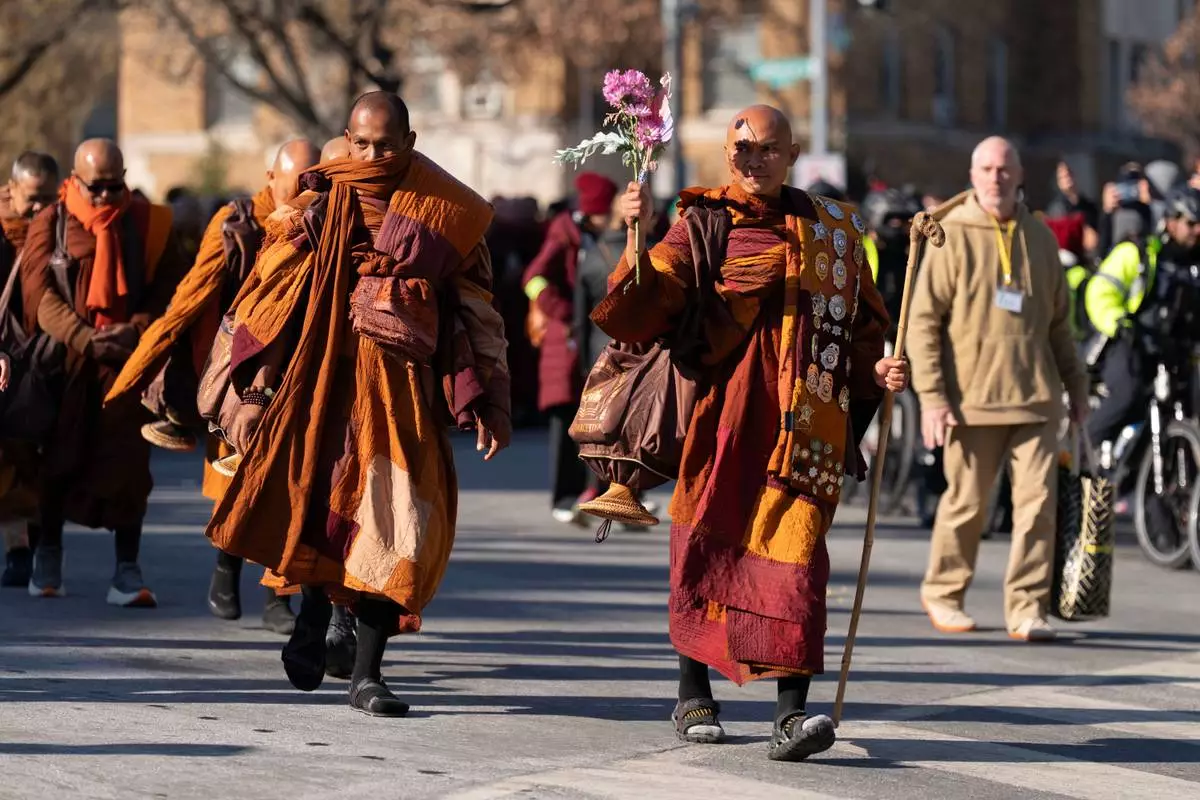
Monk Bhikkhu Pannakara waves as Buddhist monks who are participating in a Walk For Peace walk through a the streets of Washington, Tuesday, Feb. 10, 2026. (AP Photo/Jose Luis Magana)
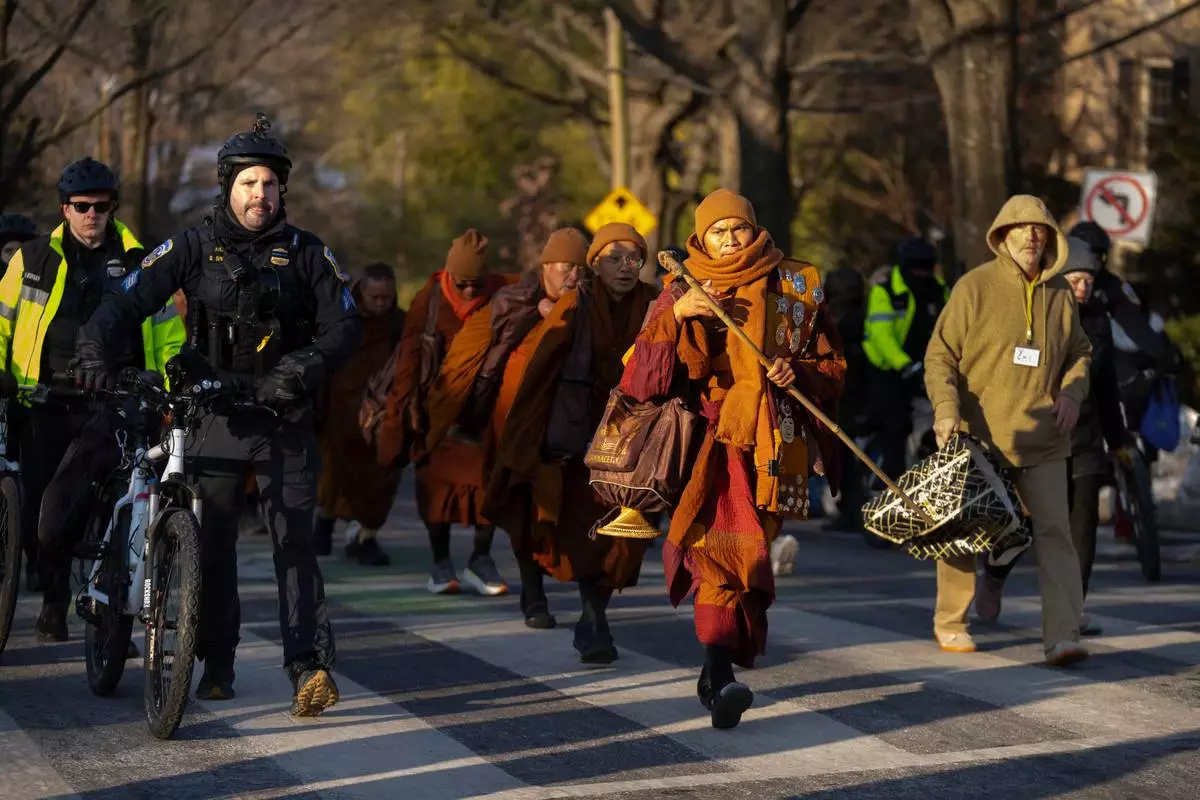
Buddhist monks who are participating in a Walk For Peace walk through a neighborhood on Tuesday, Feb. 10, 2026, in Washington. (AP Photo/Mark Schiefelbein)
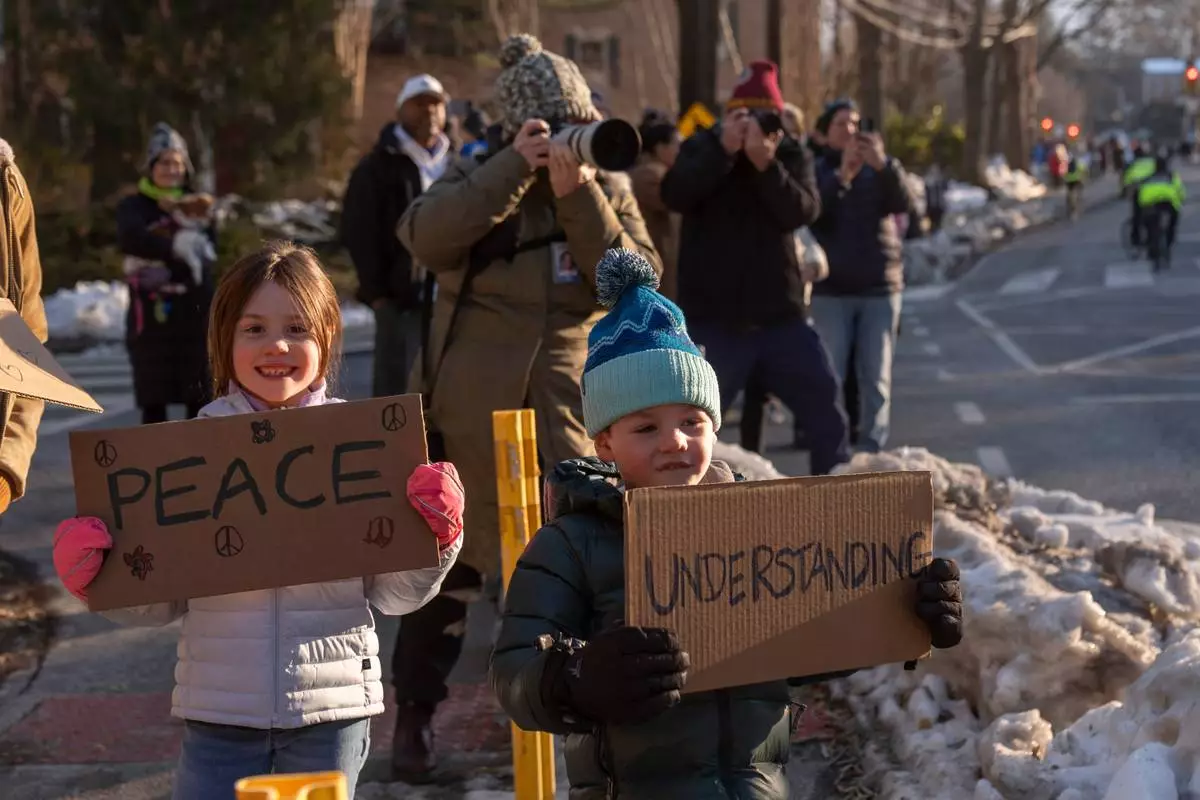
Spectators watch as Buddhist monks who are participating in a Walk For Peace walk through a neighborhood on Tuesday, Feb. 10, 2026, in Washington. (AP Photo/Mark Schiefelbein)
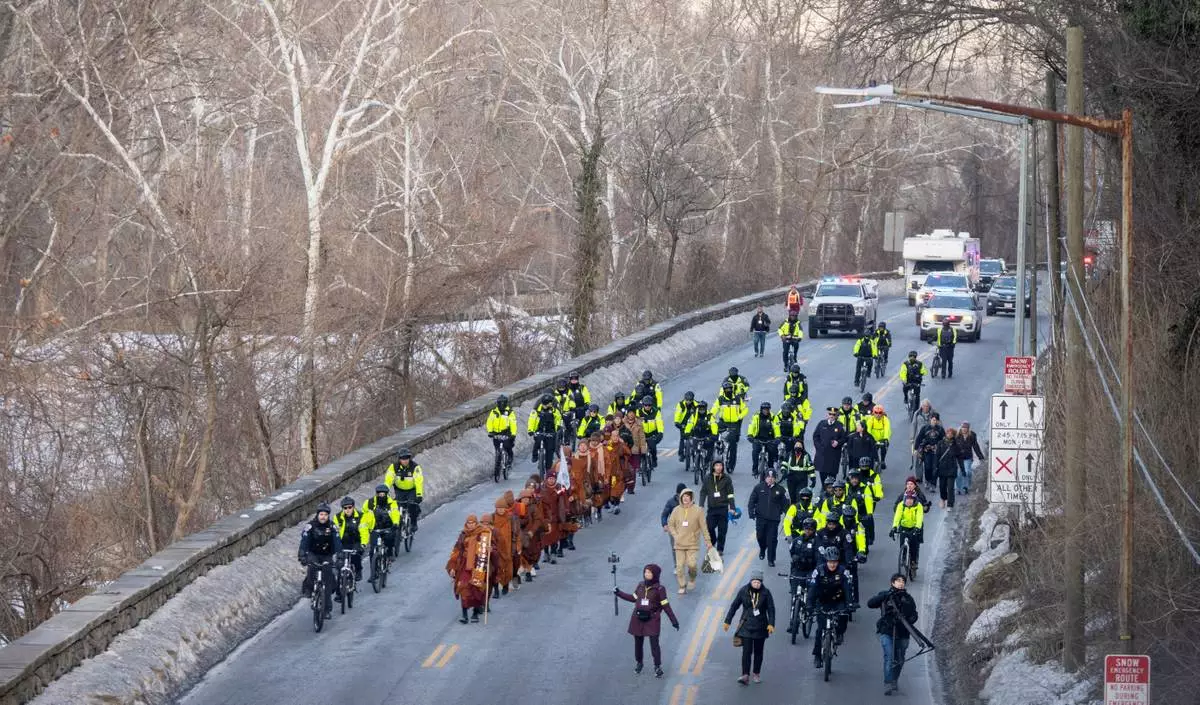
Buddhist monks who are participating in a Walk For Peace are escorted by Metropolitan Police Department officers as they walk along the C&O Canal and Potomac River on Tuesday, Feb. 10, 2026, in Washington. (AP Photo/Mark Schiefelbein)
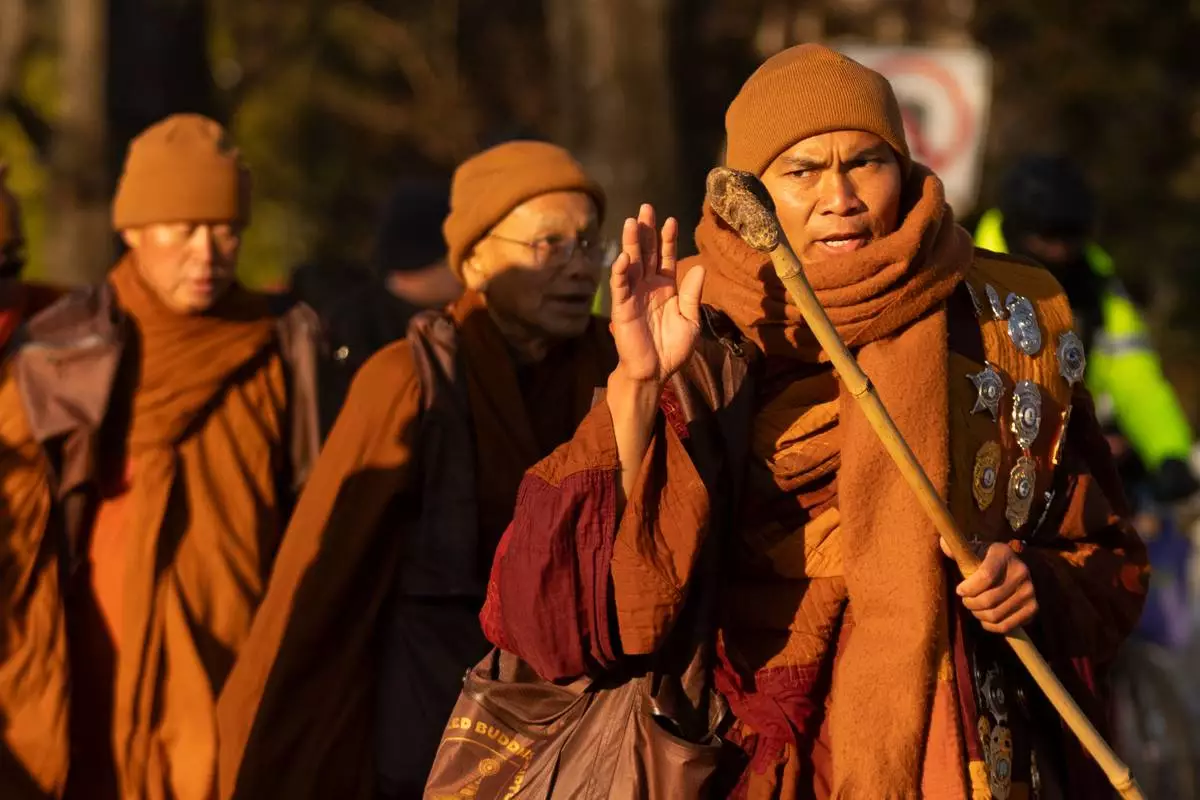
Monk Bhikkhu Pannakara waves as Buddhist monks who are participating in a Walk For Peace walk through a neighborhood on Tuesday, Feb. 10, 2026, in Washington. (AP Photo/Mark Schiefelbein)
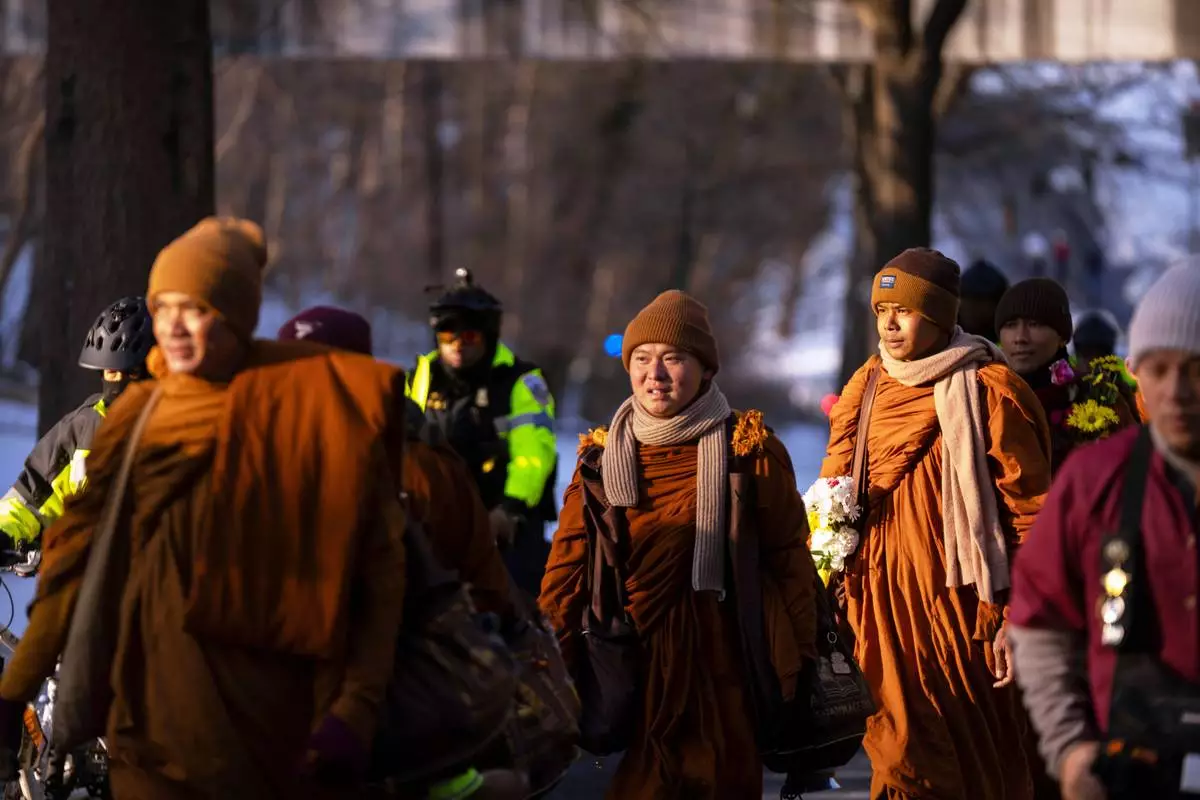
Buddhist monks who are participating in a Walk For Peace walk through a neighborhood on Tuesday, Feb. 10, 2026, in Washington. (AP Photo/Mark Schiefelbein)
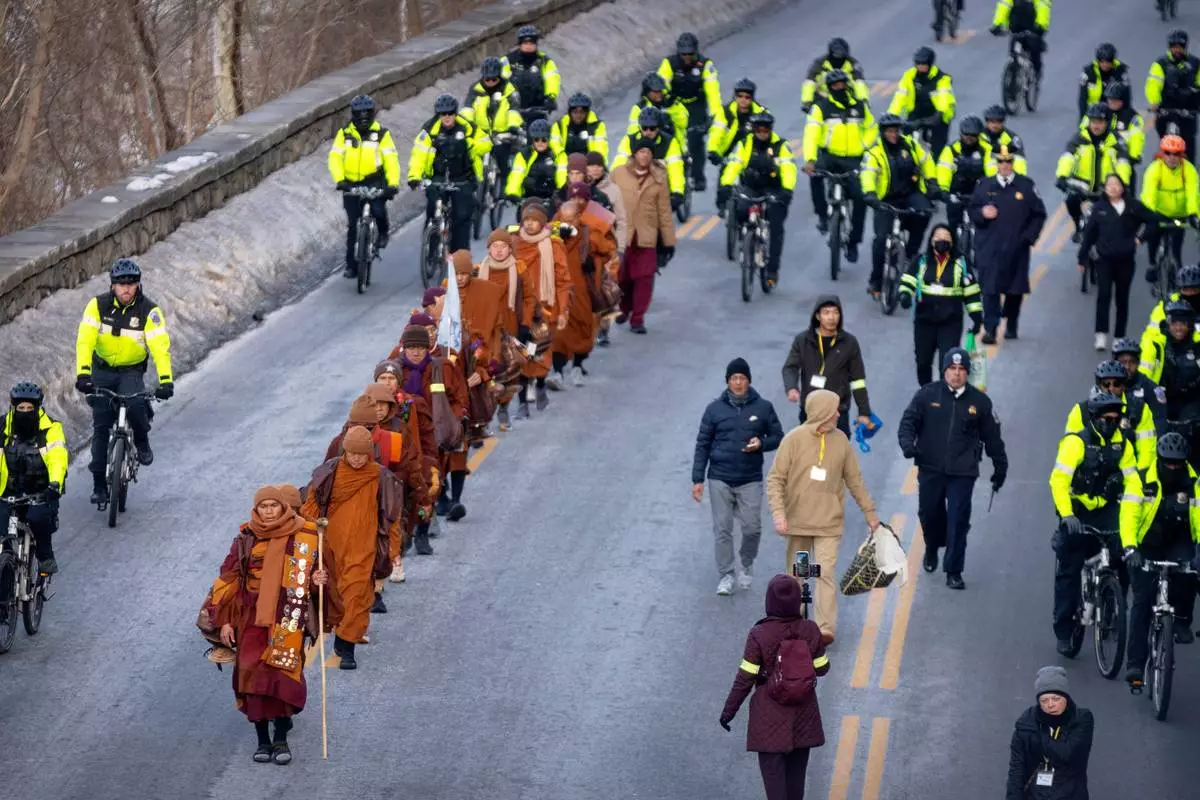
Buddhist monks who are participating in a Walk For Peace are escorted by Metropolitan Police officers as they walk along the C&O Canal and Potomac River on Tuesday, Feb. 10, 2026, in Washington. (AP Photo/Mark Schiefelbein)