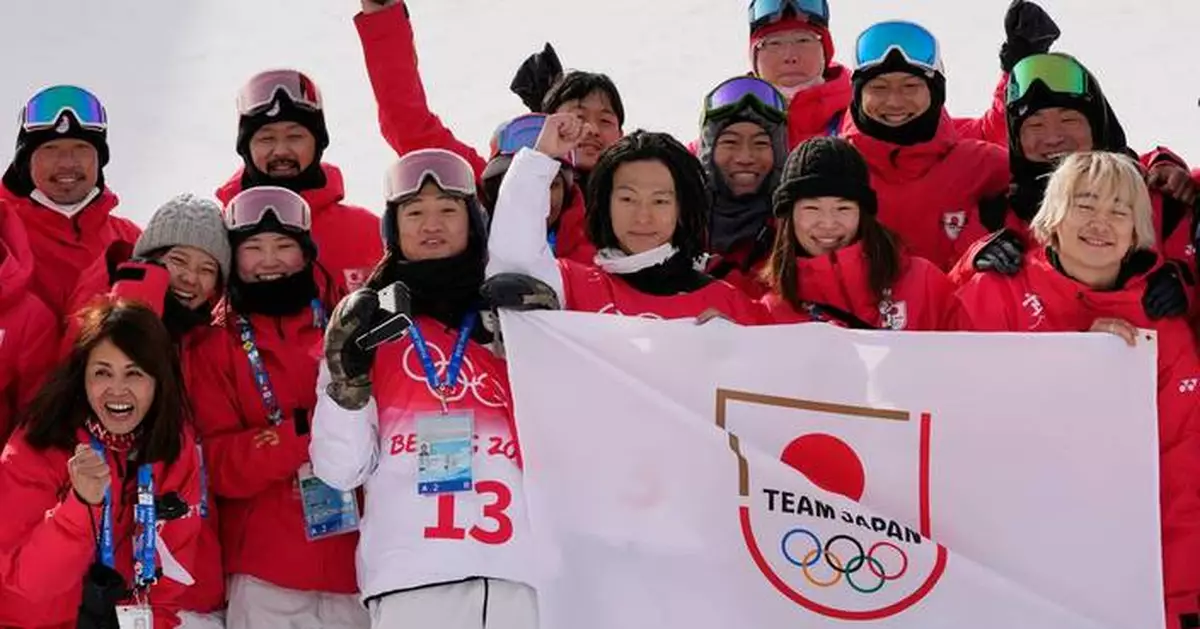
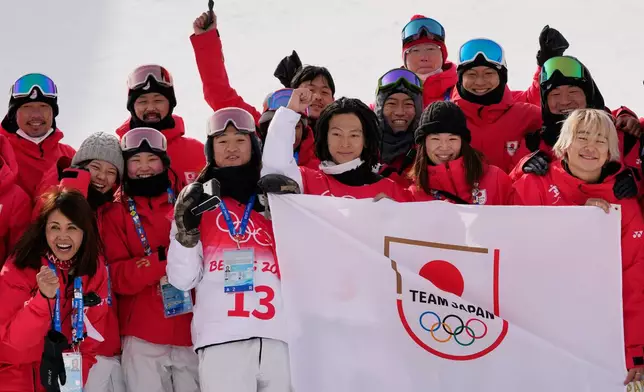
Skip to Content Facebook Feature Image

Japan's surge on the Olympic halfpipe leaves the US with some catching up to do

Sport

Japan's surge on the Olympic halfpipe leaves the US with some catching up to do
Sport

Sport

Japan's surge on the Olympic halfpipe leaves the US with some catching up to do

2026-02-10 21:37 Last Updated At:21:40

LIVIGNO, Italy (AP) — A generation ago, the sight of an Olympic halfpipe podium drenched in red, white and blue was as common as fresh powder on the mountain — a fitting and expected celebration for a sport born and raised in the United States.

A look at those podiums over the past decade tells a different story.

More Images
Japan's Ryusei Yamada, left, and Japan's Yuto Totsuka ride a chair lift during a snowboard halfpipe training session at the 2026 Winter Olympics, in Livigno, Italy, Sunday, Feb. 8, 2026. (AP Photo/Lindsey Wasson)
Japan's Ryusei Yamada, left, and Japan's Yuto Totsuka ride a chair lift during a snowboard halfpipe training session at the 2026 Winter Olympics, in Livigno, Italy, Sunday, Feb. 8, 2026. (AP Photo/Lindsey Wasson)
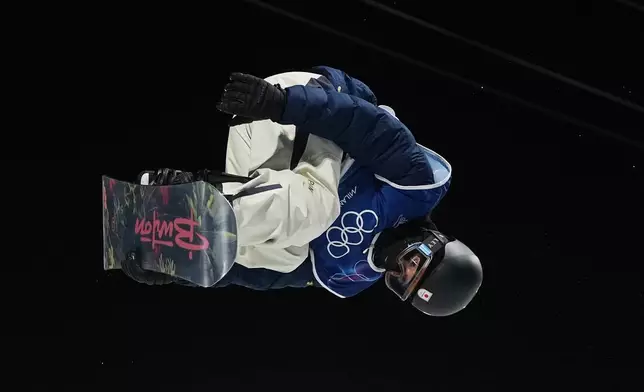
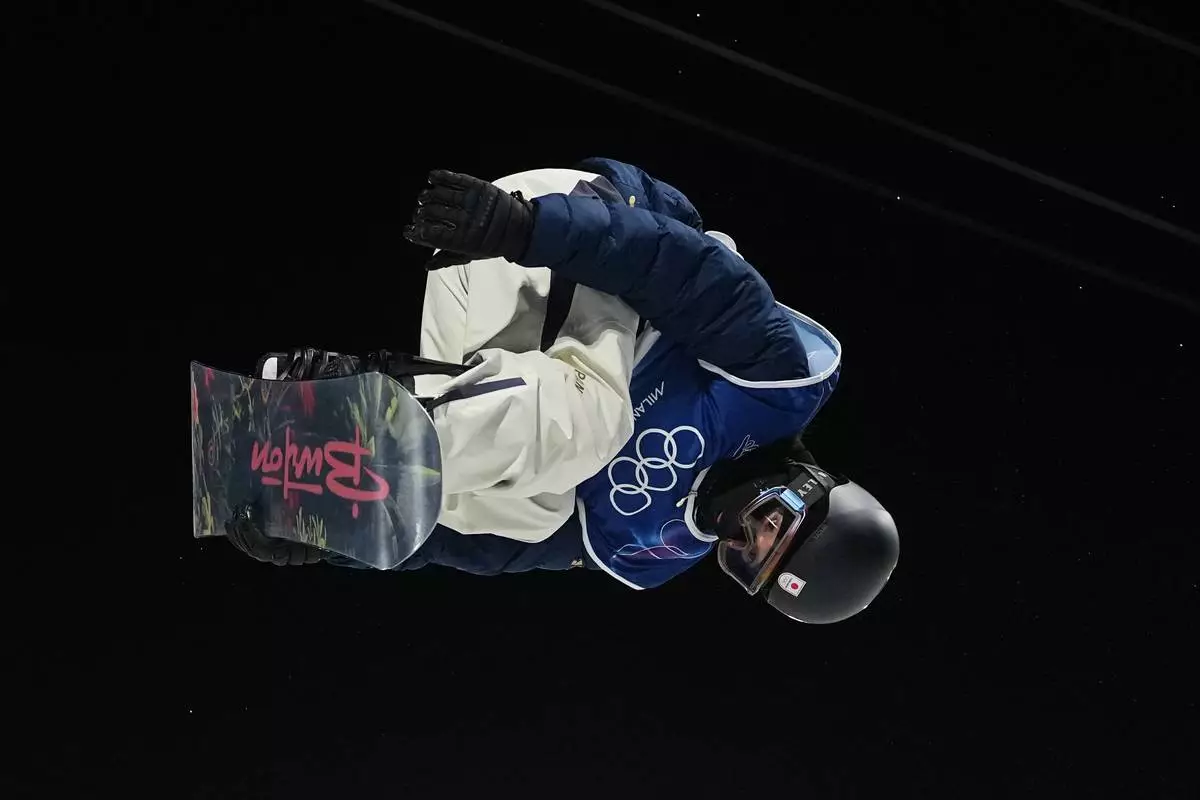
Japan's Ayumu Hirano practices during a snowboard halfpipe training session at the 2026 Winter Olympics, in Livigno, Italy, Sunday, Feb. 8, 2026. (AP Photo/Lindsey Wasson)

Japan's Ayumu Hirano practices during a snowboard halfpipe training session at the 2026 Winter Olympics, in Livigno, Italy, Sunday, Feb. 8, 2026. (AP Photo/Lindsey Wasson)

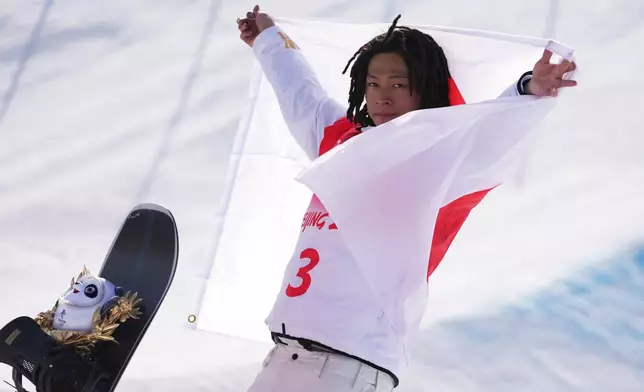
FILE - Gold medal winner Japan's Ayumu Hirano celebrates during the venue award ceremony for the men's halfpipe finals at the 2022 Winter Olympics, Friday, Feb. 11, 2022, in Zhangjiakou, China. (AP Photo/Matthias Schrader, File)
FILE - Gold medal winner Japan's Ayumu Hirano celebrates during the venue award ceremony for the men's halfpipe finals at the 2022 Winter Olympics, Friday, Feb. 11, 2022, in Zhangjiakou, China. (AP Photo/Matthias Schrader, File)

FILE - Japan's Ayumu Hirano poses for pictures after winning a gold medal in the men's halfpipe finals at the 2022 Winter Olympics, Friday, Feb. 11, 2022, in Zhangjiakou, China. (AP Photo/Francisco Seco, File)

FILE - Japan's Ayumu Hirano poses for pictures after winning a gold medal in the men's halfpipe finals at the 2022 Winter Olympics, Friday, Feb. 11, 2022, in Zhangjiakou, China. (AP Photo/Francisco Seco, File)

With Shaun White now in retirement, America's other great champion, Chloe Kim, is the only remaining U.S. snowboarder at these Winter Olympics favored to win a halfpipe medal in the contests that start with qualifying Wednesday.

The rest of the top contenders are from Japan, which boasts defending champion Ayumu Hirano and this year's second-ranked rider, Yuto Totsuka, with Australia's Scotty James and a few others sprinkled in from other spots in Asia and even New Zealand.

It's a generational shift borne from the confluence of several factors — namely, Japan's doubling down of both resources and athletes in snowboarding's most iconic event set against an alarming reduction in the number of actual halfpipes to ride across America.

These days, industry experts say there are a half-dozen or fewer halfpipes spread across American resorts. White said his last conversation with Hirano brought home the investment Japan has made in dry-slope training grounds, expensive air bags and, maybe, most importantly, time and talent.

“It's like, 'OK, so you're dropping triple-14s in a tank top while everyone else is waiting for the snow to hit in some part of the world,'" White said of the Japanese champion's summertime training regimen. “I don't know what would've happened if I had been able to train year-round in snowboarding.”

Kelly Clark, the 2002 Olympic champion, grew up in the heart of the Green Mountains in Vermont. Her path to shredding on a halfpipe began at a little resort called Mount Snow.

These days, halfpipes are rare, if nonexistent, on the East Coast, which was also the training ground for Ross Powers and Danny Kass — two of the three members of the Olympic men's halfpipe sweep that officially put this sport on the map at the Salt Lake City Games in 2002.

In 2014, slopestyle joined the Olympic program. The growing popularity of that form of riding, with its less-intimidating rails and jumps, played into what resorts are willing to invest in. It’s easier and less expensive to carve out a gentle jump or place piping on a mountain than to dig out a 22-foot steep halfpipe, which takes far more advanced skills to construct — and ride.

“If I were looking 15 years down the road at halfpipe and how common that will be at a resort, then, that I would say could be a little concerning,” Clark said. “Will it be that relatable sport that everyone can kind of watch, and participate in?”

Shannon Dunn-Downing, the 1998 bronze medalist, wrote a recent editorial in Slush Magazine titled "Is Halfpipe Dead?"

“If it’s not cut well, nobody’s gonna ride it,” she said in an interview. “Then it’s going to kind of sit there empty, and ski resorts see that, and they don’t put the effort in if they don’t understand the value of having a halfpipe in the first place.”

When their sport was dragged reluctantly into the Olympic fold in 1998, most of the best riders were essentially self-taught or privately coached, some of them starting on handmade quarterpipes that they and their friends took days to dig out.

Those who got good would look for funding — and the training access on better halfpipes that it afforded — from the Burtons and Red Bulls of the world in an ecosystem that thrived on product placement and dropping from helicopters for cool backcountry videos.

The U.S. Ski Association eventually became U.S. Ski & Snowboard, though it took decades for the snowboarders to start being treated more equitably. Four years ago, an Associated Press story detailed some of the dissatisfaction American snowboarders felt inside a Euro-centric system that favors skiing.

This came even though snowboarders have amassed 31 medals for the U.S. between 1998 and 2018, compared to 21 for the Alpine skiers over that period.

Rick Bower, who was elevated to director of the USSA snowboard program, detailed initiatives to support snowboarding that are starting to even things out — including an endowment potentially worth more than $65 million.

The goal is for the U.S. to dominate on the halfpipe when the Olympics return to Salt Lake City in 2034.

“For a long period, our sports were doing great and they were, like, ‘Hey, we’ll just let them do their thing,’” Bower said. “Because of that, we're now in a position where we’re behind and we need to do some catch-up.”

Meanwhile, Japan's pipeline comes at people in waves. Bower said that for decades, Japan would send teams of riders to America to train. More recently, it's dozens of riders with multiple coaches heading to Switzerland for camps.

“It's an army," Bower said. “It's 30 developmental athletes, all of whom are very skilled.”

Among the most telling statistics is that from 2002 through 2010, the U.S. won 12 of the 18 available halfpipe medals at the Olympics. Japan: None.

In the three Olympics since, the U.S. has won six of 18, but only one of nine (White's in 2018) on the men's side. Japan has won five, four of those in men's.

The trend is moving beyond the halfpipe. In the two big air events held so far at the Milan Cortina Games, Japan has captured three of the six medals. The U.S. produced a total of one finalist, no medals.

The bronze medalist in men's big air, Su Yiming, is from China, where participation in action sports is skyrocketing. But he trains in Japan under a Japanese coach who has an airbag.

“It just makes everything safer and you can learn a new trick a whole lot quicker,” Su said.

Zach Nigro, the senior director of sports marketing for Burton, says halfpipe's reputation as the most dangerous discipline in the sport could be part of the appeal in Japan.

“I think there are more Japanese riders who say, ‘Oh my God, I could be part of that,’” Nigro said. “They have a lot of honor. Their thought might be, it's a difficult discipline, but if you're going to be the best, then master the most difficult discipline.”

When the halfpipe finals roll around Thursday for the women and Friday for the men, Hirano, Totsuka and Ruka Hirano (not related to Ayumu) are among the Japanese candidates for the podium. So is Scotty James, the Aussie rider with eight career titles at the X Games and silver and bronze medals from the Olympics.

Where the first part of the 31-year-old James' career was spent chasing White, the second part involves holding off or catching the Japanese.

“They have a group team camaraderie, they push each other and they've built kind of a force,” James said. “They're hard to compete against. It's their composition on the board, their bodies. They're just very good at snowboarding. You put them on it and they're like one with it.”

https://apnews.com/hub/milan-cortina-2026-winter-olympics

Japan's Ryusei Yamada, left, and Japan's Yuto Totsuka ride a chair lift during a snowboard halfpipe training session at the 2026 Winter Olympics, in Livigno, Italy, Sunday, Feb. 8, 2026. (AP Photo/Lindsey Wasson)
Japan's Ryusei Yamada, left, and Japan's Yuto Totsuka ride a chair lift during a snowboard halfpipe training session at the 2026 Winter Olympics, in Livigno, Italy, Sunday, Feb. 8, 2026. (AP Photo/Lindsey Wasson)

Japan's Ayumu Hirano practices during a snowboard halfpipe training session at the 2026 Winter Olympics, in Livigno, Italy, Sunday, Feb. 8, 2026. (AP Photo/Lindsey Wasson)

Japan's Ayumu Hirano practices during a snowboard halfpipe training session at the 2026 Winter Olympics, in Livigno, Italy, Sunday, Feb. 8, 2026. (AP Photo/Lindsey Wasson)

FILE - Gold medal winner Japan's Ayumu Hirano celebrates during the venue award ceremony for the men's halfpipe finals at the 2022 Winter Olympics, Friday, Feb. 11, 2022, in Zhangjiakou, China. (AP Photo/Matthias Schrader, File)
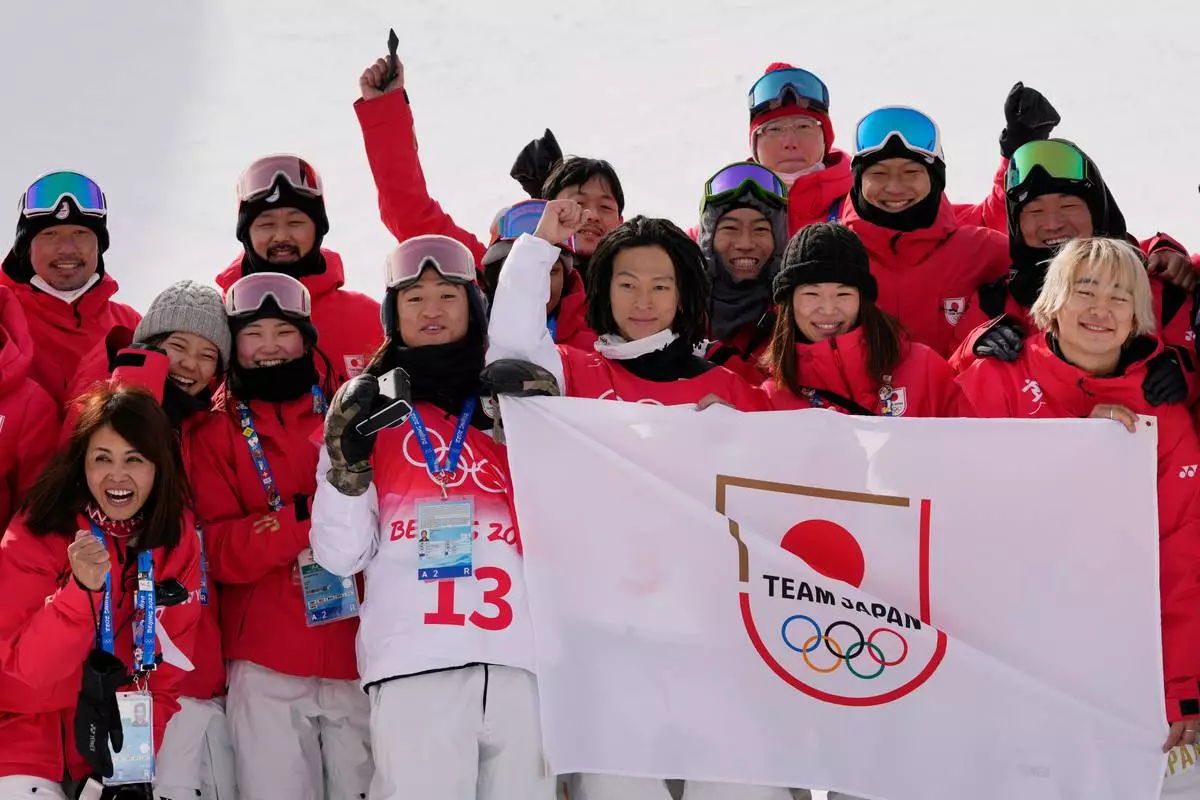
FILE - Gold medal winner Japan's Ayumu Hirano celebrates during the venue award ceremony for the men's halfpipe finals at the 2022 Winter Olympics, Friday, Feb. 11, 2022, in Zhangjiakou, China. (AP Photo/Matthias Schrader, File)

FILE - Japan's Ayumu Hirano poses for pictures after winning a gold medal in the men's halfpipe finals at the 2022 Winter Olympics, Friday, Feb. 11, 2022, in Zhangjiakou, China. (AP Photo/Francisco Seco, File)
FILE - Japan's Ayumu Hirano poses for pictures after winning a gold medal in the men's halfpipe finals at the 2022 Winter Olympics, Friday, Feb. 11, 2022, in Zhangjiakou, China. (AP Photo/Francisco Seco, File)
BOGOTA, Colombia (AP) — Against a backdrop of rising global tensions and energy market instability, governments from around 50 countries will gather Friday in Colombia’s Caribbean city of Santa Marta for a summit aimed at accelerating the shift away from fossil fuels.

The April 24–29 conference, co-hosted by Colombia and the Netherlands, will bring together ministers, subnational governments, academics and civil society groups to discuss how to move beyond oil, gas and coal while ensuring the transition is “just, orderly and equitable,” organizers said.

The meeting reflects growing frustration among some governments and advocates that decades of U.N. climate negotiations have failed to directly address fossil fuel production — the main driver of global warming — prompting the Santa Marta summit to push the issue outside formal talks.

Organizers say the gathering is intended to open space for a politically sensitive debate that has long been avoided in international climate negotiations.

“It is definitely a political space. We are opening a space for discussion that does not exist,” Colombia’s environment minister, Irene Vélez Torres, told The Associated Press in an interview ahead of the summit.

Unlike formal U.N. climate negotiations, the meeting is not expected to produce binding commitments. Instead, officials say the goal is to generate a set of proposals and build coalitions of countries willing to move faster on phasing out fossil fuels.

“We’ve also seen climate action unfortunately fall down the list of government priorities,” said Claudio Angelo, head of international policy at the Observatorio do Clima think tank in Brazil.

Nations from Europe, Latin America, Africa and Asia, many of which play key roles in fossil fuel production or consumption, will attend. The United States and Saudi Arabia — two of the world’s largest oil producers — will not, underscoring divisions between countries pushing for a faster transition and those more closely tied to fossil fuel interests.

Under the Paris Agreement — the 2015 global climate accord — countries set their own emissions targets, meaning no international process can compel governments to phase out fossil fuels.

The summit is part of a broader push to move climate diplomacy beyond emissions targets and toward directly confronting fossil fuel production — a politically sensitive issue that has long divided countries.

Some advocates say new approaches are needed to close what they see as a major gap in global climate policy.

“Fossil-free zones turn global climate goals into concrete geographic decisions,” said Andrés Gómez of the Fossil Fuel Treaty Initiative, referring to proposals to designate areas where oil, gas and coal extraction would be off-limits, particularly in ecologically sensitive regions.

Indigenous leaders involved in the process say they are pushing governments attending the Santa Marta summit to adopt fossil-free zones as part of their transition plans.

“For Indigenous peoples, stopping fossil fuel extraction is not only a climate imperative — it is essential to defending our territories, our governance systems and our right to self-determination,” said Juan Carlos Jintiach, executive secretary of the Global Alliance of Territorial Communities, a coalition of Indigenous and local community organizations representing millions of people across forest regions worldwide.

He added that governments must move “from commitments to implementation” by integrating fossil-free zones into national energy transition plans.

Analysis by advocacy groups shows that oil and gas concessions already overlap with vast areas of tropical forest and Indigenous territories, underscoring the scale of the challenge.

The conference comes at a time of heightened geopolitical uncertainty, including the war in Iran, which has disrupted global energy markets and threatened supply through the Strait of Hormuz — a critical route for roughly a fifth of the world’s oil.

The resulting price spikes are already being felt far beyond energy markets.

“Oil prices don’t just stay in energy markets — they move straight into people’s lives,” said Mary Robinson, former president of Ireland and a leading climate justice advocate expected to attend the Santa Marta conference, speaking at a press conference ahead of the event.

“Impacts are hitting the most vulnerable hardest, as always, while oil companies reap windfall profits,” she said.

In her interview, Vélez said such instability should accelerate — rather than delay — the transition.

“The crisis — and let’s call it what it is — the war in the Middle East has triggered a global crisis,” she said. “In this case, I believe the movement should be toward radicalizing the green agenda and the transitions.”

Some analysts warn that supply shocks could push countries to increase fossil fuel production in the short term, even as they commit to long-term climate goals — highlighting the tension between energy security and climate action.

That tension is particularly visible in Latin America, where many economies rely heavily on oil, gas and mining exports even as governments position themselves as climate leaders. Colombia, one of the region’s top oil producers and home to roughly 6% of the Amazon rainforest, depends on crude exports for a significant share of government revenue and foreign income.

At the same time, Colombian President Gustavo Petro’s government has pledged to halt new oil exploration and push for a global phaseout of fossil fuels.

“Economic and fiscal dependence is a problem, and it is perhaps the main challenge we face,” Vélez said.

Financial constraints are also expected to shape discussions. Many developing countries face high levels of public debt and limited fiscal space, making it difficult to invest in renewable energy and other elements of the transition.

Civil society groups say that without reforms to the global financial system, these constraints will continue to slow progress.

“Moving away from fossil fuels requires, without a doubt, a careful economic and energy transition plan,” said Carola Mejía of the Latin American and Caribbean Network for Economic, Social and Climate Justice.

Gabriella Bianchini of Global Witness said the stakes go beyond climate alone.

“As people everywhere suffer the consequences of oil-driven conflict, it’s never been clearer that the world needs to leave the fossil fuel era behind,” she said. “Santa Marta is a chance for governments and communities to grab the bull by the horns and take action toward a greener, more equitable and peaceful world.”

She added that while U.N. climate talks remain crucial, they have repeatedly struggled to deliver meaningful progress on fossil fuels.

“Santa Marta represents space for governments to work on the one plan we know will stave off the worst impacts of climate breakdown: a rapid and just transition away from fossil fuels,” Bianchini said.

Observers say a key question will be whether the meeting can produce a clearer political signal on an issue that has remained largely unresolved in global climate talks.

“If we think about it, the conference is that turning point where, collectively, we decide to be on the right side of history,” environment minister Vélez said.

The Associated Press’ climate and environmental coverage receives financial support from multiple private foundations. AP is solely responsible for all content. Find AP’s standards for working with philanthropies, a list of supporters and funded coverage areas at AP.org.

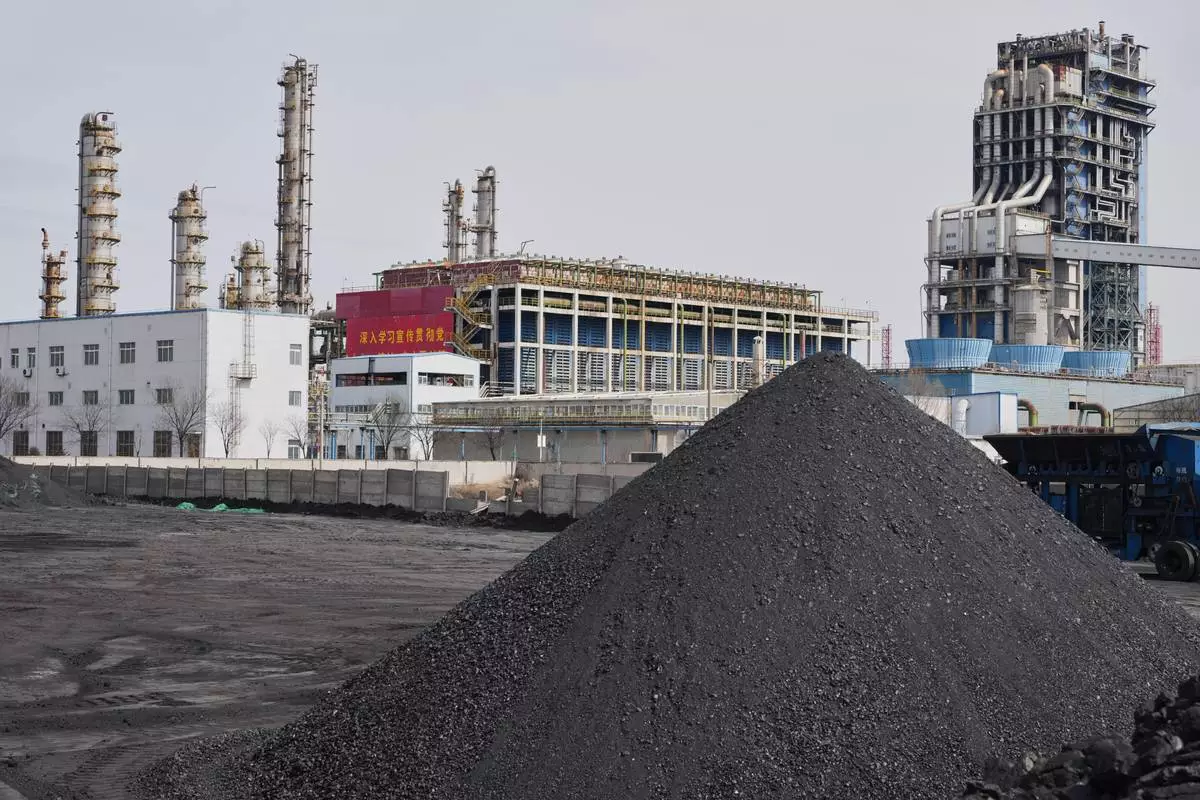
Coal piles sit near a chemical plant in Datong, China, Saturday, March 14, 2026. (AP Photo/Ng Han Guan)

Coal piles sit near a chemical plant in Datong, China, Saturday, March 14, 2026. (AP Photo/Ng Han Guan)

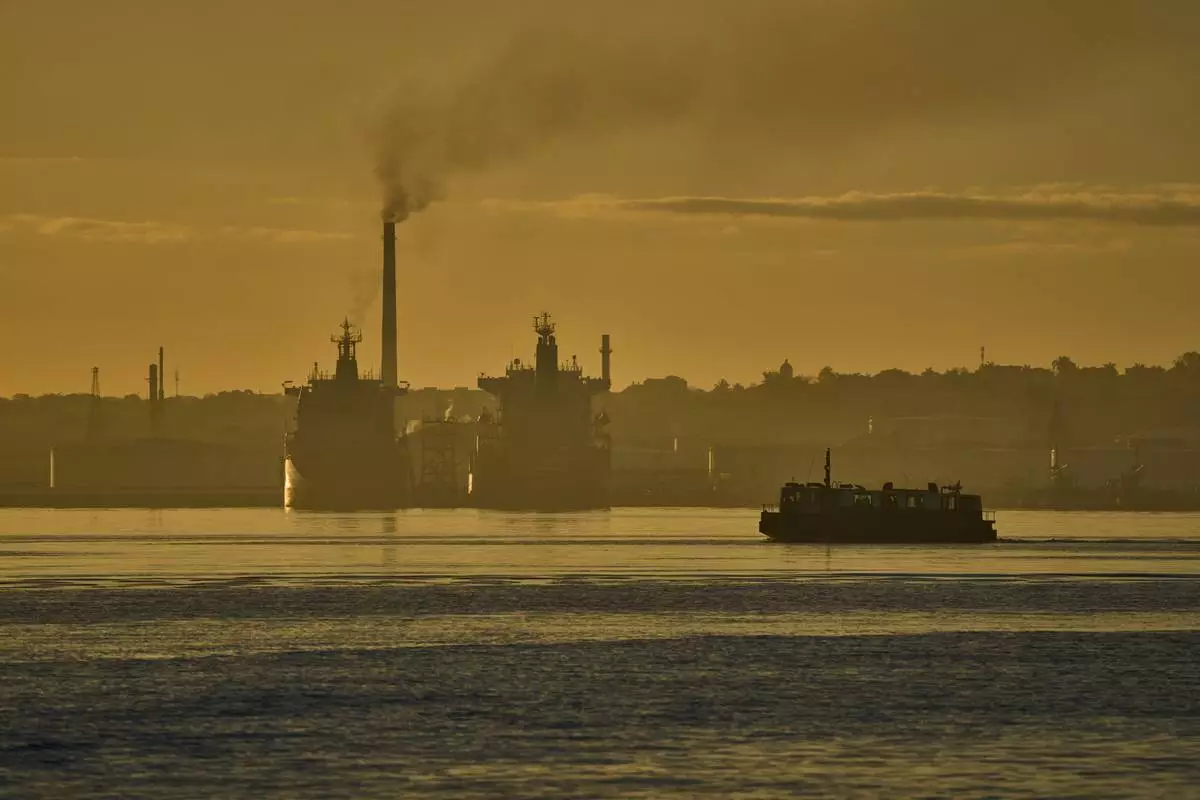
FILE - A ferry crosses Havana Bay past the Nico Lopez oil refinery where tankers are anchored in Havana Bay, Cuba, March 24, 2026. (AP Photo/Ramon Espinosa, File)

FILE - A ferry crosses Havana Bay past the Nico Lopez oil refinery where tankers are anchored in Havana Bay, Cuba, March 24, 2026. (AP Photo/Ramon Espinosa, File)

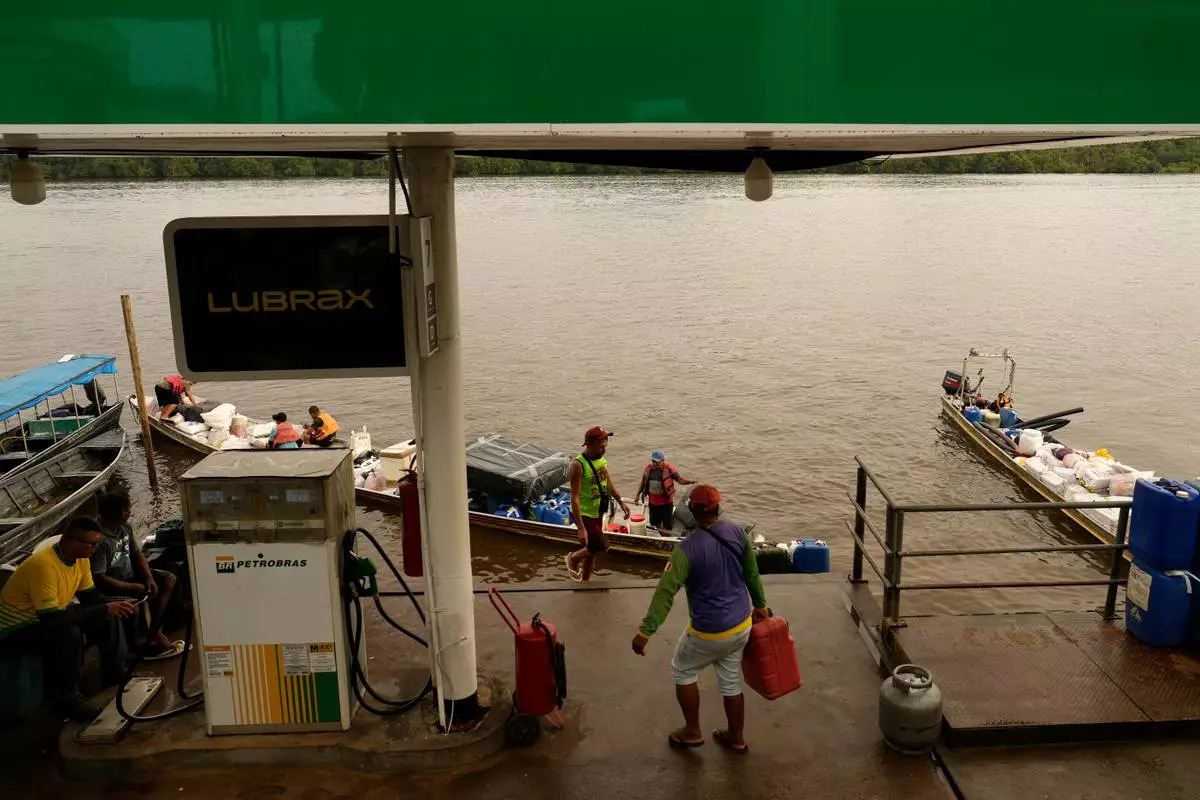
FILE - Boatmen operating Catraia, a traditional boat used on the Oiapoque River, prepare for the crossing with a load of gasoline canisters filled at a Petrobras gas station in a port in the city of Oiapoque, Amapa state, Brazil, March 10, 2026. (AP Photo/Eraldo Peres, File)

FILE - Boatmen operating Catraia, a traditional boat used on the Oiapoque River, prepare for the crossing with a load of gasoline canisters filled at a Petrobras gas station in a port in the city of Oiapoque, Amapa state, Brazil, March 10, 2026. (AP Photo/Eraldo Peres, File)

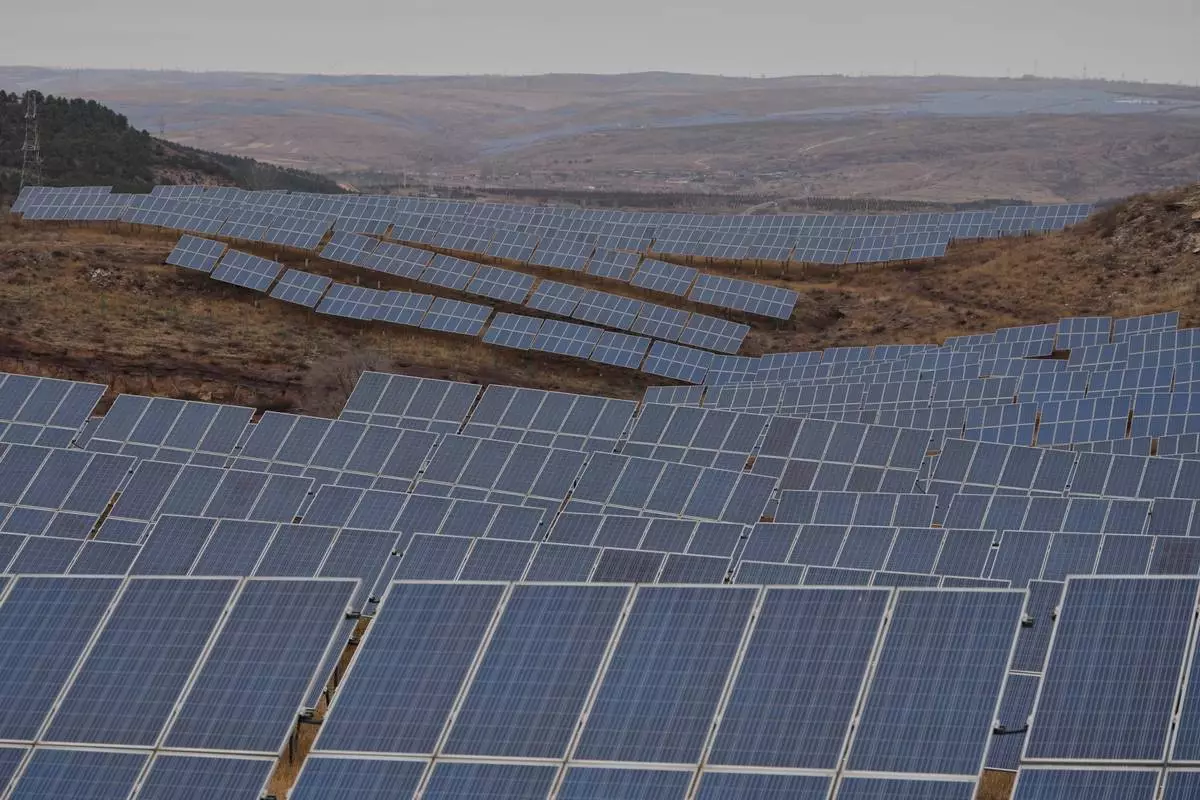
A solar farm operates in Datong, China, Friday, March 13, 2026. (AP Photo/Ng Han Guan)

A solar farm operates in Datong, China, Friday, March 13, 2026. (AP Photo/Ng Han Guan)

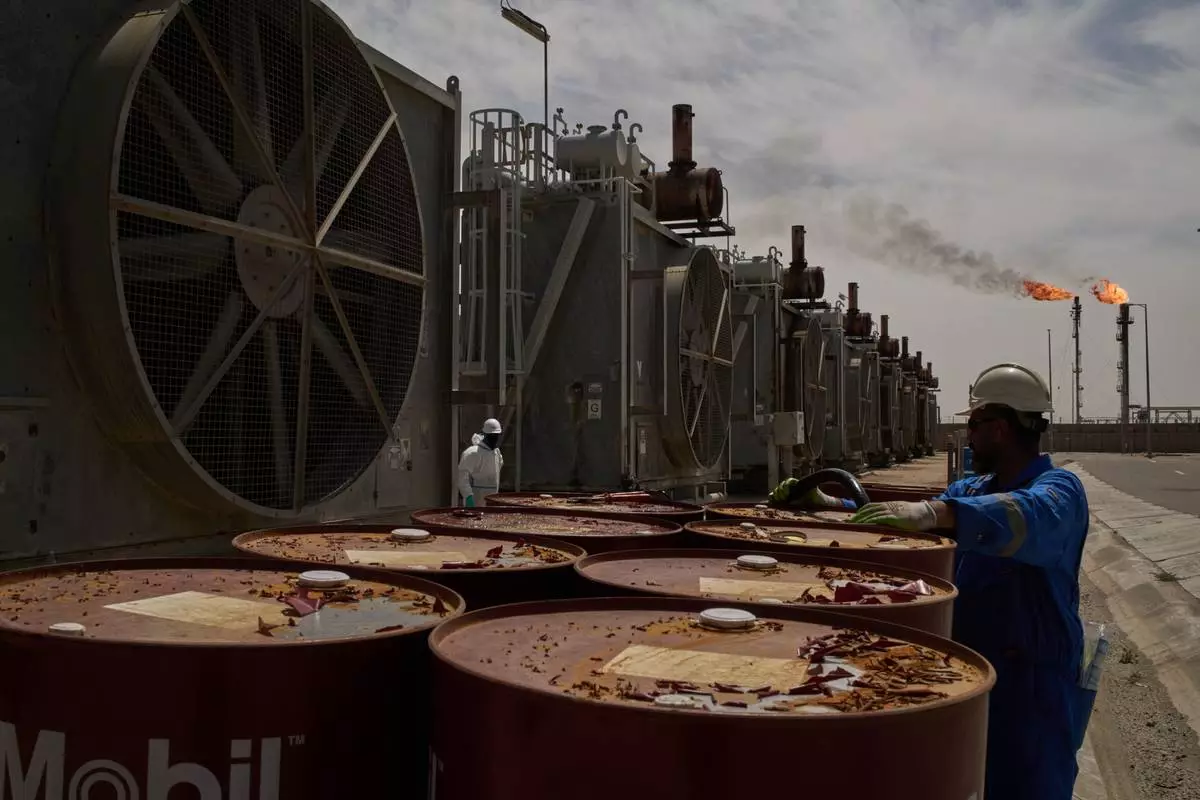
FILE - A worker collects engine oil as he works at a degassing station at Zubair oil field near Basra, Iraq, March 28, 2026. (AP Photo/Leo Correa, File)

FILE - A worker collects engine oil as he works at a degassing station at Zubair oil field near Basra, Iraq, March 28, 2026. (AP Photo/Leo Correa, File)

Recommended Articles