Gaza officials warn of a worsening waste crisis, as residents report children falling sick amid towering piles of garbage that have turned neighborhoods and markets into public health hazards.
With access to the main landfill east of the city cut off, the situation now endangers thousands of lives. In central Gaza City, streets and open spaces are choked with waste, encroaching on areas where displaced families have sought shelter.
The historic Firas Market, once a bustling hub, has been transformed into an open dumping ground after Israeli restrictions blocked access to the landfill.
"Gaza City is facing a real crisis due to the massive accumulation of solid waste in the city center. We are talking about more than 360,000 tons of solid waste piling up inside Gaza City, a very serious environmental and health hazard, which causes acceleration in the spread of diseases and epidemics among citizens and displaced people," said Husni Mehna, spokesperson for Gaza Municipality.
The environmental crisis has also disrupted daily life and economic activity, forcing many shop owners in the area to shut down as conditions continue to deteriorate.
"When the war started, Firas Market changed from a popular heritage site into a garbage dump. It affects us in every possible way," said Maher Al-Samri, a displaced Palestinian.
Just meters away from the waste piles, displaced families are living in makeshift tents, exposed daily to toxic smells, insects, and contaminated surroundings.
"We were displaced from Shuja'iyya to Firas Market, which used to be a landmark here. Today it has become a dump. We are suffering, and our children are ending up in hospitals. My daughter is constantly sick because of the garbage here. We are appealing to the whole world to help remove this waste," said Ismail Arafat, another displaced Palestinian.
To stop the situation from deteriorating further, United Nations agencies are pursuing temporary measures, including interim waste collection and transfer sites, to reduce environmental hazards and protect public health in areas housing displaced communities.
"We are preparing a temporary dump site of about 75,000 square meters to temporarily receive the waste collected from Gaza City and the north. Primarily, we will be moving the waste collected at Firas Market. You know Firas Market in the city center of Gaza City. It is a mountain, up to thirteen meters high of waste. We are talking about 300,000 cubic meters, something difficult also to understand and imagine," said Alessandro Mrakic, Head of the Gaza Office, the United Nations Development Programme (UNDP).
But without access to permanent waste disposal sites, the danger persists.
Even with a ceasefire in place, the health consequences of the war continue to endanger thousands. With garbage scattered across much of Gaza City, displaced families remain exposed to severe public health risks.
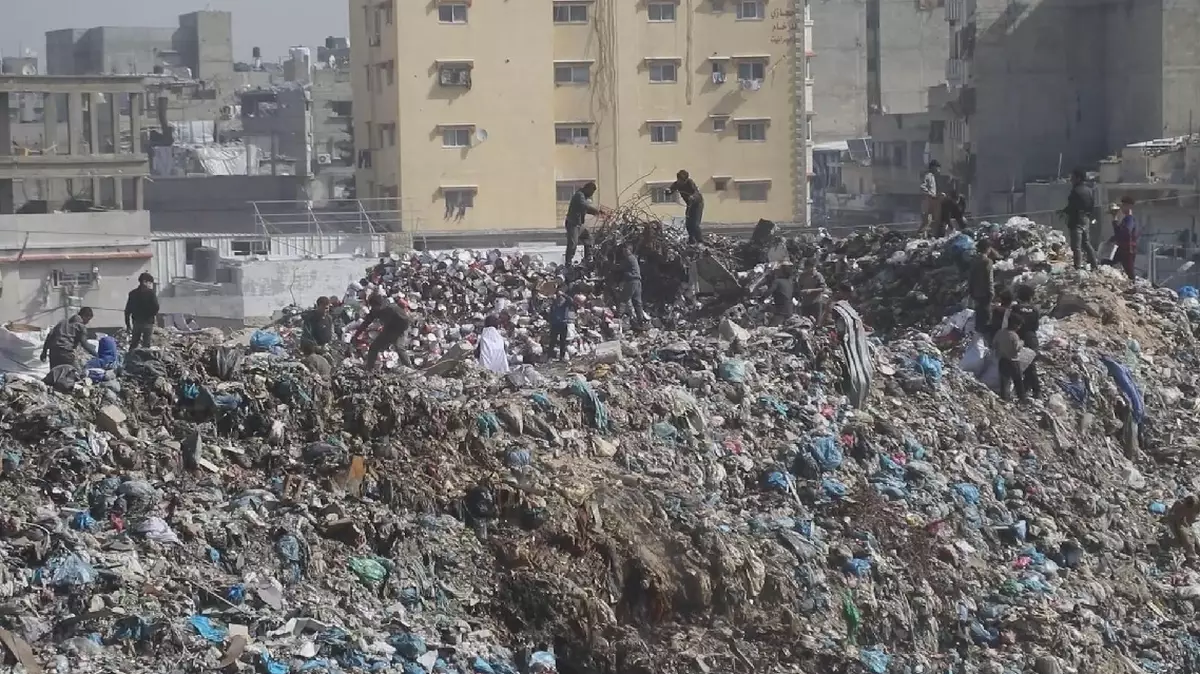
Gaza grapples with mounting waste crisis as residents face rising health risks
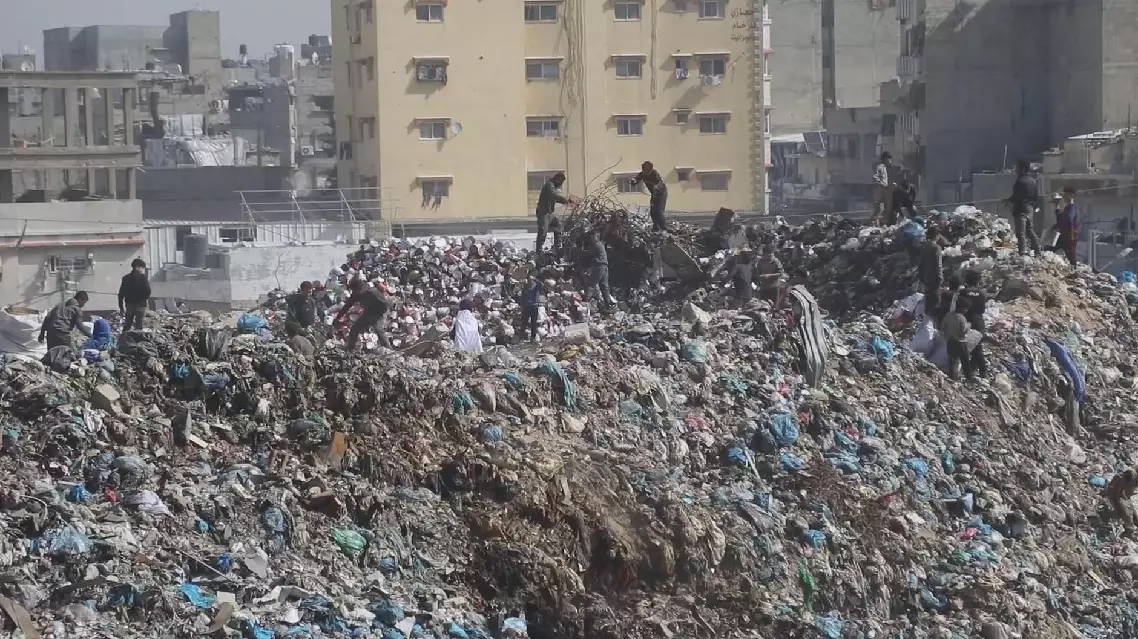
Gaza grapples with mounting waste crisis as residents face rising health risks