ANN ARBOR, Mich.--(BUSINESS WIRE)--Feb 10, 2026--
The U.S. economy faces a witches' brew of destructive macro and microeconomic problems: increasing customer switching costs and complaints, with stagnating satisfaction. Paradoxically, customer defections are down — not up. These are not signs of a healthy economy.
This press release features multimedia. View the full release here: https://www.businesswire.com/news/home/20260210746258/en/
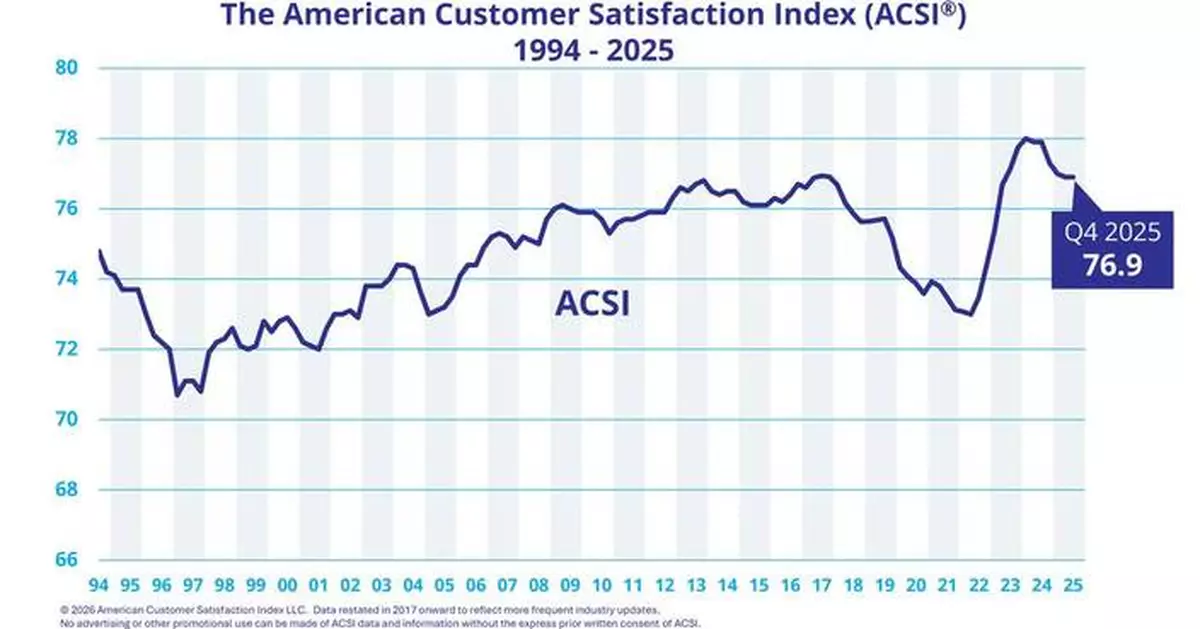
Over the past six months, the American Customer Satisfaction Index (ACSI ® ) has remained unchanged — even at the first decimal. From a sample of about 200,000 customers, the national ACSI score holds at 76.9 (out of 100) for the fourth quarter of 2025. On an annual basis, the Index fell by 0.5% and has not materially increased since 2017.
At the macro level, compounding market concentration, increasing seller pricing power, and higher buyer switching costs are major causes for the lack of improvement. At the micro level, irrelevant performance metrics and data-discordant analytics have made resource allocation for strengthening customer relationships next to impossible.
"In well-functioning markets, buyer satisfaction and seller profits move together," said Claes Fornell, founder of the ACSI and the Distinguished Donald C. Cook Professor (Emeritus) of Business Administration at the University of Michigan. "When seller profits increase without a corresponding rise in buyer utility, it is an indicator of market inefficiency. Decoupling seller profit from buyer satisfaction impedes economic growth and slows innovation. Buyer surplus stagnates and inflation accelerates. Escalating M&A activity, without a corresponding increase in antitrust enforcement, has compounded the problem. Tariffs have had a similar effect by discouraging international competition."
The 1946-1948 World War II aftermath, the 2007-2009 Great Recession, and the COVID-19 pandemic's shock to supply chains provide warnings, some of which apply today. Sellers took advantage of limited competition and raised prices.
During COVID-19, profit margins soared while customer satisfaction fell. The Great Recession of 2007-2009 was similar in some respects — it separated quantity of economic output (GDP) from quality of economic output (ACSI). Subsequently, cumulative GDP growth (post-2007) slowed by 13.5% — about $5 trillion in today's money. Profits began to account for more of national income and increased more than consumer spending did.
As to microeconomic consequences and corporate management concerns, pent-up customer defection is of increasing concern for managers as well as shareholders. It represents the unrealized customer churn that accumulates over time and is preceded by weak or stagnant customer satisfaction, increasing customer complaints, and higher customer switching costs. It is facilitated by contracts, lock-ins, market concentration, subscriptions, a lack of substitutes, and consumer risk aversion.
Pent-up customer defection is a stock of covert risk — it is not a flow — and when released, it moves rapidly. It might be avoided, or its effect may be tamed, if corporations include more financial, accounting, and analytical expertise in building strong customer relationships. Strong customer relationships are important, albeit intangible, financial assets in a competitive marketplace and would benefit if managed as such. History is clear as to what will happen to firms that do not create strong customer relationships based on profit for the seller and satisfaction and utility for the buyer. They tend to occupy the bottom of the ACSI roster.
Strong customer relationships in competitive markets are critical for customer retention. Higher retention, in turn, has compounding multiplicative effects — and at high levels of retention, exponentially increasing effects — on revenue growth and profit, while simultaneously reducing uncertainty and cash flow instability.
Claes Fornell, the Donald C. Cook Distinguished Professor of Business (Emeritus) at the University of Michigan, is the primary author of this press release. He led the development of the American Customer Satisfaction Index with assistance from Eugene W. Anderson, University of Pittsburgh; Michael D. Johnson, Cornell University; Birger Wernerfelt, M.I.T.; and David F. Larcker, Stanford University.
According to Google Scholar, Professor Fornell is the most cited person in the world on customer satisfaction and one of the most cited econometricians/statisticians with respect to structural equation models with unobservable variables and measurement error. He holds honorary doctorates from several universities.
For more, follow the American Customer Satisfaction Index on LinkedIn and X at @theACSI or visit www.theacsi.org.
No advertising or other promotional use can be made of the data and information in this release without the express prior written consent of ACSI LLC.
About the ACSI
The American Customer Satisfaction Index (ACSI ® ) is a national economic indicator and a leading provider of customer analytics products that help organizations build lasting customer relationships and prove ROI on experience investments. ACSI's AI-enhanced platform delivers intuitive dashboards and cause-and-effect analytics that pinpoint the quality drivers most predictive of customer allegiance, retention, price tolerance, and financial performance. ACSI data has been shown to correlate strongly with key micro and macroeconomic indicators, including consumer spending, GDP growth, earnings, and stock returns.
Founded in 1994 at the University of Michigan's Ross School of Business, the ACSI measures customer satisfaction with more than 400 companies in over 40 industries, including federal government services, based on approximately 200,000 annual interviews. Learn more at https://www.theacsi.org.
ACSI and its logo are Registered Marks of American Customer Satisfaction Index LLC.
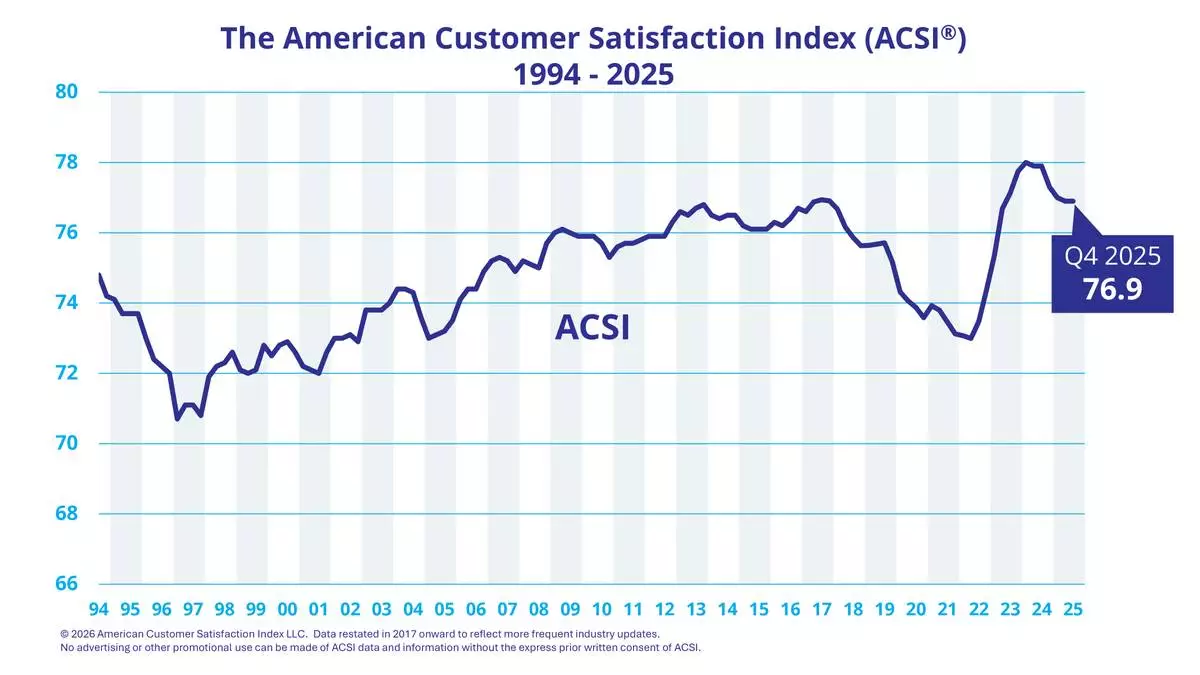
ACSI 1994-2025
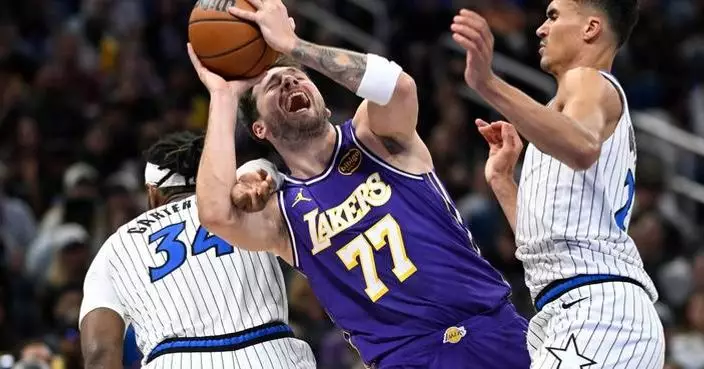
Luka Doncic is almost certainly going to win the NBA scoring title this season. And it's now very possible that he doesn't make the All-NBA team.
That's rare, but it might be this season's reality.
The roster of award-caliber players who won't be winning awards this season continues to grow, with Doncic — the Los Angeles Lakers standout guard and MVP candidate — now out with a Grade 2 left hamstring strain that will force him to miss the rest of the regular season. Minnesota guard Anthony Edwards is certain to miss the league's 65-game award eligibility threshold as well after he was held out Thursday because of illness.
Doncic has played 64 games, one shy of the threshold. It's worth noting that BetMGM Sportsbook, among others, took Doncic off the list of MVP betting options following his injury Thursday.
“At this juncture of the season, it’s the last thing you want to see,” Lakers star LeBron James told reporters in Oklahoma City after Thursday's game, long before an MRI was performed Friday to determine the extent of Doncic's injury. “Especially anybody on our team, but when you have an MVP candidate on your team, the last thing you want to see is somebody go down with a hamstring injury."
Edwards can now only reach a maximum of 64 games as well, so he won’t be on the ballot for most major NBA awards either.
It was collectively bargained — meaning the league and the players association agreed on the terms — and this is the third season of it being part of the NBA rules.
It applies to player eligibility for five awards — MVP, Defensive Player of the Year, Most Improved Player, the All-NBA Team and the All-Defensive Team. Players have to either play in 65 regular-season games (with some minutes-played minimums in there as well), or at least 62 games before suffering a “season-ending injury."
But even with Doncic's hamstring hurt badly enough that he'll miss the rest of the regular season, it wouldn't be classified as “season-ending” unless a doctor — jointly selected by the NBA and the National Basketball Players Association — says he wouldn't be able to play again through May 31.
There is a grievance process and even a way to challenge the rule citing extraordinary circumstances, but neither would be easily utilized.
Five of the league's six highest-paid players this season — Golden State's Stephen Curry and Jimmy Butler, Philadelphia's Joel Embiid, Milwaukee's Giannis Antetokounmpo and Boston's Jayson Tatum — aren't eligible for awards. Denver's Nikola Jokic is the exception on the highest-paid list, and he'd likely be ineligible if he misses more than one more game down the stretch.
There were 23 players on the list of those winning MVP, MIP, DPOY, All-NBA and All-Defense last season. Of those, at least 10 are out of the running for honors this season: Antetokounmpo, Curry, Edwards, James, Tatum, Detroit's Cade Cunningham, Indiana teammates Tyrese Haliburton and Ivica Zubac, Utah's Jaren Jackson Jr. and Oklahoma City's Jalen Williams. (Most of those 10 have been out of the awards mix because of injuries for some time; Tatum and Haliburton both tore Achilles in last season's playoffs and it was obvious then that they wouldn't hit 65-game marks this year.)
Another four award winners from a year ago — Jokic, Oklahoma City's Lu Dort, Golden State's Draymond Green and Cleveland's Evan Mobley — aren't at 65 games yet this season but, for now anyway, seem on pace to get there.
Never say never. The union wants changes to the policy, and it's certain to come up in their conversations with the league office. But many players — and even Andre Iguodala, now the head of the players' association — have said in recent years that the 65-game rule is a good thing.
The league doesn't seem inclined to make a change based solely on what would appear to be an extraordinary number of award candidates not hitting the threshold in one year.
“I think it is working,” NBA Commissioner Adam Silver said last month. “I think if you look at the numbers, the pre-implementation of this rule, numbers were going in the wrong direction. I may have this a little bit off: I think the three years before we adopted this rule, almost a third of the All-NBA players had not played 80% of the games. That was a huge issue for the league.”
As we said, it's rare, but it has happened. Twice, to be exact.
— 1968-69: Elvin Hayes won the scoring title as a rookie, then wasn't even All-NBA — and didn't win Rookie of the Year, either.
— 1975-76: Bob McAdoo won his third consecutive scoring title and was second in the MVP race — but didn't make All-NBA. Players voted for MVP in those days, and McAdoo was an extremely close second behind Kareem Abdul-Jabbar. Dave Cowens was third in the MVP vote but got the second-team All-NBA nod at center, with Abdul-Jabbar the first-team pick.
Doncic now seems likely to join that list. It's not mathematically certain yet that he wins the scoring title, but it would take something extraordinary for it not to happen.
He's averaging 33.5 points per game, with Gilgeous-Alexander at 31.6 per game. For Gilgeous-Alexander — last season's scoring champion — to overtake Doncic, he would need to go on an unbelievable run. An example: He'd need to score 292 points over the final five games to take over the top spot, and nobody other than Wilt Chamberlain has had a five-game run like that.
Of the previous 79 scoring champions, 64 were first-team All-NBA and 13 were second-team.
Jokic is going to win the league's rebounding and assist titles, while averaging a triple-double yet again. But he's also not assured yet of being on the award ballots.
The thresholds are different.
While the award mandate is 65 games in most cases, players are eligible for most statistical awards if they play in 58 games (or 70% of the season). There are different standards for some stat awards, such as field-goal percentage (minimum 300 made), free-throw percentage (minimum 125 made) and 3-point percentage (minimum 82 made).
A player can win a stat award while appearing in less than 58 games.
For example, last season, San Antonio's Victor Wembanyama played only 46 games but still won the blocked shot title. Even if he played in the minimum 58 games and recorded no blocks in the 12 games needed to reach that number he still would have been ahead of the runner-up, Utah's Walker Kessler.
AP NBA: https://www.apnews.com/hub/NBA
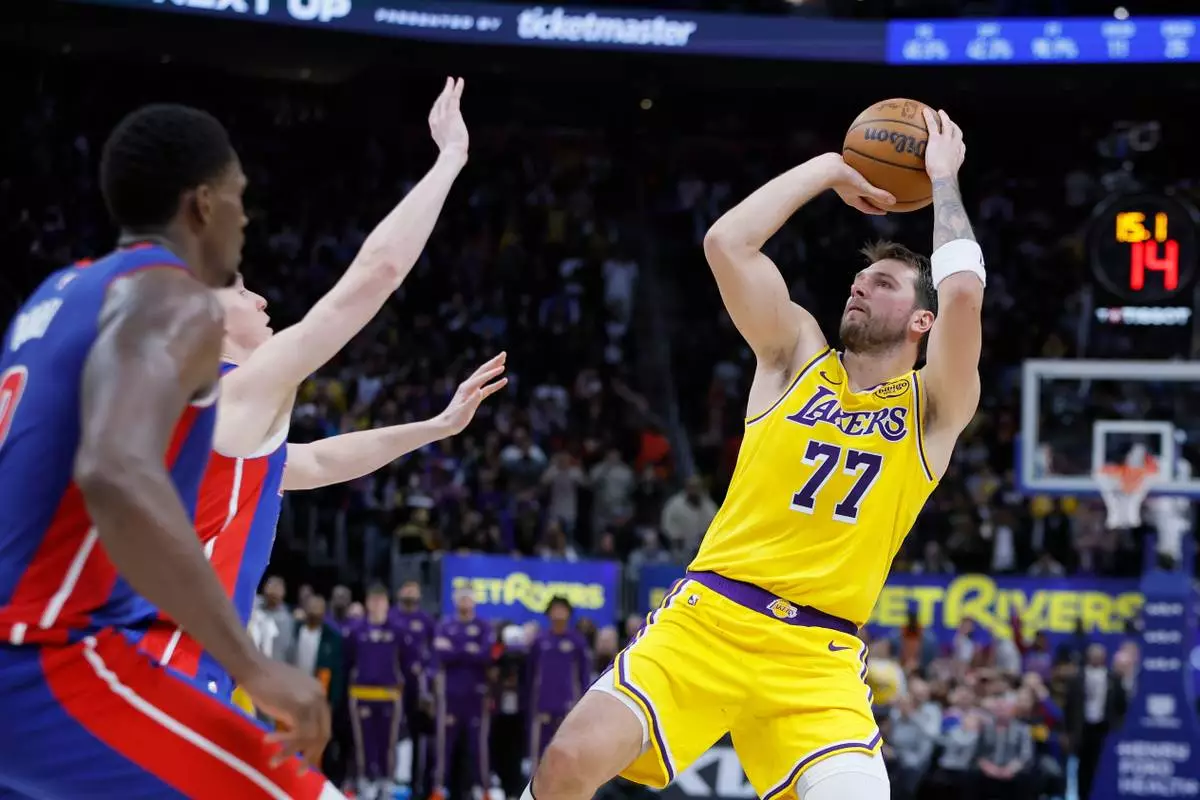
Los Angeles Lakers guard Luka Doncic (77) looks to make a shot-attempt in the fourth quarter of a loss to the Detroit Pistons in an NBA basketball game Monday, March 23, 2026, in Detroit. (AP Photo/Duane Burleson)
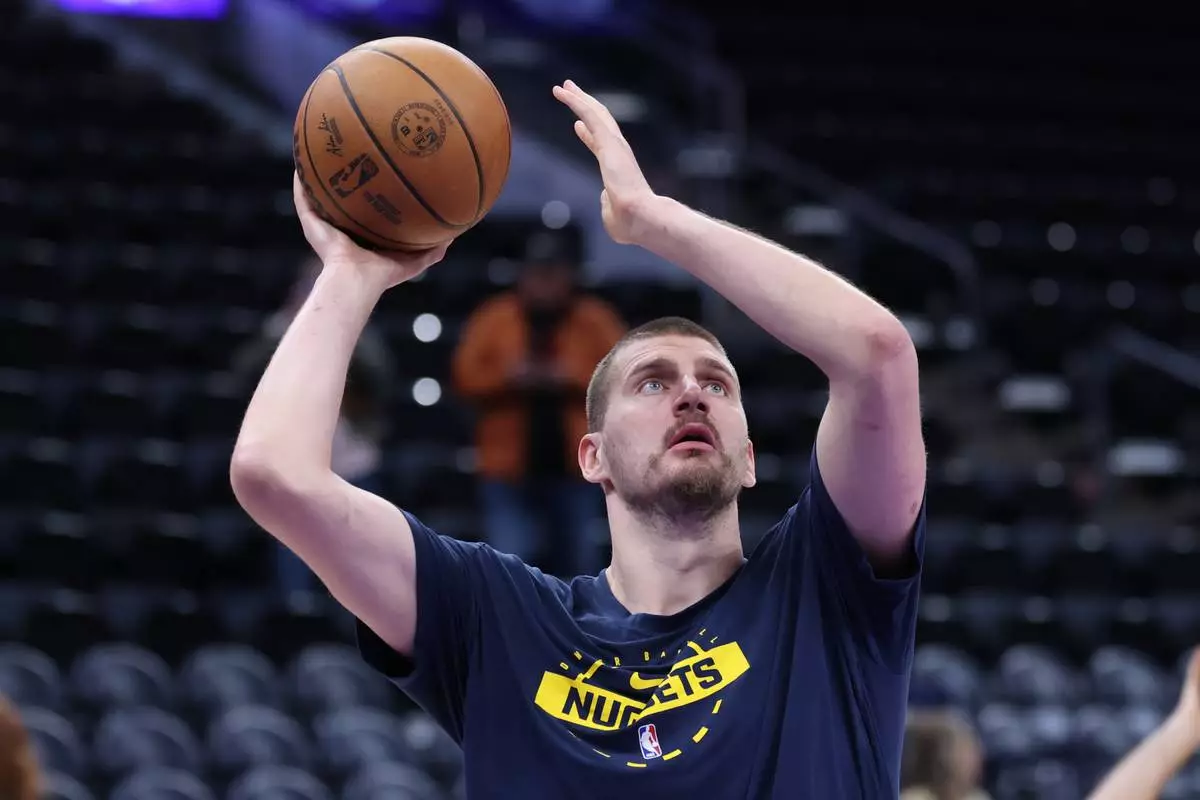
Denver Nuggets center Nikola Jokic warms up before an NBA basketball game against the Utah Jazz, Wednesday, April 1, 2026, in Salt Lake City. (AP Photo/Rob Gray)
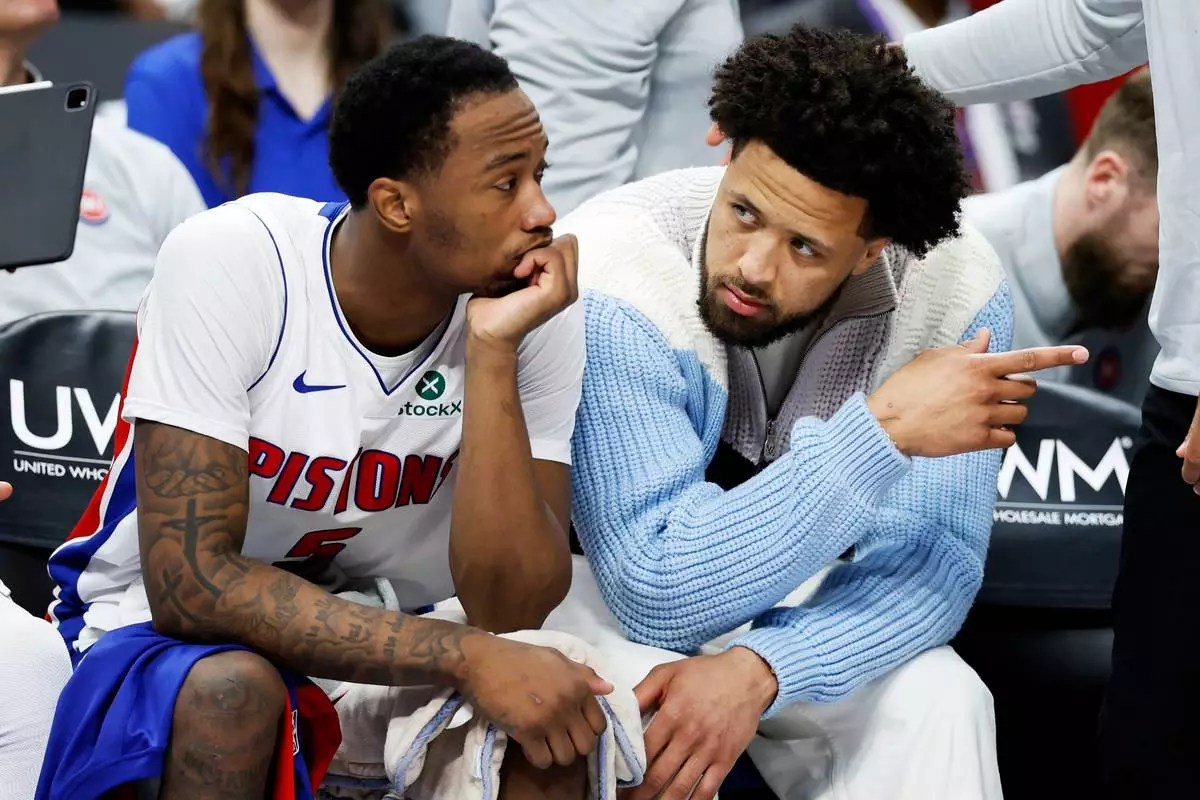
Detroit Pistons forward Ronald Holland II (5) talks with guard Cade Cunningham (2), who did not play due to an injury, during the second half of an NBA basketball game against the Toronto Raptors Tuesday, March 31, 2026, in Detroit. (AP Photo/Duane Burleson)
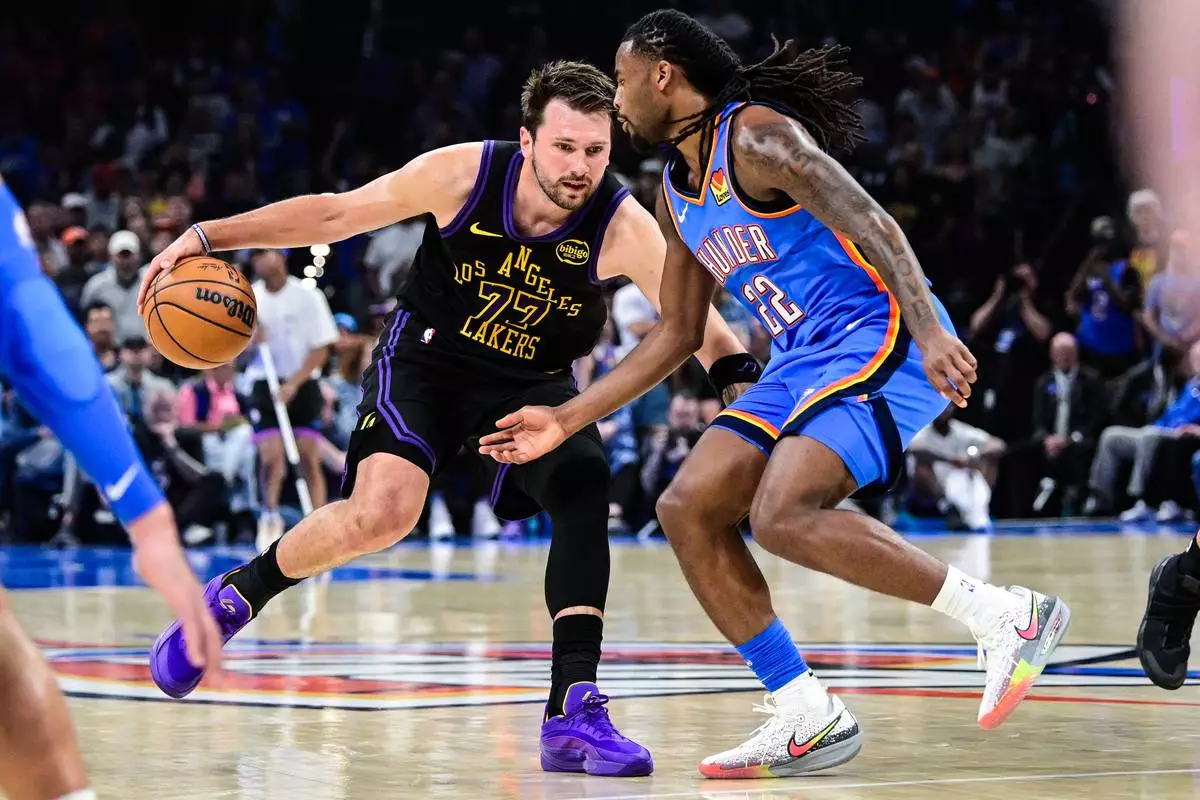
Los Angeles Lakers forward/guard Luka Dončić (77) drives against Oklahoma City Thunder guard Cason Wallace (22) during the first half of an NBA basketball game Thursday, April. 2, 2026, in Oklahoma City. (AP Photo/Gerald Leong)