Coca-Cola saw stronger U.S. demand in the fourth quarter despite higher prices.
Global unit case volumes grew 1% for the October-December period, led by the U.S., Japan and Brazil, the Atlanta beverage giant said Tuesday. Unit case volumes also rose by 1% in North America, reversing several quarters of flat or declining sales.
Coke said it hiked prices 4% in North America and 1% globally during the quarter. Coca-Cola Zero Sugar was a strong performer, with sales up 13% for the October-December period. Water, sports drinks, coffee and tea also saw stronger demand, while juices and dairy products faltered.
The company said last fall that it's seeing a divergence among consumers in North America and Europe, with higher-income buyers opting for its more expensive brands like Smartwater, Topo Chico and Fairlife while middle- and lower-income consumers are under more pressure.
Last month, the company introduced 7.5-ounce mini cans for the first time at North American convenience stores to help make its soft drinks more affordable.
Revenue rose 2% to $11.8 billion in the October-December period, falling short of Wall Street’s expectations. Analysts polled by FactSet expected quarterly revenue of $12.05 billion.
Net income rose 3% to $2.3 billion. Adjusted for one-time items, the company earned 58 cents per share, or 2 cents better then Wall Street had expected.
Coke said it expects its organic revenue to rise 4% to 5% in 2026. The company’s organic revenue grew 5% last year, and analysts were expecting close to that this year.
Shares fell almost 4% before the opening bell.
Coca-Cola announced in December that Henrique Braun, the company’s current chief operating officer and a 30-year veteran of the company, will become its CEO on March 31. Coke’s current Chairman and CEO, James Quincey, will become executive chairman.

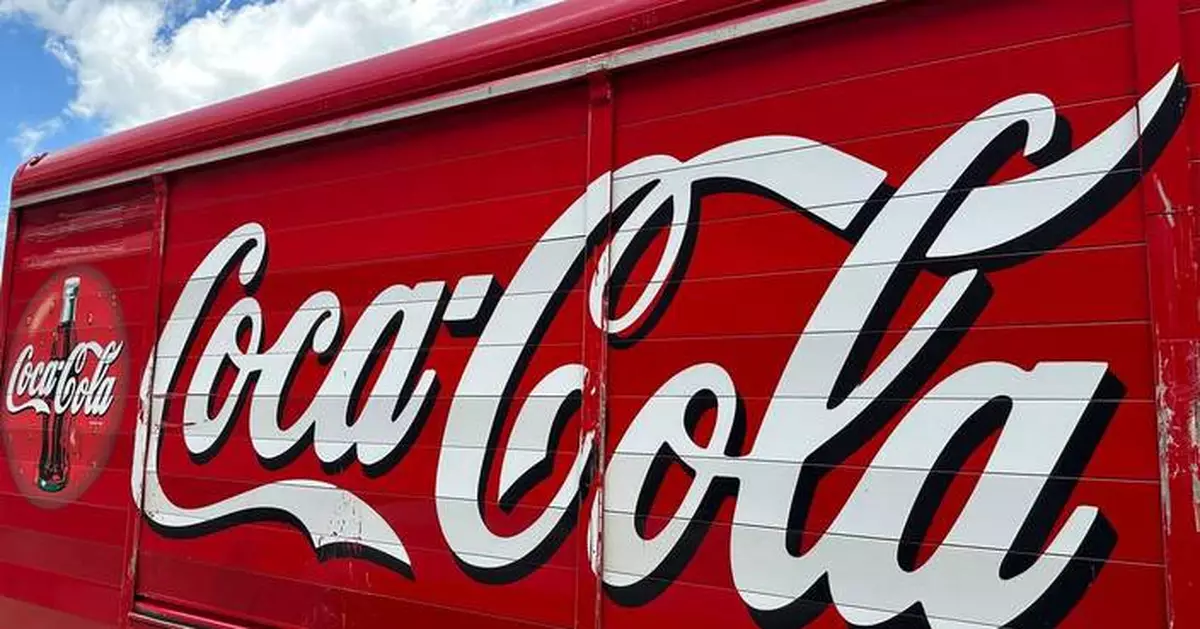
FILE - The Coca-Cola logo adorns the side of a delivery truck, May 15, 2024, in southeast Denver. (AP Photo/David Zalubowski, File)
LONDON (AP) — Russia cannot launch an attack on NATO this year or next but is planning to increase its forces significantly along the alliance's eastern flank, depending on the outcome of the war in Ukraine, a senior European intelligence official said.
Speaking in an online briefing with journalists, Kaupo Rosin, the head of Estonia’s foreign intelligence service, also told The Associated Press that Russian President Vladimir Putin currently has no desire to halt the nearly 4-year-old invasion of neighboring Ukraine and thinks he can “outsmart” the United States during talks on how to end the war.
Rosin said Russia's plan involves creating new military units and multiplying the prewar force along its border with NATO by two to three times. But that will be heavily influenced by the outcome of discussions involving Moscow, Washington and Kyiv regarding a cessation of hostilities in Ukraine, he said. That's because Russia will need to maintain a “significant portion” of its military inside occupied Ukraine and in Russia to prevent future Ukrainian action, he said.
Currently there are “not enough resources available” for Moscow to launch an attack on NATO, but the Kremlin is concerned about Europe rearming and being able to conduct military action against Russia in the next couple of years, the intelligence chief said.
Russian officials, meanwhile, are playing for time in the talks with Washington and “there is absolutely no discussion about how to really cooperate with the U.S. in a meaningful way," Rosin said.
Rosin spoke to reporters ahead of the publication of Estonia’s annual security report Tuesday. He said the information on how the Kremlin views the talks with the U.S. is based on intelligence that NATO member Estonia gathered from “Russian internal discussions.” He did not elaborate on how the information was obtained but said the discussions showed that Russian officials believe Washington remains Moscow's “main enemy.”
Russian officials have insisted publicly they want a negotiated deal but have shown little willingness to compromise and remain adamant their demands must be met.
U.S.-brokered talks between envoys from Russia and Ukraine in recent weeks have been described by officials from both sides as constructive and positive, but there has been no sign of any progress on key issues in the discussions.
Putin, “in his head, still thinks that he can actually militarily win (in Ukraine) at some point,” Rosin said.
A White House official responded to the Estonian intelligence chief’s comments and said President Donald Trump’s negotiators had made “tremendous progress” on the talks to end the war. Although prisoner exchanges have happened sporadically since May, they pointed in particular to a recent agreement in Abu Dhabi reached by the U.S., Ukraine and Russia to release more than 300 prisoners.
That agreement was evidence that efforts to end the war are advancing, said the official, who was granted anonymity because they did not have permission to speak publicly.
In an indication that Trump wants to accelerate the momentum of those efforts, Ukrainian President Volodymyr Zelenskyy said last week that Washington has given Kyiv and Moscow a June deadline to reach a settlement. Trump over the past year has set several deadlines that have come and gone without apparent consequences.
Fiona Hill, a Russia expert and adviser to Trump in his first term, said Trump and his officials are spinning a story that depicts the U.S. president as a peacemaker and, for that reason, they are not interested in changing their assessment that Putin wants to end the war.
She told AP that both leaders “need their version of events to play out" and are hanging onto their version of the truth — Putin as the victor in Ukraine and Trump as the dealmaker.
On Tuesday morning, Russian glide bombs killed an 11-year-old girl and her mother in the Donetsk region of eastern Ukraine, regional chief Vadym Filashkin said. Seven others, including a 7-year-old girl, were injured.
During the night, Russian drone attacks elsewhere in Ukraine wounded at least five people, including a toddler and two other children, regional authorities said.
Although Trump has repeatedly suggested that Putin wants peace, he has sometimes appeared frustrated with the Russian leader’s lukewarm approach to talks.
From an intelligence perspective, Rosin said he doesn’t know why U.S. officials believe Putin wants to end the war.
Hill, who served as a national intelligence officer under previous U.S. administrations, said it's unclear what intelligence information Trump gets on Russia — or if he reads it.
He relies heavily on his lead negotiators, special envoy Steve Witkoff and son-in-law Jared Kushner, who Hill said may struggle to believe that the damage to the Russian economy from the war is a price Putin is willing to pay for Ukraine.
Referring to reports that Witkoff has attended meetings with Putin without a U.S. State Department translator, she questioned if Trump's envoys understood what was being said in meetings and suggested officials may be “selectively” looking for what they want to hear.
Putin is fixated on controlling all of Ukraine and the idea “is so deep in his head” that it takes priority over anything else, including the economy, Rosin said, suggesting the conflict will continue in some form for several years.
He said Putin's position may change only if the situation in Russia, or on the front line, becomes “catastrophic," threatening his power. For now, the Kremlin leader still believes he can take Ukraine and "outsmart everybody,” Rosin said.
One reason Putin thinks he can win militarily in Ukraine is because he is “definitely” getting some incorrect information from his officials, the Estonian intelligence chief said.
Not all Russian officials, however, believe they are winning the war in Ukraine, Rosin said.
“The lower you go in the food chain,” the more people understand “how bad it is actually on the ground,” he said, whereas higher-level officials are more optimistic because they are given more positive reports. Rosin cited examples of officials being told Russian forces had captured Ukrainian settlements when that was not true.
The reports that arrive at Putin's desk may be “much more optimistic” than the situation on the ground because Putin only wants to see success, Rosin said.
Hill said both Trump and Putin are probably being told what they want to hear by people who want to please them.
—-
Follow AP’s coverage of the war in Ukraine at https://apnews.com/hub/russia-ukraine
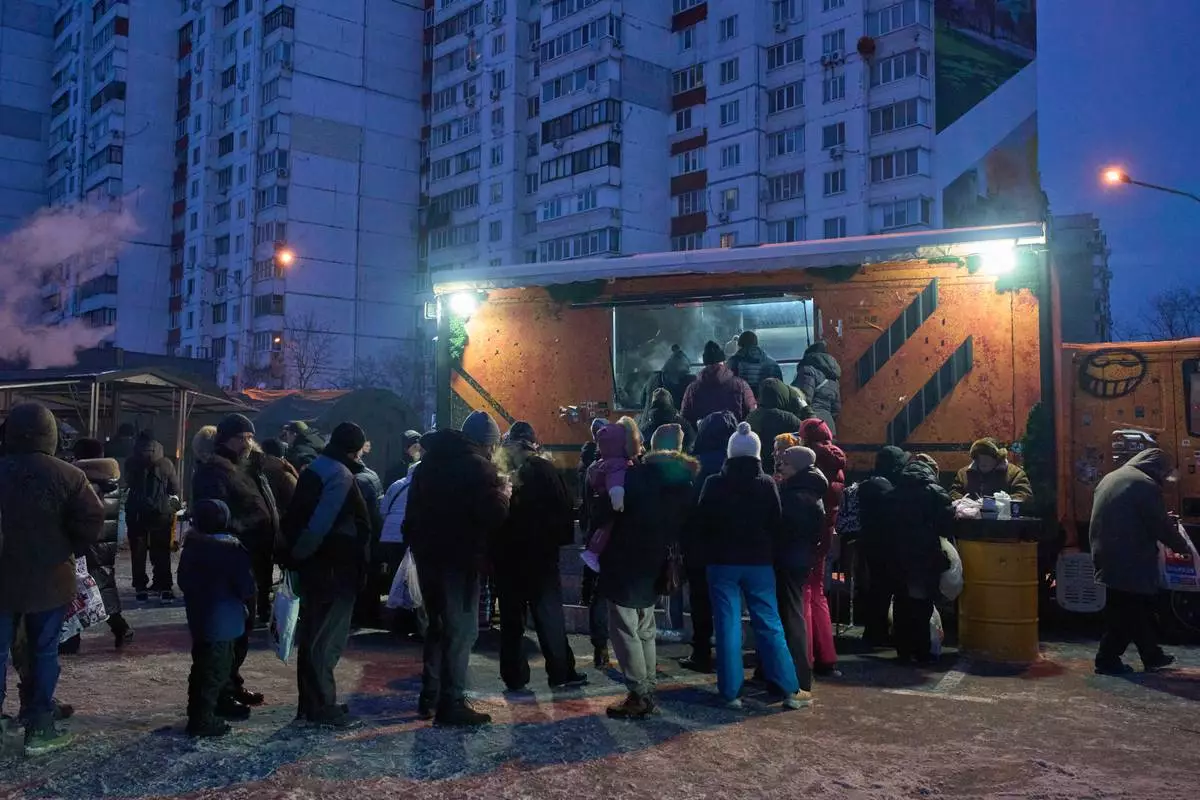
People stand in line for free hot meals that veterans of the 3rd Separate Assault Brigade of Ukraine's Armed Forces serve in residential neighborhood as repeated Russian air attacks on the country's energy sector leave people without power, heating and water in the harshest winter in decades in Kyiv, Ukraine, Sunday, Feb. 8, 2026. (AP Photo/Efrem Lukatsky)
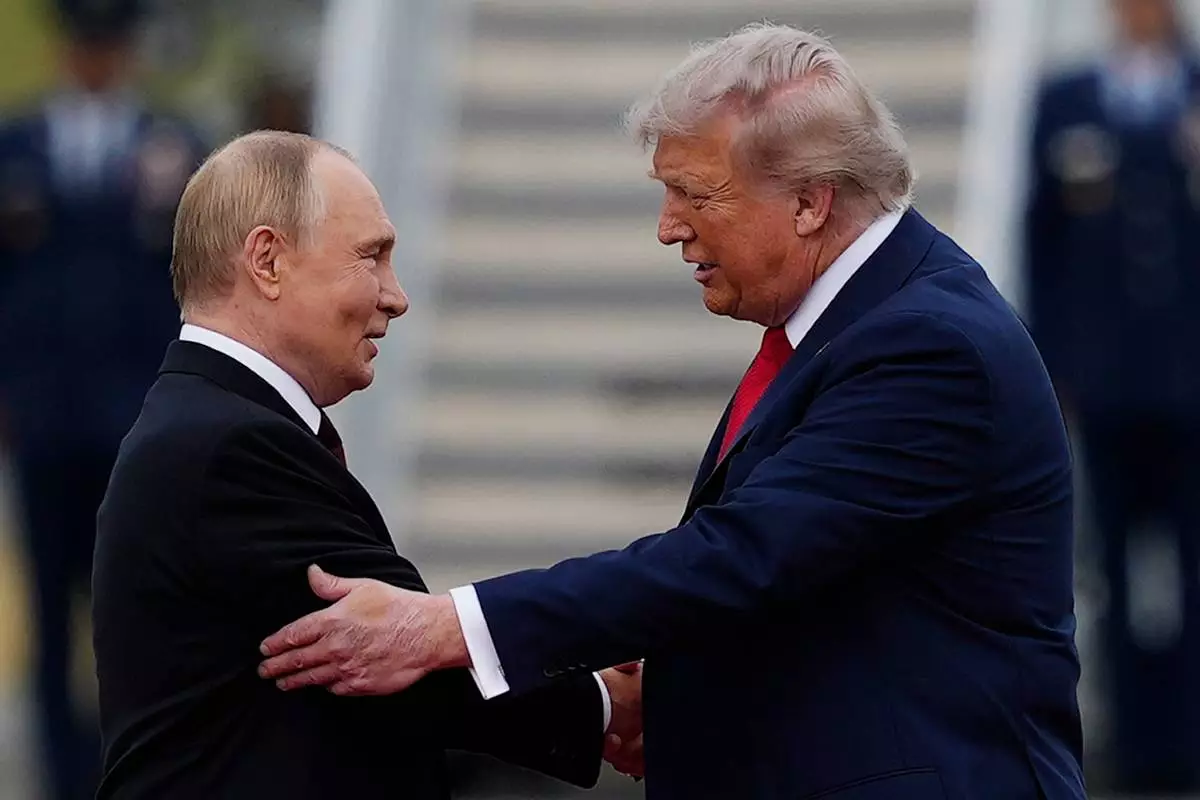
FILE - U.S. President Donald Trump greets Russian President Vladimir Putin, Aug. 15, 2025, at Joint Base Elmendorf-Richardson, Alaska. (AP Photo/Julia Demaree Nikhinson, File)
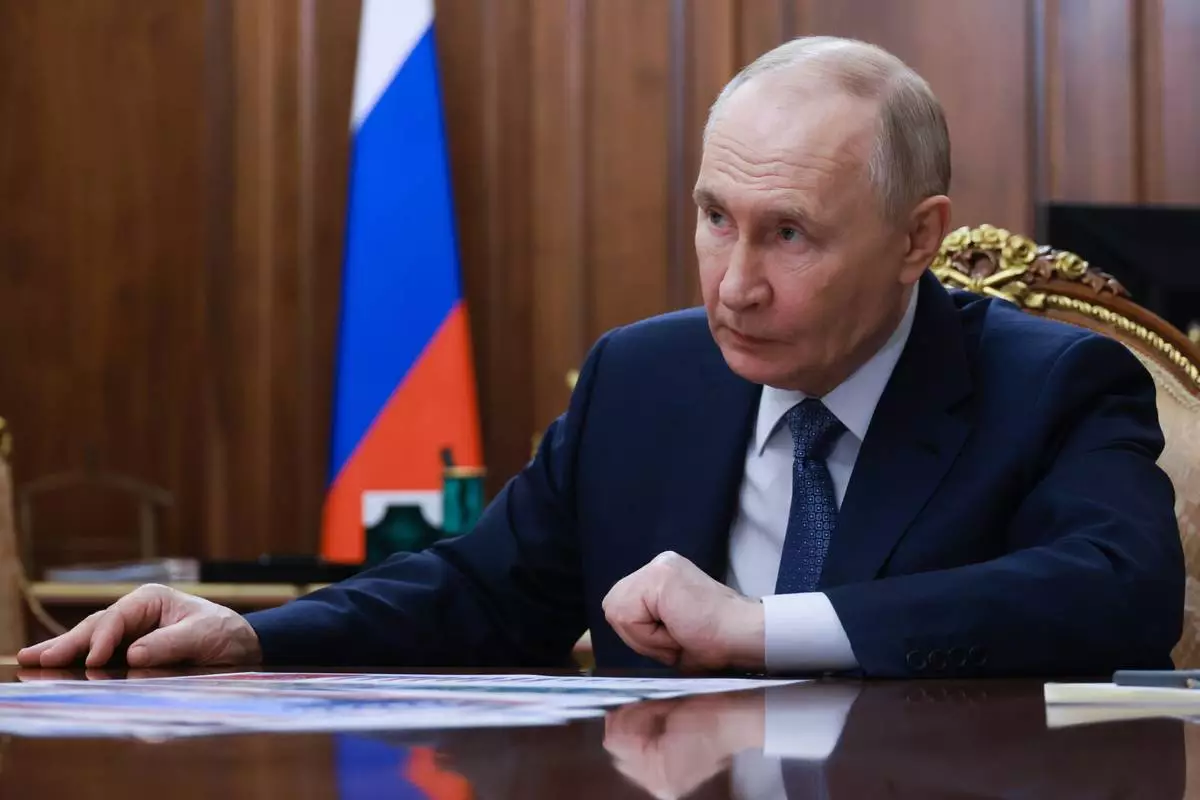
Russian President Vladimir Putin listens to Moscow Mayor Sergei Sobyanin during their meeting at the Kremlin in Moscow, Monday, Feb. 9, 2026. (Vyacheslav Prokofyev/Sputnik, Kremlin Pool Photo via AP)