MILAN (AP) — Brazilian skier Lucas Pinheiro Braathen won South America's first Winter Olympics gold medal. Now he's going for a second. Also on Day 10 of the Milan Cortina Games, Eileen Gu is aiming for gold in the ski big air competition.
Here is a guide of what to look out for on Monday:
Click to Gallery
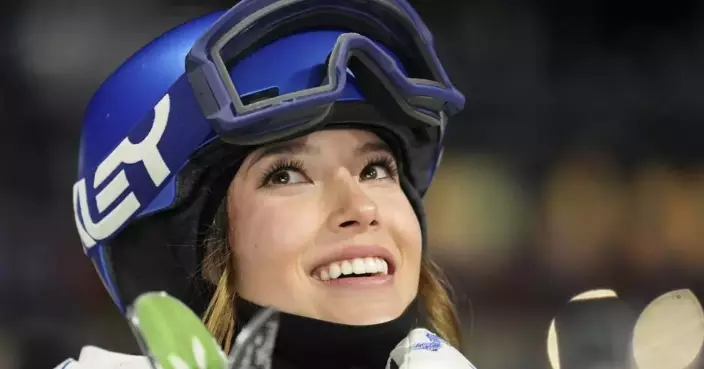
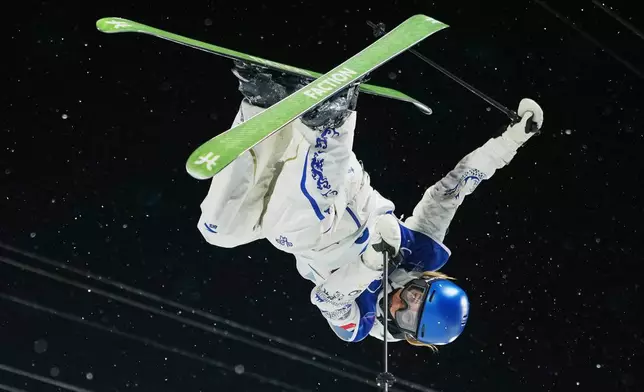
China's Eileen Gu competes during the women's freestyle skiing halfpipe qualifications at the 2026 Winter Olympics, in Livigno, Italy, Thursday, Feb. 19, 2026. (AP Photo/Julia Demaree Nikhinson)
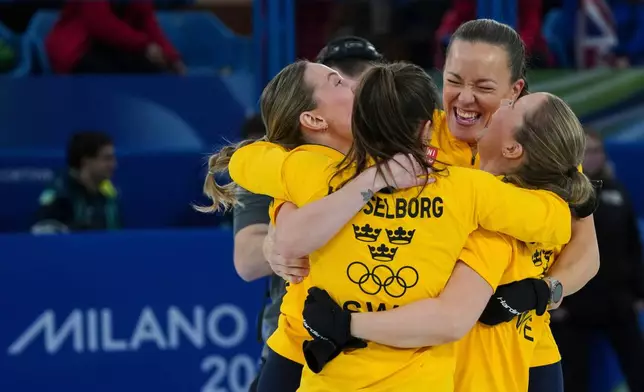
Sweden's Anna Hasselborg, Sara McManus, Sofia Scharback, Agnes Knochenhauer celebrate after winning a women's curling semifinal match against Canada, at the 2026 Winter Olympics, in Cortina d'Ampezzo, Italy, Friday, Feb. 20, 2026. (AP Photo/Misper Apawu)
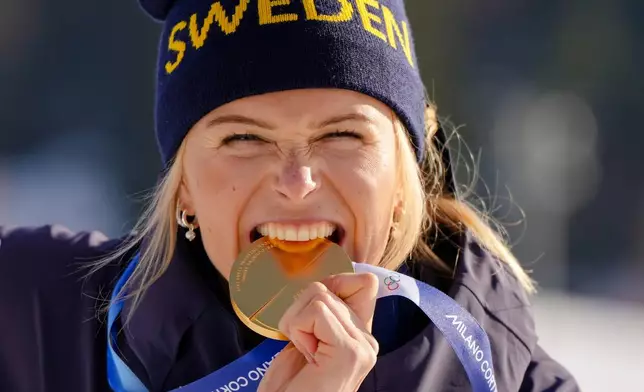
Frida Karlsson, of Sweden, poses after winning the gold medal in the cross country skiing women's 10km interval start free at the 2026 Winter Olympics, in Tesero, Italy, Thursday, Feb. 12, 2026. (AP Photo/Kirsty Wigglesworth)
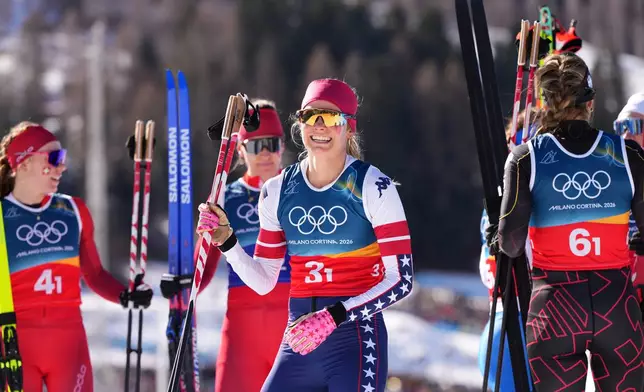
Jessie Diggins, of the United States, smiles after finishing the cross-country skiing women's team sprint free at the 2026 Winter Olympics, in Tesero, Italy, Wednesday, Feb. 18, 2026. (AP Photo/Kirsty Wigglesworth)
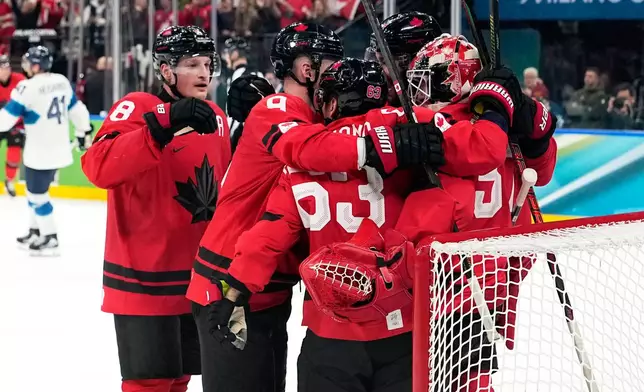
Canada players celebrate at the end of a men's ice hockey semifinal game between Canada and Finland at the 2026 Winter Olympics, in Milan, Italy, Friday, Feb. 20, 2026. (AP Photo/Hassan Ammar)
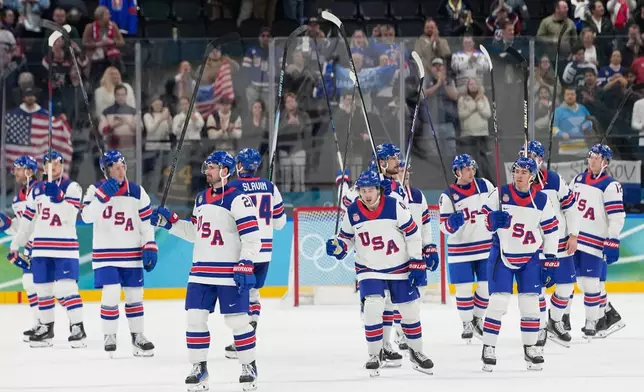
United States players celebrate at the end of a men's ice hockey semifinal game between the United States and Slovakia at the 2026 Winter Olympics, in Milan, Italy, Friday, Feb. 20, 2026. (AP Photo/Hassan Ammar)
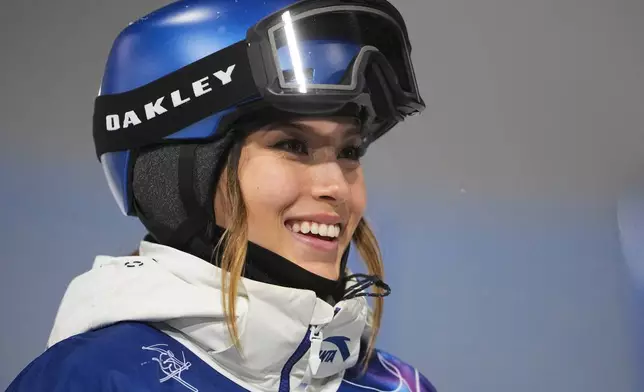
China's Eileen Gu smiles during the women's freestyle skiing halfpipe qualifications at the 2026 Winter Olympics, in Livigno, Italy, Thursday, Feb. 19, 2026. (AP Photo/Lindsey Wasson)
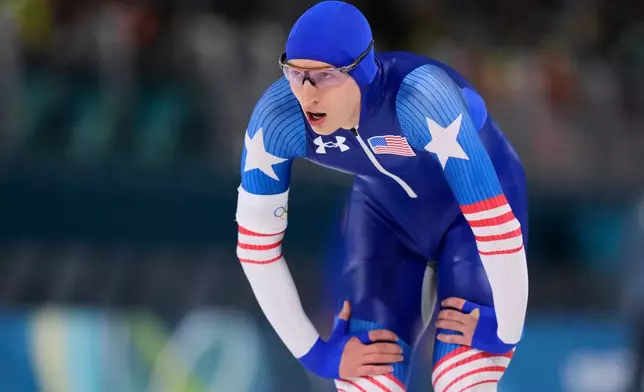
Jordan Stolz of the U.S. took a silver medal in the men's 1500 meters speedskating race at the 2026 Winter Olympics, in Milan, Italy, Thursday, Feb. 19, 2026. (AP Photo/Luca Bruno)
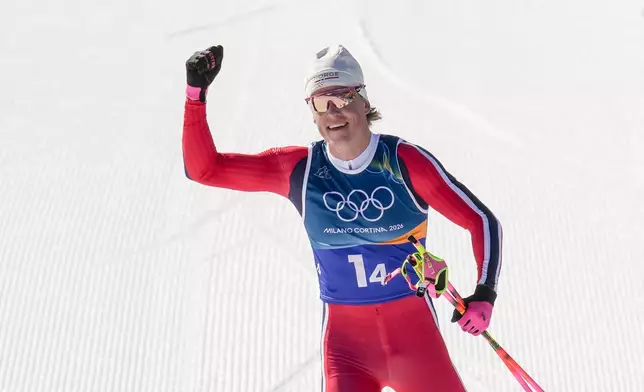
Johannes Hoesflot Klaebo, of Norway, approaches the finish line to win the gold medal in the cross country skiing men's 4 x 7.5km relay at the 2026 Winter Olympics, in Tesero, Italy, Sunday, Feb. 15, 2026. (AP Photo/Evgeniy Maloletka)
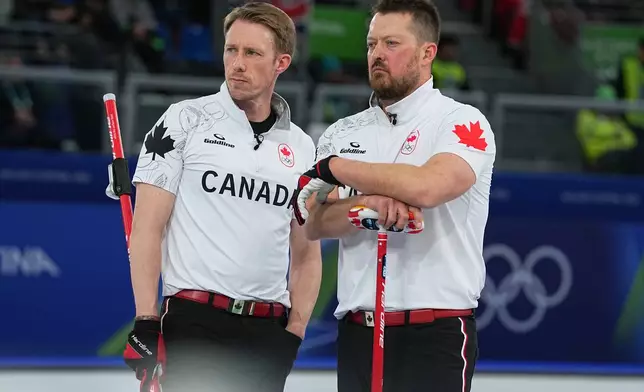
Canada's Marc Kennedy and Ben Hebert watch action in a men's curling semifinal match against Norway at the 2026 Winter Olympics, in Cortina d'Ampezzo, Italy, Thursday, Feb. 19, 2026. (AP Photo/Fatima Shbair)
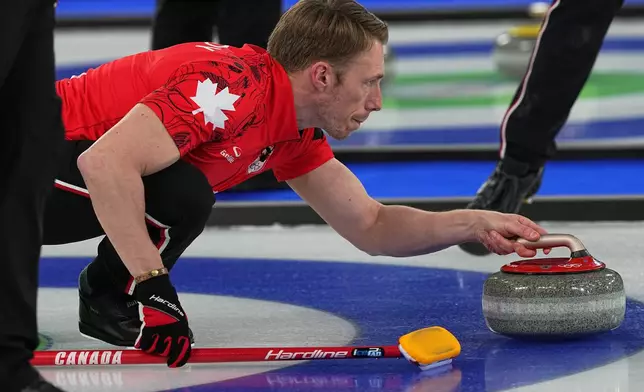
Canada's Marc Kennedy in action during the men's curling round robin session against Britain at the 2026 Winter Olympics, in Cortina d'Ampezzo, Italy, Tuesday, Feb. 17, 2026. (AP Photo/Fatima Shbair)
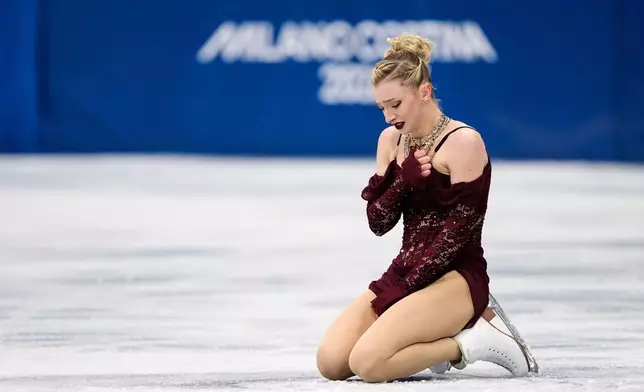
Amber Glenn of the United States competes during the women's short program figure skating at the 2026 Winter Olympics, in Milan, Italy, Tuesday, Feb. 17, 2026. (AP Photo/Natacha Pisarenko)
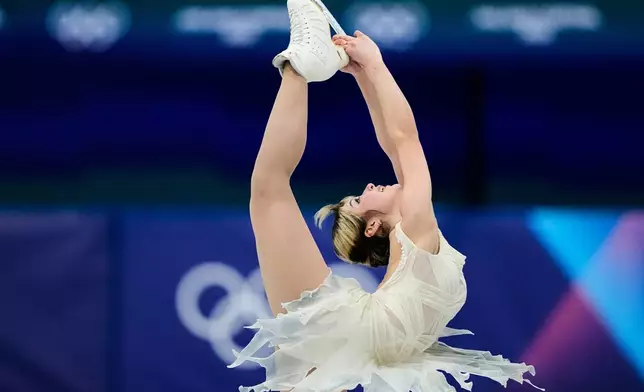
Alysa Liu of the United States competes during the women's short program figure skating at the 2026 Winter Olympics, in Milan, Italy, Tuesday, Feb. 17, 2026. (AP Photo/Natacha Pisarenko)
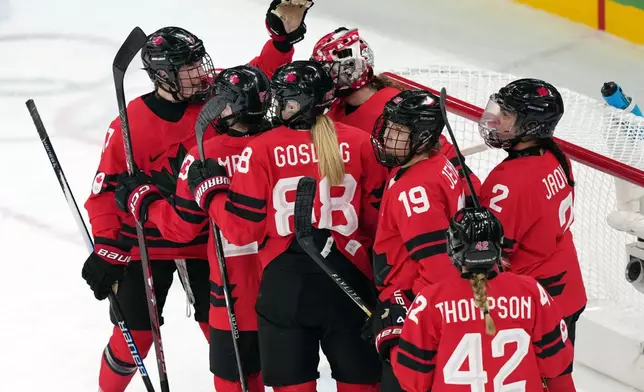
Team Canada players celebrate after their win over Switzerland in a women's ice hockey semifinal match at the 2026 Winter Olympics, in Milan, Italy, Monday, Feb. 16, 2026. (AP Photo/Carolyn Kaster)
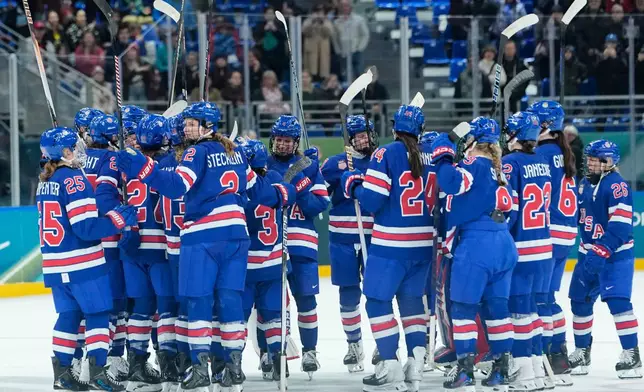
U.S. players celebrate after a semifinal match of women's ice hockey between the United States and Sweden at the 2026 Winter Olympics, in Milan, Italy, Monday, Feb. 16, 2026. (AP Photo/Petr David Josek)
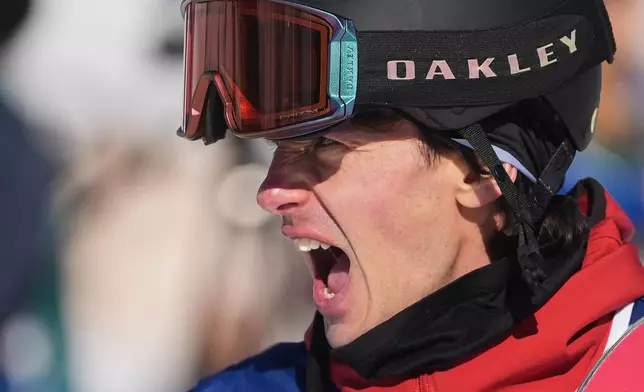
Canada's Mark McMorris reacts during the men's snowboarding slopestyle qualifications at the 2026 Winter Olympics, in Livigno, Italy, Sunday, Feb. 15, 2026. (AP Photo/Lindsey Wasson)
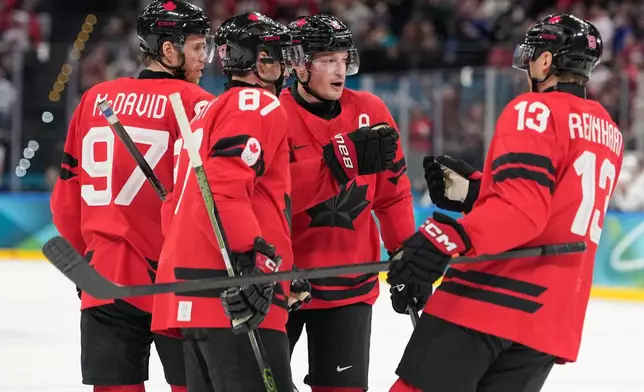
Canada's Cale Makar (8) celebrates with teammates Canada's Connor McDavid (97), Canada's Sidney Crosby (87), Canada's Sam Reinhart (13) after scoring during a preliminary round game of men's ice hockey between Canada and France at the 2026 Winter Olympics, in Milan, Italy, Sunday, Feb. 15, 2026. (AP Photo/Hassan Ammar)
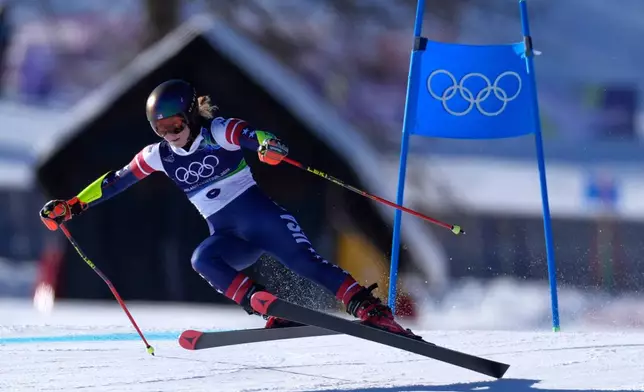
United States' Mikaela Shiffrin speeds down the course, during an alpine ski, women's giant slalom race, at the 2026 Winter Olympics, in Cortina d'Ampezzo, Italy, Sunday, Feb. 15, 2026. (AP Photo/Robert F. Bukaty)

United States' Mikaela Shiffrin leaves the finish area during an alpine ski, women's giant slalom race, at the 2026 Winter Olympics, in Cortina d'Ampezzo, Italy, Sunday, Feb. 15, 2026. (AP Photo/Robert F. Bukaty)
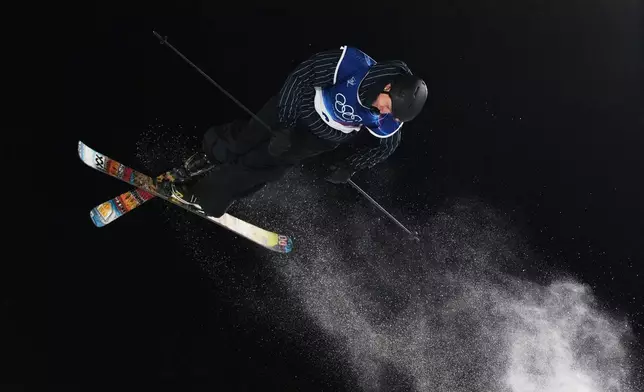
Norway's Birk Ruud competes during the men's freestyle skiing big air qualifications at the 2026 Winter Olympics, in Livigno, Italy, Sunday, Feb. 15, 2026. (AP Photo/Julia Demaree Nikhinson)

New Zealand's Zoi Sadowski-Synnott during the women's snowboarding slopestyle qualifications at the 2026 Winter Olympics, in Livigno, Italy, Sunday, Feb. 15, 2026. (AP Photo/Julia Demaree Nikhinson)
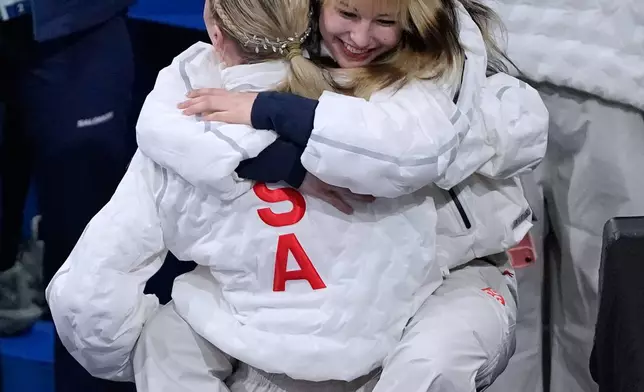
Alysa Liu hugs Amber Glenn after Team USA secured the gold medal in the figure skating team event at the 2026 Winter Olympics, in Milan, Italy, Sunday, Feb. 8, 2026. (AP Photo/Natacha Pisarenko)
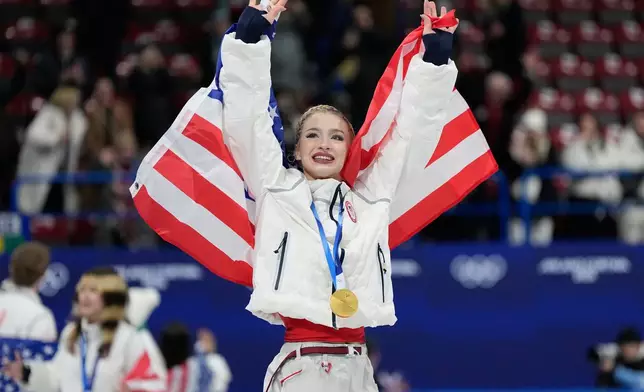
Team USA's Amber Glenn celebrates with her gold medal after the figure skating team event at the 2026 Winter Olympics, in Milan, Italy, Sunday, Feb. 8, 2026. (AP Photo/Ashley Landis)
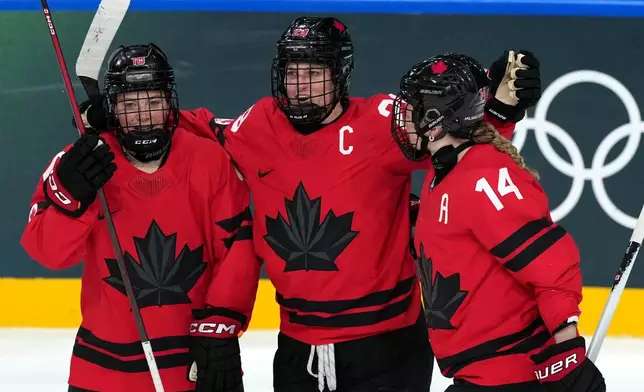
Canada's Marie-Philip Poulin (29) celebrates with Sarah Fillier (10) and Renata Fast (14) after Poulin scored against Germany during the third period of a women's ice hockey quarterfinal match at the 2026 Winter Olympics, in Milan, Italy, Saturday, Feb. 14, 2026. (AP Photo/Carolyn Kaster)
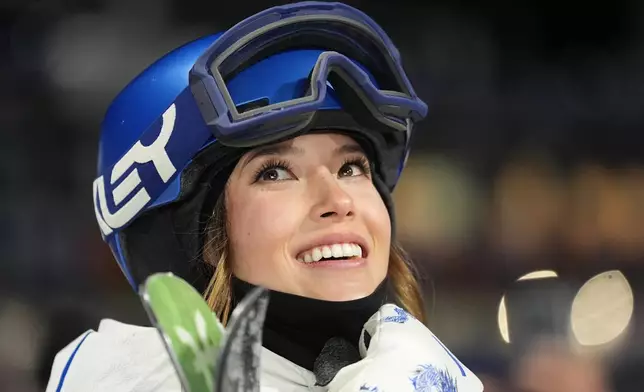
China's Eileen Gu waits for her score as she competes in the women's freestyle skiing big air qualifications at the 2026 Winter Olympics, in Livigno, Italy, Saturday, Feb. 14, 2026. (AP Photo/Abbie Parr)
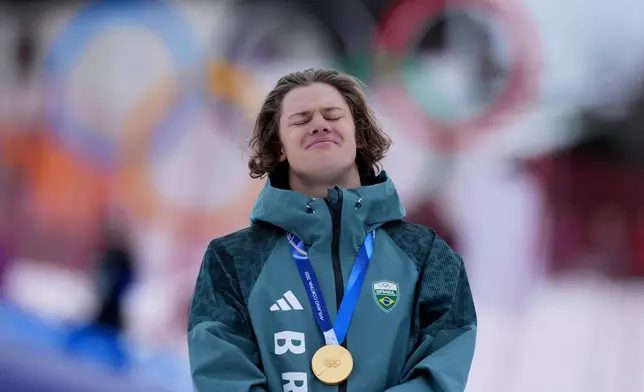
Brazil's Lucas Pinheiro Braathen listens to the national anthem as he wears his gold medal for an alpine ski, men's giant slalom race, at the 2026 Winter Olympics, in Bormio, Italy, Saturday, Feb. 14, 2026.(AP Photo/Julia Demaree Nikhinson)
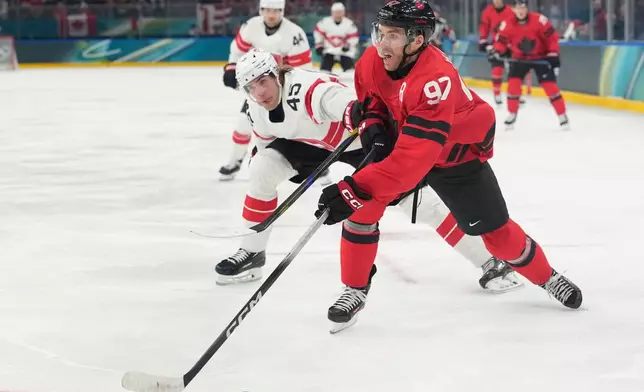
Switzerland's Michael Fora, left, challenges Canada's Connor McDavid during a preliminary round match of men's ice hockey between Canada and Switzerland at the 2026 Winter Olympics, in Milan, Italy, Friday, Feb. 13, 2026. (AP Photo/Hassan Ammar)
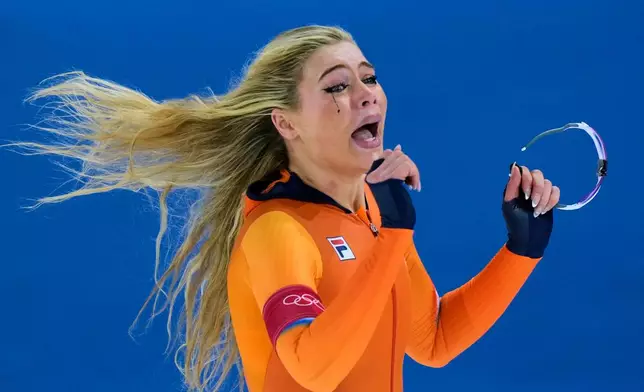
Jutta Leerdam of the Netherlands celebrates winning the gold medal in the women's 1,000 meters speedskating race at the 2026 Winter Olympics, in Milan, Italy, Monday, Feb. 9, 2026. (AP Photo/Luca Bruno)
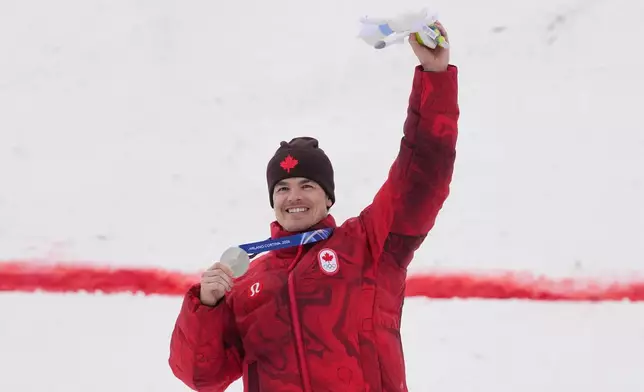
Canada's Mikael Kingsbury celebrates his silver medal in the men's freestyle skiing moguls finals at the 2026 Winter Olympics, in Livigno, Italy, Thursday, Feb. 12, 2026. (AP Photo/Gregory Bull)
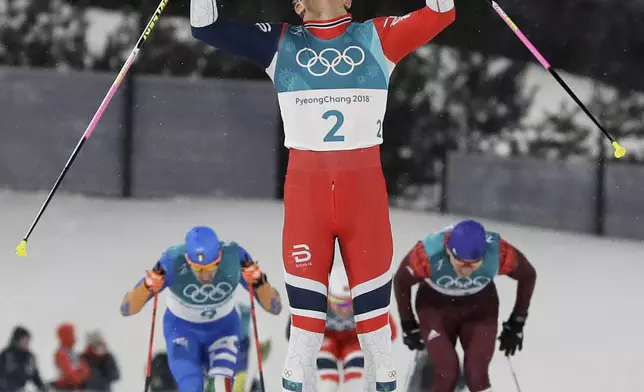
FILE - Johannes Hoesflot Klaebo, of Norway, celebrates after winning the men's cross-country skiing sprint classic at the 2018 Winter Olympics in Pyeongchang, South Korea, Feb. 13, 2018. (AP Photo/Kirsty Wigglesworth, File)

United States' Mikaela Shiffrin crosses the finish line of an alpine ski, women's team combined race, at the 2026 Winter Olympics, in Cortina d'Ampezzo, Italy, Tuesday, Feb. 10, 2026. (AP Photo/Andy Wong)
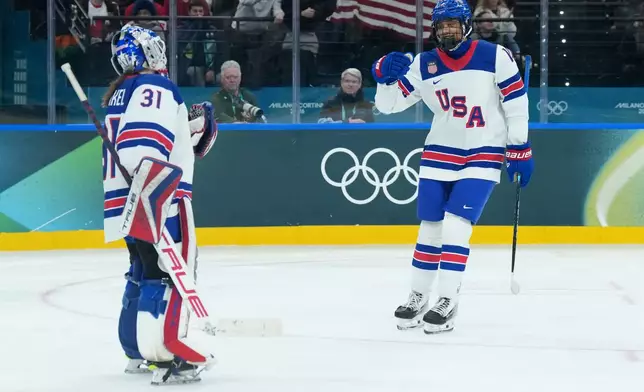
United States' Laila Edwards (10) celebrates a goal with goaltender Aerin Frankel (31) during third period against Canada during the third period of a preliminary round match of women's ice hockey between USA and Canada at the 2026 Winter Olympics in Milan, Italy, Tuesday, Feb. 10, 2026. (Nathan Denette/The Canadian Press via AP)
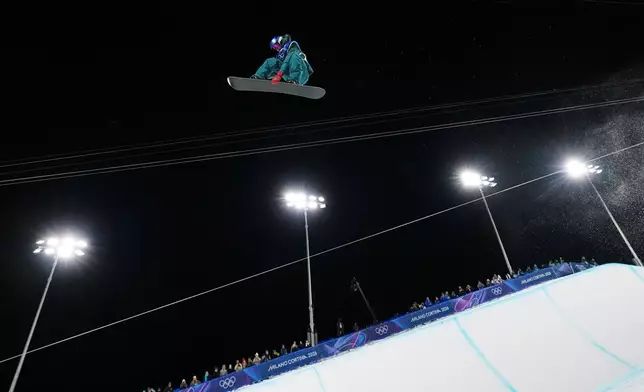
Australia's Scotty James competes during the men's snowboarding halfpipe qualifications at the 2026 Winter Olympics, in Livigno, Italy, Wednesday, Feb. 11, 2026. (AP Photo/Gregory Bull)
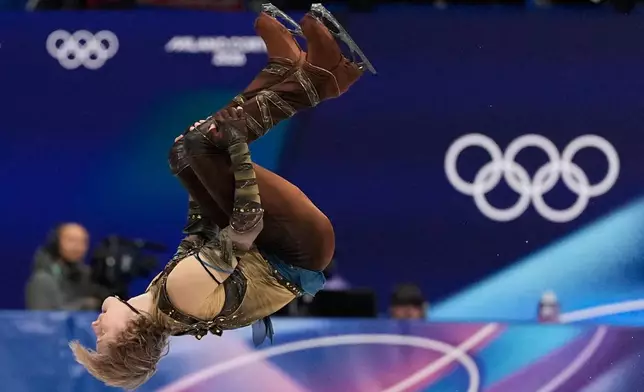
Ilia Malinin of the United States does a back flip while competing during the men's figure skating short program at the 2026 Winter Olympics, in Milan, Italy, Tuesday, Feb. 10, 2026. (AP Photo/Ashley Landis)

Italy's Amos Mosaner, left, and Stefania Constantini strategize during the mixed doubles round robin phase of the curling competition against Norway at the 2026 Winter Olympics, in Cortina d'Ampezzo, Italy, Saturday, Feb. 7, 2026. (AP Photo/Fatima Shbair)

Breezy Johnson of the United States reacts in the finish area of the alpine ski women's downhill race, at the 2026 Winter Olympics, in Cortina d'Ampezzo, Italy, Sunday, Feb. 8, 2026. (Jean-Christophe Bott, Keystone via AP)
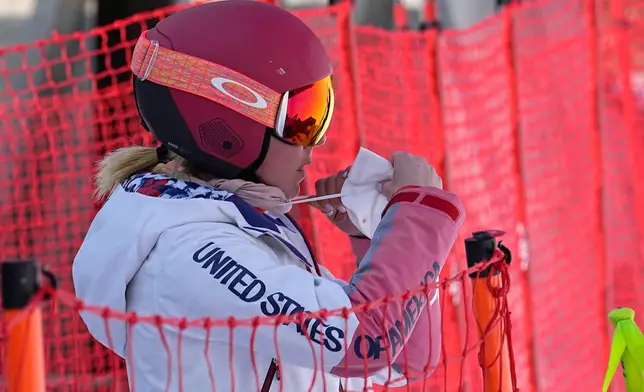
FILE - Mikaela Shiffrin of the United States adjusts her face mask before heading to the gondola to go up the alpine ski course for a training run at the 2022 Winter Olympics, Feb. 10, 2022, in the Yanqing district of Beijing. (AP Photo/Luca Bruno, file)
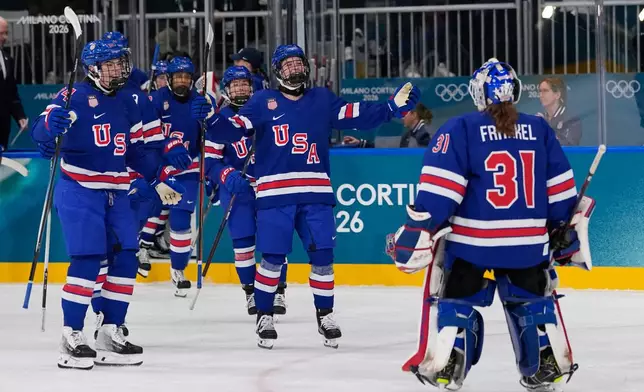
United States' Aerin Frankel, right, celebrates with teammates after a preliminary round match of women's ice hockey between the United States and Finland at the 2026 Winter Olympics, in Milan, Italy, Saturday, Feb. 7, 2026. (AP Photo/Petr David Josek)
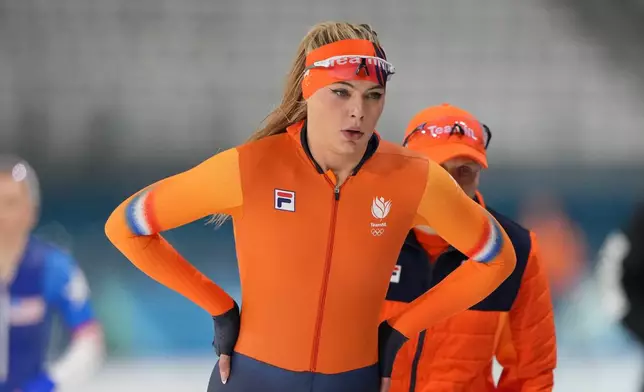
Jutta Leerdam of the Netherlands warms up during a speedskating training session, at the 2026 Winter Olympics, in Milan, Italy, Thursday, Feb. 5, 2026. (AP Photo/Lee Jin-man)
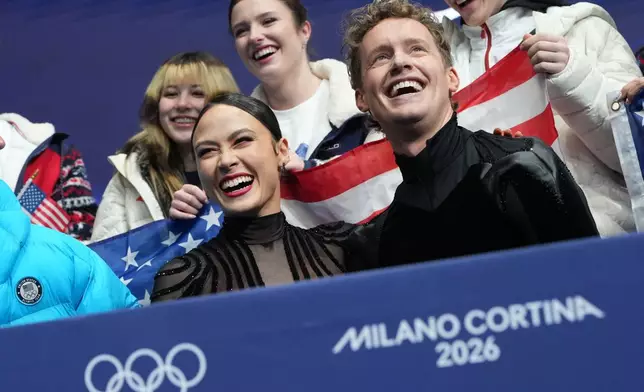
Madison Chock and Evan Bates of the United States react to their scores after competing during the figure skating ice dance team event at the 2026 Winter Olympics, in Milan, Italy, Saturday, Feb. 7, 2026. (AP Photo/Francisco Seco)
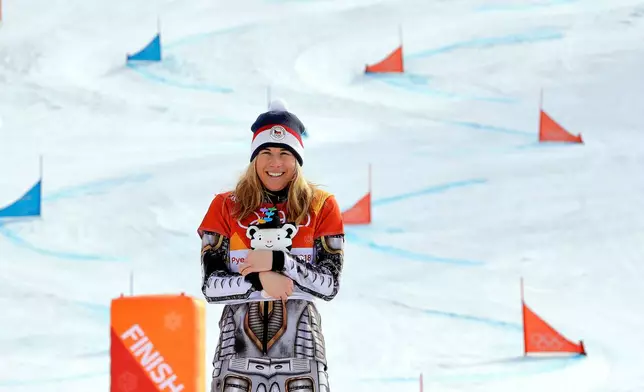
FILE -Gold medal winner Ester Ledecka, of the Czech Republic, celebrates after the women's parallel giant slalom at Phoenix Snow Park at the 2018 Winter Olympics in Pyeongchang, South Korea, Saturday, Feb. 24, 2018. (AP Photo/Lee Jin-man, File)
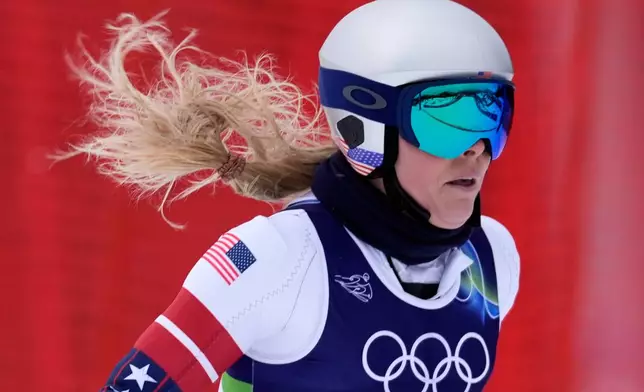
United States' Lindsey Vonn in action during alpine ski women's downhill training, at the 2026 Winter Olympics, in Cortina d'Ampezzo, Italy, Saturday, Feb. 7, 2026. (AP Photo/Robert F. Bukaty)
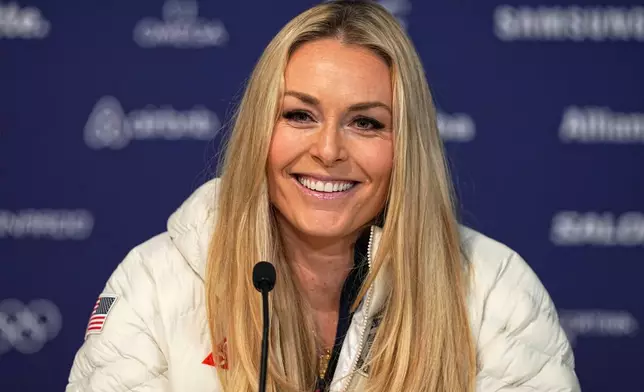
United States' Lindsey Vonn smiles during a press conference by the U.S. ski team at the 2026 Winter Olympics, in Cortina d'Ampezzo, Italy, Tuesday, Feb. 3, 2026. (AP Photo/Fatima Shbair)
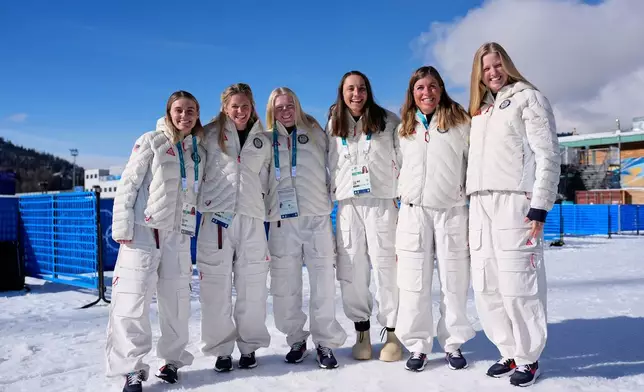
United States cross country athletes, from left, Novie McCabe, Jessie Diggins, Sammy Smith, Julia Kern, Rosie Brennan and Hayiley Swirlbul pose for photos before a cross country training session at the 2026 Winter Olympics, in Tesero, Italy, Thursday, Feb. 5, 2026. (AP Photo/Matthias Schrader)
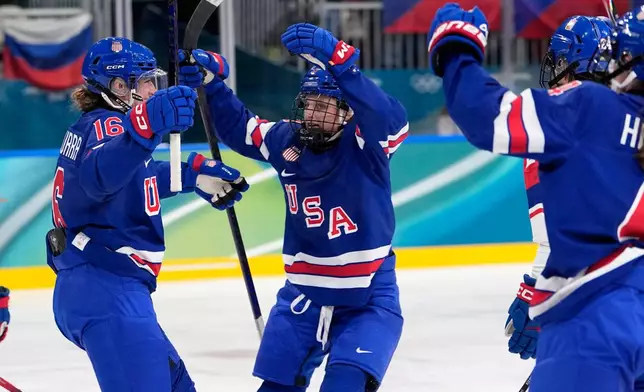
United States' Hayley Scamurra, left, celebrates after scoring her side's fifth goal during a preliminary round match of women's ice hockey between United States and Czechia at the 2026 Winter Olympics, in Milan, Italy, Thursday, Feb. 5, 2026. (AP Photo/Petr David Josek)
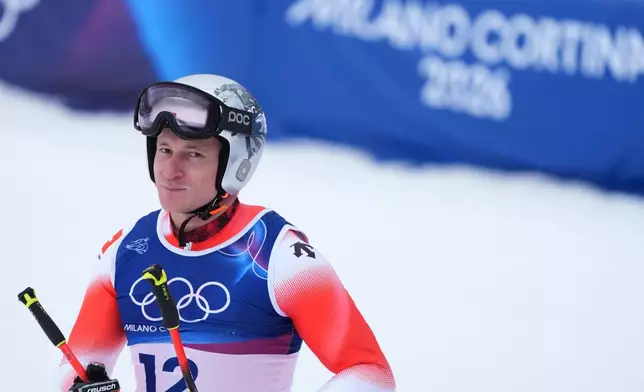
Switzerland's Marco Odermatt reacts at the finish area of an alpine ski, men's downhill official training, at the 2026 Winter Olympics, in Bormio, Italy, Friday, Feb. 6, 2026. (AP Photo/Rebecca Blackwell)
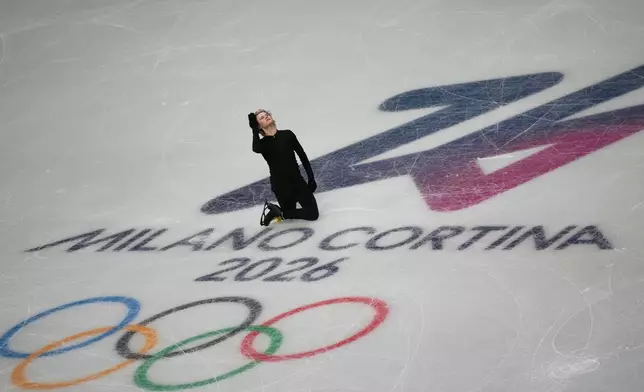
Ilia Malinin, of the United States, practices during a figure skating training session ahead of the 2026 Winter Olympics, in Milan, Italy, Tuesday, Feb. 3, 2026. (AP Photo/Christophe Ena)
Viewers around the world can watch on official broadcasters, including NBC and streaming on Peacock and NBC Olympics platforms.
It’s going to be a showdown between two friends and two racers who were members of the same ski club as kids.
There is of course Pinheiro Braathen, who once raced for Norway, but now skies for Brazil. He’s going for a second gold. There’s also his friend Atle Lie McGrath of Norway.
They were teammates as kids in Norway. They are 1-2 in the standings on the World Cup circuit in the slalom. McGrath is racing with a heavy heart. He lost his grandfather on the day of the opening ceremonies.
It's the second of three medal shots for Gu, but the San Francisco-born Chinese skier's ambition comes at a cost.
Gu started her Olympics with silver in slopestyle, losing out to Switzerland’s Mathilde Gremaud for the second Olympics running.
Heading into the big air final, Gu said she's being “punished” by officials who refused to allow her extra training time for her third and final event, the halfpipe. The big air final clashes with halfpipe training, so Gu's rivals will get more time to practice.
The United States has surged through the women's hockey tournament, winning all of its five games and allowing just one goal. Now to guarantee a medal.
The U.S. takes on the other 5-0 team in the tournament, Sweden. “Captain Clutch” Marie-Philip Poulin returned from a knee injury in Canada's quarterfinal game. Her team now plays Switzerland for a place in the gold medal game.
Arianna Fontana has 13 career Olympic medals and is already the most decorated short-track speedskater of all time. The women's 1,000 meters offers her the chance of a 14th. There's also medals on offer in pairs figure skating.
AP Winter Olympics: https://apnews.com/hub/milan-cortina-2026-winter-olympics
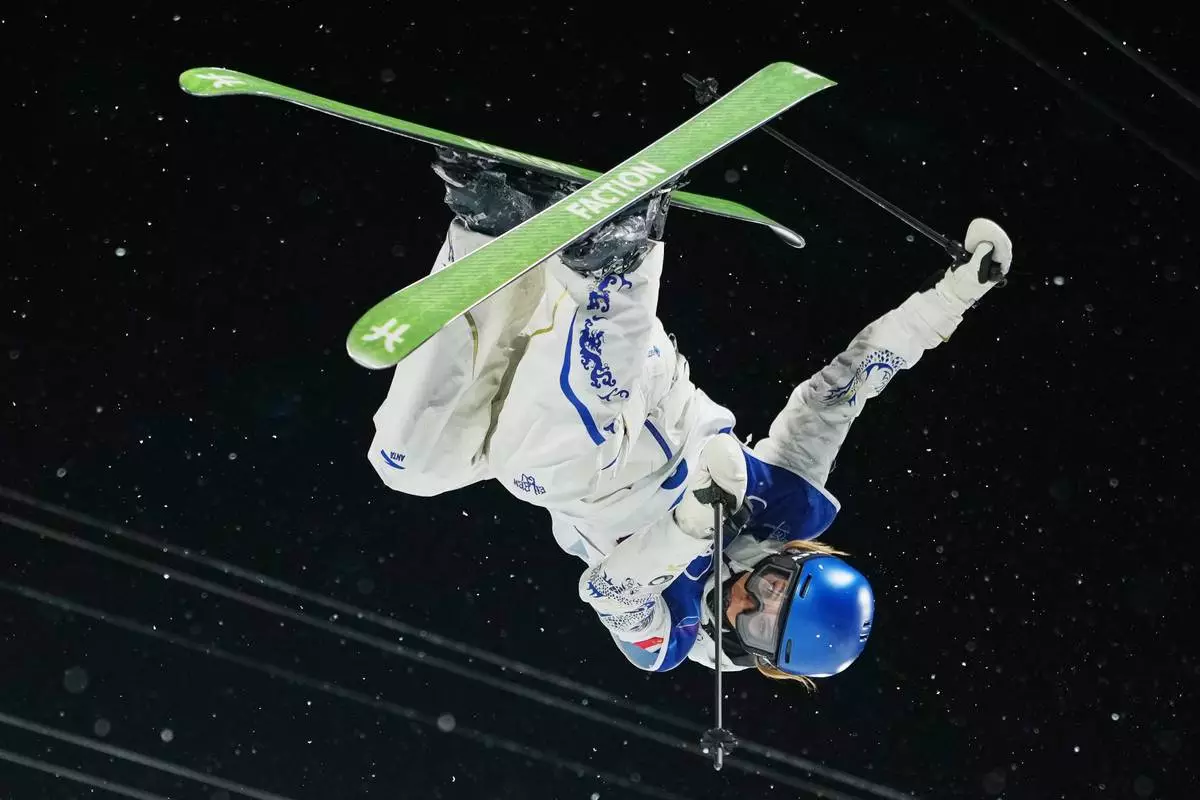
China's Eileen Gu competes during the women's freestyle skiing halfpipe qualifications at the 2026 Winter Olympics, in Livigno, Italy, Thursday, Feb. 19, 2026. (AP Photo/Julia Demaree Nikhinson)
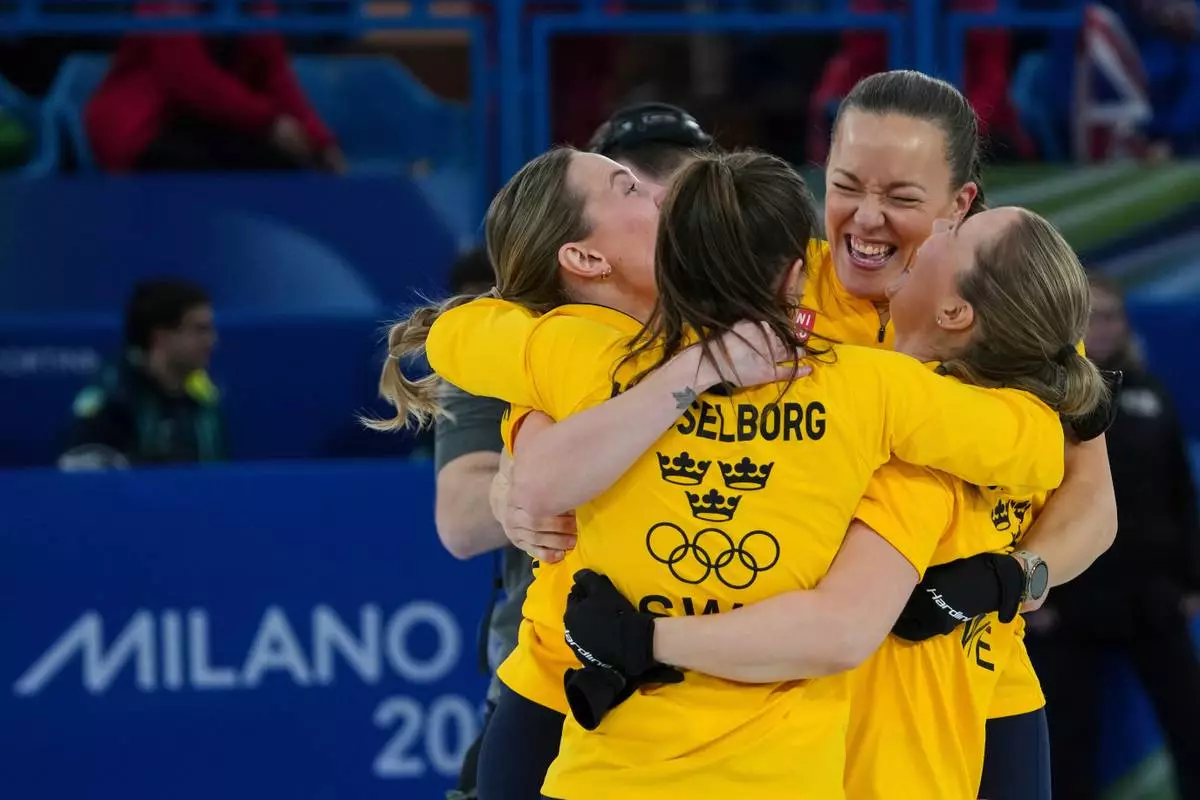
Sweden's Anna Hasselborg, Sara McManus, Sofia Scharback, Agnes Knochenhauer celebrate after winning a women's curling semifinal match against Canada, at the 2026 Winter Olympics, in Cortina d'Ampezzo, Italy, Friday, Feb. 20, 2026. (AP Photo/Misper Apawu)
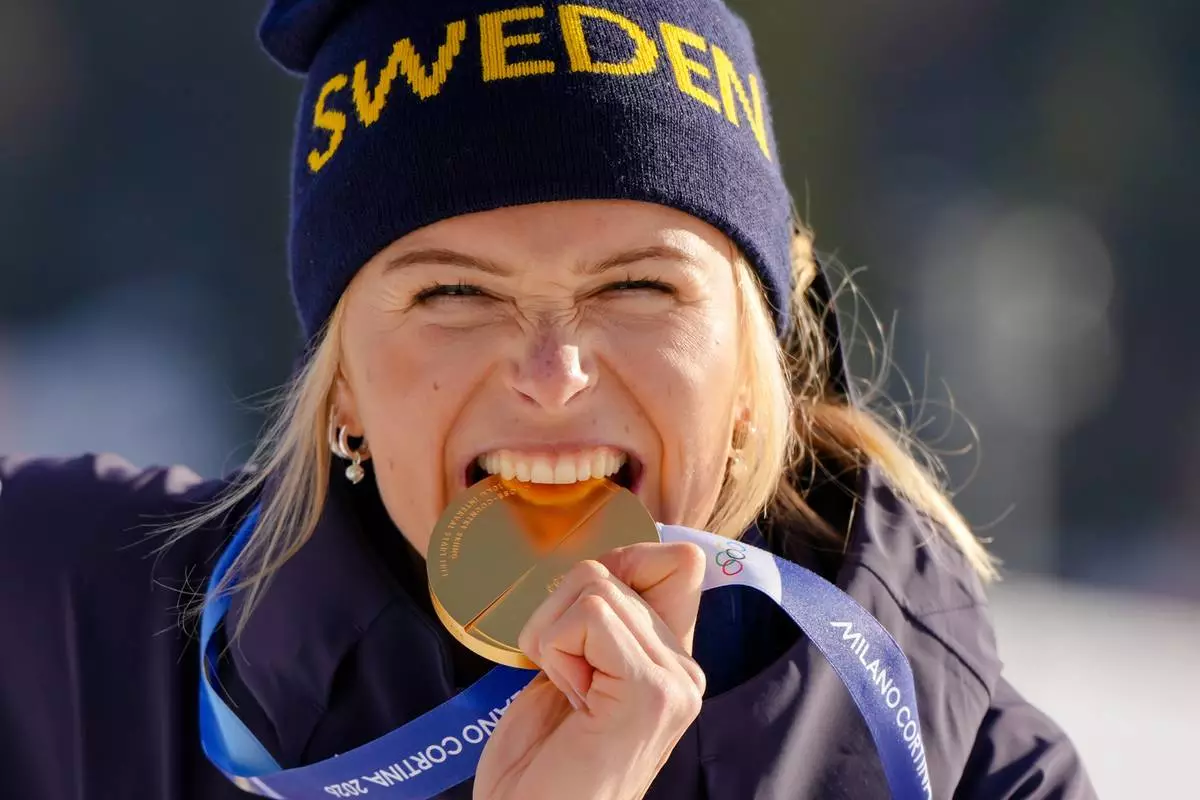
Frida Karlsson, of Sweden, poses after winning the gold medal in the cross country skiing women's 10km interval start free at the 2026 Winter Olympics, in Tesero, Italy, Thursday, Feb. 12, 2026. (AP Photo/Kirsty Wigglesworth)
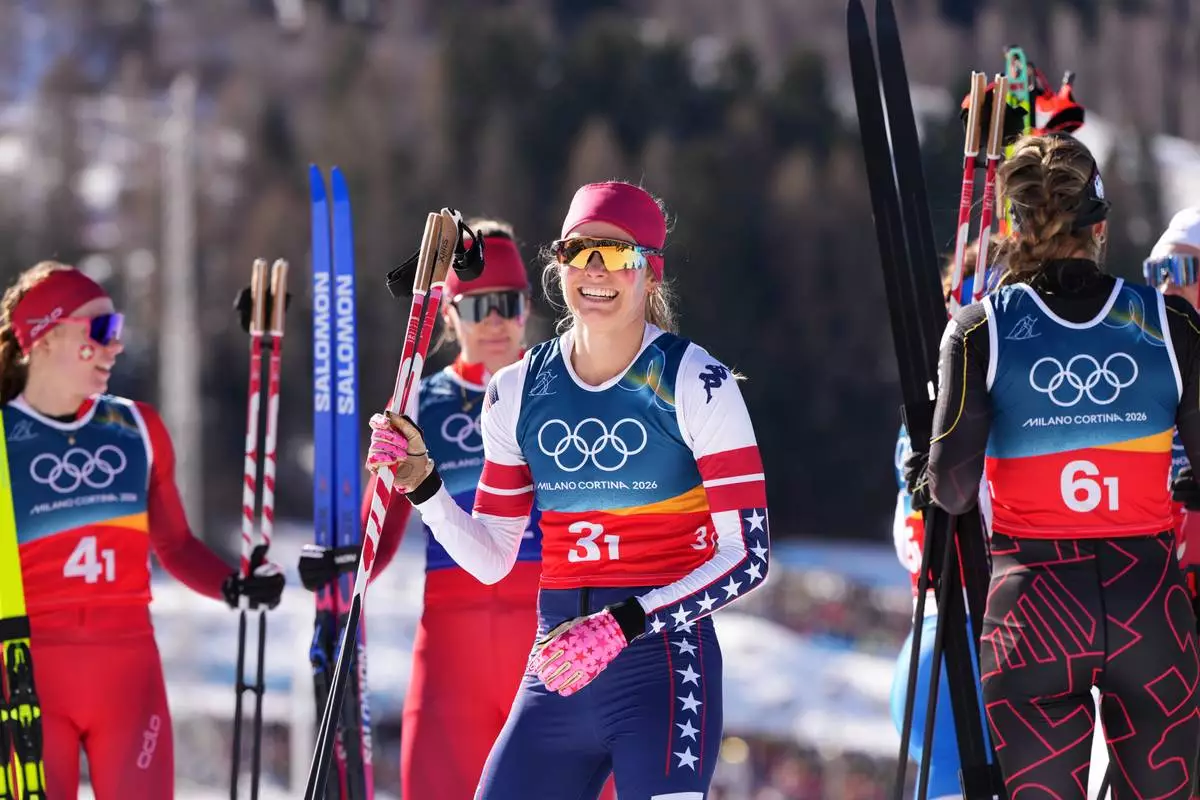
Jessie Diggins, of the United States, smiles after finishing the cross-country skiing women's team sprint free at the 2026 Winter Olympics, in Tesero, Italy, Wednesday, Feb. 18, 2026. (AP Photo/Kirsty Wigglesworth)
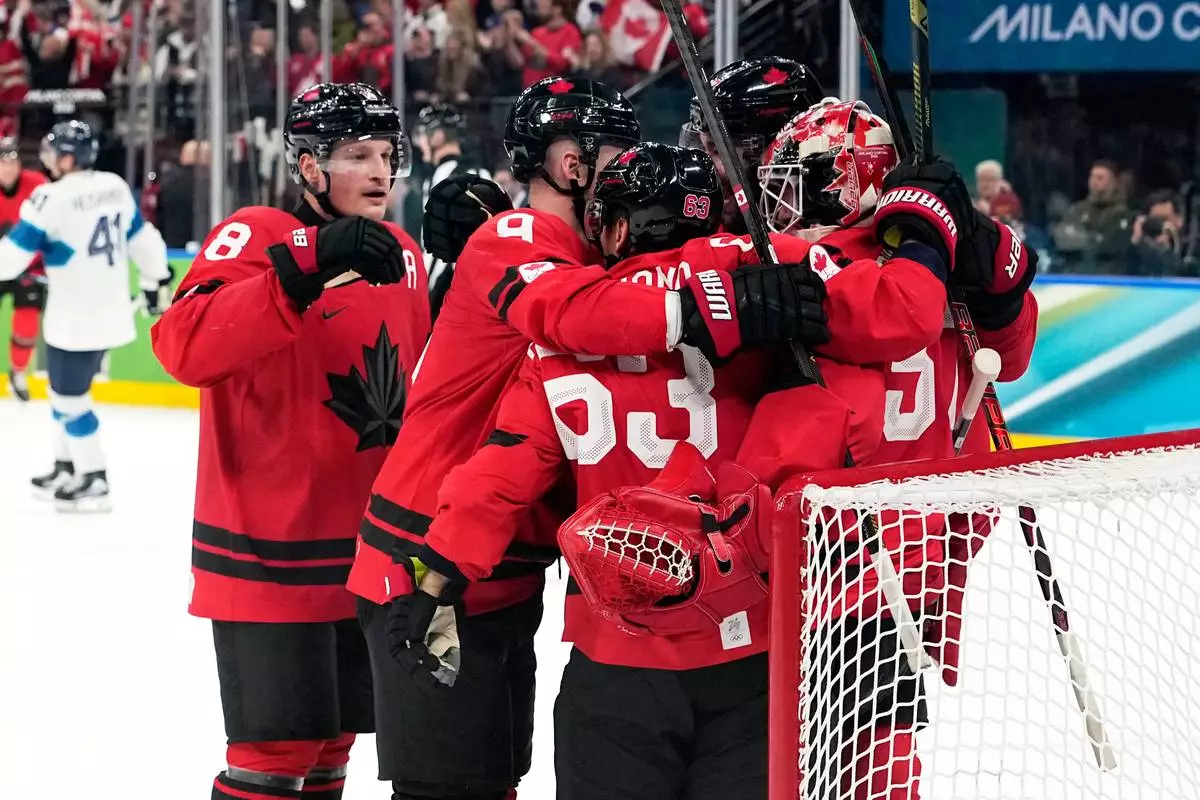
Canada players celebrate at the end of a men's ice hockey semifinal game between Canada and Finland at the 2026 Winter Olympics, in Milan, Italy, Friday, Feb. 20, 2026. (AP Photo/Hassan Ammar)
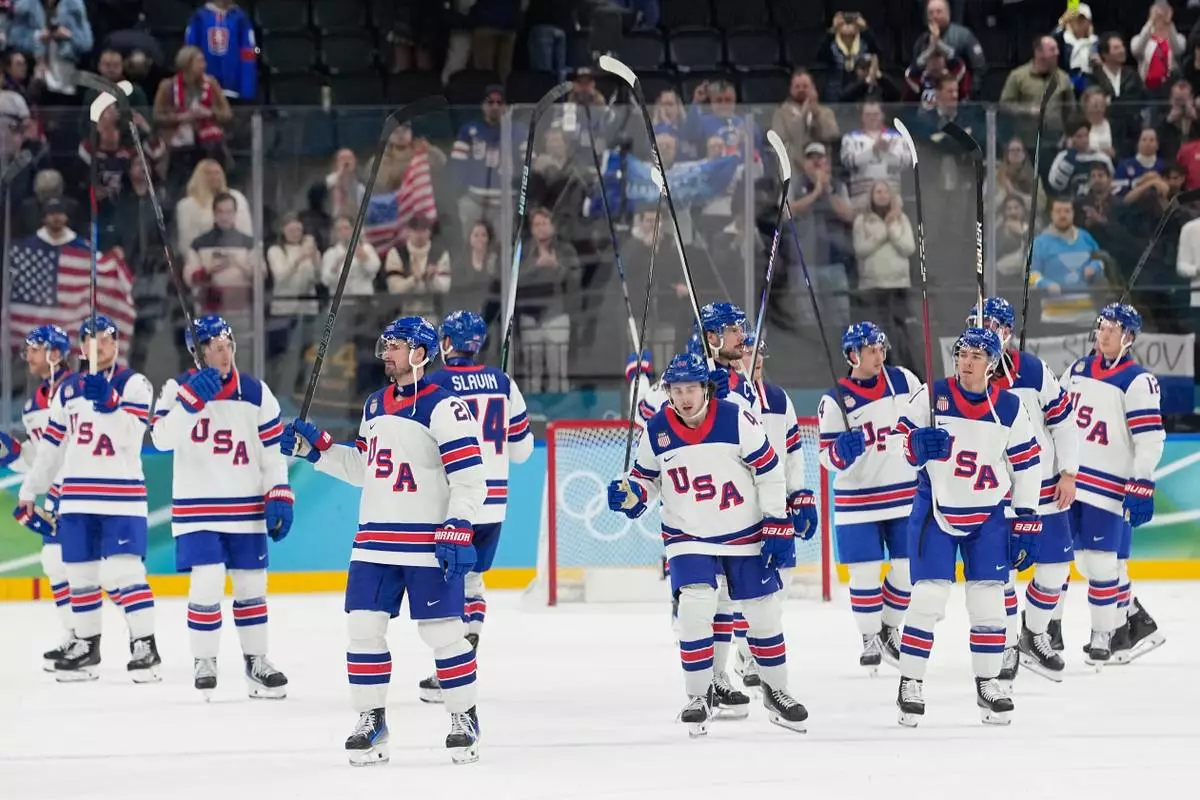
United States players celebrate at the end of a men's ice hockey semifinal game between the United States and Slovakia at the 2026 Winter Olympics, in Milan, Italy, Friday, Feb. 20, 2026. (AP Photo/Hassan Ammar)

China's Eileen Gu smiles during the women's freestyle skiing halfpipe qualifications at the 2026 Winter Olympics, in Livigno, Italy, Thursday, Feb. 19, 2026. (AP Photo/Lindsey Wasson)
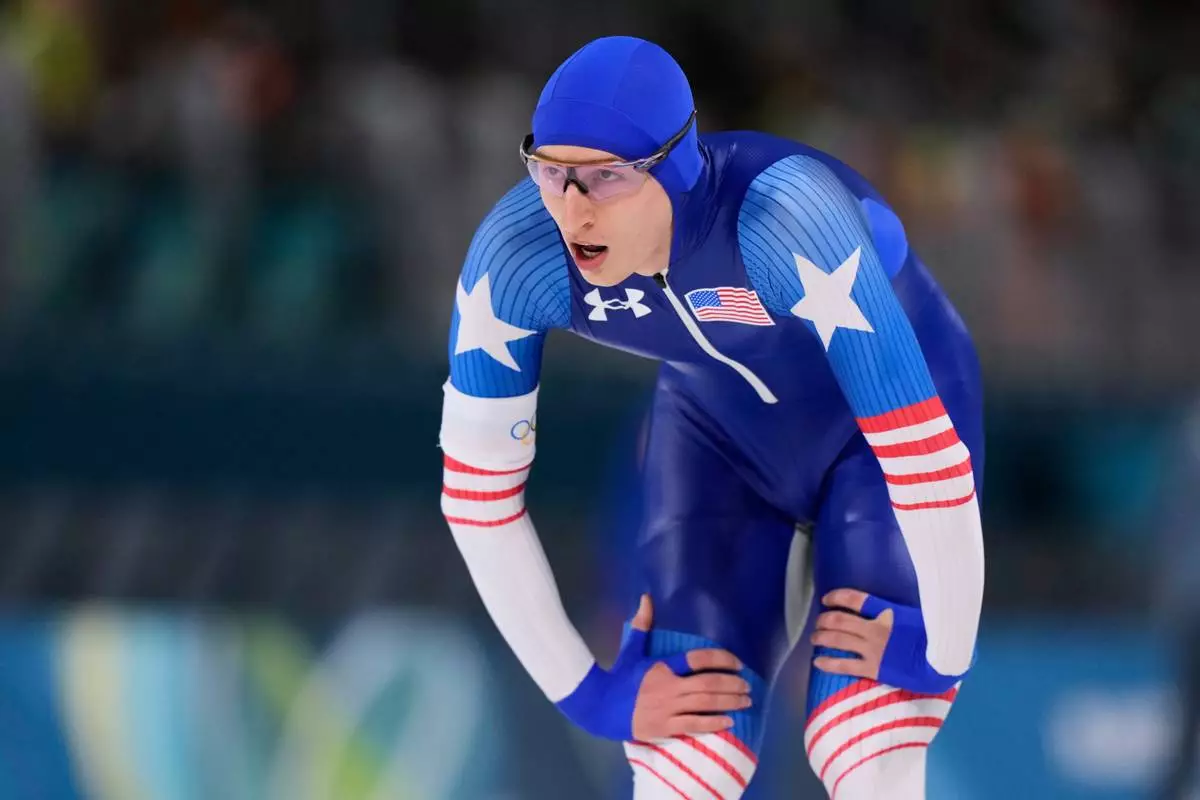
Jordan Stolz of the U.S. took a silver medal in the men's 1500 meters speedskating race at the 2026 Winter Olympics, in Milan, Italy, Thursday, Feb. 19, 2026. (AP Photo/Luca Bruno)
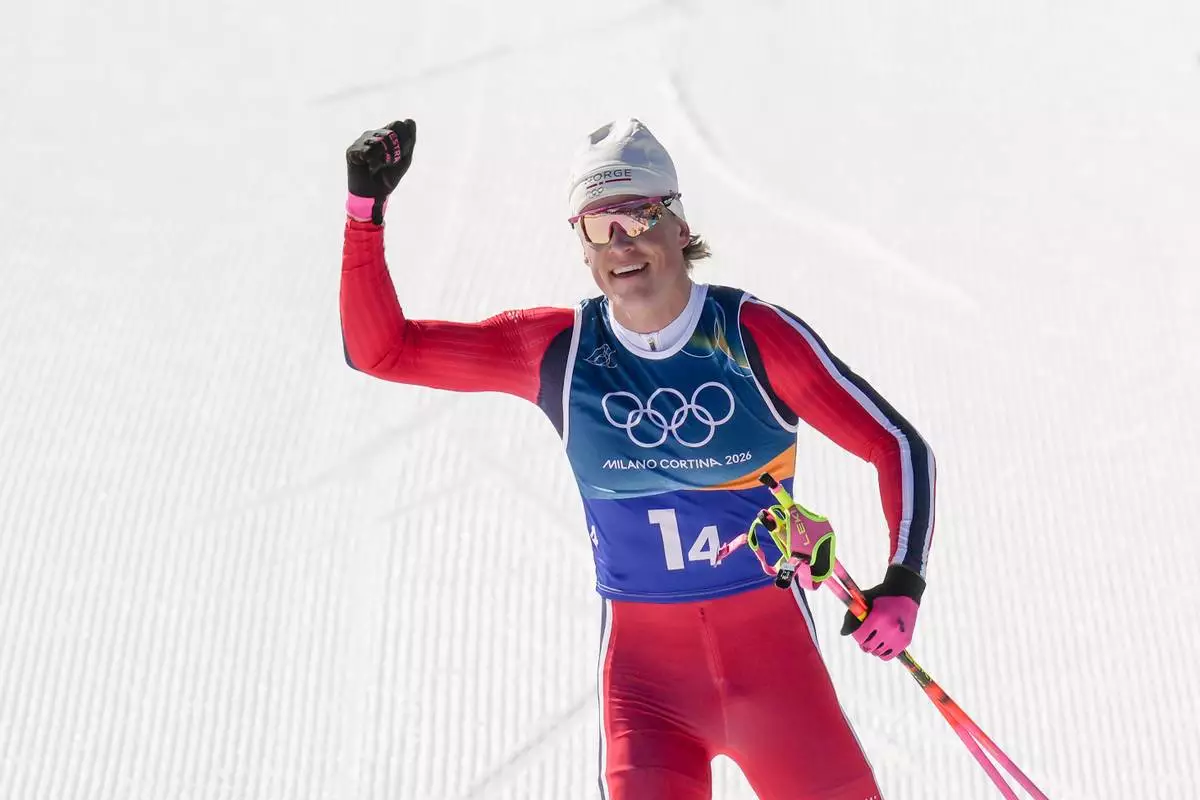
Johannes Hoesflot Klaebo, of Norway, approaches the finish line to win the gold medal in the cross country skiing men's 4 x 7.5km relay at the 2026 Winter Olympics, in Tesero, Italy, Sunday, Feb. 15, 2026. (AP Photo/Evgeniy Maloletka)
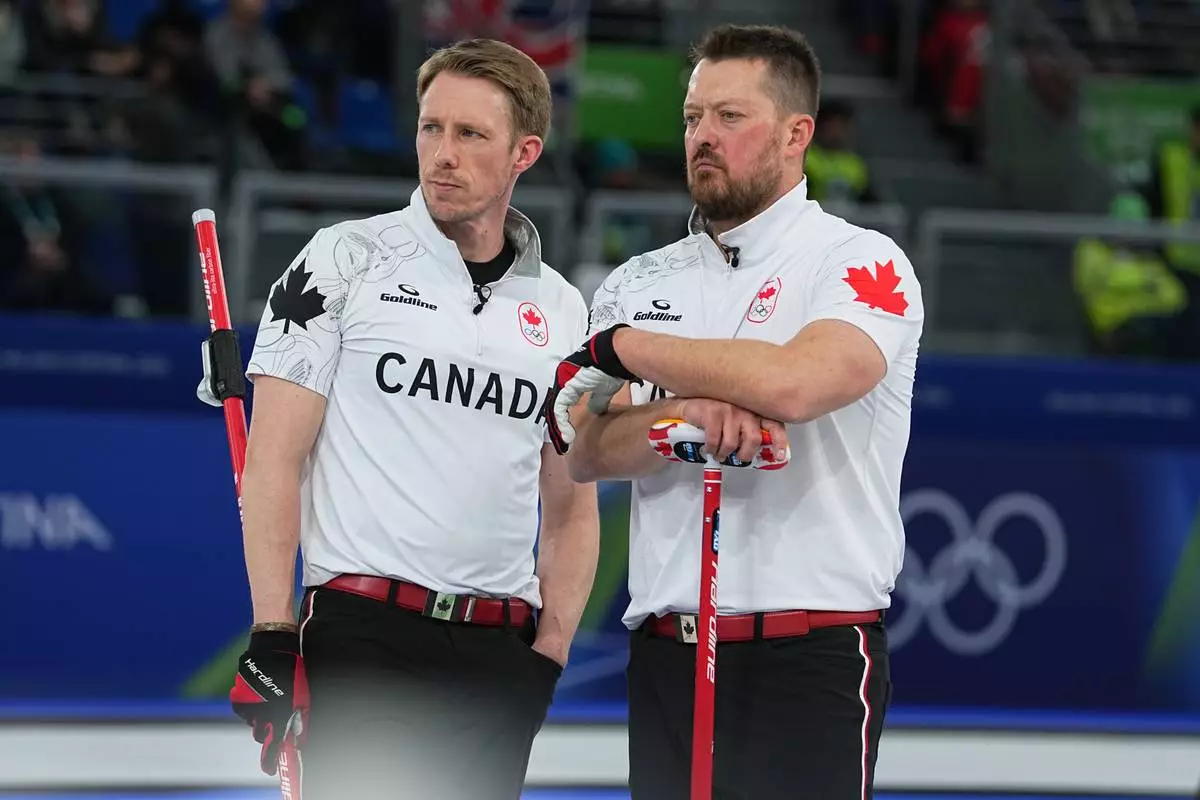
Canada's Marc Kennedy and Ben Hebert watch action in a men's curling semifinal match against Norway at the 2026 Winter Olympics, in Cortina d'Ampezzo, Italy, Thursday, Feb. 19, 2026. (AP Photo/Fatima Shbair)
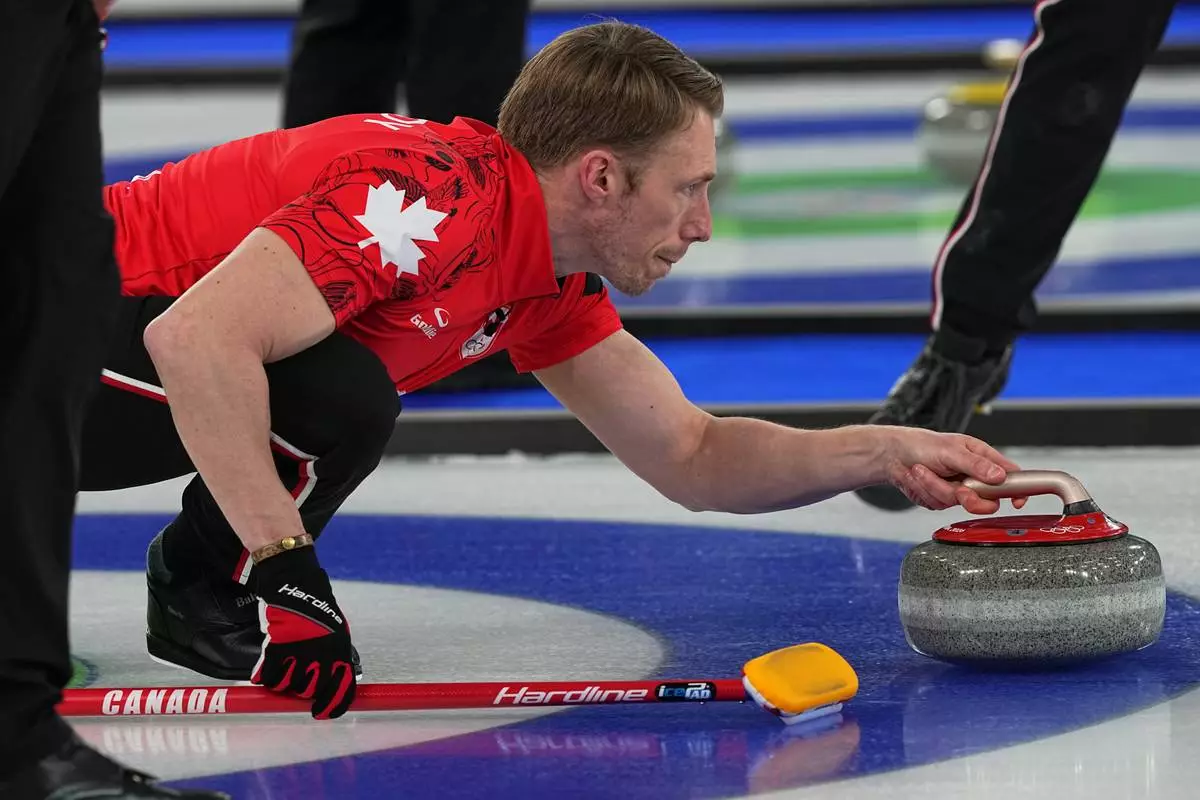
Canada's Marc Kennedy in action during the men's curling round robin session against Britain at the 2026 Winter Olympics, in Cortina d'Ampezzo, Italy, Tuesday, Feb. 17, 2026. (AP Photo/Fatima Shbair)
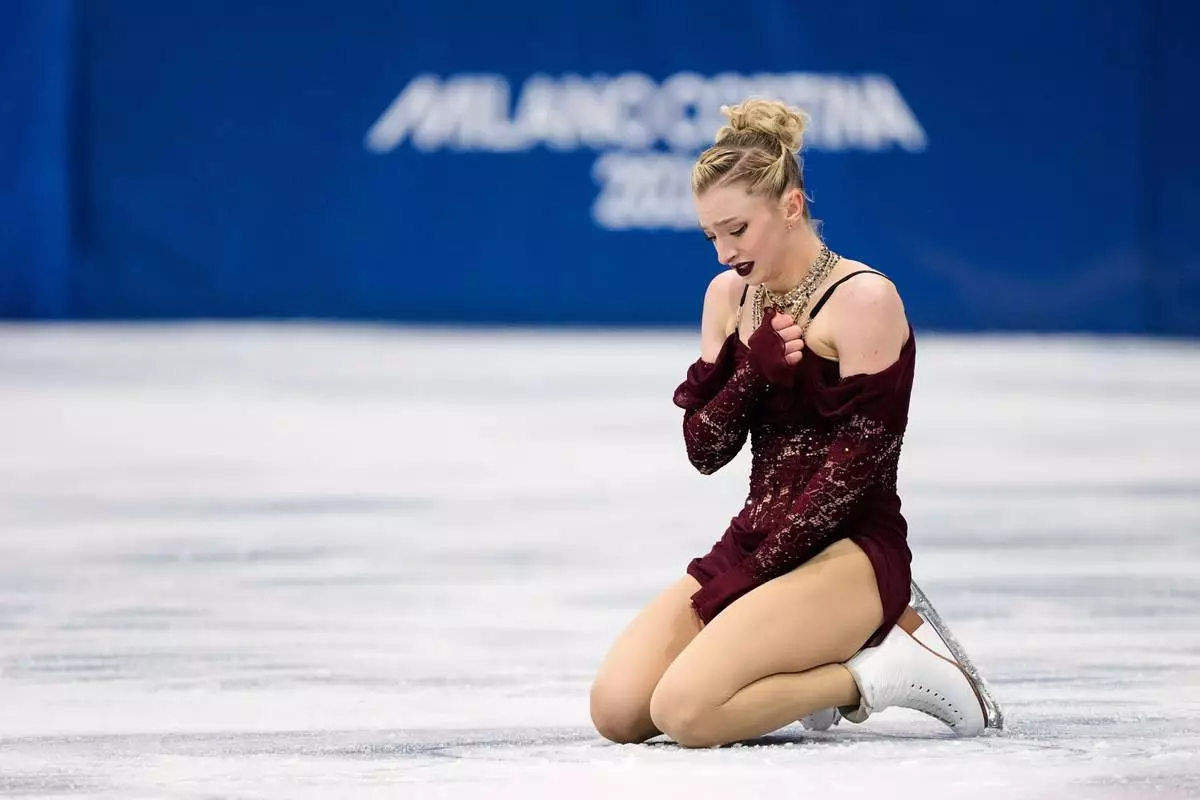
Amber Glenn of the United States competes during the women's short program figure skating at the 2026 Winter Olympics, in Milan, Italy, Tuesday, Feb. 17, 2026. (AP Photo/Natacha Pisarenko)
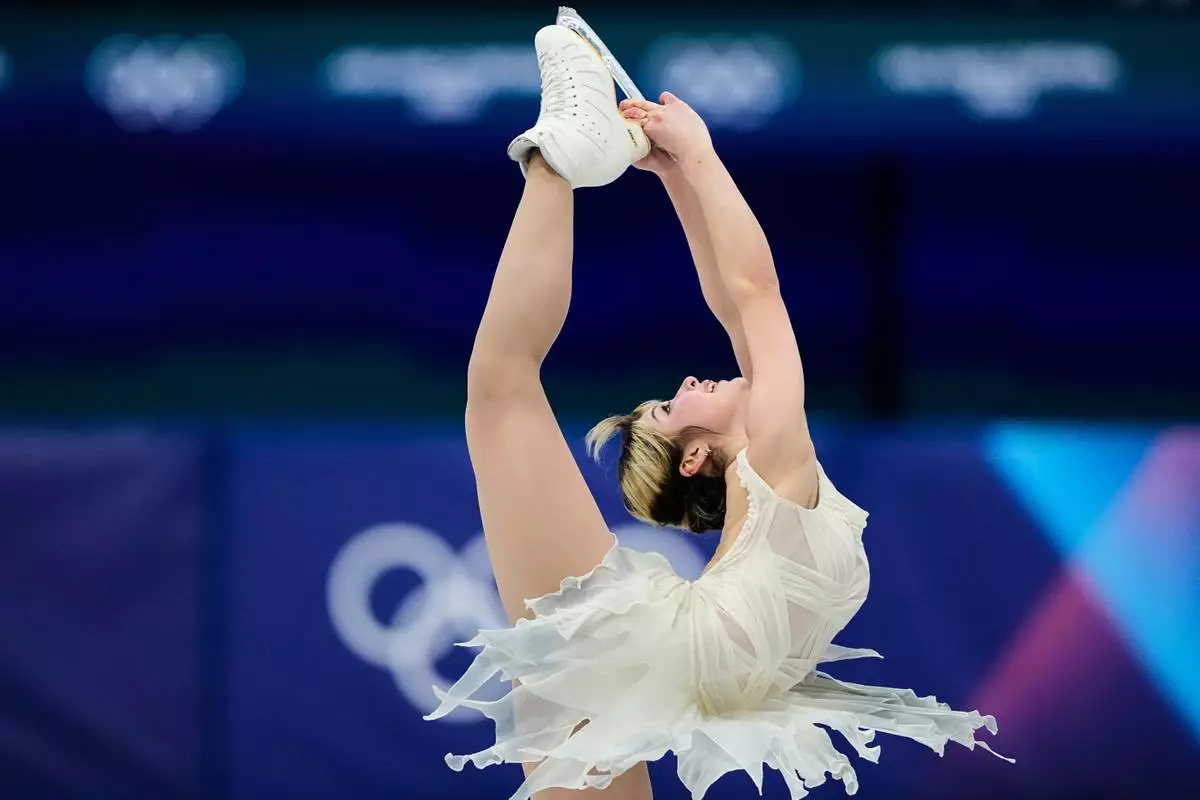
Alysa Liu of the United States competes during the women's short program figure skating at the 2026 Winter Olympics, in Milan, Italy, Tuesday, Feb. 17, 2026. (AP Photo/Natacha Pisarenko)
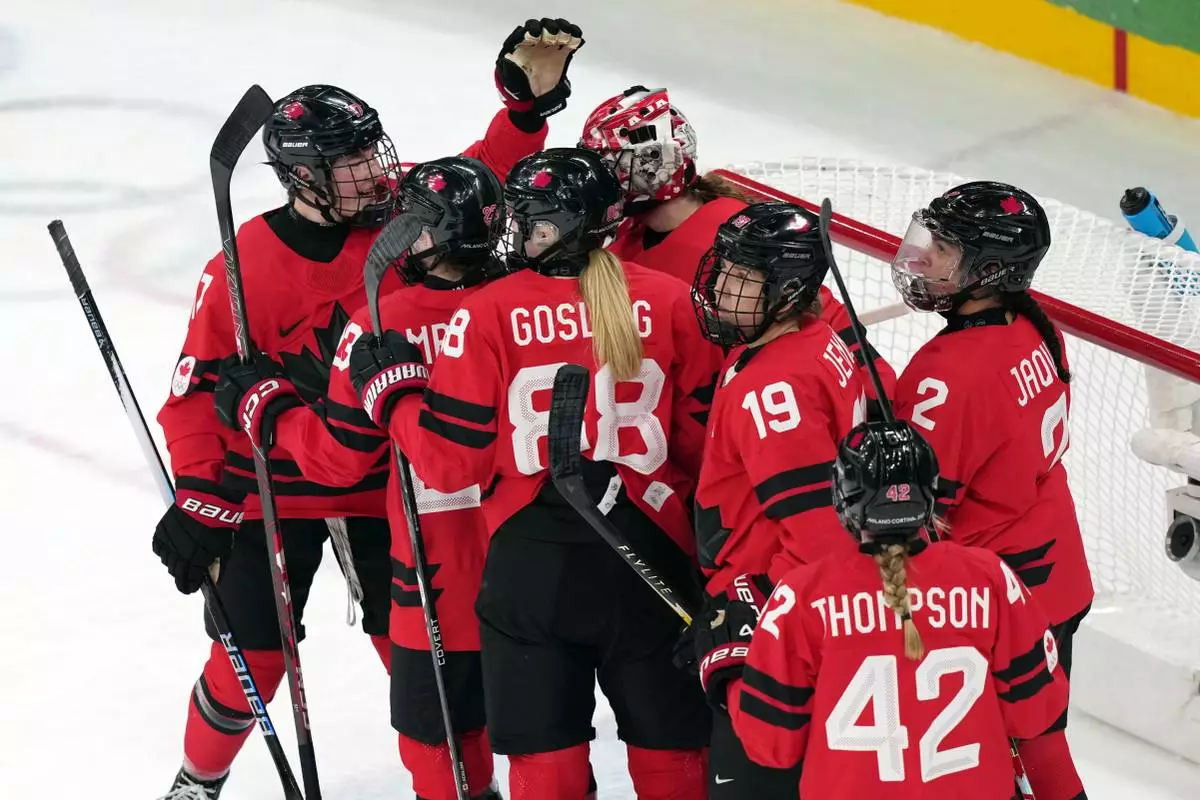
Team Canada players celebrate after their win over Switzerland in a women's ice hockey semifinal match at the 2026 Winter Olympics, in Milan, Italy, Monday, Feb. 16, 2026. (AP Photo/Carolyn Kaster)
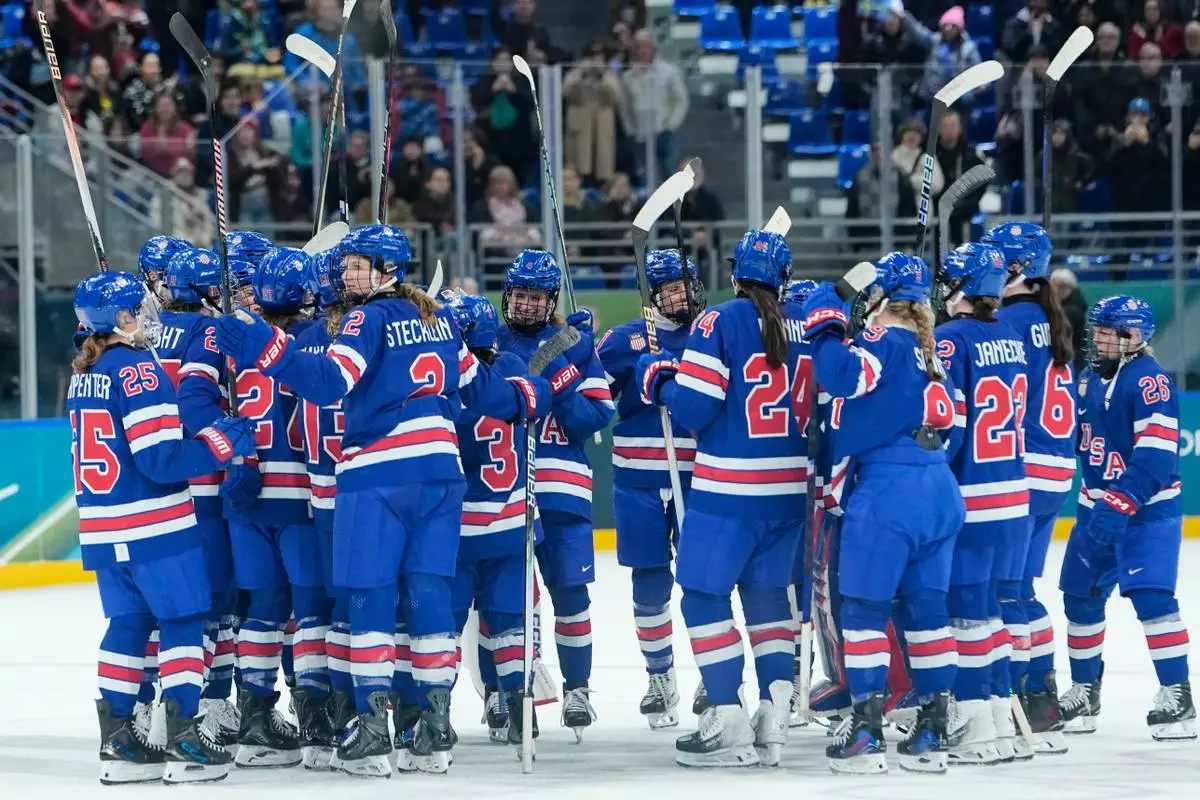
U.S. players celebrate after a semifinal match of women's ice hockey between the United States and Sweden at the 2026 Winter Olympics, in Milan, Italy, Monday, Feb. 16, 2026. (AP Photo/Petr David Josek)
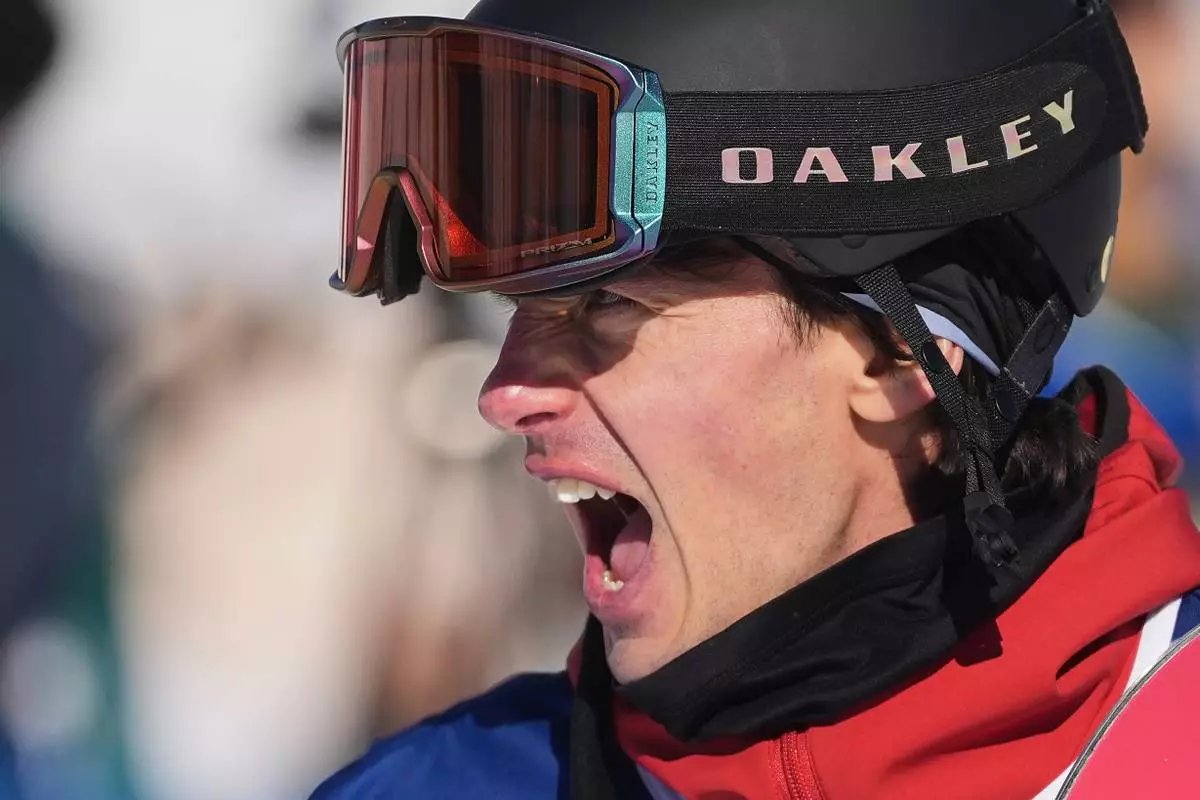
Canada's Mark McMorris reacts during the men's snowboarding slopestyle qualifications at the 2026 Winter Olympics, in Livigno, Italy, Sunday, Feb. 15, 2026. (AP Photo/Lindsey Wasson)
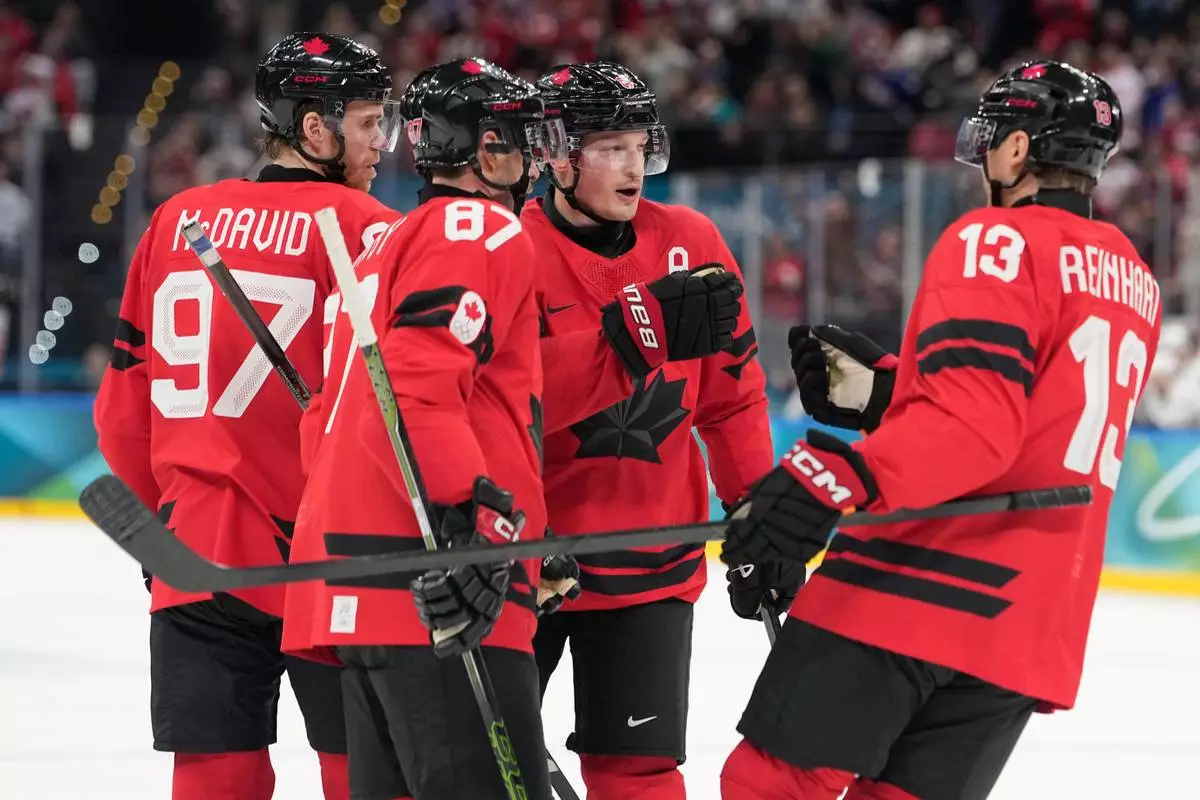
Canada's Cale Makar (8) celebrates with teammates Canada's Connor McDavid (97), Canada's Sidney Crosby (87), Canada's Sam Reinhart (13) after scoring during a preliminary round game of men's ice hockey between Canada and France at the 2026 Winter Olympics, in Milan, Italy, Sunday, Feb. 15, 2026. (AP Photo/Hassan Ammar)
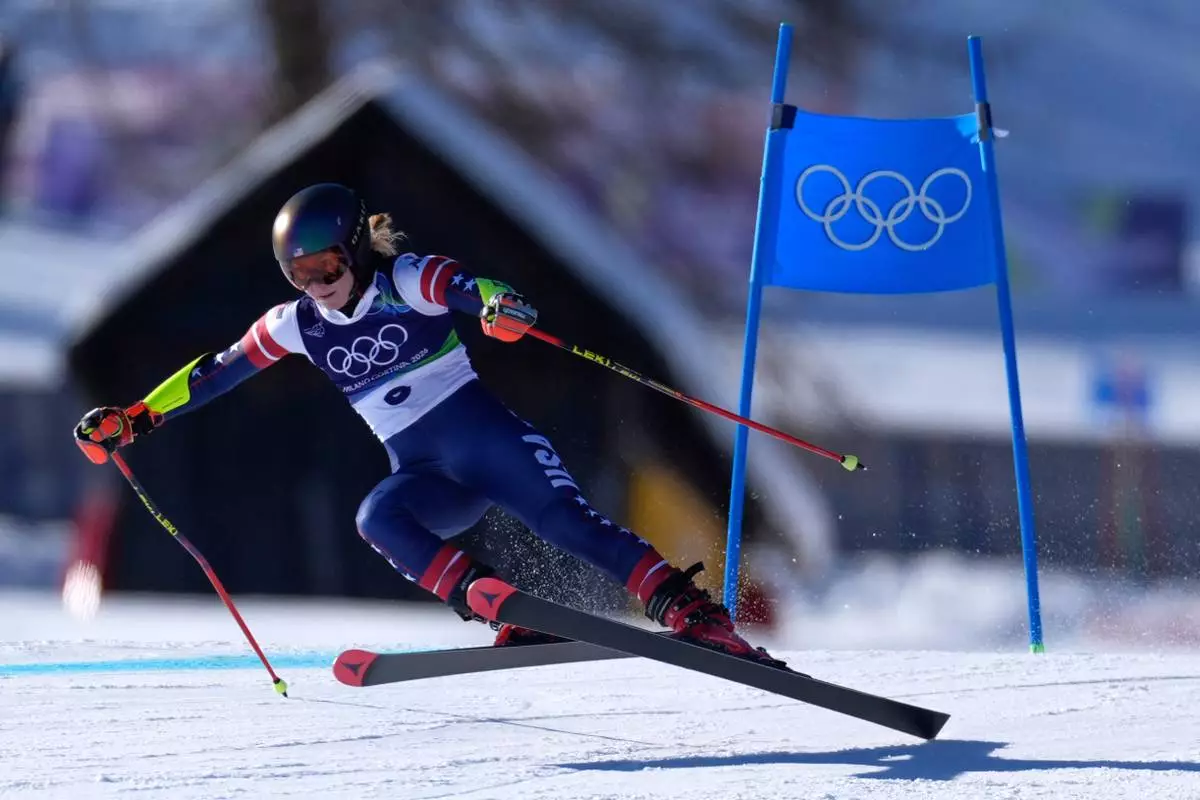
United States' Mikaela Shiffrin speeds down the course, during an alpine ski, women's giant slalom race, at the 2026 Winter Olympics, in Cortina d'Ampezzo, Italy, Sunday, Feb. 15, 2026. (AP Photo/Robert F. Bukaty)
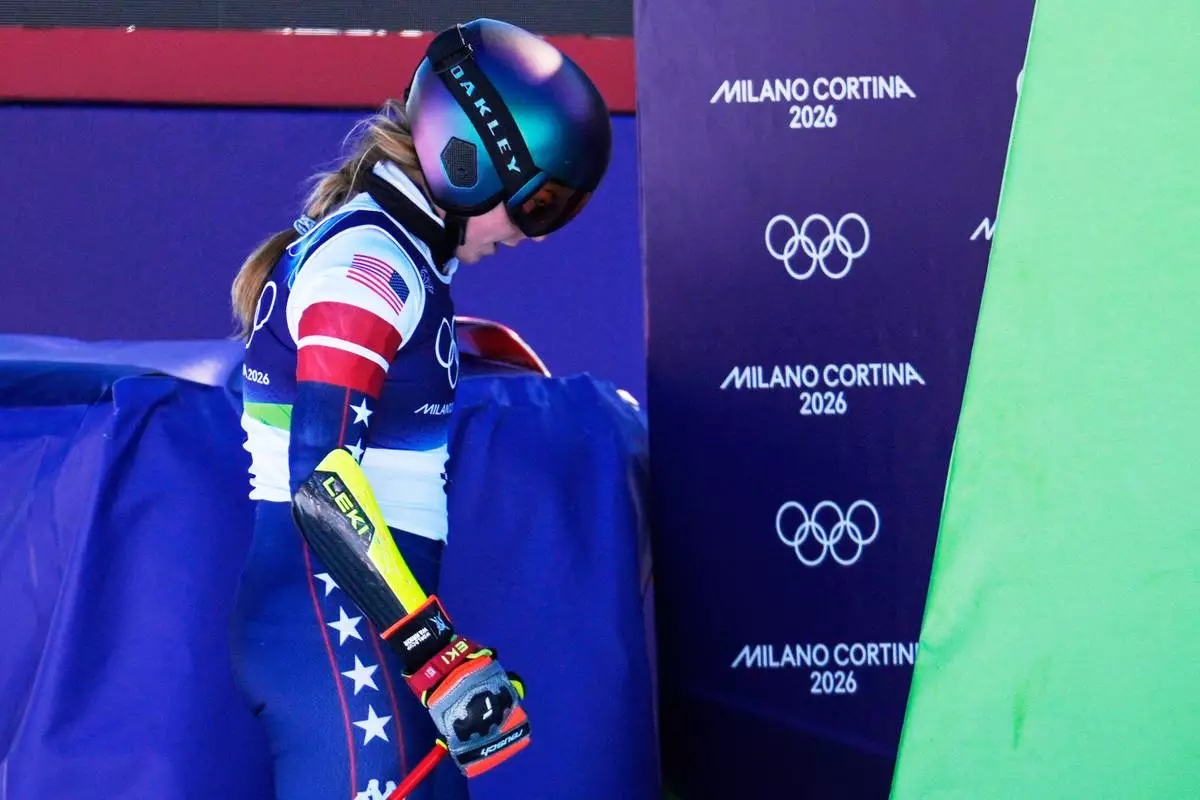
United States' Mikaela Shiffrin leaves the finish area during an alpine ski, women's giant slalom race, at the 2026 Winter Olympics, in Cortina d'Ampezzo, Italy, Sunday, Feb. 15, 2026. (AP Photo/Robert F. Bukaty)
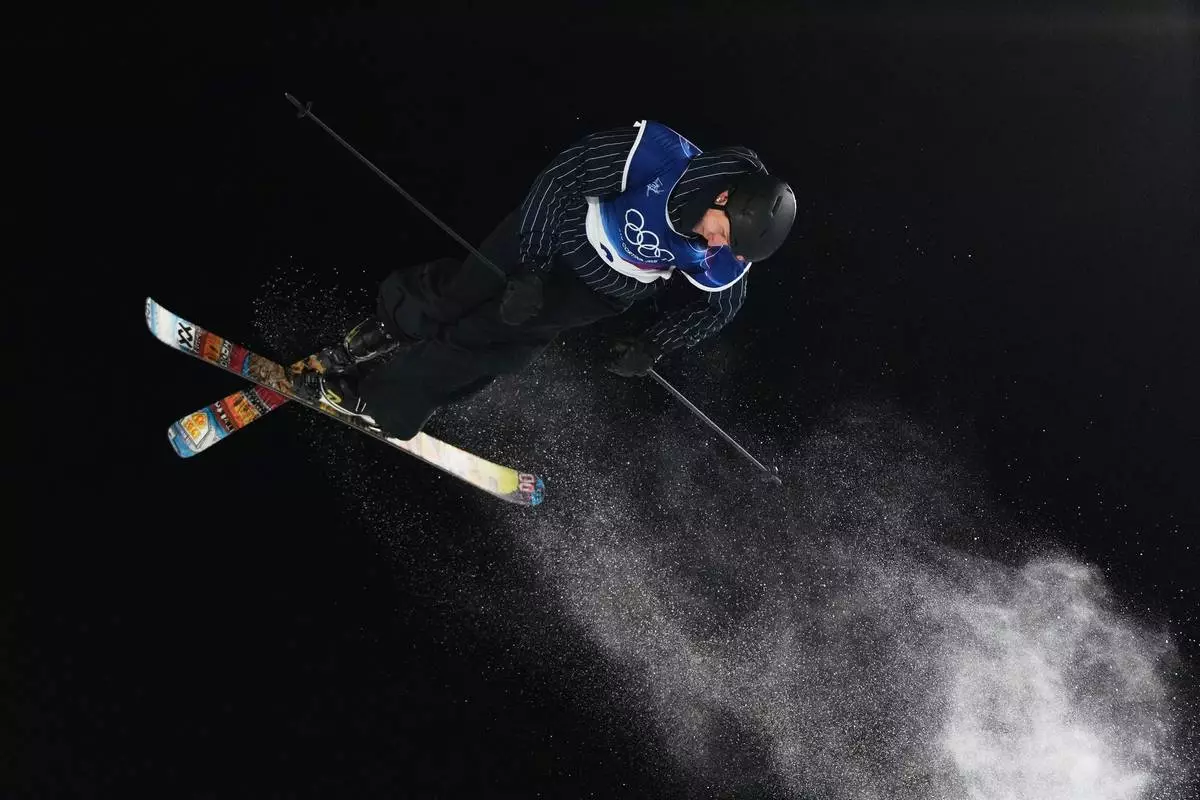
Norway's Birk Ruud competes during the men's freestyle skiing big air qualifications at the 2026 Winter Olympics, in Livigno, Italy, Sunday, Feb. 15, 2026. (AP Photo/Julia Demaree Nikhinson)
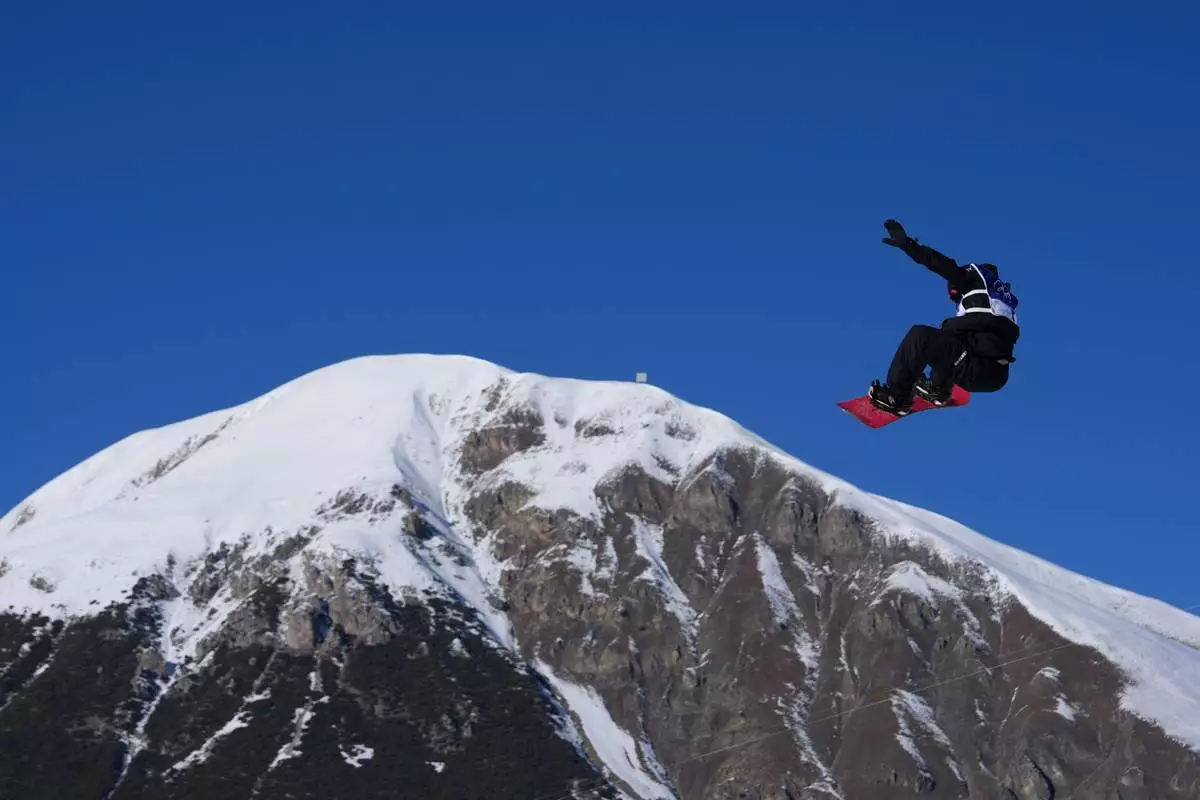
New Zealand's Zoi Sadowski-Synnott during the women's snowboarding slopestyle qualifications at the 2026 Winter Olympics, in Livigno, Italy, Sunday, Feb. 15, 2026. (AP Photo/Julia Demaree Nikhinson)
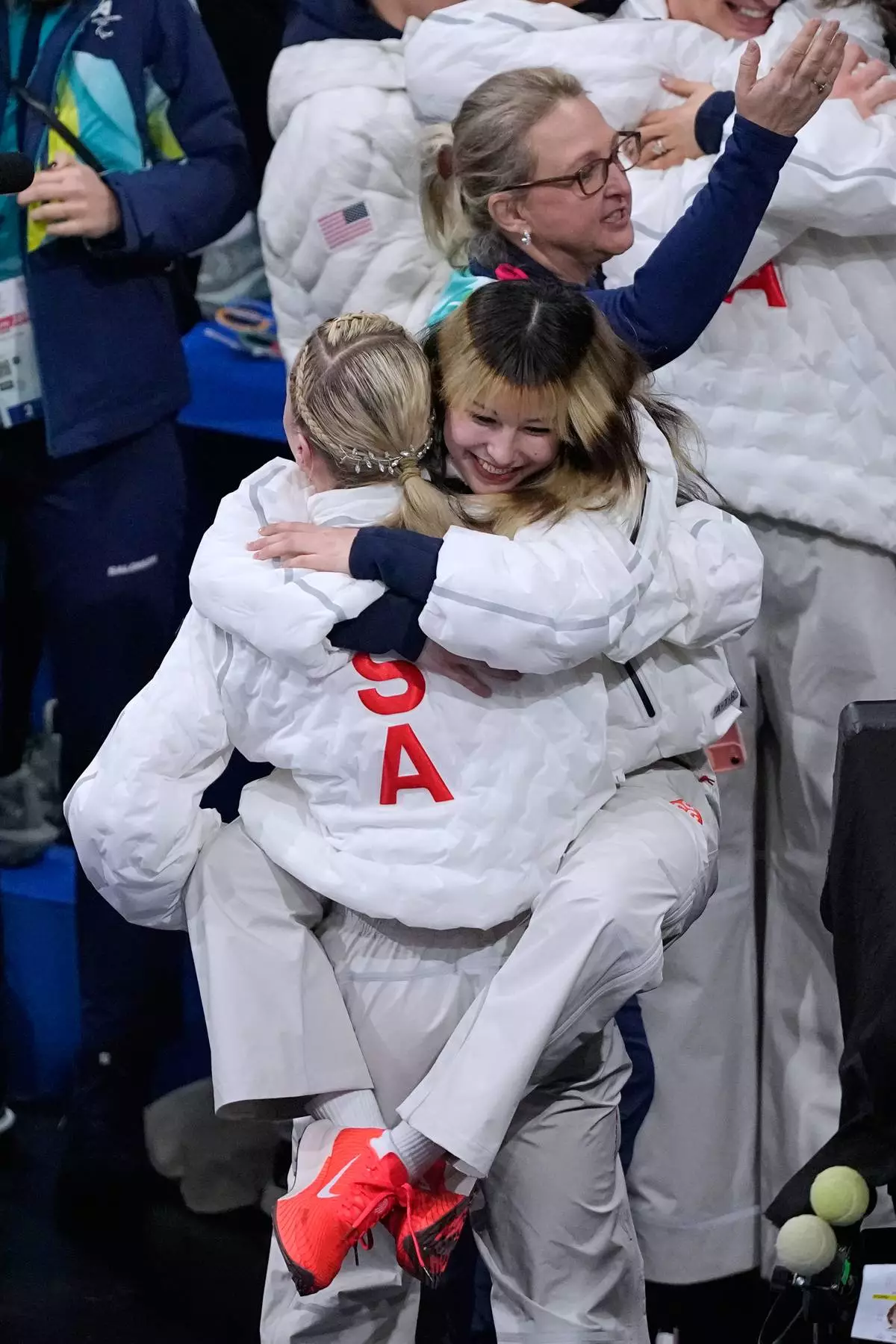
Alysa Liu hugs Amber Glenn after Team USA secured the gold medal in the figure skating team event at the 2026 Winter Olympics, in Milan, Italy, Sunday, Feb. 8, 2026. (AP Photo/Natacha Pisarenko)
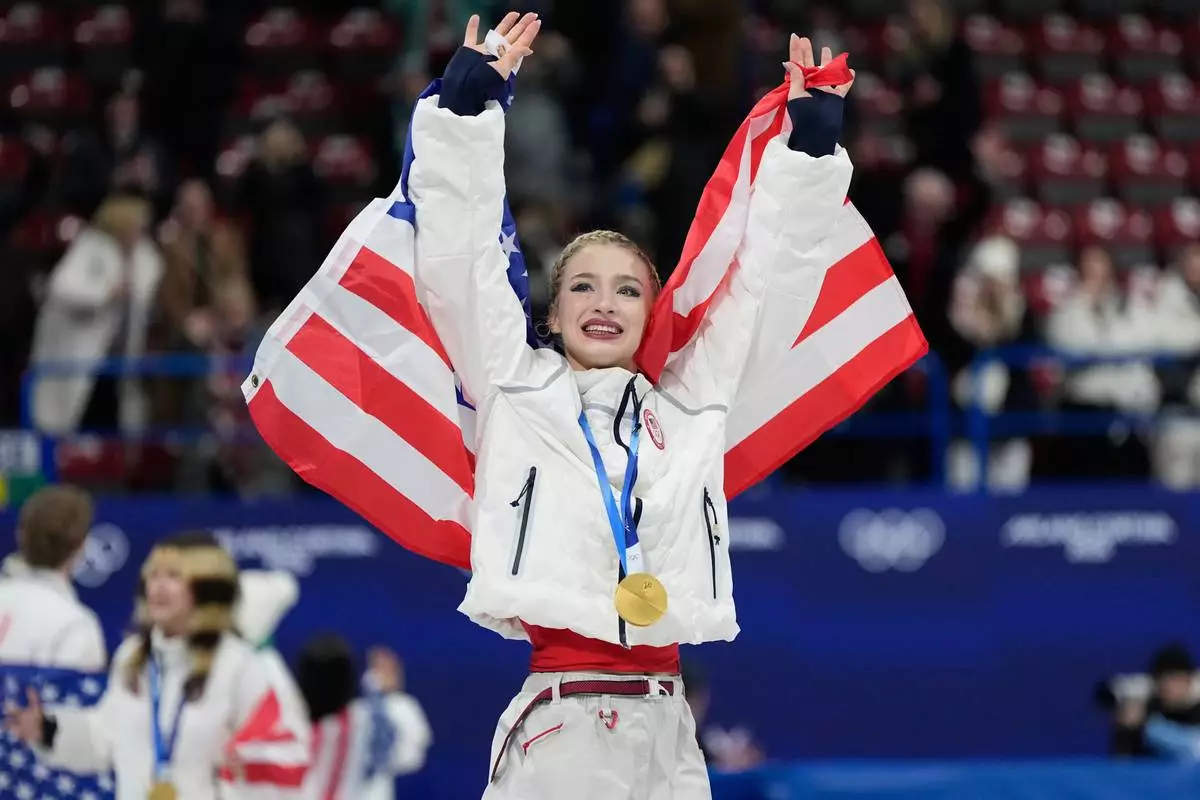
Team USA's Amber Glenn celebrates with her gold medal after the figure skating team event at the 2026 Winter Olympics, in Milan, Italy, Sunday, Feb. 8, 2026. (AP Photo/Ashley Landis)
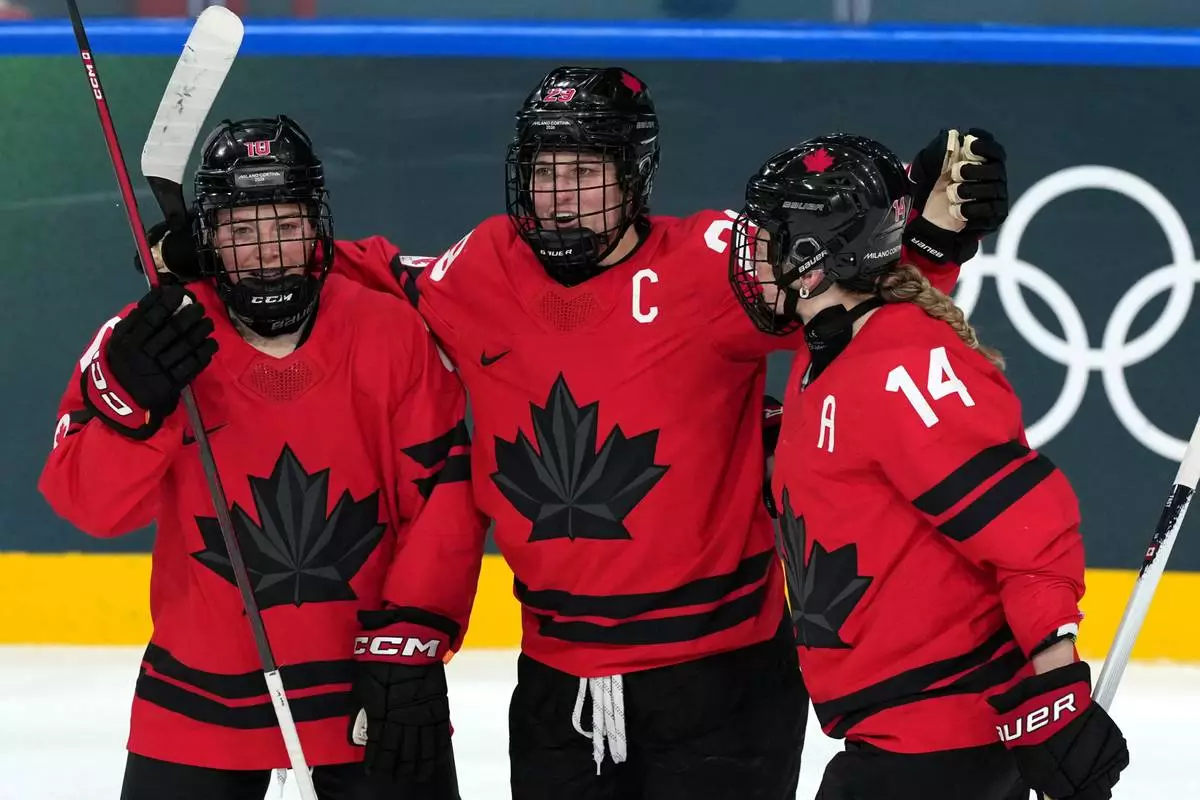
Canada's Marie-Philip Poulin (29) celebrates with Sarah Fillier (10) and Renata Fast (14) after Poulin scored against Germany during the third period of a women's ice hockey quarterfinal match at the 2026 Winter Olympics, in Milan, Italy, Saturday, Feb. 14, 2026. (AP Photo/Carolyn Kaster)
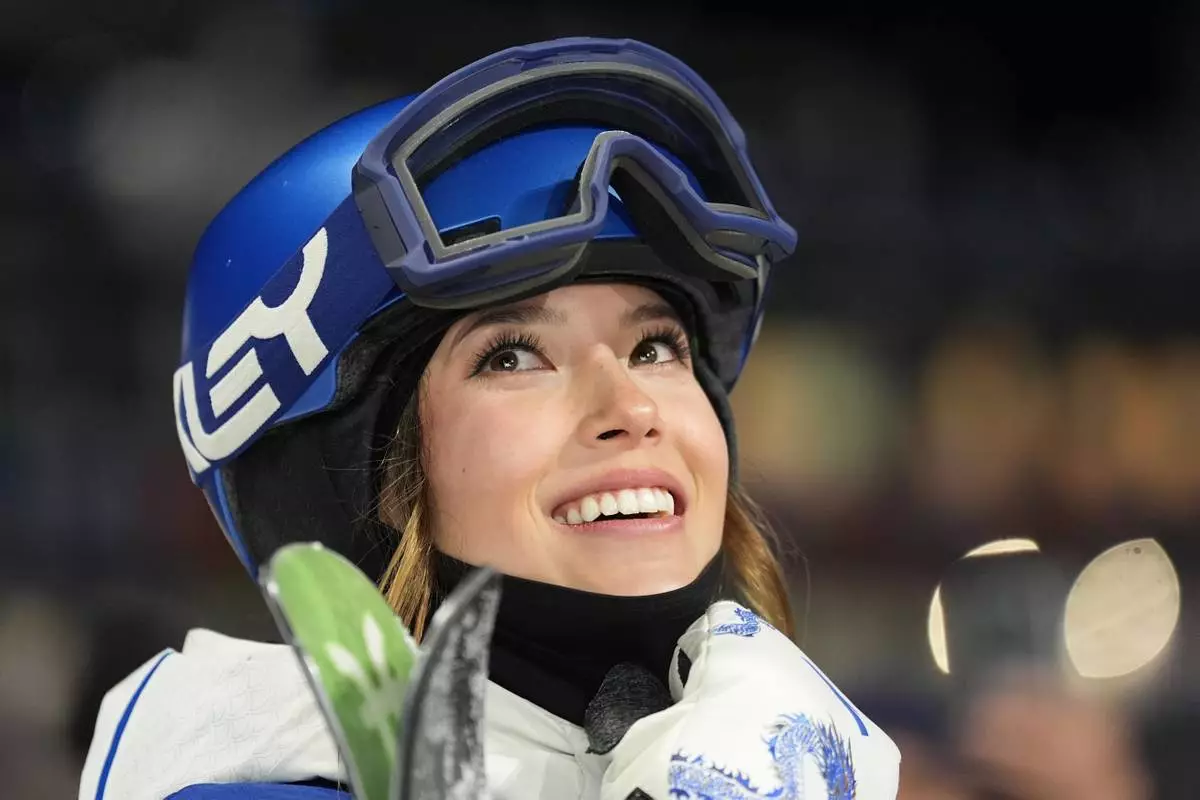
China's Eileen Gu waits for her score as she competes in the women's freestyle skiing big air qualifications at the 2026 Winter Olympics, in Livigno, Italy, Saturday, Feb. 14, 2026. (AP Photo/Abbie Parr)

Brazil's Lucas Pinheiro Braathen listens to the national anthem as he wears his gold medal for an alpine ski, men's giant slalom race, at the 2026 Winter Olympics, in Bormio, Italy, Saturday, Feb. 14, 2026.(AP Photo/Julia Demaree Nikhinson)
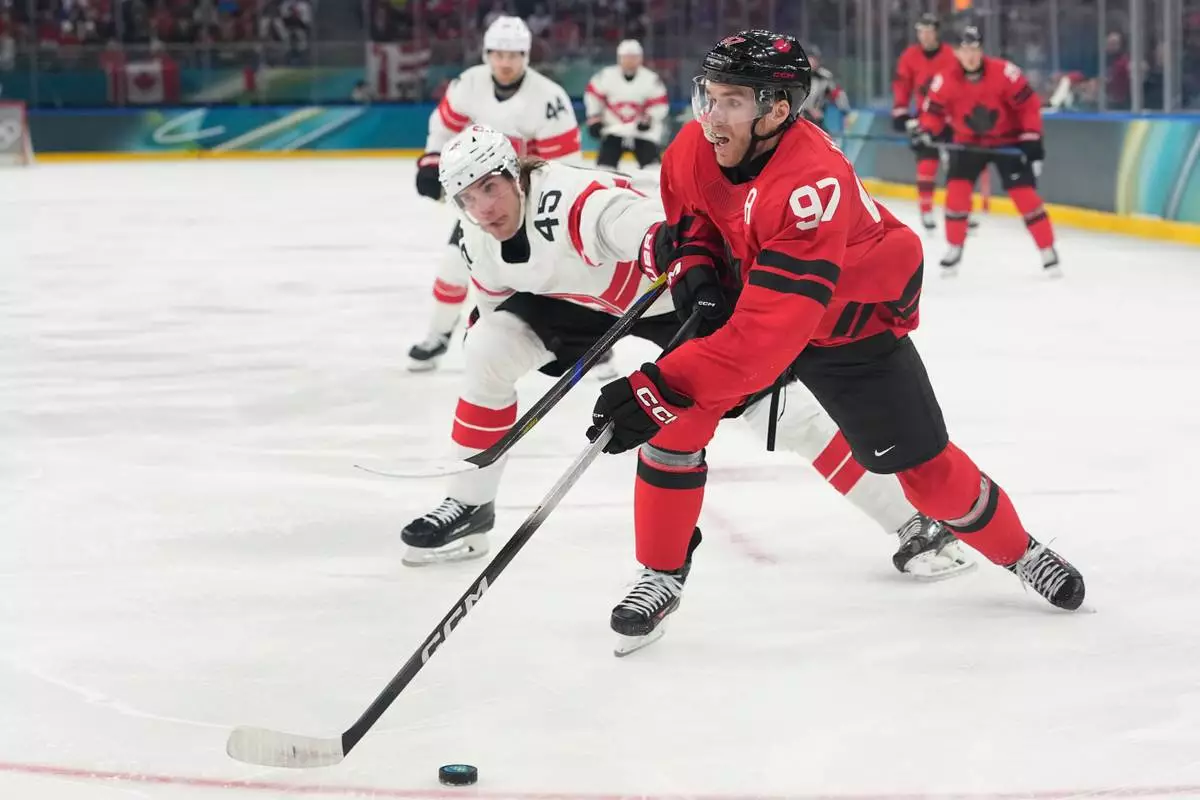
Switzerland's Michael Fora, left, challenges Canada's Connor McDavid during a preliminary round match of men's ice hockey between Canada and Switzerland at the 2026 Winter Olympics, in Milan, Italy, Friday, Feb. 13, 2026. (AP Photo/Hassan Ammar)
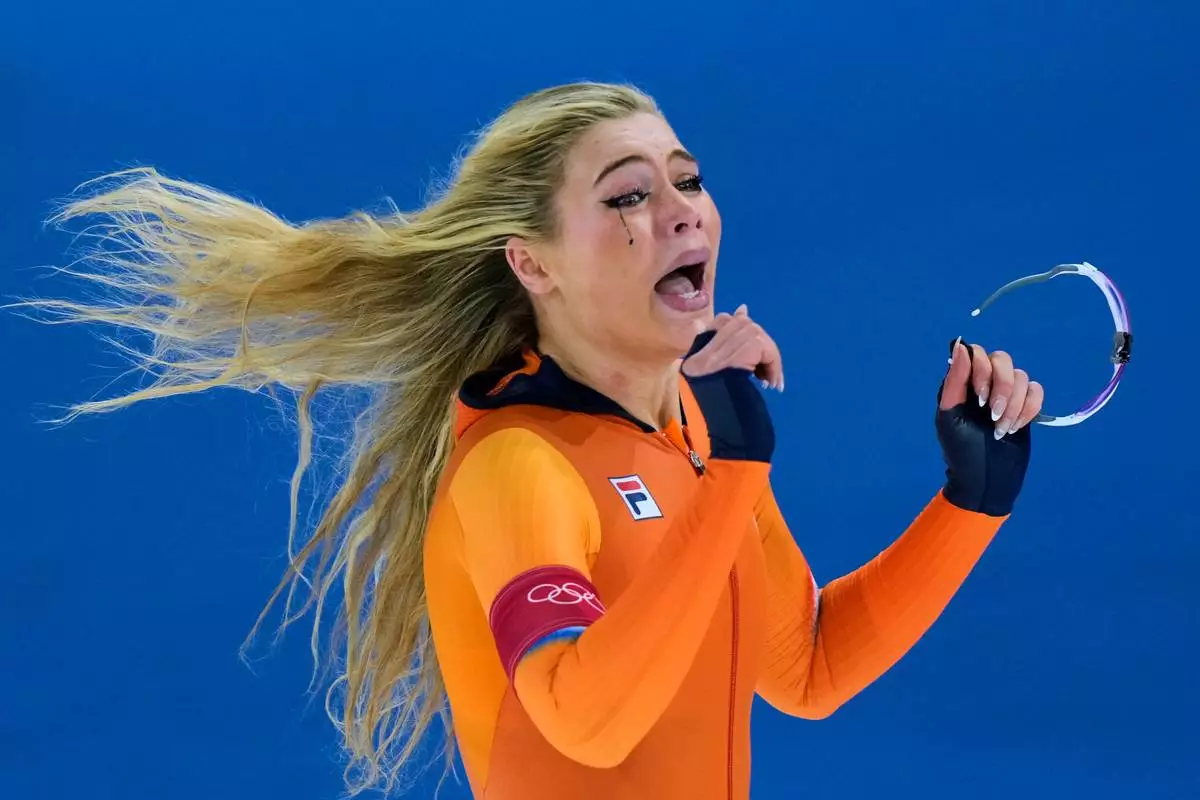
Jutta Leerdam of the Netherlands celebrates winning the gold medal in the women's 1,000 meters speedskating race at the 2026 Winter Olympics, in Milan, Italy, Monday, Feb. 9, 2026. (AP Photo/Luca Bruno)

Canada's Mikael Kingsbury celebrates his silver medal in the men's freestyle skiing moguls finals at the 2026 Winter Olympics, in Livigno, Italy, Thursday, Feb. 12, 2026. (AP Photo/Gregory Bull)
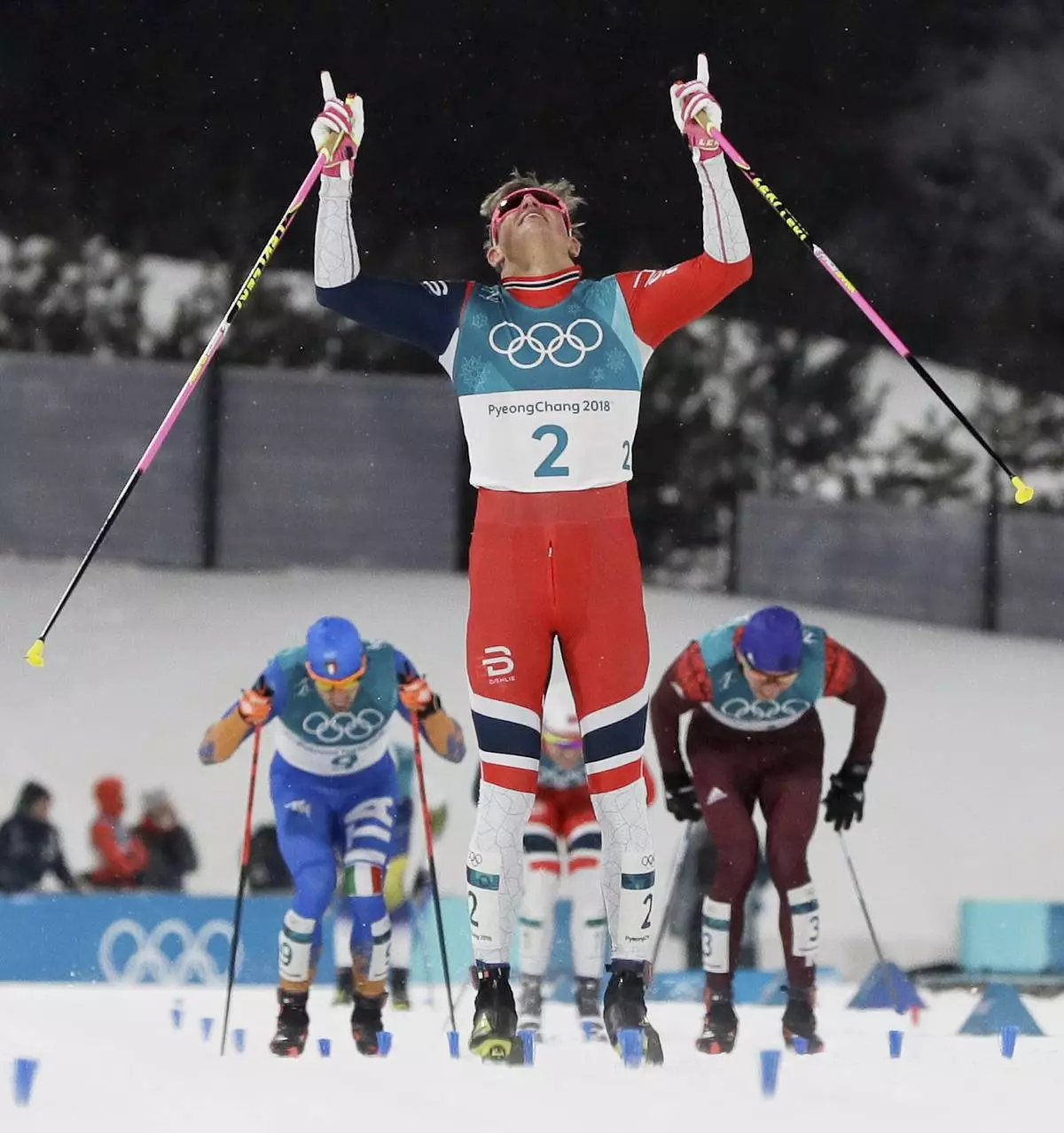
FILE - Johannes Hoesflot Klaebo, of Norway, celebrates after winning the men's cross-country skiing sprint classic at the 2018 Winter Olympics in Pyeongchang, South Korea, Feb. 13, 2018. (AP Photo/Kirsty Wigglesworth, File)
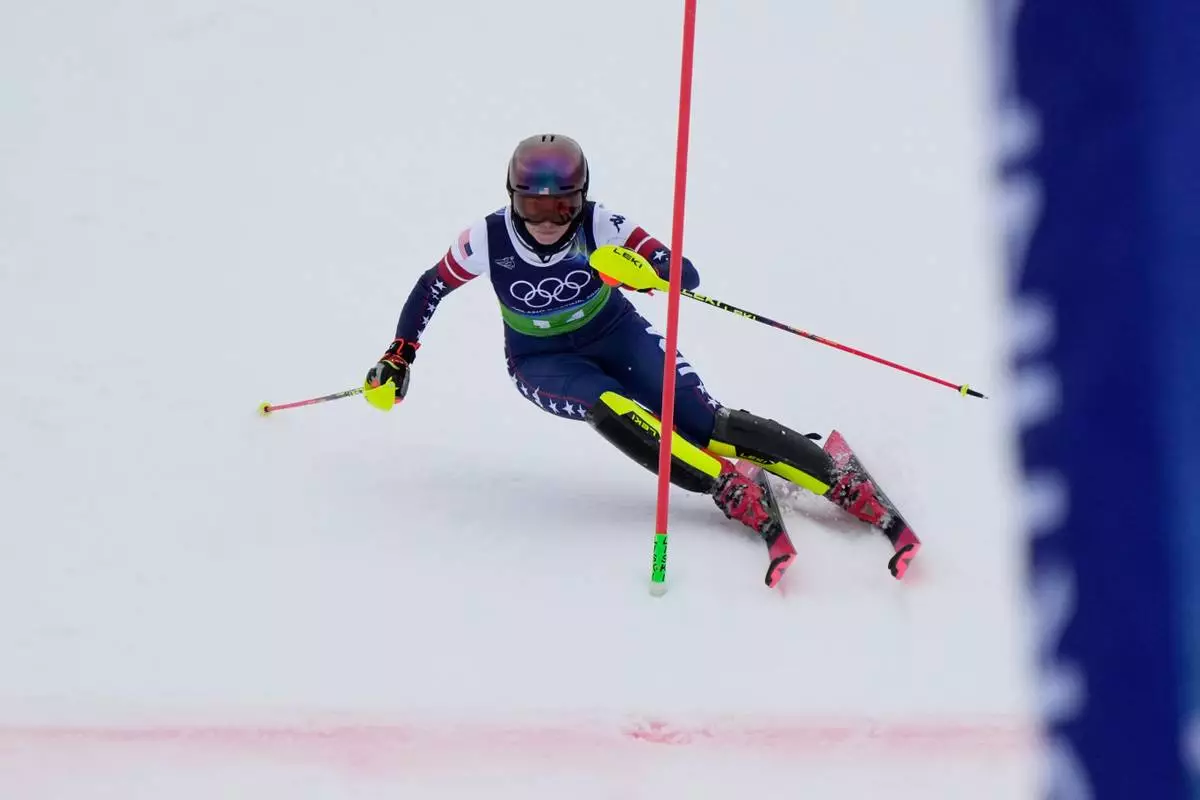
United States' Mikaela Shiffrin crosses the finish line of an alpine ski, women's team combined race, at the 2026 Winter Olympics, in Cortina d'Ampezzo, Italy, Tuesday, Feb. 10, 2026. (AP Photo/Andy Wong)
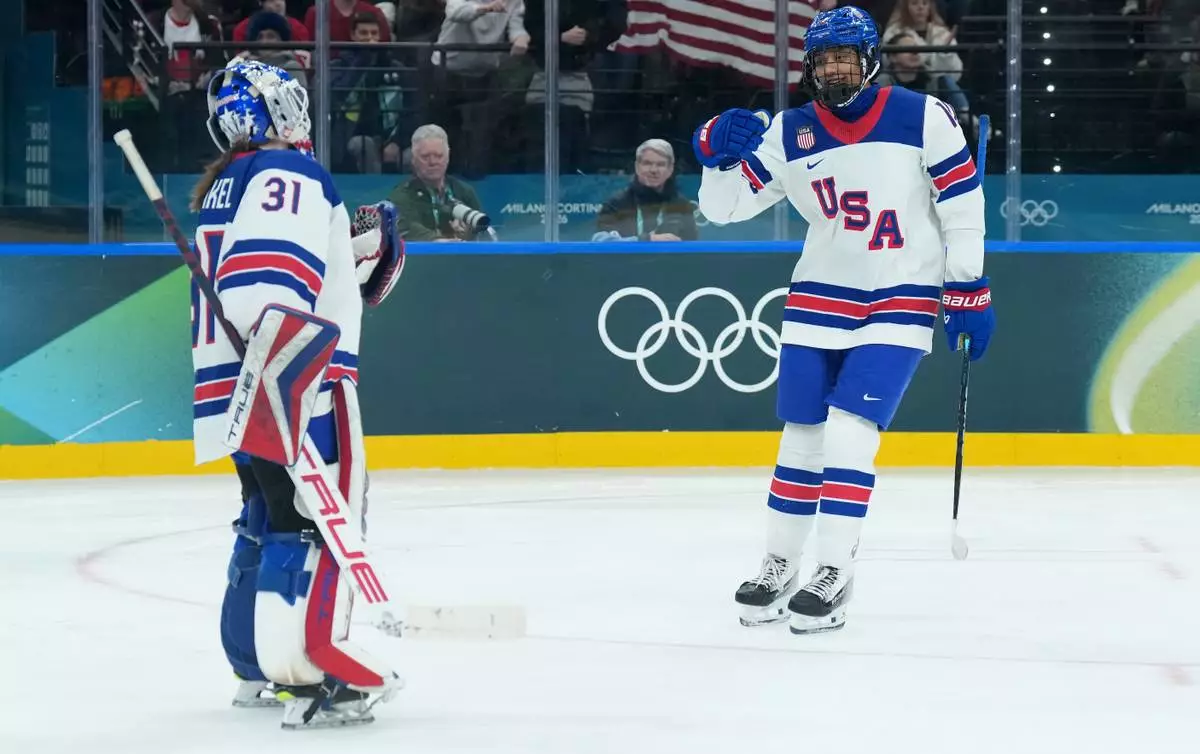
United States' Laila Edwards (10) celebrates a goal with goaltender Aerin Frankel (31) during third period against Canada during the third period of a preliminary round match of women's ice hockey between USA and Canada at the 2026 Winter Olympics in Milan, Italy, Tuesday, Feb. 10, 2026. (Nathan Denette/The Canadian Press via AP)
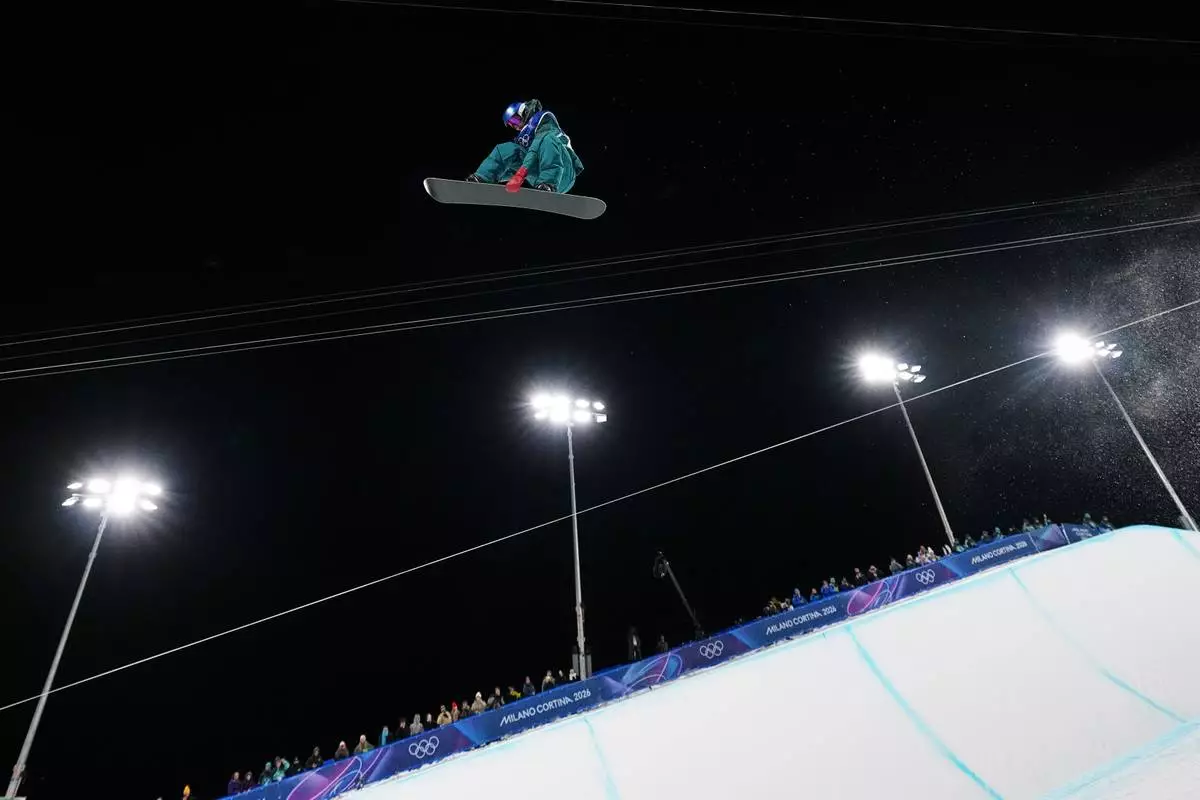
Australia's Scotty James competes during the men's snowboarding halfpipe qualifications at the 2026 Winter Olympics, in Livigno, Italy, Wednesday, Feb. 11, 2026. (AP Photo/Gregory Bull)
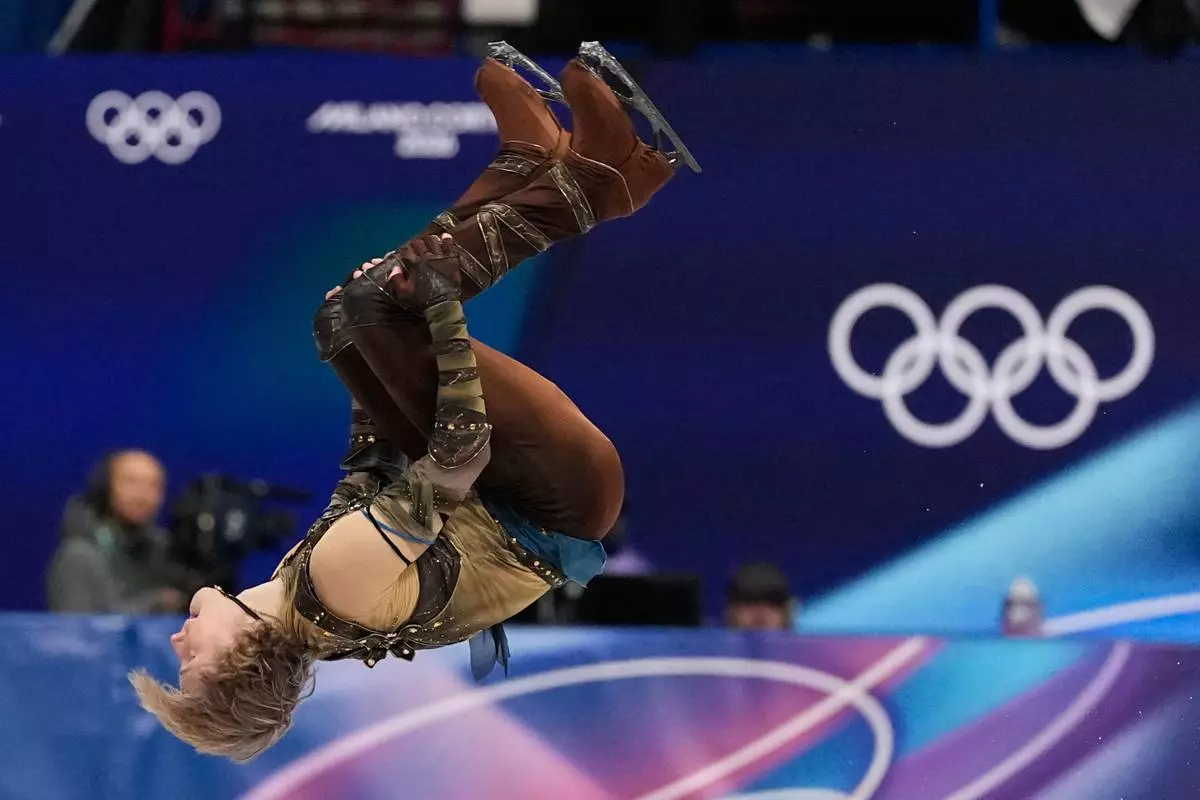
Ilia Malinin of the United States does a back flip while competing during the men's figure skating short program at the 2026 Winter Olympics, in Milan, Italy, Tuesday, Feb. 10, 2026. (AP Photo/Ashley Landis)
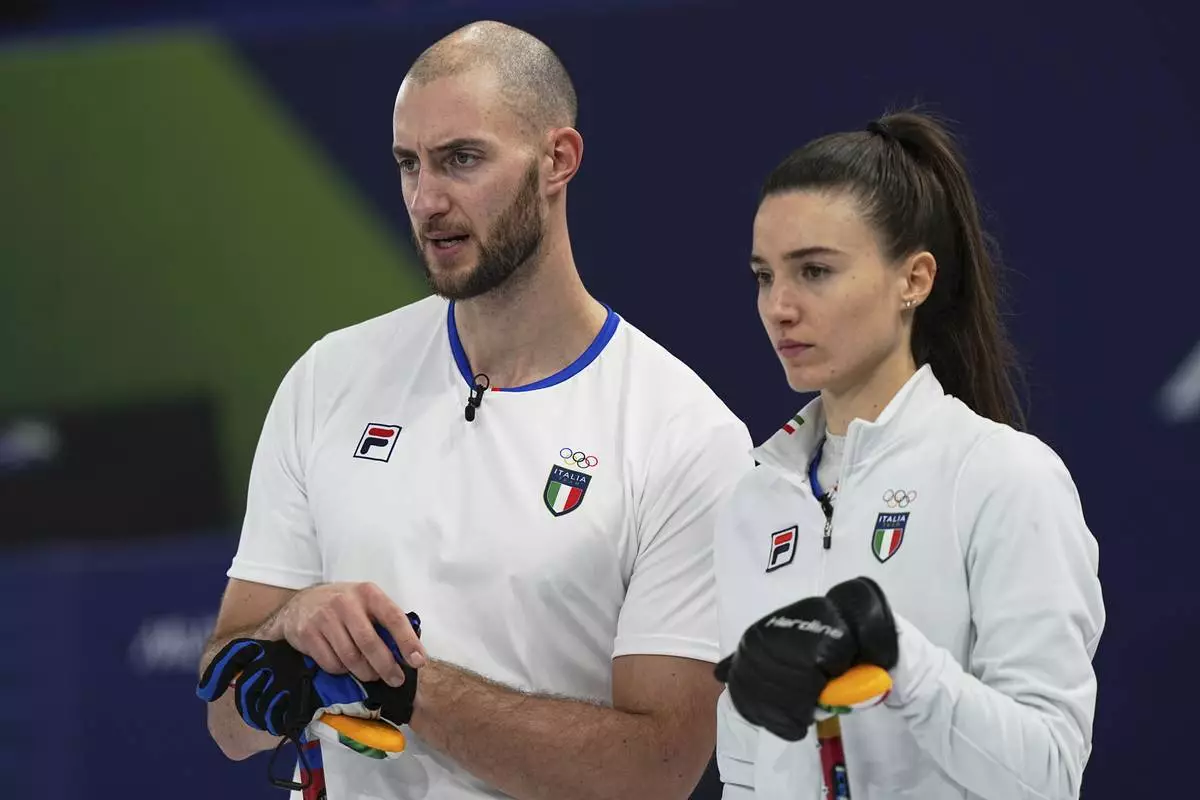
Italy's Amos Mosaner, left, and Stefania Constantini strategize during the mixed doubles round robin phase of the curling competition against Norway at the 2026 Winter Olympics, in Cortina d'Ampezzo, Italy, Saturday, Feb. 7, 2026. (AP Photo/Fatima Shbair)
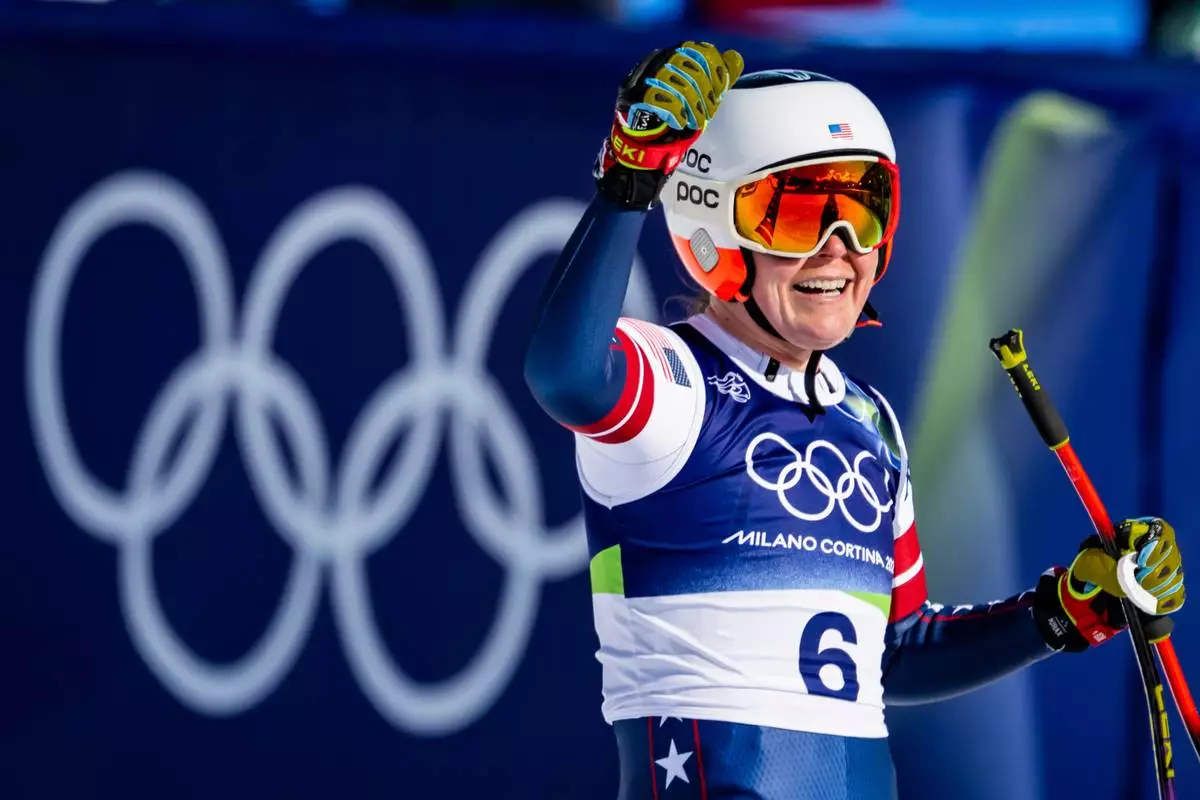
Breezy Johnson of the United States reacts in the finish area of the alpine ski women's downhill race, at the 2026 Winter Olympics, in Cortina d'Ampezzo, Italy, Sunday, Feb. 8, 2026. (Jean-Christophe Bott, Keystone via AP)
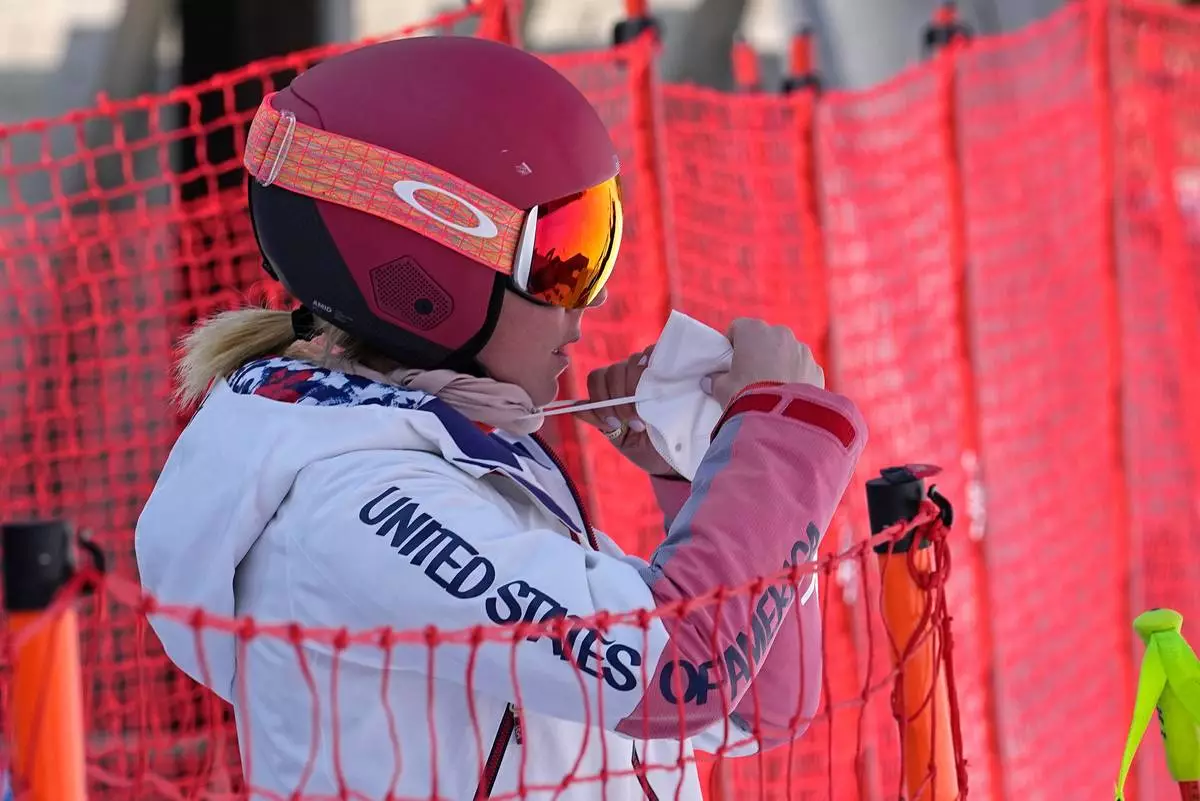
FILE - Mikaela Shiffrin of the United States adjusts her face mask before heading to the gondola to go up the alpine ski course for a training run at the 2022 Winter Olympics, Feb. 10, 2022, in the Yanqing district of Beijing. (AP Photo/Luca Bruno, file)
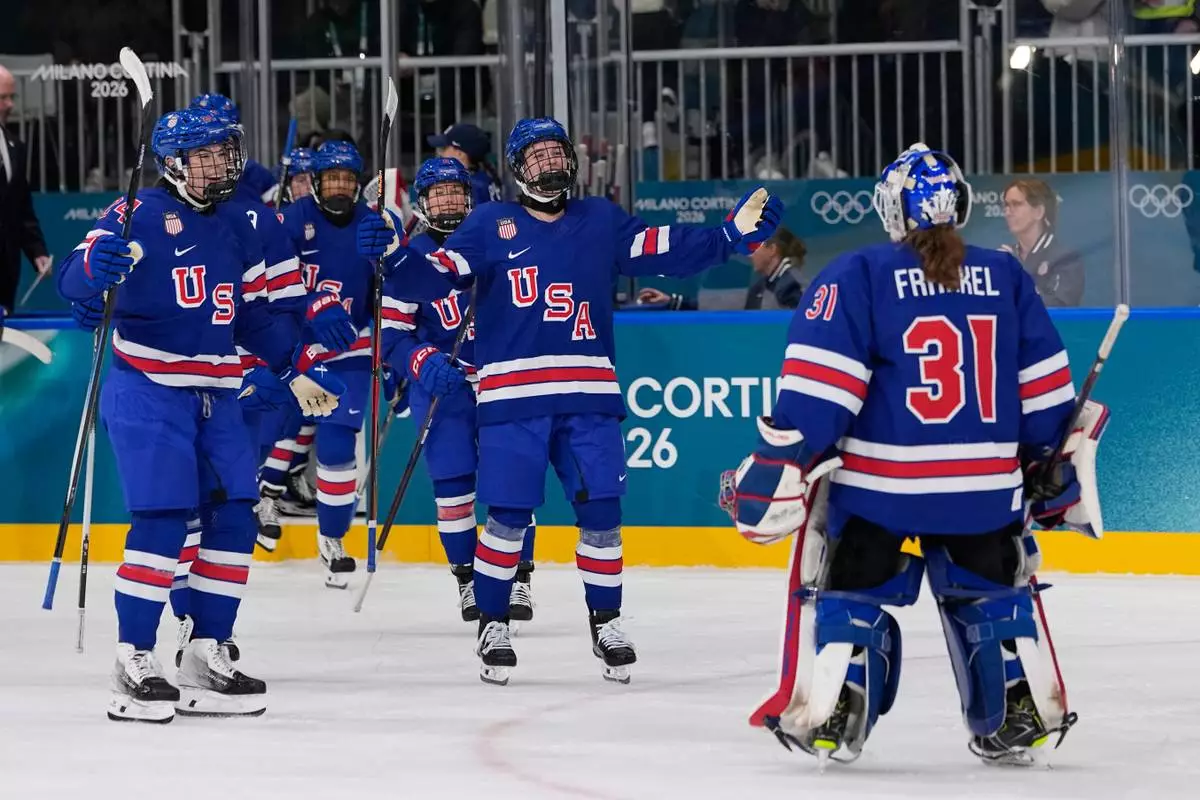
United States' Aerin Frankel, right, celebrates with teammates after a preliminary round match of women's ice hockey between the United States and Finland at the 2026 Winter Olympics, in Milan, Italy, Saturday, Feb. 7, 2026. (AP Photo/Petr David Josek)
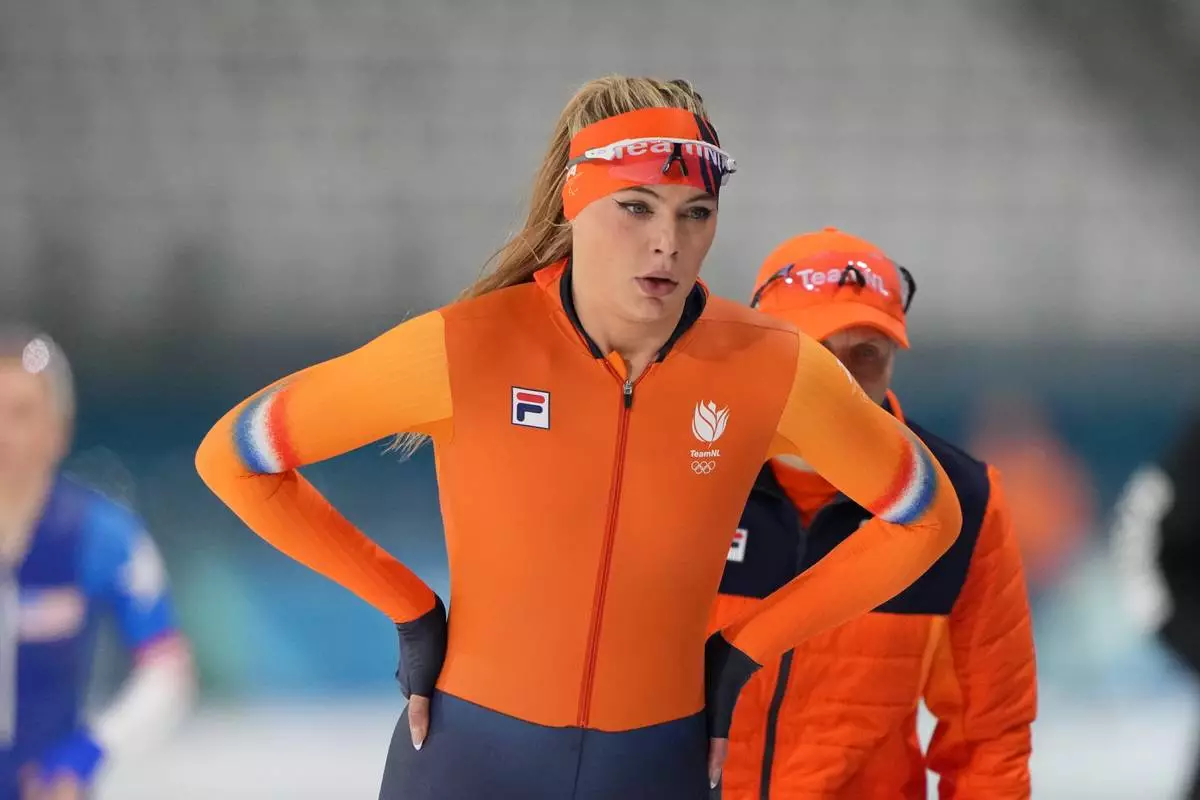
Jutta Leerdam of the Netherlands warms up during a speedskating training session, at the 2026 Winter Olympics, in Milan, Italy, Thursday, Feb. 5, 2026. (AP Photo/Lee Jin-man)
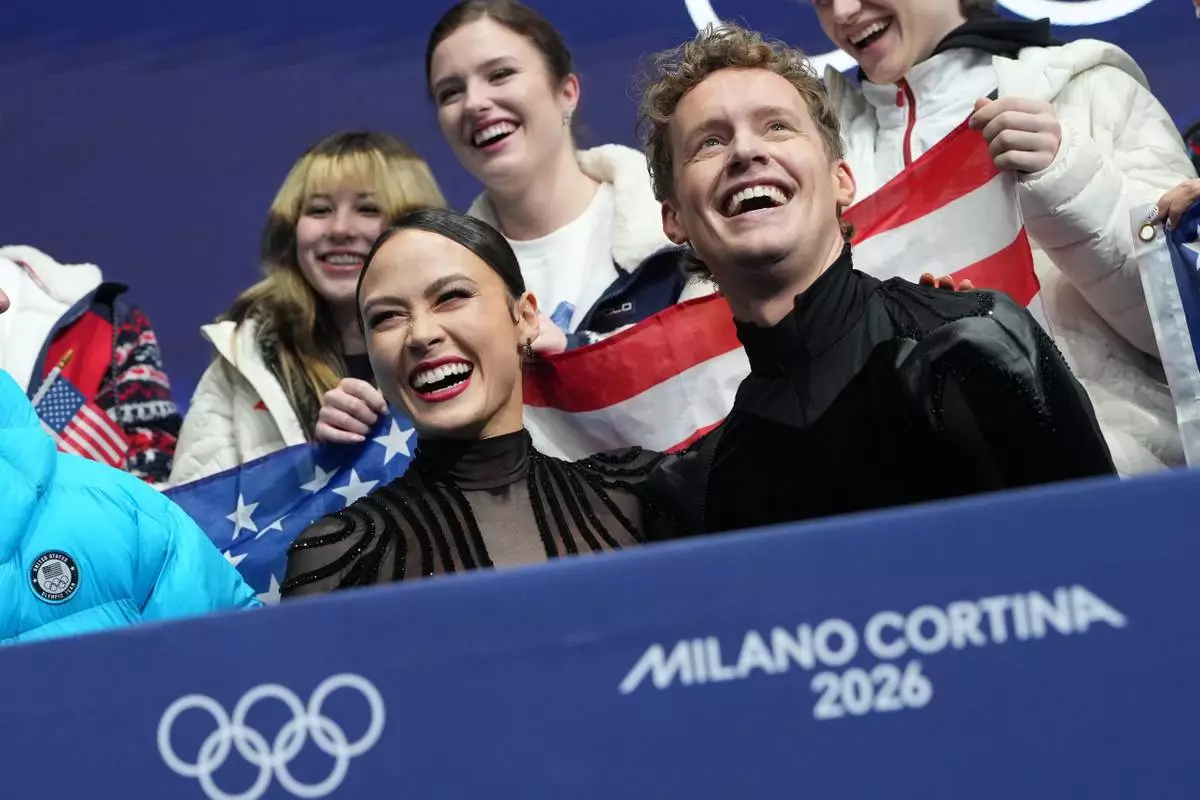
Madison Chock and Evan Bates of the United States react to their scores after competing during the figure skating ice dance team event at the 2026 Winter Olympics, in Milan, Italy, Saturday, Feb. 7, 2026. (AP Photo/Francisco Seco)
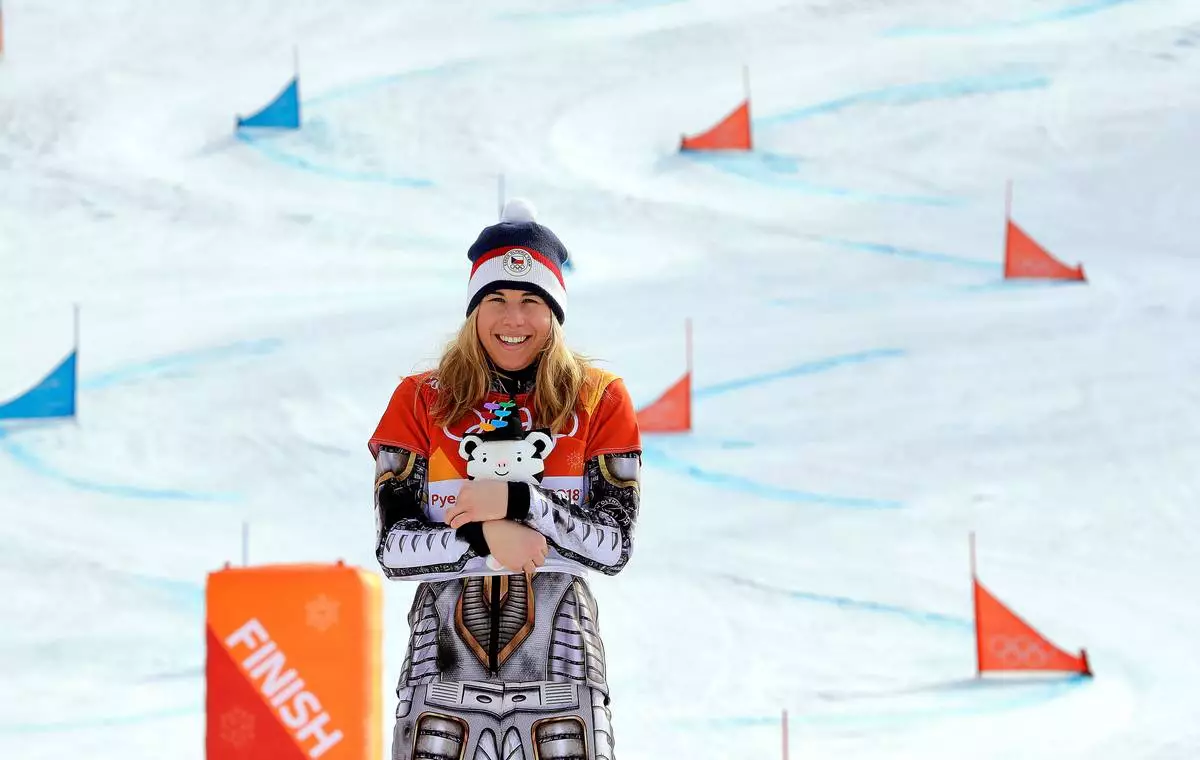
FILE -Gold medal winner Ester Ledecka, of the Czech Republic, celebrates after the women's parallel giant slalom at Phoenix Snow Park at the 2018 Winter Olympics in Pyeongchang, South Korea, Saturday, Feb. 24, 2018. (AP Photo/Lee Jin-man, File)
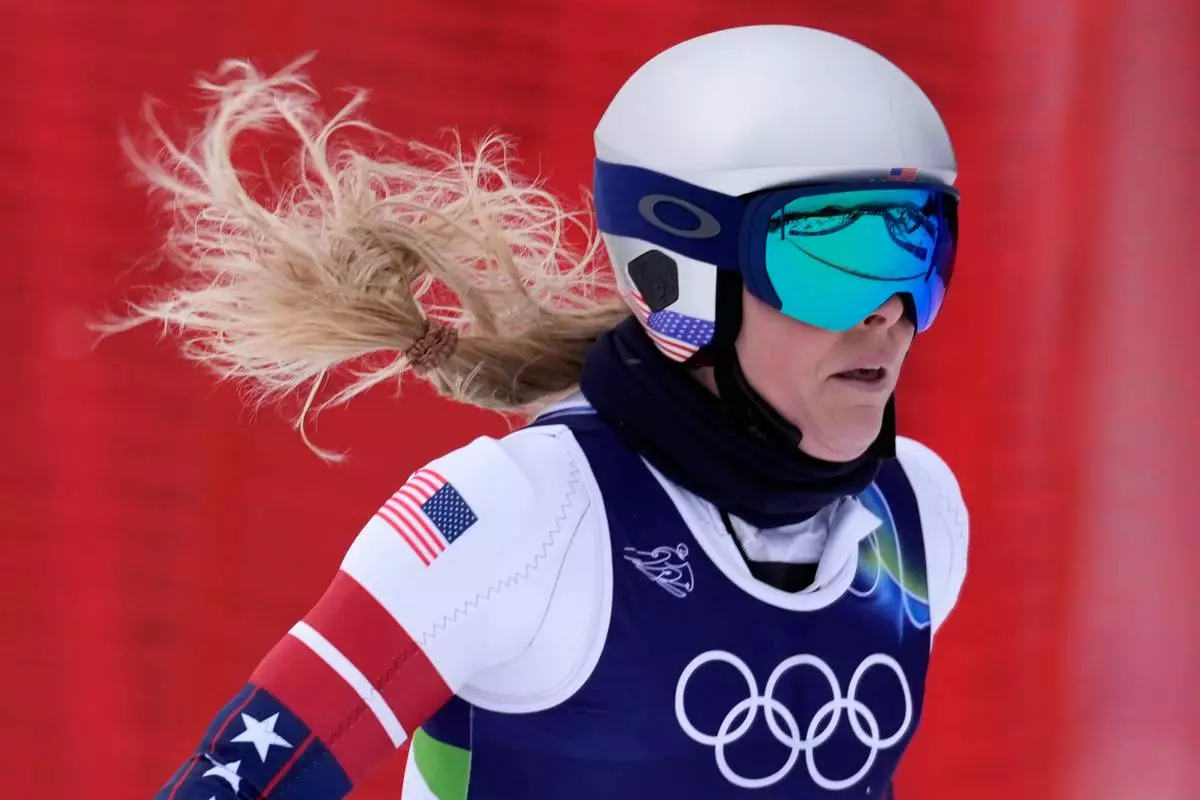
United States' Lindsey Vonn in action during alpine ski women's downhill training, at the 2026 Winter Olympics, in Cortina d'Ampezzo, Italy, Saturday, Feb. 7, 2026. (AP Photo/Robert F. Bukaty)
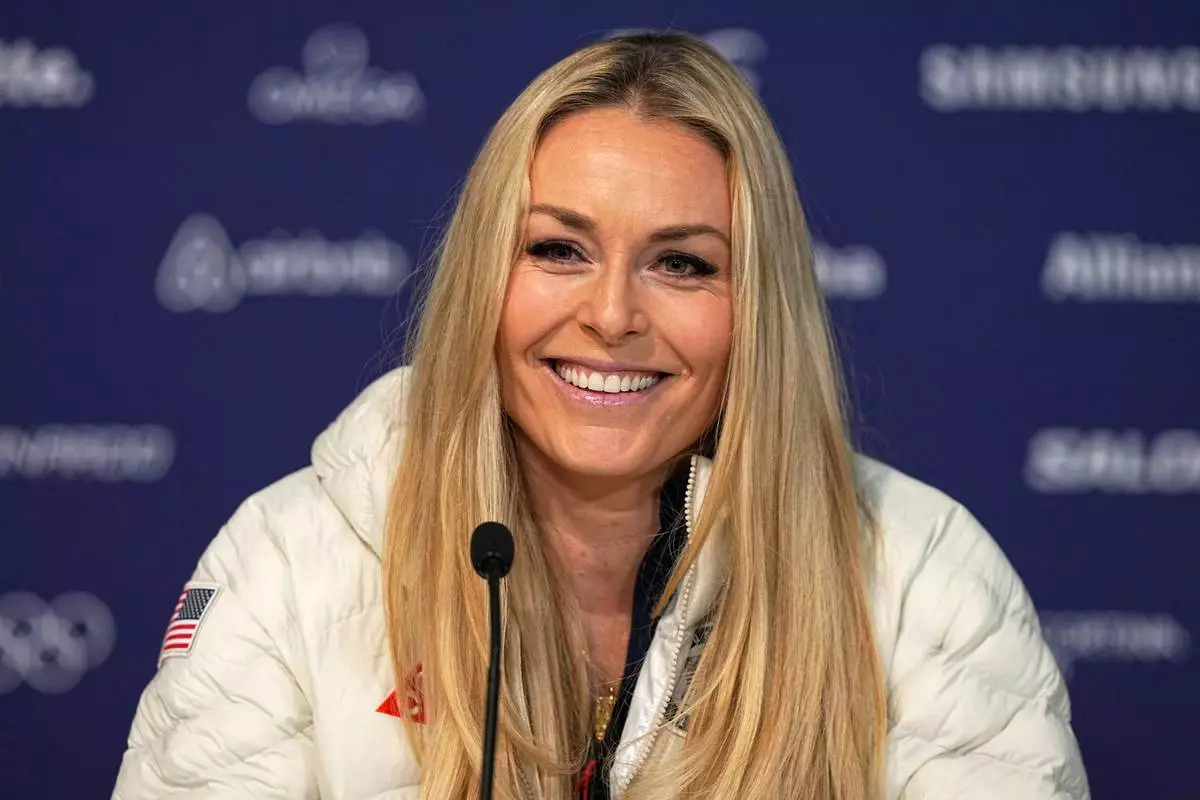
United States' Lindsey Vonn smiles during a press conference by the U.S. ski team at the 2026 Winter Olympics, in Cortina d'Ampezzo, Italy, Tuesday, Feb. 3, 2026. (AP Photo/Fatima Shbair)
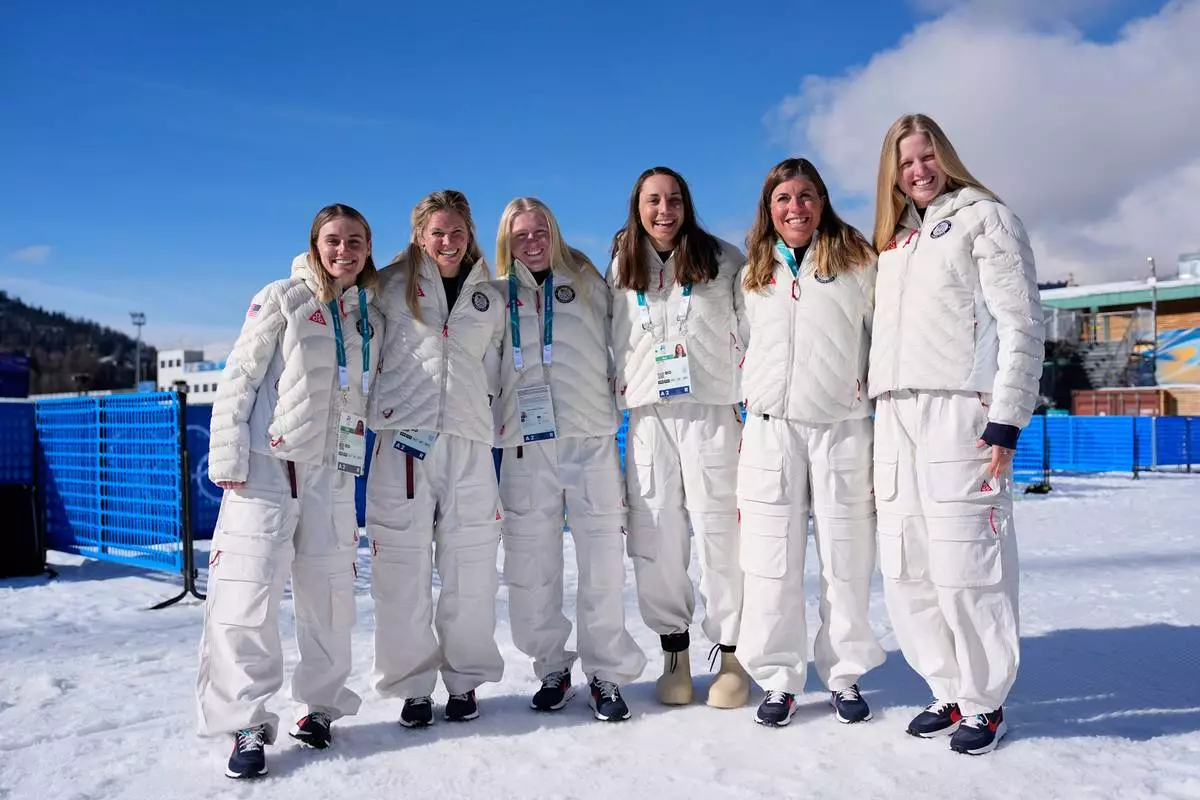
United States cross country athletes, from left, Novie McCabe, Jessie Diggins, Sammy Smith, Julia Kern, Rosie Brennan and Hayiley Swirlbul pose for photos before a cross country training session at the 2026 Winter Olympics, in Tesero, Italy, Thursday, Feb. 5, 2026. (AP Photo/Matthias Schrader)
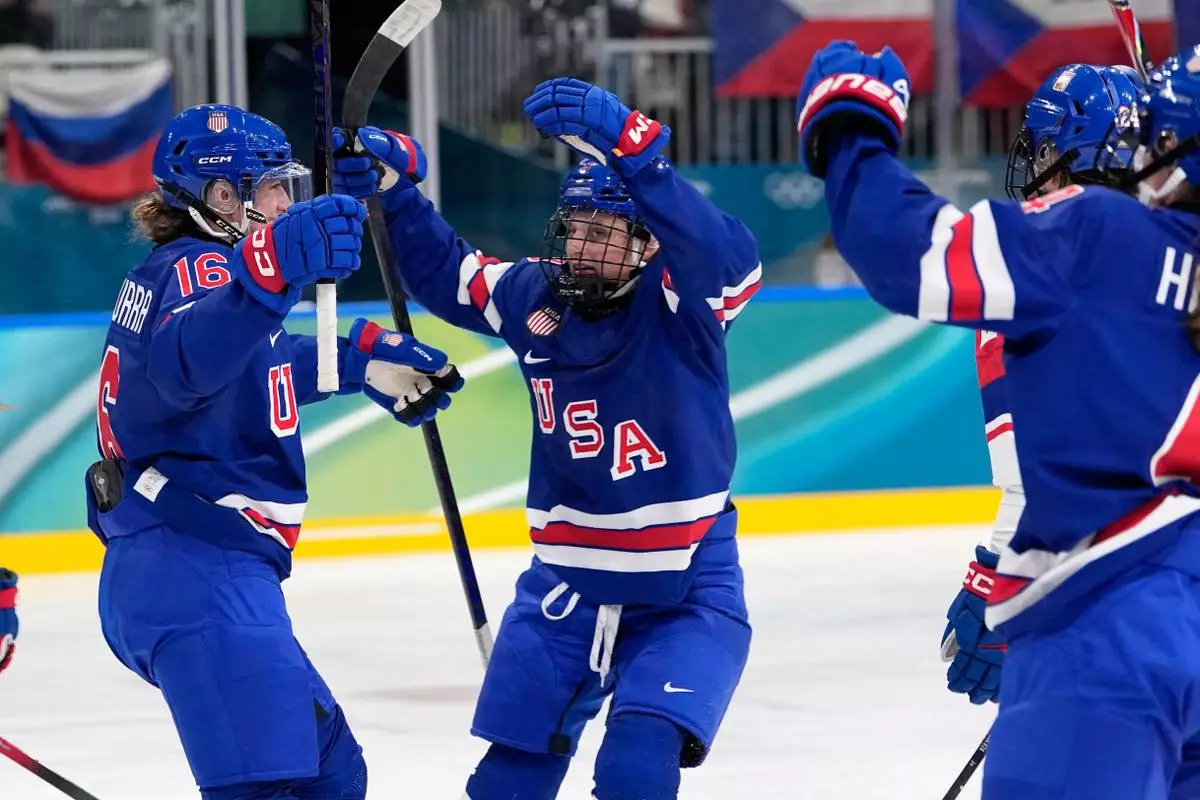
United States' Hayley Scamurra, left, celebrates after scoring her side's fifth goal during a preliminary round match of women's ice hockey between United States and Czechia at the 2026 Winter Olympics, in Milan, Italy, Thursday, Feb. 5, 2026. (AP Photo/Petr David Josek)
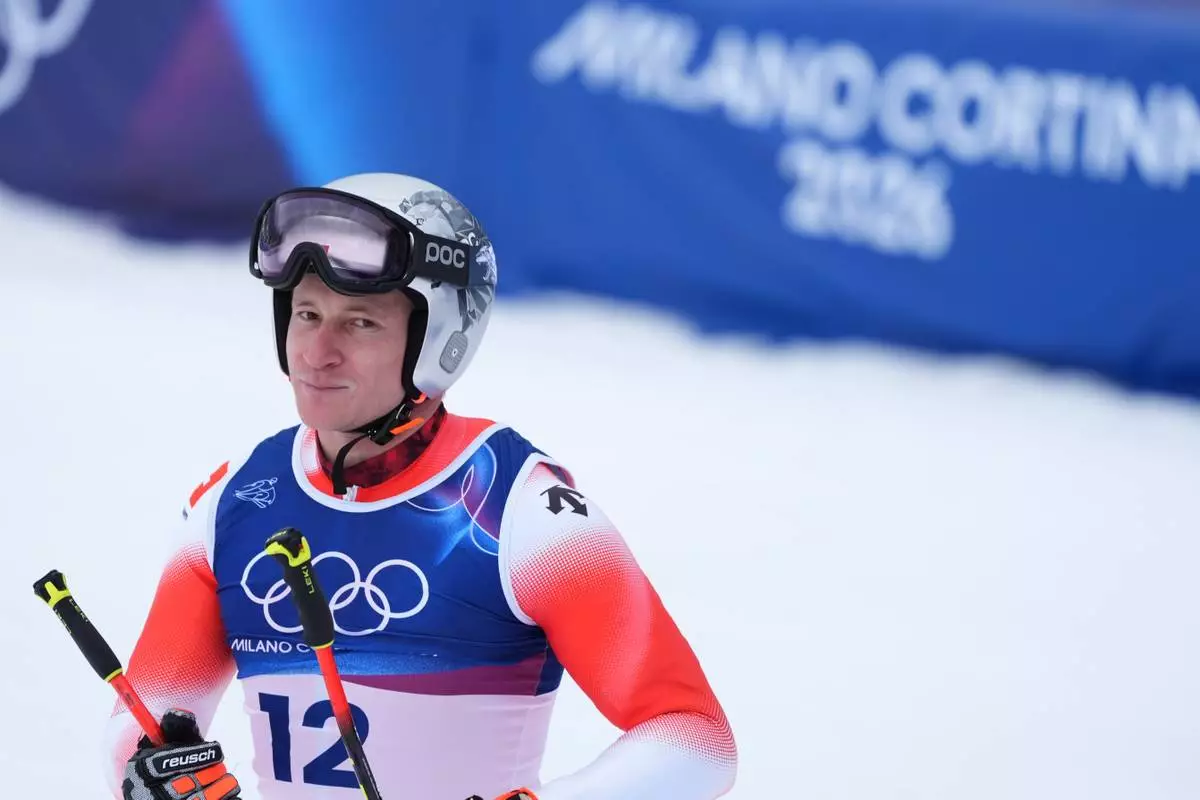
Switzerland's Marco Odermatt reacts at the finish area of an alpine ski, men's downhill official training, at the 2026 Winter Olympics, in Bormio, Italy, Friday, Feb. 6, 2026. (AP Photo/Rebecca Blackwell)
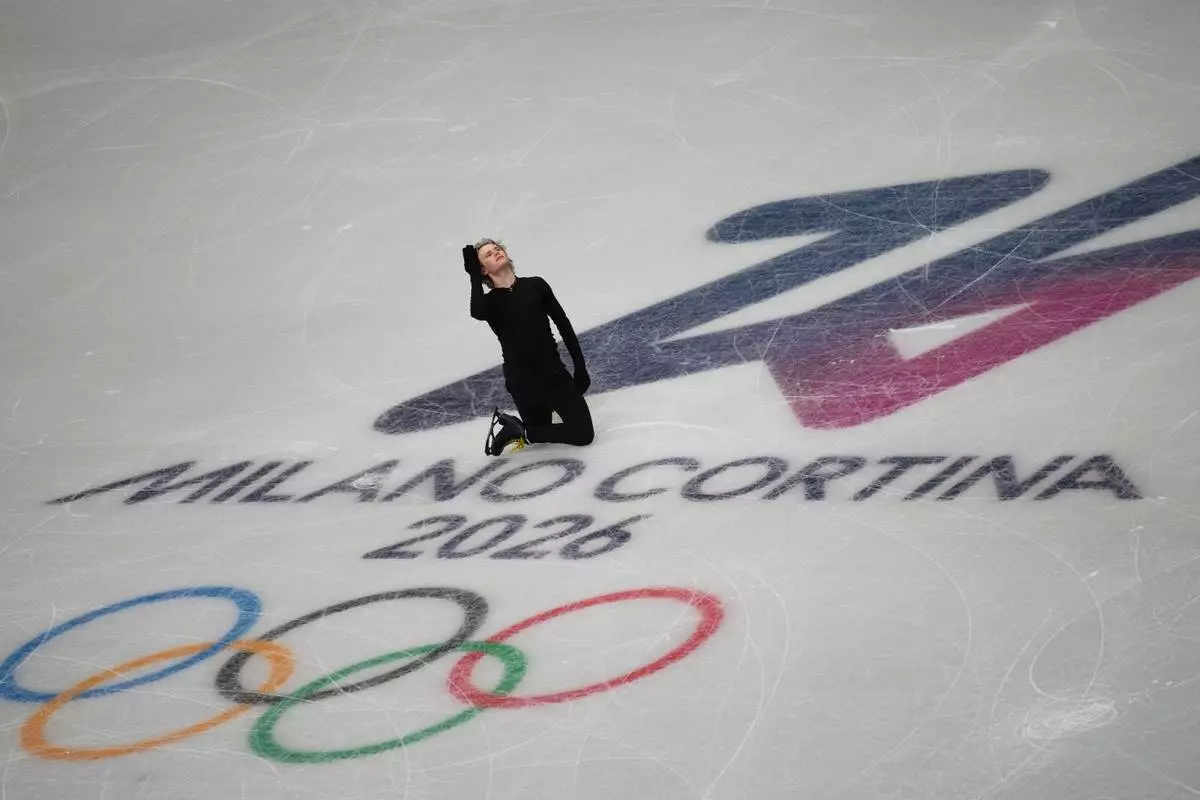
Ilia Malinin, of the United States, practices during a figure skating training session ahead of the 2026 Winter Olympics, in Milan, Italy, Tuesday, Feb. 3, 2026. (AP Photo/Christophe Ena)