LOS ANGELES (AP) — A jury has found former major league outfielder Yasiel Puig guilty of obstruction of justice and lying to federal officials investigating an illegal gambling operation, the U.S. Attorney’s Office said Friday.
The verdict came after a multiweek trial that featured testimony from Major League Baseball officials and Donny Kadokawa, a Hawaii baseball coach that Puig placed bets through. Puig now faces up to 20 years in federal prison and is scheduled to be sentenced May 26.
Puig's attorney, Keri Curtis Axel, said the government failed to prove key elements of its case and that she plans to raise post-trial motions.
“We look forward to clearing Yasiel’s name,” Axel said.
Puig, 35, initially pled guilty to a felony charge of lying to federal agents investigating an illegal gambling operation. He acknowledged in an August 2022 plea agreement that he wracked up more than $280,000 in losses over a few months in 2019 while wagering on tennis, football and basketball games through a third party who worked for an illegal gambling operation run by Wayne Nix, a former minor league baseball player.
Nix pled guilty in 2022 to conspiracy to operate an illegal gambling business and subscribing to a false tax return. He is still awaiting sentencing.
Authorities said Puig placed at least 900 bets through Nix-controlled betting websites and through a man who worked for Nix.
Prosecutors said that during a January 2022 interview with federal investigators, Puig denied knowing about the nature of his bets, who he was betting with, and the circumstances of paying his gambling debts.
But he changed his tune months later, announcing that he was switching his plea to not guilty because of “significant new evidence,” according to a statement from his attorneys in Los Angeles.
“I want to clear my name,” Puig said in the statement. “I never should have agreed to plead guilty to a crime I did not commit.”
The government argued that he intentionally misled the federal investigators. They played in court audio clips of Puig speaking English and brought expert witnesses to testify on Puig's cognitive abilities, the New York Times reported.
His attorneys said that Puig, who has a third-grade education, had untreated mental-health issues and did not have his own interpreter or criminal legal counsel with him during the interview with federal investigators where he purportedly lied.
Puig's former attorney Steven Gebelin testified that during the January 2022 interview, Puig tried to be helpful in answering the investigators' questions and the interpreter struggled with Puig’s Spanish language dialect, according to the New York Times.
Puig batted .277 with 132 home runs and 415 RBIs while appearing in seven major league seasons, the first six with the Dodgers, where he earned an All-Star selection in 2014.
Dodgers broadcaster Vin Scully called Puig the “wild horse” for his on-field antics and talent at a young age, joining MLB at 22, a year after escaping his home country of Cuba.
He played for the Cincinnati Reds and the Cleveland Indians in 2019 before becoming a free agent. He then played in the Mexican League and last year he signed a one-year, $1 million contact with South Korea’s Kiwoom Heroes.
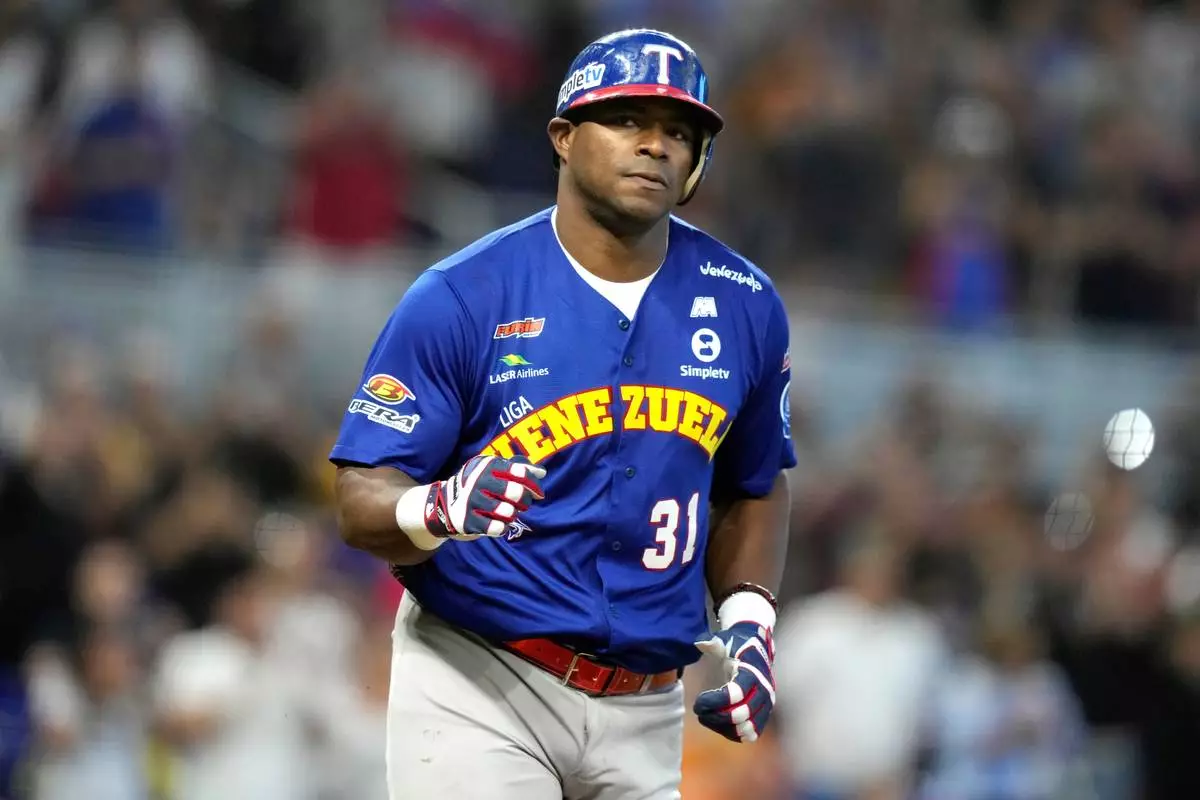
FILE - Venezuela's Yasiel Puig heads to first after drawing a bases loaded walk to score Ehire Adrianza during the third inning of a Caribbean Series baseball game against Curacao, Saturday, Feb. 3, 2024, in Miami. (AP Photo/Lynne Sladky, File)
PORTLAND, Ore. (AP) — Lawyers for conservation groups, Native American tribes, and the states of Oregon and Washington returned to court Friday to seek changes to dam operations on the Snake and Columbia Rivers, following the collapse of a landmark agreement with the federal government to help recover critically imperiled salmon runs.
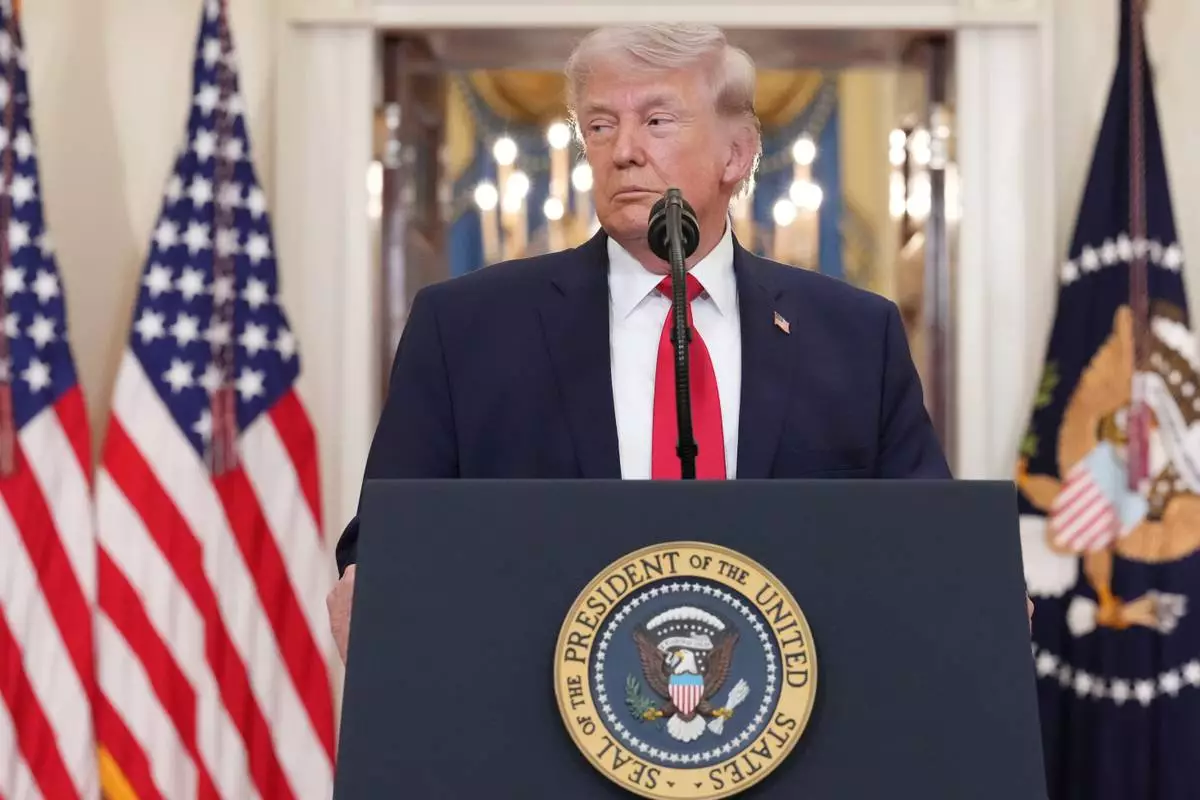
Last year President Donald Trump torpedoed the 2023 deal, in which the Biden administration had promised to spend $1 billion over a decade to help restore salmon while also boosting tribal clean energy projects. The White House called it “radical environmentalism” that could have resulted in the breaching of four controversial dams on the Snake River.
Referring to the decades-long litigation, U.S. District Judge Michael Simon in Portland said it was “deja vu all over again” as he opened the hearing in a packed courtroom.
The plaintiffs argue that the way the government operates the dams violates the Endangered Species Act, and judges have repeatedly ordered changes to help the fish over the years. They're asking the court to order changes at eight large hydropower dams, including lowering reservoir water levels, which can help fish travel through them faster, and increasing spill, which can help juvenile fish pass over dams instead of through turbines.
“We are looking at fish that are on the cusp of extinction,” Amanda Goodin, an attorney with Earthjustice, a nonprofit law firm representing conservation, clean energy and fishing groups in the litigation, said during the hearing. “This is not a situation that can wait.”
In opposing arguments, an attorney for the federal government said “there's not a linear relationship that more spill equals more benefit” for salmon.
In court filings, the federal government called the request a “sweeping scheme to wrest control” of the dams that would compromise the ability to operate them safely and efficiently. Any such court order could also raise rates for utility customers, the government said.
The lengthy legal battle was revived after Trump pulled the U.S. out of the Resilient Columbia Basin Agreement last June. The pact with Washington, Oregon and four Native American tribes had allowed for a pause in the litigation.
The plaintiffs, which include the state of Oregon and a coalition of conservation and fishing groups such as the National Wildlife Federation, filed the motion for a preliminary injunction, with Washington state, the Nez Perce Tribe and Yakama Nation supporting it as “friends of the court.” The parties have described salmon as central to Northwest tribal life.
The Columbia River Basin, spanning an area roughly the size of Texas, was once the world’s greatest salmon-producing river system, with at least 16 stocks of salmon and steelhead. Today, four are extinct and seven are endangered or threatened. Another iconic but endangered Northwest species, a population of killer whales, also depend on the salmon.
The construction of the first dams on the Columbia River, including the Grand Coulee and Bonneville in the 1930s, provided jobs during the Great Depression as well as hydropower and navigation. They made the town of Lewiston, Idaho, the most inland seaport on the West Coast, and many farmers continue to rely on barges to ship their crops.
Opponents of the proposed dam changes include the Inland Ports and Navigation Group, which said in a statement last year that increasing spill “can disproportionately hurt navigation, resulting in disruptions in the flow of commerce that has a highly destructive impact on our communities and economy.”
However, the dams are also a main culprit behind the decline of salmon, which regional tribes consider part of their cultural and spiritual identity.
Speaking before the hearing, Jeremy Takala of the Yakama Nation Tribal Council said “extinction is not an option.”
“This is very personal to me. It's very intimate,” he said, describing how his grandfather took him to go fishing. “Every season of lower survival means closed subsistence fisheries, loss of ceremonies and fewer elders able to pass on fishing traditions to the next generation.”
The dams for which changes are being sought are the Ice Harbor, Lower Monumental, Little Goose and Lower Granite on the Snake River, and the Bonneville, The Dalles, John Day and McNary on the Columbia.
FILE - Water spills over the Bonneville Dam on the Columbia River, which runs along the Washington and Oregon state line, June 21, 2022. (AP Photo/Jessie Wardarski, File)
FILE - Water moves through a spillway of the Lower Granite Dam on the Snake River near Almota, Wash., April 11, 2018. (AP Photo/Nicholas K. Geranios, File)
FILE - This photo shows the Ice Harbor dam on the Snake River in Pasco, Wash, Oct. 24, 2006. (AP Photo/Jackie Johnston, File)