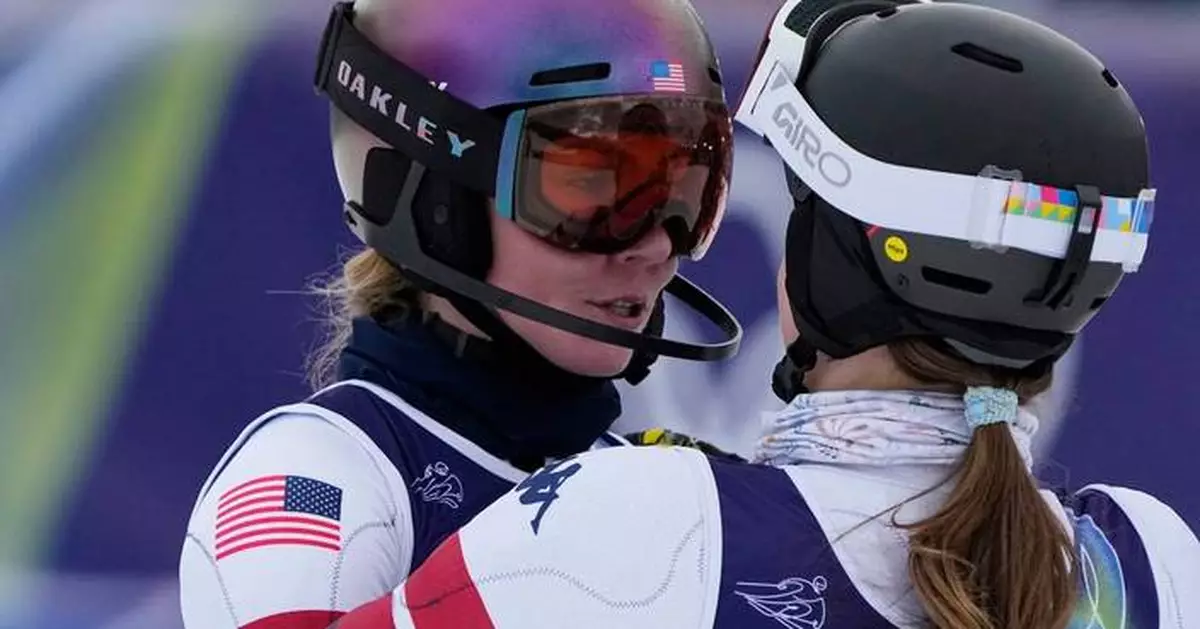
CORTINA D’AMPEZZO, Italy (AP) — Make that seven straight races without a medal for Mikaela Shiffrin at the Winter Olympics.
The American skiing standout was given the ideal platform to win the new team combined event after partner Breezy Johnson led the opening downhill leg on Tuesday.
Click to Gallery
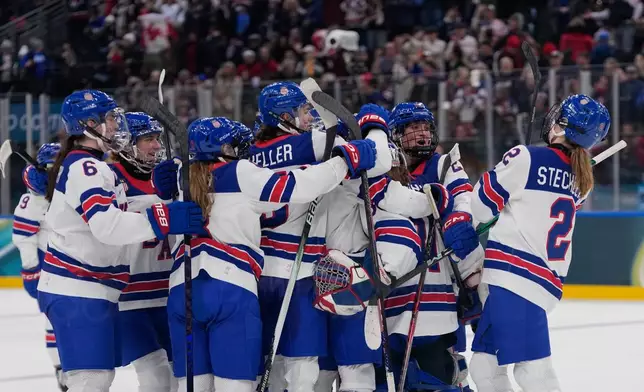
US players celebrate at the end of a preliminary round match of women's ice hockey between USA and Canada at the 2026 Winter Olympics, in Milan, Italy, Tuesday, Feb. 10, 2026. (AP Photo/Petr David Josek)
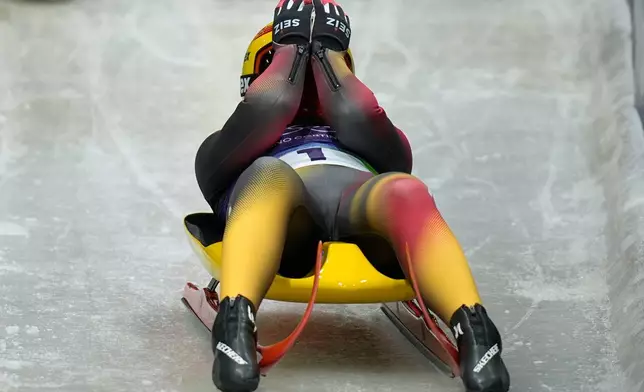
Germany's Julia Taubitz celebrates winning the gold medal during a women's single luge competition at the 2026 Winter Olympics, in Cortina d'Ampezzo, Italy, Tuesday, Feb. 10, 2026. (AP Photo/Aijaz Rahi)
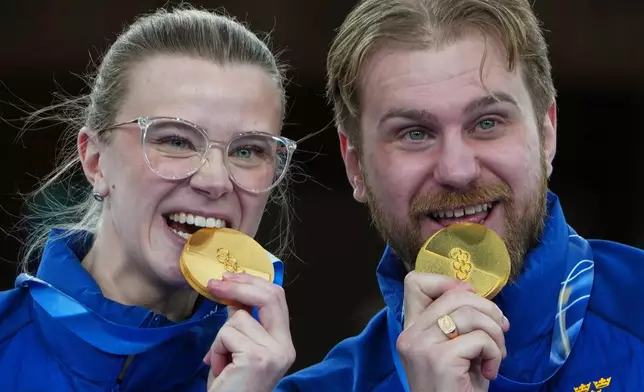
Sweden's Isabella Wranaa and Rasmus Wranaa celebrate on the podium after winning the gold medal match of the mixed doubles curling at the 2026 Winter Olympics, in Cortina d'Ampezzo, Italy, Tuesday, Feb. 10, 2026. (AP Photo/Misper Apawu)
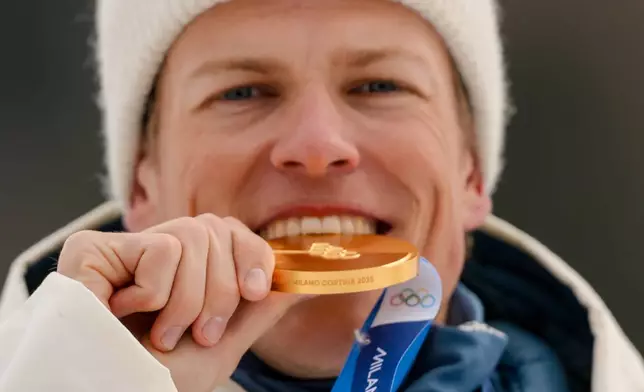
Johannes Hoesflot Klaebo, of Norway, poses after winning the gold medal in the cross-country skiing men's sprint classic at the 2026 Winter Olympics, in Tesero, Italy, Tuesday, Feb. 10, 2026. (AP Photo/Evgeniy Maloletka)
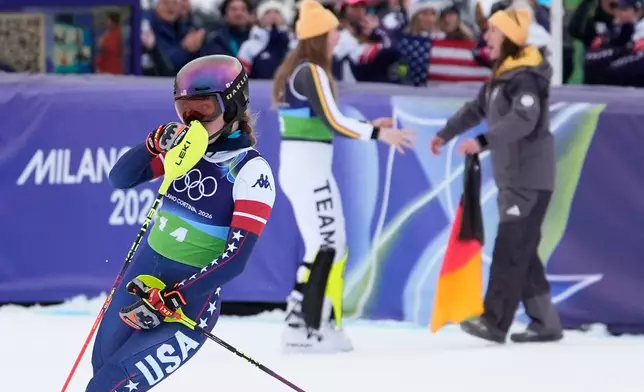
United State's Mikaela Shiffrin reacts as she looks back to see her disappointing time as Germany's Emma Aicher, background left, and Kira Weidle Winkelmann celebrate winning the silver medal in an alpine ski, women's team combined race, at the 2026 Winter Olympics, in Cortina d'Ampezzo, Italy, Tuesday, Feb. 10, 2026. (AP Photo/Robert F. Bukaty)
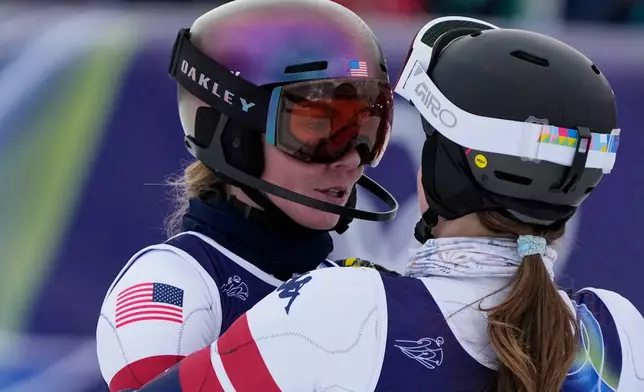
United States' Mikaela Shiffrin, left, is hugged by United States' Paula Moltzan at the finish area of an alpine ski, women's team combined race, at the 2026 Winter Olympics, in Cortina d'Ampezzo, Italy, Tuesday, Feb. 10, 2026. (AP Photo/Andy Wong)
Shiffrin was the last racer out in the slalom — the second leg of the event — and had the 15th-fastest time, dropping the U.S. to fourth place and extending her Olympic slump that stretches back to 2022 when she didn’t win a medal in any of her six races at the Beijing Games.
Ariane Raedler and Katharina Huber of Austria won gold, while Paula Moltzan and Jacqueline Wiles took bronze ahead of their more high-profile U.S. teammates.
Olympic redemption will have to wait, then, for Shiffrin, who is the most successful World Cup racer of all time with a record 108 victories. She is set to compete in her core events of slalom and giant slalom later in the Milan Cortina Games as she looks to add to her two golds and a silver from her first two Olympics.
Johnson missed out on a second medal, having won the downhill on Sunday.
Don't be surprised if Johannes Høsflot Klæbo soon holds the all-time record for gold medals at the Winter Games.
The Norwegian cross-country star powered to his second straight Olympic gold — and seventh of his career — by winning the men’s sprint. He was a comfortable 0.8 seconds ahead of Ben Ogden of the United States.
Klæbo moved to one gold behind three compatriots: Marit Bjørgen, Bjørn Dæhlie and Ole Einar Bjørndalen, all of whom have retired with a record-tying eight. Bjørgen and Dæhlie also were cross-country skiers. Bjørndalen won his gold medals in biathlon, which combines cross-country skiing with shooting.
Klæbo can join them by winning the 10-kilometer freestyle on Friday. He already won the skiathlon on Sunday for his sixth gold.
In the women's final, King Carl XVI Gustaf of Sweden watched as the country swept the medals. Linn Svahn edged defending champion Jonna Sundling and Maja Dahlqvist was third.
It was an emotional day for Norway's medal winners at the biathlon.
After winning the men’s 20-kilometer individual race, Johan-Olav Botn paid tribute to a teammate who died in the lead-up to the Olympics.
Botn pointed to the sky as he crossed the line in honor of Sivert Guttorm Bakken, who was found dead in his hotel room in Lavaze, Italy, in December.
Sturla Holm Laegreid won the bronze medal and then gave quite the post-race interview, revealing — while fighting back tears — in a live broadcast that he had been unfaithful to his girlfriend.
The golds for Botn and Klæbo took Norway to six overall — three more than any other nation so far.
The U.S.-Canada rivalry in women's hockey has turned extremely lopsided.
The Americans made it seven straight wins over their biggest rival by winning 5-0 in what many saw as a preview of the title match.
Hannah Bilka scored twice as the United States overwhelmed a Canadian team missing its captain, Marie-Philip Poulin, to clinch first place in Group A. The team swept all four of its preliminary-round games by a combined score of 20-1.
The reward for the U.S. in the quarterfinals? A match against host nation Italy.
Isabella and Rasmus Wranå, Sweden’s first team of siblings at the Winter Olympics, won gold in mixed doubles curling by beating U.S. pair Cory Thiesse and Korey Dropkin.
A two-point play by Isabella off the final rock of a tight match sealed a 6-5 win for the Swedish duo, who used to be rival players and now are Olympic champions together.
The Americans won a first medal in Olympic mixed doubles, and Thiesse became the first American woman to capture a medal in curling.
Gold in women’s singles luge went to Germany — again.
Julia Taubitz became the 13th winner from Germany in 17 editions, finishing nearly a full second ahead of Elina Bota of Latvia after four runs over two days. Ashley Farquharson took bronze, the third singles medal ever for USA Luge at the Olympics and matching the best finish by an American women’s slider.
An Olympic gold completes Taubitz’s resume. Now-retired German great Natalie Geisenberger won the last three gold medals.
Twenty years later, Italian short track speedskater Arianna Fontana is still winning medals at the Winter Olympics.
The latest was a gold in the mixed team relay. That took her to three golds and 12 medals overall in an Olympic career that started in 2006 — when she was 15 — at the Winter Games in Turin.
Fontana was already the most decorated short track speedskater of all time and there’s chances for more medals in the 500 and the 3,000 relay at the 2026 Olympics.
AP Olympics: https://apnews.com/hub/milan-cortina-2026-winter-olympics
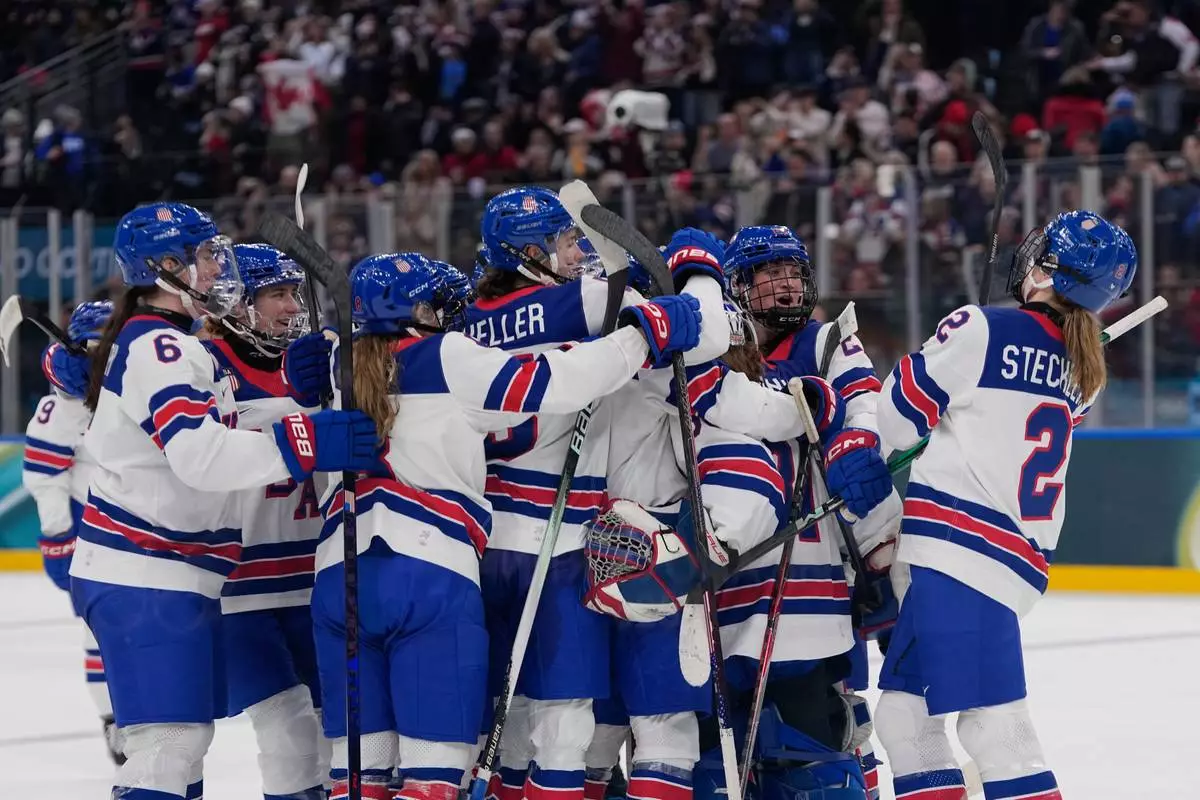
US players celebrate at the end of a preliminary round match of women's ice hockey between USA and Canada at the 2026 Winter Olympics, in Milan, Italy, Tuesday, Feb. 10, 2026. (AP Photo/Petr David Josek)
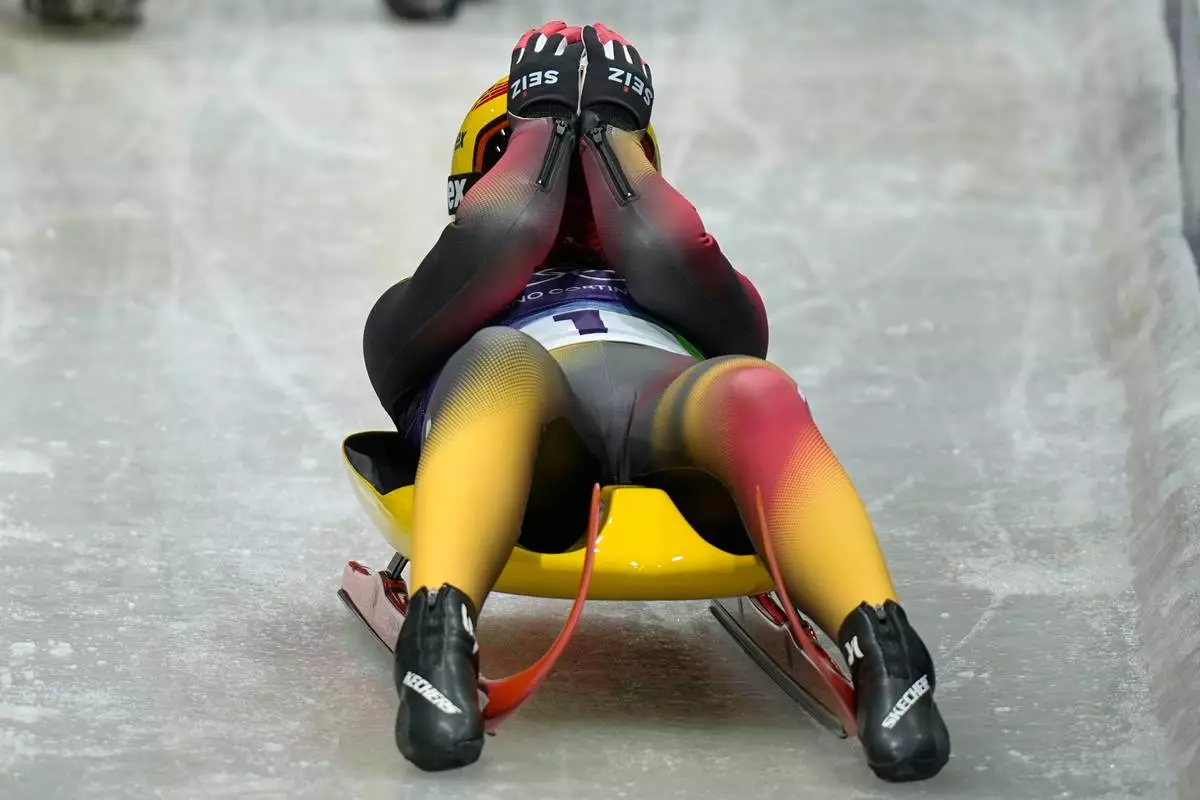
Germany's Julia Taubitz celebrates winning the gold medal during a women's single luge competition at the 2026 Winter Olympics, in Cortina d'Ampezzo, Italy, Tuesday, Feb. 10, 2026. (AP Photo/Aijaz Rahi)
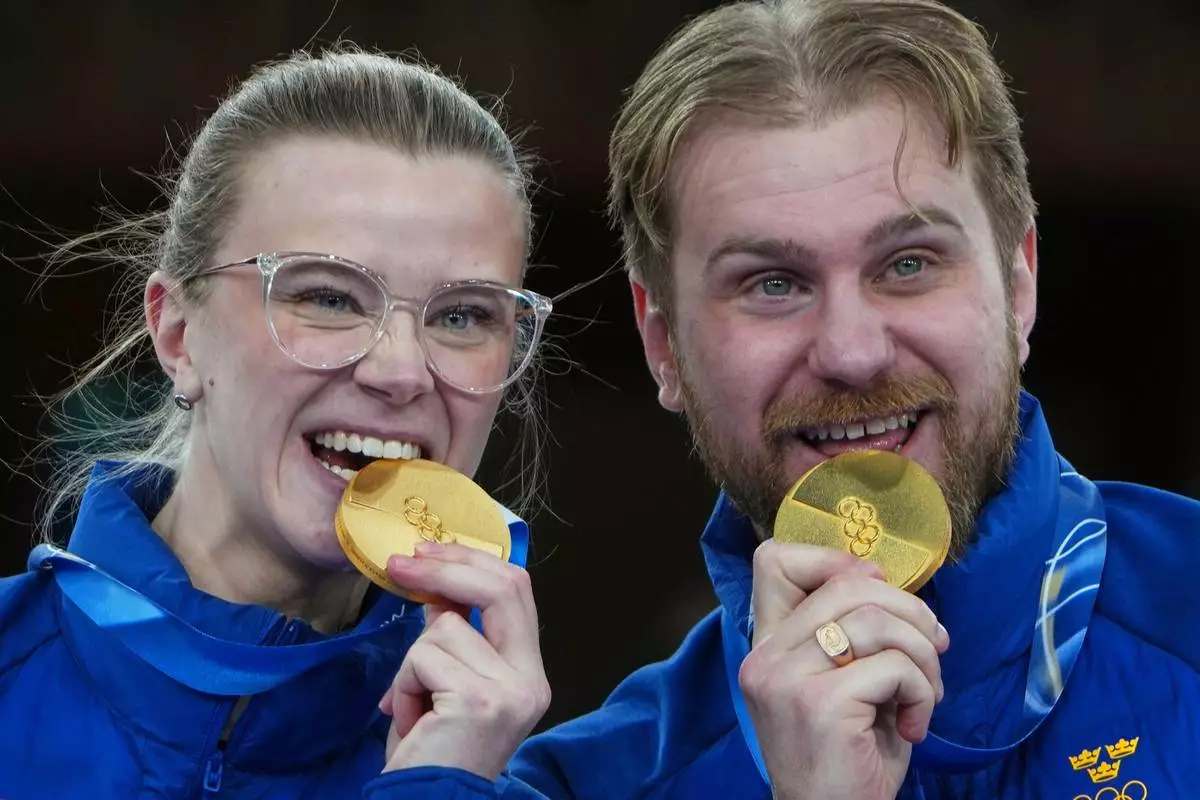
Sweden's Isabella Wranaa and Rasmus Wranaa celebrate on the podium after winning the gold medal match of the mixed doubles curling at the 2026 Winter Olympics, in Cortina d'Ampezzo, Italy, Tuesday, Feb. 10, 2026. (AP Photo/Misper Apawu)
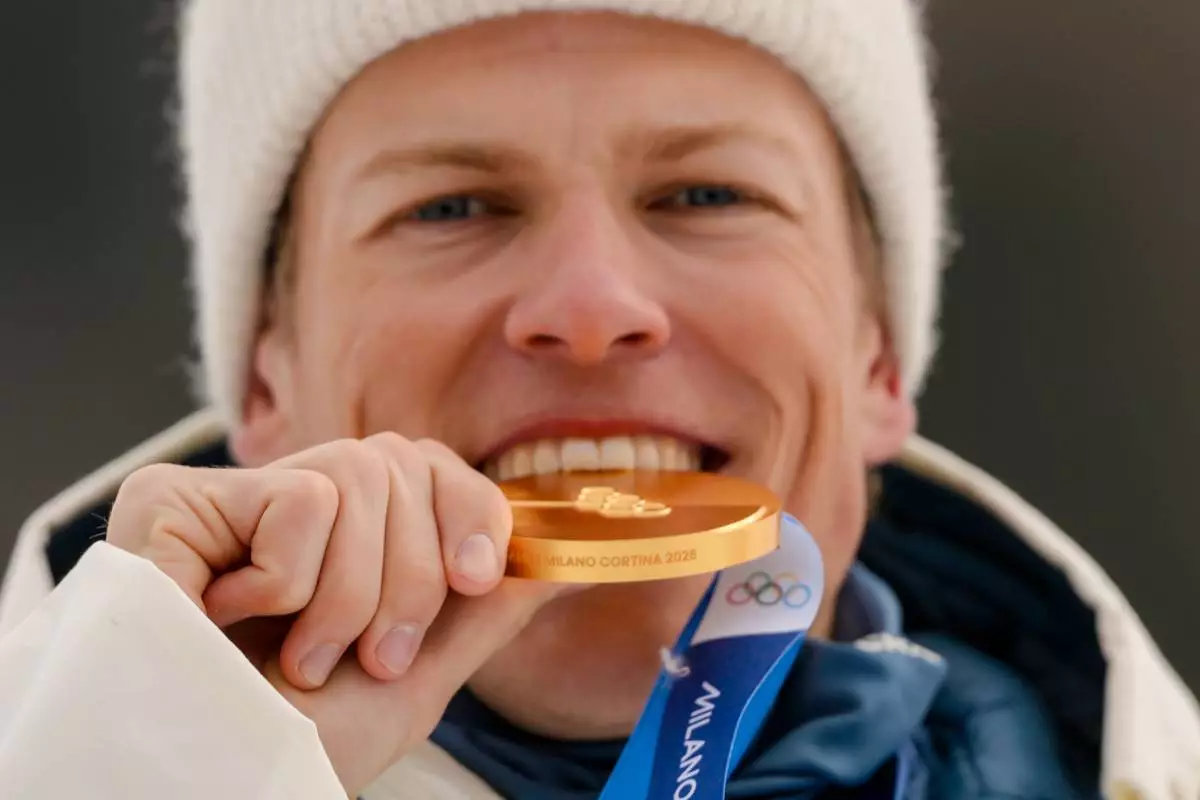
Johannes Hoesflot Klaebo, of Norway, poses after winning the gold medal in the cross-country skiing men's sprint classic at the 2026 Winter Olympics, in Tesero, Italy, Tuesday, Feb. 10, 2026. (AP Photo/Evgeniy Maloletka)
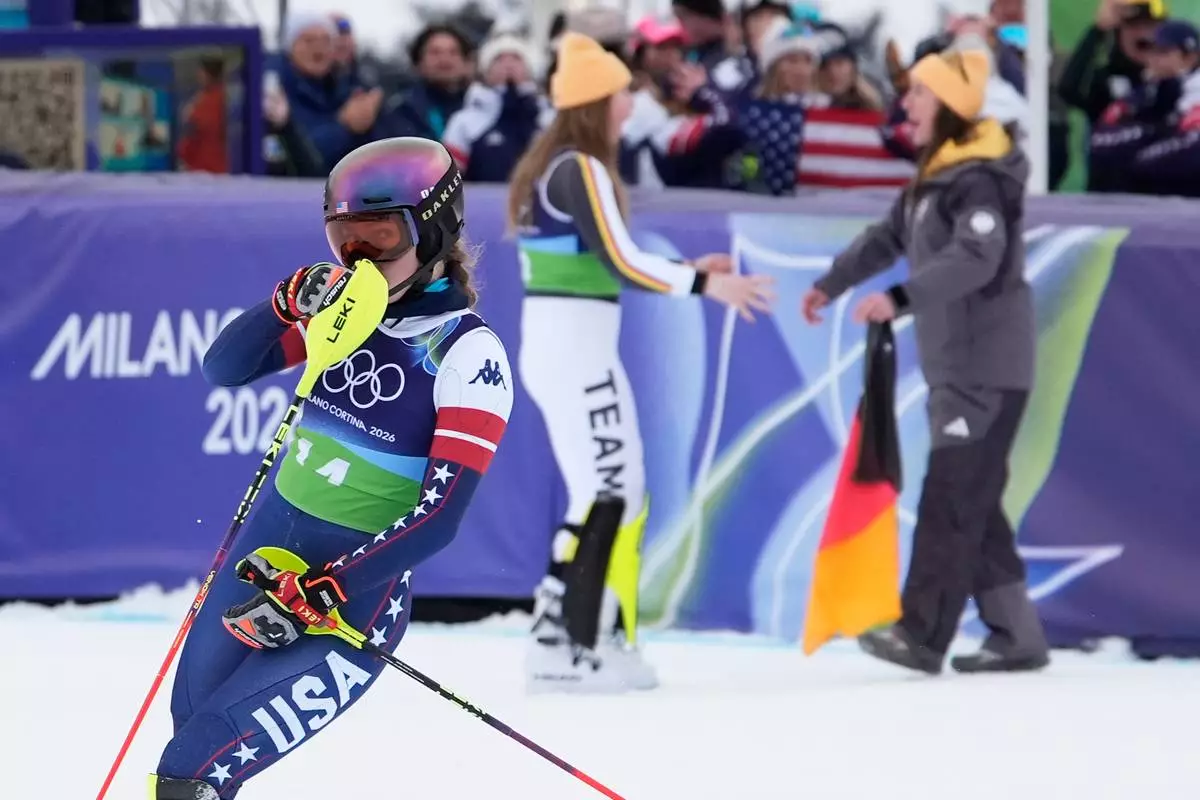
United State's Mikaela Shiffrin reacts as she looks back to see her disappointing time as Germany's Emma Aicher, background left, and Kira Weidle Winkelmann celebrate winning the silver medal in an alpine ski, women's team combined race, at the 2026 Winter Olympics, in Cortina d'Ampezzo, Italy, Tuesday, Feb. 10, 2026. (AP Photo/Robert F. Bukaty)
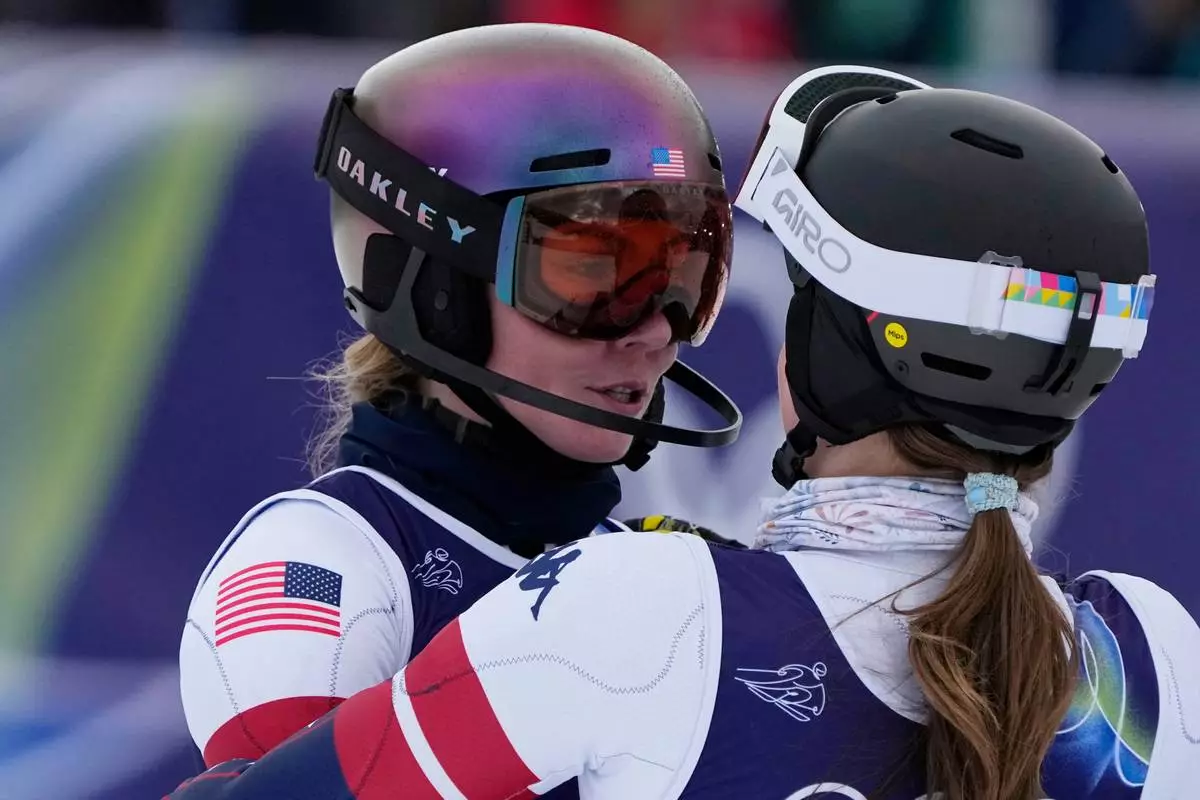
United States' Mikaela Shiffrin, left, is hugged by United States' Paula Moltzan at the finish area of an alpine ski, women's team combined race, at the 2026 Winter Olympics, in Cortina d'Ampezzo, Italy, Tuesday, Feb. 10, 2026. (AP Photo/Andy Wong)