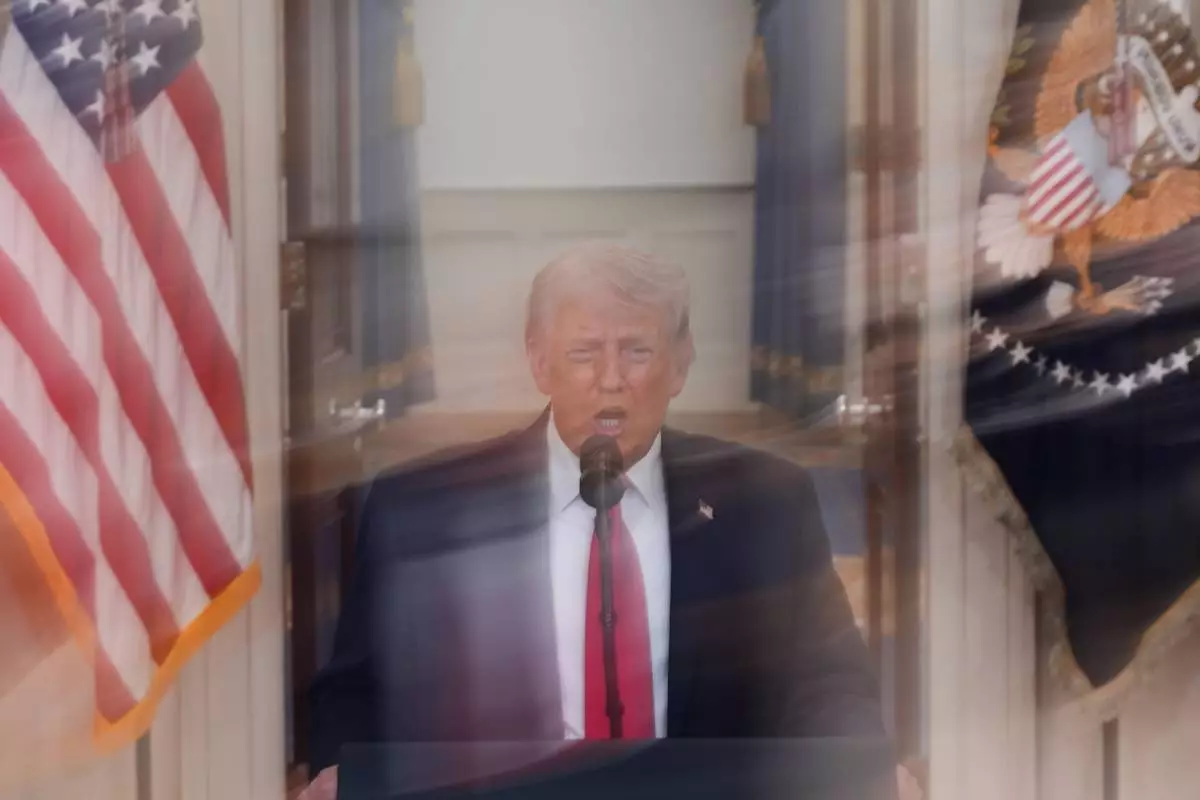
WASHINGTON (AP) — Congressional Democrats on Tuesday accused the Trump administration of trying to hijack plans to celebrate America’s 250th anniversary and using the nonprofit National Park Foundation to solicit money from private donors for some of the president’s pet projects, including the massive arch he wants to build in the nation’s capital.
During a hearing on the 250th anniversary commemoration, U.S. Rep. Jared Huffman said President Donald Trump and his allies are attempting to use the celebration to “promote an alternate reality.”
The California Democrat accused Republican members of the committee of letting the administration “hijack the country’s 250th anniversary and sell access, hide his donors and rewrite history. You let him clean house and put loyalists on the board of the National Park Foundation, open the door to foreign, dark money donors to buy influence with zero oversight.”
Democratic Rep. Maxine Dexter of Oregon voiced concern that a White House-led initiative, called Freedom 250, is using public money earmarked for a separate, congressionally chartered commission, America250, and is co-mingling it with private donations.
Dexter said the structure of the organization created by the White House makes it difficult to tell who is donating to it.
“This leaves us all guessing which one of Donald Trump’s billionaire buddies and which foreign interests are buying access,” she said.
Danielle Alvarez, spokeswoman for Freedom 250, said it has received no funding from foreign donors. The park foundation, which typically raises money to help the national parks, must grant anonymity if a donor asks for it, the foundation's president and CEO, Jeff Reinbold, said when asked during the hearing.
Davis Ingle, a White House spokesman, responded to the hearing by saying the president wants to ensure that the country gets “the spectacular birthday it deserves.
“The celebration of America’s 250th anniversary is going to display great patriotism in our nation’s capital and throughout the country,” he said in a statement. “President Trump’s bold vision will be imprinted upon the fabric of America and be felt by generations to come.”
The three-hour hearing, before a subcommittee of the House Committee on Natural Resources, was promoted as an explanation of public and private partnerships supporting America's 250th anniversary on public lands, but it veered into an airing of numerous Democratic concerns.
Democrats raised questions about national park sites where exhibits and displays have been sanitized or removed altogether as part of the administration's efforts to quash diversity, equity and inclusion, as well as questions over funding and transparency. Rep. James Clyburn of South Carolina gave an impassioned address about seeing the darker parts of U.S. history as part of the nation's strength.
Alan Spears, senior director at the National Parks Conservation Association, testified that when “you begin picking at words to soften and sanitize, to erase the history, that is a dangerous precipice to be on. Because I think the quickest way that you can disappear people is to disappear their story or to soften it.”
In 2016, Congress formed America250, the U.S. Semiquincentennial Commission, to lead planning for the anniversary that commemorates the signing of the Declaration of Independence in July 1776.
The commission was initially expecting to receive $100 million of the $150 million appropriated for the anniversary in the Republicans' tax and spending bill, which they called the One Big Beautiful Bill Act. The money went to the U.S. Department of the Interior and was intended for activities surrounding the commemoration.
A source familiar with the funding for America250, who was not authorized to speak publicly about it, said that the anticipated amount dropped to $50 million and that so far the organization has received just $25 million. Federal funding cuts last year already had led some communities to begin scaling back their plans for celebrating the anniversary.
Tim Whitehouse, executive director of Public Employees for Environmental Responsibility, testified that the funding question is tantamount.
“The American people are paying for this commemoration. We deserve to know where our money is going,” he said, adding that he sent a letter to Interior Secretary Doug Burgum seeking answers.
A spokeswoman with the Interior Department said in a recent email that a portion of the funding was being provided to the U.S. Semiquincentennial Commission through an interagency agreement with the National Park Service. The Interior Department did not respond to requests after the hearing for comment on the distribution of federal money to America250.
Republicans were relatively silent in responding to the Democrats' lines of questioning, except North Carolina Rep. Addison McDowell, who defended the celebration being planned as a reminder of how far the nation has come.
“As I sat here and listened to the other side’s remarks, what I heard was a deeply misguided and dark vision of America,” he said. “If you didn’t know any better, you might believe from their remarks that the United States is not the greatest experiment in human history, but an ongoing crime scene.”
Rep. Val Hoyle, an Oregon Democrat, countered immediately: “Yes, we need to celebrate how far America has come, but how the hell do we know how far we’ve come if we erase the history? How is that patriotic?”
America250 is focused on commemorations around the country, including a national volunteer effort and creating an audio-visual archive of stories from everyday Americans. One initiative, “America’s Field Trip,” asks students from around the country to share stories on what America means to them, with a chance to get field trips to historic sites and landmarks. One initiative, America Gives, aims to significantly increase the number of Americans who volunteer with nonprofits with support from companies like Walmart and Coca-Cola and nonprofits like Points of Light.
So far, the organization has said it has had enough money, including from donations, to continue with its original programming.
Much of the programming from the White House group has so far appeared to focus on splashy events, including a planned UFC fighting competition at the White House, athletic events involving high school athletes it's calling The Patriot Games and a “Great American State Fair” on the National Mall. Freedom 250 was responsible for the striking birthday lighting of the Washington Monument coming into the New Year.
AP reporter Thalia Beaty contributed to this report.
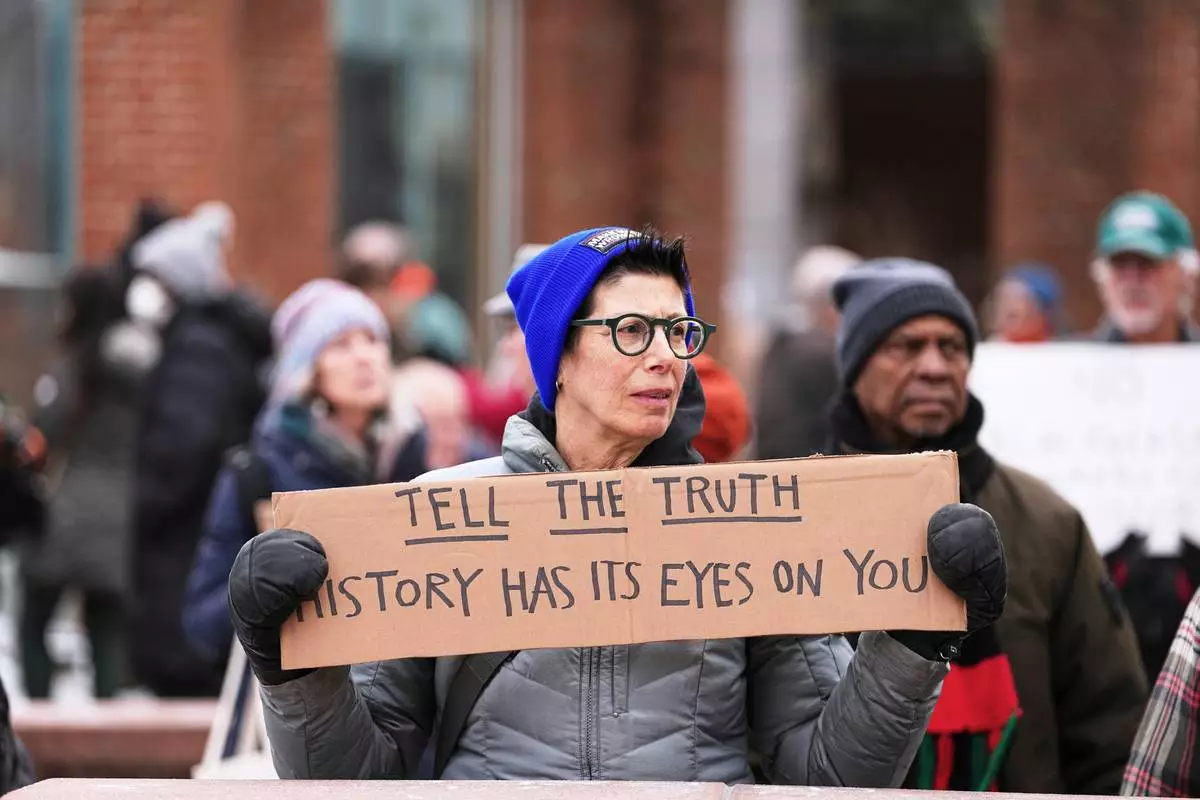
Demonstrators gather to protest removal of explanatory panels that were part of an exhibit on slavery at the President's House Site in Philadelphia, Tuesday, Feb. 10, 2026. (AP Photo/Matt Rourke)
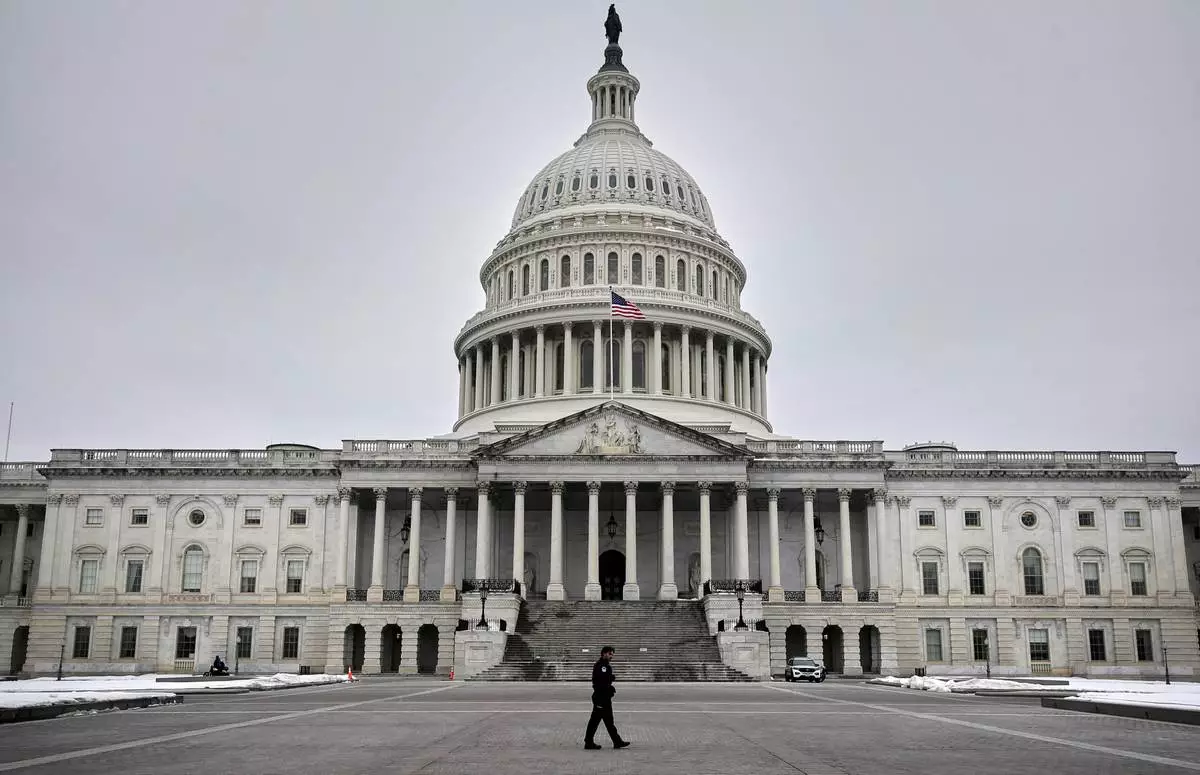
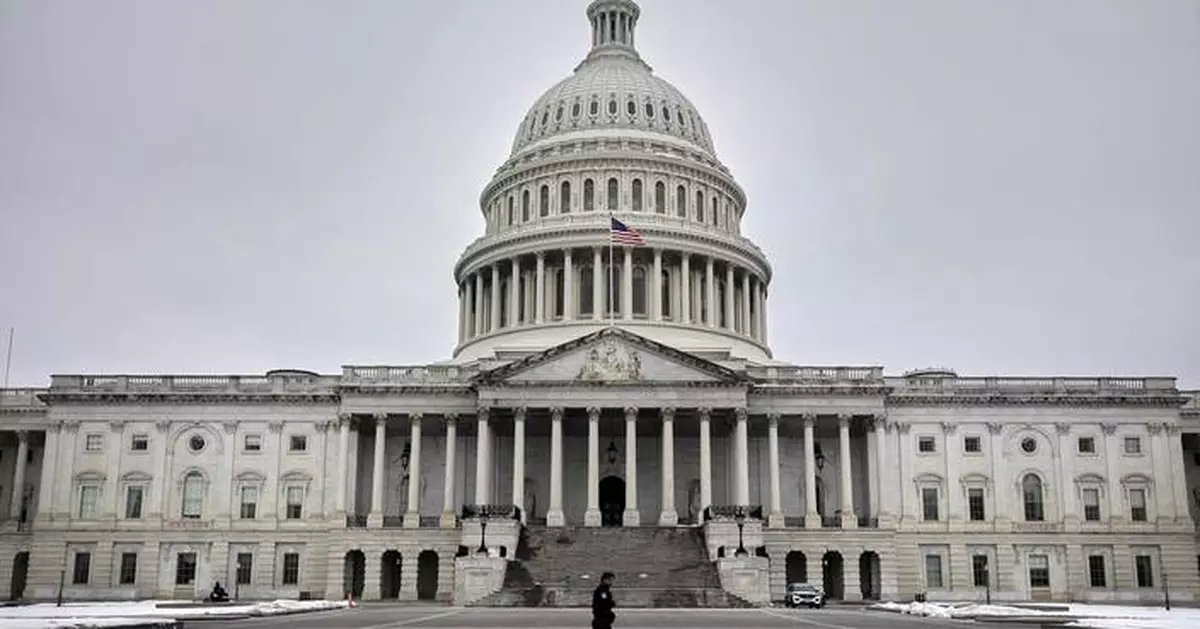
A U.S. Capitol Police officer patrols on the East Front of the U.S. Capitol, Friday, Feb. 6, 2026, in Washington. (AP Photo/Rahmat Gul)