Invited to mark the arrival of spring, a group of artists traveled through villages and historic sites in southwest China, encountering rituals, landscapes, and everyday traditions along the way.
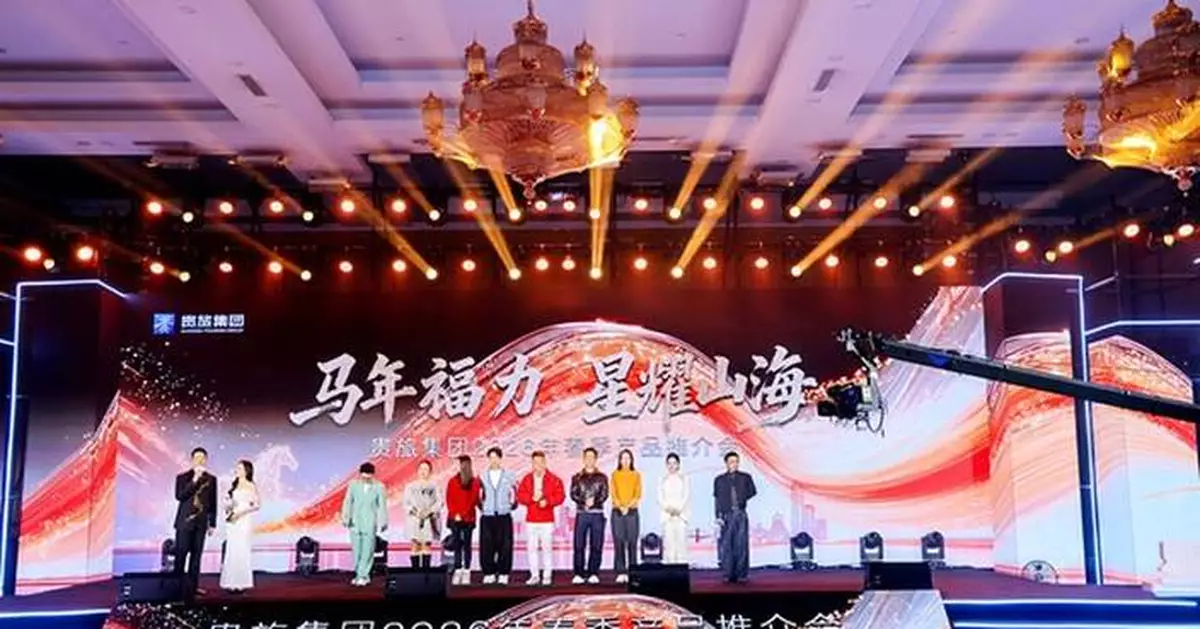
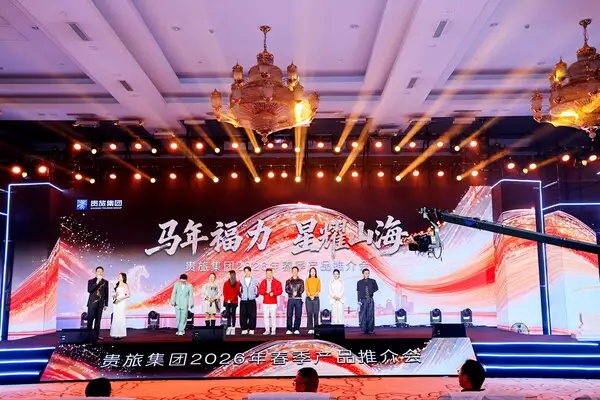
GUIYANG, China, Feb. 11, 2026 /PRNewswire/ -- As spring arrived in Guizhou in early February, a group of Hong Kong artists found themselves traveling through the province, moving between historic towns, village rituals, and shared meals tied to the rhythms of the season. Their journey, timed to Lichun—the traditional Beginning of Spring—took shape across several days and locations, offering a close look at how local customs, landscapes, and everyday life intersect at the turning of the year. The artists, including Natalis Chan Pak-Cheung, Eddie Cheung Siu-fai, Edwin Siu Ching Nam, Priscilla Wong Tsui-yu, and Jacquelin Ch'ng Se Min, were taking part in a "Fortune"-themed itinerary introduced in Guiyang at the 2026 Spring Tourism Product Promotional Conference, hosted by Guizhou Tourism Industry Development Group.
Click to Gallery
Hong Kong Artists Explored a "Fortune"-Themed Journey Through Guizhou, Praising a Carefully Curated Spring Itinerary
Hong Kong Artists Explored a "Fortune"-Themed Journey Through Guizhou, Praising a Carefully Curated Spring Itinerary
Hong Kong Artists Explored a "Fortune"-Themed Journey Through Guizhou, Praising a Carefully Curated Spring Itinerary
Hong Kong Artists Explored a "Fortune"-Themed Journey Through Guizhou, Praising a Carefully Curated Spring Itinerary
Hong Kong Artists Explored a "Fortune"-Themed Journey Through Guizhou, Praising a Carefully Curated Spring Itinerary
During the days leading up to the Spring Festival, the artists traveled through Guizhou as blessing rituals and seasonal customs came into focus across the province. Their journey, which ran from February 3 to 6, moved through a series of settings tied to ideas of fortune and renewal, from hands-on craft traditions to shared meals shaped by ritual practice. At Colorful Guizhou City, they moved between expressions of different ethnic cultures, cutting "Fu" characters from paper, learning traditional batik techniques, preparing matcha, and sitting down to a meal inspired by the ceremonial traditions of Nuo opera. Several Guizhou dishes, each associated with good fortune and blessings, stood out as among the most memorable parts of the experience.
At Yunfeng Tunpu, on the outskirts of Anshun, stone-walled lanes and squat watchtowers give the village the feel of a place suspended in time, their origins tracing back to the Ming era. Shaped by more than six centuries of military garrison history and the traditions of Dixi, or ground opera, the setting drew the artists into its rhythms almost immediately. They painted masks, put on traditional costumes, and stepped into Dixi performances themselves, later describing Yunfeng Tunpu as "a living history book" that offers a tactile sense of how China's traditional culture continues to endure.
By the end of the journey, the theme that framed the itinerary had receded into the background, replaced by moments drawn from daily life—shared meals, local rituals, and time spent moving through landscapes shaped by history. The artists reflected on Guizhou through what they saw and experienced firsthand, from village customs to everyday scenes that rarely make it into travel brochures. Traveling alongside artists from Hong Kong and Macao, the journey opened a window onto the province for audiences beyond the region, carried not by slogans but by stories shaped through direct encounter.
In Biasha, a village often described as "China's last gunman tribe," the artists encountered a set of blessing rituals still woven into daily life. Ceremonial gunfire marked prayers for good fortune, village elders led well-wishing rites, and fortune-seeking ceremonies took place beneath ancient trees that anchor the community's sense of continuity. Through these encounters, the artists came to understand Biasha's tree culture, shaped by a long-standing relationship between people and the natural world. They planted saplings of their own, and as they pressed soil around the young trees, reflected quietly on ideas of resilience, renewal, and life taking root in a landscape shaped by time.
Food became a steady companion throughout the journey, with meals offering an introduction to Guizhou's regional cooking traditions. At the Jun Tun and the Miao Long-Table banquets, dishes arrived one after another, each reflecting a different facet of local cuisine. Natalis Chan lingered over a sour soup chicken served at the Jun Tun Banquet, describing it as "refreshingly tangy, flavorful, and wonderfully tender—an unforgettable taste of Guizhou." Drinks, including locally roasted coffee and tart sea buckthorn juice, rounded out the meals with flavors distinctive to the region. Traveling in small groups and compact vehicles, an approach deliberately adopted by Guizhou Tourism Industry Development Group, the artists moved easily between stops, an unhurried pace that Eddie Cheung later pointed to as one of the journey's strengths.
** The press release content is from PR Newswire. Bastille Post is not involved in its creation. **

Hong Kong Artists Explored a "Fortune"-Themed Journey Through Guizhou, Praising a Carefully Curated Spring Itinerary

Hong Kong Artists Explored a "Fortune"-Themed Journey Through Guizhou, Praising a Carefully Curated Spring Itinerary

Hong Kong Artists Explored a "Fortune"-Themed Journey Through Guizhou, Praising a Carefully Curated Spring Itinerary

Hong Kong Artists Explored a "Fortune"-Themed Journey Through Guizhou, Praising a Carefully Curated Spring Itinerary
Hong Kong Artists Explored a "Fortune"-Themed Journey Through Guizhou, Praising a Carefully Curated Spring Itinerary
|
Announced alongside M Series Smart Assist Module launch on Kickstarter
NEW YORK, April 4, 2026 /PRNewswire/ -- Yarbo, a company focused on intelligent yard robotics, today announced the Yarbo Open Platform, a long-term initiative currently under development and planned for release in early 2027. Designed to expand Yarbo's modular yard robot system across both software and hardware, the platform is intended to support deeper customization, broader smart home connectivity, and new forms of user and developer-driven functionality over time. The announcement coincides with the launch of the Smart Assist Module (SAM) for the M Series on Kickstarter.
The Open Platform is not available today. Instead, it reflects Yarbo's roadmap for how its ecosystem may evolve over time, including a three-layer software architecture built around an Open API, SDK, and no-code Automation Editor, as well as a hardware expansion framework designed to support future user-built and developer-built modules.
A Structured Approach to Software Integration and Automation
The Yarbo Open Platform is structured to accommodate different levels of technical expertise, from everyday users to experienced developers. It is designed to provide multiple entry points into the Yarbo ecosystem, enabling both software-driven automation and hardware-level expansion.
On the software side, the platform consists of three layers:
- Yarbo Open API — intended to enable connectivity between Yarbo devices and external platforms, allowing them to participate in broader home automation scenarios.
- Yarbo SDK — a set of development tools, including code libraries and documentation, designed for developers building custom features or integrations.
- Yarbo Automation Editor — a visual, drag-and-drop interface within the Yarbo app that allows users to create automation workflows without writing code.
Together, these components are intended to make automation accessible to a wide range of users, while also supporting more advanced development use cases.
The platform is also designed to support compatibility with widely used smart home ecosystems, including Home Assistant, Google Home, and Amazon Alexa, enabling users to incorporate Yarbo into existing connected home setups.
Extending Capability Through Hardware
In addition to software capabilities, the Open Platform introduces a hardware expansion approach designed to extend Yarbo's functionality beyond its existing modules.
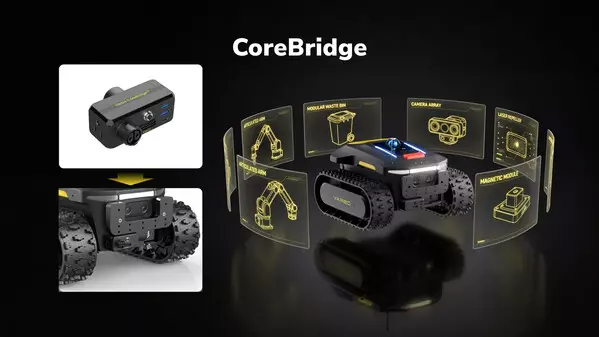
At the center of this is CoreBridge, a standardized hardware interface currently in development that is intended to provide access to Yarbo's mechanical mounting points, power system, and data connections. It is designed to support third-party development and user-built extensions, allowing new types of functionality beyond pre-defined modules.
One example of this extensibility is an electromagnet-based module, which can be attached via CoreBridge to enable Yarbo to latch onto and move objects such as garbage bins. In a potential use scenario, this could enable automated movement of a bin to the curb on collection day and its return afterward.
This combination of software and hardware openness reflects an effort to expand the role of outdoor robotics beyond fixed-function devices.
Smart Assist Module Launch on Kickstarter
Alongside the Open Platform announcement, Yarbo is launching the Smart Assist Module (SAM) for the M Series on Kickstarter.
The module introduces two primary features designed to expand how users interact with their yard robot in everyday use:
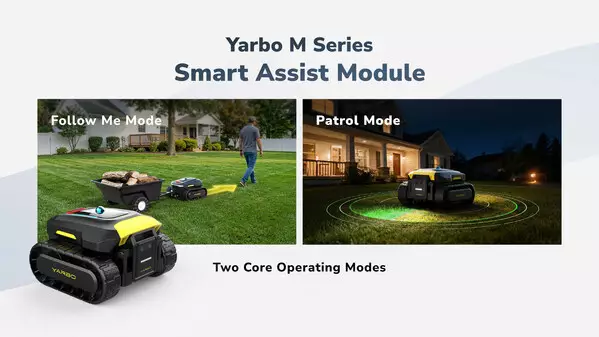
- Follow Me Mode — enabling Yarbo to move alongside the user while carrying tools or materials, reducing the need for manual transport during yard work.
- Patrol Mode — allowing Yarbo to move along customizable routes around the property, with features such as remote live view, app-based alerts, and optional audio notifications via its built-in speaker, providing an added layer of awareness and convenience for users managing outdoor spaces.
The Smart Assist Module is positioned as part of Yarbo's broader effort to extend the practical use cases of its modular system.
Looking Ahead
The Yarbo Open Platform is planned for release in early 2027 and is being developed to support both the Y Series and M Series. By introducing a framework that combines software integration, developer tools, and hardware extensibility, Yarbo aims to enable a broader range of applications while allowing users to define how the system evolves over time.
Further details will be shared as development progresses.
About Yarbo
Yarbo is defining a new category of outdoor robotics with its Modular Yard Robot. Known for its automated snow blower robots, Yarbo introduced a modular system designed for year-round use. Powered by a single intelligent core unit, the system supports interchangeable modules for mowing, leaf blowing, snow clearing, and more—creating a more efficient approach to outdoor maintenance for homeowners.
Announced alongside M Series Smart Assist Module launch on Kickstarter
NEW YORK, April 4, 2026 /PRNewswire/ -- Yarbo, a company focused on intelligent yard robotics, today announced the Yarbo Open Platform, a long-term initiative currently under development and planned for release in early 2027. Designed to expand Yarbo's modular yard robot system across both software and hardware, the platform is intended to support deeper customization, broader smart home connectivity, and new forms of user and developer-driven functionality over time. The announcement coincides with the launch of the Smart Assist Module (SAM) for the M Series on Kickstarter.
The Open Platform is not available today. Instead, it reflects Yarbo's roadmap for how its ecosystem may evolve over time, including a three-layer software architecture built around an Open API, SDK, and no-code Automation Editor, as well as a hardware expansion framework designed to support future user-built and developer-built modules.
A Structured Approach to Software Integration and Automation
The Yarbo Open Platform is structured to accommodate different levels of technical expertise, from everyday users to experienced developers. It is designed to provide multiple entry points into the Yarbo ecosystem, enabling both software-driven automation and hardware-level expansion.
On the software side, the platform consists of three layers:
- Yarbo Open API — intended to enable connectivity between Yarbo devices and external platforms, allowing them to participate in broader home automation scenarios.
- Yarbo SDK — a set of development tools, including code libraries and documentation, designed for developers building custom features or integrations.
- Yarbo Automation Editor — a visual, drag-and-drop interface within the Yarbo app that allows users to create automation workflows without writing code.
Together, these components are intended to make automation accessible to a wide range of users, while also supporting more advanced development use cases.
The platform is also designed to support compatibility with widely used smart home ecosystems, including Home Assistant, Google Home, and Amazon Alexa, enabling users to incorporate Yarbo into existing connected home setups.
Extending Capability Through Hardware
In addition to software capabilities, the Open Platform introduces a hardware expansion approach designed to extend Yarbo's functionality beyond its existing modules.
At the center of this is CoreBridge, a standardized hardware interface currently in development that is intended to provide access to Yarbo's mechanical mounting points, power system, and data connections. It is designed to support third-party development and user-built extensions, allowing new types of functionality beyond pre-defined modules.
One example of this extensibility is an electromagnet-based module, which can be attached via CoreBridge to enable Yarbo to latch onto and move objects such as garbage bins. In a potential use scenario, this could enable automated movement of a bin to the curb on collection day and its return afterward.
This combination of software and hardware openness reflects an effort to expand the role of outdoor robotics beyond fixed-function devices.
Smart Assist Module Launch on Kickstarter
Alongside the Open Platform announcement, Yarbo is launching the Smart Assist Module (SAM) for the M Series on Kickstarter.
The module introduces two primary features designed to expand how users interact with their yard robot in everyday use:
- Follow Me Mode — enabling Yarbo to move alongside the user while carrying tools or materials, reducing the need for manual transport during yard work.
- Patrol Mode — allowing Yarbo to move along customizable routes around the property, with features such as remote live view, app-based alerts, and optional audio notifications via its built-in speaker, providing an added layer of awareness and convenience for users managing outdoor spaces.
The Smart Assist Module is positioned as part of Yarbo's broader effort to extend the practical use cases of its modular system.
Looking Ahead
The Yarbo Open Platform is planned for release in early 2027 and is being developed to support both the Y Series and M Series. By introducing a framework that combines software integration, developer tools, and hardware extensibility, Yarbo aims to enable a broader range of applications while allowing users to define how the system evolves over time.
Further details will be shared as development progresses.
About Yarbo
Yarbo is defining a new category of outdoor robotics with its Modular Yard Robot. Known for its automated snow blower robots, Yarbo introduced a modular system designed for year-round use. Powered by a single intelligent core unit, the system supports interchangeable modules for mowing, leaf blowing, snow clearing, and more—creating a more efficient approach to outdoor maintenance for homeowners.
** This press release is distributed by PR Newswire through automated distribution system, for which the client assumes full responsibility. **
Yarbo Introduces Open Platform Strategy, Opening Its Robotics System to Developers and Smart Home Ecosystems
Yarbo Introduces Open Platform Strategy, Opening Its Robotics System to Developers and Smart Home Ecosystems