Speech by FS at Consensus Hong Kong 2026
Following is the speech by the Financial Secretary, Mr Paul Chan, at Consensus Hong Kong 2026 today (February 11):
Click to Gallery
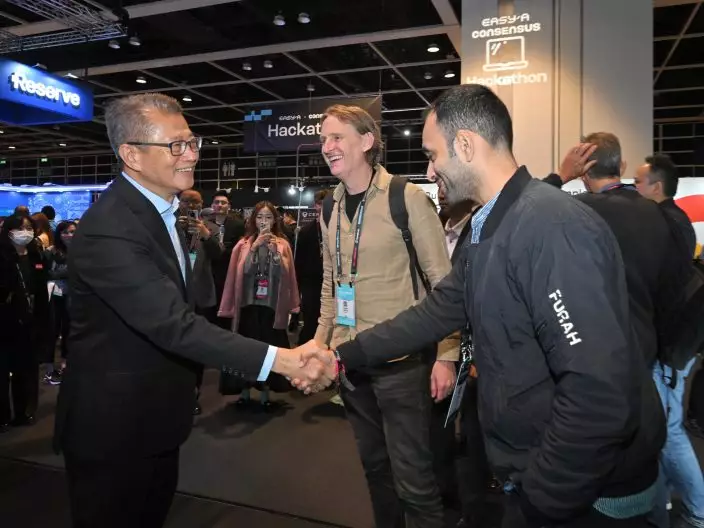
Photo shows Mr Chan (left) visiting an exhibition booth. Source: HKSAR Government Press Releases
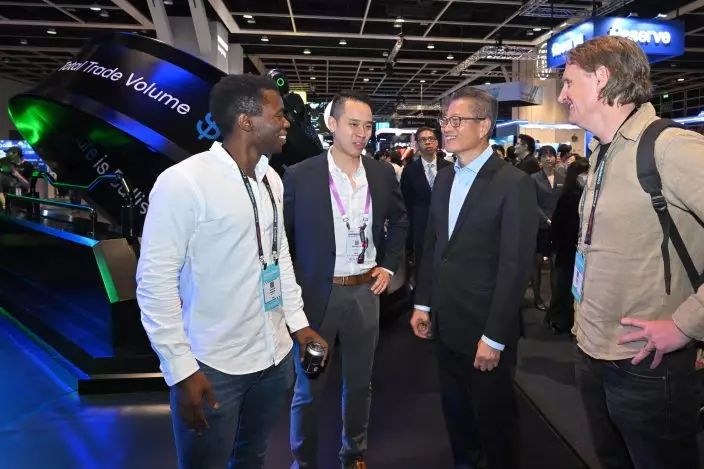
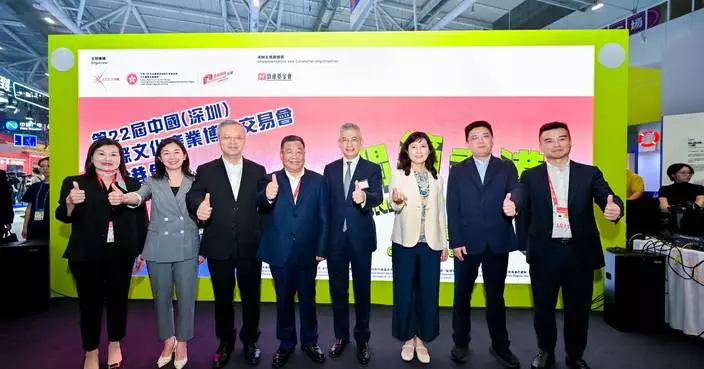
Photo shows Mr Chan (second right) visiting an exhibition booth. Source: HKSAR Government Press Releases
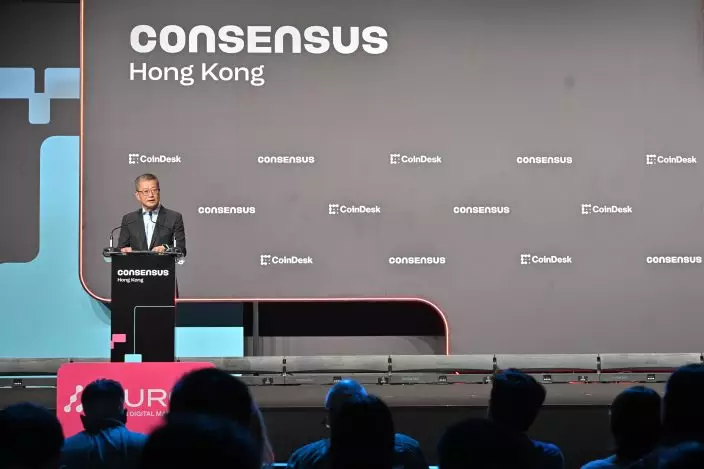
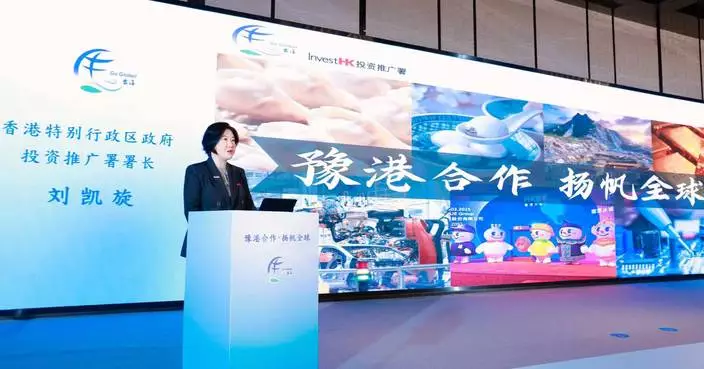
The Financial Secretary, Mr Paul Chan, Source: HKSAR Government Press Releases
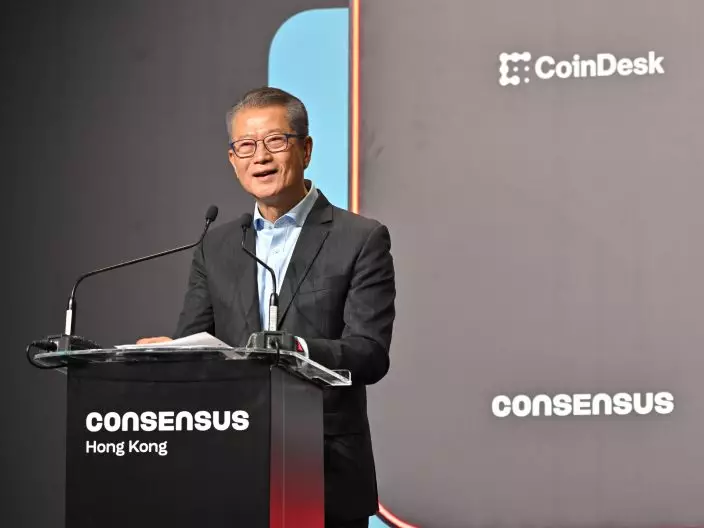
The Financial Secretary, Mr Paul Chan, Source: HKSAR Government Press Releases
Michael (Chairman of Consensus, Mr Michael Lau), Tom (Chief Executive Officer of Bullish Group, Mr Tom Farley), Jay (President of CoinDesk, Mr Jay Yarow), industry leaders and innovators, friends from around the world,
It is a pleasure to join you all at the Consensus Conference in Hong Kong for the second consecutive year. Let me begin by thanking CoinDesk for once again choosing Hong Kong to host this iconic event. This conference has become a powerful platform in Asia for exploring the cutting-edge trends in the Web3 space and for fostering partnerships and collaboration.
Evolving global trends
Globally, the application of Web3 technologies in finance continues to broaden in both scope and sophistication. A few trends are more prominent. The first is tokenisation of RWAs (real-world assets). In a growing number of markets, tokenisation initiatives are moving from "proof of concept" to real-word deployment, supported by more institutional adoption. Government bonds, money market funds and other more traditional financial instruments are increasingly being issued or mirrored on-chain, using digital ledgers to enhance settlement efficiency, enable fractional ownership and unlock liquidity in assets that have traditionally been less liquid.
Hong Kong is one of the pioneers in this space. The HKSAR Government was the first in the world to issue tokenised government green bonds. Last year, we build on this foundation by issuing the world's largest digital green bond, with a multi-currency offering of HK$10 billion. Meanwhile, financial institutions are becoming more receptive to digital assets. By the end of last year, banks in Hong Kong held over HK$14 billion in digital assets under custody, a year-on-year increase of about 180 per cent. Banks have also begun offering tokenised deposit services, with the total value of such deposits reaching HK$29 billion by the end of last year.
The second trend is a related and evolving one: that is, the interaction between "TradFi" (traditional finance) and "DeFi" (decentralised finance). Traditional institutions are now importing DeFi mechanisms into their own architectures – such as automated market-making, programmable liquidity pools and the use of on-chain collateral – to support more efficient trading, funding and settlement.At the same time, DeFi is coming under growing regulatory and supervisory pressure in multiple jurisdictions, particularly in relation to anti-money laundering, investor protection, and broader financial stability. There have been growing calls for DeFi to be brought under existing or emerging digital-asset regulatory frameworks.
The third trend is the growing intersection between AI and digital assets. AI systems are being designed to interact with tokenised money and smart contracts, enabling the autonomous execution of certain transactions and settlements. At the same time, AI tools are making digital asset markets more intelligent, efficient and data-driven. As AI agents become capable of making and executing decisions independently, we may begin to see the early forms of what some call the "machine economy": where AI agents can hold and transfer digital assets, pay for services, and transact with one another on chain. While this shift could deliver substantial efficiency gains, it also raises important questions around AI governance, accountability, and cybersecurity.
Hong Kong's approach
Against this backdrop of rapid global experimentation, what are we doing in Hong Kong? We are charting our course, leveraging our unique strengths as an international financial centre to stay at the forefront of innovation and keep pace with emerging developments. A few principles are guiding our strategy.
First, under the "one country, two systems" framework, Hong Kong is free to explore financial innovation, including in digital assets. We stand out as a market with consistent, predictable, forward-looking policies, and a balanced and trusted regulatory framework.We welcome Web3 innovators and institutions from around the world to develop and scale their businesses here.
At the same time, we recognisethat innovation often moves faster than regulation, potentially creating gaps and new risks. We are therefore carefully balancing the promotion of innovation with the need for sound risk management. Our objective is to embrace new technologies while safeguarding investors, consumers and the overall financial stability. The principle of "same activity, same risk, same regulation" continues to underpin the design of our regulatory framework.
Second, we see Web3, blockchain technology and AI as powerful enablers of the real economy, rather than ends in themselves.Our policy focus is therefore on how these technologies can be applied to enhance efficiency, lower costs and support concrete, real-world use cases. Ultimately, our aim is to make financial services more inclusive and accessible, while addressing long-standing pain points in transactions and market operations.
Third, we are committed to pro-innovation regulation. Our regulators operate with a dual mandate: they not only exercise prudent supervision, but also actively facilitate market and product development.Through mechanisms such as regulatory sandboxes, we support experimentation and, in some cases, co-create solutions in close collaboration with innovators and industry participants.
Some latest initiatives
Ladies and gentlemen, with these guiding principles in mind, we are pressing ahead to advance Web3 development in Hong Kong. Let me highlight some of our latest initiatives.
First, on regulation. We continue to enhance Hong Kong's regulatory framework for digital assets, including the launch of a regulatory regime for stablecoin issuers in August last year. We see stablecoins as a practical tool for addressing the pain points in the real economy, particularly in payments and settlements. In giving out licences, we ensure that licensees have real-world use cases, a credible and sustainable business model, as well as strong regulatory compliance capabilities. Our strategy is moving forward fast, step by step. Therefore, we plan to issue only a small number of stablecoin issuer licences in the first batch in March this year.
Meanwhile, we are also finalising the details of a new licensing regime for digital asset dealers and custodian service providers, with the aim of introducing the relevant legislation this summer. Together with the frameworks already in place, this will ensure that our overall regulatory regime comprehensively covers the key nodes of the digital asset ecosystem.
Second, on product innovation and development. We will regularise the issuance of tokenised green bonds. At the same time, we encourage market innovation and nurture the broader ecosystem. For example, building on the Project Ensemble sandbox, Ensemble TX was launched by the HKMA (Hong Kong Monetary Authority) in November last year. It is a new pilot phase that enables faster, more transparent and more efficient settlement of real-value tokenised transactions.
Looking ahead, as the convergence of AI and blockchain continues to accelerate, the Government and our regulators will work with the industry to foster concrete, high-impact use cases, while ensuring that emerging risks are properly identified, monitored and managed.
Concluding Remarks
Ladies and gentlemen, before I close, let me leave you with this message: the Hong Kong SAR Government and our financial regulators fully recognise the need of and are committed to keeping pace with rapid technological change, and building a vibrant digital asset ecosystem here in Hong Kong. We welcome global innovators like you to join us on this journey.
In less than a week, we will celebrate the Chinese New Year. The Year of the Horse symbolises agility, stamina and strength. May I wish you all a prosperous and energetic year ahead. And for those who have travelled from afar, I hope you will take some time to enjoy the festive spirit and unique charm of Hong Kong.
My thanks once again to CoinDesk for hosting this remarkable event in Hong Kong. May this event inspire many more fresh ideas and lasting partnerships. Thank you very much.
Photo shows Mr Chan (left) visiting an exhibition booth. Source: HKSAR Government Press Releases
Photo shows Mr Chan (second right) visiting an exhibition booth. Source: HKSAR Government Press Releases
The Financial Secretary, Mr Paul Chan, Source: HKSAR Government Press Releases
The Financial Secretary, Mr Paul Chan, Source: HKSAR Government Press Releases