Skip to Content Facebook Feature Image

As ICE expands, an AP review of crimes committed by agents shows how their powers can be abused

News

As ICE expands, an AP review of crimes committed by agents shows how their powers can be abused
News

News

As ICE expands, an AP review of crimes committed by agents shows how their powers can be abused

2026-02-11 13:28 Last Updated At:14:40

Investigators said one immigration enforcement official got away with physically assaulting his girlfriend for years. Another admitted he repeatedly sexually abused a woman in his custody. A third is charged with taking bribes to remove detention orders on people targeted for deportation.

At least two dozen U.S. Immigration and Customs Enforcement employees and contractors have been charged with crimes since 2020, and their documented wrongdoing includes patterns of physical and sexual abuse, corruption and other abuses of authority, a review by The Associated Press found.

More Images
In this screengrab made from body camera footage provided by the Monroe County, Fla., Sheriff's Office, off-duty U.S. Immigration and Customs Enforcement agent Scott Deiseroth takes a field sobriety test after he was pulled over for drunk driving with his children in the car in August 2025. (Monroe County Sheriff's Office via AP)

In this screengrab made from body camera footage provided by the Monroe County, Fla., Sheriff's Office, off-duty U.S. Immigration and Customs Enforcement agent Scott Deiseroth takes a field sobriety test after he was pulled over for drunk driving with his children in the car in August 2025. (Monroe County Sheriff's Office via AP)

In this screengrab made from body camera footage provided by the Monroe County, Fla., Sheriff's Office, off-duty U.S. Immigration and Customs Enforcement agent Scott Deiseroth argues with a deputy who pulled him over for drunk driving with his children in the car in August 2025. (Monroe County Sheriff's Office via AP)
In this screengrab made from body camera footage provided by the Monroe County, Fla., Sheriff's Office, off-duty U.S. Immigration and Customs Enforcement agent Scott Deiseroth argues with a deputy who pulled him over for drunk driving with his children in the car in August 2025. (Monroe County Sheriff's Office via AP)

In this screengrab made from body camera footage provided by the Monroe County, Fla., Sheriff's Office, off-duty U.S. Immigration and Customs Enforcement agent Scott Deiseroth argues with a deputy who pulled him over for drunk driving with his children in the car in August 2025. (Monroe County Sheriff's Office via AP)

In this screengrab made from body camera footage provided by the Monroe County, Fla., Sheriff's Office, off-duty U.S. Immigration and Customs Enforcement agent Scott Deiseroth argues with a deputy who pulled him over for drunk driving with his children in the car in August 2025. (Monroe County Sheriff's Office via AP)

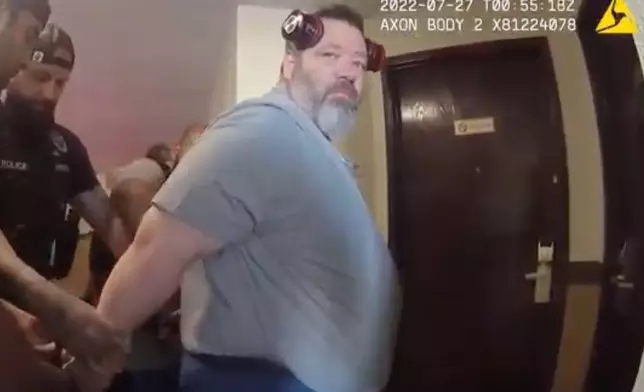
In this screengrab made from body camera footage provided by the Othello, Wash., Police Department, police officers arrest U.S. Immigration and Customs Enforcement supervisor Koby Williams in July 2022 during an underage sex sting operation. (Othello Police Department via AP)

In this screengrab made from body camera footage provided by the Othello, Wash., Police Department, police officers arrest U.S. Immigration and Customs Enforcement supervisor Koby Williams in July 2022 during an underage sex sting operation. (Othello Police Department via AP)

While most of the cases happened before Congress voted last year to give ICE $75 billion to hire more agents and detain more people, experts say these kinds of crimes could accelerate given the sheer volume of new employees and their empowerment to use aggressive tactics to arrest and deport people.

The Trump administration has emboldened agents by arguing they have “absolute immunity” for their actions on duty and by weakening oversight. One judge recently suggested that ICE was developing a troubling culture of lawlessness, while experts have questioned whether job applicants are getting enough vetting and training.

“Once a person is hired, brought on, goes through the training and they are not the right person, it is difficult to get rid of them and there will be a price to be paid later down the road by everyone,” said Gil Kerlikowske, who served as commissioner of U.S. Customs and Border Protection from 2014 to 2017.

Almost every law enforcement agency contends with bad employees and crimes related to domestic violence and substance abuse are long-standing problems in the field. But ICE's rapid growth and mission to deport millions are unprecedented, and the AP review found that the immense power that officers exercise over vulnerable populations can lead to abuses.

Department of Homeland Security Assistant Secretary Tricia McLaughlin said that wrongdoing was not widespread in the agency, and that ICE “takes allegations of misconduct by its employees extremely seriously.” She said that most new hires had already worked for other law enforcement agencies, and that their backgrounds were thoroughly vetted.

“America can be proud of the professionalism our officers bring to the job day-in and day-out,” she said.

ICE announced last month that it had more than doubled in size to 22,000 employees in less than one year.

Kerlikowske said ICE agents are particularly “vulnerable to unnecessary use of force issues,” given that they often conduct enforcement operations in public while facing protests. With the number of ICE detainees nearly doubling since last year to 70,000, employees and contractors responsible for overseeing them are also facing challenging conditions that can provide more opportunities for misconduct.

The Border Patrol doubled in size to more than 20,000 agents from 2004 to 2011 — six years longer than ICE took. It was embarrassed by a wave of corruption, abuse and other misconduct by some of the new hires. Kerlikowske recalled cases of agents who accepted bribes to let cars carrying drugs enter the U.S. or who became involved in human trafficking.

He and others say ICE is poised to see similar problems that will likely be broader in scope, with less oversight and accountability.

“The corruption and the abuse and the misconduct was largely confined in the prior instance to along the border and interactions with immigrants and border state residents. With ICE, this is going to be a countrywide phenomenon as they pull in so many people who are attracted to this mission,” said David Bier, director of immigration studies at the Cato Institute, a libertarian think tank.

Bier, who has helped publicize some of the recent arrests and other alleged misconduct by ICE agents, said he has been struck by the “remarkable array of different offenses and charges that we’ve seen.”

AP’s review examined public records involving cases of ICE employees and contractors who have been arrested since 2020, including at least 17 who have been convicted and six others who are awaiting trial. Nine have been charged in the last year, including an agent cited last month for assaulting a protester near Chicago while off-duty.

Some of the most serious crimes were committed by veteran ICE employees and supervisors rather than rookies.

While federal officials have justified ICE's aggression, the behavior of agents is drawing scrutiny from cellphone-wielding observers and prosecutors in Democratic-led jurisdictions. Local agencies are looking into last month’s fatal shootings in Minneapolis of protesters Renee Good and Alex Pretti by federal agents, as well as the killing of Keith Porter by an off-duty ICE agent in Los Angeles on New Year’s Eve.

Around the country, the cases have attracted unwelcome headlines for ICE, which has spent millions of dollars publicizing the criminal rap sheets of those they arrest as the “worst of the worst.”

Among them:

__ The assistant ICE field office supervisor in Cincinnati, Samuel Saxon, a 20-year ICE veteran, has been jailed since his arrest in December on charges that he attempted to strangle his girlfriend.

Saxon had abused the woman for years, fracturing her hip and nose and causing internal bleeding, a judge found in a ruling ordering him detained pending trial. “The defendant is a volatile and violent individual,” the judge wrote of Saxon, whose attorneys didn’t return a message seeking comment. ICE said he is considered absent without leave.

__ “I’m ICE, boys,” an ICE employment eligibility auditor told police in Minnesota in November when he was arrested in a sting as he went to meet a person he thought was a 17-year-old prostitute. Alexander Back, 41, has pleaded not guilty to attempted enticement of a minor. ICE said Back is on administrative leave while the agency investigates.

—When officers in suburban Chicago found a man passed out in a crashed car in October, they were surprised to discover the driver was an ICE officer who had recently completed his shift at a detention center and had his government firearm in the vehicle. They arrested Guillermo Diaz-Torres for driving under the influence. He's pleaded not guilty and has been put on administrative duty pending an investigation.

__ After an ICE officer in Florida was stopped for driving drunk with his two children in the car in August, he tried to get out of charges by pointing to his law enforcement and military service. When that failed, he demanded to know whether one of the deputies arresting him was Haitian and threatened to check the man’s immigration status, body camera video shows.

“I’ll run him once I get out of here and if he’s not legit, ooh, he’s taking a ride back to Haiti,” Scott Deiseroth warned during the arrest.

Deiseroth, who was sentenced to probation and community service, is on administrative leave pending the outcome of an internal investigation. “He did something stupid. He owned up to it,” said his attorney, Michael Catalano. “He’s very sorry about the whole thing.”

The AP's review found a pattern of charges involving ICE employees and contractors who mistreated vulnerable people in their care.

A former top official at an ICE contract facility in Texas was sentenced to probation on Feb. 4 after acknowledging he grabbed a handcuffed detainee by the neck and slammed him into a wall last year. Prosecutors had downgraded the charge from a felony to a misdemeanor.

In December, an ICE contractor pleaded guilty to sexually abusing a detainee at a detention facility in Louisiana. Prosecutors said the man had sexual encounters with a Nicaraguan national over a five-month period in 2025 as he instructed other detainees to act as lookouts.

Outside Chicago, an off-duty ICE agent has been charged with misdemeanor battery for throwing to the ground a 68-year-old protester who was filming him at a gas station in December. McLaughlin has said the agent acted in self-defense.

Another pattern that emerged in AP's review involved ICE officials charged with abusing their power for financial gain.

An ICE deportation officer in Houston was indicted last summer on charges that he repeatedly accepted cash bribes from bail bondsmen in exchange for removing detainers ICE had placed on their clients targeting them for deportation.

ICE said the officer was “indefinitely suspended” in May 2024, before his arrest one year later. He has pleaded not guilty to seven counts of accepting bribes and was released from custody while awaiting trial.

Prosecutors say a former supervisor in ICE’s New York City office provided confidential information about people’s immigration statuses to acquaintances and made an arrest in exchange for gifts and other gain. He was arrested in November 2024, has pleaded not guilty and is awaiting trial.

Two Utah-based ICE investigators were sentenced to prison last year for a scheme in which they made hundreds of thousands of dollars stealing synthetic drugs known as “bath salts” from government custody and selling them through government informants.

The wrongdoing often included the use of ICE resources and credentials to try to avoid arrest or receive favorable treatment.

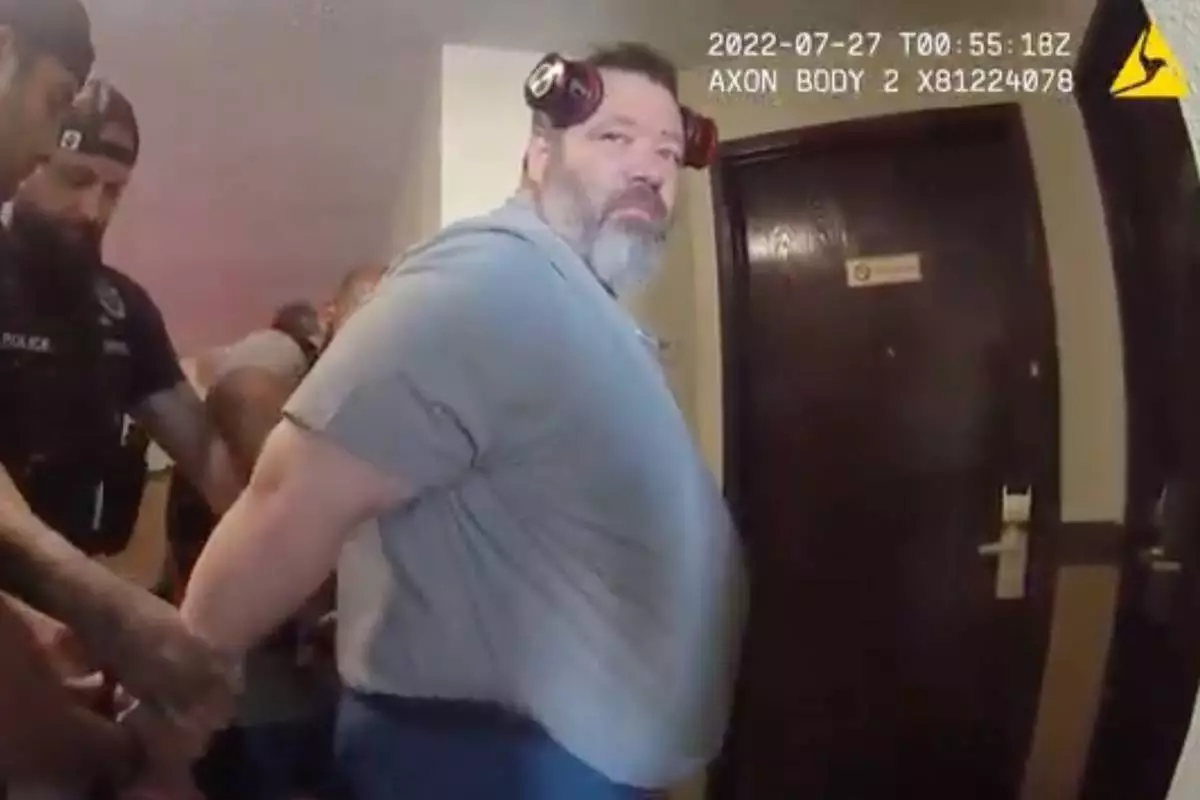
In 2022, ICE supervisor Koby Williams was arrested in a sting by police in Othello, Washington, while going to a hotel room to meet who he thought was a 13-year-old girl he’d arranged to pay for sex.

Williams had driven his government vehicle, which was filled with cash, alcohol, pills and Viagra, and was carrying his ICE badge and loaded government firearm. The 22-year ICE veteran offered a rationale that turned out to be a lie: that he was there to “rescue” the girl as part of a human trafficking investigation. Williams is serving prison time for what prosecutors called a “reprehensible" abuse of power.

“With a duty to protect and serve,” they wrote, “defendant sought to exploit and victimize.”

In this screengrab made from body camera footage provided by the Monroe County, Fla., Sheriff's Office, off-duty U.S. Immigration and Customs Enforcement agent Scott Deiseroth takes a field sobriety test after he was pulled over for drunk driving with his children in the car in August 2025. (Monroe County Sheriff's Office via AP)

In this screengrab made from body camera footage provided by the Monroe County, Fla., Sheriff's Office, off-duty U.S. Immigration and Customs Enforcement agent Scott Deiseroth takes a field sobriety test after he was pulled over for drunk driving with his children in the car in August 2025. (Monroe County Sheriff's Office via AP)

In this screengrab made from body camera footage provided by the Monroe County, Fla., Sheriff's Office, off-duty U.S. Immigration and Customs Enforcement agent Scott Deiseroth argues with a deputy who pulled him over for drunk driving with his children in the car in August 2025. (Monroe County Sheriff's Office via AP)
In this screengrab made from body camera footage provided by the Monroe County, Fla., Sheriff's Office, off-duty U.S. Immigration and Customs Enforcement agent Scott Deiseroth argues with a deputy who pulled him over for drunk driving with his children in the car in August 2025. (Monroe County Sheriff's Office via AP)

In this screengrab made from body camera footage provided by the Monroe County, Fla., Sheriff's Office, off-duty U.S. Immigration and Customs Enforcement agent Scott Deiseroth argues with a deputy who pulled him over for drunk driving with his children in the car in August 2025. (Monroe County Sheriff's Office via AP)

In this screengrab made from body camera footage provided by the Monroe County, Fla., Sheriff's Office, off-duty U.S. Immigration and Customs Enforcement agent Scott Deiseroth argues with a deputy who pulled him over for drunk driving with his children in the car in August 2025. (Monroe County Sheriff's Office via AP)

In this screengrab made from body camera footage provided by the Othello, Wash., Police Department, police officers arrest U.S. Immigration and Customs Enforcement supervisor Koby Williams in July 2022 during an underage sex sting operation. (Othello Police Department via AP)

In this screengrab made from body camera footage provided by the Othello, Wash., Police Department, police officers arrest U.S. Immigration and Customs Enforcement supervisor Koby Williams in July 2022 during an underage sex sting operation. (Othello Police Department via AP)

DHAKA, Bangladesh (AP) — When Tarique Rahman, the son of a former prime minister of Bangladesh, returned to the country in December after 17 years of self-imposed exile, he declared to his supporters: “I have a plan.”

Rahman returned at a time of upheaval. Bangladesh was seemingly adrift under an interim administration as it inched closer to a nationwide poll. Many Bangladeshis felt his return offered the country a new chance. His fiercest rival, the former Prime Minister Sheikh Hasina, would be absent from the election after being toppled by a violent student-led revolt in 2024.

Barely two months later, Rahman is widely seen as the front-runner in Thursday’s election. He restated his ambitions at a campaign rally in Dhaka on Monday, arriving at the podium under heavy security as supporters spilled into a public park, dancing and cheering.

“The main goal and objective of this plan is to change the fate of the people and of this country,” he told the crowd.

That task will not be easy for whoever wins.

The election in Bangladesh follows a tumultuous period that has been marked by mob violence, rising religious intolerance, attacks on the press, the rise of Islamists and the fraying of the rule of law. A fair election will be a major challenge. Governing in its aftermath may prove an even sterner test for democratic institutions weakened by more than a decade of disputed polls and shrinking political space.

“An election with relatively little violence in which people are able to vote freely and all sides accept the outcome would be a significant step forward,” said Thomas Kean of the International Crisis Group, a think tank devoted to resolving conflicts. Yet he cautioned that the restoration of democracy, after facing severe strains under Hasina’s rule, would be a long-term challenge.

That process, Kean said, has “only just started.”

Rahman — the 60-year-old son of former Prime Minister Khaleda Zia — has been promising job creation, greater freedom of speech, law and order, and an end to corruption. His campaign seeks to portray him as a bulwark of democracy in a political landscape long dominated by entrenched parties, military coups and vote rigging.

Though Rahman never held office in his mother’s governments, many Bangladeshis saw him as wielding considerable influence within her Bangladesh Nationalist Party until her death in December.

BNP’s main opponent is an 11-party coalition led by Jamaat-e-Islami, the country’s foremost Islamist party, still shadowed by its collaboration with Pakistan during the 1971 war of independence. On Monday, its chief Shafiqur Rahman told supporters at a rally that the alliance has come together “with the dream of building a new Bangladesh.”

With Hasina’s Awami League party absent from the poll and calling on its supporters to stay away, Jamaat-e-Islami is seeking to expand its reach. The conservative party claims it would govern with restraint if elected to power, but its ascent has sparked unease, particularly over its views on women. The party chief has said women are biologically weaker than men and should not work eight hours a day like men, raising fears it could restrict the fundamental rights of women.

Anxieties over Bangladesh’s future are echoed particularly by those who were part of the uprising that paved the way for the election.

When Nobel Peace Prize laureate Muhammad Yunus assumed office three days after Hasina’s ouster, there was optimism among many. Later, student leaders of the uprising launched a new political outfit, the National Citizen Party, styling itself as a clean break from the old political order.

That promise faded after the party joined the Jamaat-e-Islami-led alliance, leading to disillusion among some leaders, several of whom quit.

Tasnim Jara, a public health expert who resigned from the NCP and is running as an independent candidate, said the uprising had “opened a window” for people like her to enter politics and help reshape its culture. But that hope faded once the NCP aligned itself with the Islamists.

She said it became hard for her to see how a genuinely new political culture that many in Bangladesh have long sought could emerge from such an arrangement.

“I struggled to see how a new political culture could genuinely thrive within that framework,” she said.

Arafat Imran, a student at Dhaka University, said he joined the uprising expecting change, but feels that the aspirations that led to the protests “have not been realized."

Imran noted that though the uprising brought new political faces, the core machinery of the state — the military, police and bureaucracy — remains largely unchanged.

True reform or meaningful change, Imran said, would require overhauling the entire system, adding that “holding elections every five years alone cannot sustain democracy.”

“Alongside elections, it is essential to guarantee the rule of law and civil rights. Had these been ensured, there might have been grounds for satisfaction regarding the elections,” he said.

Worries have also spilled into other areas crucial to a healthy democracy.

Roksana Anzuman Nicole, a popular Dhaka talk-show host, became a rare media voice during the uprising, challenging security forces as hundreds were killed on the streets.

After Hasina’s ouster, hopes that such freedoms would expand also faded. Nicole is now off air, confined to her home, and fearful for her safety after a heated debate with a guest defending mob attacks led to threats against her, her family and colleagues.

“A major pillar of that movement was the belief that everyone would be able to speak freely, that people would enjoy freedom of expression. Sheikh Hasina left on August 5, and just 10 days later, my dreams collapsed,” she said.

Her experience is shared by others too. In December, a pro-uprising cultural activist was shot dead in central Dhaka, and protesters set fire to the offices of the country’s two largest newspapers, trapping staff inside. Last week, 21 journalists from an online outlet reporting critically on the military were briefly detained.

Many journalists told The Associated Press they have curtailed their movements or stopped going to work altogether. Many have lost their jobs as they have been branded by pro-uprising activists as collaborators of Hasina. Global human rights groups have expressed their concerns over press freedom under the Yunus-led administration.

“A free press is vital for a flourishing democracy,” said Catherine Cooper of the Robert & Ethel Kennedy Human Rights Center, one of the groups observing the election. “Protecting freedom of expression should be a top priority.”

Many Bangladeshis are putting their trust in the election. The vote will also include a referendum for political reforms that include prime ministerial term limits and stronger checks on executive power.

There is, however, uncertainty over how the nation’s democracy would look in the years to come.

Iftekhar Zaman, a Bangladeshi political analyst, said for the first time in 16 years, Bangladeshis will have a genuine chance to vote, after three elections under Hasina were marred by allegations of rigging or opposition boycotts. He described the poll as “extraordinary,” but warned that reinforcing democratic institutions would take time.

Kean of the International Crisis Group said while some of the proposed reforms are “significant and meaningful,” they won’t be enough.

“The political culture has to change as well, and we are only seeing the first signs of that,” he said.

Roksana Anzuman Nicole, a popular Dhaka talk-show host, talks to The Associated Press in Dhaka, Bangladesh, Feb. 5, 2026. (AP Photo/Mahmud Hossain Opu)

Roksana Anzuman Nicole, a popular Dhaka talk-show host, talks to The Associated Press in Dhaka, Bangladesh, Feb. 5, 2026. (AP Photo/Mahmud Hossain Opu)

National Citizen Party (NCP) convener Nahid Islam, left, talks to Jamaat-e-Islami leader Shafiqur Rahman during an election rally in Dhaka, Bangladesh, on Feb. 9, 2026. (AP Photo/Anupam Nath)

National Citizen Party (NCP) convener Nahid Islam, left, talks to Jamaat-e-Islami leader Shafiqur Rahman during an election rally in Dhaka, Bangladesh, on Feb. 9, 2026. (AP Photo/Anupam Nath)

FILE - Protesters celebrate at the Parliament House premise after news of Prime Minister Sheikh Hasina's resignation, in Dhaka, Bangladesh, on Aug. 5, 2024. (AP Photo/Fatima Tuj Johora, File)

FILE - Protesters celebrate at the Parliament House premise after news of Prime Minister Sheikh Hasina's resignation, in Dhaka, Bangladesh, on Aug. 5, 2024. (AP Photo/Fatima Tuj Johora, File)

FILE - Head of the Bangladesh's interim government and Nobel laureate Dr. Muhammad Yunus attends an event during where the signing of a political charter called July National Charter was announced, outside Bangladesh's national parliament complex in Dhaka, Bangladesh, on Oct. 17, 2025. (AP Photo/Mahmud Hossain Opu, File)

FILE - Head of the Bangladesh's interim government and Nobel laureate Dr. Muhammad Yunus attends an event during where the signing of a political charter called July National Charter was announced, outside Bangladesh's national parliament complex in Dhaka, Bangladesh, on Oct. 17, 2025. (AP Photo/Mahmud Hossain Opu, File)

Tarique Rahman, the son of former Prime Minister Khaleda Zia and chairman of the Bangladesh Nationalist Party (BNP), attends an election rally ahead of national election in Dhaka, Bangladesh, on Feb. 8, 2026. (AP Photo/Anupam Nath)

Tarique Rahman, the son of former Prime Minister Khaleda Zia and chairman of the Bangladesh Nationalist Party (BNP), attends an election rally ahead of national election in Dhaka, Bangladesh, on Feb. 8, 2026. (AP Photo/Anupam Nath)

Recommended Articles