YLÖJÄRVI, Finland--(BUSINESS WIRE)--Feb 11, 2026--
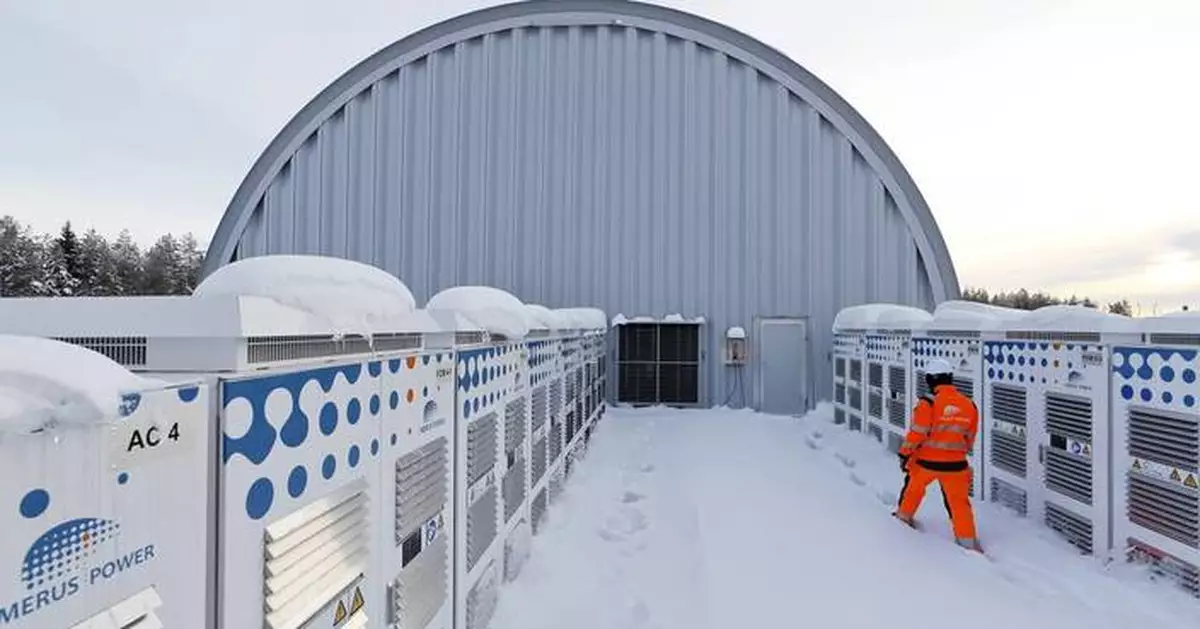
Merus Power Oyj has signed a battery energy storage deal worth approximately 13 million euros with Neve Oy. The 30 MW/80 MWh facility is designed to operate in extremely cold conditions and will be delivered to Rovaniemi at the end of 2026. The companies have also agreed on comprehensive operations and maintenance services for the energy storage facility.
This press release features multimedia. View the full release here: https://www.businesswire.com/news/home/20260205029746/en/
The energy storage facility is engineered to operate reliably in Arctic conditions, withstanding temperatures down to –50 °C, heavy snowfall, and ice. The system uses grid forming technology that supports the inertia of the electricity grid and strengthens the stability of the electricity system. Merus Power delivered the first grid forming energy storage facilities in the Nordic countries to Valkeakoski and Lappeenranta last year.
Merus Power is responsible for the manufacture, installation, and testing of the BESS. The system is based on advanced technology developed by Merus Power in Finland and the company's own software, which controls and operates the BESS as part of the critical electricity infrastructure. Finnish software development, quality, and cybersecurity features support the system's operational reliability and controllability even in exceptional situations and crises.
Neve Oy is a Lapland-based, multi-sector group owned by the city of Rovaniemi. The company is responsible for electricity transmission, electricity and district heating production, district heating networks and services, water supply, fiber optics, and other energy and infrastructure services in the demanding conditions of the north. The energy storage facility to be delivered will enable participation in several different electricity markets, supporting the flexibility of the electricity grid and the operational reliability of the energy system in demanding conditions.
“Arctic conditions place exceptional requirements on electrical systems. Merus Power's solution responds to these challenges and supports our strategic goal of developing reliable and sustainable energy solutions for the demanding conditions of Lapland,” says Kristian Gullsten, CEO of Neve Oy.
“Merus Power’s energy storage solutions have been developed for demanding electricity grid environments where performance, reliability, and high availability are critical factors. We are proud that our modular solutions can be tailored to our customers' needs. With our technological expertise, we can support Neve Oy in developing the flexibility and reliability of its energy system,” comments Kari Tuomala, CEO of Merus Power.
The deal strengthens Merus Power's position as a supplier of demanding energy storage solutions both in the Nordic countries and internationally.
Merus Power
Merus Power is a Finnish technology company driving the sustainable energy transition. We design and produce innovative energy storages, power quality solutions and services for the needs of renewable energy and industry. Through our scalable technology, we facilitate the growth of renewable energy in electricitygrids and improve the energy efficiency of society.
Our net sales in 2025 were EUR 54.6 million and our stock’s trading symbol on the Nasdaq First North Growth Market Finland is MERUS.
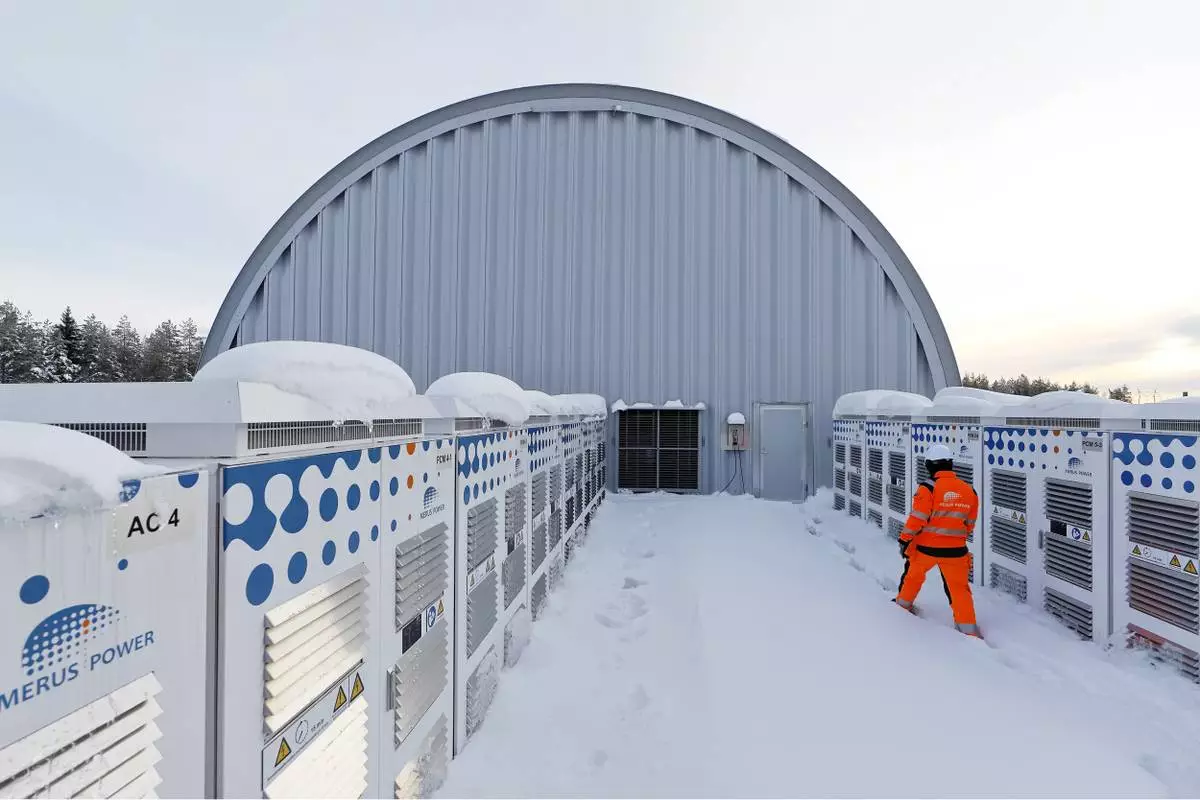
Merus Power delivered the first grid forming battery energy storage systems in the Nordics last year. The grid forming BESS to be deployed in Lapland is also designed to withstand extreme Arctic conditions.
HELSINGBORG, Sweden (AP) — NATO allies and defense officials expressed bewilderment Friday at U.S. President Donald Trump’s announcement that he would send 5,000 U.S. troops to Poland just weeks after ordering the same number of forces pulled out of Europe.
The apparent change of mind came after weeks of statements from Trump and his administration about reducing — not increasing — the U.S. military footprint in Europe. Trump's initial order set off a flurry of action among military commanders and left allies already doubtful about America's commitment to Europe's security to ponder what forces they might have to backfill on NATO's eastern flank with Russia and Ukraine.
Earlier this month, the Trump administration said it was reducing levels in Europe by about 5,000 troops, and U.S. officials confirmed about 4,000 service members were no longer rotating into Poland from Germany. The dispatch to Germany of U.S. personnel trained to fire long-range missiles was also halted.
But in a post on Truth Social on Thursday, Trump said he would now send "an additional 5,000 Troops to Poland,” citing his strong ties with Polish President Karol Nawrocki, whom Trump endorsed in elections last year.
“It is confusing indeed, and not always easy to navigate,” Swedish Foreign Minister Maria Malmer Stenergard told reporters Friday at a meeting she was hosting of her NATO counterparts, including U.S. Secretary of State Marco Rubio.
Ministers from the Netherlands and Norway were sanguine about Trump’s latest move, as was Latvian Foreign Minister Baiba Braže, who said allies knew the U.S. troop “posture was being reconsidered, and now there is no change of posture. For now.”
U.S. defense officials also expressed confusion. “We just spent the better part of two weeks reacting to the first announcement. We don’t know what this means either,” said one of two officials who spoke on condition of anonymity to discuss sensitive military matters.
But Rubio said Washington’s allies understand that changes in the U.S. troop presence in Europe will come as the Trump administration reevaluates its force needs. “I think there’s a broad recognition that there are going to be eventually less U.S. troops in Europe than there has historically been for a variety of reasons,” he said.
The latest surprise came despite a U.S. pledge to coordinate troop deployments, including one from NATO’s top military officer, U.S. Lt. Gen. Alex Grynkewich, on Wednesday.
Trump's initial announcement that he would withdraw troops came as he fumed over remarks by German Chancellor Friedrich Merz, who said that the U.S. was being “humiliated” by the Iranian leadership and criticized what he called a lack of strategy in that war.
Trump told reporters that the U.S. would be cutting even more than 5,000 and also announced new tariffs on European cars. Germany is the continent’s biggest auto producer.
Rubio insisted that Trump’s decision “is not a punitive thing. It’s just something that’s ongoing.”
About 80,000 U.S. troops are stationed in Europe. The Pentagon is required to keep at least 76,000 troops and major equipment on the continent unless NATO allies are consulted and there is a determination that such a withdrawal is in U.S. interests.
The withdrawal of 5,000 troops might drop numbers below that limit.
But Trump's latest post suggests that troop numbers in Europe would not change. Polish Foreign Minister Radek Sikorski welcomed the decision to send more forces to his country, saying it ensures that “the presence of American troops in Poland will be maintained more or less at previous levels.”
NATO Secretary-General Mark Rutte also welcomed the move. On Thursday, before Trump took to Truth Social again, Rutte had underlined that it was important for Europe to take care of its own security. “We have a process in place. This is normal business,” he told reporters.
At NATO headquarters in Brussels, meanwhile, U.S. officials briefed the allies on the Pentagon's aims for its commitments to the NATO Force Model, which involves contingency planning for Europe’s defense in the event of serious security concerns. It was widely expected that a further reduction of U.S. forces would be coming.
Asked whether any cuts were announced, Rutte said: “I’m afraid it’s much more complicated than that.” He said the procedure “is highly classified” and declined to give details.
Rubio played down concerns about a shift in U.S. force levels in Europe, saying: "Every country has to constantly reevaluate what their needs are, what their commitments are around the world, and how to properly structure that.”
Cook reported from Brussels. Associated Press writer Emma Burrows in London contributed.
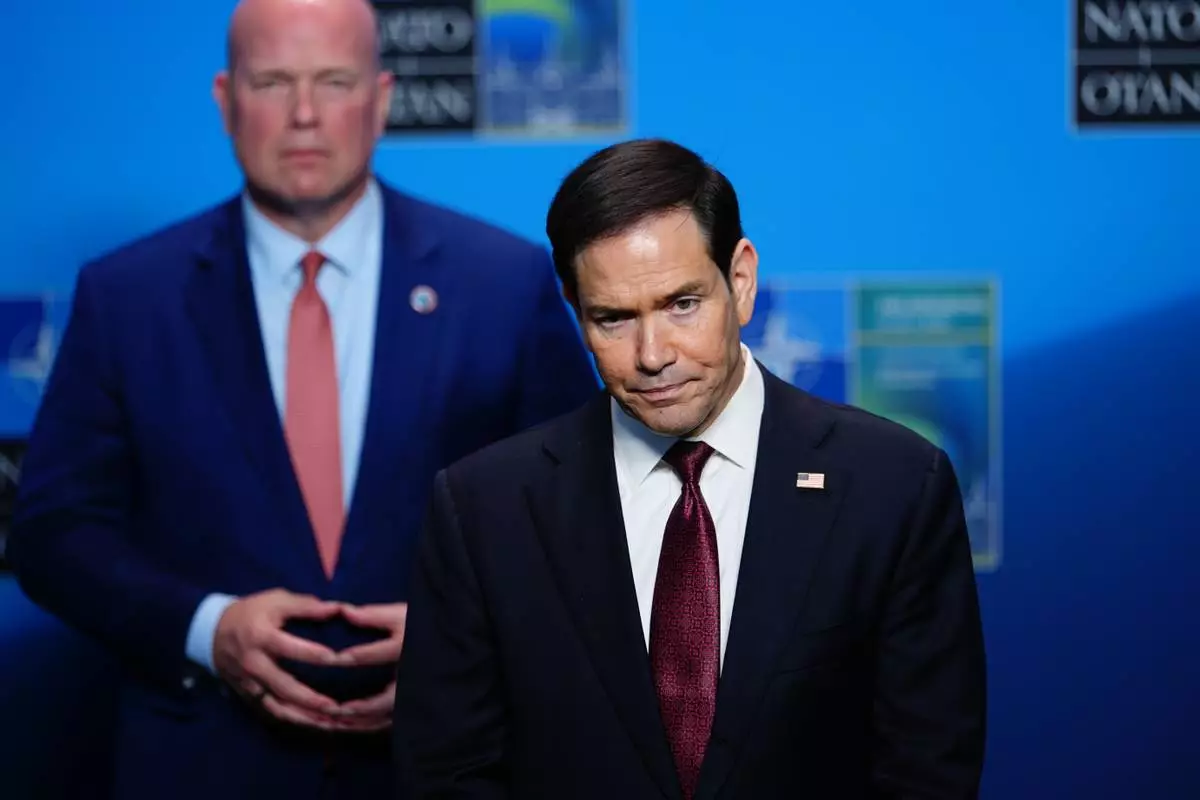
United States Secretary of State Marco Rubio speaks with journalists during a meeting of NATO foreign ministers in Helsingborg, Sweden, Friday, May 22, 2026. (AP Photo/Julia Demaree Nikhinson, Pool)
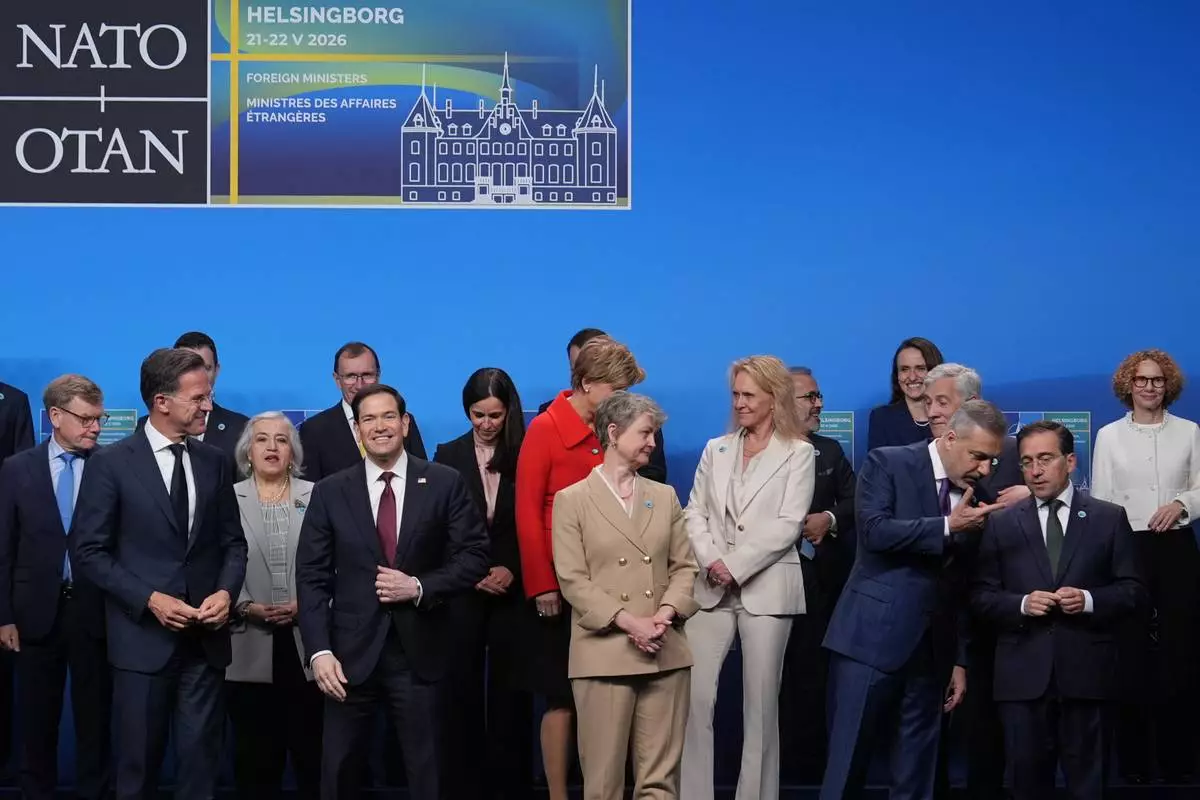
United States Secretary of State Marco Rubio, front second left, and NATO Secretary General Mark Rutte, front left, speak with each other during a group photo at a meeting of NATO foreign ministers in Helsingborg, Sweden, Friday, May 22, 2026. (AP Photo/Julia Demaree Nikhinson, Pool)
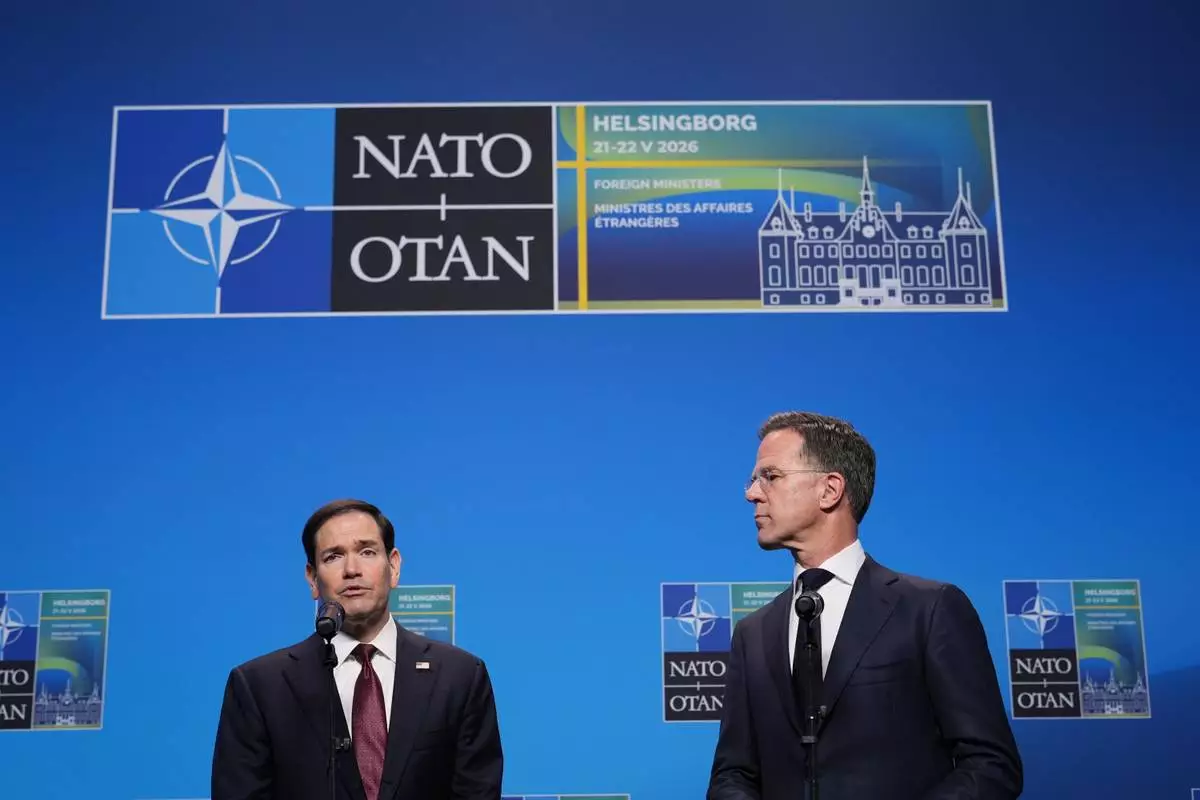
United States Secretary of State Marco Rubio, left, and NATO Secretary General Mark Rutte look at each other as they deliver a statement during a meeting of NATO foreign ministers in Helsingborg, Sweden, Friday, May 22, 2026. (AP Photo/Julia Demaree Nikhinson, Pool)
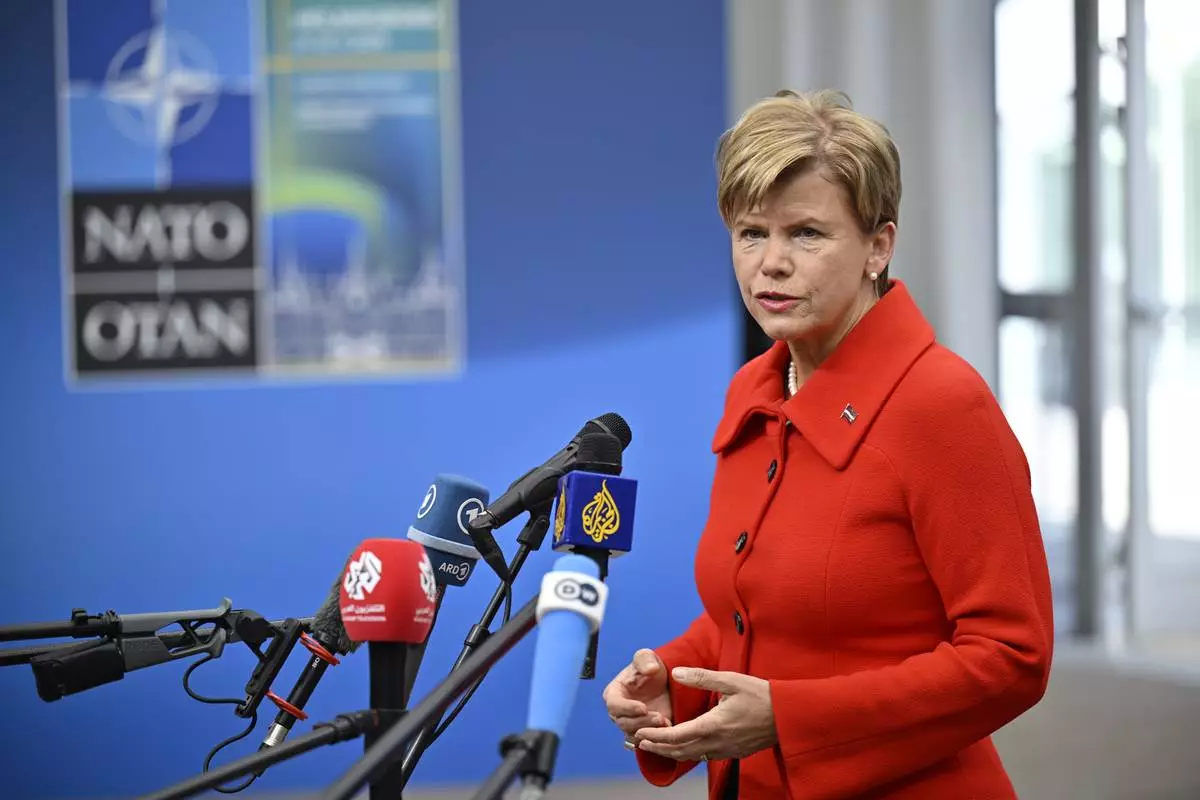
Latvian Foreign Minister Baiba Braže speaks at the doorstep of the NATO foreign ministers' meeting at Sea U in Helsingborg, Sweden, Friday, May 22, 2026. (Johan Nilsson/TT News Agency via AP)
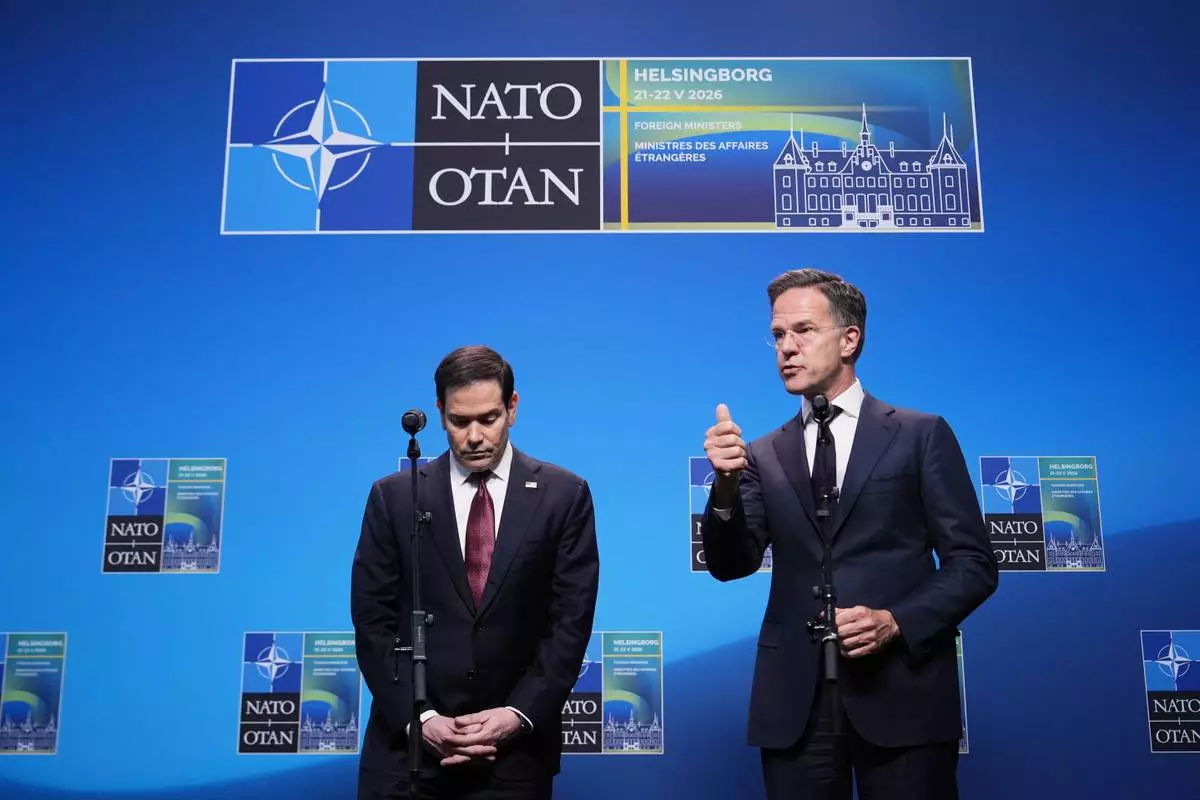
United States Secretary of State Marco Rubio, left, and NATO Secretary General Mark Rutte deliver a statement during a meeting of NATO foreign ministers in Helsingborg, Sweden, Friday, May 22, 2026. (AP Photo/Julia Demaree Nikhinson, Pool)
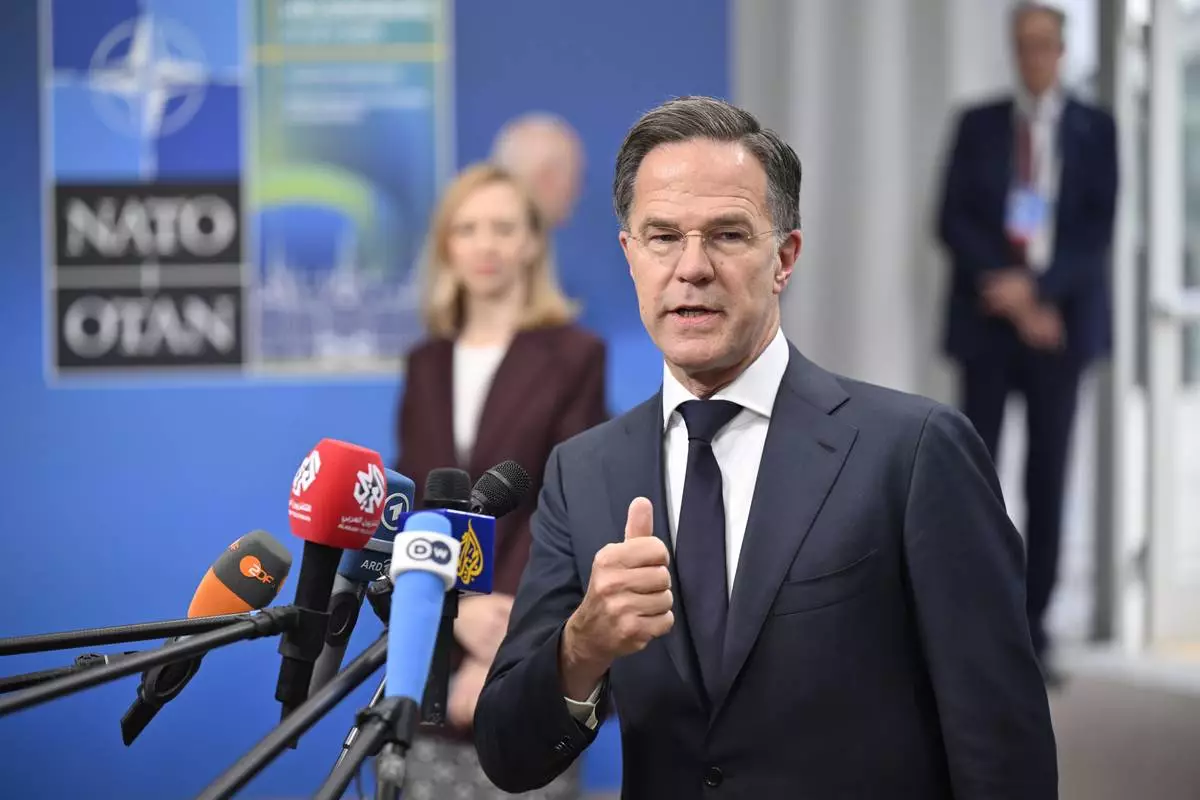
NATO Secretary General Mark Rutte speaks to media at the NATO Foreign Ministers' meeting in Helsingborg, Sweden, Friday, May 22, 2026. (Johan Nilsson/TT News Agency via AP)
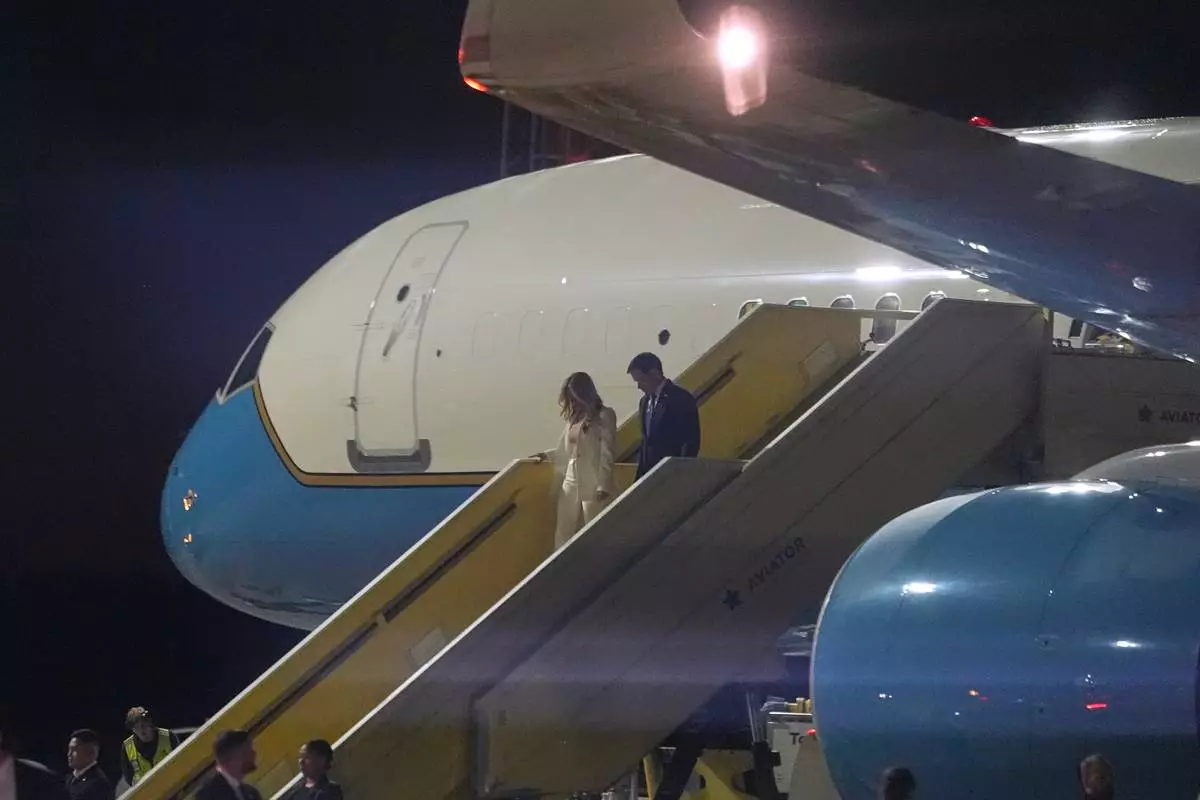
Secretary of State Marco Rubio arrives with his wife Jeanette at Malmo Airport, Friday, May 22, 2026, in Malmo-Sturup, Sweden, ahead of a NATO foreign ministers meeting. (AP Photo/Julia Demaree Nikhinson, Pool)
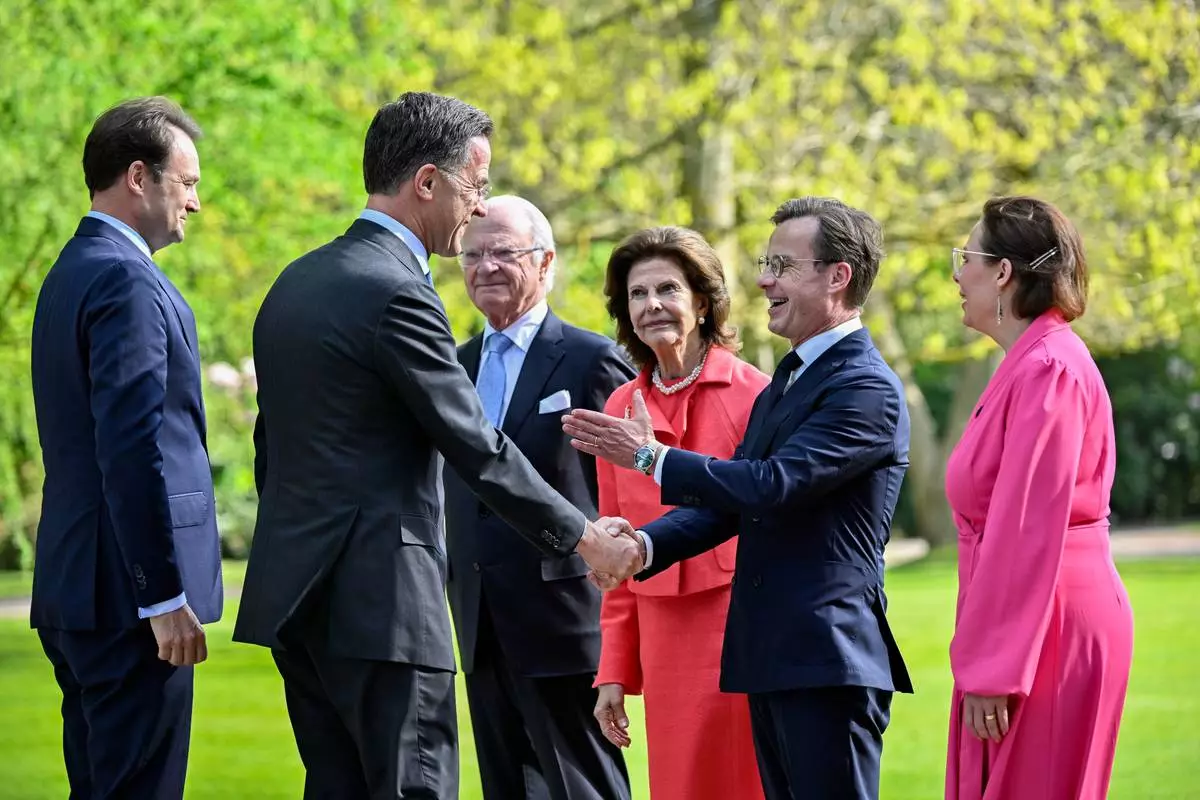
NATO Secretary General Mark Rutte, second from left, shakes hands with Prime Minister of Sweden Ulf Kristersson, as he is greeted by King Carl Gustaf of Sweden, Queen Silvia of Sweden and Minister for Foreign Affairs of Sweden Maria Malmer Stenergard, right, before a dinner at Sofiero Castle in Helsingborg, Sweden, Thursday May 21 2026. (Johan Nilsson/TT News Agency via AP)
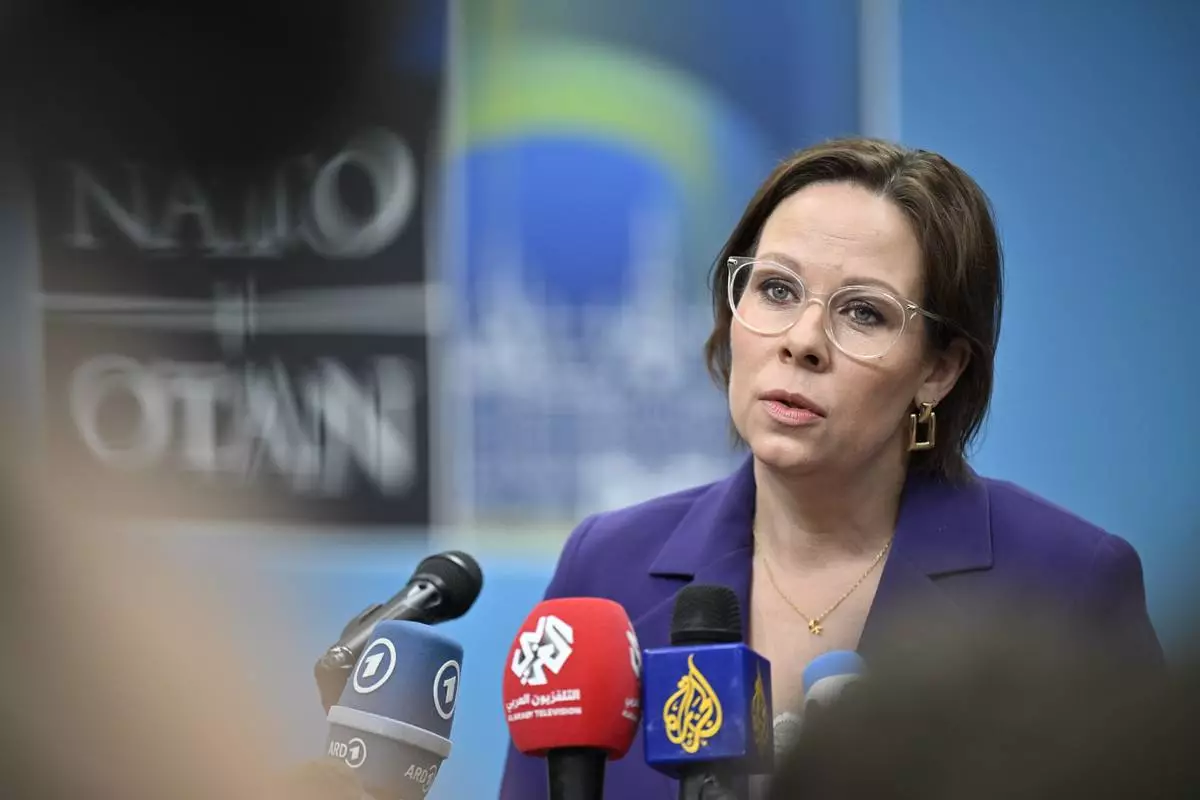
Swedish Foreign Minister Maria Malmer Stenergard speaks to media at the NATO Foreign Ministers' meeting in Helsingborg, Sweden, Friday, May 22, 2026. (Johan Nilsson/TT News Agency via AP)