CORTINA D'AMPEZZO, Italy (AP) — Ukrainian skeleton athlete Vladyslav Heraskevych trained again in his banned helmet Wednesday, one day before the start of his race at the Milan Cortina Games and with the International Olympic Committee urging him to make his point differently.
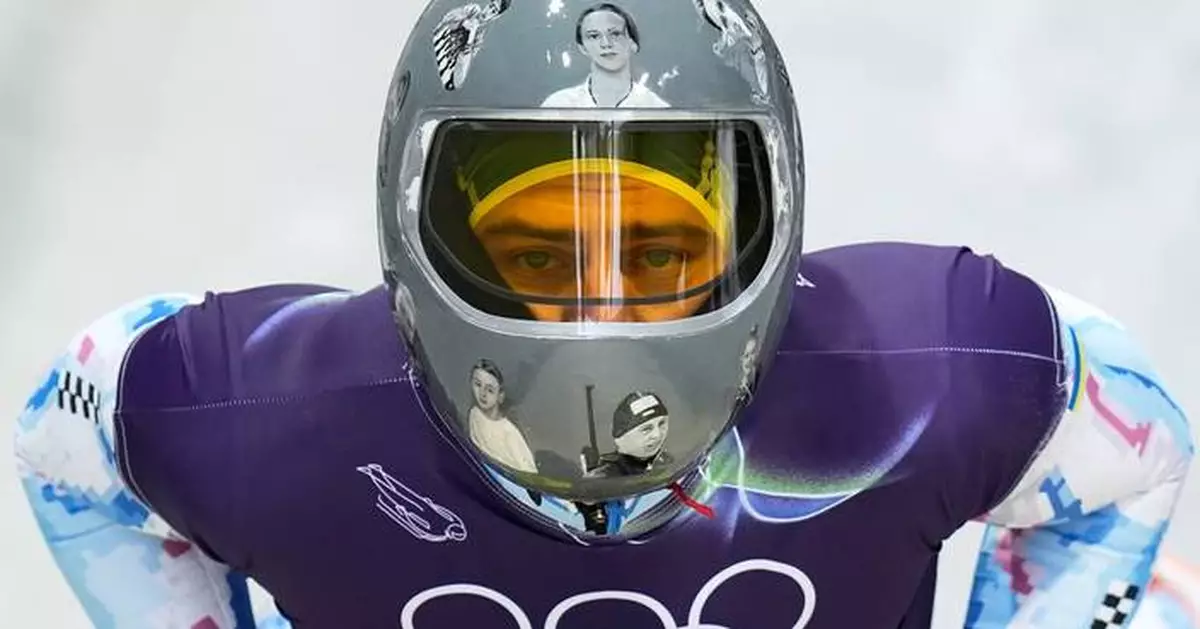
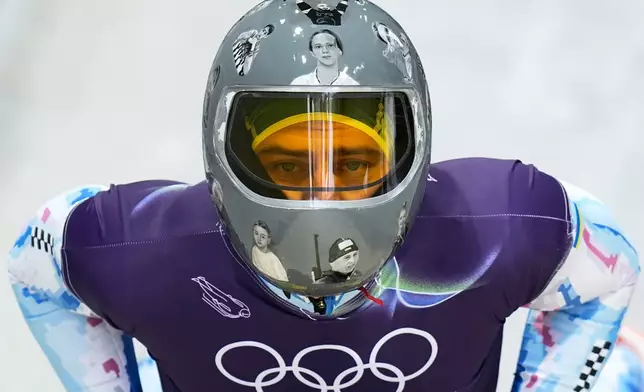
Heraskevych came to the Olympics with a customized helmet showing the faces of more than 20 Ukrainian athletes and coaches who were killed during their country's war with Russia, a conflict that started shortly after the 2022 Beijing Games ended.
Click to Gallery
Ukraine's Vladyslav Heraskevych, left, talks to the media during a men's skeleton training session at the 2026 Winter Olympics, in Cortina d'Ampezzo, Italy, Wednesday, Feb. 11, 2026. (AP Photo/Alessandra Tarantino)
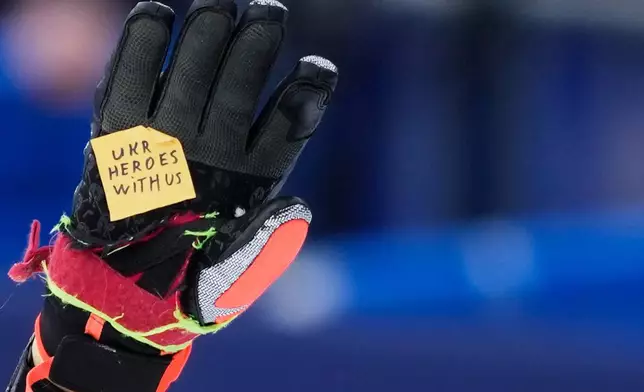
Ukraine's Dmytro Shepiuk holds a sticker reading "UKR heroes with us" at the finish area during a men's super-G race, at the 2026 Winter Olympics, in Bormio, Italy, Wednesday, Feb.11, 2026. (AP Photo/Julia Demaree Nikhinson)
Ukraine's Vladyslav Heraskevych holds up his crash helmet during a press conference following a skeleton training session at the 2026 Winter Olympics, in Cortina d'Ampezzo, Italy, Tuesday, Feb. 10, 2026. (AP Photo/Steve Moore)
Ukraine's Vladyslav Heraskevych holds up his crash helmet during a press conference following a skeleton training session at the 2026 Winter Olympics, in Cortina d'Ampezzo, Italy, Tuesday, Feb. 10, 2026. (AP Photo/Steve Moore)
Ukraine's Vladyslav Heraskevych arrives at the finish during a men's skeleton training session at the 2026 Winter Olympics, in Cortina d'Ampezzo, Italy, Wednesday, Feb. 11, 2026. (AP Photo/Alessandra Tarantino)
But the IOC said Monday night that the helmet wouldn't be allowed in competition, citing a rule against making political statements on the Olympic field of play. Heraskevych wore the helmet for training Tuesday and Wednesday anyway, knowing the IOC could ultimately keep him from the Olympic race.
“The helmet does not violate any IOC rules,” Heraskevych said.
The IOC disagrees, and planned to talk to Heraskevych again Wednesday to discuss what would be allowed, spokesman Mark Adams said. Adams said those words about an hour before Heraskevych's Wednesday training session, so it wasn't immediately clear when or if that conversation would occur.
“We will reiterate the many, many opportunities that he has to express his grief," Adams said. "As we discussed before, he can do so on social media and press conferences in the mixed zone. So, we will try to talk to him about that and try to convince him.
"We want him to compete. We really, really want him to have his moment. That’s very, very important. We want all athletes to have their moment and that’s the point. We want all our athletes to have a fair and level playing field.”
Other Ukrainian athletes are speaking out in support of Heraskevych — with their hands.
“Remembrance is not a violation,” Ukrainian luge athlete Olena Smaha wrote on the palm of her glove during the final two runs of the women's luge event Tuesday night, a clear reference to the helmet and the fallout. (Smaha has written other messages on her glove before races in the past.) And Wednesday, just moments after he crossed the finish line in the men's super-G race, Ukrainian skier Dmytro Shepiuk lifted his right glove to show “UKR heroes with us” in another show of solidarity with Heraskevych.
The helmet was created a few weeks ago by a Ukrainian artist, and one of the reasons why Heraskevych believes it should be allowed is because some athletes have been allowed to pay tribute to others at the end of their competition.
One example: U.S. figure skater Maxim Naumov brought a photo of his late parents — former pairs world champions Evgenia Shishkova and Vadim Naumov, who were among the 67 people killed in a plane crash on Jan. 29, 2025 — to the kiss-and-cry area after his skate in Milan on Tuesday night.
“A beautiful tribute,” Heraskevych said.
The IOC has offered Heraskevych a chance to wear a black armband in competition as a display of his grief and mourning of countrymen, even though such tributes are typically not allowed. Adams said that represents a compromise; Heraskevych said he's not interested.
“I think the way that we hope that we can deal with this is on a human level. … We will have conversations with him to try to explain that actually it’s in everybody’s interest for him to compete and for him also to be able to say what he wants to say," Adams said. "So, I’m not saying that we have a solution, a ready solution, for this. But I think here, it’s better for people to talk to people and for human interaction, hopefully, to win the day.”
Heraskevych is a legitimate medal contender in Cortina: He was no worse than sixth in any of his five official training runs this week in the buildup to the Olympic race.
AP Sports Writer Pat Graham in Bormio, Italy, contributed to this report.
AP Olympics: https://apnews.com/hub/milan-cortina-2026-winter-olympics

Ukraine's Vladyslav Heraskevych, left, talks to the media during a men's skeleton training session at the 2026 Winter Olympics, in Cortina d'Ampezzo, Italy, Wednesday, Feb. 11, 2026. (AP Photo/Alessandra Tarantino)
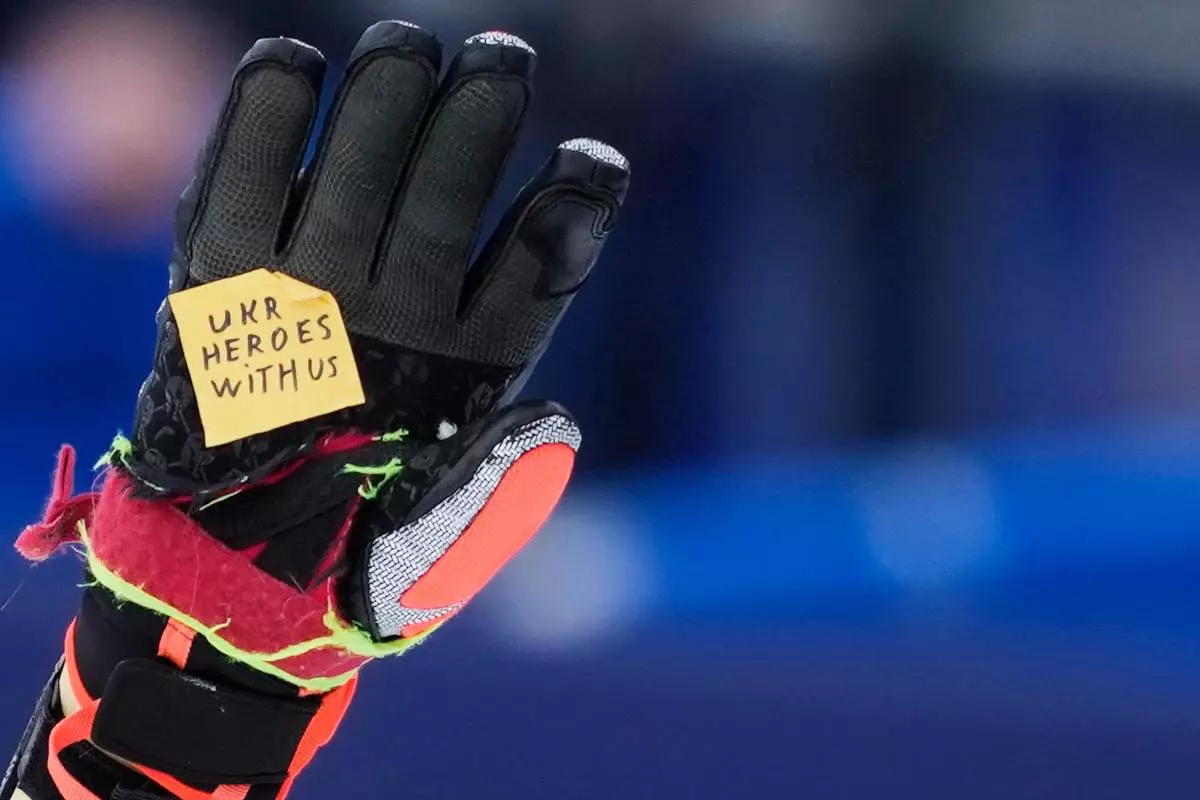
Ukraine's Dmytro Shepiuk holds a sticker reading "UKR heroes with us" at the finish area during a men's super-G race, at the 2026 Winter Olympics, in Bormio, Italy, Wednesday, Feb.11, 2026. (AP Photo/Julia Demaree Nikhinson)

Ukraine's Vladyslav Heraskevych holds up his crash helmet during a press conference following a skeleton training session at the 2026 Winter Olympics, in Cortina d'Ampezzo, Italy, Tuesday, Feb. 10, 2026. (AP Photo/Steve Moore)

Ukraine's Vladyslav Heraskevych holds up his crash helmet during a press conference following a skeleton training session at the 2026 Winter Olympics, in Cortina d'Ampezzo, Italy, Tuesday, Feb. 10, 2026. (AP Photo/Steve Moore)
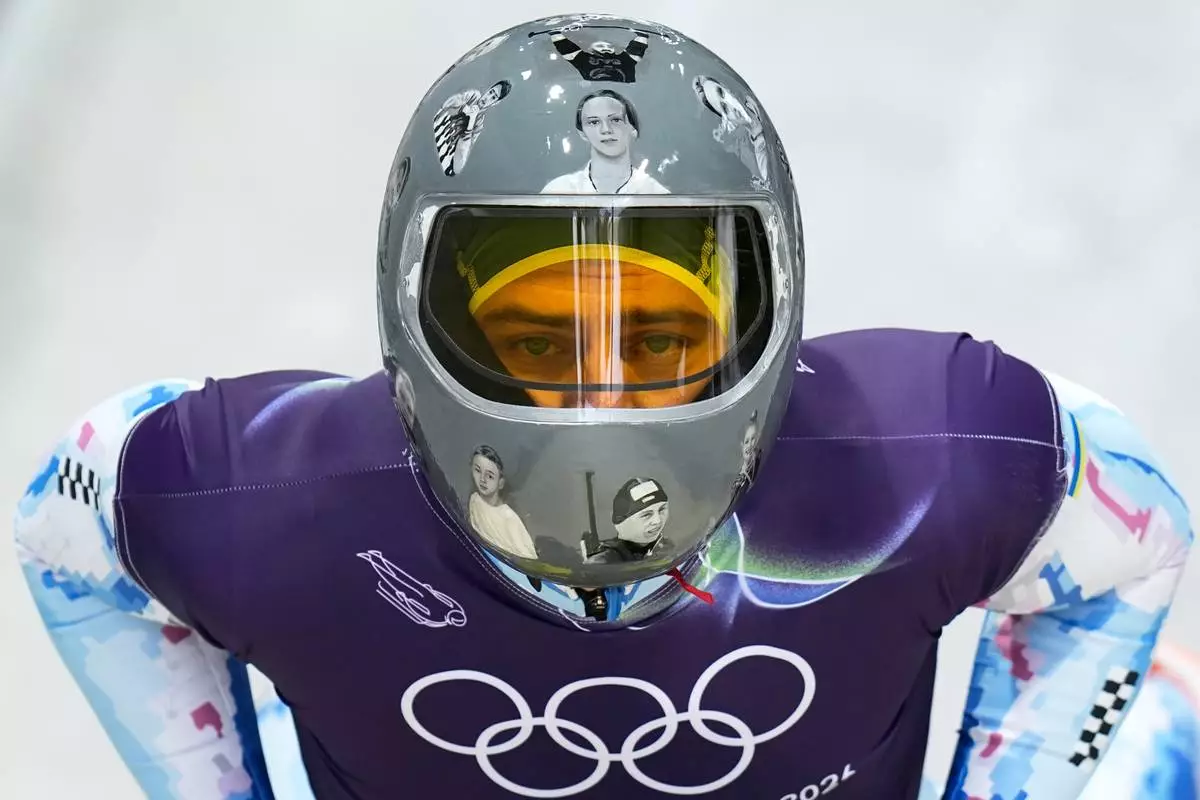
Ukraine's Vladyslav Heraskevych arrives at the finish during a men's skeleton training session at the 2026 Winter Olympics, in Cortina d'Ampezzo, Italy, Wednesday, Feb. 11, 2026. (AP Photo/Alessandra Tarantino)
TENERIFE, Spain (AP) — The head of the World Health Organization sought Saturday to reassure residents of the Spanish island where passengers of a hantavirus-stricken cruise ship are expected to be evacuated, issuing them a direct message that the virus was “not another COVID.”
The Dutch-flagged MV Hondius, with more than 140 passengers and crew on board, is headed to Spain's Canary Islands, off the coast of West Africa, and is expected to arrive at the island of Tenerife early Sunday.
WHO Director-General Tedros Adhanom Ghebreyesus, along with Spain’s Health Minister Monica Garcia and Interior Minister Fernando Grande-Marlaska, were due on the island Saturday to coordinate the disembarkation of passengers and some crew.
“I know you are worried. I know that when you hear the word ‘outbreak’ and watch a ship sail toward your shores, memories surface that none of us have fully put to rest. The pain of 2020 is still real, and I do not dismiss it for a single moment,” Tedros said in a message to the people of Tenerife.
“But I need you to hear me clearly: This is not another COVID. The current public health risk from hantavirus remains low. My colleagues and I have said this unequivocally, and I will say it again to you now,” Tedros added.
The WHO, Spanish authorities and cruise company Oceanwide Expeditions said nobody on the Hondius is currently showing symptoms of the virus.
Hantavirus can cause life-threatening illness. It usually spreads when people inhale contaminated residue of rodent droppings and isn’t easily transmitted between people. But the Andes virus detected in the cruise ship outbreak may be able to spread between people in rare cases. Symptoms usually show between one and eight weeks after exposure.
Three people have died since the outbreak, and five passengers who left the ship are infected with hantavirus.
Some on Tenerife say they are worried. On board the cruise ship, some Spanish passengers have voiced concern about being stigmatized.
“I tell you, I don’t like this very much,” said 69-year-old resident Simon Vidal. “Anyone can say what they want. Why did they have to bring a boat from another country here? Why not anywhere else, why bring it to the Canary Islands?”
Others said they empathized with the boat's passengers, but were still concerned.
“The truth is that it is very worrying,” said 27-year-old Venezuelan immigrant Samantha Aguero. She added: “We feel a bit unsafe, we don’t feel as there are 100% security measures in place to welcome it. This is a virus after all and we have lived this during the pandemic. But we also need to have empathy.”
Spanish Health Minister Monica Garcia said passengers and some crew would disembark in Tenerife “under maximum safety conditions.”
The ship will not dock but will remain at anchor. Everyone disembarking will be checked for symptoms and won't be taken off the ship until a flight is already in Tenerife waiting to fly them off the island, Garcia said during a news conference in Madrid. There are currently people of more than 20 different nationalities on board.
Both the U.S. and the U.K. have agreed to send planes to evacuate their citizens. Americans are to be quarantined at a medical center in Nebraska.
All Spanish passengers will be transferred to a medical facility and quarantined, Garcia said. Oceanwide has listed 13 Spanish passengers and one Spanish crew member on board.
Those disembarking will leave behind their luggage, Garcia said, and will be allowed to take only a small bag with essential items, a cellphone, charger and documentation.
Some crew, as well as the body of a passenger who died on board, will remain on the ship, which will sail on to the Netherlands, where it will undergo disinfection, the minister added.
According to a letter sent by the Dutch foreign and health ministers to parliament late Friday, Spain has activated the EU civil protection mechanism for a medical evacuation plane equipped for infections diseases to be on standby in case anyone on the ship becomes ill. That person would then be transported by air to the European mainland.
The Dutch government will work with Spanish authorities and the ship company to arrange repatriation of Dutch passengers and crew as soon as possible after arrival in Tenerife, subject to medical conditions and advice from the European Centre for Disease Prevention and Control, the letter said. Those without symptoms will go into home quarantine for six weeks and be monitored by local health services.
As the ship is Dutch-flagged, the Netherlands may also temporarily accommodate people of other nationalities and monitor them in quarantine, it said.
Health authorities across four continents were tracking down and monitoring more than two dozen passengers who disembarked before the deadly outbreak was detected. They were also scrambling to trace others who may have come into contact with them.
On April 24, nearly two weeks after the first passenger had died on board, more than two dozen people from at least 12 different countries left the ship without contact tracing, Dutch officials and the ship’s operator have said.
It wasn’t until May 2 that health authorities first confirmed hantavirus in a passenger.
Dutch public health authorities have been monitoring people who were on a flight that was briefly boarded by a Dutch ship passenger who later died and was confirmed to have hantavirus. Three people who were on the flight and had symptoms have all tested negative for hantavirus, Dutch National Institute for Public Health spokesperson Harald Wychgel told The Associated Press on Saturday.
Becatoros reported from Sparta, Greece. Associated Press reporters Angela Charlton in Paris and Helena Alves in Tenerife contributed to this report.
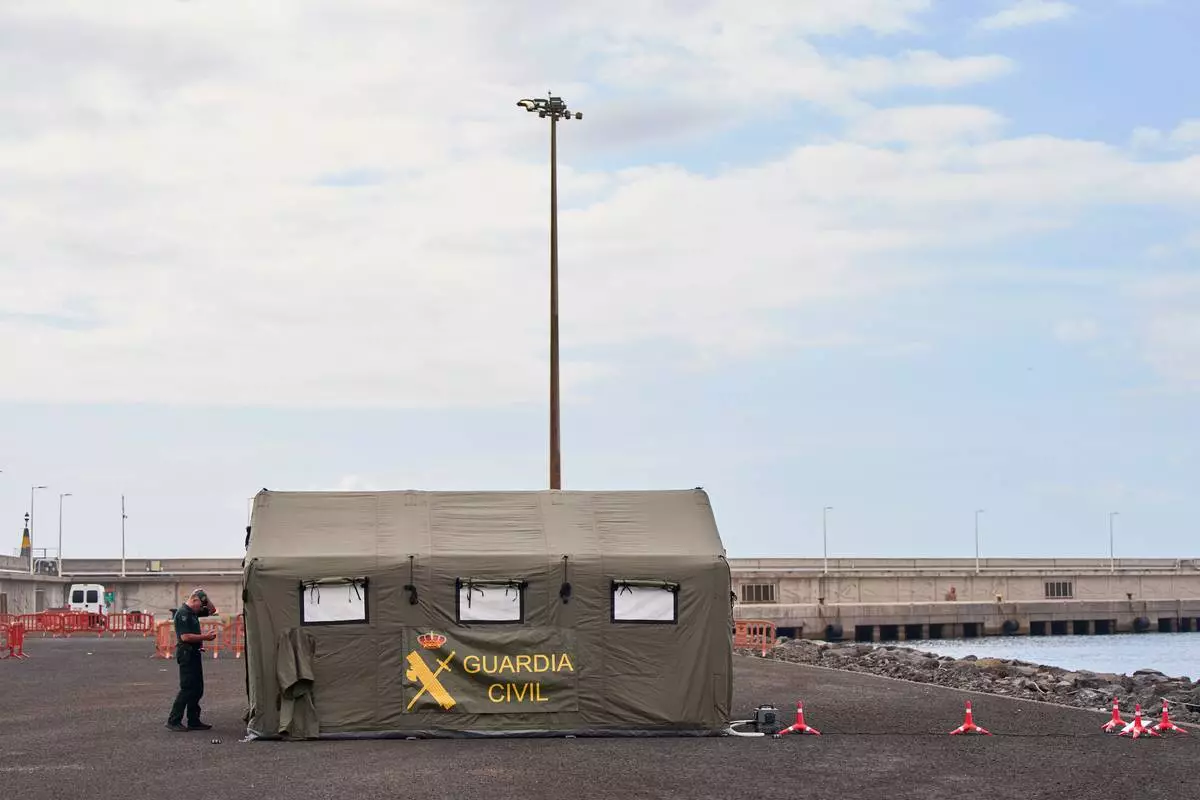
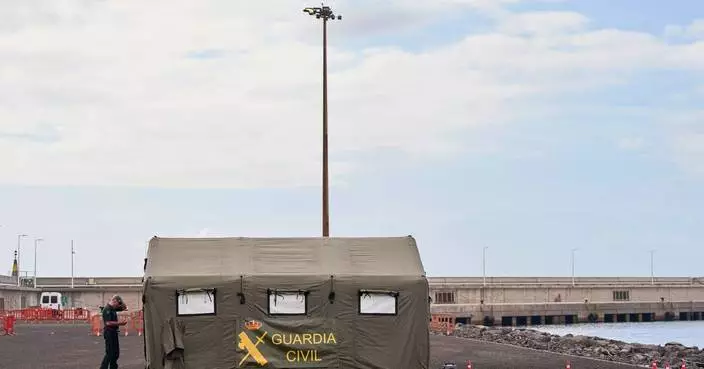
A Spanish Civil Guard officer inspects the area where passengers from the MV Hondius cruise ship are expected to arrive at the port of Granadilla in Tenerife, Canary Islands, Spain, Saturday, May 9, 2026. (AP Photo/Manu Fernandez)
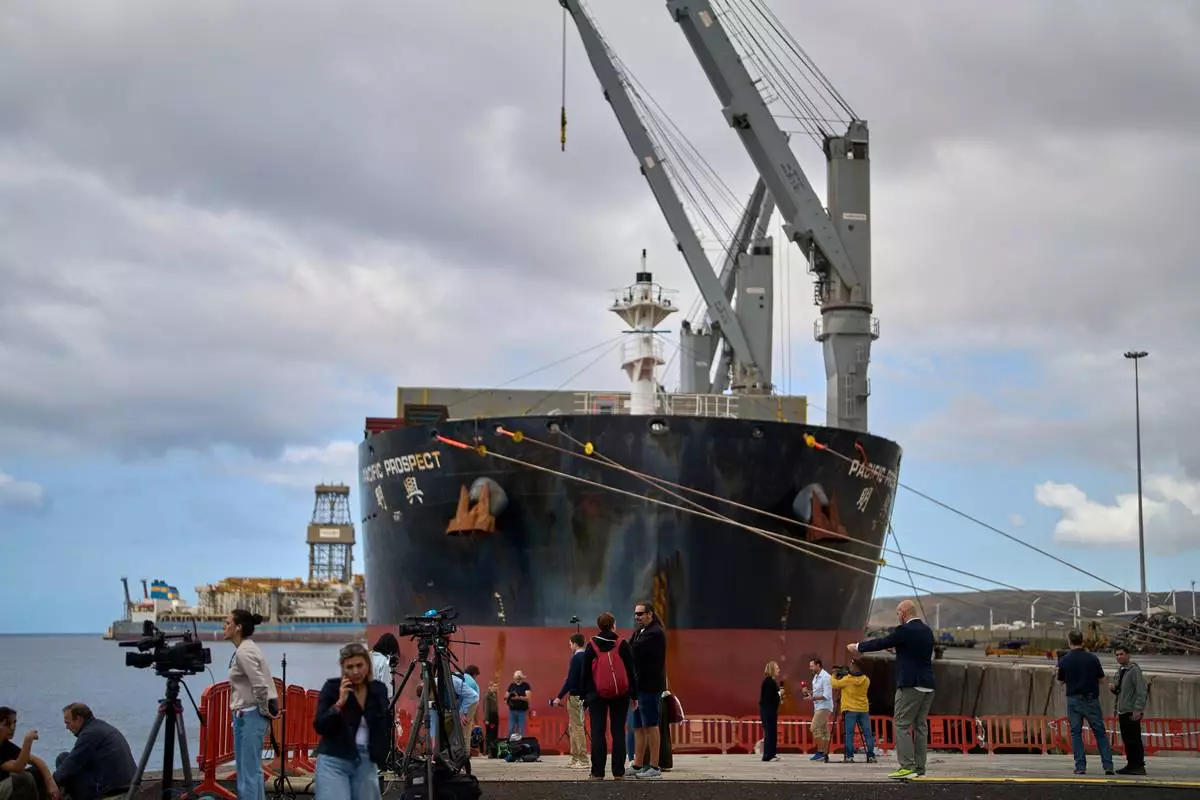
Media crew members stand in the area where passengers from the MV Hondius cruise ship are expected to arrive at the port of Granadilla in Tenerife, Canary Islands, Spain, Saturday, May 9, 2026. (AP Photo/Manu Fernandez)
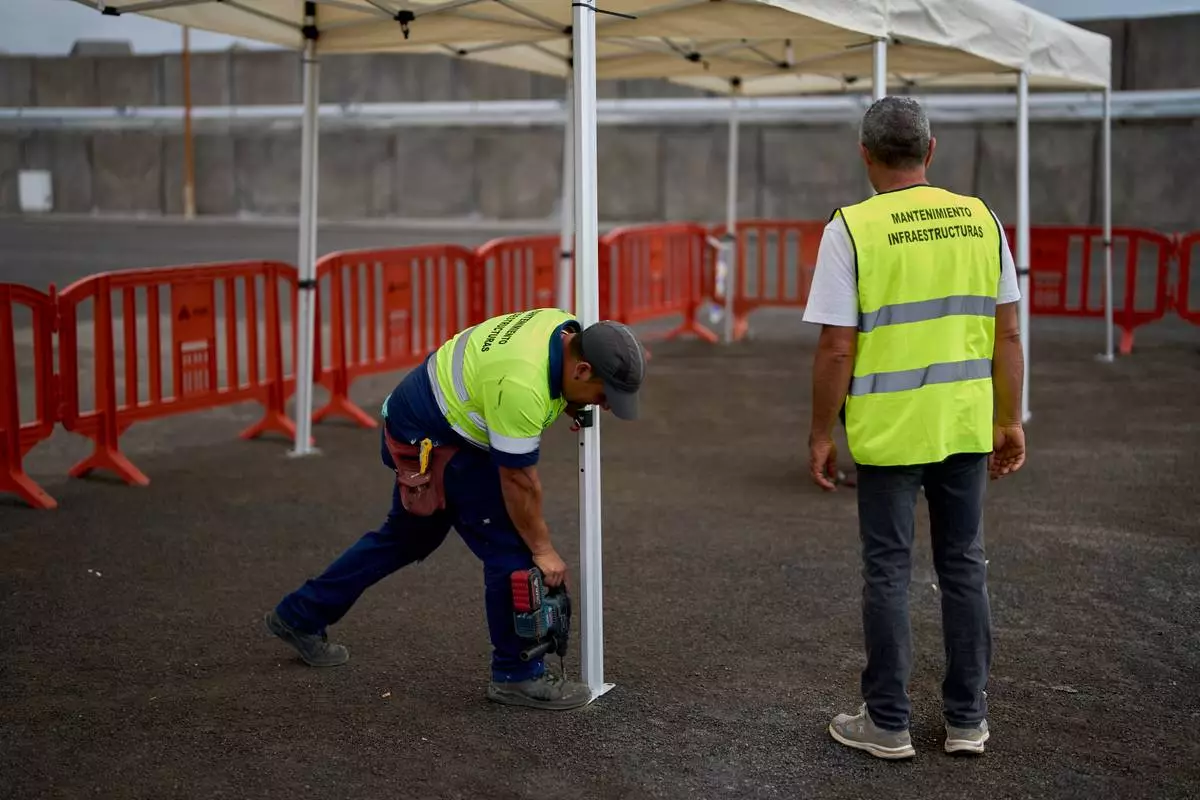
Workers set up temporary shelters in the area where passengers from the MV Hondius cruise ship are expected to arrive at the port of Granadilla in Tenerife, Canary Islands, Spain, Saturday, May 9, 2026. (AP Photo/Manu Fernandez)
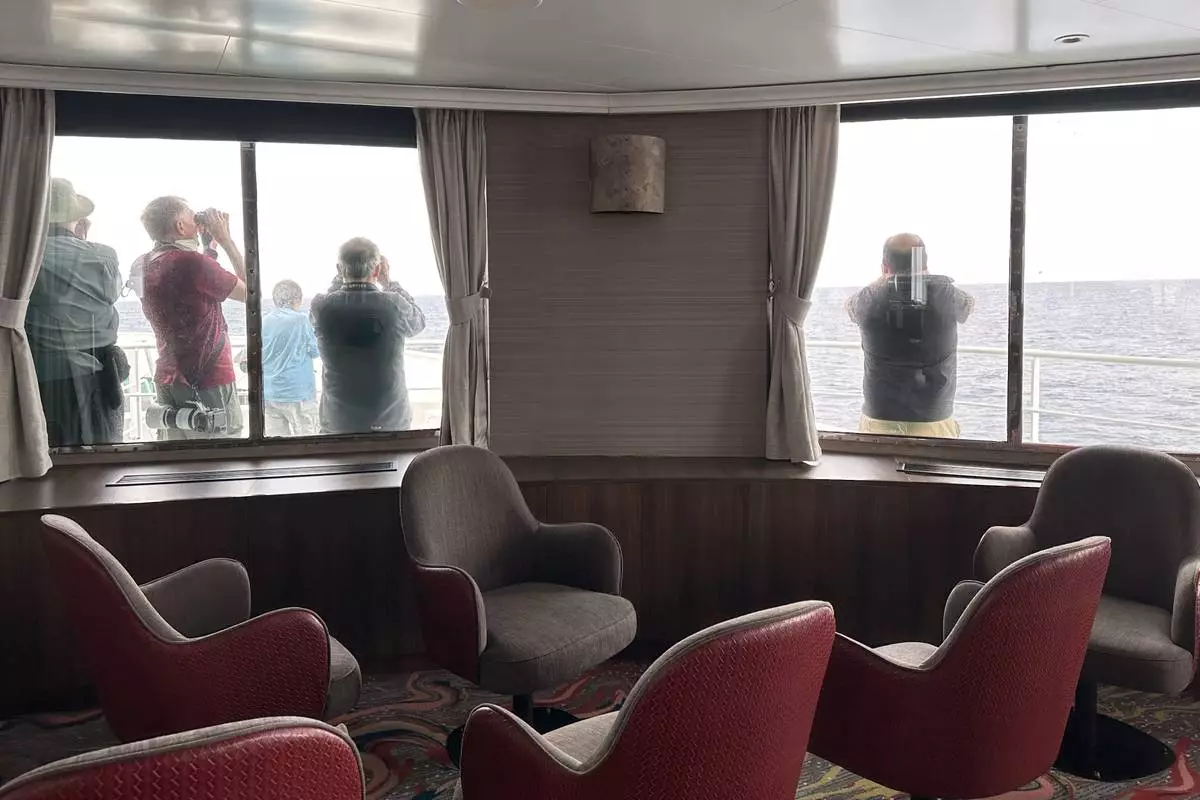
Passengers on the hantavirus-stricken cruise ship, MV Hondius, scan the horizon with binoculars during their voyage to Spain's port of Tenerife, May 6, 2026. (AP Photo)
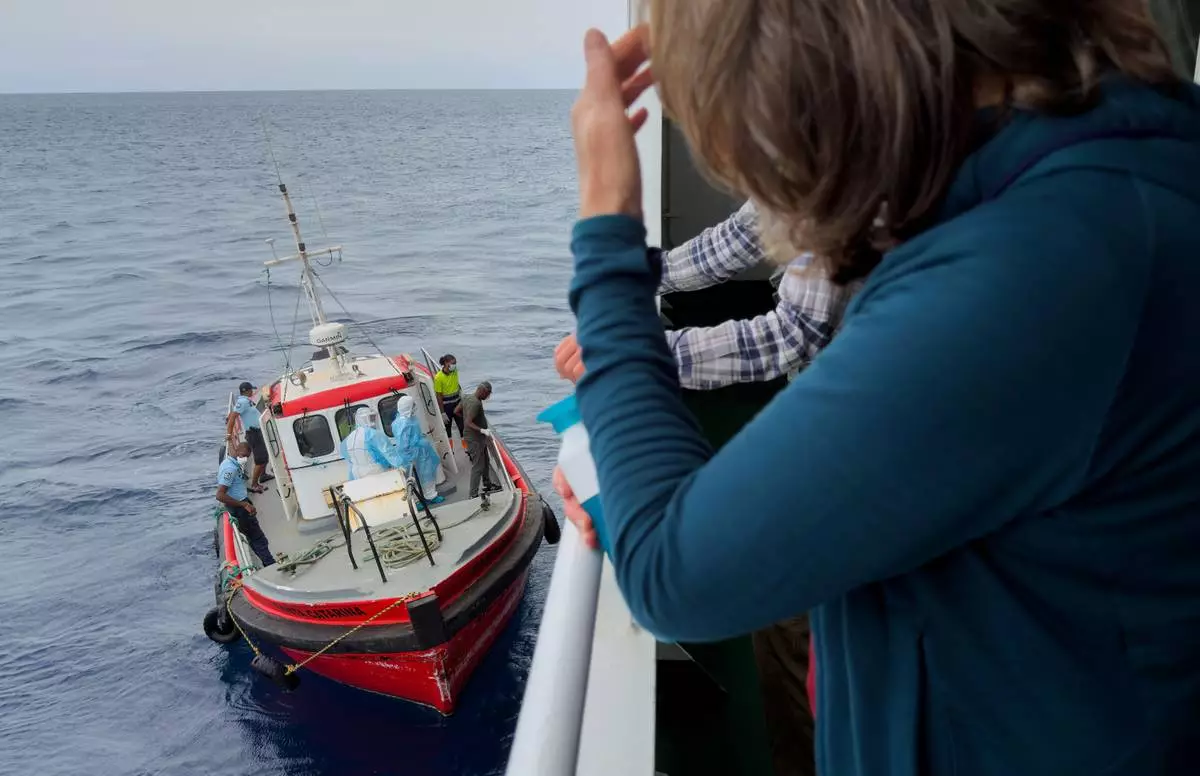
Passengers on the the hantavirus-stricken cruise ship, MV Hondius, watch epidemiologists board the boat in Praia, during their voyage to Spain's port of Tenerife, May 6, 2026. (AP Photo)
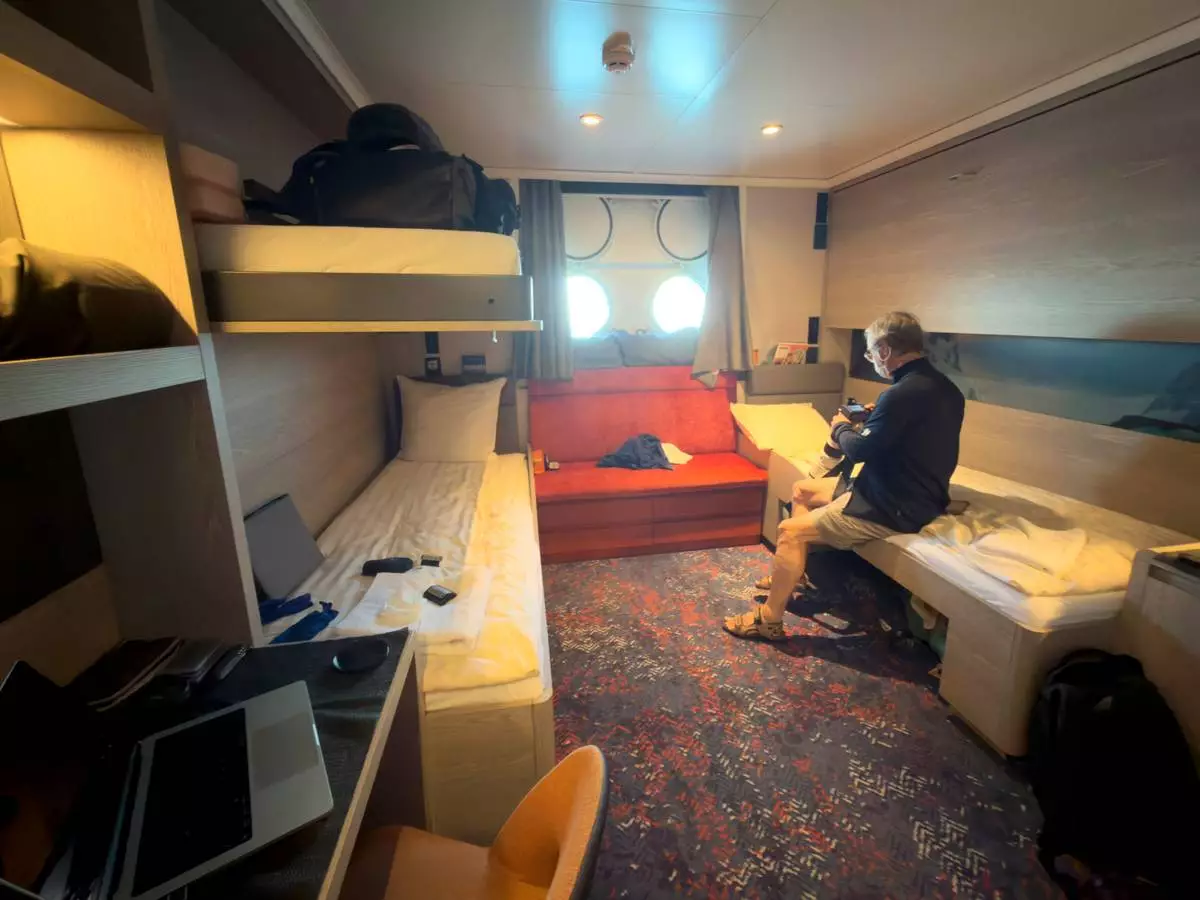
A passenger checks his camera inside his cabin on the hantavirus-stricken cruise ship, MV Hondius, during the voyage to Spain's port of Tenerife, May 6, 2026. (AP Photo)
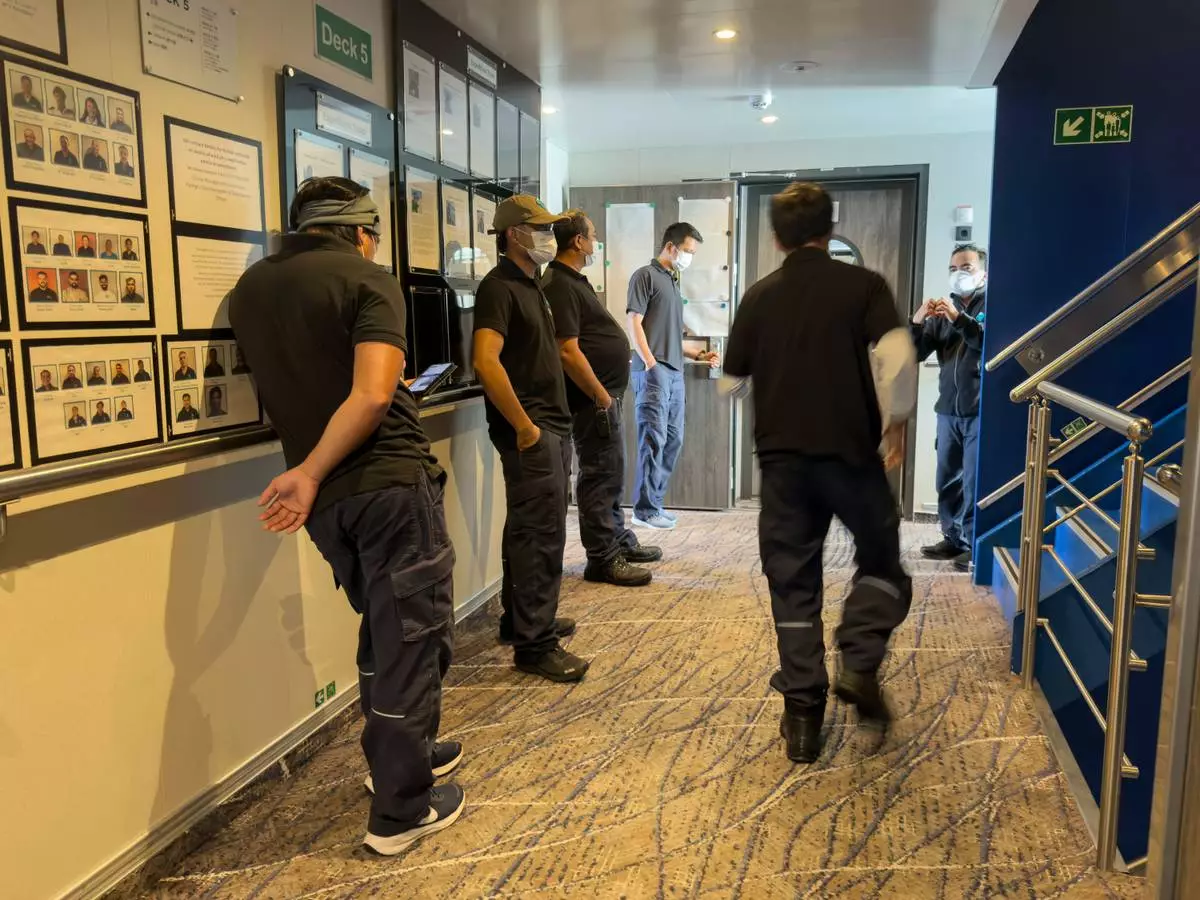
Crew members of the hantavirus-stricken cruise ship, MV Hondius, wait their turns for a first interview with epidemiologists, during the voyage to Spain's port of Tenerife, May 6, 2026. (AP Photo)
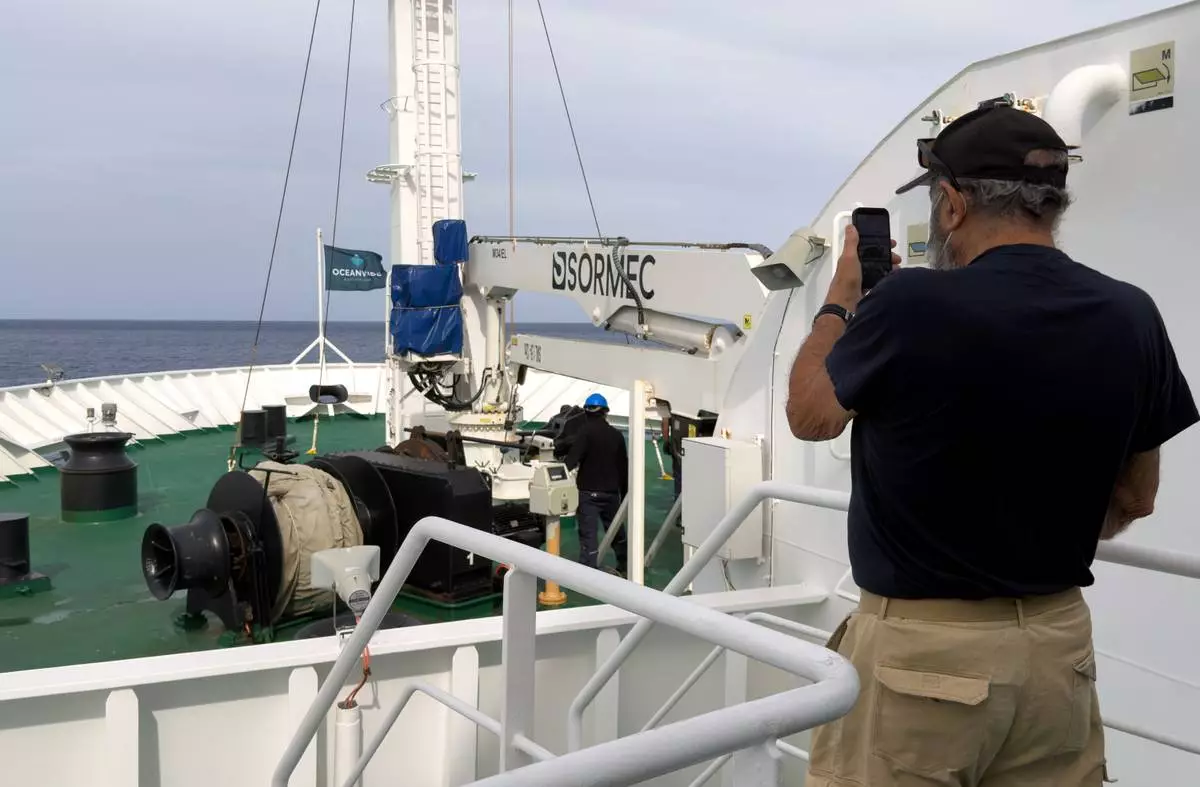
A passenger on the the hantavirus-stricken cruise ship, MV Hondius, takes a photo of the ship's weighing anchor in Praia, during the voyage to Spain's port of Tenerife, May 6, 2026. (AP Photo)