Kraft Heinz said Wednesday it's pausing its plans to split into two companies.
Steve Cahillane, a former Kellogg Co. chief who became CEO of Kraft Heinz on Jan. 1, said he wants to ensure that all of the company's resources are focused on profitable growth.
“I have seen that the opportunity is larger than expected and that many of our challenges are fixable and within our control,” Cahillane said in a statement.
The company's shares were flat in morning trading Wednesday as Kraft Heinz reported lower quarterly and annual results. Investors are likely concerned that Kraft Heinz believes its businesses aren't strong enough to stand on their own, said Robert Moskow, an analyst with TD Cowen, in a research note.
Kraft Heinz announced in September it was splitting into two companies a decade after a merger of the brands created one of the biggest food manufacturers on the planet.
One of the companies would include stronger-selling brands such as Heinz, Philadelphia cream cheese and Kraft Mac & Cheese. The other would include slower-selling brands like Maxwell House, Oscar Mayer, Kraft Singles and Lunchables.
At the time, Kraft Heinz said it expected the split to be finalized in the second half of this year. The company hired Cahillane, who presided over a similar breakup at Kellogg Co. in 2023, in December.
But on Wednesday, Kraft Heinz said it will pivot from the split and invest $600 million in marketing, sales and product development.
“We are confident in the opportunity ahead and believe this investment will accelerate our return to profitable growth,” Cahillane said.
Kraft Heinz said Wednesday its net sales fell 3% to $6.35 billion in the October-December period. That was lower than the $6.37 billion Wall Street forecast, according to analysts polled by FactSet. Sales fell 5% in North America but rose internationally.
Kraft Heinz's net income fell 69.5% to $651 million in the fourth quarter. Adjusted for one-time items, the company earned 67 cents per share, which beat analysts' forecast of 61 cents.
The path to the merger of Kraft and Heinz began in 2013, when billionaire investor Warren Buffett teamed up with Brazilian investment firm 3G Capital to buy H.J. Heinz Co. At the time, the $23 billion deal was the most expensive ever in the food industry.
As a combined company, Kraft Heinz wanted to capitalize on its massive scale. But shifting tastes complicated those plans, with households seeking out less processed foods and switching to cheaper store brands.
Kraft Heinz tried to follow those trends. In 2021, the company sold both its Planters nut business and its natural cheese business, vowing to reinvest the money into higher-growth brands like P3 protein snacks. But the company continued to struggle.
Kraft Heinz’s net revenue has fallen every year since 2020, when it saw a pandemic-related bump in sales. In April, Kraft Heinz lowered its full-year sales and earnings guidance, citing weaker customer spending in the U.S. and the impact of President Donald Trump’s tariffs.
Over the years, Buffett said he had come to realize that the company’s competitive moat around its brands wasn’t as strong as he thought. Two representatives from Buffett's investment company, Berkshire Hathaway, resigned from the Kraft Heinz board last spring, and Berkshire later took a $3.76 billion write-down on its Kraft-Heinz investment. Buffett said he was disappointed in Kraft Heinz’ plan to split in two.
Buffett's successor at Berkshire, Greg Abel, may now be seeking to unload its stake in the company altogether. Late last month, Kraft Heinz warned investors in a regulatory filing that Berkshire Hathaway may be interested in selling its 325 million shares.
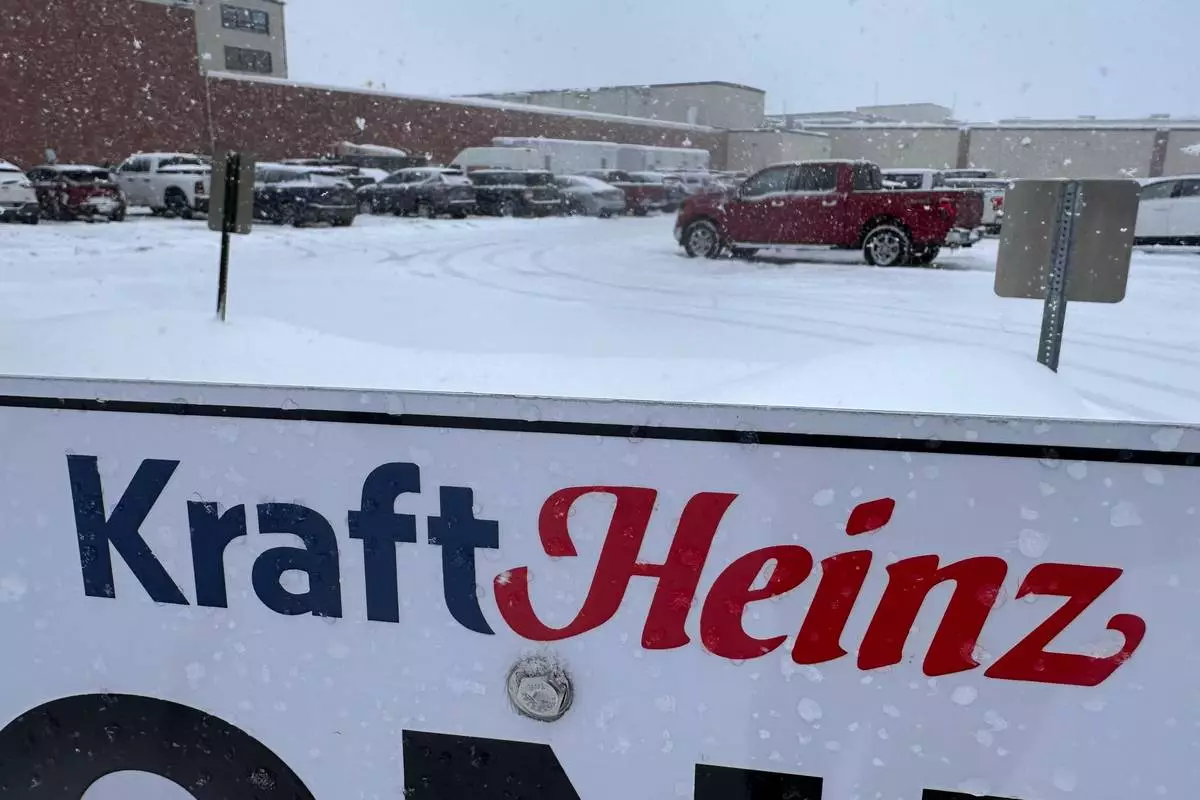
A sign snows the company's logo at the Kraft Heinz facility in Lowville, N.Y., on Wednesday, Feb. 11, 2026. (AP Photo/Cara Anna)
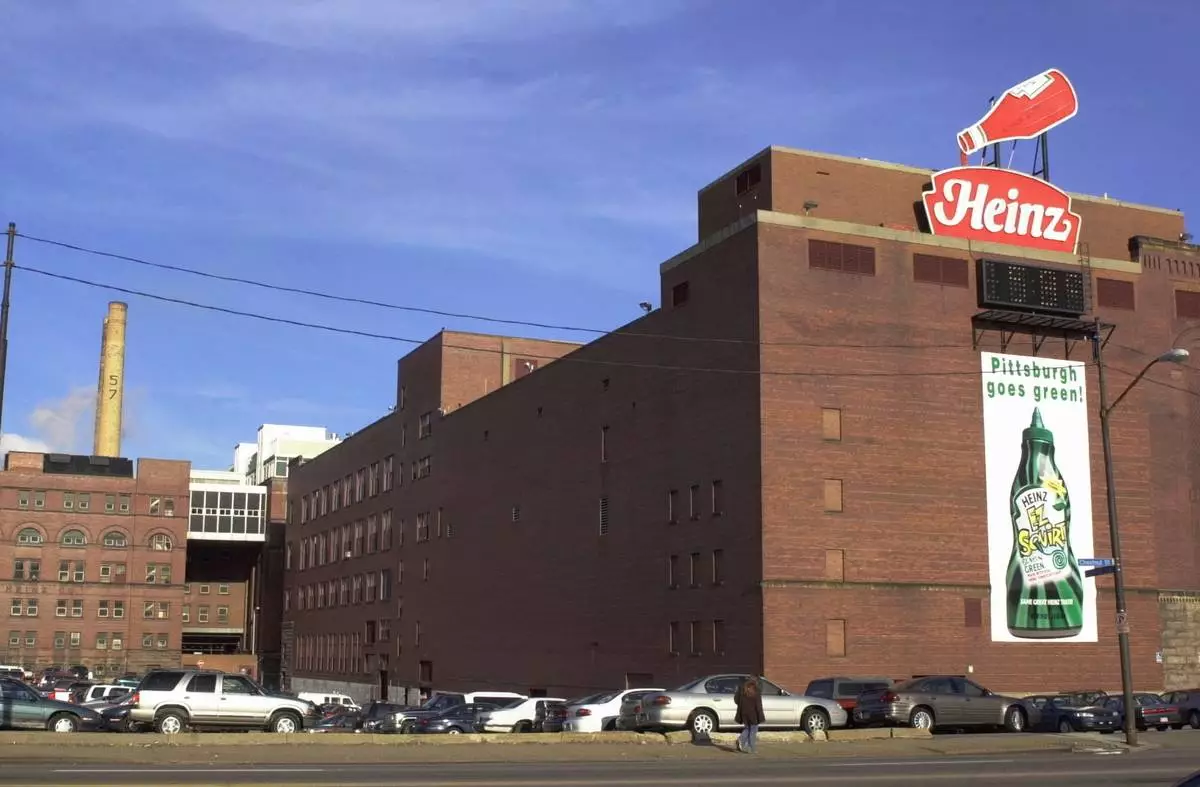
FILE - The H.J Heinz Co. headquarters is seen on Pittsburgh's northside on Friday, Nov. 9, 2001. (AP Photo/Keith Srakocic, File)
FILE - The Kraft logo outside of the company's headquarters in Northfield, Ill., March 25, 2015. (AP Photo/Nam Y. Huh, File)
RALEIGH, N.C. (AP) — Hold on to those Thanksgiving turkeys! WKRP is coming to Cincinnati — for real this time.
“I cannot, by contract, tell you when. I cannot tell you who. But I can tell you, direct to the camera, WKRP, after 48 years, is coming to Cincinnati,” D.P. McIntire, who runs the media nonprofit that is auctioning the famous call letters, told The Associated Press. “Book it! It’s done!”
The call sign was made famous by “WKRP in Cincinnati,” a CBS television sitcom that ran from 1978 to 1982. It made stars of actors like Loni Anderson and Richard Sanders, whose bumbling newsman Les Nessman reported on a Thanksgiving promotion gone bad when live but flightless turkeys were dropped from a helicopter.
McIntire remembers watching the show’s first episode — featuring disc jockeys Dr. Johnny Fever (Howard Hesseman) and Venus Flytrap (Tim Reid) — in the living room with his parents and older sister.
“And at the end of the 30-minute episode,” he said, “I got up and I proclaimed, `I’m going to be in radio. And if I ever have the opportunity, I’m going to run a station called WKRP.’”
McIntire said he got his first on-air job at 13 as a news anchor at WNQQ “Wink FM” in Blairsville, Pennsylvania.
Fast forward to 2014, when his North Carolina-based nonprofit acquired the call sign from the Federal Communications Commission. Stations in Dallas, Georgia, and Alexandria, Tennessee, previously bore the letters.
McIntire laughs as he recalls his chat with a woman in the agency’s audio division.
He had two sets of call letters in mind. She told him he needed a third.
“Being the jokester that I am, I said, `Well, if you need three, and if it’s available, we’ll take WKRP,’” he said. “And 90 seconds later, she came back and she said, `Mr. McIntire. Congratulations. You’re the general manager of WKRP in Raleigh, North Carolina.’”
WKRP-LP — 101.9 on the FM dial — went live Nov. 30, 2015. The LP stands for “low power,” a class of station created to serve more local audiences that didn’t want mass-market content.
“Our format is what radio used to be 35 years ago in small-town America,” he said. “There is Greats of the 80s, Sounds of the 70s, 90s Rewind.”
LPFM is restricted to nonprofit organizations like his Oak City Media, and it’s definitely local.
“Your broadcast capacity is limited to 100 watts,” McIntire said. “So, your average range is between, depending on your terrain and circumstances, 4 and 12 miles (6 and 19 kilometers) in any direction. Enough to cover a small town.”
And, by necessity, it’s a low-budget affair.
The transmitter is in a corner of McIntire’s garage, between a recycling bin and the cleaning supplies. The broadcast antenna sits atop a 25-foot (7.62-meter) metal flagpole in the backyard. The studio — microphones and a mixing board hooked up to a computer — is in McIntire’s basement.
Like the WKRP of television, McIntire and his partners set out to be “irreverent.” One of their offerings is a two-hour show called “Weird Al and Friends,” focusing on the satirical works of Weird Al Yankovic.
They even had an annual Thanksgiving turkey giveaway. But don’t call the American Society for the Prevention of Cruelty to Animals — they hand out gift certificates to a local grocery store.
“We don’t toss them out of helicopters,” he said with a laugh.
After more than a decade on the air, the 56-year-old McIntire decided it was time to pass the reins.
“We’re in a position where the older members like me who started the station are turning the leadership over to younger members,” he said. “They’re not interested in radio.”
They put out a call for bids to use the call letters on FM and AM radio, as well as television and digital television.
They intend to use the proceeds for a new nonprofit venture called Independent Broadcast Consultants. He said IBC will be “geared specifically toward helping these new broadcasters get up and running, get the consulting that they need in order to be, hopefully, more successful than we have been.”
Oak City Media was all set to hand off the television-related suffixes — WKRPTV and WKRPDT — when another group defaulted on the agreement, McIntire said. But he said the Cincinnati deal is in the bag, he just can’t legally discuss it.
“It will be radio,” he said. “But that’s all I can tell you at this time.”
Robert Thompson, who uses a season 2 episode of “WKRP” in his TV history class at Syracuse University, said it’s telling that people see real value in a fictional station whose call letters invoke the word “crap.”
“The value comes from the love of the characters for each other,” he said. “And now by buying this thing, the value comes from our love of the characters themselves.”
Whatever they do with the call sign, McIntire hopes they will be true to the show that inspired it.
“It has a special place in the hearts of an awful lot of people,” he said. “And we have been very, very, very proud to have been a steward of that legacy.”
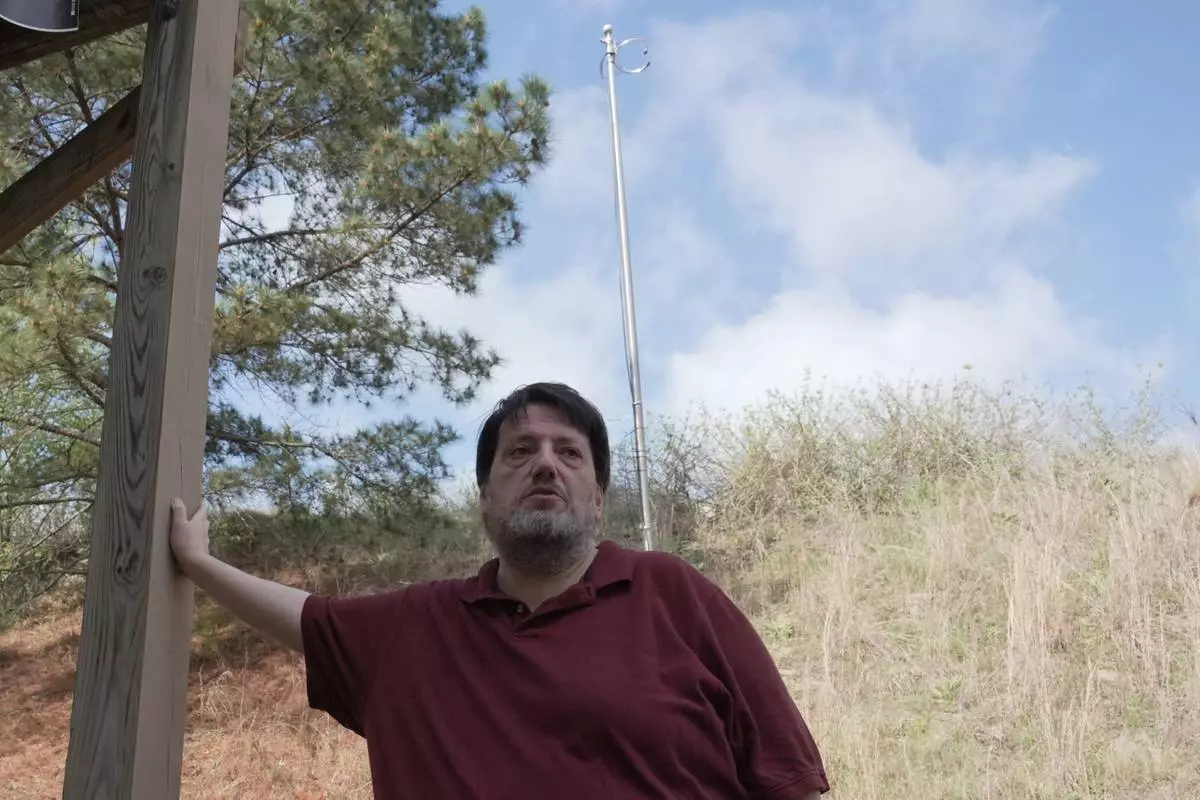
D.P. McIntire leans against a deck beneath the WKRP radio antenna in the backyard of his home in Raleigh, N.C., on Thursday, April 2, 2026. (AP Photo/Allen G. Breed)
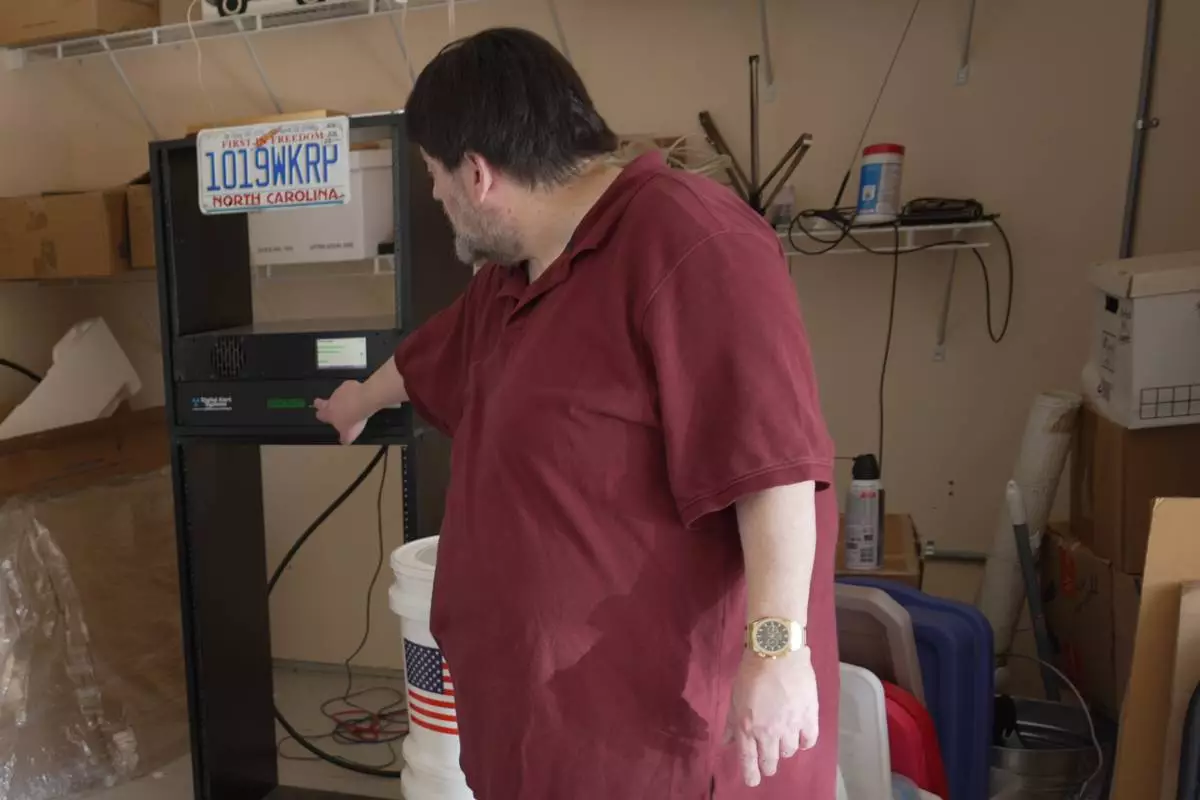
D.P. McIntire points to the transmitter for WKRP radio in a corner of his garage in Raleigh, N.C., on Thursday, April 2, 2026. (AP Photo/Allen G. Breed)
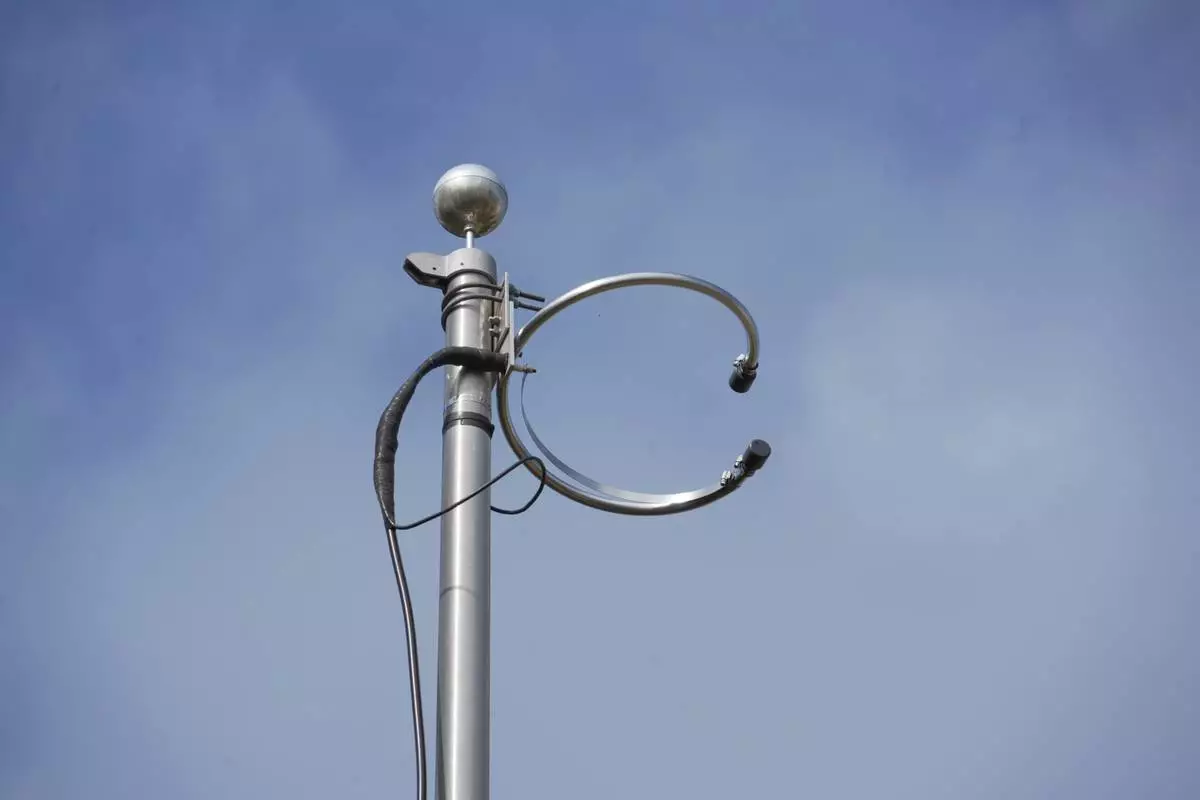
The WKRP radio antenna sits atop a 25-foot flagpole behind D.P. McIntire's home in Raleigh, N.C., on Thursday, April 2, 2026. (AP Photo/Allen G. Breed)
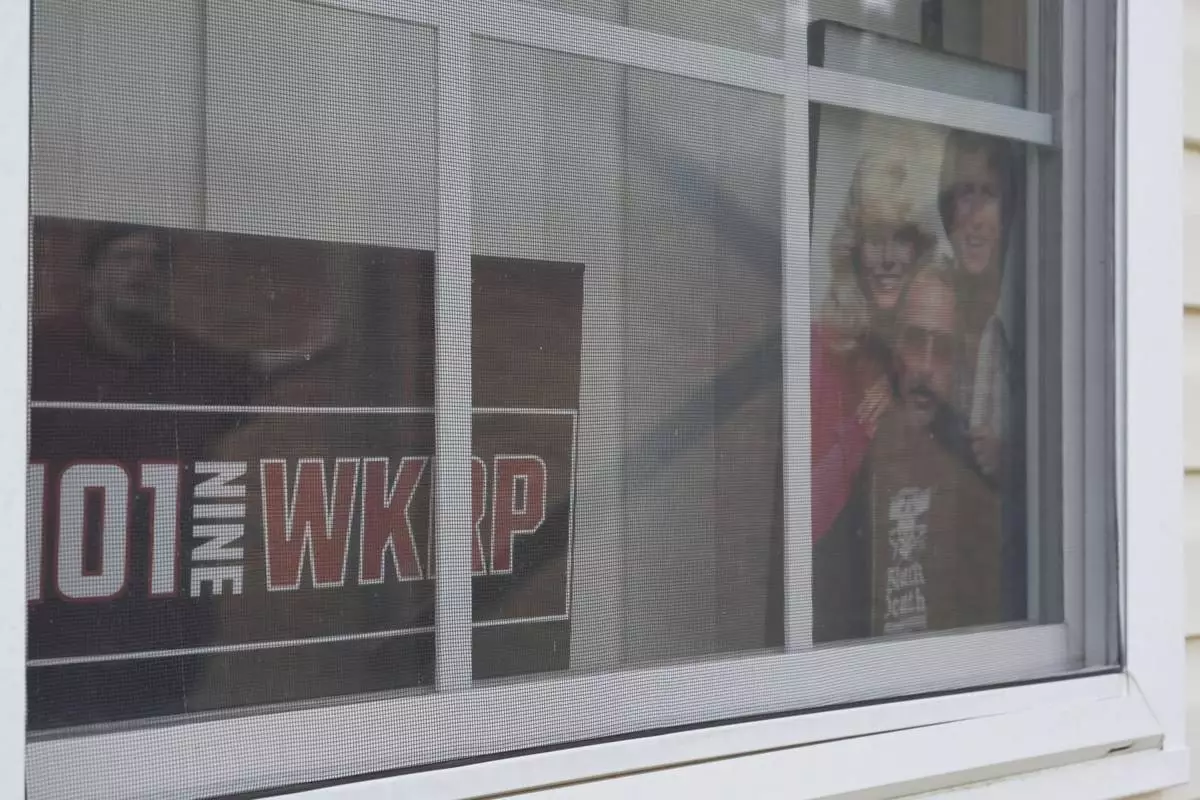
A photo of the cast members of the sitcom "WKRP in Cincinnati" sits in a window at the home of D.P. McIntire in Raleigh, N.C., on Thursday, April 2, 2026. (AP Photo/Allen G. Breed)
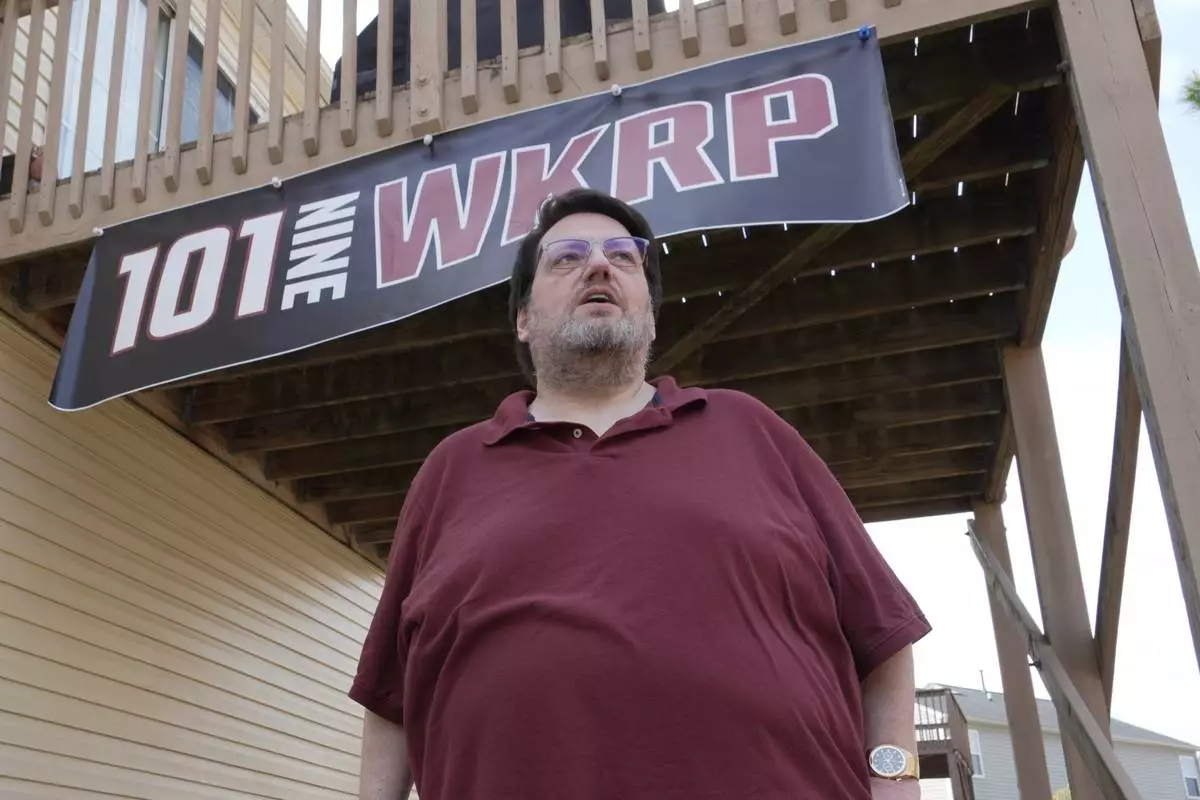
D.P. McIntire stands beneath a WKRP banner in the backyard of his home in Raleigh, N.C., on Thursday, April 2, 2026. (AP Photo/Allen G. Breed)