Skip to Content Facebook Feature Image

House GOP pushes strict proof-of-citizenship requirement for voters ahead of midterm elections

News

House GOP pushes strict proof-of-citizenship requirement for voters ahead of midterm elections
News

News

House GOP pushes strict proof-of-citizenship requirement for voters ahead of midterm elections

2026-02-12 08:23 Last Updated At:08:30

WASHINGTON (AP) — House Republicans rushed to approve legislation on Wednesday that would impose strict new proof-of-citizenship requirements ahead of the midterm elections, a long shot Trump administration priority that faces sharp blowback in the Senate.

The bill, called the Safeguard American Voter Eligibility, or SAVE America Act, would require Americans to prove they are citizens when they register to vote, mostly through a valid U.S. passport or birth certificate. It would also require a valid photo identification before voters can cast ballots, which some states already demand. It was approved on a mostly party-line vote, 218-213.

Republicans said the legislation is needed to prevent voter fraud, but Democrats warn it will disenfranchise millions of Americans by making it harder to vote. Federal law already requires that voters in national elections be U.S. citizens, but there’s no requirement to provide documentary proof. Experts said voter fraud is extremely rare, and very few noncitizens ever slip through the cracks. Fewer than one in 10 Americans don't have paperwork proving they are citizens.

“Some of my colleagues will call this voter suppression or Jim Crow 2.0,” said Rep. Bryan Steil, R-Wis., presenting the package at a committee hearing.

But he said “those allegations are false,” and he argued the bill is needed to enforce existing laws, particularly those that bar immigrants who are not citizens from voting. “The current law is not strong enough,” he said.

The GOP's sudden push to change voting rules at the start of the midterm election season is raising red flags, particularly because President Donald Trump has suggested he wants to nationalize U.S. elections, which, under the Constitution, are designed to be run by individual states.

The Trump administration recently seized ballots in Georgia from the 2020 election, which the president insists he won despite his defeat to Democrat Joe Biden. The Department of Justice is demanding voter rolls from states, including Michigan, where a federal judge this week dismissed the department's lawsuit seeking the voter files. Secretaries of state have raised concerns that voters' personal data may be shared with Homeland Security to verify citizenship and could result in people being unlawfully purged from the rolls.

“Let me be clear what this is about: It’s about Republicans trying to rig the next election,” said Rep. Jim McGovern of Massachusetts, the top Democrat on the Rules Committee, during a hearing ahead of the floor vote. “Republicans are pushing the Save America Act because they want fewer Americans to vote. It’s that simple.”

The legislation is actually a do-over of a similar bill the House approved last year, which also sought to clamp down on fraudulent voting, particularly among noncitizens. It won the support of four House Democrats, but stalled in the Republican-led Senate. Only one Democrat, Rep. Henry Cuellar of Texas, voted for the revised bill.

This version toughens some of the requirements further, while creating a process for those whose names may have changed, particularly during marriage, to provide the paperwork necessary and further attest to their identity.

It also requires states to share their voter information with the Department of Homeland Security, as a way to verify the citizenship of the names on the voter rolls. That has drawn pushback from elections officials as potentially intrusive on people's privacy.

The new rules in the bill would take effect immediately, if the bill is passed by both chambers of Congress and signed into law.

But with primary elections getting underway next month, critics said the sudden shift would be difficult for state election officials to implement and potentially confuse voters.

Voting experts have warned that more than 20 million U.S. citizens of voting age do not have proof of their citizenship readily available. Almost half of Americans do not have a U.S. passport.

“Election Day is fast approaching,” said Sen. Lisa Murkowski, R-Alaska. “Imposing new federal requirements now, when states are deep into their preparations, would negatively impact election integrity by forcing election officials to scramble to adhere to new policies likely without the necessary resources.”

In the Senate, where Republicans also have majority control, there does not appear to be enough support to push the bill past the chamber's filibuster rules, which largely require 60 votes to advance legislation.

That frustration has led some Republicans, led by Sen. Mike Lee of Utah, to push for a process that would skip the 60-vote threshold in this case, and allow the bill to be debated through a so-called standing filibuster — a process that would open the door to potentially endless debate.

Lee made the case to GOP senators at a closed-door lunch this week, and some said afterward they are mulling the concept.

“I think most people’s minds are open,” said Sen. John Kennedy, R-La., “My mind's certainly open.”

But Murkowski of Alaska said she is flat out against the legislation.

“Not only does the U.S. Constitution clearly provide states the authority to regulate the ‘times, places, and manner’ of holding federal elections, but one-size-fits-all mandates from Washington, D.C., seldom work in places like Alaska,” she said.

Karen Brinson Bell of Advance Elections, a nonpartisan consulting firm, said the bill adds numerous requirements for state and local election officials with no additional funding.

“Election officials have a simple request of Congress — that you help share their burdens not add to them,” she said.

This story has been corrected to fix a statistic. Fewer than one in 10 Americans do not have paperwork proving they are citizens; an earlier version incorrectly said fewer than one in 10 have valid passports.

__

Associated Press writer Kevin Freking contributed to this report.
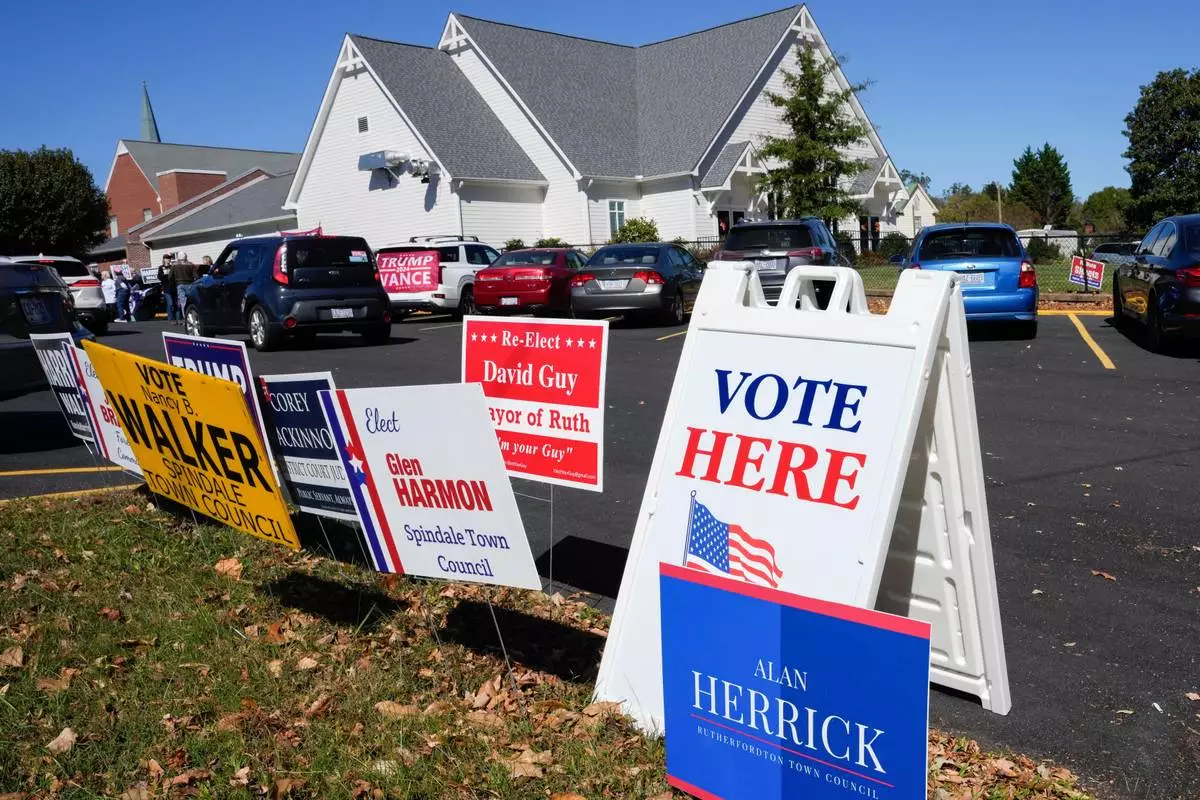
FILE - A Vote Here sign is posted amongst political signs as people arrive to vote at the Rutherford County Annex Building, an early voting site, Oct. 17, 2024, in Rutherfordton, N.C. (AP Photo/Kathy Kmonicek, File)
FILE - A Vote Here sign is posted amongst political signs as people arrive to vote at the Rutherford County Annex Building, an early voting site, Oct. 17, 2024, in Rutherfordton, N.C. (AP Photo/Kathy Kmonicek, File)

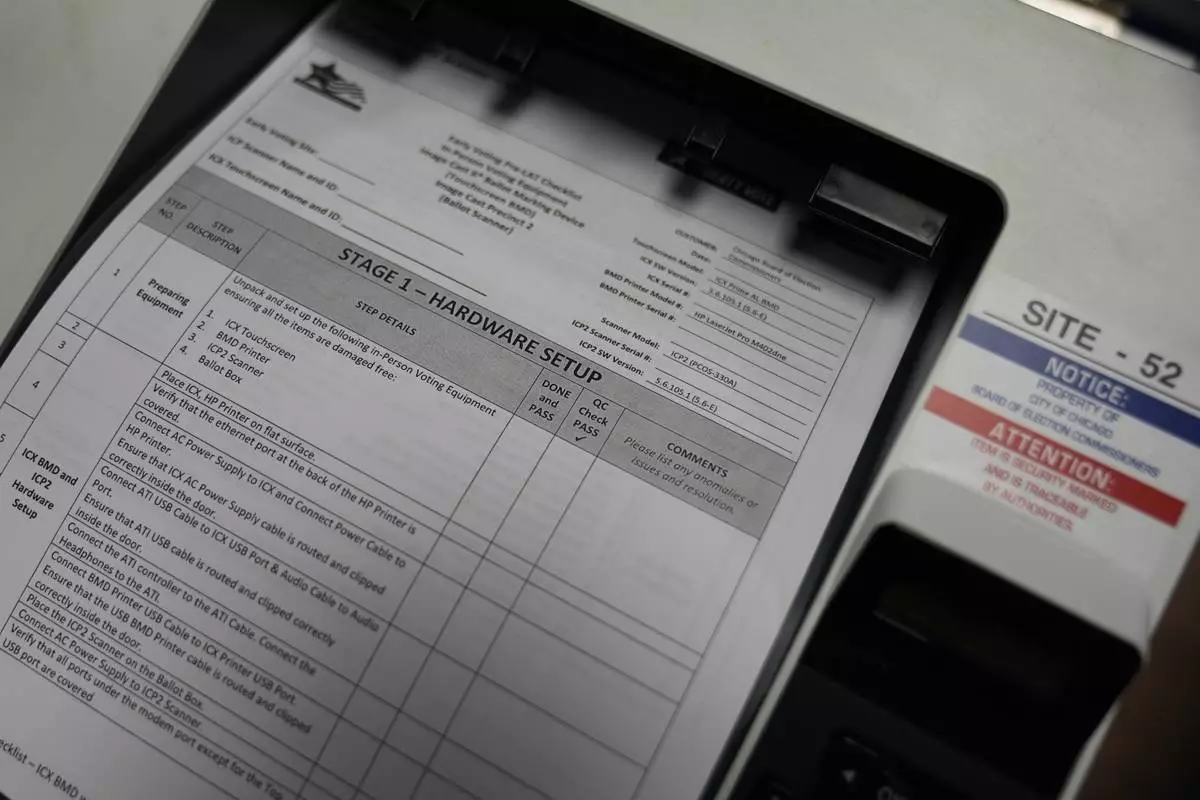
Information paper sits on a printer next to a touchscreen voting machine at New Chicago Voter Supersite in Chicago, Tuesday, Feb.10, 2026. (AP Photo/Nam Y. Huh)
Information paper sits on a printer next to a touchscreen voting machine at New Chicago Voter Supersite in Chicago, Tuesday, Feb.10, 2026. (AP Photo/Nam Y. Huh)

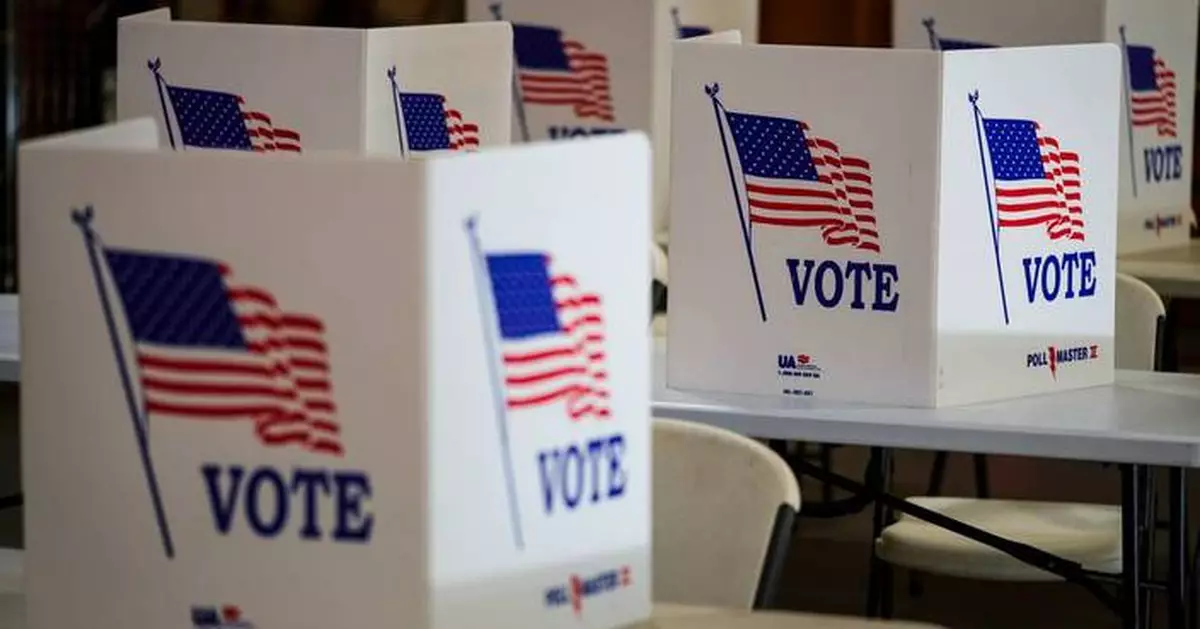
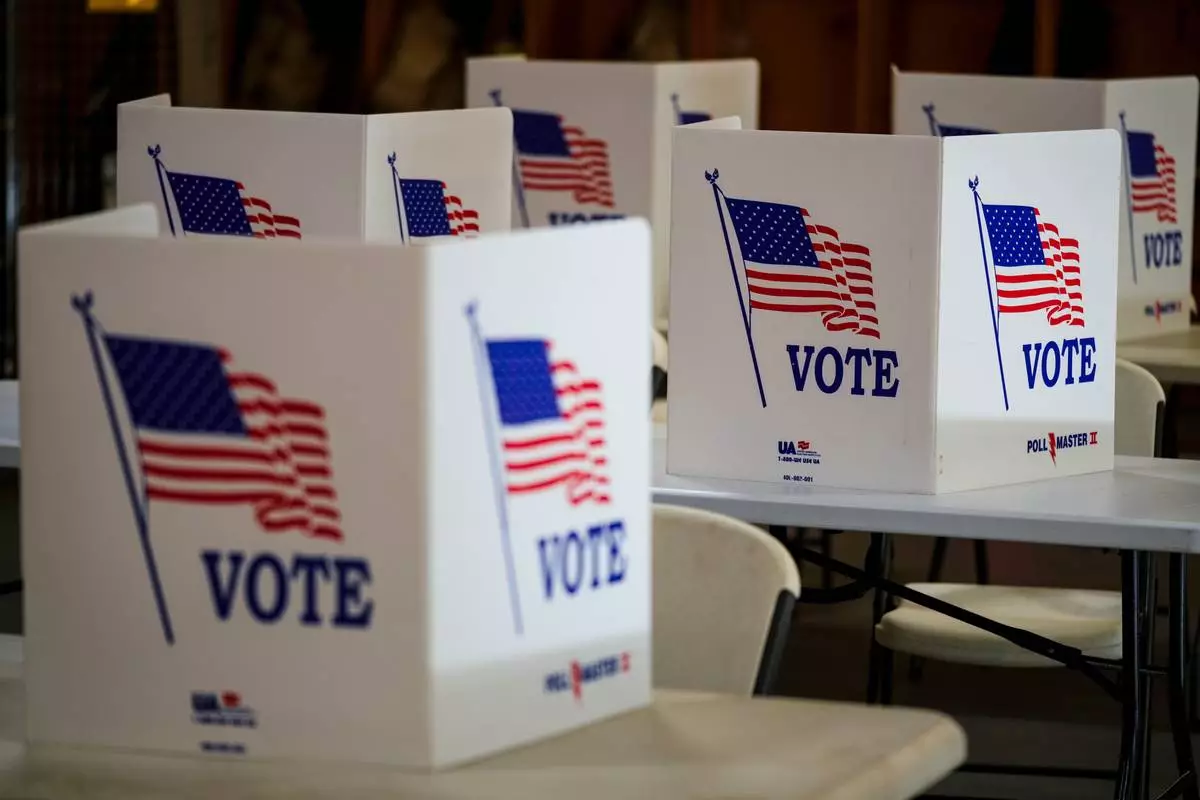
FILE- Voting booths are set up at a polling place in Newtown, Pa, April 23, 2024. (AP Photo/Matt Rourke, File)
FILE- Voting booths are set up at a polling place in Newtown, Pa, April 23, 2024. (AP Photo/Matt Rourke, File)
WASHINGTON (AP) — A disruption in reimbursements to states for disaster relief costs. Delays in cybersecurity response and training. And missed paychecks for the agents who screen passengers and bags at the nation's airports, which could lead to unscheduled absences and longer wait times for travelers.

Those were just some of the potential ramifications of a looming funding lapse at the Department of Homeland Security, according to officials who testified before a House panel on Wednesday.

Congress has approved full-year funding for the vast majority of the federal government, but it only passed a short-term funding patch for the Department of Homeland Security that extends through Friday. In response to the killing of two American citizens in Minneapolis and other incidents, Democrats have insisted that any funding bill for the department come with changes to immigration enforcement operations.

A Homeland Security shutdown appeared increasingly likely on Wednesday, the second day in a row with little apparent progress in negotiations between Democrats and the White House. Democrats are demanding new curbs on ICE including better identification, the use of judicial warrants and an end to racial profiling, among other asks. They are still waiting to hear from the White House after rejecting an initial offer late Monday night from the administration as “incomplete and insufficient.”

As the two sides remained far apart, Senate Majority Leader John Thune, R-S.D., urged Democrats and the White House to find agreement.

“I think it’s important that the people at the negotiating table double down, sharpen their pencils and strike a deal,” Thune said.

Speaker Mike Johnson, R-La., said he was at the White House late Wednesday and the administration “is sending over a few terms.”

“We're very hopeful that can be worked out,” Johnson said, adding that he put House Republicans on notice to expect a vote Friday to keep Homeland Security funded.

Meanwhile, Republicans are emphasizing that a Homeland Security shutdown would not curtail the work of the agencies Democrats are most concerned about. Trump's tax and spending cut bill passed last year gave Immigration and Customs Enforcement about $75 billion to expand detention capacity and beef up enforcement operations.

“Removal operations will continue. Wall construction will continue,” said Rep. Mark Amodei, the Republican chairman of the House Appropriations subcommittee on Homeland Security.

Rather, agencies such as the Transportation Security Administration, the Secret Service, Coast Guard and Federal Emergency Management Agency would take the biggest hit, he said. Officials from those agencies appeared before the House subcommittee to explain the potential impact of a Homeland Security shutdown.

Rep. Henry Cuellar, the ranking Democrat on the panel, said the tragic loss of two American citizens in Minneapolis — Renee Good and Alex Pretti — should concern every lawmaker. He said that strong borders and a respect for human life are not competing values.

“When enforcement actions lead to outcomes like that, we have an obligation to ask the hard question and to make sure our laws and policies are working as intended,” Cuellar said.

He said on Homeland Security funding that “we were almost there. We were there, Democrats and Republicans and everybody, but the second shooting brought different dynamics. I think we can get there to address that.”

About 90% of the department's employees would continue working in a shutdown, but they would do so without pay. Vice Admiral Thomas Allan of the U.S. Coast Guard said law enforcement and emergency response missions continue during a shutdown, but that the possibility of missed paychecks creates significant financial hardships.

“Shutdowns cripple morale and directly harm our ability to recruit and retain the talented Americans we need to meet growing demands,” Allan said.

Ha Nguyen McNeill of the Transportation Security Administration shared a similar concern. She estimated about 95% of the agency's 61,000 workers would continue to work, but potentially go without a paycheck depending upon the length of a shutdown. She noted that they just went through a lengthy shutdown last fall.

“We heard reports of officers sleeping in their cars at airports to save money on gas, selling their blood and plasma and taking on second jobs to make ends meet,” she said. “...Some are just recovering from the financial impact of the 43-day shutdown. Many are still reeling from it. We cannot put them through another such experience.”

Homeland Security also includes the agency charged with working to protect the public and private sector from a broad range of cyber threats. Madhu Gottumukkala, acting director of that agency, said a shutdown would “degrade our capacity to provide timely and actionable guidance to help partners defend their networks.”

“I want to be clear, when the government shuts down, cyber threats do not,” he said.

Gregg Phillips, an associate administrator at FEMA, said its disaster relief fund has sufficient balances to continue emergency response activities during a shutdown, but would become seriously strained in the event of a catastrophic disaster. He said that while the agency continues to respond to threats like flooding and winter storms, long-term planning and coordination with state and local partners is “irrevocably impacted.”

For example, he said a lapse would disrupt training for first responders at the National Disaster & Emergency Management University in Maryland.

“The import of these trainings cannot be measured,” Phillips said. “And their absence will be felt in our local communities."

At the Secret Service, “the casual observer will see no difference,” said Matthew Quinn, the agency's deputy director. But he said reform efforts taking place at the Secret Service are affected.

“Delayed contracts, diminished hiring and halted new programs will be the result,” Quinn said.

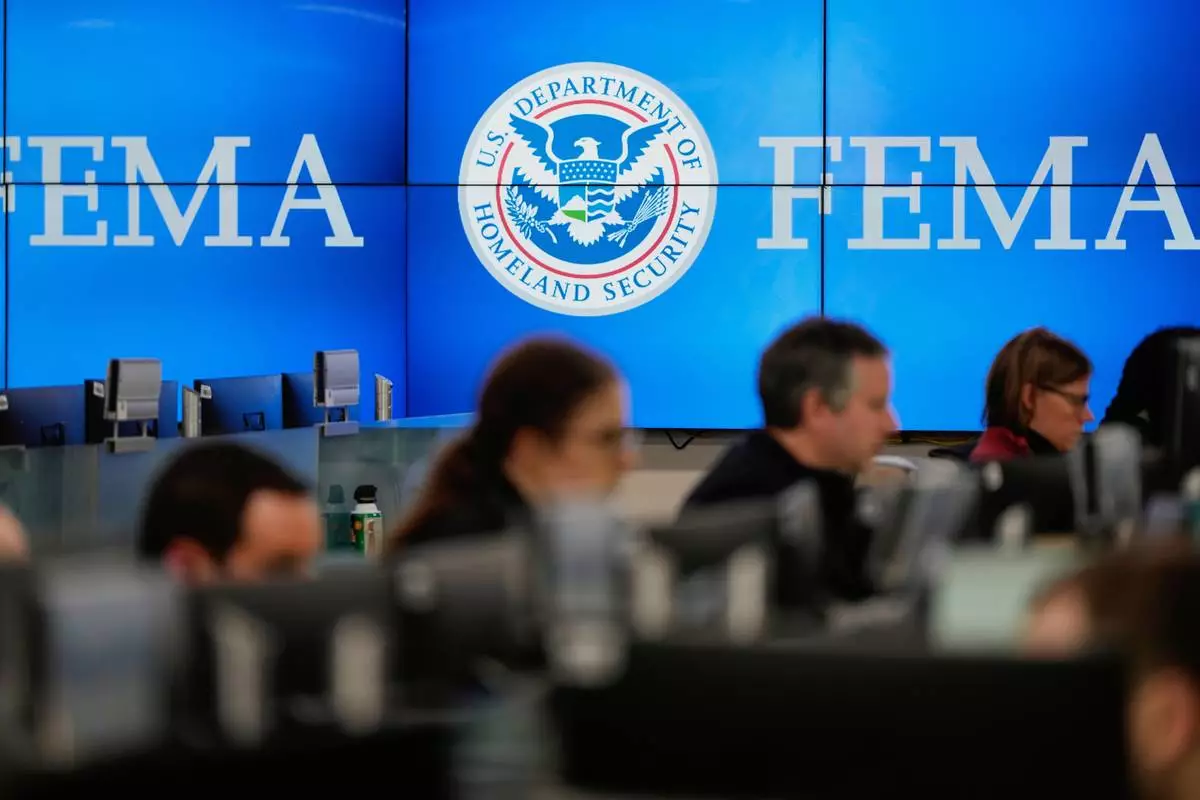
FILE - People work at the Federal Emergency Management Agency headquarters in Washington, on Saturday, Jan. 24, 2026. (AP Photo/Julia Demaree Nikhinson, File)

FILE - People work at the Federal Emergency Management Agency headquarters in Washington, on Saturday, Jan. 24, 2026. (AP Photo/Julia Demaree Nikhinson, File)

Recommended Articles