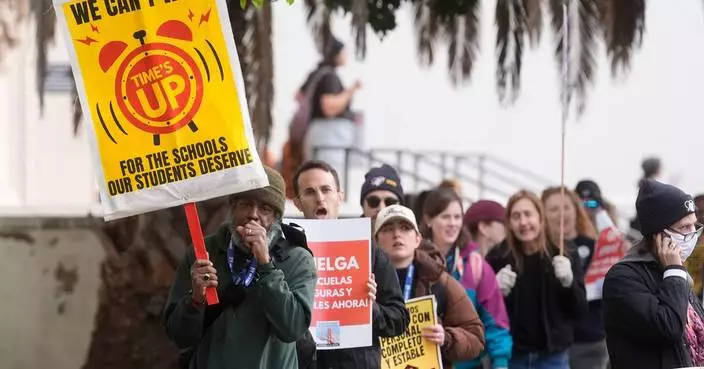
NEW YORK (AP) — Nurses on strike at two major New York City hospital systems have approved new contracts, but ones striking at another system rejected the proposal, ensuring that the monthlong walkout will continue at some of the city’s major medical centers.
The New York State Nurses Association announced Wednesday that its members at Montefiore and Mount Sinai approved new three-year deals while nurses at NewYork Presbyterian rejected the proposal.
The nurses who will be returning to work in the coming days represent about 10,500 of the roughly 15,000 nurses who walked off the job Jan. 12 in what the union said is the largest and longest strike of its kind in city history.
“This hard-earned victory shows hospitals that they can’t cut corners on patient care,” Nancy Hagans, the union’s president, said in a statement. “Now it’s time for NewYork-Presbyterian to do the right thing, agree to a fair contract and bring all our nurses back to work.”
Brendan Carr, CEO of Mount Sinai, urged hospital staff to come together with empathy and respect and a “shared culture” as its unionized nurses return to work starting Saturday.
“The past several weeks have been challenging, emotional, frustrating, and exhausting in different ways for all of us,” he said in a letter to staff. “I want to remind us all that health care is built on compassion, and that compassion must extend not only to our patients, but also to one another.”
NewYork Presbyterian said it was disappointed its nurses did not ratify a proposal from mediators that would have provided similar benefits and protections as those approved by their counterparts at Montefiore and Mount Sinai.
The union’s top leaders also urged NewYork Presbyterian nurses to accept the deal, even though its own bargaining committee rejected it.
“We believe the proposal, which includes compromises, is fair and reasonable and reflects our respect for our nurses and the critical role that they play,” NewYork Presbyterian said in a statement.
The hospital system said it's still determining its next steps. More than 4,200 NewYork Presbyterian nurses remain on strike, the union said.
A spokesperson for Montefiore didn’t immediately comment.
The union said the deals ratified Wednesday include pay raises of more than 12% over three years.
They also maintain nurses’ health benefits with no additional out-of-pocket costs and include new protections against workplace violence, including specific protections for transgender and immigrant nurses and patients, the union said.
The pacts even include new safeguards against the use of artificial intelligence in hospitals for the first time, according to the union.
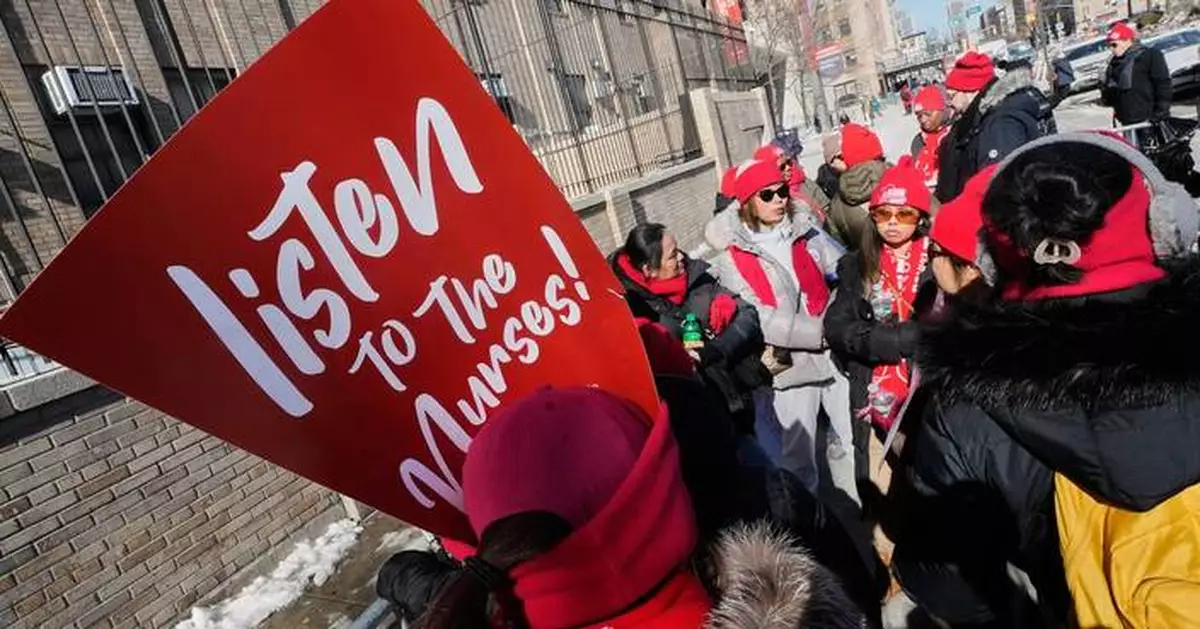
Unionized nurses began picketing in front of some of the largest privately-run hospitals in the city just as the region endured some of the most frigid temperatures seen in years.
Nurses said staffing and safety were among their top issues in contract talks.
They complained their patient loads are unmanageable and sought better security measures in hospitals, particularly after two recent violentincidents.
The union said the new deals reached with Mount Sinai and Montefiore address those concerns by committing the hospitals to increasing staffing levels and new safety measures, such as additional weapons detection systems at entrances, more visitor screening and wearable panic alarms for staff.
The hospitals, for their part, have insisted operations at the affected hospitals have been running smoothly during the strike, with organ transplants, cardiac surgeries and other complex procedures largely uninterrupted.
They brought on thousands of temporary nurses to fill in staffing gaps, and canceled scheduled surgeries, transferred some patients and discharged others in the days ahead of the strike.
Follow Philip Marcelo at https://x.com/philmarcelo
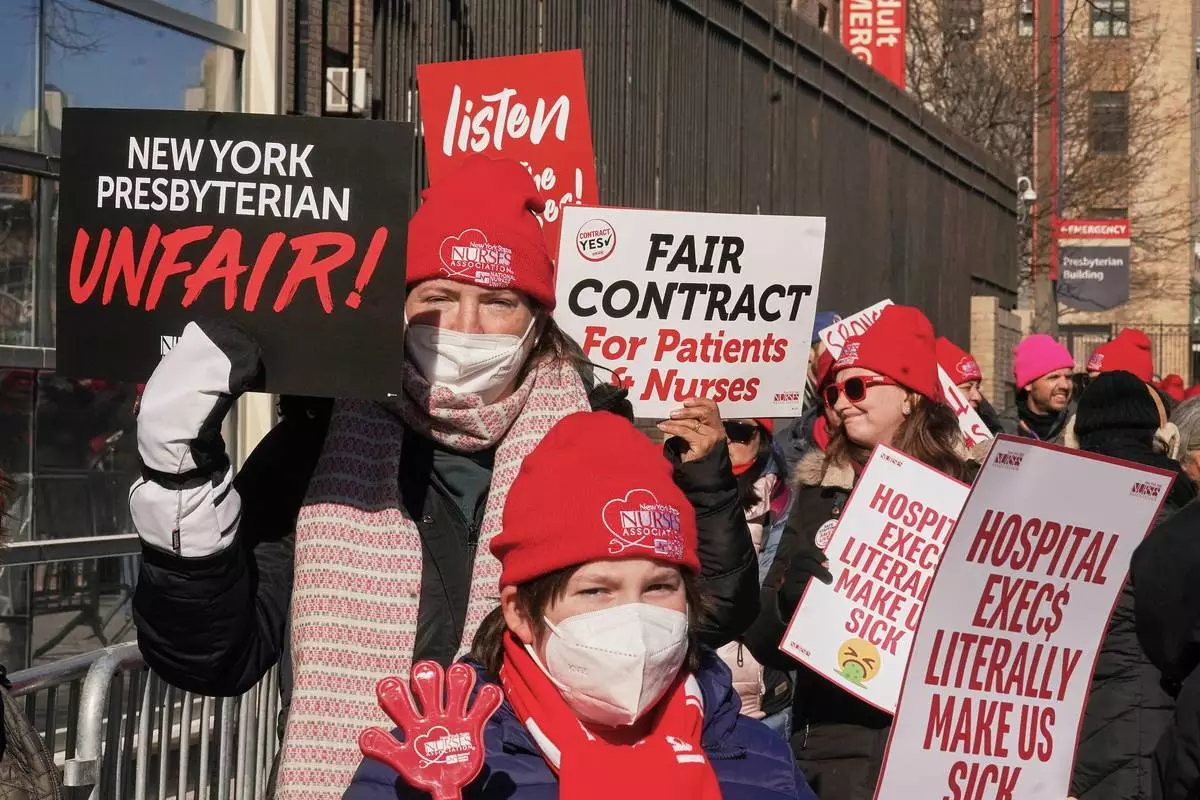
Striking nurses walk a picket line outside NewYork Presbyterian Hospital in New York, Monday, Feb. 9, 2026. (AP Photo/Richard Drew)
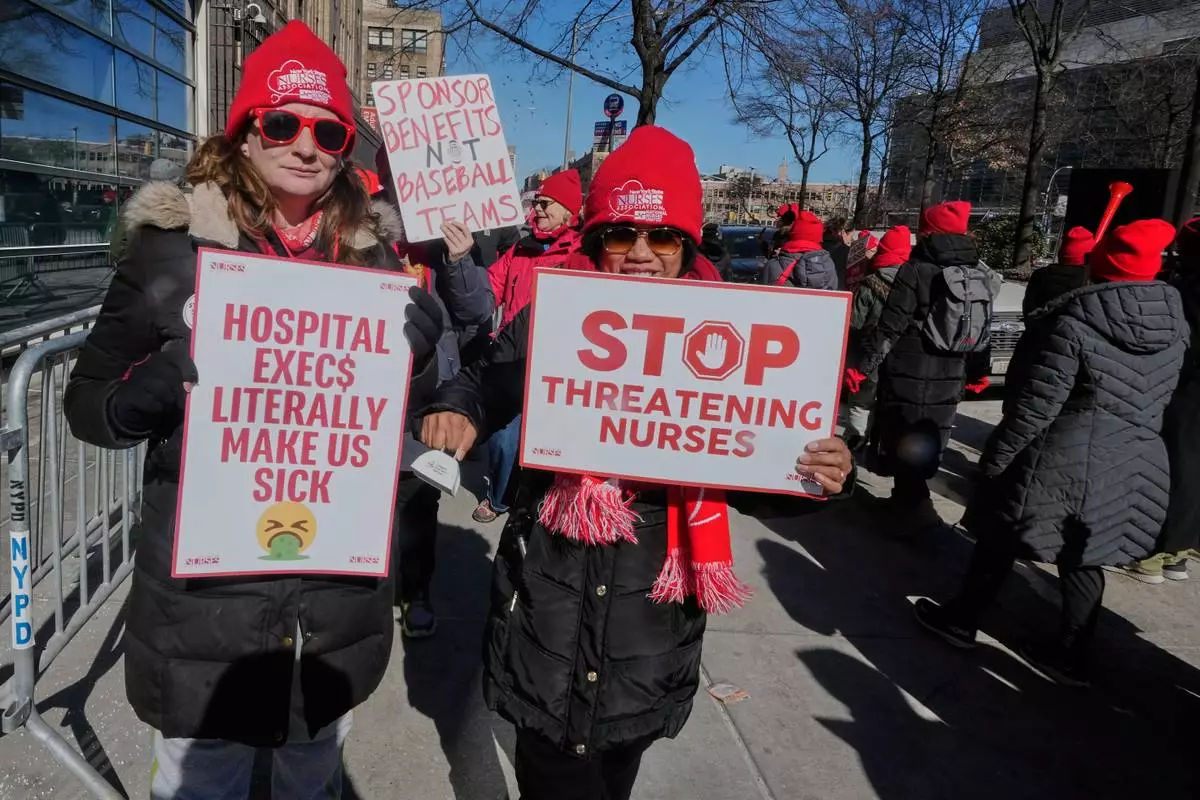
Striking nurses walk a picket line outside NewYork Presbyterian Hospital, in New York, Monday, Feb. 9, 2026. (AP Photo/Richard Drew)
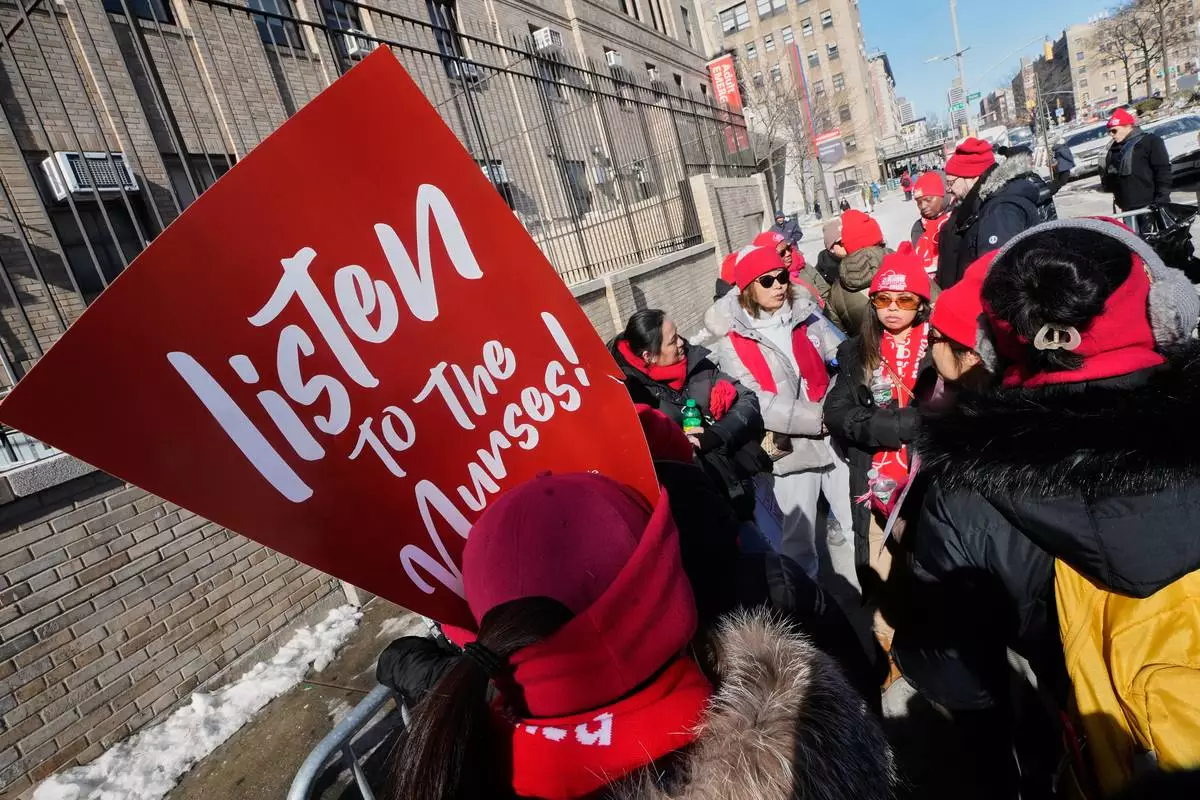
Striking nurses walk a picket line outside NewYork Presbyterian Hospital, in New York, Monday, Feb. 9, 2026. (AP Photo/Richard Drew)
A member of the federal Religious Liberty Commission has been ousted after a hearing this week that featured tense exchanges on the definition of antisemitism. The ousted member, Carrie Prejean Boller, had defended prominent commentator Candace Owens, who routinely shares antisemitic conspiracy theories.
Prejean Boller, a model turned conservative activist, denied that Owens had ever said anything antisemitic, quoted a Bible verse that attributed the death of Jesus to Jews and pushed back on the idea that some people mask antisemitism in their criticism of Israel.
“No member of the commission has the right to hijack a hearing for their own personal and political agenda on any issue,” said Texas Lt. Gov. Dan Patrick, chair of the commission, in a statement Wednesday. “This is clearly, without question, what happened Monday in our hearing on antisemitism in America. This was my decision.”
Prejean Boller challenged Patrick’s authority to remove her, saying only President Donald Trump has that power. In a post on the social media site X, she said Patrick's actions “reflect a Zionist political agenda.”
The hearing took place as the commission, created by Trump last year, is the subject of a new federal lawsuit this week from progressive religious groups. The suit says the panel fails to represent diverse views and religions and consists almost entirely of conservative Christian members.
Prejean Boller's removal came amid a wider, increasingly contentious debate over whether the right should give a platform to commentators espousing antisemitic views.
It followed a hearing Monday in Washington that was focused on antisemitism. It featured multiple witnesses, including first-hand accounts of students and others who said universities failed to protect Jewish students amid pro-Palestinian protests during the Israel-Hamas war in Gaza.
Prejean Boller had sharp exchanges with witnesses during the hearing. Seth Dillon, CEO of the conservative satirical site The Babylon Bee, which routinely lampoons progressives, was there to testify that conservatives need to push back against a growing antisemitic movement on the right.
Prejean Boller challenged him, questioning whether critics of Israel should be considered antisemitic. Dillon said no, but that context matters. There are “people who try to conceal their antisemitism under the guise of merely criticizing Israel," he said.
Prejean Boller also questioned whether social media sites should be pressured to ban quotations of a Bible verse that attributes the death of Jesus to Jews. And she disputed Dillon's criticisms of Owens, saying she had never heard her say anything antisemitic.
“You should look up more of her statements,” Dillon said, citing such things as Owens saying her critics were “of the synagogue of Satan.”
Prejean Boller, the 2009 Miss California, drew criticism during the Miss USA contest that same year when she said she believed marriage should only be between a man and a woman. She became politically active in subsequent years, supporting Trump's presidential runs and criticizing such things as COVID-19 restrictions.
The hearing was the latest of several by the commission, which has featured testimony accusing the administration of former President Joe Biden of allegedly repressing religious freedom in different ways. The commission is preparing to deliver a report to Trump this spring.
Also this week, various faith groups filed a lawsuit in U.S. District Court in New York, challenging the makeup of the commission.
The lawsuit was filed by the progressive Interfaith Alliance as well as Muslim, Hindu and Sikh organizations.
It argued that the 1972 Federal Advisory Committee Act requires that any advisory committees be fairly balanced among competing viewpoints.
The lawsuit says the commissioners, “consisting of almost exclusively Christians with one Orthodox Jewish Rabbi, represent the narrow perspective that America was founded as a 'Judeo-Christian' nation and must be guided by Biblical principles.”
It said this excludes people of other faiths and no religions, as well as those in the Judeo-Christian tradition who "are committed to religious freedom and pluralism, and reject Christian nationalism."
Associated Press religion coverage receives support through the AP’s collaboration with The Conversation US, with funding from Lilly Endowment Inc. The AP is solely responsible for this content.
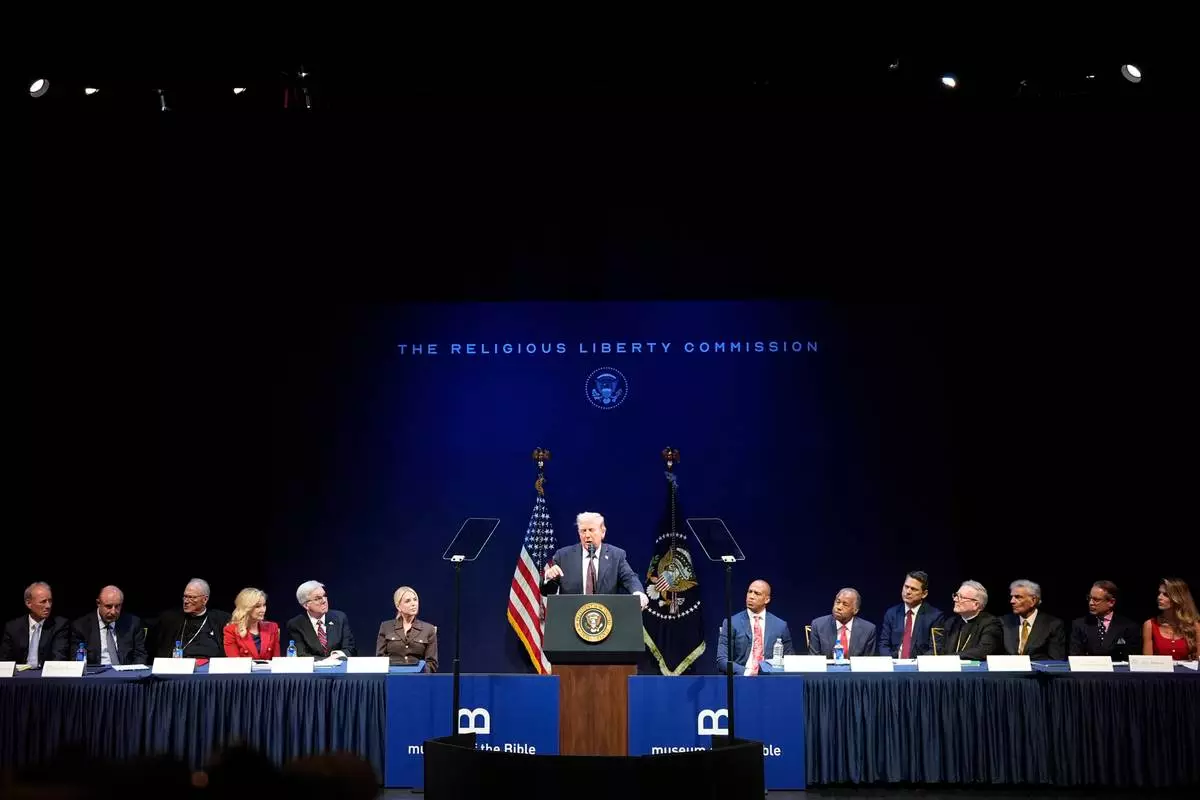
FILE - President Donald Trump speaks at a hearing of the Religious Liberty Commission at the Museum of the Bible, Sept. 8, 2025, in Washington. (AP Photo/Alex Brandon, File)