|
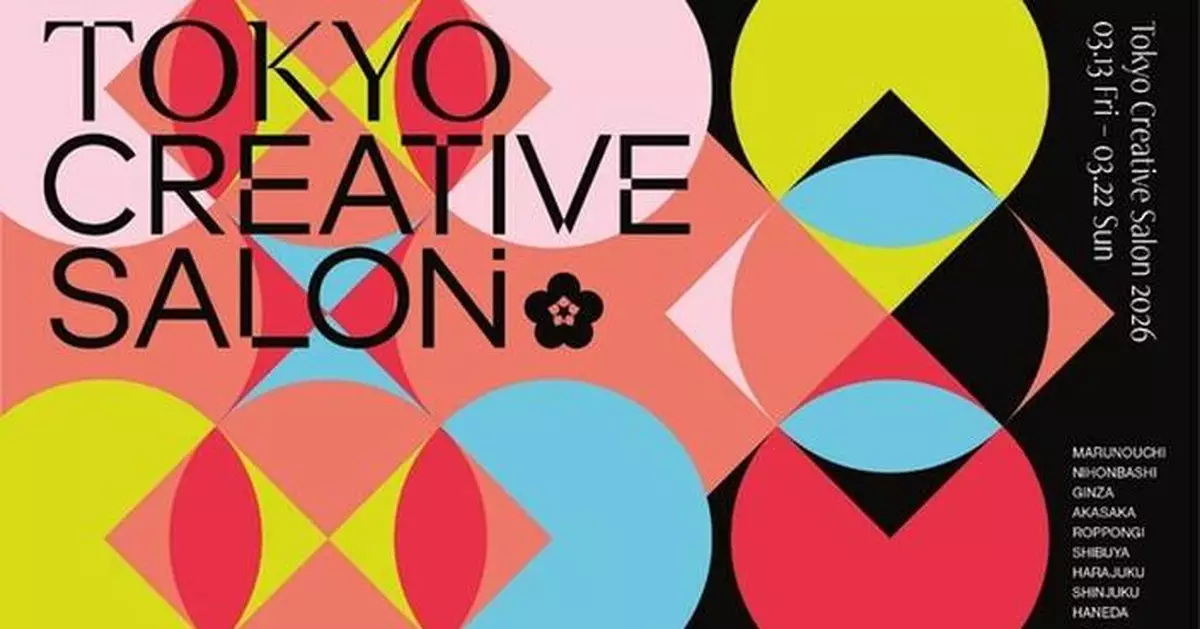
TOKYO, Feb. 12, 2026 /PRNewswire/ -- TOKYO CREATIVE SALON 2026 (TCS2026) will present an expanded lineup of programs under its core concept of FUTURE VINTAGE, offering visitors a city-wide experience of contemporary creativity across Tokyo.
City Wide Program
At the heart of TCS2026 is the City Wide Program, which transforms Tokyo itself into a creative platform. Across nine areas—each with its own history, culture, and identity—fashion, design, art, and craft installations will unfold throughout the city. Visitors are invited to walk between districts, encountering creativity as part of everyday urban life and experiencing Tokyo's diverse expressions through movement and exploration.
Tokyo Vintage Fashion Week
A new official program, Tokyo Vintage Fashion Week, will take place from March 13 to March 15, 2026, at Shinjuku Sumitomo Building Triangle Plaza.
Approximately 100 vendors will participate in a vintage market showcasing diverse items, alongside a fashion show that reinterprets the stories, contexts, and craftsmanship embedded in vintage pieces. The program highlights how vintage culture continues to evolve and connect to future styles.
Focus Exhibition: "Tokyo Trace"
Tokyo Trace is a focus exhibition that explores how Tokyo shapes creative expression. Rather than serving merely as a backdrop, the city leaves traces through encounters, landscapes, and cultural layers.
The inaugural edition will spotlight NOMARHYTHM TEXTILE, a globally recognized Japanese textile brand, examining how Tokyo's influence is woven into its creative process. The exhibition will be held from March 13 to March 15, 2026, at Shinjuku Sumitomo Building Triangle Plaza.
Collaboration with the Mainichi Fashion Awards
Continuing from the previous year, TCS2026 will collaborate with the Mainichi Fashion Awards, one of Japan's most established fashion honors founded in 1983. Through this partnership, TCS highlights Japan's fashion culture from both historical and contemporary perspectives, strengthening its international presence.
About the TCS2026 Logo
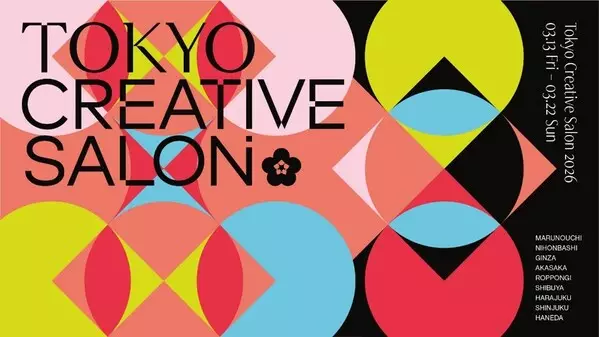
The TCS2026 logo symbolizes Tokyo's ability to continuously generate new styles while embracing accumulated cultural layers. Inspired by cherry blossoms—an icon of spring and renewal—the design reflects the city's creative energy, where diverse influences converge and past expressions evolve into future forms.
Through these programs, TOKYO CREATIVE SALON 2026 presents Tokyo as a living archive of creativity—where past, present, and future intersect.
TOKYO, Feb. 12, 2026 /PRNewswire/ -- TOKYO CREATIVE SALON 2026 (TCS2026) will present an expanded lineup of programs under its core concept of FUTURE VINTAGE, offering visitors a city-wide experience of contemporary creativity across Tokyo.
City Wide Program
At the heart of TCS2026 is the City Wide Program, which transforms Tokyo itself into a creative platform. Across nine areas—each with its own history, culture, and identity—fashion, design, art, and craft installations will unfold throughout the city. Visitors are invited to walk between districts, encountering creativity as part of everyday urban life and experiencing Tokyo's diverse expressions through movement and exploration.
Tokyo Vintage Fashion Week
A new official program, Tokyo Vintage Fashion Week, will take place from March 13 to March 15, 2026, at Shinjuku Sumitomo Building Triangle Plaza.
Approximately 100 vendors will participate in a vintage market showcasing diverse items, alongside a fashion show that reinterprets the stories, contexts, and craftsmanship embedded in vintage pieces. The program highlights how vintage culture continues to evolve and connect to future styles.
Focus Exhibition: "Tokyo Trace"
Tokyo Trace is a focus exhibition that explores how Tokyo shapes creative expression. Rather than serving merely as a backdrop, the city leaves traces through encounters, landscapes, and cultural layers.
The inaugural edition will spotlight NOMARHYTHM TEXTILE, a globally recognized Japanese textile brand, examining how Tokyo's influence is woven into its creative process. The exhibition will be held from March 13 to March 15, 2026, at Shinjuku Sumitomo Building Triangle Plaza.
Collaboration with the Mainichi Fashion Awards
Continuing from the previous year, TCS2026 will collaborate with the Mainichi Fashion Awards, one of Japan's most established fashion honors founded in 1983. Through this partnership, TCS highlights Japan's fashion culture from both historical and contemporary perspectives, strengthening its international presence.
About the TCS2026 Logo
The TCS2026 logo symbolizes Tokyo's ability to continuously generate new styles while embracing accumulated cultural layers. Inspired by cherry blossoms—an icon of spring and renewal—the design reflects the city's creative energy, where diverse influences converge and past expressions evolve into future forms.
Through these programs, TOKYO CREATIVE SALON 2026 presents Tokyo as a living archive of creativity—where past, present, and future intersect.
** The press release content is from PR Newswire. Bastille Post is not involved in its creation. **
TOKYO CREATIVE SALON 2026 Program Highlights City-Wide Creativity Across Tokyo
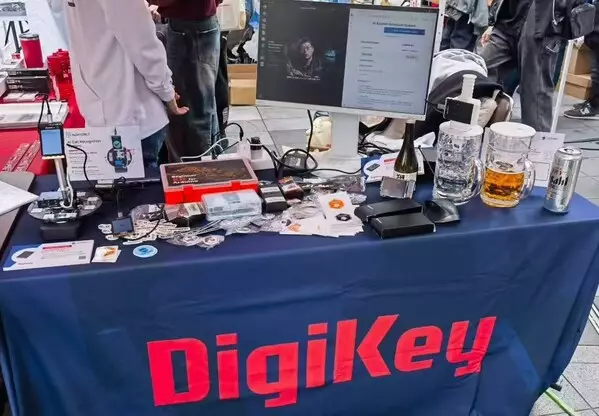
SHANGHAI, April 5, 2026 /PRNewswire/ -- DFRobot, a global leader in open-source hardware, recently participated in the Robot Hokoten @ Akihabara event in Tokyo, appearing at the DigiKey booth. The company presented two AI-driven projects based on open-source hardware—an "Electronic Nose" gas recognition system and an AI-powered cell recognition teaching system—demonstrating how AI and open hardware can be effectively applied in STEAM education and maker scenarios.
Electronic Nose: Integrating TinyML with On-Device AI
The "Electronic Nose" project combines edge AI with embedded hardware. It uses four MEMS gas sensors connected to an ESP32 running a TinyML model for real-time odor analysis.
During the demonstration, the sensor probe was placed above a glass of beer. Within 20 to 30 seconds, the system completed odor sampling and analysis. The results were then transmitted to the LattePanda Sigma, a compact x86 computing module, which generated descriptive content or tasting notes using a locally deployed language model. The entire process was executed on-device, without relying on network connectivity.
Xia Qing, Senior Engineer at DFRobot, commented: "This demonstration shows how makers can combine TinyML-based sensing with local AI models to transform sensor data into intuitive insights. Potential applications include coffee flavor analysis, fermentation monitoring, and food freshness detection."
AI Cell Recognition: Bringing AI into the STEAM Classroom
Another featured project focused on educational applications. DFRobot presented an AI-powered cell recognition teaching system designed to integrate artificial intelligence into middle school biology education. The system is built using the HUSKYLENS 2 AI vision sensor and the UNIHIKER K10 development board.
Powered by the K230 processor with up to 6 TOPS of AI computing performance, HUSKYLENS 2 can efficiently run both pre-trained and user-trained models with low latency. In the demonstration, the system performed real-time identification and classification of cells under a microscope, making abstract AI and machine learning concepts tangible through hands-on interaction.
The project showcases the complete AI workflow—from data collection and model training to edge inference—highlighting its practical applicability in educational settings.
Partnering with DigiKey to Expand the Open-Source Hardware Ecosystem
DFRobot and DigiKey jointly showcased at Robot Hokoten to promote open-source hardware and AI education. The two parties will continue collaborating on technical content, global marketing, and educational solutions, lowering the barrier to AI and open hardware adoption, and accelerating the transition from maker projects to real STEAM classroom applications.
** This press release is distributed by PR Newswire through automated distribution system, for which the client assumes full responsibility. **
DFRobot Showcases AI Maker Projects at Robot Hokoten in Akihabara