Russia has attempted to fully block WhatsApp in the country, the company said, the latest move in an ongoing government effort to tighten control over the internet.
A WhatsApp spokesperson said late Wednesday that the Russian authorities' action was intended to “drive users to a state-owned surveillance app,” a reference to Russia's own state-supported MAX messaging app that's seen by critics as a surveillance tool.
Click to Gallery
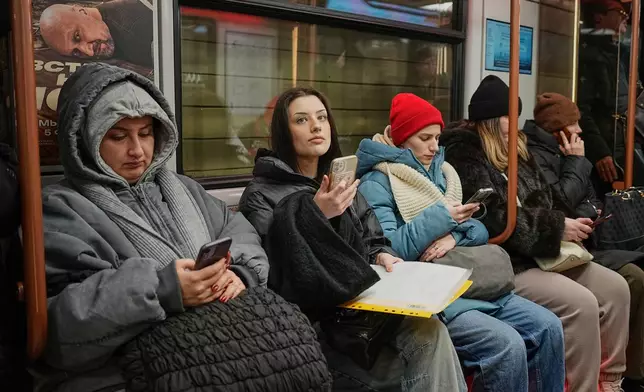
Passengers look at their smartphones while on the subway in Moscow, Wednesday, Feb. 11, 2026. (AP Photo/Alexander Zemlianichenko)
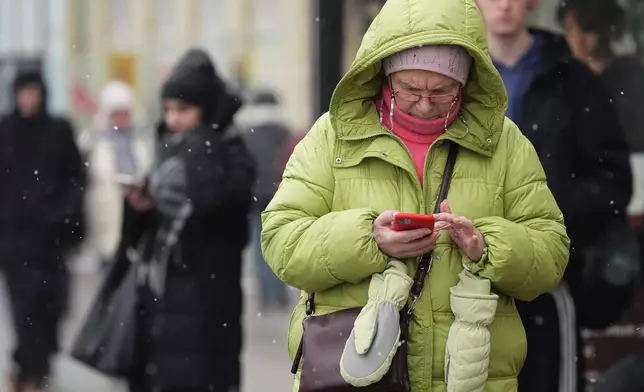
A woman looks at her smartphone at a bus stop in St. Petersburg, Russia, Wednesday, Feb. 11, 2026. (AP Photo/Dmitri Lovetsky)
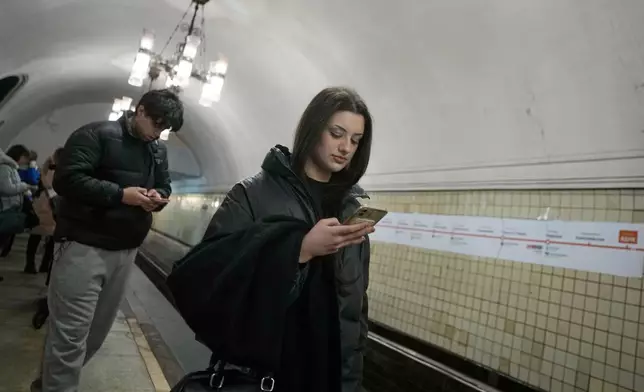
A young woman looks at her smartphone while on the subway in Moscow, Wednesday, Feb. 11, 2026. (AP Photo/Alexander Zemlianichenko)
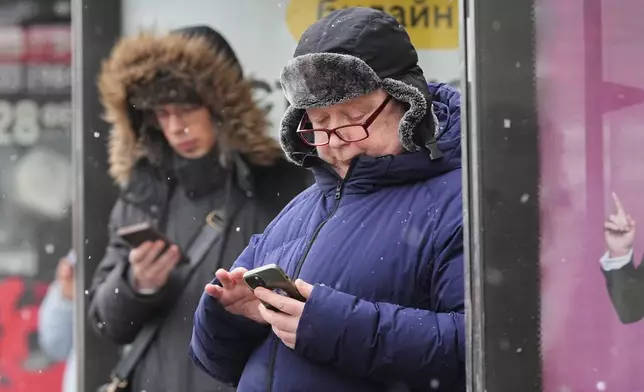
People look at their smartphones at a bus stop in St. Petersburg, Russia, Wednesday, Feb. 11, 2026. (AP Photo/Dmitri Lovetsky)
FILE - A WhatsApp icon is displayed on an iPhone, Nov. 15, 2018, in Gelsenkirchen, Germany. (AP Photo/Martin Meissner, File)
“Trying to isolate over 100 million people from private and secure communication is a backwards step and can only lead to less safety for people in Russia,” the WhatsApp spokesperson said. "We continue to do everything we can to keep people connected.”
Russia's government has already blocked major social media like Twitter, Facebook and Instagram and ramped up other online restrictions since Russia’s full-scale invasion of Ukraine in 2022.
Kremlin spokesman Dmitry Peskov said WhatsApp owner Meta Platforms should comply with Russian law to see it unblocked, according to the state Tass news agency.
Earlier this week, Russian communications watchdog Roskomnadzor said it will introduce new restrictions on the Telegram messaging app after accusing it of refusing to abide by the law. The move triggered widespread criticism from military bloggers, who warned that Telegram was widely used by Russian troops fighting in Ukraine and its throttling would derail military communications.
Despite the announcement, Telegram has largely been working normally. Some experts say it’s a more difficult target, compared with WhatsApp. Some Russian experts said that blocking WhatsApp would free up technological resources and allow authorities to fully focus on Telegram, their priority target.
Authorities had previously restricted access to WhatsApp before moving to finally ban it Wednesday.
Under President Vladimir Putin, authorities have engaged in deliberate and multipronged efforts to rein in the internet. They have adopted restrictive laws and banned websites and platforms that don’t comply, and focused on improving technology to monitor and manipulate online traffic.
Russian authorities have throttled YouTube and methodically ramped up restrictions against popular messaging platforms, blocking Signal and Viber and banning online calls on WhatsApp and Telegram. In December, they imposed restrictions on Apple’s video calling service FaceTime.
While it’s still possible to circumvent some of the restrictions by using virtual private network services, many of them are routinely blocked, too.
At the same time, authorities actively promoted the “national” messaging app called MAX, which critics say could be used for surveillance. The platform, touted by developers and officials as a one-stop shop for messaging, online government services, making payments and more, openly declares it will share user data with authorities upon request. Experts also say it doesn’t use end-to-end encryption.
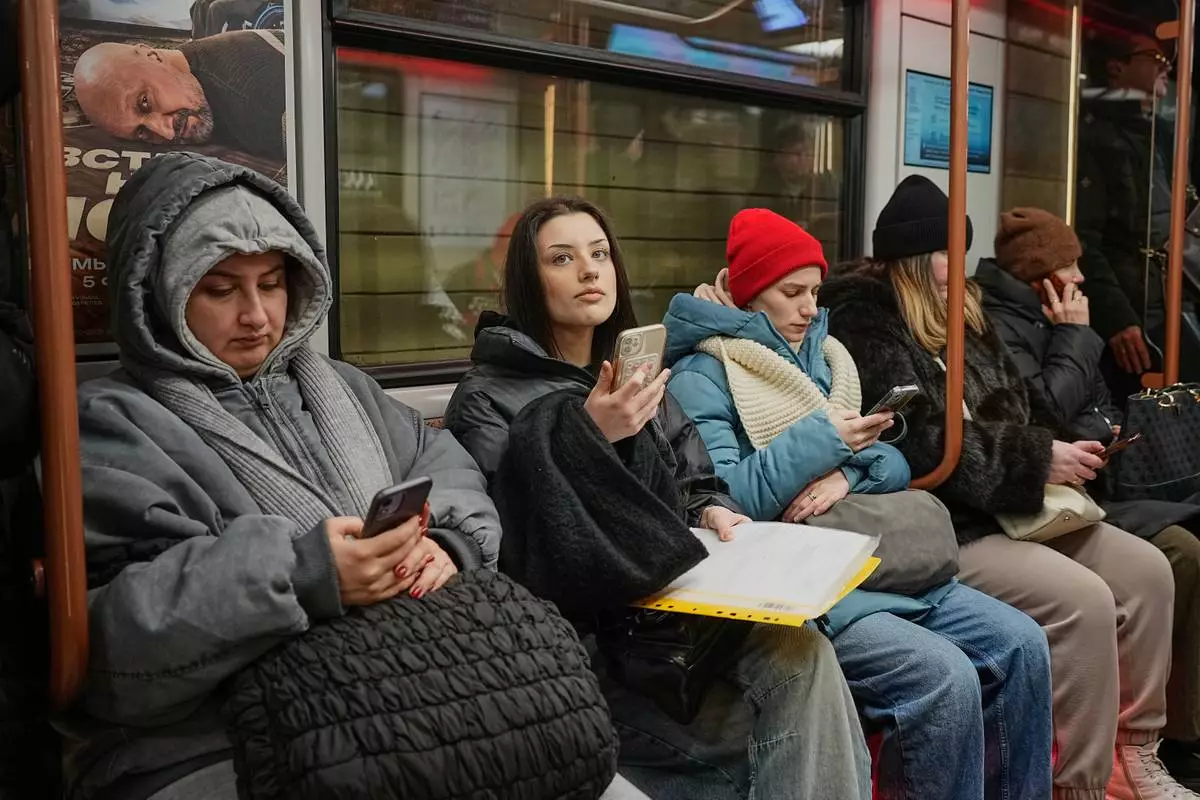
Passengers look at their smartphones while on the subway in Moscow, Wednesday, Feb. 11, 2026. (AP Photo/Alexander Zemlianichenko)
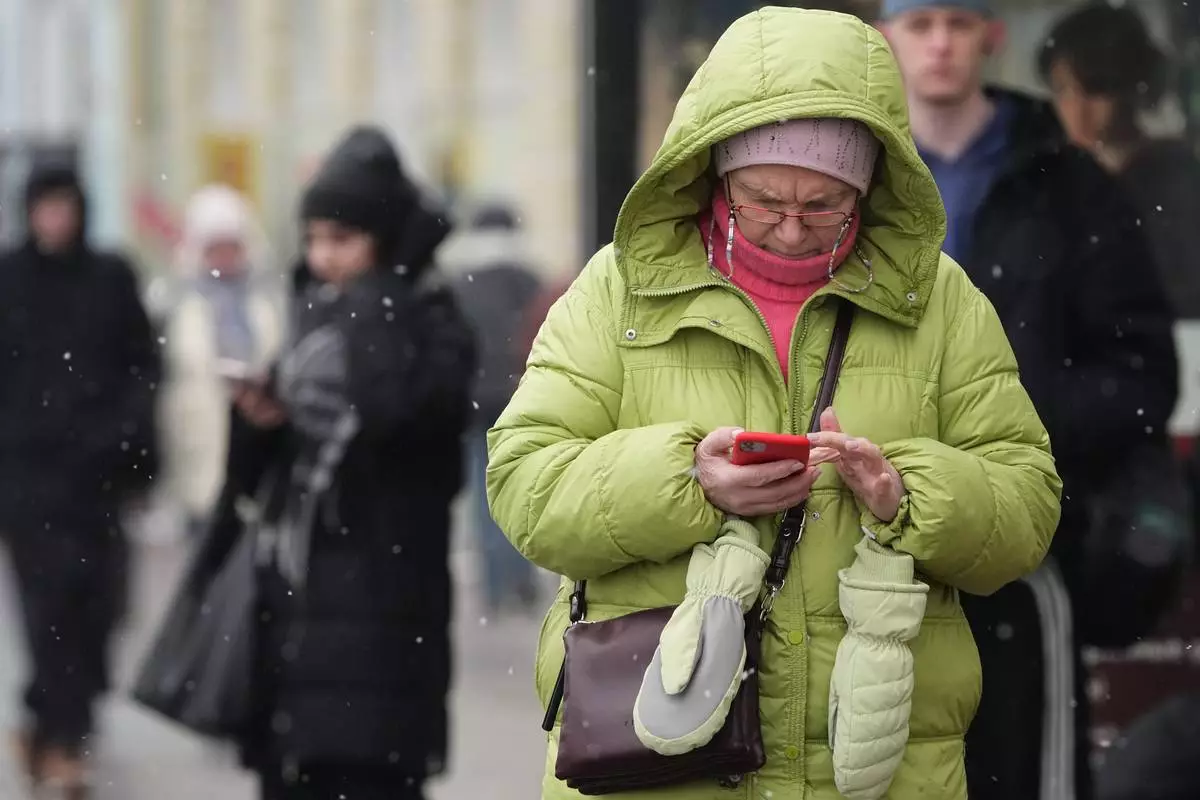
A woman looks at her smartphone at a bus stop in St. Petersburg, Russia, Wednesday, Feb. 11, 2026. (AP Photo/Dmitri Lovetsky)
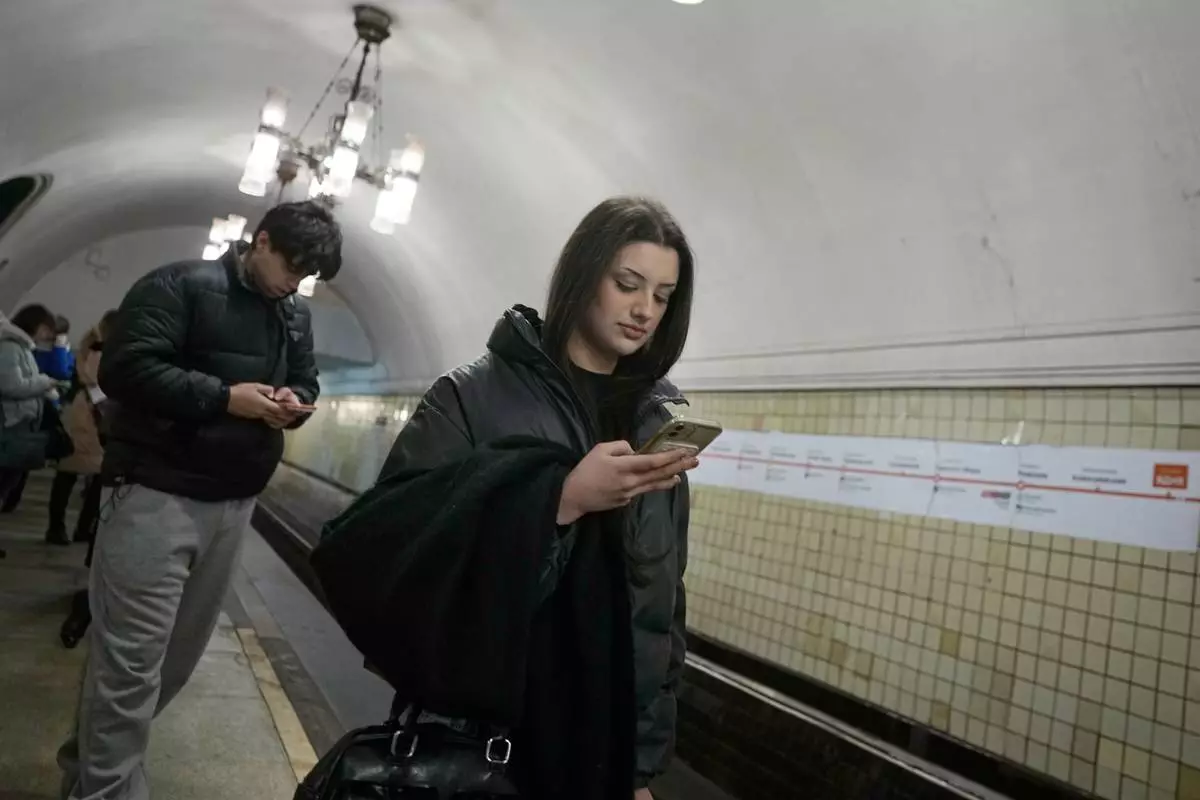
A young woman looks at her smartphone while on the subway in Moscow, Wednesday, Feb. 11, 2026. (AP Photo/Alexander Zemlianichenko)
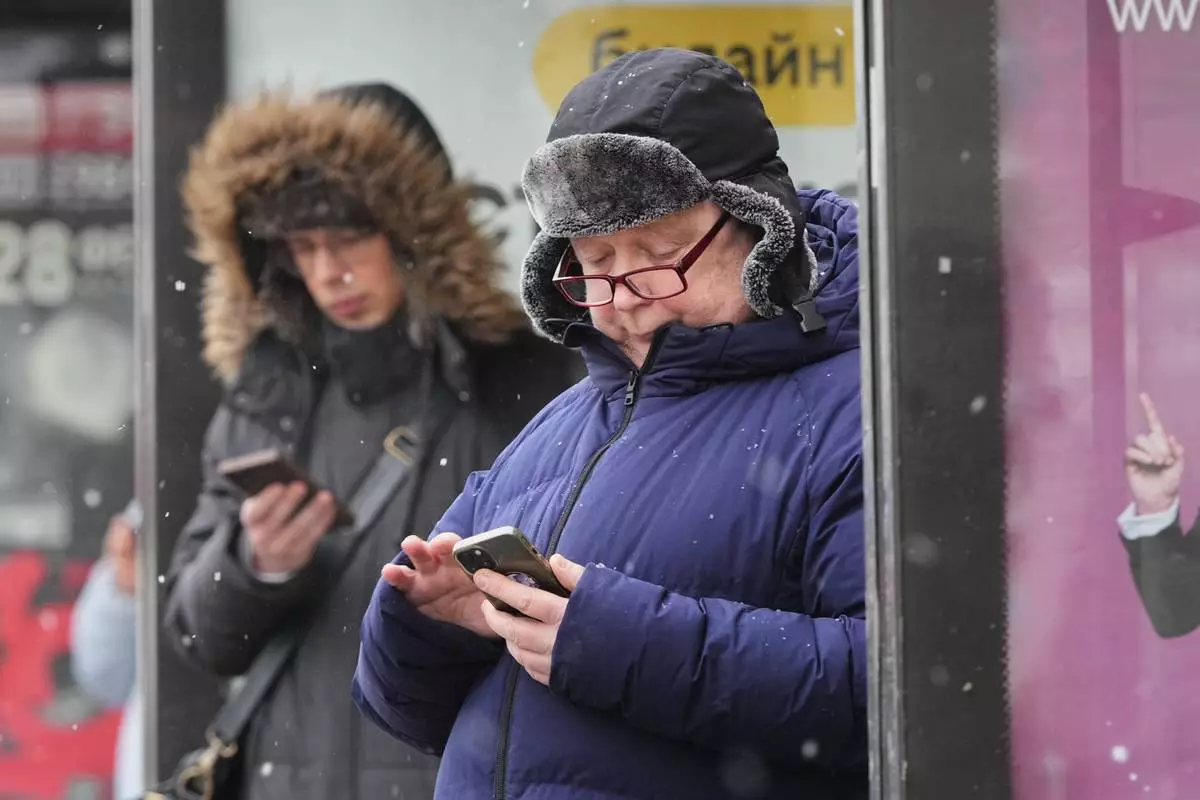
People look at their smartphones at a bus stop in St. Petersburg, Russia, Wednesday, Feb. 11, 2026. (AP Photo/Dmitri Lovetsky)

FILE - A WhatsApp icon is displayed on an iPhone, Nov. 15, 2018, in Gelsenkirchen, Germany. (AP Photo/Martin Meissner, File)
His right arm strapped tight to protect a damaged shoulder, Edin Džeko raised his left hand holding his phone to film Bosnia-Herzegovina’s late-night team celebrations after beating Italy and qualifying for the World Cup.
The 40-year-old talismanic striker smiled as he led teammates singing in the bar-room party while they wore white t-shirts with the 2026 World Cup logo.
Džeko’s goals and inspiration have helped take Bosnia to just its second World Cup as an independent soccer nation since the former Yugoslavia broke up in regional wars during his childhood.
Now the player who has so often carried the team on his shoulders faces a race against time to get his shoulder healed before the tournament starts in 10 weeks.
“I hope that it is not a great injury to Edin Džeko and that he will be able to be with us at the World Cup,” Bosnia coach Sergej Barbarez said, “because he does not have much time.”
Džeko was injured right at the end of the 1-1 draw against Italy and couldn't take part in the ensuing penalty shootout, but the fact that he was still on the field through all of extra time was a sign of his leadership. With the very last kick of the game Džeko was advancing with the ball into Italy’s half when taken down by the hacking challenge of Davide Frattesi.
Džeko stayed on the turf getting treatment for his injured shoulder as the final whistle blew and the teams started preparing for the penalty shootout.
Džeko’s six goals in the qualifying campaign, including an 86th-minute equalizer at Wales in the playoffs semifinal last Thursday, had taken Bosnia to the playoff final. And his strong challenge at a cross to the far post helped tee up Haris Tabaković to cancel 10-man Italy’s lead in the 79th on Tuesday.
Then his younger teammates had to pick up the baton and beat Italy’s storied goalkeeper Gianluigi Donnarumma in the shootout.
Bosnia went 4-for-4, while two Italians faltered. The team's final two kicks were scored by Wisconsin-born Esmir Bajraktarević — who played one game for the United States two years ago before FIFA approved his switch to Bosnia — and teenager Kerim Alajbegović.
The combined age of Bajraktarević and Alajbegović is 39, one year less than Džeko.
The 18-year-old Alajbegović was not even born when Džeko made his international debut in July 2007 and began a remarkable run of scoring in 20 straight calendar years for his country.
Džeko watched on his with shoulder strapped when Bajraktarević’s decisive spot-kick sneaked underneath Donnarumma's hands to spark wild celebrations in the loud and intimate Bilino Polje Stadium in Zenica.
After nine seasons playing in Italy, Džeko spent some time commiserating with the losing players, including former teammates at Inter Milan and Roma.
Then he went up into the seats of the main grandstand to meet family and friends as emotion swept the nation.
“What can I say? We saw everything after that last penalty. Great pride,” Bosnia defender Nikola Katić said. “I’ve never cried after a game, I’m 29 years old, and now the tears have started.”
With or without Džeko, Bosnia should have a great opportunity to advance from its World Cup group, after falling short in 2014 in Brazil.
Bosnia opens against co-host Canada on June 12 in Toronto, then faces Switzerland in Los Angeles and finishes against Qatar in Seattle on June 24.
AP soccer: https://apnews.com/hub/soccer
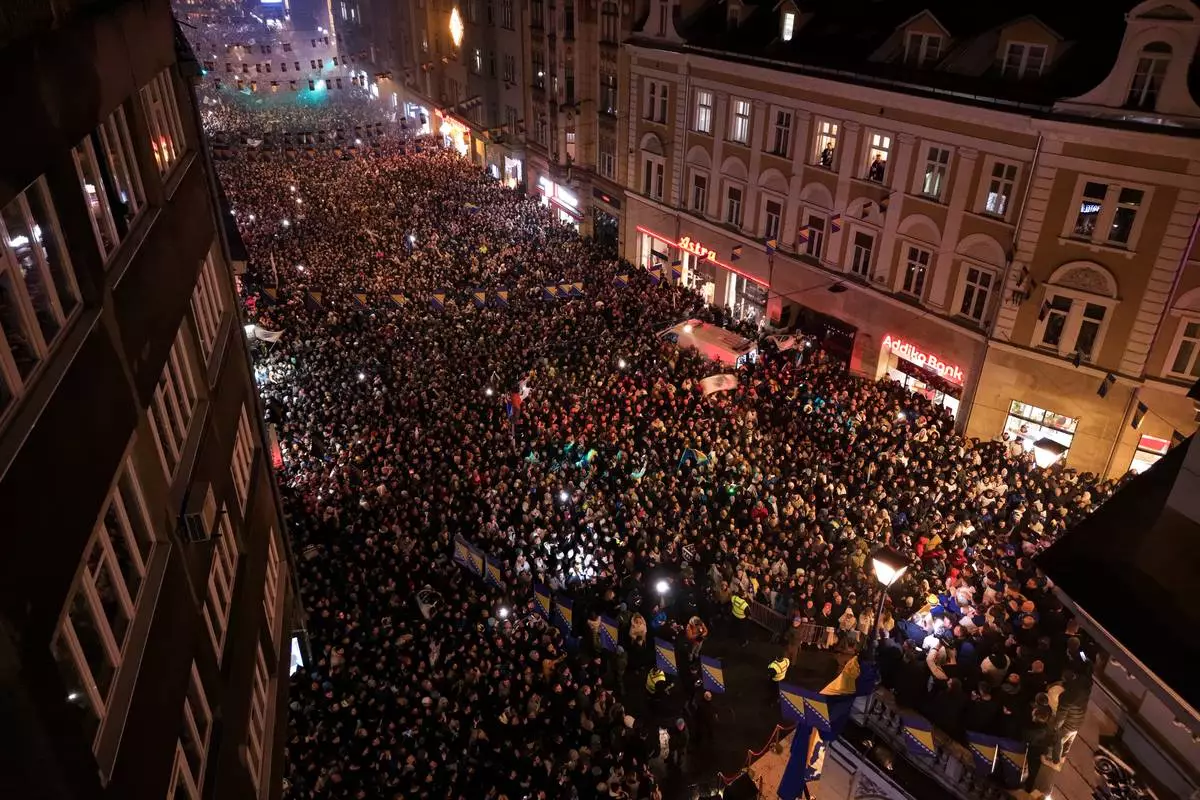
An aerial view shows fans celebrating after the Bosnian national team qualified for the World Cup by winning a penalty shootout against Italy, in Sarajevo, Bosnia, Wednesday, April 1, 2026. (AP Photo/Armin Durgut)

Bosnia's coach Sergej Barbarez is chaired aloft as he celebrates after winning a penalty shootout during the World Cup qualifying playoff final soccer match between Bosnia and Italy in Zenica, Bosnia, Tuesday, March 31, 2026. (AP Photo/Armin Durgut)
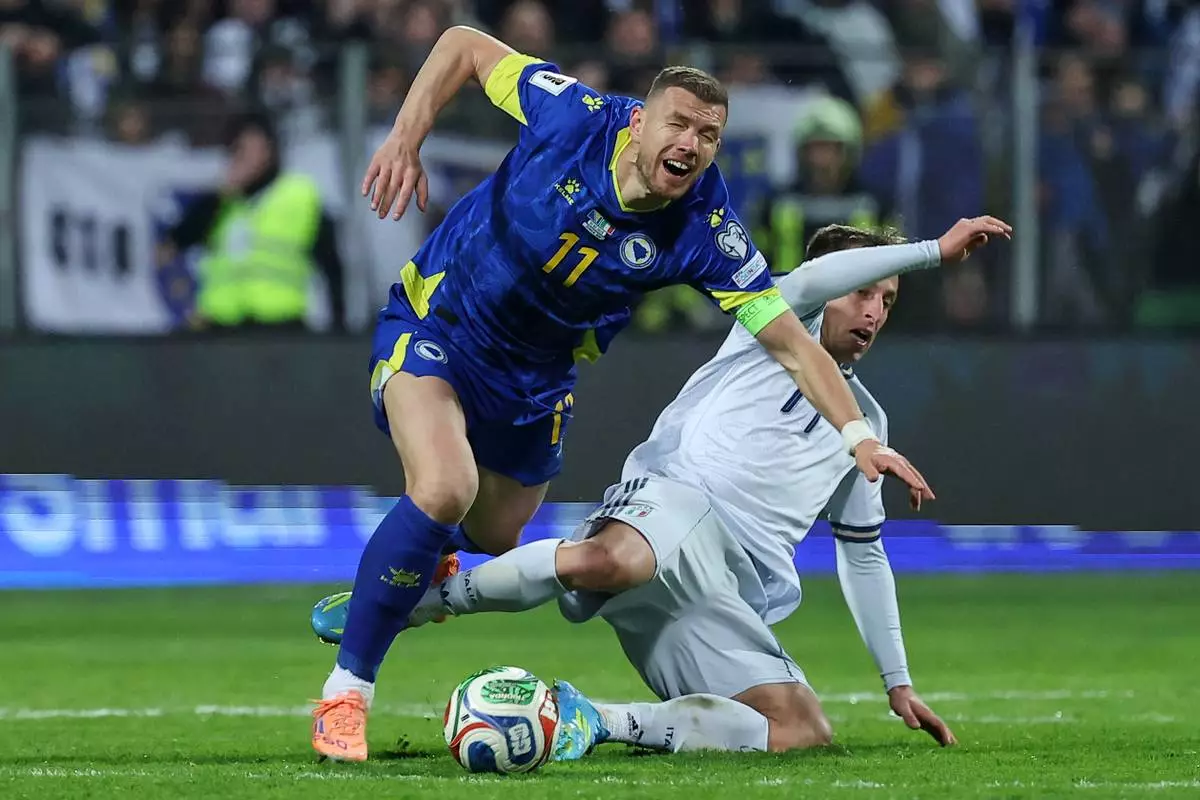
Bosnia's Edin Dzeko, left, is challenged by Italy's Davide Frattesi during the World Cup qualifying playoff final soccer match between Bosnia and Italy in Zenica, Bosnia, Tuesday, March 31, 2026. (AP Photo/Armin Durgut)
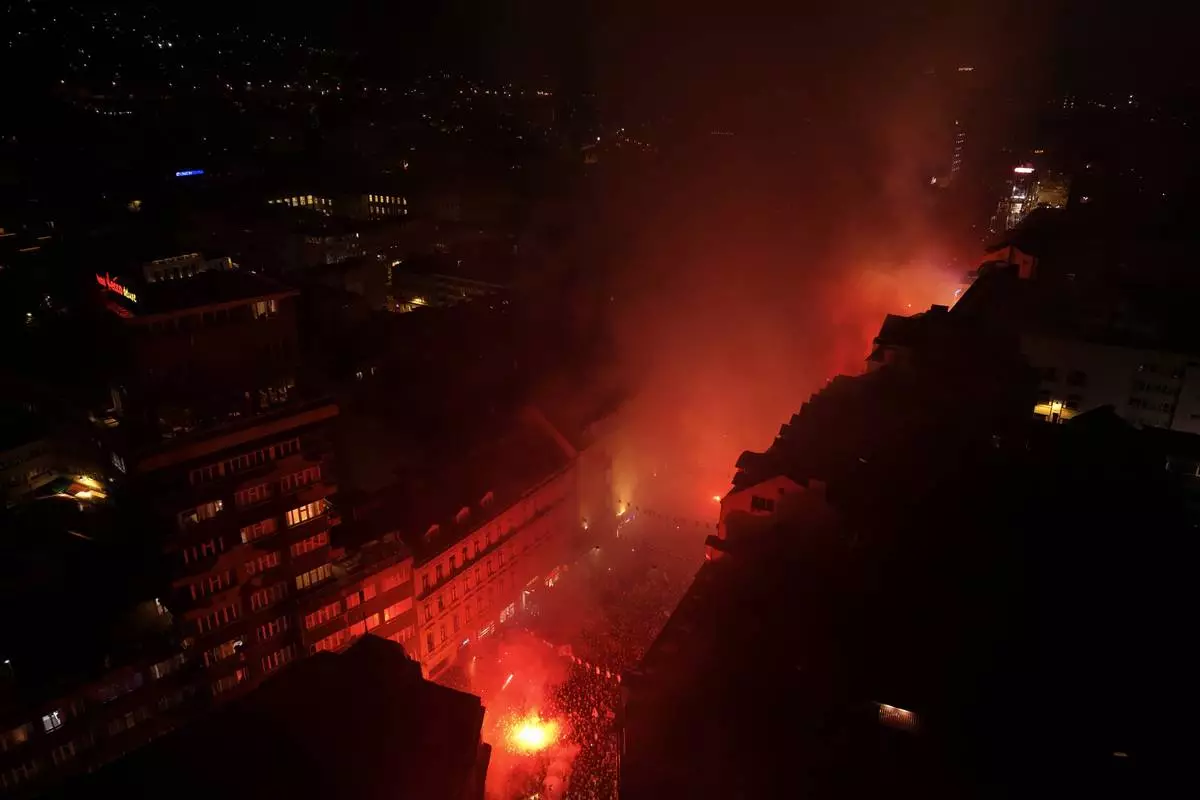
An aerial view shows smoke rising above Sarajevo as soccer fans light flares to welcome the Bosnian national team after qualifying for the World Cup by winning a penalty shootout against Italy, in Sarajevo, Bosnia, Wednesday, April 1, 2026. (AP Photo/Armin Durgut)
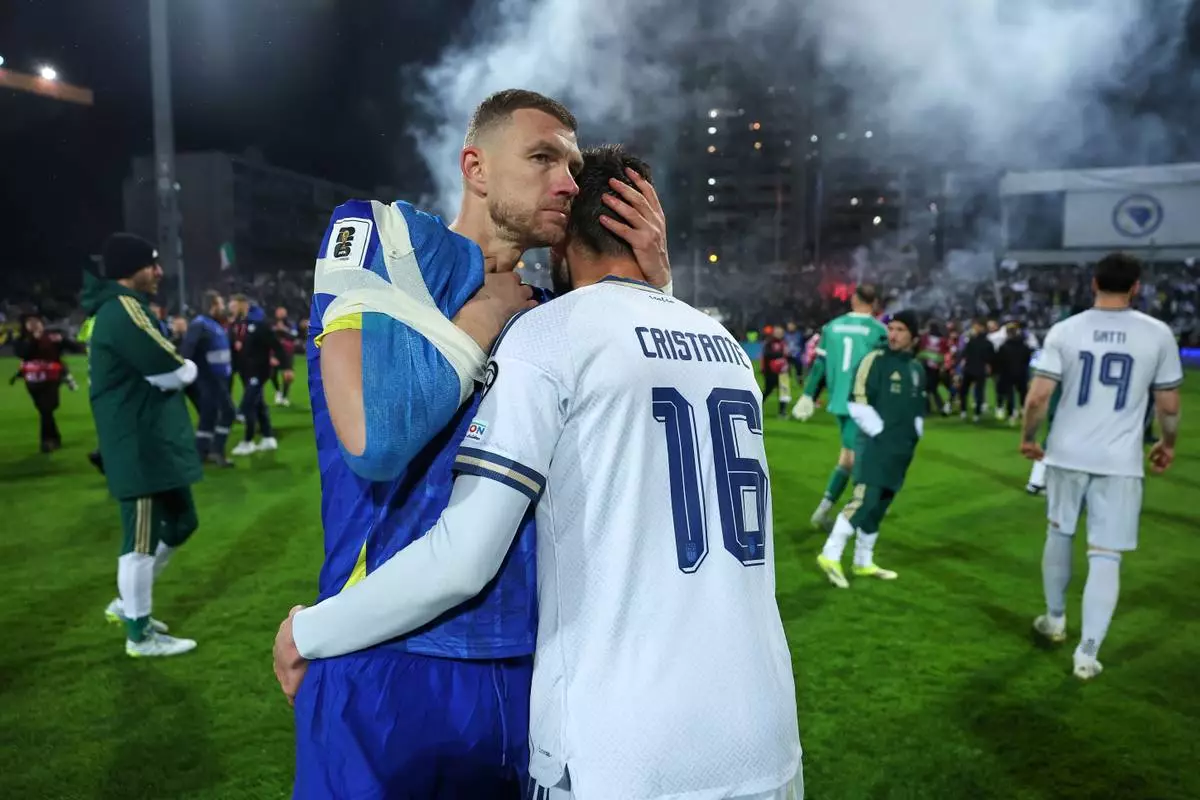
Bosnia's Edin Dzeko, left, greets Italy's Bryan Cristante after a penalty shootout during the World Cup qualifying playoff final soccer match between Bosnia and Italy in Zenica, Bosnia, Tuesday, March 31, 2026. (AP Photo/Armin Durgut)