Skip to Content Facebook Feature Image

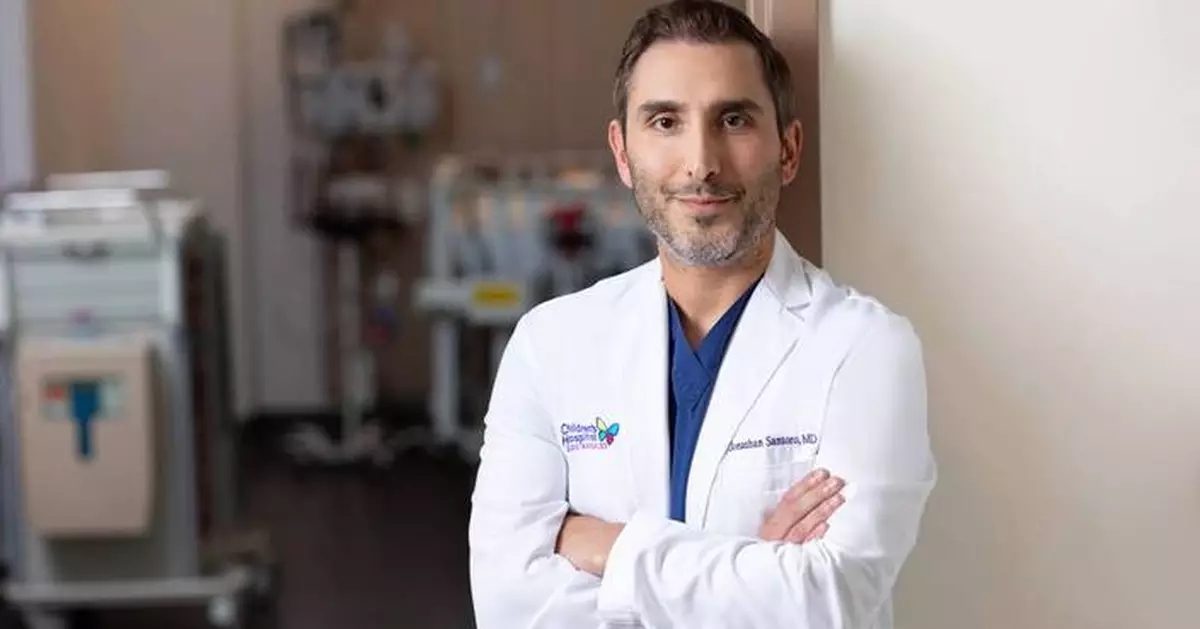
Jonathan D. Santoro, MD, Appointed Chief of Neurology and Co-Director of the Neurological Institute at Children’s Hospital Los Angeles

News

Jonathan D. Santoro, MD, Appointed Chief of Neurology and Co-Director of the Neurological Institute at Children’s Hospital Los Angeles
News

News

Jonathan D. Santoro, MD, Appointed Chief of Neurology and Co-Director of the Neurological Institute at Children’s Hospital Los Angeles

2026-02-12 19:00 Last Updated At:19:21

LOS ANGELES--(BUSINESS WIRE)--Feb 12, 2026--

Children’s Hospital Los Angeles (CHLA) today announced the appointment of Jonathan D. Santoro, MD, a neurologist and physician-scientist known for advancing patient care and research, as Chief of Neurology and Co-Director of the Neurological Institute at Children’s Hospital Los Angeles. Dr. Santoro previously served as Director of Neuroimmunology and led the division as Interim Chief during a comprehensive national search.

This press release features multimedia. View the full release here: https://www.businesswire.com/news/home/20260212245123/en/

The Neurological Institute at Children’s Hospital Los Angeles cares for children with serious brain and nervous system conditions. Its pediatric neurology and neurosurgery program is ranked No. 10 in the nation by U.S. News & World Report for 2025–26, reflecting its commitment to advancing care and research for young patients and their families. Dr. Santoro will co-direct the Neurological Institute with Mark D. Krieger, MD, Surgeon-in-Chief at CHLA.

In his new role, Dr. Santoro will lead neurologic clinical care across inpatient and outpatient settings, advance clinical trials and basic and translational research, oversee education programs and faculty and staff development, and guide strategic growth. His leadership will support high-quality patient care, foster innovation, advance training programs—all designed to improve outcomes for children, adolescents, and young adults with complex neurological conditions.

"We are excited to welcome Dr. Santoro in his new leadership roles," said Alan S. Wayne, MD, Pediatrician-in-Chief, Senior Vice President of Academic Affairs, and Chair of the Department of Pediatrics at CHLA and the Keck School of Medicine of USC. "Dr. Santoro’s expertise in pediatric neuroimmunology, his National Institutes of Health-funded research program, and his proven mentorship and leadership will strengthen our neuroscience programs and enhance care for individuals with neurologic conditions."

Dr. Santoro is recognized for his work in pediatric neuroimmunology and immune-mediated neurologic disorders. He is a leading authority on Down syndrome regression disorder and serves as co-principal investigator of the first NIH-funded clinical trial evaluating targeted therapies for this condition. He also holds an academic appointment as Associate Clinical Professor of Pediatrics and Neurology at the Keck School of Medicine of USC, where he contributes to research, education, and mentorship.

Dr. Santoro joined CHLA in 2019. He has authored more than 100 peer-reviewed publications and book chapters, served on editorial boards for leading journals, and is a frequent invited speaker at national and international conferences. His contributions have influenced clinical care and research priorities nationally and have earned numerous teaching, research, and leadership awards.

Dr. Santoro earned his bachelor's, master's, and medical degrees from Tulane University in New Orleans. He completed his pediatrics and child neurology residencies at Stanford University, followed by a neuroimmunology fellowship at Massachusetts General Hospital and Boston Children's Hospital, Harvard Medical School.

About Children’s Hospital

Children’s Hospital Los Angeles is at the forefront of pediatric medicine and is the largest provider of hospital care for children in California. Since its founding in 1901, CHLA has delivered a level of pediatric care that is among the best in the world. Ranked one of the top 10 children’s hospitals in the nation by U.S. News & World Report, Children’s Hospital Los Angeles provides comprehensive and compassionate care to one of the largest and most diverse pediatric patient populations in the country. The hospital is the top-ranked children’s hospital in California and the Pacific U.S. region for 2025-26. A leader in pediatric research, CHLA is among the top 10 children’s hospitals for research funding from the National Institutes of Health. The Saban Research Institute of Children's Hospital Los Angeles supports the full continuum of research, translating scientific discoveries into life-changing treatments for patients around the globe. As a pediatric academic medical center, CHLA is also home to one of the largest graduate education programs for pediatricians in the United States. The hospital’s commitment to building stronger, healthier communities is evident in CHLA’s efforts to enhance health education and literacy, introduce more people to careers in health care, and fight food insecurity. To learn more, follow CHLA on Facebook, Instagram, LinkedIn, YouTube, and X, and visit CHLA.org.
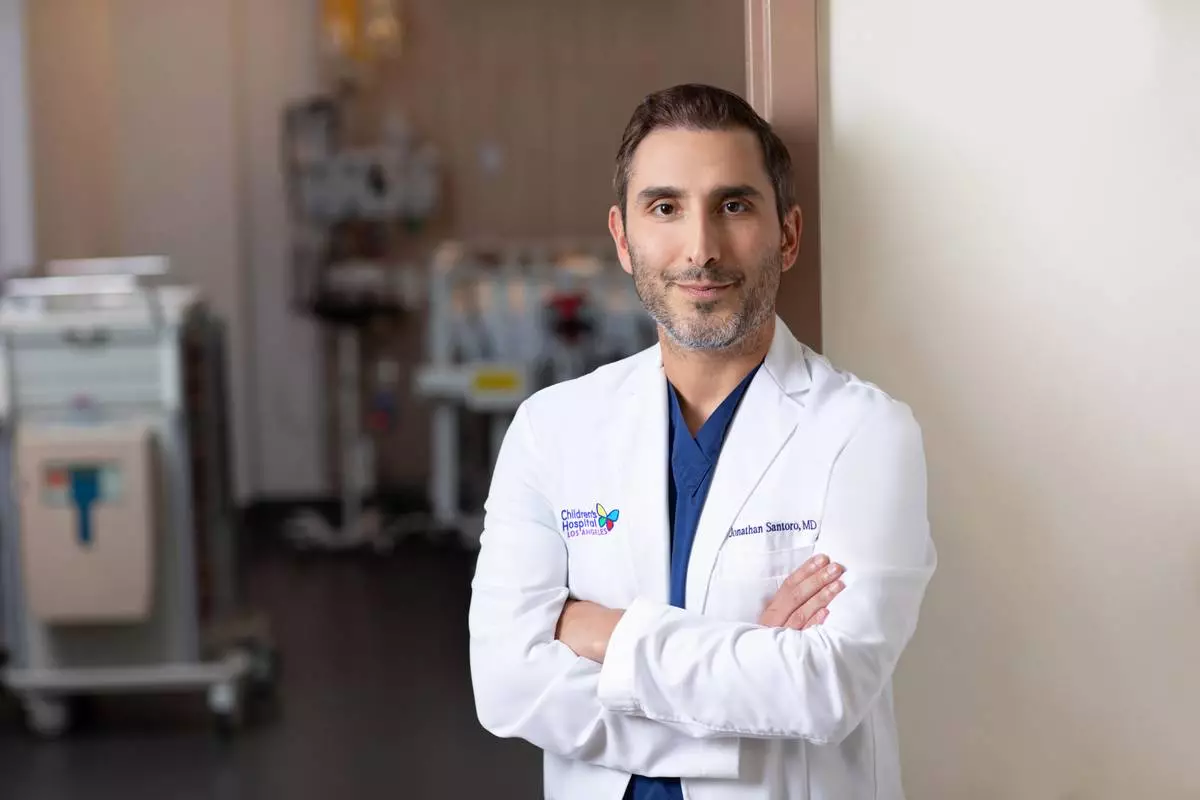
Jonathan D. Santoro, MD, Appointed Chief of Neurology and Co-Director of the Neurological Institute at Children’s Hospital Los Angeles
Jonathan D. Santoro, MD, Appointed Chief of Neurology and Co-Director of the Neurological Institute at Children’s Hospital Los Angeles
CORTINA D'AMPEZZO, Italy (AP) — The Olympic men's skeleton race begins Thursday, and all eyes at the start will be on Ukraine's Vladyslav Heraskevych.

Will he or won't he?

It's the biggest question in sliding at the Milan Cortina Games.

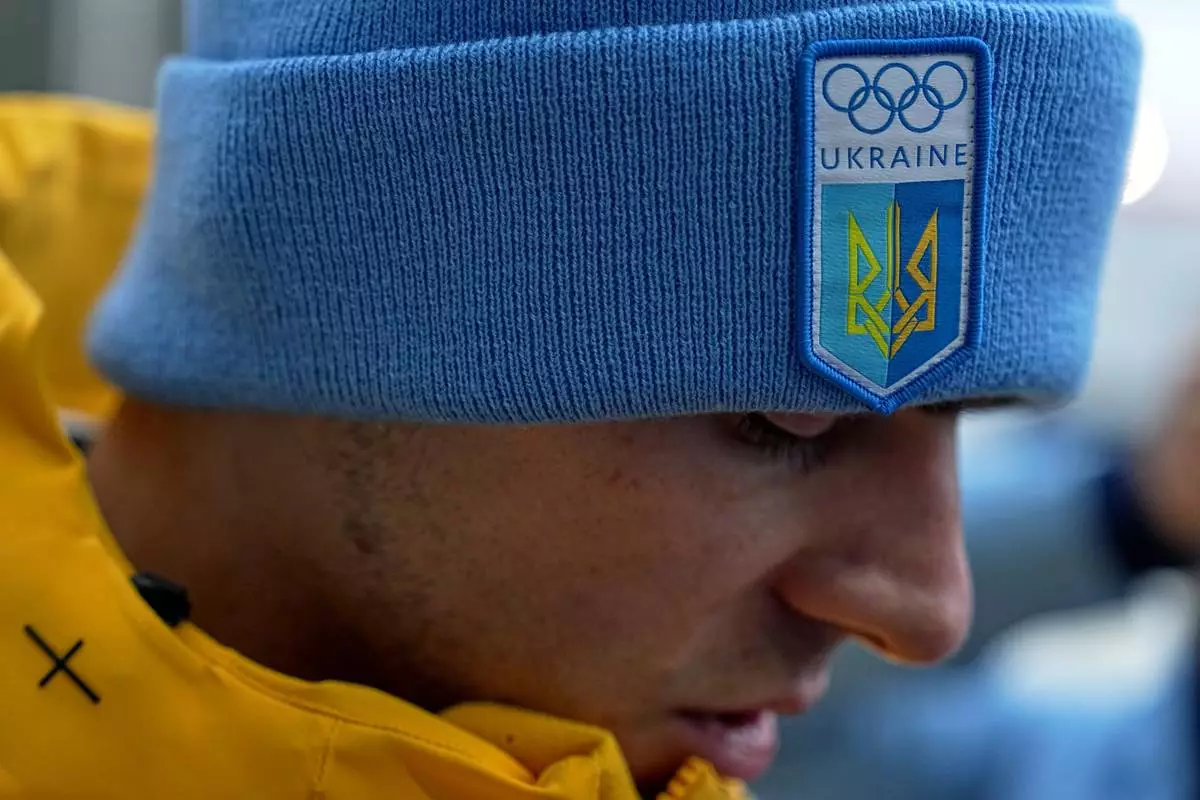
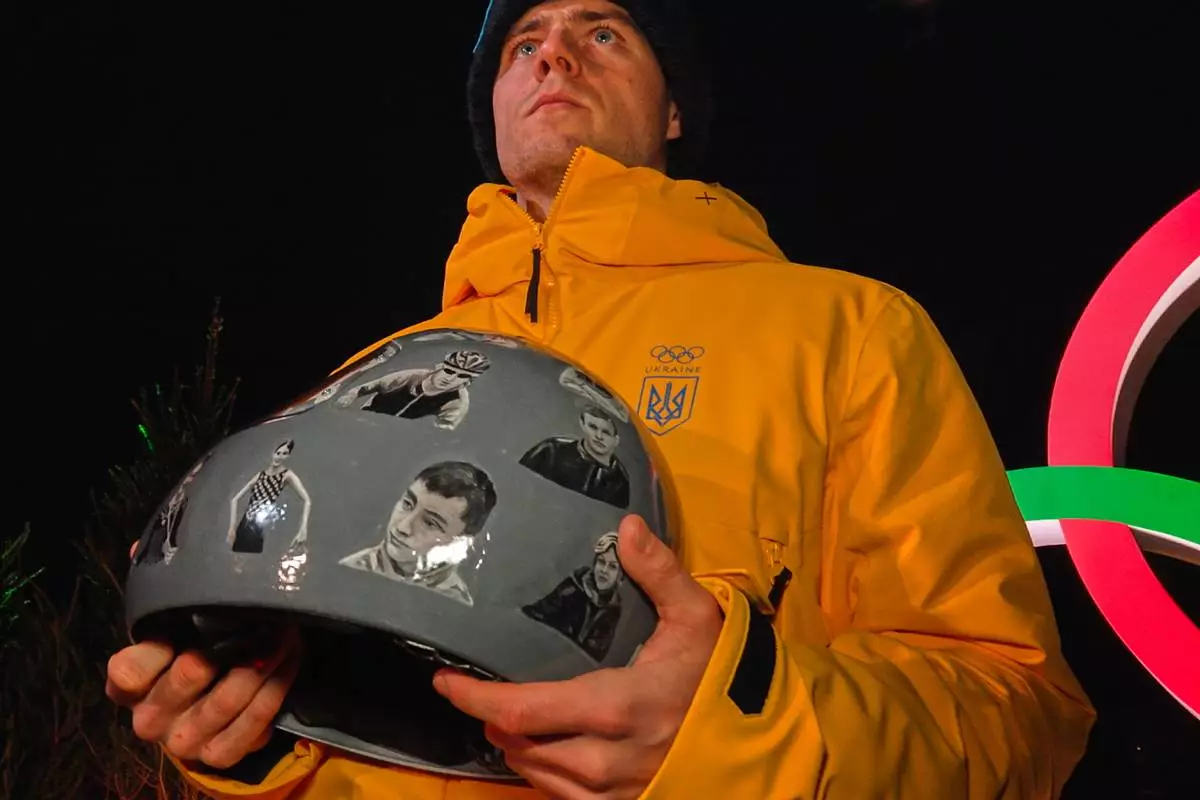
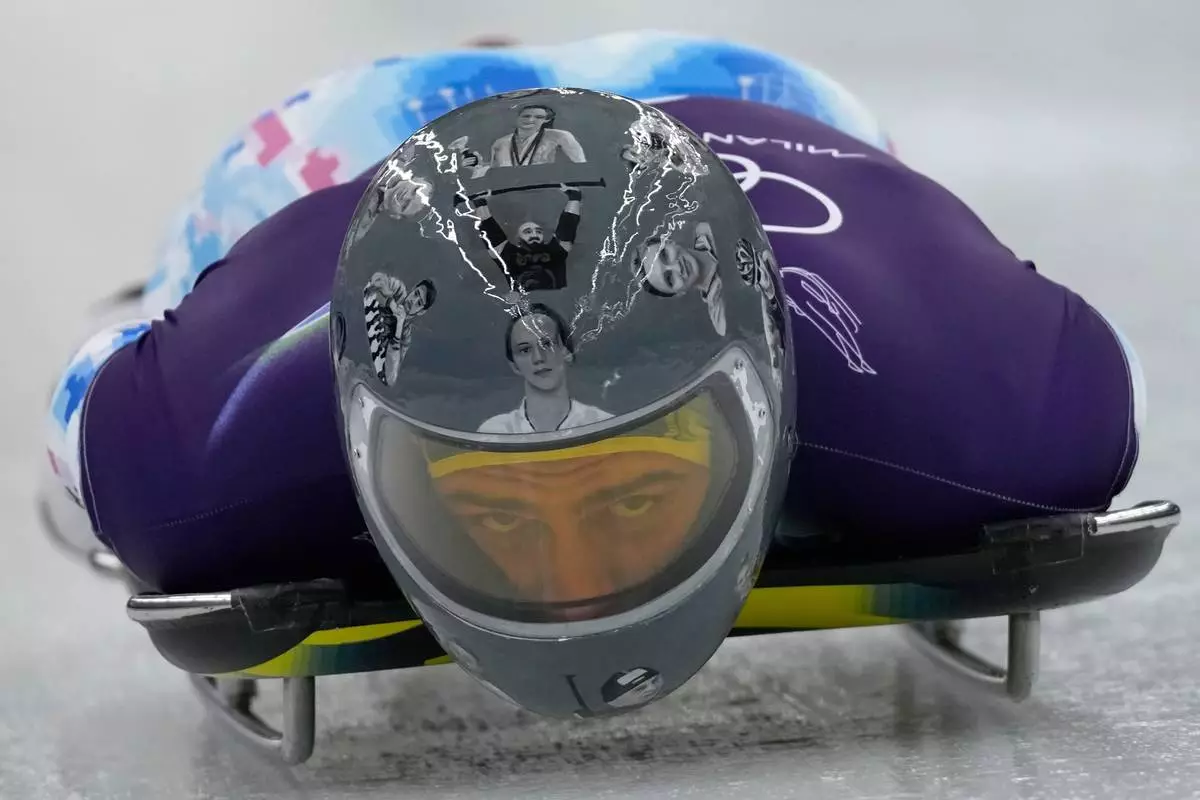
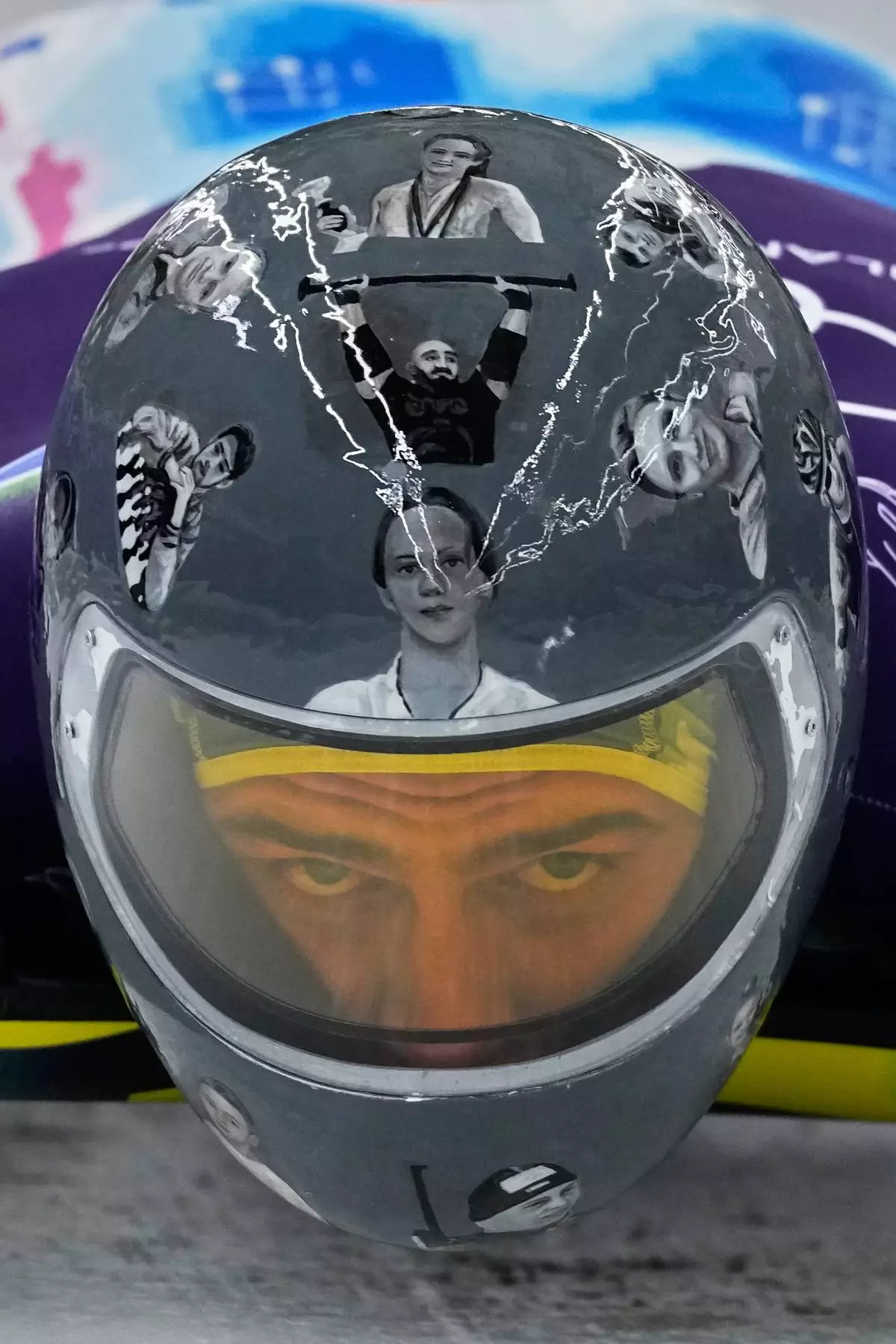
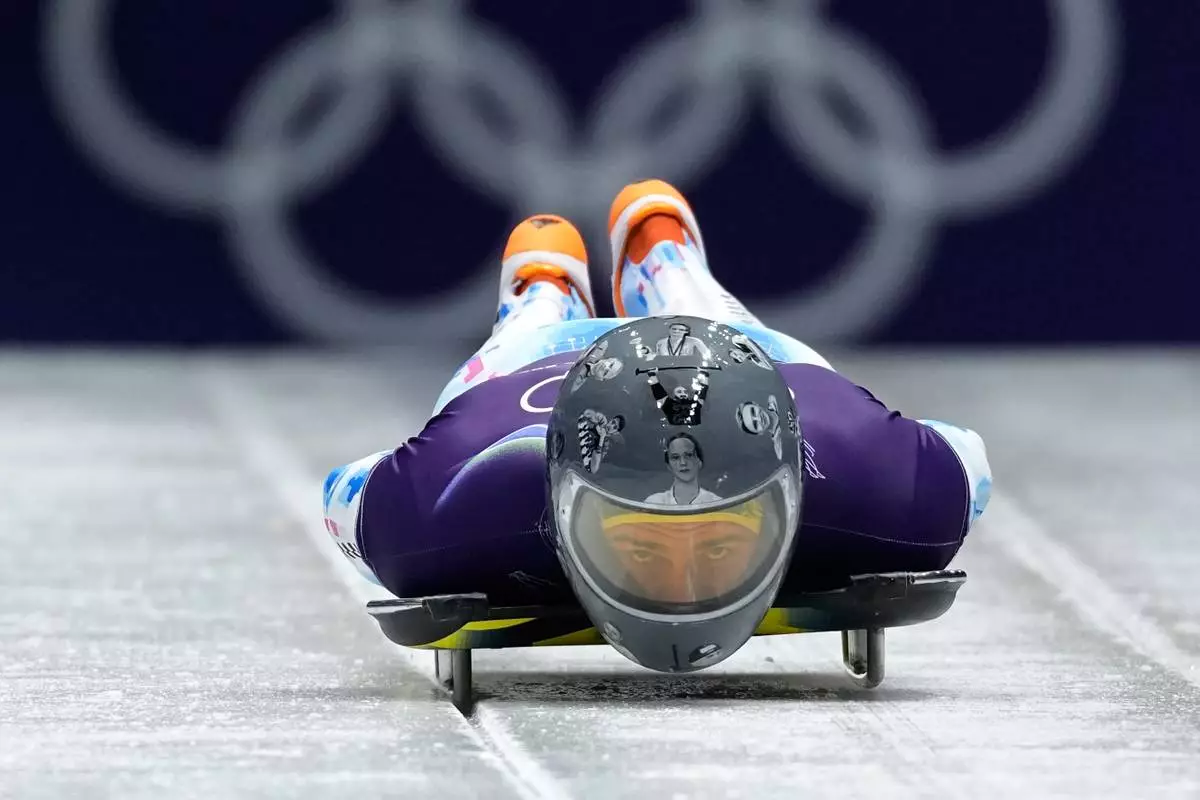
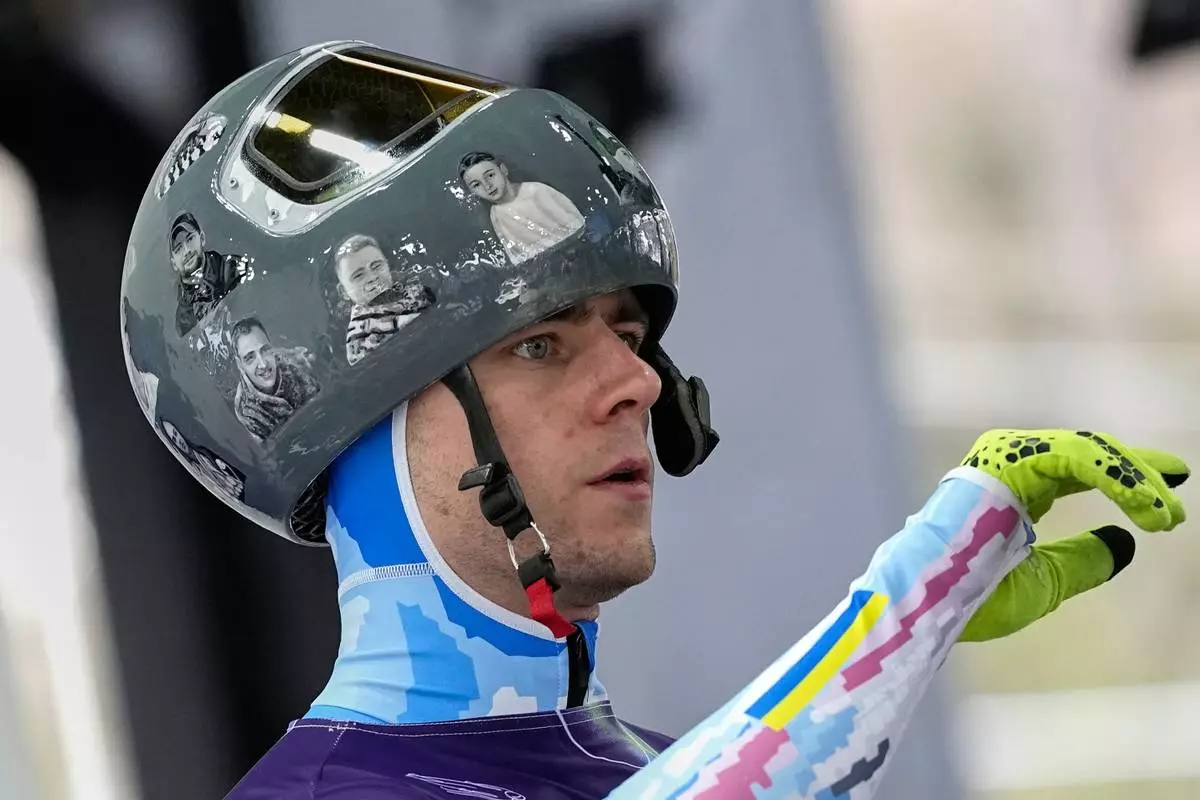
Heraskevych plans to wear his banned helmet — a tribute to Ukrainian athletes and coaches killed during the war with Russia — in the race, despite the International Olympic Committee saying it violates its rules on political statements and isn't appropriate for competition.

If Heraskevych races with the helmet, he risks sanctions that could go as far as disqualification from the Olympics. And that would put the IOC in a difficult spot, because kicking an athlete out of the Games for paying tribute to those killed in a war would draw tons of criticism.

The IOC has sided with Heraskevych before. When he displayed a “No war in Ukraine” sign after his fourth and final run at the 2022 Beijing Olympics, the IOC said he was simply calling for peace and did not find him in violation of the Olympic charter.

“We want him to compete. We really, really want him to have his moment,” IOC spokesman Mark Adams said Wednesday. “That’s very, very important. We want all athletes to have their moment and that’s the point. We want all our athletes to have a fair and level playing field.”

The first two runs of the race are Thursday, with the final two runs on Friday night. Heraskevych is a legitimate medal hopeful, and he's evidently willing to risk his chance at a medal for his tribute to those he considers heroes.

AP Olympics: https://apnews.com/hub/milan-cortina-2026-winter-olympics

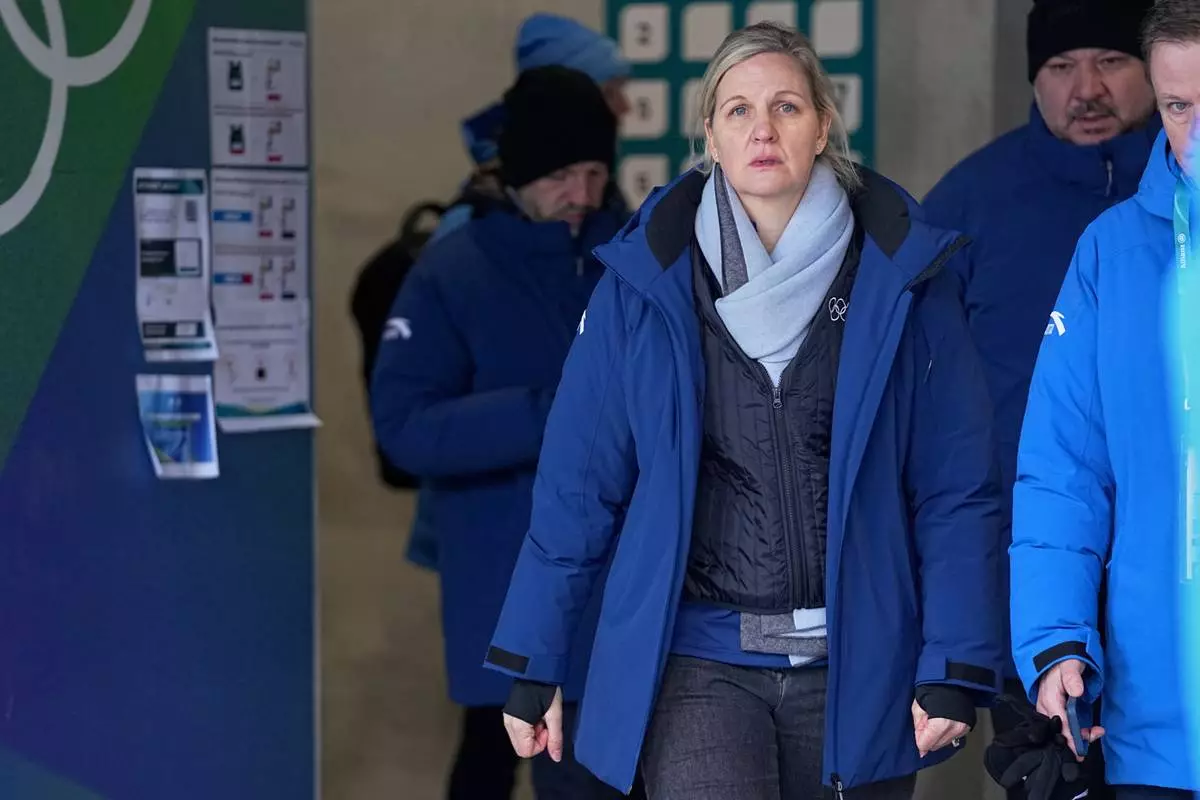
International Olympic Committee President Kirsty Coventry leaves the start house of the sliding center at the 2026 Winter Olympics, in Cortina d'Ampezzo, Italy, Thursday, Feb. 12, 2026. (AP Photo/Fatima Shbair)

International Olympic Committee President Kirsty Coventry leaves the start house of the sliding center at the 2026 Winter Olympics, in Cortina d'Ampezzo, Italy, Thursday, Feb. 12, 2026. (AP Photo/Fatima Shbair)

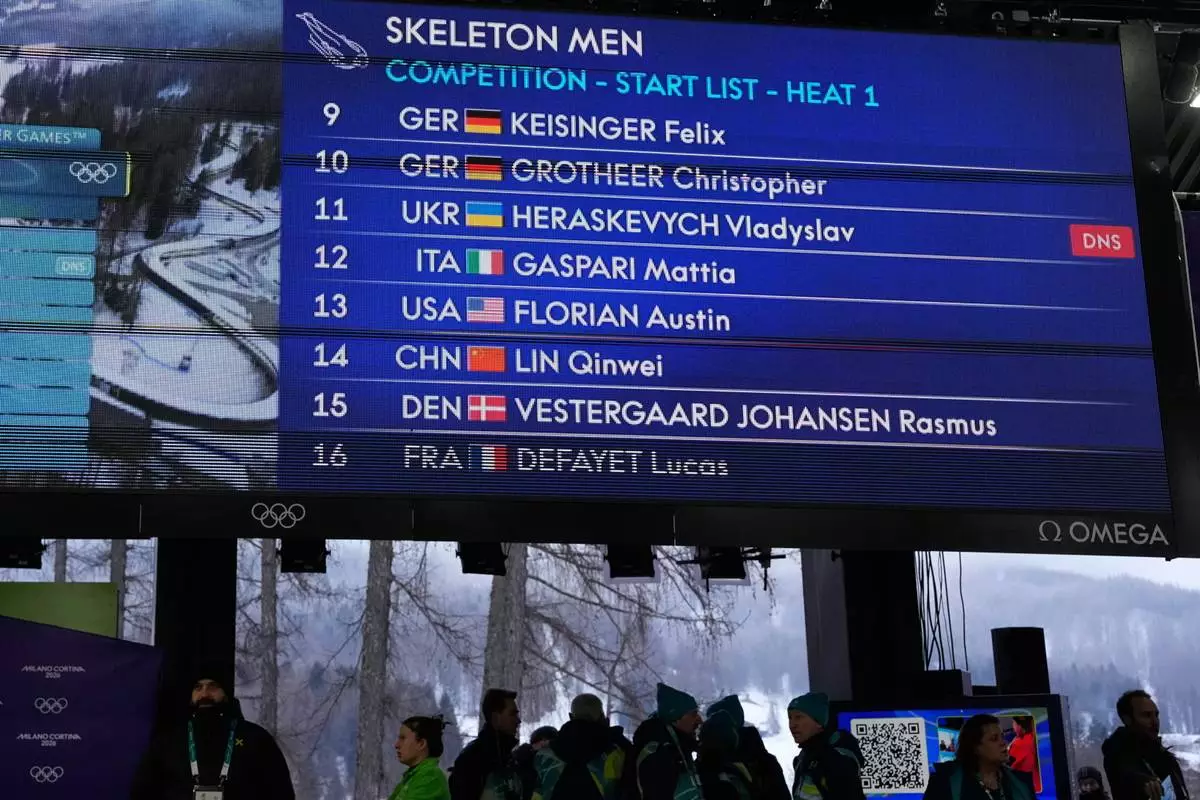
A scoreboard, that indicates that Ukrainian skeleton athlete Vladyslav Heraskevych did not start, is seen at the 2026 Winter Olympics, in Cortina d'Ampezzo, Italy, Thursday, Feb. 12, 2026. (AP Photo/Alessandra Tarantino)

A scoreboard, that indicates that Ukrainian skeleton athlete Vladyslav Heraskevych did not start, is seen at the 2026 Winter Olympics, in Cortina d'Ampezzo, Italy, Thursday, Feb. 12, 2026. (AP Photo/Alessandra Tarantino)

Ukraine's Vladyslav Heraskevych arrives at the finish during a men's skeleton training session at the 2026 Winter Olympics, in Cortina d'Ampezzo, Italy, Tuesday, Feb. 10, 2026. (AP Photo/Alessandra Tarantino)

Ukraine's Vladyslav Heraskevych arrives at the finish during a men's skeleton training session at the 2026 Winter Olympics, in Cortina d'Ampezzo, Italy, Tuesday, Feb. 10, 2026. (AP Photo/Alessandra Tarantino)

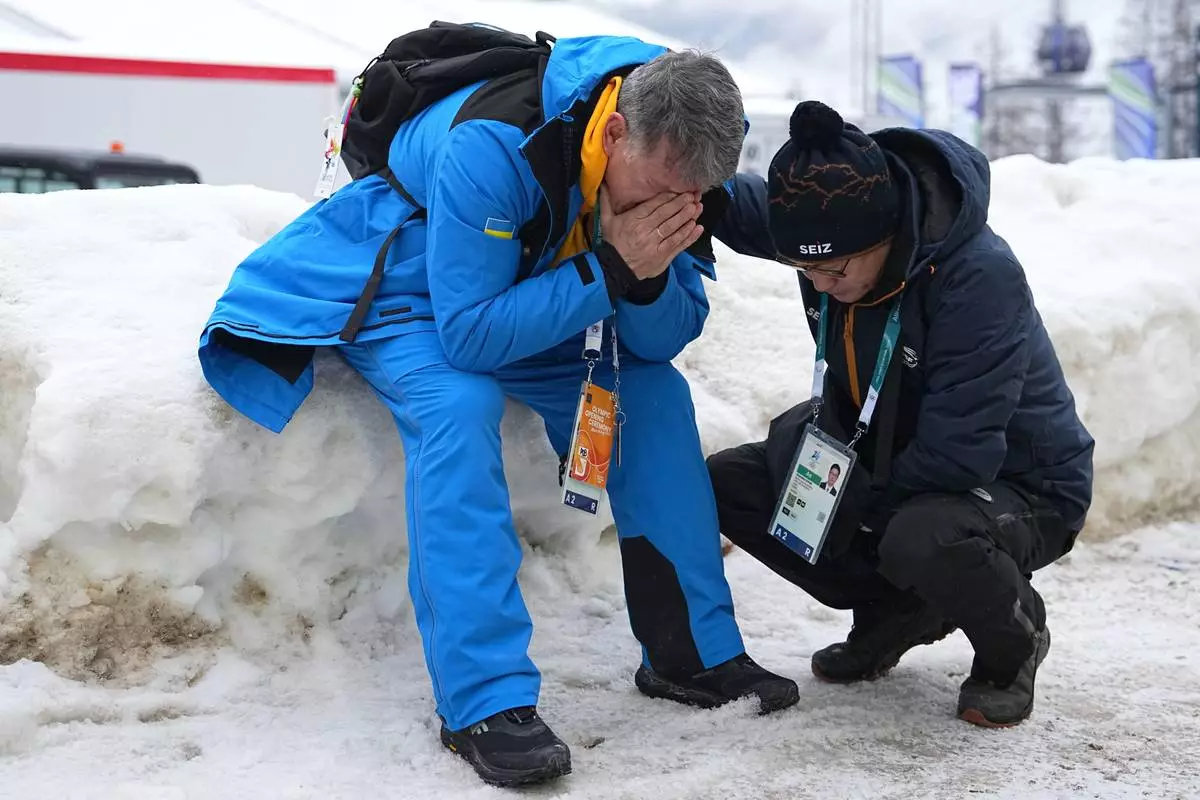
Mykhailo Heraskevych, father of Ukrainian skeleton athlete Vladyslav Heraskevych, reacts as he sits next to the start house of the sliding center at the 2026 Winter Olympics, in Cortina d'Ampezzo, Italy, Thursday, Feb. 12, 2026. (AP Photo/Fatima Shbair)

Mykhailo Heraskevych, father of Ukrainian skeleton athlete Vladyslav Heraskevych, reacts as he sits next to the start house of the sliding center at the 2026 Winter Olympics, in Cortina d'Ampezzo, Italy, Thursday, Feb. 12, 2026. (AP Photo/Fatima Shbair)

Ukrainian skeleton athlete Vladyslav Heraskevych talks to the media at the start house of the sliding center at the 2026 Winter Olympics, in Cortina d'Ampezzo, Italy, Thursday, Feb. 12, 2026. (AP Photo/Fatima Shbair)

Ukrainian skeleton athlete Vladyslav Heraskevych talks to the media at the start house of the sliding center at the 2026 Winter Olympics, in Cortina d'Ampezzo, Italy, Thursday, Feb. 12, 2026. (AP Photo/Fatima Shbair)

Ukraine's Vladyslav Heraskevych holds up his crash helmet during a press conference following a skeleton training session at the 2026 Winter Olympics, in Cortina d'Ampezzo, Italy, Tuesday, Feb. 10, 2026. (AP Photo/Steve Moore)

Ukraine's Vladyslav Heraskevych holds up his crash helmet during a press conference following a skeleton training session at the 2026 Winter Olympics, in Cortina d'Ampezzo, Italy, Tuesday, Feb. 10, 2026. (AP Photo/Steve Moore)

Ukraine's Vladyslav Heraskevych starts for a men's skeleton training session at the 2026 Winter Olympics, in Cortina d'Ampezzo, Italy, Wednesday, Feb. 11, 2026. (AP Photo/Aijaz Rahi)

Ukraine's Vladyslav Heraskevych starts for a men's skeleton training session at the 2026 Winter Olympics, in Cortina d'Ampezzo, Italy, Wednesday, Feb. 11, 2026. (AP Photo/Aijaz Rahi)

Ukraine's Vladyslav Heraskevych starts for a men's skeleton training session at the 2026 Winter Olympics, in Cortina d'Ampezzo, Italy, Wednesday, Feb. 11, 2026. (AP Photo/Aijaz Rahi)

Ukraine's Vladyslav Heraskevych starts for a men's skeleton training session at the 2026 Winter Olympics, in Cortina d'Ampezzo, Italy, Wednesday, Feb. 11, 2026. (AP Photo/Aijaz Rahi)

Ukraine's Vladyslav Heraskevych starts for a men's skeleton training session at the 2026 Winter Olympics, in Cortina d'Ampezzo, Italy, Wednesday, Feb. 11, 2026. (AP Photo/Aijaz Rahi)

Ukraine's Vladyslav Heraskevych starts for a men's skeleton training session at the 2026 Winter Olympics, in Cortina d'Ampezzo, Italy, Wednesday, Feb. 11, 2026. (AP Photo/Aijaz Rahi)

Ukraine's Vladyslav Heraskevych, left, talks to the media during a men's skeleton training session at the 2026 Winter Olympics, in Cortina d'Ampezzo, Italy, Wednesday, Feb. 11, 2026. (AP Photo/Alessandra Tarantino)

Ukraine's Vladyslav Heraskevych, left, talks to the media during a men's skeleton training session at the 2026 Winter Olympics, in Cortina d'Ampezzo, Italy, Wednesday, Feb. 11, 2026. (AP Photo/Alessandra Tarantino)

Recommended Articles