BERLIN (AP) — Germany’s referees are under scrutiny after a plethora of questionable decisions and incorrect calls compounded by anger over the video assistant referees’ failure to correct them.
It's leading to widespread frustration among players and coaches, while fans' patience is tested by lengthy VAR checks that don't always bring clarity, or contentious calls that aren't checked at all.
The latest example came in the German Cup on Wednesday when Leipzig was aggrieved not to be awarded at least a free kick after Bayern Munich defender Josip Stanišić clearly fouled Antonio Nusa on the edge of the penalty area early in Bayern’s 2-0 win.
“It’s absolutely crazy,” Leipzig coach Ole Werner said. “If four people can’t see that as a foul then it’s not quarterfinal level, I’m sorry.”
Bayern also had a questionable call go its way in the Bundesliga against Hoffenheim last weekend, when defender Kevin Akpoguma was sent off early. There was no VAR intervention.
The previous weekend, there were contentious decisions in Bundesliga games between Eintracht Frankfurt and Bayer Leverkusen, Leipzig and Mainz, Hoffenheim and Union Berlin, and Augsburg’s match against St. Pauli.
Augsburg midfielder Elvis Rexhbeçaj called for VAR to be scrapped altogether after he was incorrectly penalized in the subsequent game against Mainz. A minutes-long delay for VAR failed to correct referee Patrick Ittrich’s erroneous call. Ittrich acknowledged his mistake after the match but by then it was too late.
“The biggest problem is there’s no common denominator,” Dortmund coach Niko Kovač said. “Whoever is sitting in the studio or whoever is refereeing has a different perception and that makes it difficult. Regardless of who’s sitting there the decisions should be consistent.”
Bayern visits relegation-threatened Werder Bremen on Saturday. The league leader has recovered from an uncharacteristic two-game run without a win and shouldn’t face many problems against a team that failed to get a bounce in new coach Daniel Thione ’s debut last weekend. Bremen is 11 games without a win.
Borussia Dortmund hosts Mainz on Friday when it will aim to maintain some pressure on Bayern by provisionally cutting the gap to three points with its sixth consecutive win. But Mainz has won its last three.
The battle for Champions League qualification remains intense with six points between third-placed Hoffenheim and sixth-placed Leverkusen. Only the top four qualify for Europe’s most lucrative competition. Hoffenheim hosts Freiburg on Saturday, when Leverkusen hosts St. Pauli and fifth-placed Stuttgart hosts Cologne. Leipzig, which is ahead of Stuttgart on goal difference, welcomes Wolfsburg on Sunday.
Colombia star Luis Díaz is in arguably the form of his life with five goals in his last three games for Bayern, including Wednesday’s cup win over Leipzig and a hat trick against Hoffenheim last weekend.
Christoph Baumgartner scored two in Leipzig’s 2-1 win over Cologne and the Austria midfielder is instrumental to the team’s Champions League push.
Nadiem Amiri has led Mainz’s revival under new coach Urs Fisher. Amiri scored two penalties last weekend to lift Mainz up to 14th. The team has lost only once in eight league games under Fischer. There were nine defeats in 13 games before that.
South Korea forward Lee Jae-sung has extended his contract at Mainz. The 33-year-old Lee has 28 goals in 159 games for Mainz since joining in a free transfer from Holstein Kiel in 2021. Mainz did not divulge the length of his new deal. His contract had been due to expire at the end of the season.
AP soccer: https://apnews.com/hub/soccer
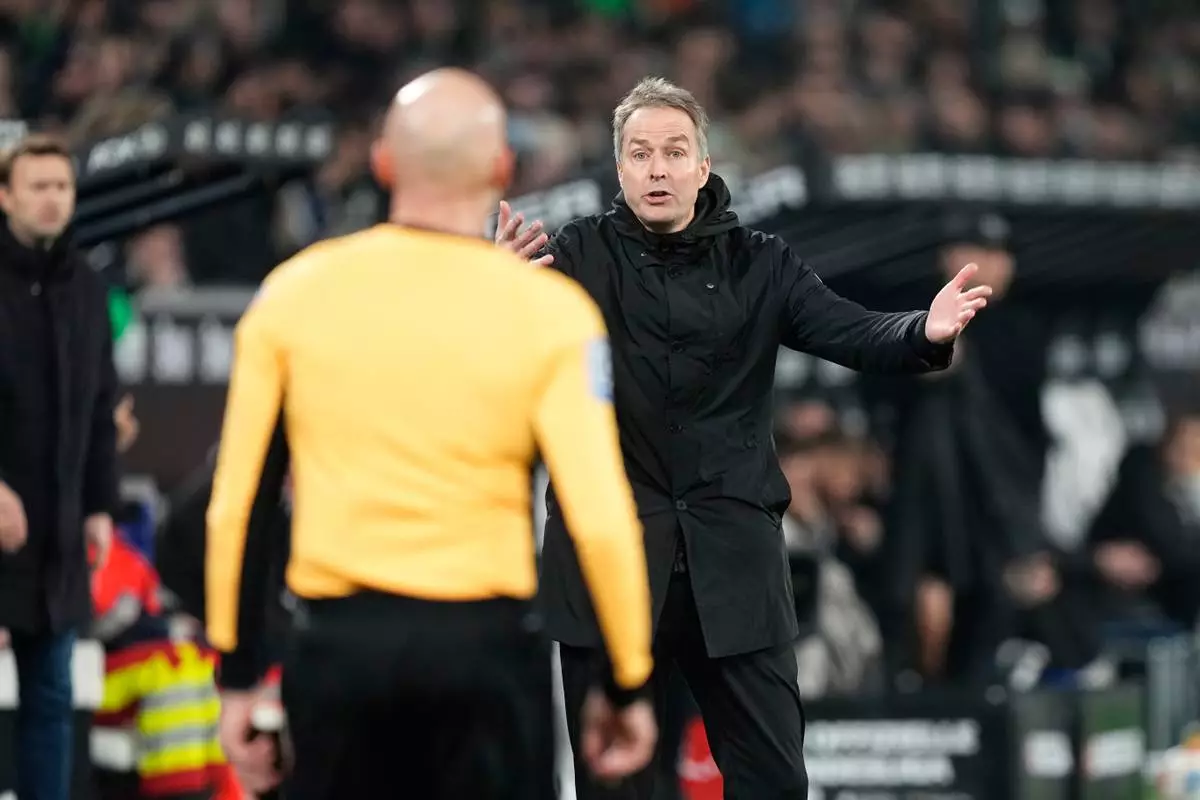
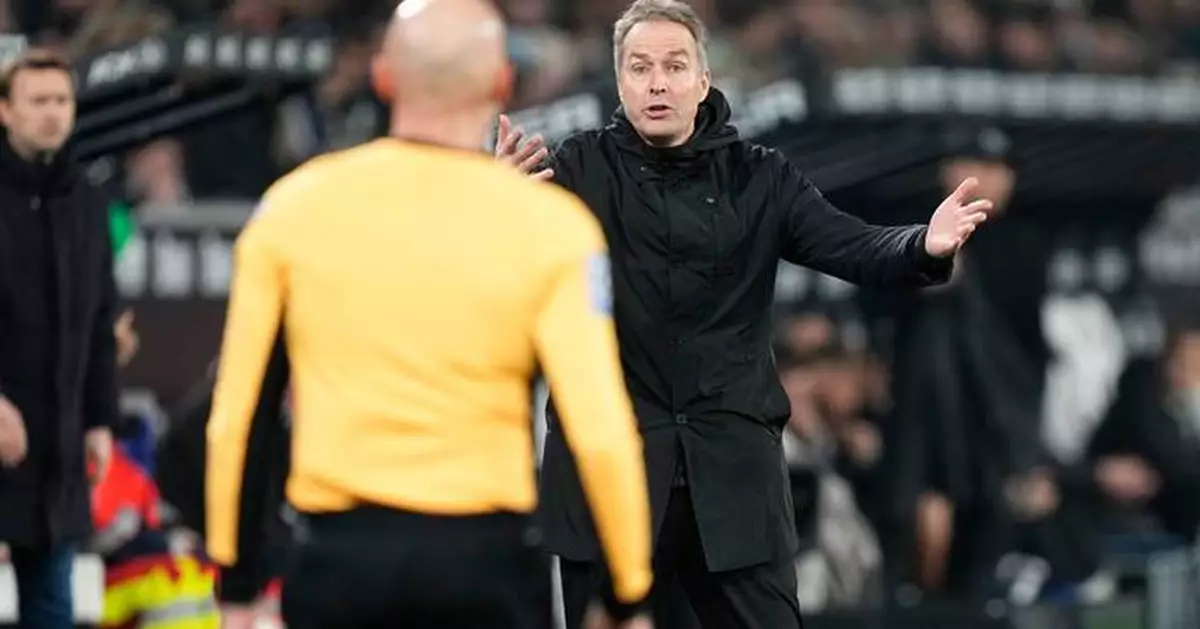
Leverkusen's head coach Kasper Hjulmand reacts during the German Bundesliga soccer match between Borussia Moenchengladbach and Bayer Leverkusen in Moenchengladbach, Germany, Saturday, Feb. 7, 2026. (AP Photo/Martin Meissner)
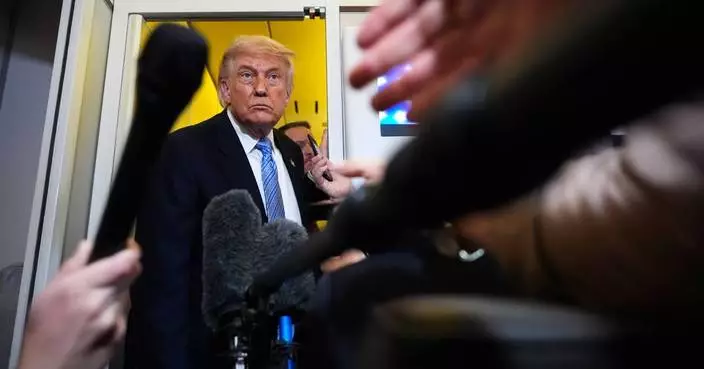
HELSINGBORG, Sweden (AP) — NATO allies and defense officials expressed bewilderment Friday at U.S. President Donald Trump’s announcement that he would send 5,000 U.S. troops to Poland just weeks after ordering the same number of forces pulled out of Europe.
The apparent change of mind came after weeks of statements from Trump and his administration about reducing — not increasing — the U.S. military footprint in Europe. Trump's initial order set off a flurry of action among military commanders and left allies already doubtful about America's commitment to Europe's security to ponder what forces they might have to backfill on NATO's eastern flank with Russia and Ukraine.
Earlier this month, the Trump administration said it was reducing levels in Europe by about 5,000 troops, and U.S. officials confirmed about 4,000 service members were no longer rotating into Poland from Germany. The dispatch to Germany of U.S. personnel trained to fire long-range missiles was also halted.
But in a post on Truth Social on Thursday, Trump said he would now send "an additional 5,000 Troops to Poland,” citing his strong ties with Polish President Karol Nawrocki, whom Trump endorsed in elections last year.
“It is confusing indeed, and not always easy to navigate,” Swedish Foreign Minister Maria Malmer Stenergard told reporters Friday at a meeting she was hosting of her NATO counterparts, including U.S. Secretary of State Marco Rubio.
Ministers from the Netherlands and Norway were sanguine about Trump’s latest move, as was Latvian Foreign Minister Baiba Braže, who said allies knew the U.S. troop “posture was being reconsidered, and now there is no change of posture. For now.”
U.S. defense officials also expressed confusion. “We just spent the better part of two weeks reacting to the first announcement. We don’t know what this means either,” said one of two officials who spoke on condition of anonymity to discuss sensitive military matters.
But Rubio said Washington’s allies understand that changes in the U.S. troop presence in Europe will come as the Trump administration reevaluates its force needs. “I think there’s a broad recognition that there are going to be eventually less U.S. troops in Europe than there has historically been for a variety of reasons,” he said.
The latest surprise came despite a U.S. pledge to coordinate troop deployments, including one from NATO’s top military officer, U.S. Lt. Gen. Alex Grynkewich, on Wednesday.
Trump's initial announcement that he would withdraw troops came as he fumed over remarks by German Chancellor Friedrich Merz, who said that the U.S. was being “humiliated” by the Iranian leadership and criticized what he called a lack of strategy in that war.
Trump told reporters that the U.S. would be cutting even more than 5,000 and also announced new tariffs on European cars. Germany is the continent’s biggest auto producer.
Rubio insisted that Trump’s decision “is not a punitive thing. It’s just something that’s ongoing.”
About 80,000 U.S. troops are stationed in Europe. The Pentagon is required to keep at least 76,000 troops and major equipment on the continent unless NATO allies are consulted and there is a determination that such a withdrawal is in U.S. interests.
The withdrawal of 5,000 troops might drop numbers below that limit.
But Trump's latest post suggests that troop numbers in Europe would not change. Polish Foreign Minister Radek Sikorski welcomed the decision to send more forces to his country, saying it ensures that “the presence of American troops in Poland will be maintained more or less at previous levels.”
NATO Secretary-General Mark Rutte also welcomed the move. On Thursday, before Trump took to Truth Social again, Rutte had underlined that it was important for Europe to take care of its own security. “We have a process in place. This is normal business,” he told reporters.
At NATO headquarters in Brussels, meanwhile, U.S. officials briefed the allies on the Pentagon's aims for its commitments to the NATO Force Model, which involves contingency planning for Europe’s defense in the event of serious security concerns. It was widely expected that a further reduction of U.S. forces would be coming.
Asked whether any cuts were announced, Rutte said: “I’m afraid it’s much more complicated than that.” He said the procedure “is highly classified” and declined to give details.
Rubio played down concerns about a shift in U.S. force levels in Europe, saying: "Every country has to constantly reevaluate what their needs are, what their commitments are around the world, and how to properly structure that.”
Cook reported from Brussels. Associated Press writer Emma Burrows in London contributed.
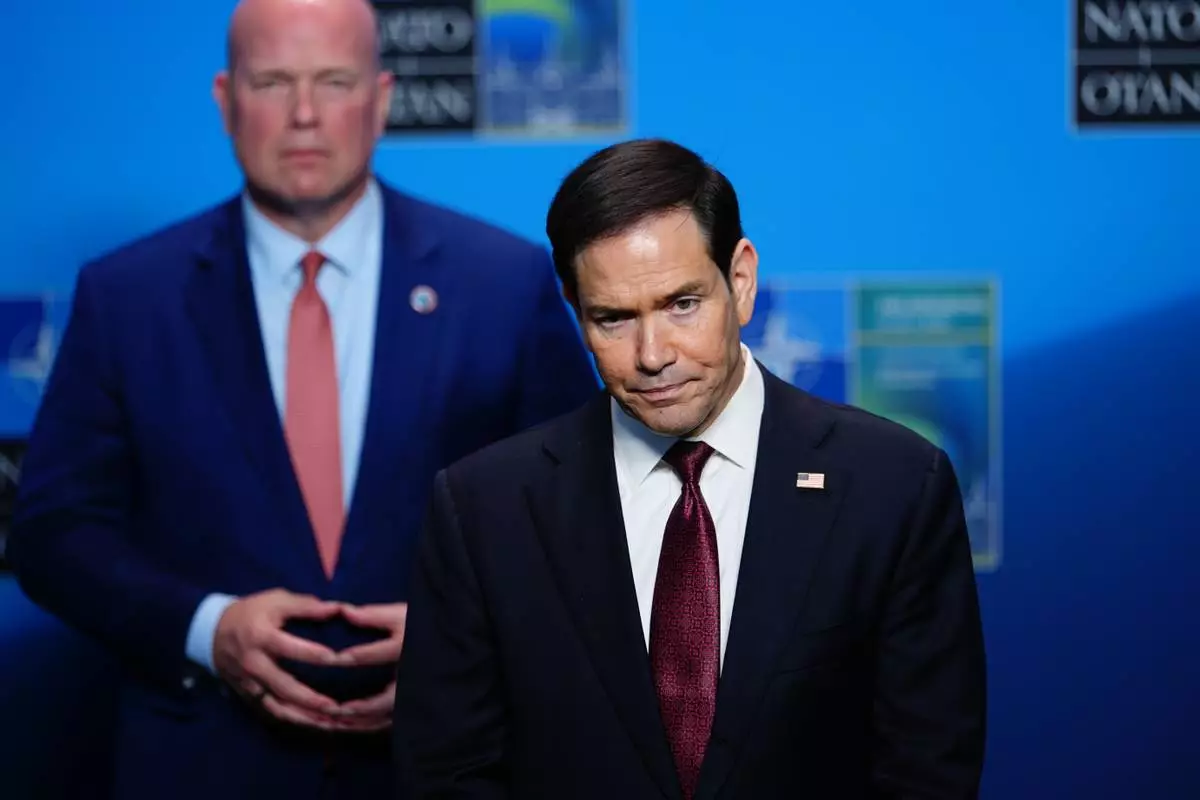
United States Secretary of State Marco Rubio speaks with journalists during a meeting of NATO foreign ministers in Helsingborg, Sweden, Friday, May 22, 2026. (AP Photo/Julia Demaree Nikhinson, Pool)
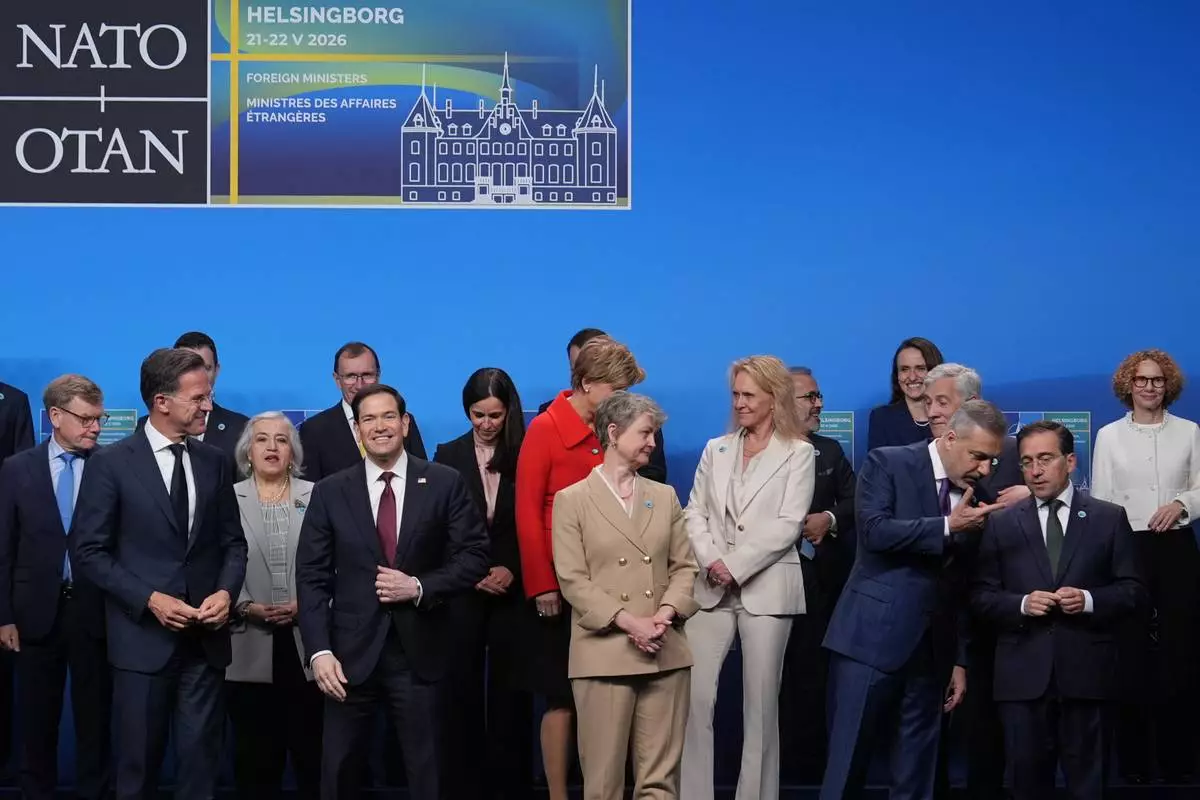
United States Secretary of State Marco Rubio, front second left, and NATO Secretary General Mark Rutte, front left, speak with each other during a group photo at a meeting of NATO foreign ministers in Helsingborg, Sweden, Friday, May 22, 2026. (AP Photo/Julia Demaree Nikhinson, Pool)
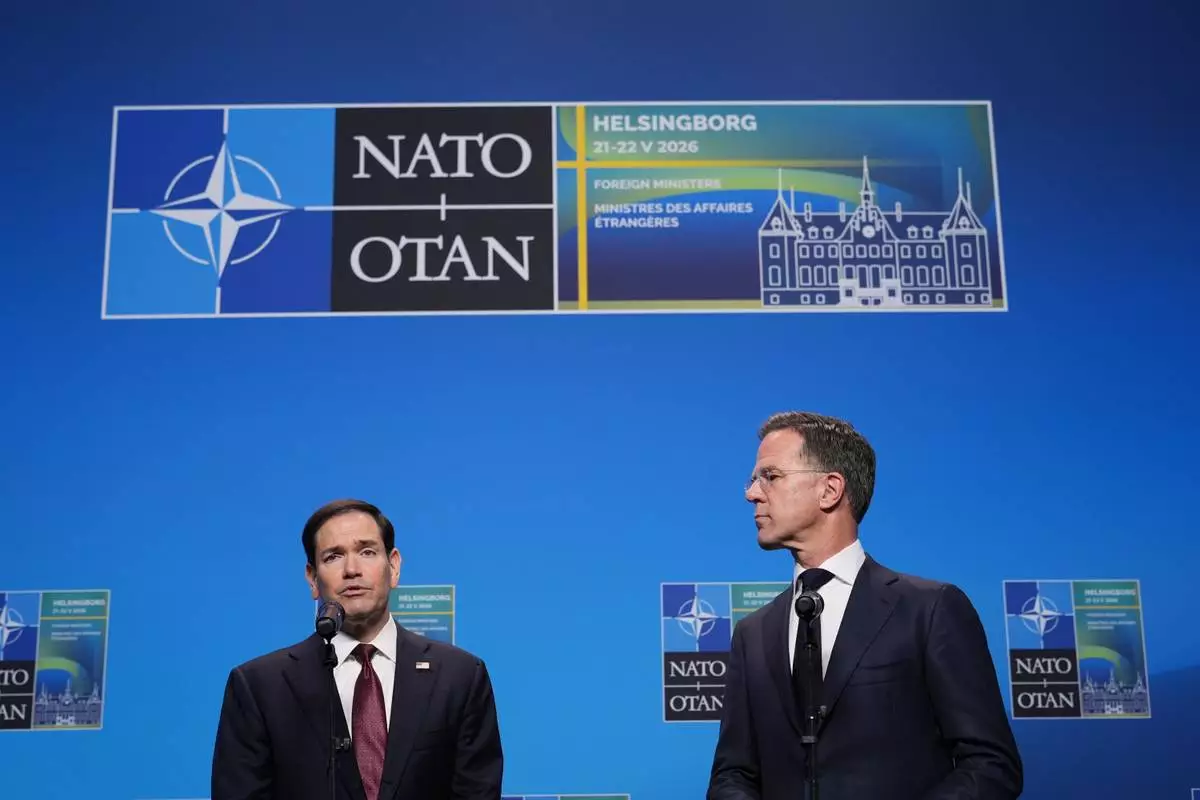
United States Secretary of State Marco Rubio, left, and NATO Secretary General Mark Rutte look at each other as they deliver a statement during a meeting of NATO foreign ministers in Helsingborg, Sweden, Friday, May 22, 2026. (AP Photo/Julia Demaree Nikhinson, Pool)
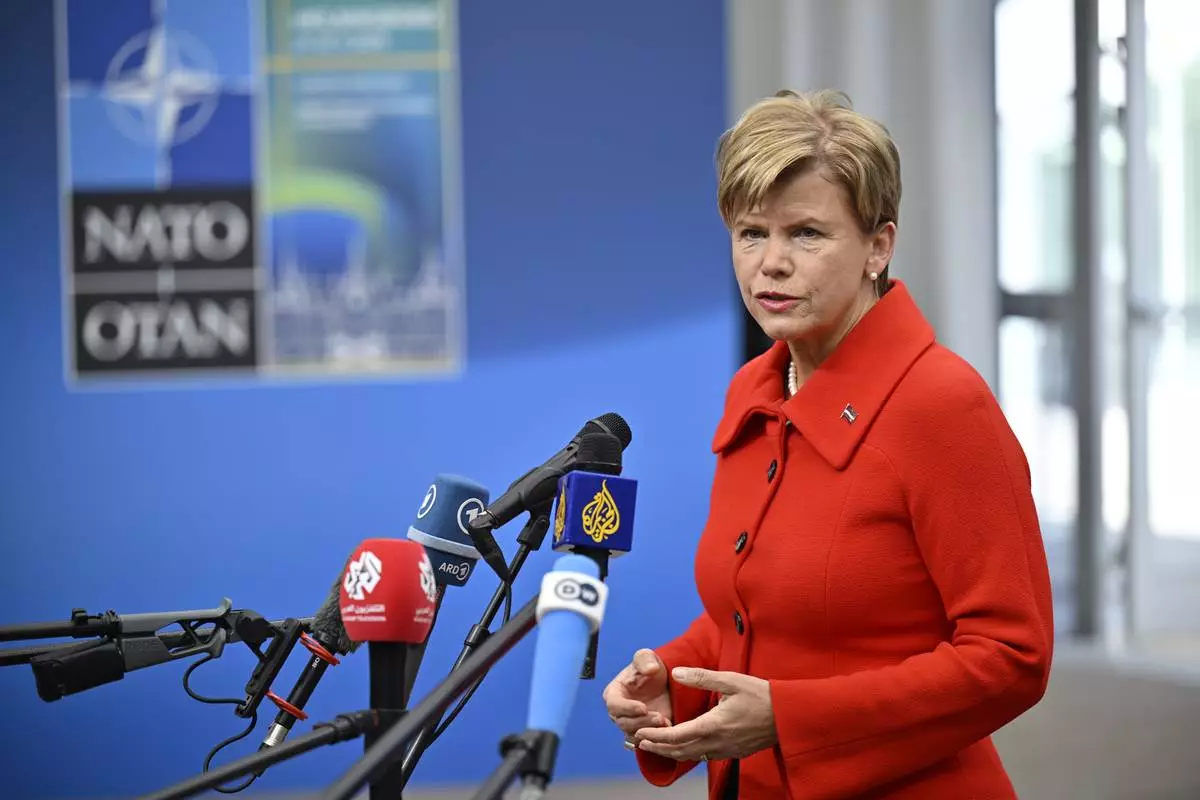
Latvian Foreign Minister Baiba Braže speaks at the doorstep of the NATO foreign ministers' meeting at Sea U in Helsingborg, Sweden, Friday, May 22, 2026. (Johan Nilsson/TT News Agency via AP)
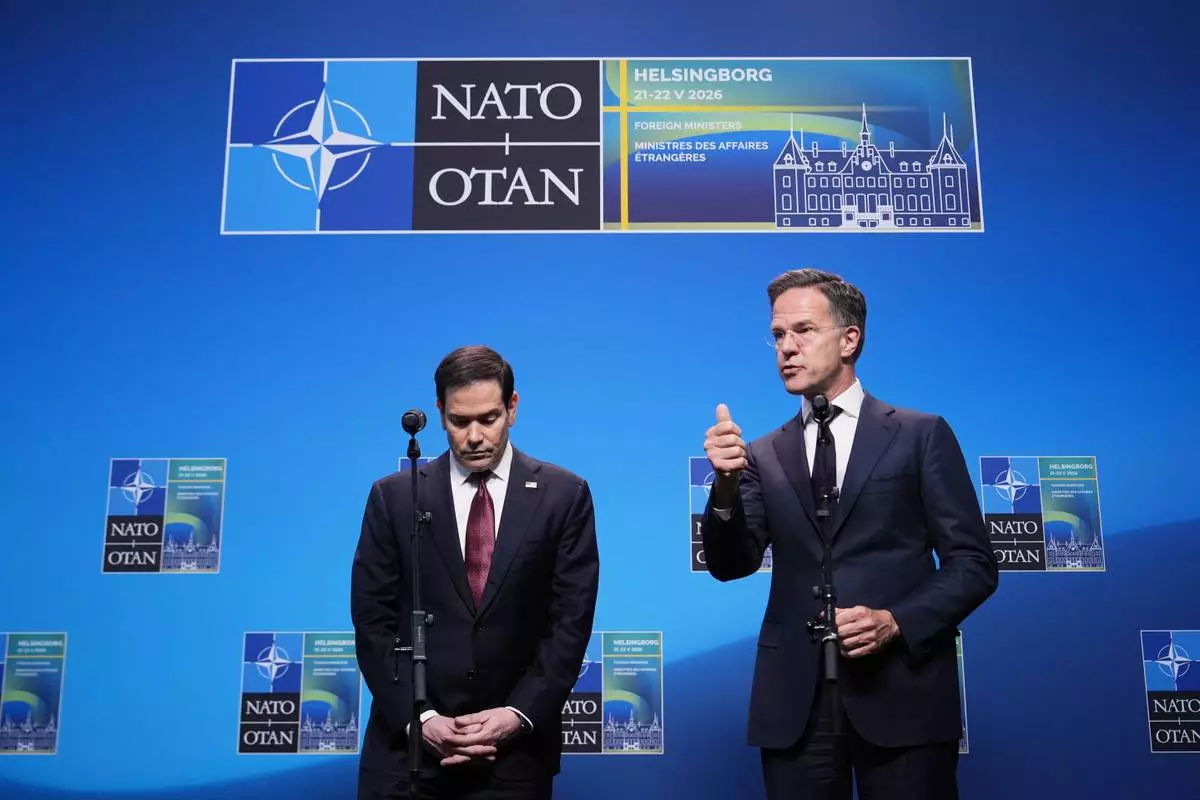
United States Secretary of State Marco Rubio, left, and NATO Secretary General Mark Rutte deliver a statement during a meeting of NATO foreign ministers in Helsingborg, Sweden, Friday, May 22, 2026. (AP Photo/Julia Demaree Nikhinson, Pool)
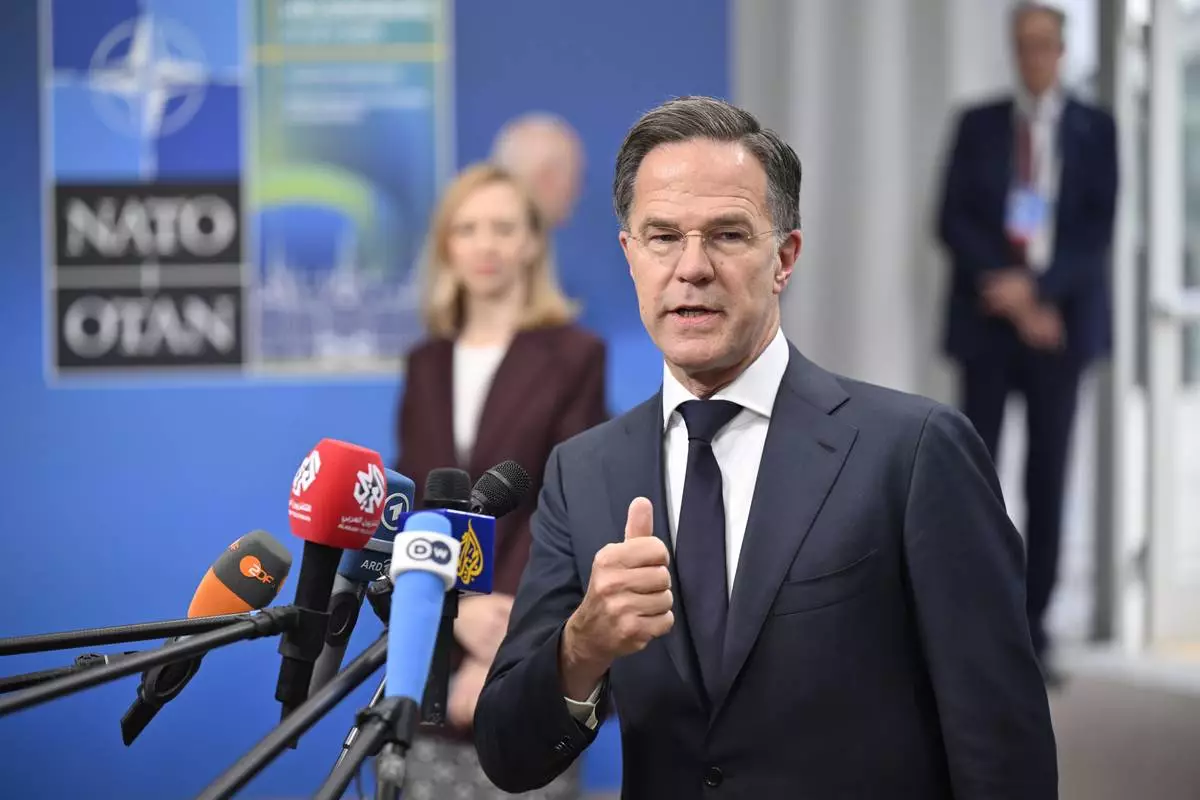
NATO Secretary General Mark Rutte speaks to media at the NATO Foreign Ministers' meeting in Helsingborg, Sweden, Friday, May 22, 2026. (Johan Nilsson/TT News Agency via AP)
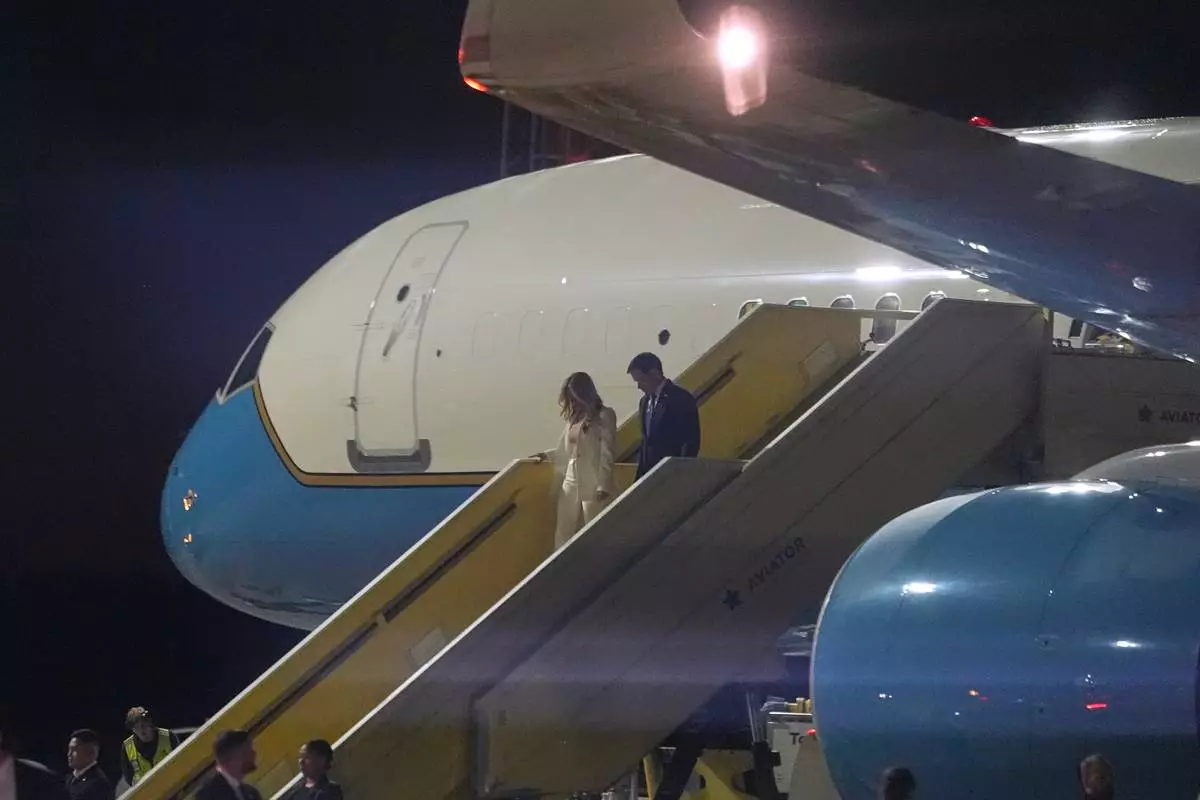
Secretary of State Marco Rubio arrives with his wife Jeanette at Malmo Airport, Friday, May 22, 2026, in Malmo-Sturup, Sweden, ahead of a NATO foreign ministers meeting. (AP Photo/Julia Demaree Nikhinson, Pool)
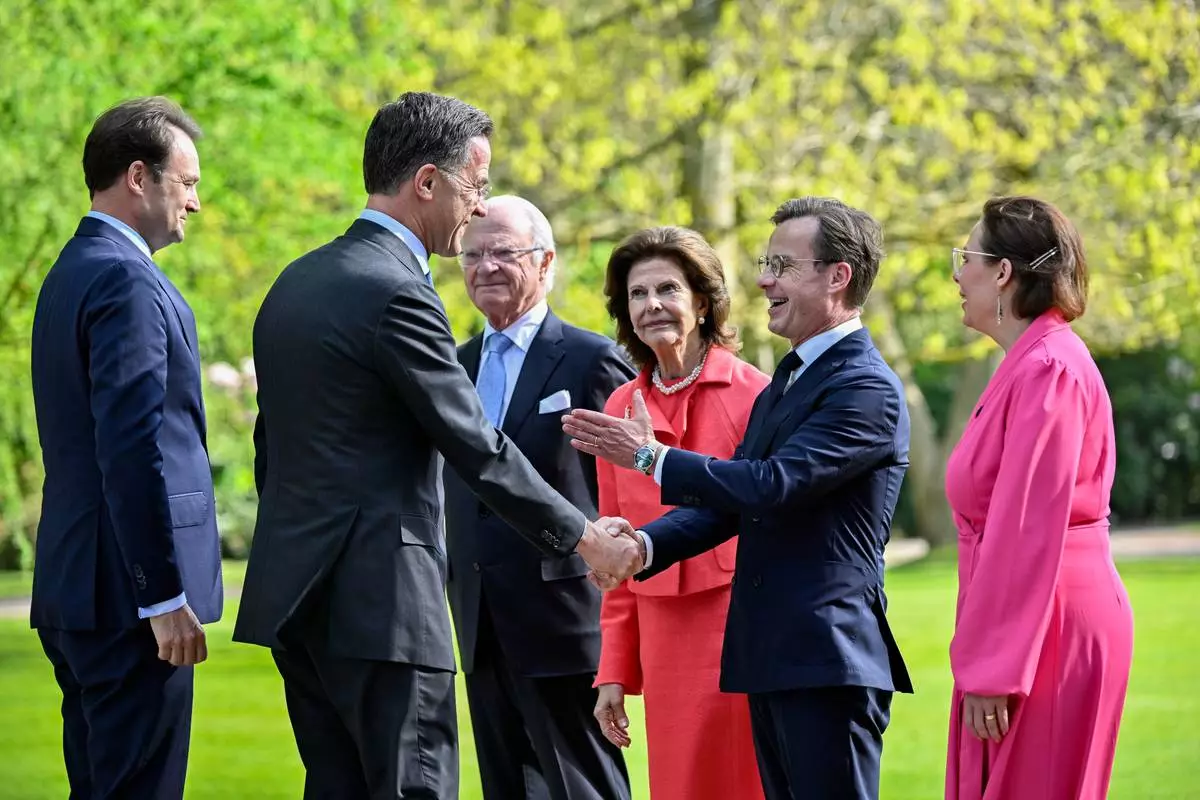
NATO Secretary General Mark Rutte, second from left, shakes hands with Prime Minister of Sweden Ulf Kristersson, as he is greeted by King Carl Gustaf of Sweden, Queen Silvia of Sweden and Minister for Foreign Affairs of Sweden Maria Malmer Stenergard, right, before a dinner at Sofiero Castle in Helsingborg, Sweden, Thursday May 21 2026. (Johan Nilsson/TT News Agency via AP)
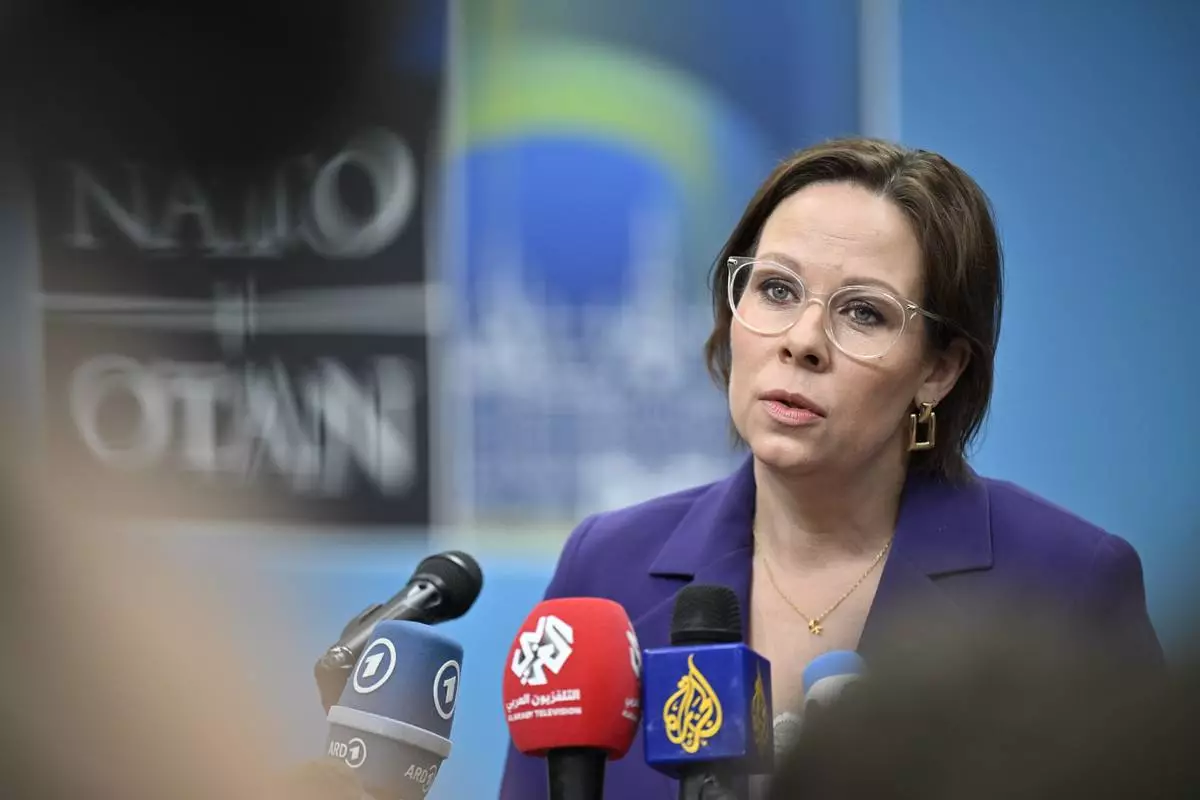
Swedish Foreign Minister Maria Malmer Stenergard speaks to media at the NATO Foreign Ministers' meeting in Helsingborg, Sweden, Friday, May 22, 2026. (Johan Nilsson/TT News Agency via AP)