The newly-released tranche of documents relating to the case of late U.S. financier and convicted sex offender Jeffery Epstein exposes a degree of hypocrisy at the top of U.S. politics and a judicial system that shields the elite, while keeping justice out of reach for the victims and ordinary citizens, political experts and a former U.S. official have said.
Late last month, the U.S. Department of Justice (DOJ) released the remaining batch of the so-called Epstein files, totaling some three million pages, with 2,000 video segments and 180,000 images included, sparking serious scrutiny across the Atlantic and in several other countries. It prompted the resignation of several political figures over the nature of their ties to Epstein, who died under mysterious circumstances while in federal custody in 2019.
The scale of the case and the profiles of the people allegedly involved has shocked the world. The handling of the files themselves has been another source of outrage, with numerous redactions raising further questions about who is being protected, while errors by the DOJ exposed a significant amount of victim information, including the names and personal details of nearly 100 victims, causing further fury.
U.S. Deputy Attorney General Todd Blanche admitted mistakes had been made in the release, citing the sheer volume of files which he described as being like "two Eiffel towers" of stacked documents.
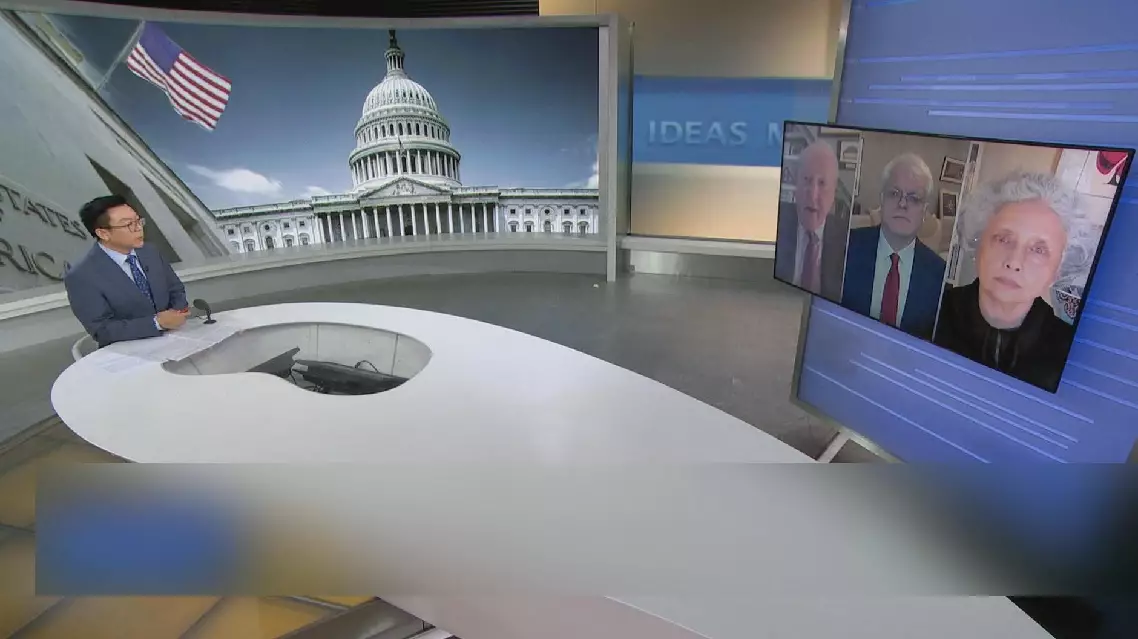
In an interview with the China Global Television Network (CGTN), Gene Rossi, a former U.S. federal prosecutor, said that only half of the collected material was released, raising questions over whether the reputation and interests of certain groups was being safeguarded. He stressed that the omissions go beyond bureaucratic error, pointing to what he views as the deliberate concealment of evidence tied to decades of sex trafficking.
"He (Blanche) is absolutely, categorically wrong when he said that his first Eiffel Tower production of documents complies with the law. It does not. One, he divulged victims names. Two, they whited out and redacted information that should have been disclosed. Three, they should have provided to the public that draft indictment which lists the other conspirators, which are probably men. And they were protecting the men who were involved in this horrendous sex trafficking operation that was going on for decades," Rossi said.
Josef Mahoney, a professor of politics and international relations at East China Normal University in Shanghai, suggested that senior politicians may have sought to take control of the investigation in order to shield themselves. He emphasized that the problem goes far beyond the mishandling of documents, and pointed to a deep politicization of U.S. institutions.
"It's not just that the DOJ, the Department of Justice, has been so heavily politicized. The FBI has also been heavily politicized. Even the National Archives with [U.S. Secretary of State] Marco Rubio heading the national records has been heavily politicized. And of course, Congress has not lived up to its constitutional mandate of curtailing executive excesses. And because, as has been stated, because the president has been repeatedly implicated in possibly inappropriate relations up to being compromised by a foreign government, not just with Epstein, but the foreign government. I don't think we can ever trust this government to give us a fair and honest accounting," Mahoney said.
Radhika Desai, professor of political studies at the University of Manitoba, said the victims deserve justice but are unlikely to get it. She stressed that the Epstein case potentially implicates those at the very top of American society, where wealth and power has seemingly enabled perpetrators to hide from accountability.
"The very fact that Trump had to make the campaign promise to release these files shows you how much support there is to release those files because Trump is willing to promise anything in order to get elected and this is one of those promises. So that's what he did and so we are now in this kind of very complex situation. But I suspect that justice for the victims: those who are dead, those who have been abused, those who have committed suicide, I think that's going to be a long way away if at all they will get anything because this involves extremely rich and powerful people, the very top of American society. And I just don't think, unless there is a massive fundamental change in the political forces that rule the United States, that you will see justice," Desai said.
Mahoney added that the case has shown how those on both sides of the political divide are complicit in hypocrisy, with both Democrats and Republicans appearing to act as adversaries in public while colluding privately.
"I was not surprised to find people like left wing hero Noam Chomsky not only rubbing shoulders with people like Epstein or right-wing hero (Steve) Bannon, but representing values completely at odds with those generally ascribed to him. Suggesting the American left and right are complicit adversaries in public while colluding with each other privately in so much as both our elites benefiting from the same system. Now this I believe exposes what many perceive to be the hypocrisy of the American system, which more often than not provides a dramatic performance of democracy, but is in fact a system of elite manipulation of the masses," said Mahoney.
Epstein case exposes hypocrisy, reveals failure of US judicial system which protects elites: experts