NEW YORK (AP) — Since Robert F. Kennedy Jr. was sworn in to lead the U.S. Department of Health and Human Services one year ago, he has defended his upending of federal health policy by saying the changes will restore trust in America’s public health agencies.
But as the longtime leader of the anti-vaccine movement scales back immunization guidance and dismisses scientists and advisers, he has clashed with top medical groups who say he is not following the science.
The confrontation is deepening confusion that surged during the COVID-19 pandemic. Surveys show trust in the agencies Kennedy leads is falling, not rising, as the country's health landscape undergoes dramatic change.
Kennedy says he aims to boost transparency to empower Americans to make their own health choices. Doctors counter that the false and unverified information he promotes is causing major, perhaps irreversible, damage — and that if enough people forgo vaccination, it will prompt a surge of illness and death.
People once trusted health agencies regardless of party, and the government reported “the best of what science knows at this point,” said Kathleen Hall Jamieson, director of the Annenberg Public Policy Center at the University of Pennsylvania.
"Now, you cannot confidently go to federal websites and know that," she said.
HHS spokesman Andrew Nixon said that trust had suffered during the Biden administration. “Kennedy’s mandate is to restore transparency, scientific rigor, and accountability,” he said.
New findings from the health care research nonprofit KFF show that 47% of Americans trust the U.S. Centers for Disease Control and Prevention “a great deal” or “a fair amount” to provide reliable vaccine information, down about 10 percentage points since the beginning of Trump’s second term.
Trust among Democrats dropped 9 percentage points since September, to 55%, the survey found. Trust among Republicans and independents hasn't changed since September, but it has declined somewhat among both groups since the beginning of Trump’s term.
Even among supporters of Kennedy’s Make America Healthy Again movement, fewer than half say they trust agencies like the CDC and Food and Drug Administration “a lot” or “some” to make recommendations about childhood vaccine schedules.
Gallup surveys also show a drop in Americans who believe the CDC is doing a “good job,” from 40% in 2024 to 31% last year.
Those results came alongside a decline of trust across the government, not just agencies under Kennedy’s oversight. Yet concerns about Kennedy’s trustworthiness also have emerged, including through documents recently obtained by The Associated Press and The Guardian, which undermine his statements about his motive behind a 2019 trip to Samoa, prompting senators to accuse Kennedy of lying.
Historically, federal scientific and public health agencies enjoyed strong ratings in opinion polls. The CDC for decades scored above many other government agencies in Gallup surveys asking whether they were doing a “good” or “excellent” job.
Two decades ago, more than 60% of Americans gave the CDC high marks, according to Gallup. But that number plummeted at the beginning of the COVID-19 pandemic, amid agency mistakes and guidance that some people didn’t like.
In 2020, the percentage of Americans who believed the CDC was doing at least a “good” job fell to 40% and then leveled off for a few years.
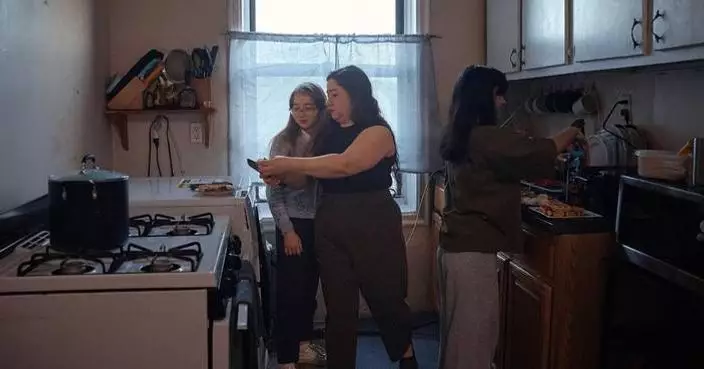
Alix Ellis, a hairstylist and mom in Madison, Georgia, lost her confidence in the CDC and other health agencies during the pandemic. She said some guidance didn't make sense. At her salon, stylists could work directly on someone’s hair, but others in the room had to be several feet away.
“I’m not saying that we were lied to, but that is when I was like, OK, ‘Why are we doing this?’ ” the 35-year-old said.
Part of Kennedy’s pitch as health secretary has been restoring Americans’ trust in public health.
“We’re going to tell them what we know, we’re going to tell them what we don’t know, and we’re going to tell them what we’re researching and how we’re doing it,” Kennedy told senators about the CDC last September. “It’s the only way to restore trust in the agency — by making it trustworthy.”
Before entering politics, Kennedy was one of the loudest voices spreading false information about immunizations. Now, he is trying to fix a trust problem he helped create, said Dr. Rob Davidson, a Michigan emergency physician.
“You fed those people false information to create the distrust, and now you’re sweeping into power and you’re going to cure the distrust by promoting the same disinformation,” said Davidson, who runs a doctor group called the Committee to Protect Health Care. “It’s upside-down.”
Kennedy has wielded the power of his office to take steps that diverge from medical consensus.
Last May, he announced COVID-19 vaccines were no longer recommended for healthy children and pregnant women, a move doctors called concerning and confusing.
In November, he directed the CDC to abandon its position that vaccines do not cause autism, without supplying new evidence. Earlier this year, the CDC reduced the number of vaccines recommended for every child, a decision medical groups said would undermine protections against a half-dozen diseases.
Kennedy also overhauled his department through canceled grants and mass layoffs. Last summer, Kennedy fired his CDC chief after less than a month over vaccine policy disagreements.
Some have applauded the moves. But surveys suggest many Americans do not.
“I have much less trust,” said Mark Rasmussen, a 67-year-old retiree in Danbury, Connecticut.
Shocked by Kennedy's dismantling of public health norms, professional medical groups have urged Americans not to follow new vaccine recommendations they say were adopted without public input or compelling evidence.
More than 200 public health and advocacy groups urged Congress to investigate Kennedy's change to the vaccine schedule. The American Medical Association, working with the University of Minnesota's Vaccine Integrity Project, this week announced a new evidence-based process for reviewing the safety of respiratory virus vaccines — something they say is needed since the government stopped doing that kind of systematic review.
Many Democratic-led states have created their own alliances to counter Kennedy's vaccine guidance.
“We see burgeoning confusion about which sources to trust and about which sources are real. That makes decision-making on an individual level much harder," said Dr. Megan Ranney, dean of the Yale School of Public Health.
She said she worried the confusion was contributing to the rise in diseases like whooping cough and measles, once largely eliminated in the U.S.
Surveys indicate growing public wavering over support for the measles-mumps-rubella vaccine. An August 2025 Annenberg survey found that 82% would be “very” or “somewhat” likely to recommend that an eligible child in their household get MMR vaccine, compared with 90% in November 2024.
HHS officials say they are promoting independent decision-making by families while working to reduce preventable diseases. They say reducing routine vaccine recommendations was meant to ensure parents vaccinate children against the riskiest diseases.
As Kennedy has pledged to restore trust, he has also urged people to come to their own conclusions.
“This idea that you should trust the experts," Kennedy said recently on The Katie Miller Podcast, “a good mother doesn’t do that.”
AP writer Amelia Thomson DeVeaux in Washington contributed to this report.
The Associated Press Health and Science Department receives support from the Howard Hughes Medical Institute’s Department of Science Education and the Robert Wood Johnson Foundation. The AP is solely responsible for all content.
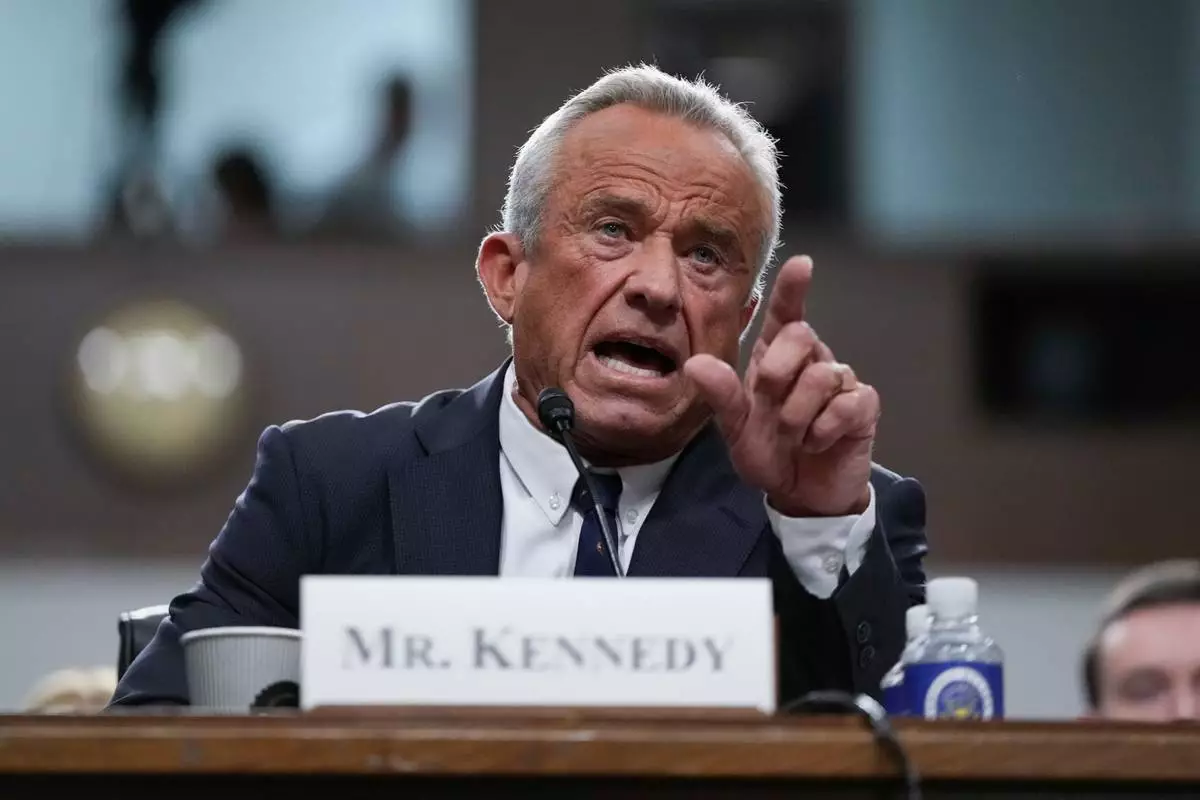
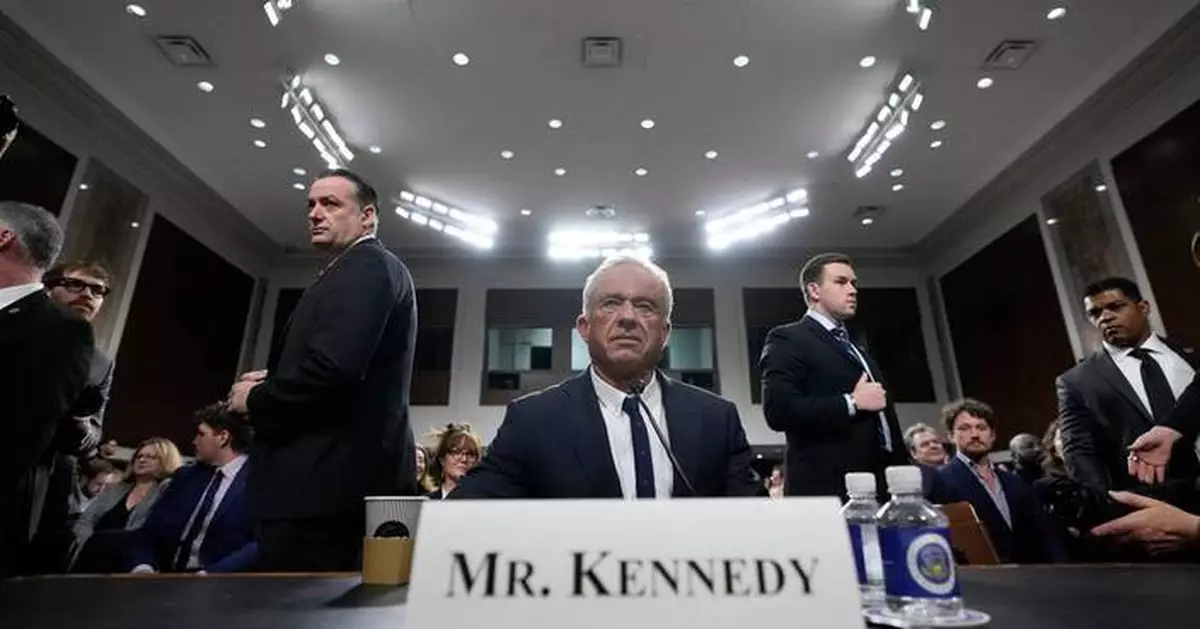
FILE - Robert F. Kennedy Jr., President Donald Trump's choice to be Secretary of Health and Human Services, appears before the Senate Finance Committee for his confirmation hearing, at the Capitol in Washington, Jan. 29, 2025. (AP Photo/Ben Curtis, file)
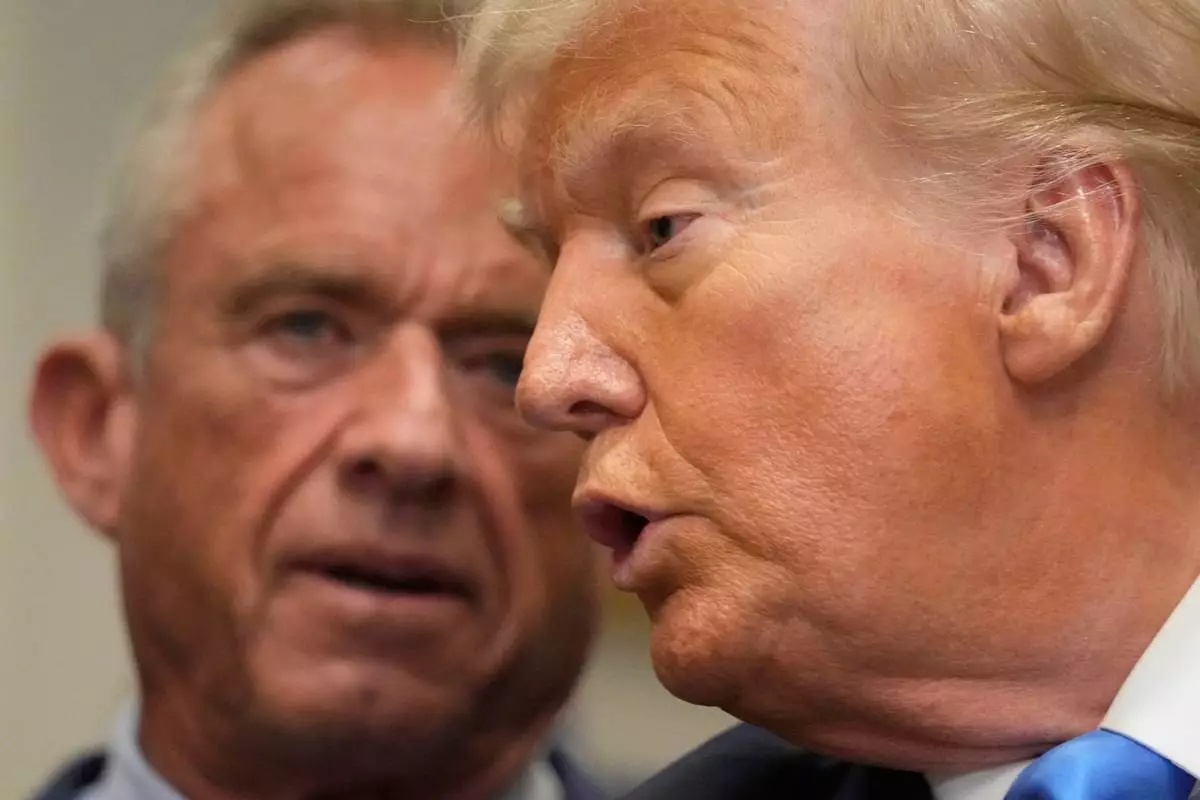
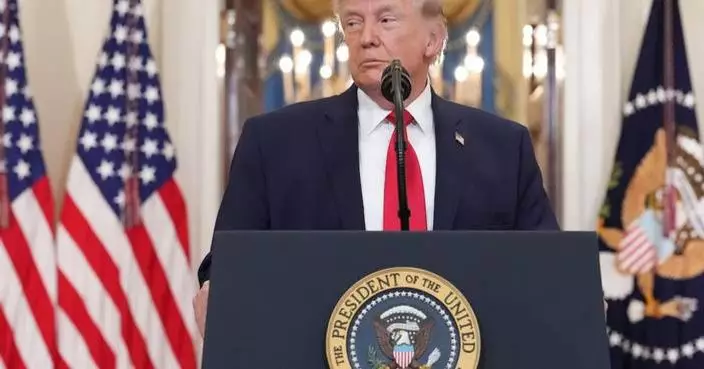
FILE - President Donald Trump speaks in the Roosevelt Room of the White House, Sept. 22, 2025, in Washington, as Health and Human Services Secretary Robert F. Kennedy Jr. listens. (AP Photo/Mark Schiefelbein)
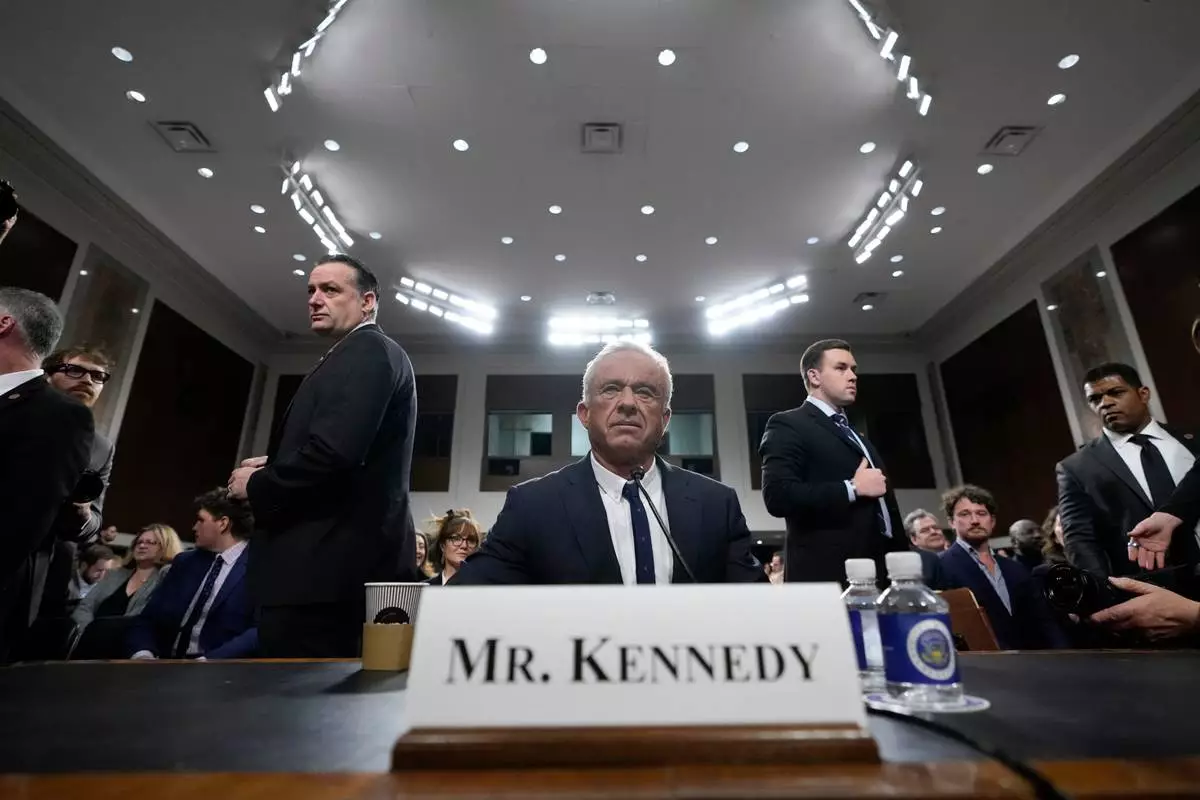
FILE - Robert F. Kennedy Jr., President Donald Trump's choice to be Secretary of Health and Human Services, appears before the Senate Finance Committee for his confirmation hearing, at the Capitol in Washington, Jan. 29, 2025. (AP Photo/Ben Curtis, file)