Sales of previously occupied U.S. homes fell sharply in January as higher home prices and possibly harsh winter weather kept many prospective homebuyers on the sidelines despite easing mortgage rates.
Existing home sales sank 8.4% last month from December to a seasonally adjusted annual rate of 3.91 million units, the National Association of Realtors said Thursday. That’s the biggest monthly decline in nearly four years and the slowest annual sales pace in more than two years.
Sales fell 4.4% compared with January last year. The latest sales figure fell short of the 4.105 million pace economists were expecting, according to FactSet.
“The decrease in sales is disappointing," said Lawrence Yun, NAR’s chief economist. "The below-normal temperatures and above-normal precipitation this January make it harder than usual to assess the underlying driver of the decrease and determine if this month’s numbers are an aberration.”
Home sales slowed sharply across the Northeast, Midwest, South and West. But sales had their biggest annual and monthly drop in the West, which wasn't as affect by last month's winter storm as the other regions of the country. Plus, there’s usually a month or two lag between a contract signing and when the sale is finalized, so many of January's sales reflect contracts signed late last year.
Despite the sharp drop in sales, home prices continued to climb last month. The national median sales price increased 0.9% in January from a year earlier to $396,800. Home prices have risen on an annual basis for 31 months in a row.
The U.S. housing market has been in a sales slump dating back to 2022, when mortgage rates began to climb from pandemic-era lows. The combination of higher mortgage rates, years of skyrocketing home prices and a chronic shortage of homes nationally following more than a decade of below-average home construction have left many aspiring homeowners priced out of the market. Sales of previously occupied U.S. homes remained stuck last year at 30-year lows.
Sales have been hovering close to a 4-million annual pace now going back to 2023. That’s well short of the 5.2-million annual pace that’s historically been the norm.
Still, mortgage rates have been trending lower for months, which helped give home sales a boost in December and brightened the outlook for the upcoming spring home-buying season — at least for home shoppers who can afford to buy at current rates.
Many of the homes purchased last month likely went under contract in November and December, when mortgage rates eased to their lowest levels of the year.
The average rate on a 30-year mortgage briefly dropped last month to 6.06%, the lowest level since September 2022, according to mortgage buyer Freddie Mac. It has since inched higher, remaining just above 6%, but close to a percentage point lower than a year ago.
Even so, affordability remains a challenge for many aspiring homeowners, especially first-time buyers who don’t have equity from an existing home to put toward a new home purchase. They accounted for 31% of homes sales last month. Historically, they made up 40% of home sales.
“Today we have minimal foreclosures, housing wealth continues to build out, it's just that renters who want to become homeowners are finding difficulty,” Yun said.
Uncertainty over the economy and job market are also likely keeping many would-be buyers on the sidelines.
While the economy has been registering solid growth, the labor market has been sluggish for months. U.S. job openings fell in December to the lowest level in more than five years. And while hiring by U.S. employers was surprisingly strong in January, government revisions reduced the number of jobs created last year to the weakest total since 2020, when the pandemic began.
The sales slowdown means more homes are staying on the market longer.
There were 1.22 million unsold homes at the end of January, down 0.8% from December and up 3.4% from January last year, NAR said. That’s still well short of the roughly 2 million homes for sale that was typical before the COVID-19 pandemic.
January’s month-end inventory translates to a 3.7-month supply at the current sales pace. Traditionally, a 5- to 6-month supply is considered a balanced market between buyers and sellers.
More homes traditionally go on the market ahead of the spring home-buying season, which could give prospective buyers a wider selection.
“Buyers will find a more favorable market as we head into spring,” said Lisa Sturtevant, chief economist at Bright MLS. “More inventory, lower rates and slower price growth will give buyers more room for negotiation.”

FILE - A sign promoting 100% financing is displayed outside a model home in the Colony Ridge development in Cleveland, Tx., Oct. 3, 2023. (AP Photo/David J. Phillip, File)
BRUSSELS (AP) — European allies at NATO on Thursday brushed aside concerns that the United States has stepped back from its leadership role of the world’s biggest security organization, leaving them and Canada to do the lion's share of defending Europe.
U.S. Defense Secretary Pete Hegseth did not attend Thursday’s gathering of defense ministers at NATO headquarters in Brussels. His no-show came after U.S. Secretary of State Marco Rubio skipped the last meeting of NATO foreign ministers in December.
It’s rare for members of a U.S. administration to miss a meeting of the organization’s top decision-making body, the North Atlantic Council, let alone two in a row. U.S. Under Secretary of Defense Elbridge Colby was sent in Hegseth’s place.
“Sadly for him, he is missing a good party,” Icelandic Foreign Minister Þorgerður Katrín Gunnarsdóttir told reporters. “Of course, it’s always better that the ministers attend here, but I would not describe it as a bad signal.”
“I’m not disappointed,” German Defense Minister Boris Pistorius said. “Each of us has a full agenda. And one time the American defense minister is here, and one time not, so it's his decision and his duties he has to fulfill.”
When asked what NATO’s purpose was in its infancy in 1949, NATO’s first secretary-general, the British general and diplomat Lord Hastings Ismay, was reputed to have replied: “To keep the Americans in, the Russians out and the Germans down.”
Nowadays, Germany is stepping up. After Russia invaded Ukraine four years ago, it vowed to spend 100 billion euros ($118 billion) to modernize its armed forces in coming years.
A big part of NATO Secretary-General Mark Rutte’s job is to keep the Americans in.
“They have to take care of the whole world. This is the United States,” Rutte told reporters before chairing the meeting. “I totally accept it, agree with it.”
“They have always consistently pleaded for Europe doing more, Canada doing more, taking more care of the defense of NATO territory, of course in conjunction with the United States,” he said.
That means more European spending on conventional weapons and defense, while the U.S. guarantees NATO's nuclear deterrent.
But doubts linger, and unexpected moves by the Trump administration cannot be ruled out. Allies still wonder whether more U.S. troops will be withdrawn from Europe.
“What for me is the most important is the no-surprise policy that has been agreed between the NATO secretary-general and the U.S.,” Dutch Defense Minister Ruben Brekelmans said.
Publicly at least, the Trump administration is doing much less at NATO. A year ago, Hegseth warned that America’s security priorities lie elsewhere and that Europe would have to look after itself, and Ukraine in its battle against Russia's full-scale invasion.
Supplies of U.S. guns and money that were sent to Ukraine by the administration of former U.S. President Joe Biden have dried up under Trump. European allies and Canada are obliged to buy weapons from the United States to donate now.
Western backers of Ukraine also met at NATO on Thursday to drum up more military support. A scheme proudly championed by the Pentagon under Biden, the Ukraine Defense Contact Group is now chaired by the U.K. and Germany.
U.K. Defense Secretary John Healey announced that Britain would provide “an extra half a billion pounds ($682 million) in urgent air defense to Ukraine." Sweden intends to fund the purchase of more American weapons. The Netherlands is sending flight simulators to help Ukrainian fighter pilots train to fly F-16 jets.
In a statement, meanwhile, 16 former U.S. ambassadors and top military officers who served at NATO issued a joint defense of the organization.
“If the United States were to withdraw from NATO, or diminish its utility by eroding trust among allies, the immediate result would not be a ‘peace dividend,’” they said. Instead, it would result in higher costs, greater risks and a loss of U.S. influence and legitimacy.
In a speech to the ministers, U.S. Under Secretary of Defense Colby laid out a vision of a new alliance – a “NATO 3.0” – that he said would be more “balanced, credible and rooted in shared strength and realism.”
“The times are changing, and we must adapt,” he said.
While the United States defends its territory, “interests in our hemisphere” and the Indo-Pacific, he said, “it follows that Europe should field the preponderance of the forces required to deter and, if necessary, defeat conventional aggression in Europe.”
The one “deliverable” from Thursday’s meeting was the announcement that NATO would launch Arctic Sentry, its response to U.S. security concerns in the high north, and an attempt to dissuade Trump from trying to seize Greenland.
It’s ostensibly aimed at countering Russian and Chinese activities or influence in the Arctic region.
But Arctic Sentry is essentially a rebranding exercise. National drills already underway in the region, like those run by Denmark and Norway, will be brought under the NATO umbrella and overseen by the organization’s military chief.
It is not a long-term NATO operation or mission.
Denmark, France and Germany will take part in the “military activities” happening under Arctic Sentry, but they have not said in what way. Finland and Sweden are likely to get involved. Belgium is considering what role it might play.
It remains unclear what role, if any, the United States will take.
“It can’t just be more from the United States,” U.S. Ambassador to NATO Matthew Whitaker said ahead of Thursday’s meeting. “We need capable allies that are ready and strong, that can bring assets to all of these areas of our collective security.”
Trump’s renewed threats last month to annex Greenland — a semiautonomous territory of NATO ally Denmark — have deeply shaken the rest of the alliance. NATO’s primary role is to defend the territory of its 32 member states, not to undermine it.
European allies and Canada hope that Arctic Sentry and ongoing talks between the Trump administration, Denmark and Greenland will allow NATO to move on from the dispute and focus on Europe’s real security priority, Russia’s war on Ukraine.
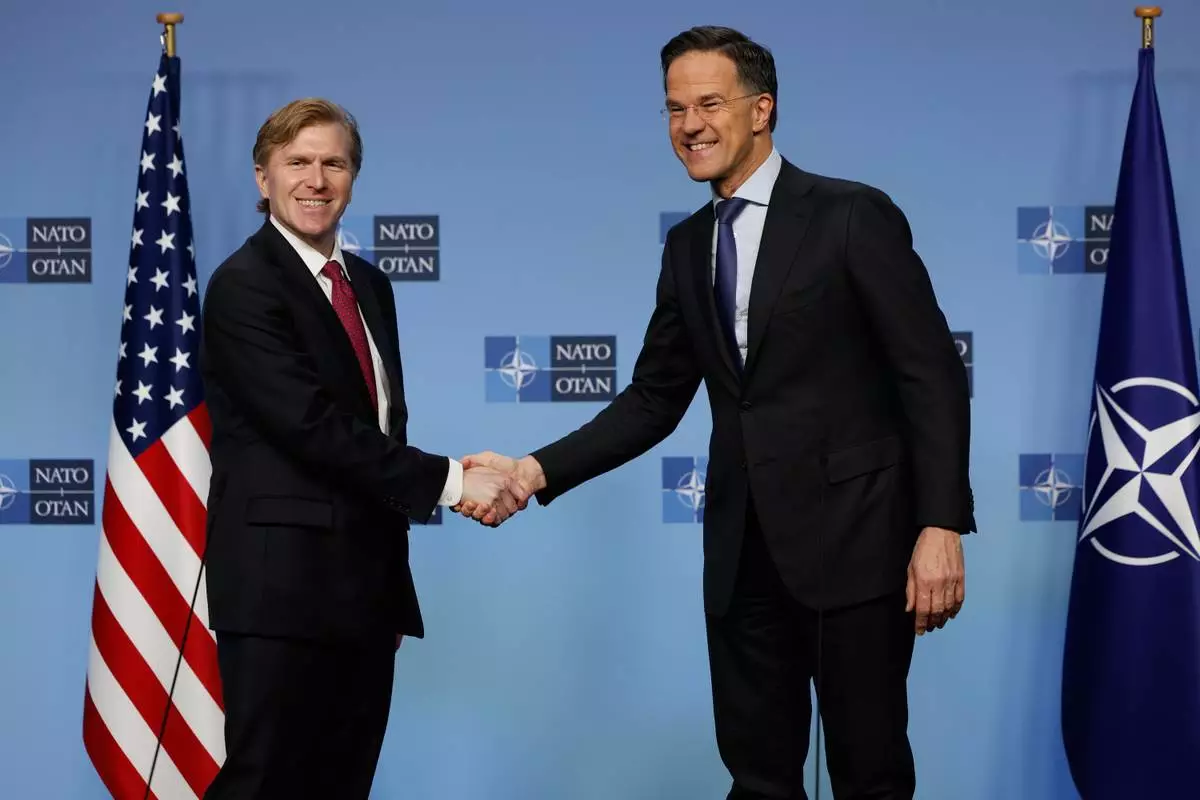
NATO Secretary General Mark Rutte, right, shakes hands with United States Undersecretary of Defense for Policy Elbridge Colby prior to a meeting of NATO defense ministers at NATO headquarters in Brussels, Thursday, Feb. 12, 2026. (AP Photo/Geert Vanden Wijngaert)
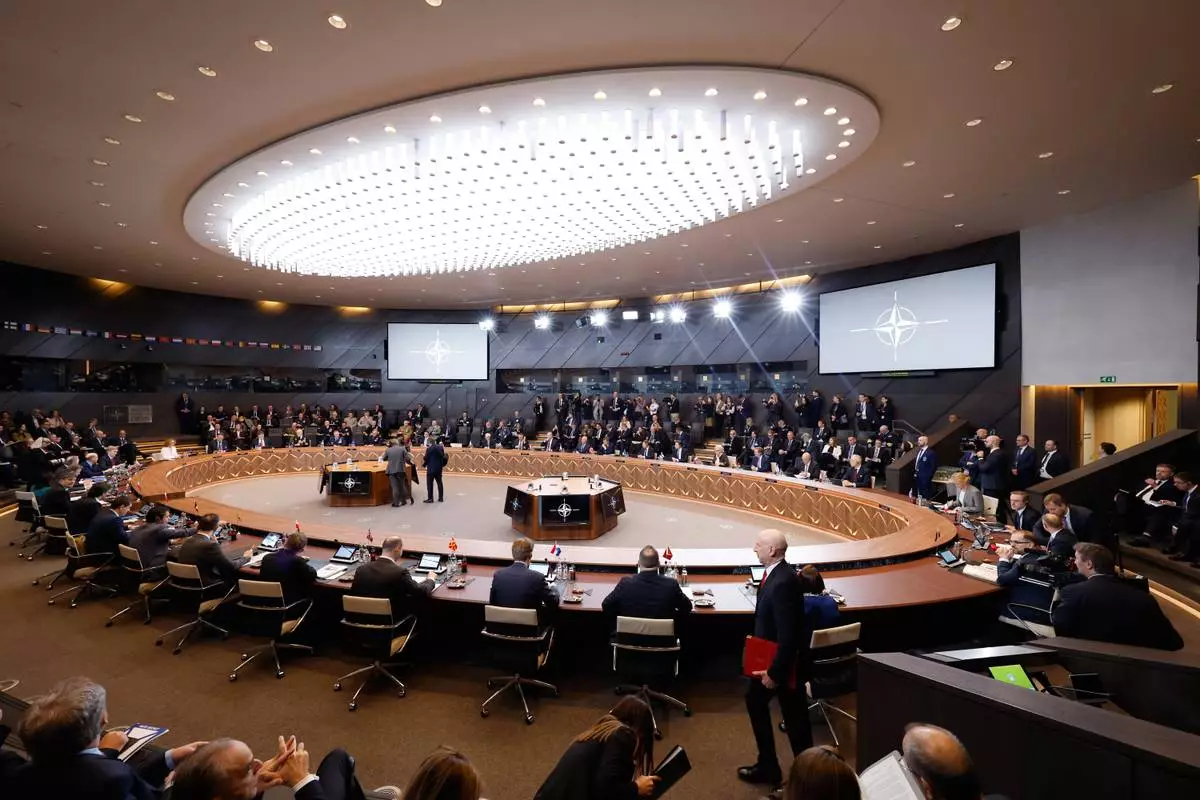
A general view of the round table during a meeting of the North Atlantic Council in Defense Ministers Session at NATO headquarters in Brussels, Thursday, Feb. 12, 2026. (AP Photo/Geert Vanden Wijngaert)
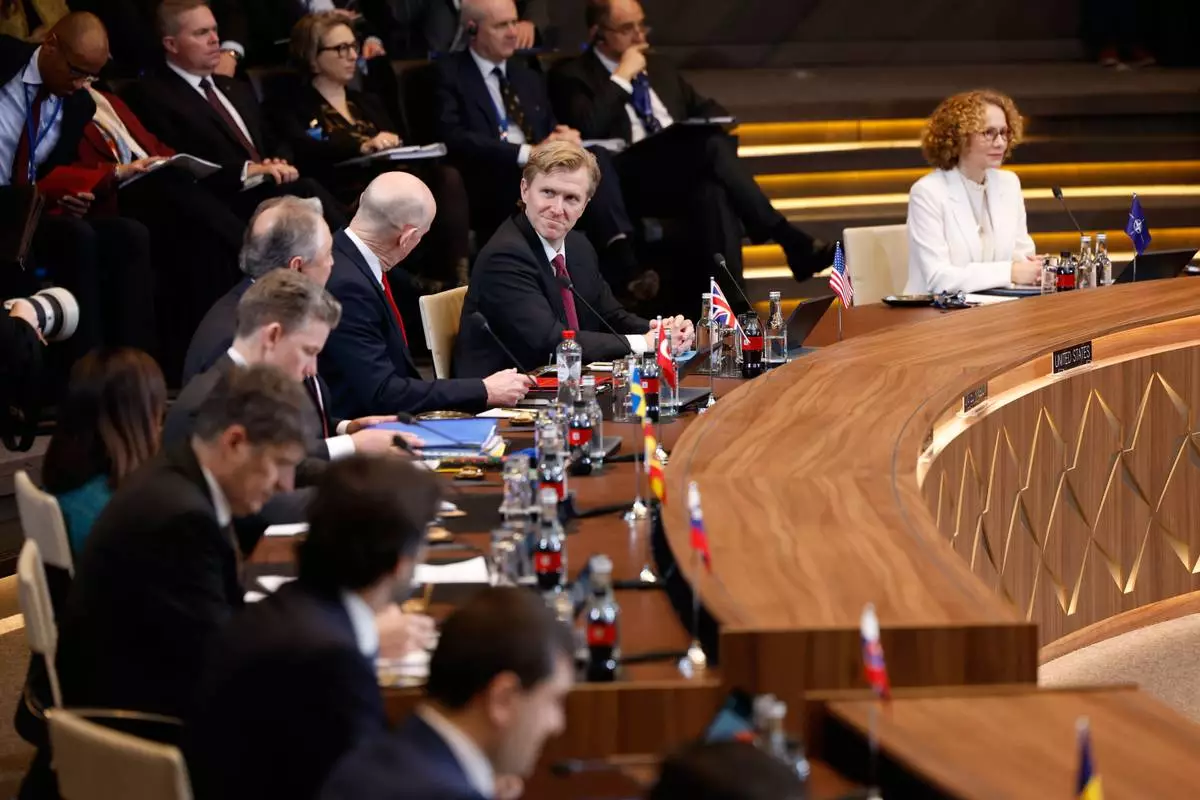
United States Undersecretary of Defense for Policy Elbridge Colby, center, speaks with Britain's Defense Secretary John Healey during a meeting of the North Atlantic Council in Defense Ministers Session at NATO headquarters in Brussels, Thursday, Feb. 12, 2026. (AP Photo/Geert Vanden Wijngaert)
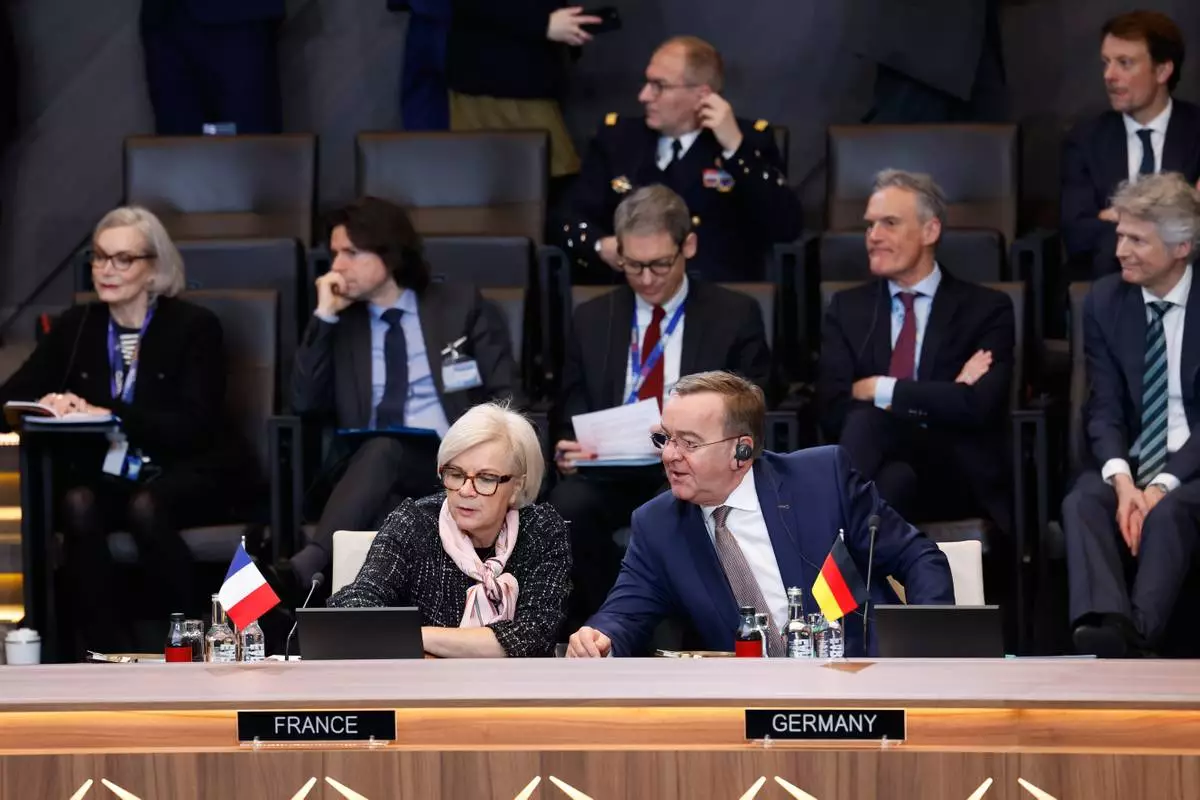
Germany's Defense Minister Boris Pistorius, right, speaks with French Defense Minister Catherine Vautrin during a meeting of the North Atlantic Council in Defense Ministers Session at NATO headquarters in Brussels, Thursday, Feb. 12, 2026. (AP Photo/Geert Vanden Wijngaert)
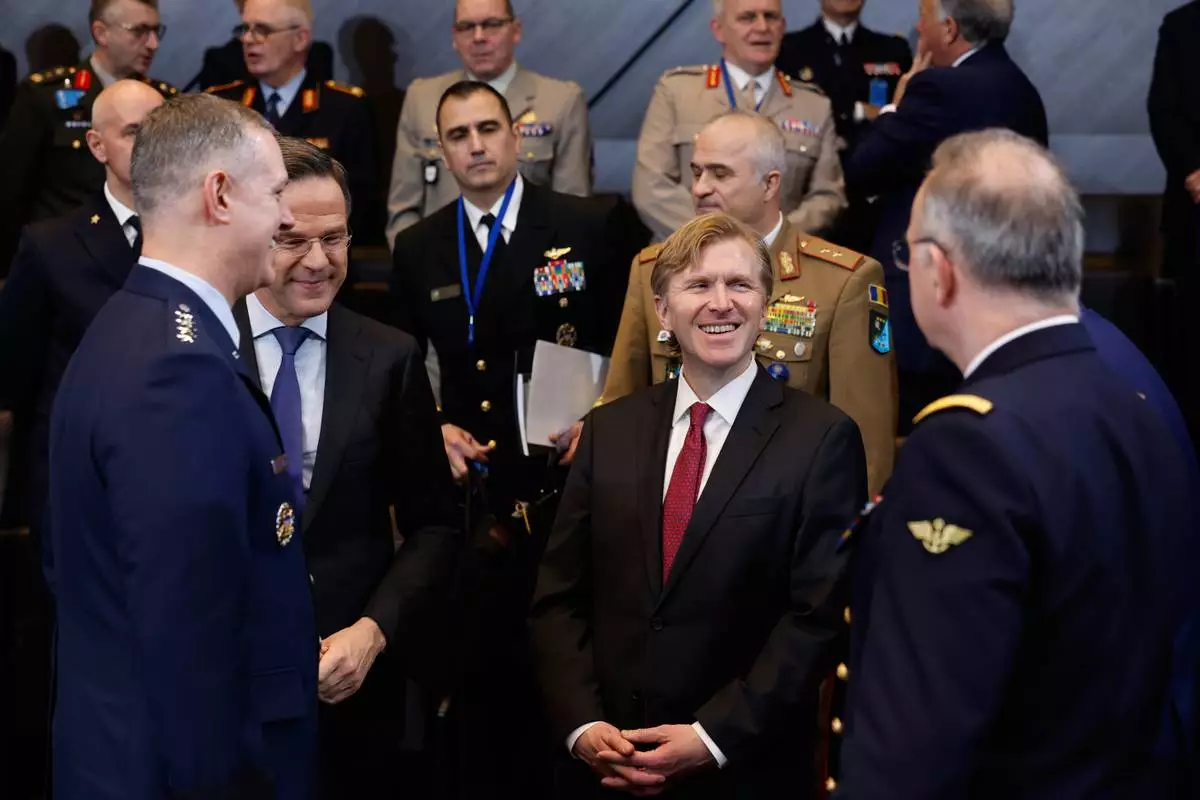
NATO Secretary General Mark Rutte, second left, introduces United States Undersecretary of Defense for Policy Elbridge Colby, center, to military staff during a meeting of the North Atlantic Council in Defense Ministers Session at NATO headquarters in Brussels, Thursday, Feb. 12, 2026. (AP Photo/Geert Vanden Wijngaert)