Skip to Content Facebook Feature Image

Russia fires barrage at Ukrainian cities as next round of US-brokered talks is unclear

News

Russia fires barrage at Ukrainian cities as next round of US-brokered talks is unclear
News

News

Russia fires barrage at Ukrainian cities as next round of US-brokered talks is unclear

2026-02-13 00:17 Last Updated At:00:20

KYIV, Ukraine (AP) — Russia launched a barrage of ballistic missiles and drones at Ukrainian cities in overnight attacks, officials reported on Thursday as Ukrainian President Volodymyr Zelenskyy said Moscow was “hesitating” about another round of U.S.-brokered talks on stopping the fighting.

Washington has proposed further negotiations next week between Russian and Ukrainian delegations either in Miami or Abu Dhabi, in the United Arab Emirates, which was the location of the last meeting, Zelenskyy said late Wednesday.

Ukraine “immediately confirmed” it would attend, he said. “So far, as I understand it, Russia is hesitating,” Zelenskyy told reporters in a messaging app interview late Wednesday.

Kremlin spokesman Dmitry Peskov said on Thursday that another round of talks was expected “soon” but gave no further details.

American officials made no comment on the possibility of further talks as part of a yearlong peace effort by the Trump administration. Zelenskyy said last week that the United States has given Ukraine and Russia a June deadline to reach a deal.

But with Russia’s invasion of its neighbor marking its fourth anniversary later this month, disagreements between Moscow and Kyiv over key issues have held up a comprehensive settlement. The issues include who keeps the Ukrainian land that Russia’s army has so far occupied, especially in the eastern Donbas industrial heartland, and Moscow’s demands for Kyiv to surrender more territory.

Ukraine wants Western-backed security guarantees, including a date for joining the European Union, and a postwar reconstruction package in place before it can contemplate signing a proposed 20-point settlement, Zelenskyy said.

Russia has meanwhile continued to pound Ukrainian civilian areas, including residential areas and the power grid, and Moscow has not responded to a U.S. proposal for an “energy ceasefire” that would also halt Ukrainian drone strikes on Russian oil facilities, Zelenskyy said.

The United Nations High Commissioner for Human Rights, Volker Türk, urged Russia to stop hitting electricity infrastructure, reminding Moscow in a statement that targeting civilian infrastructure is prohibited under international humanitarian law.

Overnight from Wednesday to Thursday, Russia fired 219 long-range strike drones, 24 ballistic missiles and a guided aircraft missile at Ukraine, according to the Ukrainian air force.

The main targets were the Ukrainian capital, Kyiv, the second-largest city of Kharkiv, Dnipro in central Ukraine, and the southern port city of Odesa, the air force said — all cities that have come under relentless bombardment.

In Dnipro, Russian strikes injured four people, including a 4-year-old girl and a newborn boy, regional head Oleksandr Hanzha wrote on Telegram.

In Kyiv, several residential buildings were damaged, and two people were injured, according to the city administration.

In Odesa, one person was injured as a residential high-rise was partially destroyed and a market and a supermarket caught fire, regional head Oleksandr Hanzha wrote on Telegram.

Temperatures have moved above freezing point in Kyiv, but it is still bitterly cold in the city.

Oleksii Kuleba, deputy prime minister for the restoration of Ukraine, said 2,600 buildings were left without heating after the Kyiv attack in addition to 1,100 buildings in the capital that already were without heating due to previous attacks.

In Odesa, nearly 300,000 residents were left without running water, Kuleba said, while in Dnipro the central heating system stopped working for some 10,000 people.

Ukraine has hit back at Russia with long-range strikes on military targets and oil refineries that generate a large slice of Russia's income.

Ukraine’s military general staff said Thursday that one of its domestically developed long-range drones hit the Ukhta oil refinery in Russia’s Komi region, around 1,750 kilometers (1,000 miles) from the Ukrainian border.

An official with Ukraine’s Security Service, known as the SBU, told The Associated Press that it was the first time Ukrainian drones have flown so far. The official spoke on condition of anonymity because they were not authorized to speak publicly.

Ukraine’s general staff also said that one of its domestically produced, long-range “Flamingo” missiles hit one of the Russian military’s biggest storage sites for missiles, ammunition and explosives in the Volgograd region and caused major explosions.

Separately, Ukrainian forces also hit and started a fire at the Michurinsk Progress Plant in Russia’s Tambov region, a defense enterprise producing high-technology equipment for aviation and missile systems, the General Staff said.

Ukraine's military also confirmed it damaged the Volgograd oil refinery in a strike the previous day.

In other developments:

The White House announced Thursday that first lady Melania Trump helped to reunite a small group of Russian and Ukrainian children with their families after they became separated by the invasion.

Five children — four boys and one girl, from 4 to 15 years old — were reunited with their families in Ukraine, while one child returned to its family in Russia, according to Maria Lvova-Belova, the Kremlin’s commissioner for children’s rights.

Lvova-Belova is sought for war crimes by the International Criminal Court for allegedly deporting children from Ukraine.

It was the third such family reunification involving the first lady.

Katie Marie Davies in Manchester, England contributed.

Follow AP’s coverage of the war in Ukraine at https://apnews.com/hub/russia-ukraine
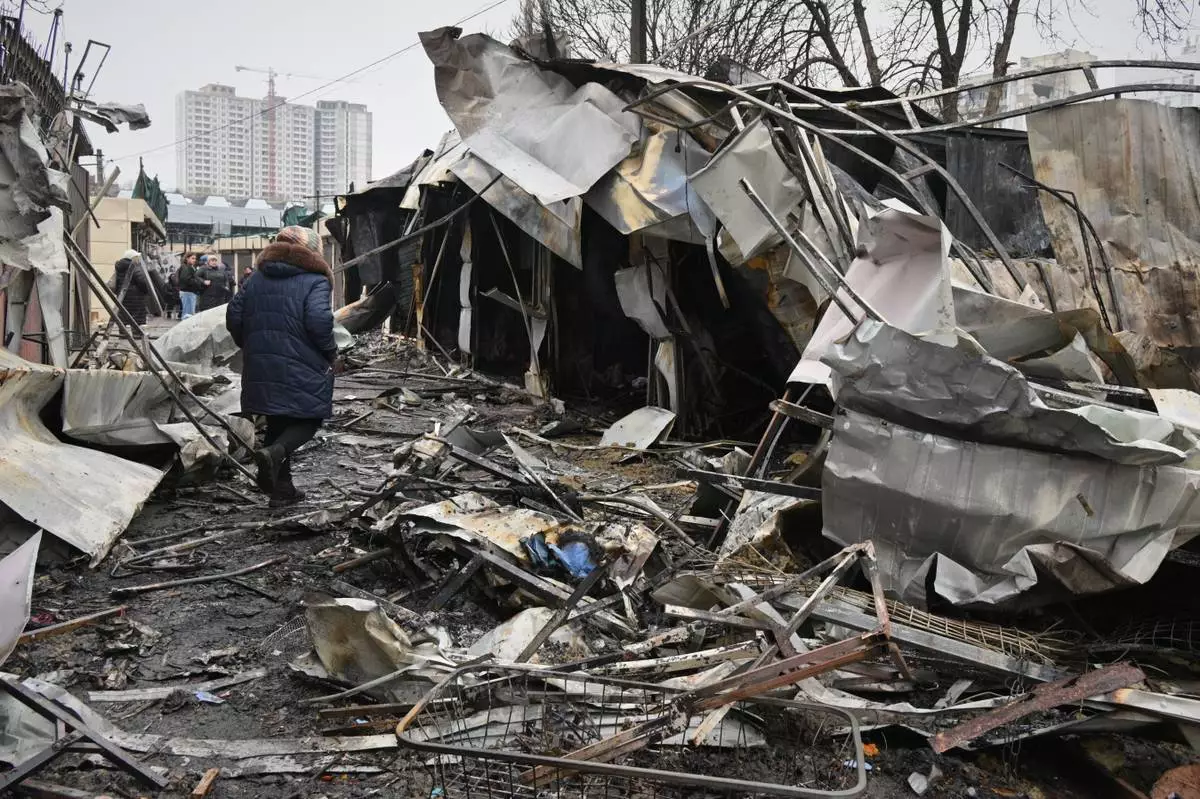
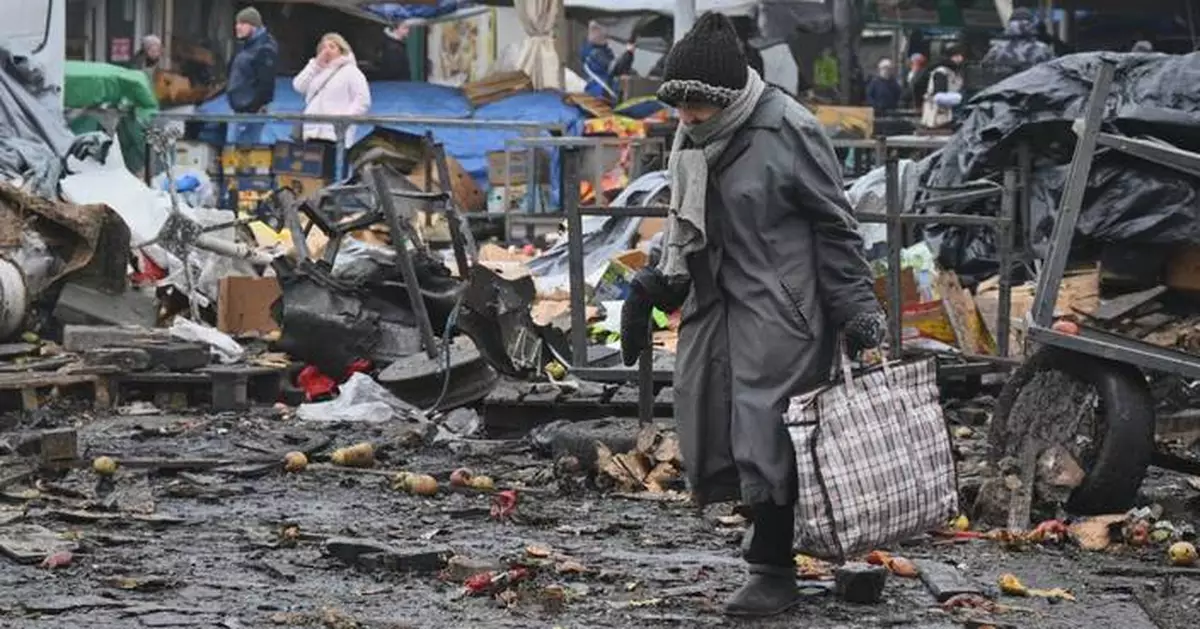
People look at a ruined city market following a Russia's attack in Odesa, Ukraine, Thursday, Feb. 12, 2026. (AP Photo/Michael Shtekel)
People look at a ruined city market following a Russia's attack in Odesa, Ukraine, Thursday, Feb. 12, 2026. (AP Photo/Michael Shtekel)
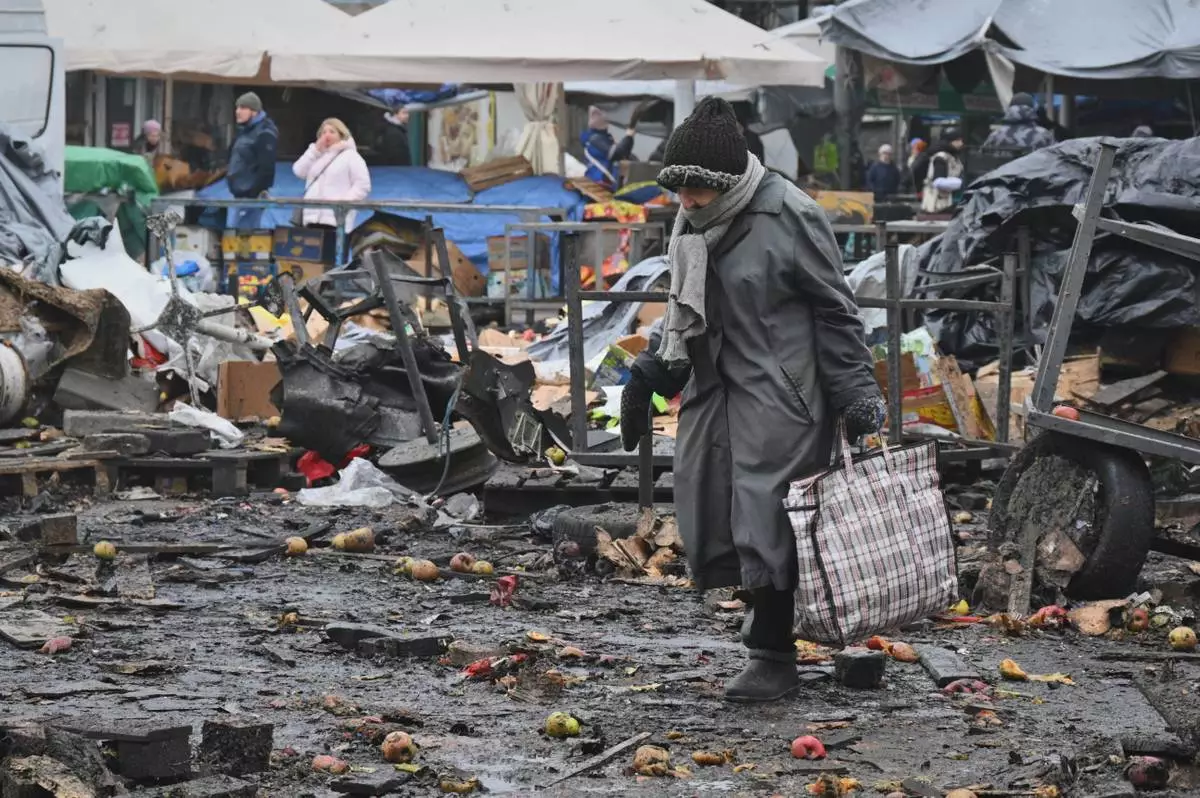
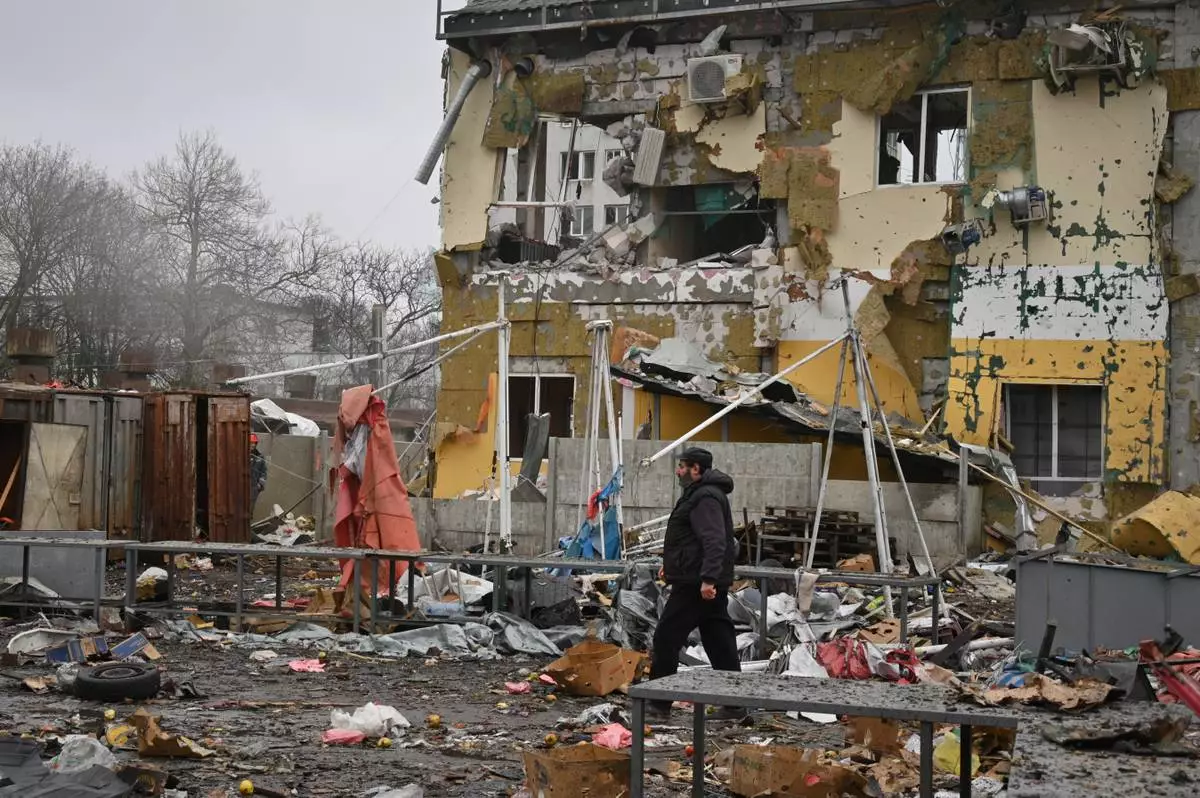
A man walks at a ruined city market following a Russia's attack in Odesa, Ukraine, Thursday, Feb. 12, 2026. (AP Photo/Michael Shtekel)


A man walks at a ruined city market following a Russia's attack in Odesa, Ukraine, Thursday, Feb. 12, 2026. (AP Photo/Michael Shtekel)

People walk at a ruined city market following a Russia's attack in Odesa, Ukraine, Thursday, Feb. 12, 2026. (AP Photo/Michael Shtekel)
People walk at a ruined city market following a Russia's attack in Odesa, Ukraine, Thursday, Feb. 12, 2026. (AP Photo/Michael Shtekel)

PHOENIX (AP) — When Jennifer Rizzotti arrived at UConn as a player in 1992, the expectations around the school, as well as the women's basketball landscape, were much different than they are today.

Geno Auriemma was only in his eighth season coaching the Huskies. UConn hadn't yet hoisted a national championship trophy. There wasn't nearly the same pressure to win that the Huskies face now. And women's basketball as a whole hadn't seen the unprecedented growth in sponsorships and popularity it is experiencing now.

By the 1994-95 season, Rizzotti and fellow UConn standout Rebecca Lobo helped the Huskies go undefeated en route to their first national title. Everything about the program changed, and even as women's basketball has evolved and skyrocketed in exposure, the Huskies have remained the gold standard.

“There was no thought that we were going to be undefeated,” Rizzotti said. “We didn't have that internal pressure. We didn't have external pressure. That's the last time a UConn team could play that way. Think about that: 1995 is the last time a UConn team could play without that kind of pressure.”

The Huskies have since won 12 national titles, reached the Final Four 25 times and won 30 conference titles. They've been ranked 653 weeks in The Associated Press women's basketball poll, and Auriemma is the winningest coach in women's college basketball history.

As conversations around the Final Four in Phoenix center around how the women's game has grown, the Huskies, who are competing for the second straight national title, have been at the forefront.

“You could tell that everything was aligned for this program to reach that pinnacle," said Rizzotti, who is currently the president of the WNBA’s Connecticut Sun. “I don't think anything of us would have predicted that it would have gone on as it had.”

Rizzotti joined former UConn players Stefanie Dolson, currently with the WNBA's Washington Mystics, and Shea Ralph, now Vanderbilt's coach, on a panel Friday at “The AP Top 25 Fan Poll Experience,” which is being held at Arizona State’s First Amendment Forum in the Walter Cronkite School of Journalism and Mass Communication.

Earlier Friday, Big East commissioner Val Ackerman, former Metro Atlantic Athletic Conference (MAAC) commissioner Rich Ensor and AP women’s poll founder Mel Greenberg spoke on a panel moderated by college basketball analyst Debbie Antonelli on the growth of women's basketball at the college and pro levels.

“I think women's basketball has never been more popular,” said Ackerman, who was the first president of the WNBA from 1996-2005. “I think schools that are succeeding are really seeing, feeling and believing in the (return on investment). And UConn's a case in point.”

Ackerman sees the investment that the schools in this year's Final Four — UConn, Texas, South Carolina, and UCLA — have made in their programs to reach back-to-back national semifinals as a reflection of the growing importance of pouring resources into women's hoops.

“And that's done a world of good,” she added. “Programs like South Carolina, UCLA, you see what they're doing for their campuses. The investment is paying off in terms of the brand and engagement with the community and school reputation.”

Even as women's sports are drawing record crowds and WNBA players are set to make more money than ever, Ensor sees much more room to capitalize on this current growth.

“It has been about breaking down barriers, and they still exist,” Ensor said. “We marvel at what's happened, but we still recognize there's a lot more that's to come.”

AP Top 25 Fan Poll Experience: https://apnews.com/https:/apnews.com/projects/arizona-state-fan-poll-experience/

AP March Madness bracket: https://apnews.com/hub/ncaa-womens-bracket and coverage: https://apnews.com/hub/march-madness

FILE - Connecticut's Breanna Stewart, left, drives to the basket as Cincinnati's Maya Benham, right, defends during the first half of an NCAA college basketball game Wednesday, Feb. 17, 2016, in Storrs, Conn. (AP Photo/Jessica Hill, File)

FILE - Connecticut's Breanna Stewart, left, drives to the basket as Cincinnati's Maya Benham, right, defends during the first half of an NCAA college basketball game Wednesday, Feb. 17, 2016, in Storrs, Conn. (AP Photo/Jessica Hill, File)

From left, Debbie Antonelli, Val Ackerman, Rich Ensor and Mel Greenberg sit on a panel during an event Friday, April 3, 2026, in Phoenix. (AP Photo/John Locher)

From left, Debbie Antonelli, Val Ackerman, Rich Ensor and Mel Greenberg sit on a panel during an event Friday, April 3, 2026, in Phoenix. (AP Photo/John Locher)

Val Ackerman, commissioner of the Big East Conference, listens during an event Friday, April 3, 2026, in Phoenix. (AP Photo/John Locher)

Val Ackerman, commissioner of the Big East Conference, listens during an event Friday, April 3, 2026, in Phoenix. (AP Photo/John Locher)

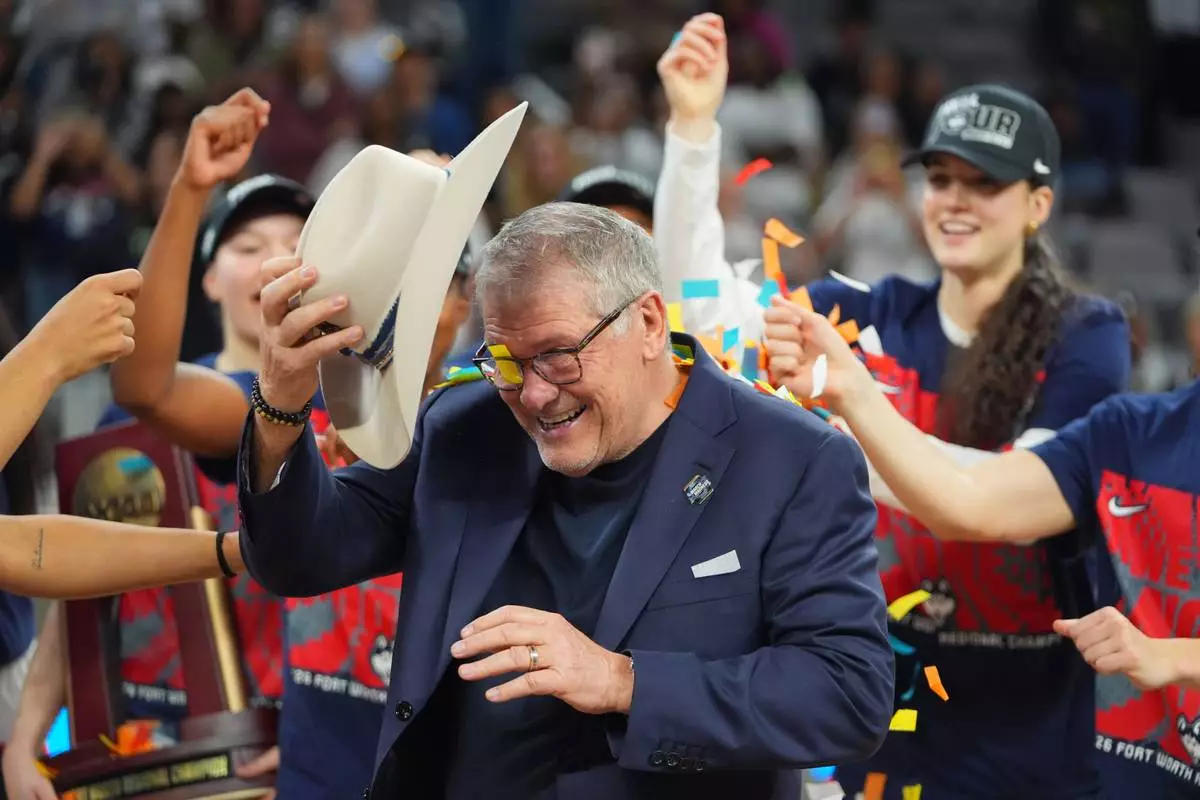
UConn head coach Geno Auriemma reacts after his team defeated Notre Dame in the Elite Eight of the NCAA college basketball tournament, Sunday, March 29, 2026, in Fort Worth, Texas. (AP Photo/LM Otero)

UConn head coach Geno Auriemma reacts after his team defeated Notre Dame in the Elite Eight of the NCAA college basketball tournament, Sunday, March 29, 2026, in Fort Worth, Texas. (AP Photo/LM Otero)

Recommended Articles