Utah Jazz forward Jaren Jackson Jr. will undergo surgery after a post-trade physical revealed a growth in his left knee, the team announced Thursday.
Jackson consulted with several medical professionals after the localized pigmented villonodular synovitis growth was detected in an MRI. He will undergo surgery during the NBA All-Star break.
It’s unclear how long Jackson will be out. A team spokesperson said they would provide an update on his return after the surgery.
Utah acquired Jackson from Memphis as part of an eight-player deal. A rebuilding Grizzlies team received three first-round picks alongside Georges Niang, Kyle Anderson, Walter Clayton Jr. and Taylor Hendricks. Utah gained Jackson, Jock Landale, John Konchar and Vince Williams Jr.
Jackson was drafted by the Grizzlies with the No. 4 pick in the 2018 draft. He was a two-time All-Star in Memphis and the 2023 NBA Defensive Player of the Year.
Jackson has played in three games for Utah against Orlando, Miami and Sacramento. He helped the Jazz to a 115-111 win against Miami with 22 points and five assists, and a Wednesday night 121-93 rout of Sacramento with 23 points and four assists.
Jackson has averaged 19.4 points, 4.7 rebounds, 2.0 assists and 1.4 blocks in 48 games this season.
AP NBA: https://apnews.com/hub/NBA
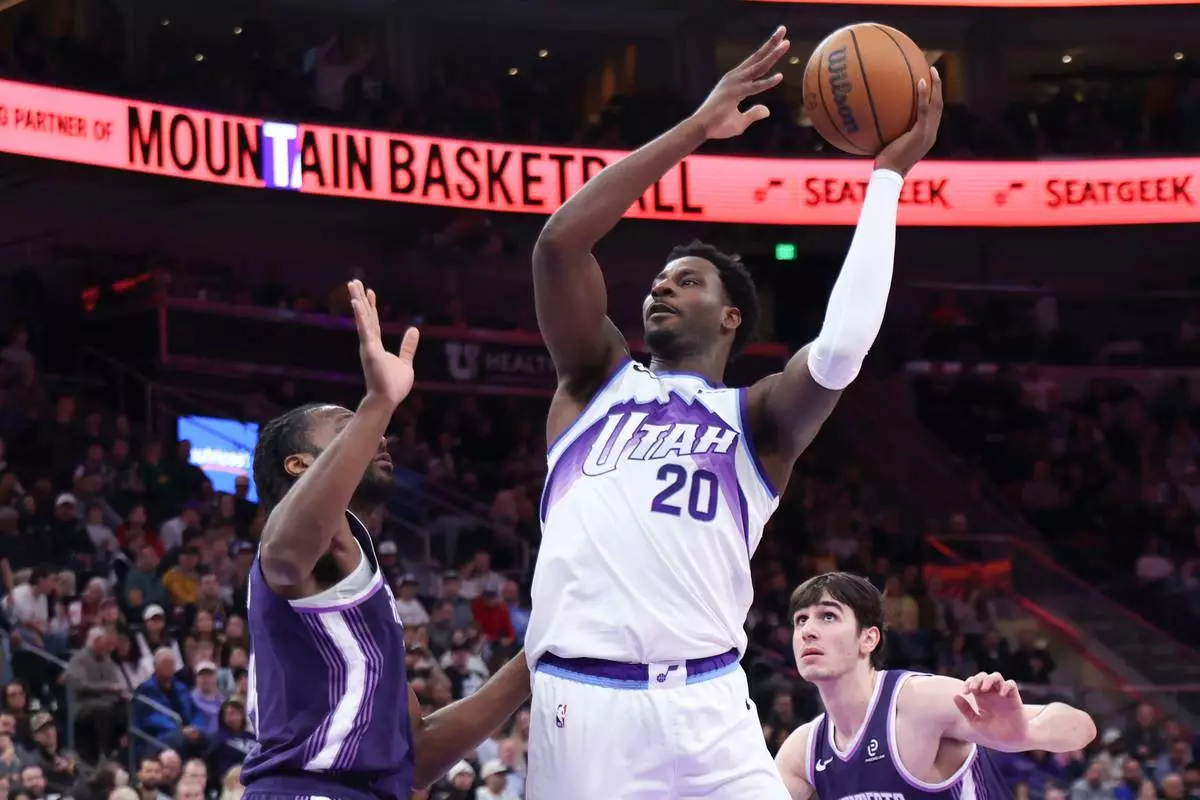
Utah Jazz forward Jaren Jackson Jr. (20) goes up for a shot against the Sacramento Kings during the second half of an NBA basketball game, Wednesday, Feb. 11, 2026, in Salt Lake City. (AP Photo/Rob Gray)
The average long-term U.S. mortgage rate is holding at just above 6% after reversing a modest uptick in recent weeks just as the housing market closes in on the spring homebuying season.
The benchmark 30-year fixed rate mortgage rate slipped to 6.09% from 6.11% last week, mortgage buyer Freddie Mac said Thursday. One year ago, the rate averaged 6.87%.
The modest pullback brings the average rate back to where it was three weeks ago.
Borrowing costs on 15-year fixed-rate mortgages, popular with homeowners refinancing their home loans, also edged lower this week. That average rate fell to 5.44% from 5.5% last week. A year ago, it was at 6.09%, Freddie Mac said.
Mortgage rates are influenced by several factors, from the Federal Reserve’s interest rate policy decisions to bond market investors’ expectations for the economy and inflation. They generally follow the trajectory of the 10-year Treasury yield, which lenders use as a guide to pricing home loans.
The 10-year Treasury yield was at 4.13% at midday Thursday, down from 4.21% a week ago.
Mortgage rates have been trending lower for months, helping drive a pickup in home sales the last four months of 2025, but not enough to lift the housing market out of a deep sales rut dating back to 2022, when mortgage rates began to climb from pandemic-era lows.
The combination of higher mortgage rates, years of skyrocketing home prices and a chronic shortage of homes nationally following more than a decade of below-average home construction have left many aspiring homeowners priced out of the market. Sales of previously occupied U.S. homes remained stuck last year at 30-year lows.
Lower mortgage rates failed to revive home sales last month. They posted the biggest monthly drop in nearly four years and the slowest annualized sales pace in more than two years.
This week's drop in mortgage rates comes two weeks after the Federal Reserve decided to pause cuts to its main interest rate after lowering rates three times in a row to close out 2025 in an attempt to shore up the job market.
The central bank doesn’t set mortgage rates, but its decisions to raise or lower its short-term rate are watched closely by bond investors and can ultimately affect the yield on 10-year Treasurys that influence mortgage rates.
Economists generally expect mortgage rates to stay relatively stable in the coming months, with forecasts calling for the average rate on a 30-year mortgage to continue to hover around 6%.
However, that may not be enough to unlock affordability for many prospective home shoppers, nor encourage homeowners who bought their home or refinanced when rates were sharply lower to sell now and buy at current rates.
Nearly 79% of homeowners with a mortgage have a rate below 6%, according to Realtor.com. That's leading to fewer homes on the market, which helps keep propping up prices.
"In short, while the market remains stable, a larger drop in rates will be needed to attract new buyers and sellers and truly reignite the housing market,” said Jiayi Xu, an economist at Realtor.com.
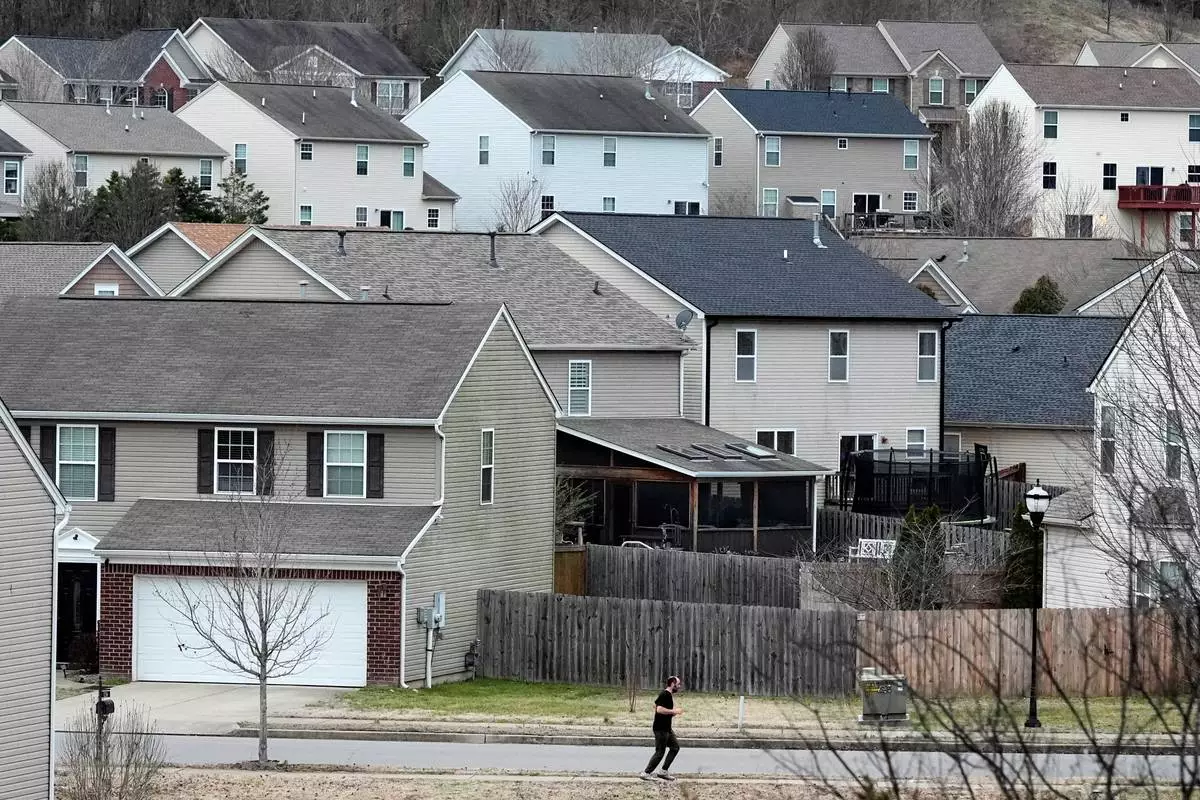
A person jogs past single family homes, Tuesday, Feb. 10, 2026, in Nashville, Tenn. (AP Photo/George Walker IV)