WASHINGTON (AP) — A shutdown for the Department of Homeland Security appeared certain Thursday as lawmakers in the House and Senate were set to leave Washington for a 10-day break and negotiations with the White House over Democrats' demands for new restrictions had stalled.
Democrats and the White House have traded offers in recent days as the Democrats have said they want curbs on President Donald Trump’s broad campaign of immigration enforcement. They have demanded better identification for U.S. Immigration and Customs Enforcement and other federal law enforcement officers, a new code of conduct for those agencies and more use of judicial warrants, among other requests.
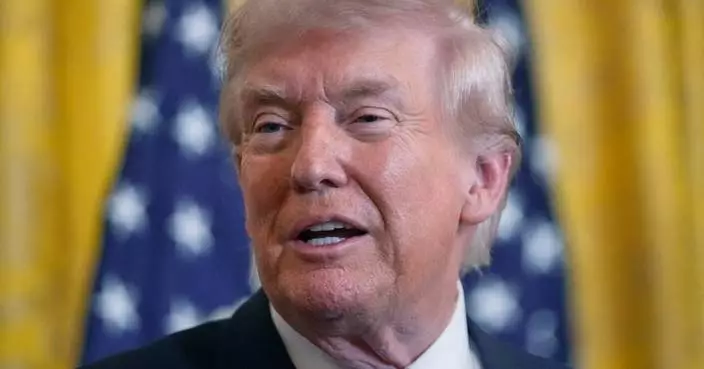
The White House sent its latest proposal late Wednesday, but Trump told reporters on Thursday that some of the Democratic demands would be “very, very hard to approve.”
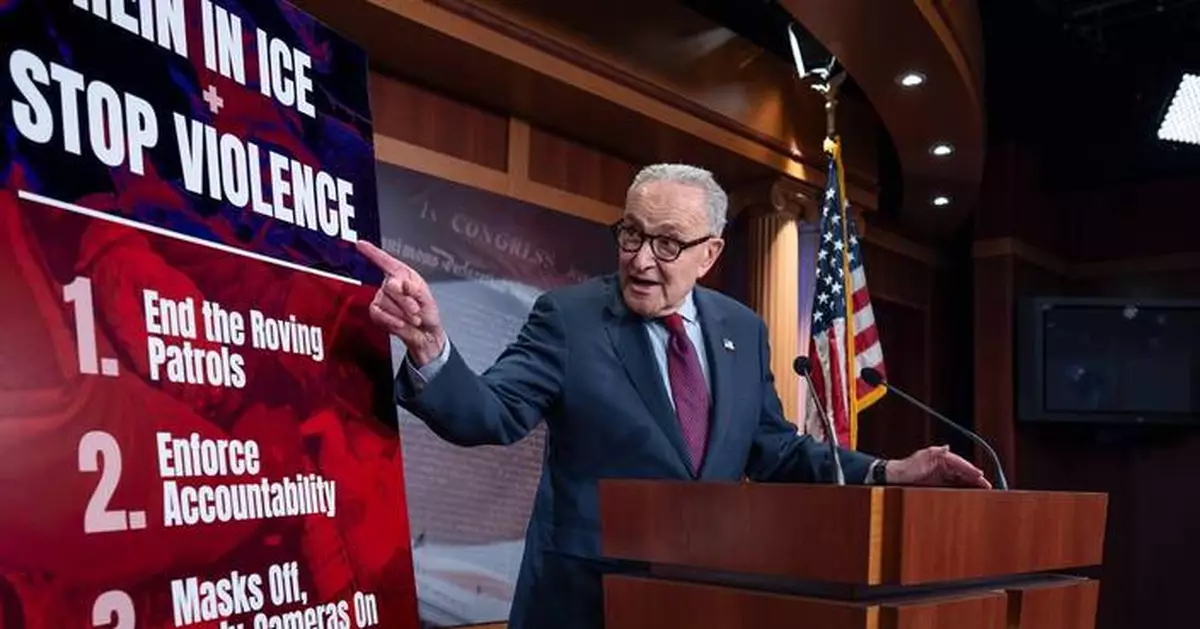
Democrats said the White House offer, which was not made public, did not include sufficient curbs on ICE after two protesters were fatally shot last month. The offer was “not serious,” Senate Democratic Leader Chuck Schumer of New York said Thursday, after the Senate rejected a bill to fund the department.
Americans want accountability and “an end to the chaos,” Schumer said. “The White House and congressional Republicans must listen and deliver.”
Lawmakers in both chambers were on notice to return to Washington if the two sides struck a deal to end the expected shutdown. Sen. Patty Murray, the top Democrat on the Senate Appropriations Committee, told reporters that Democrats would send the White House a counterproposal over the weekend.
Senate Majority Leader John Thune, R-S.D., said after the vote that a shutdown appeared likely and “the people who are not going to be getting paychecks" will pay the price.
The impact of a DHS shutdown is likely to be minimal at first. It would not likely block any of the immigration enforcement operations, as Trump’s tax and spending cut bill passed last year gave ICE about $75 billion to expand detention capacity and bolster enforcement operations.
But the other agencies in the department — including the Transportation Security Administration, the Federal Emergency Management Agency, the Secret Service and the Coast Guard — could take a bigger hit over time.
Gregg Phillips, an associate administrator at FEMA, said at a hearing this week that its disaster relief fund has sufficient balances to continue emergency response activities during a shutdown, but would become seriously strained in the event of a catastrophic disaster.
Phillips said that while the agency continues to respond to threats like flooding and winter storms, long-term planning and coordination with state and local partners will be “irrevocably impacted.”
Trump, who has remained largely silent during the bipartisan talks, noted Thursday that a recent court ruling rejected a ban on masks for federal law enforcement officers.
“We have to protect our law enforcement,” Trump told reporters.
Democrats made the demands for new restrictions on ICE and other federal law enforcement after ICU nurse Alex Pretti was shot and killed by a U.S. Border Patrol officer in Minneapolis on Jan. 24. Renee Good was shot by ICE agents on Jan. 7.
Trump agreed to a Democratic request that the Homeland Security bill be separated from a larger spending measure that became law last week. That package extended Homeland Security funding at current levels only through Friday.
Schumer and House Democratic leader Hakeem Jeffries of New York have said they want immigration officers to remove their masks, to show identification and to better coordinate with local authorities. They have also demanded a stricter use-of-force policy for the federal officers, legal safeguards at detention centers and a prohibition on tracking protesters with body-worn cameras.
Democrats also say Congress should end indiscriminate arrests and require that before a person can be detained, authorities have verified that the person is not a U.S. citizen.
Thune suggested there were potential areas of compromise, including on masks. There could be contingencies “that these folks aren't being doxed,” Thune said. “I think they could find a landing place.”
But Republicans have been largely opposed to most of the items on the Democrats’ list, including a prohibition on masks.
Sen. Eric Schmitt, R-Mo., said Republicans who have pushed for stronger immigration enforcement would benefit politically from the Democratic demands.
“So if they want to have that debate, we’ll have that debate all they want,” said Schmitt.
Thune, who has urged Democrats and the White House to work together, indicated that another sticking point is judicial warrants.
“The issue of warrants is going to be very hard for the White House or for Republicans,” Thune said of the White House's most recent offer. “But I think there are a lot of other areas where there has been give, and progress.”
Schumer and Jeffries have said DHS officers should not be able to enter private property without a judicial warrant and that warrant procedures and standards should be improved. They have said they want an end to “roving patrols” of agents who are targeting people in the streets and in their homes.
Most immigration arrests are carried out under administrative warrants. Those are internal documents issued by immigration authorities that authorize the arrest of a specific person but do not permit officers to forcibly enter private homes or other nonpublic spaces without consent. Traditionally, only warrants signed by judges carry that authority.
But an internal ICE memo obtained by The Associated Press last month authorizes ICE officers to use force to enter a residence based solely on a more narrow administrative warrant to arrest someone with a final order of removal, a move that advocates say collides with Fourth Amendment protections.
Thune, R-S.D., said were “concessions” in the White House offer. He would not say what those concessions were, though, and he acknowledged the sides were “a long ways toward a solution."
Schumer said it was not enough that the administration had announced an end to the immigration crackdown in Minnesota that led to thousands of arrests and the fatal shootings of two protesters.
“We need legislation to rein in ICE and end the violence,” Schumer said, or the actions of the administration “could be reversed tomorrow on a whim.”
Simmering partisan tensions played out on the Senate floor immediately after the vote, as Alabama Sen. Katie Britt, the chairwoman of the Senate Appropriations subcommittee that oversees Homeland Security funding, tried to pass a two-week extension of Homeland Security funding and Democrats objected.
Britt said Democrats were “posturing” and that federal employees would suffer for it. “I’m over it!” she yelled.
Connecticut Sen. Chris Murphy, the top Democrat on the Homeland spending subcommittee, responded that Democrats “want to fund the Department of Homeland Security, but only a department that is obeying the law.”
“This is an exceptional moment in this country’s history,” Murphy said.
Associated Press writers Lisa Mascaro, Joey Cappelletti, Stephen Groves and Rebecca Santana contributed to this report.
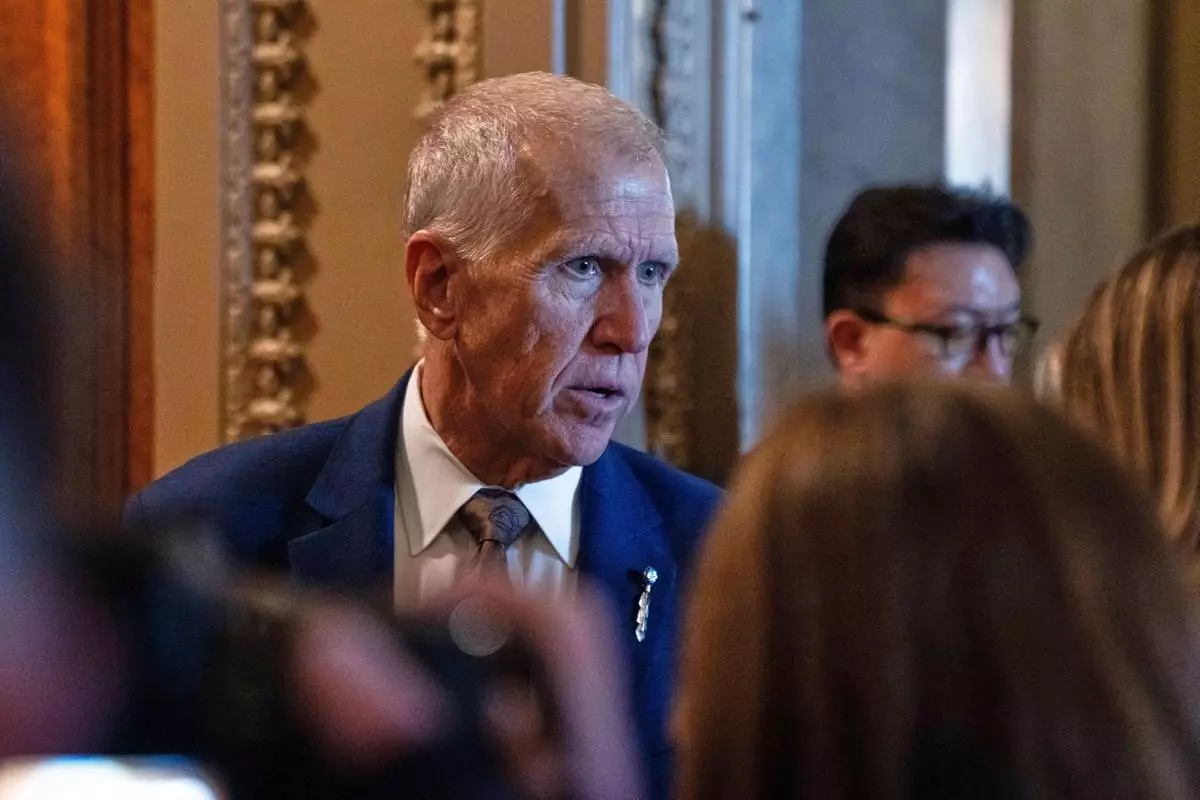
Sen. Thom Tillis, R-N.C., speaks to members of the media at the Capitol, Thursday, Feb. 12, 2026, in Washington. (AP Photo/Allison Robbert)
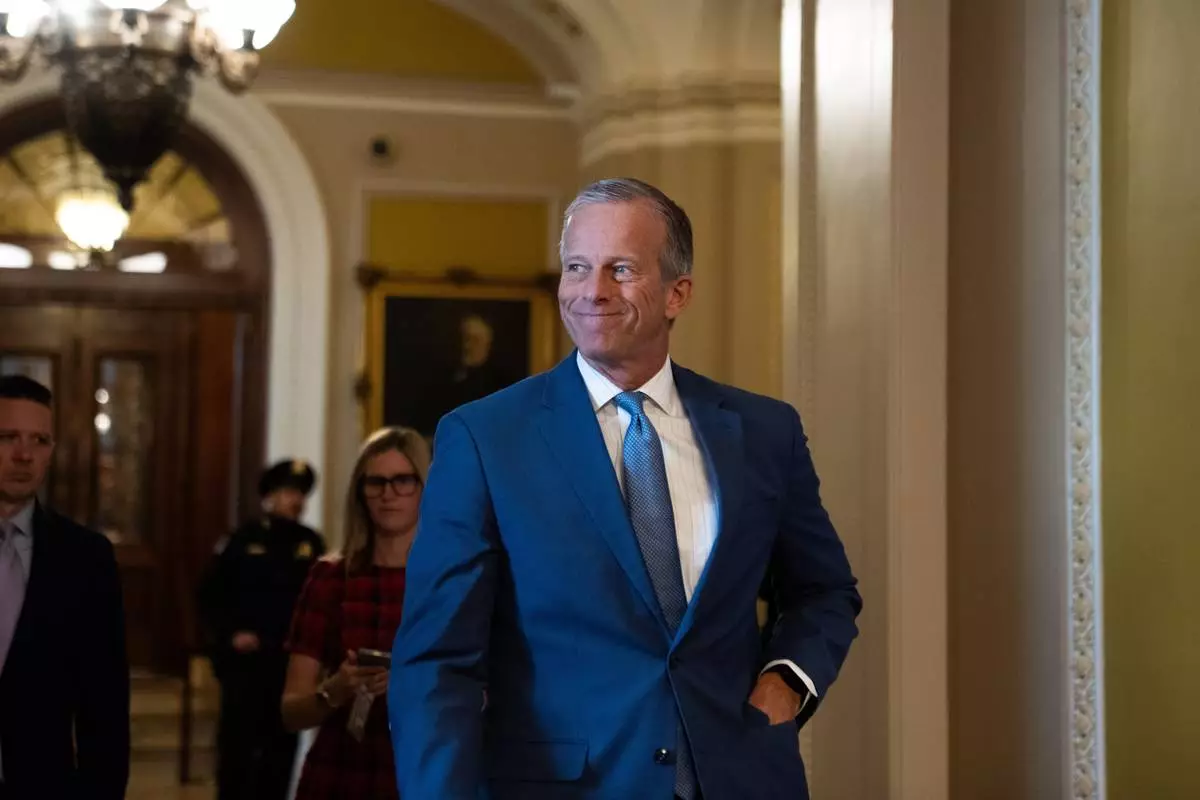
Senate Majority Leader John Thune, R-S.D., exits the floor after voting at the Capitol, Thursday, Feb. 12, 2026, in Washington. (AP Photo/Allison Robbert)
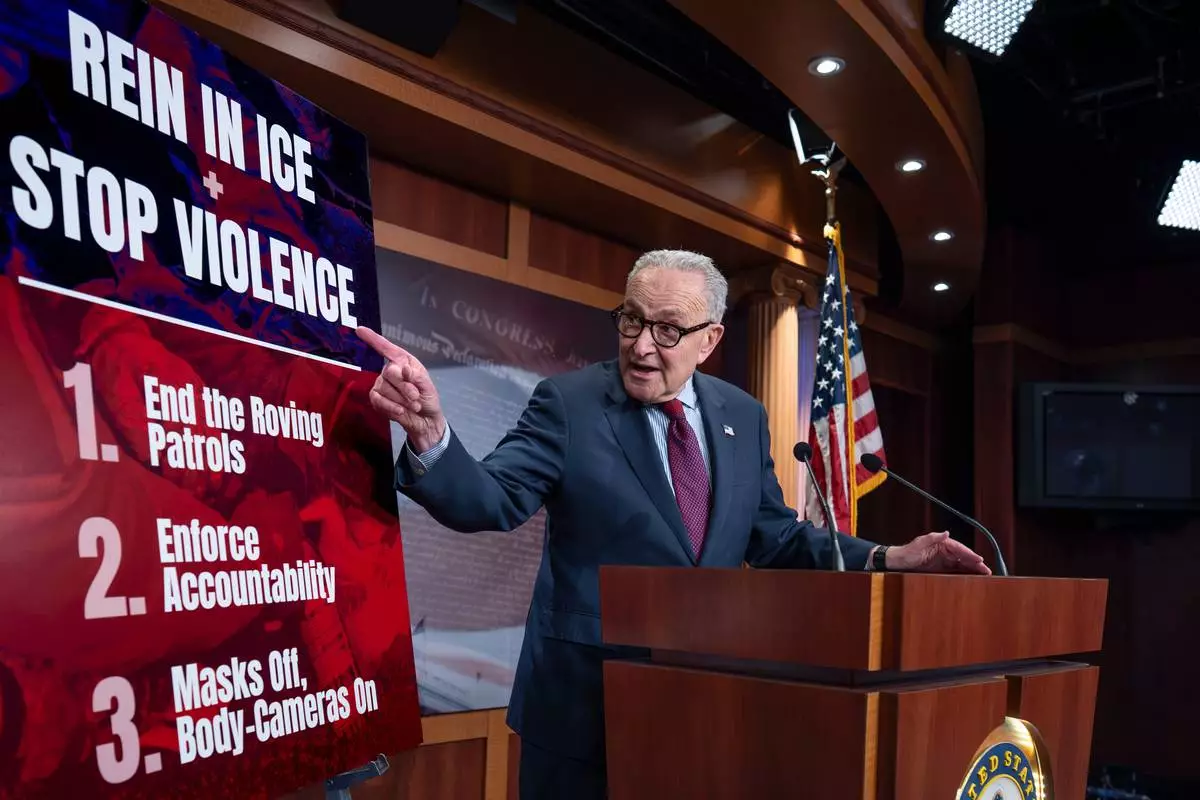
Senate Minority Leader Chuck Schumer, D-N.Y., speaks to reporters at the Capitol in Washington, Thursday, Feb. 12, 2026. (AP Photo/J. Scott Applewhite)