COALDALE, Alberta--(BUSINESS WIRE)--Feb 12, 2026--
Taurus Canada Renewable Natural Gas (RNG) Corp. announced today the company has been awarded $10 million in funding through the Government of Alberta’s Technology Innovation and Emissions Reduction (TIER) program to construct a fully integrated anaerobic digestion and carbon sequestration facility that will produce natural gas (RNG) exclusively from livestock manure in partnership with KCL Cattle Company and Kasko Cattle Co.
This press release features multimedia. View the full release here: https://www.businesswire.com/news/home/20260212330794/en/
The announcement was made at a press conference at Kasko Farms Headquarters today attended by Honourable Grant Hunter, Minister of Environment and Protected Areas, Government of Alberta; Nathan Neudorf, MLA for Lethbridge-East; Kelly Ogle, Board Chair, Emissions Reduction Alberta; Phillip Abrary, Chairman & CEO, Taurus RNG; and, Ryan Kasko, CEO, Kasko Cattle Company.
At the press conference, Alberta’s government announced it is investing $28 million from the industry-funded Technology Innovation and Emissions Reduction (TIER) program to support six new technology projects designed to reduce costs, improve efficiency, and lower environmental impacts. The funding will be delivered through Emissions Reduction Alberta’s Industrial Transformation Challenge.
“We are incredibly appreciative of this support from the Government of Alberta through Emissions Reduction Alberta. Their financial support, together with our capital commitment, will allow us to proceed with a pioneering, fully-integrated Renewable Energy and Carbon Capture and Sequestration Project in the heart of Alberta’s cattle farming region. In partnership with KCL Cattle Company and Kasko Cattle Co., this first-of-its-kind project will pave the way to establishing global leadership in renewable energy and sustainable farming practices,” said Phillip Abrary, Chairman and CEO of Taurus Canada Renewable Natural Gas Corp.
“We’re increasing energy production and protecting the environment at the same time. The world wants our energy, and these technologies can help us deliver while lowering emissions and keeping our industries competitive for decades to come. We’re investing in made-in-Alberta projects because nobody innovates faster and better than Albertans," said Honourable Grant Hunter, Minister of Environment and Protected Areas.
“Alberta was built by and continues to be built by innovators. It is because of these efforts we are the economic engine of Canada and global demand continues to grow for our responsibly produced energy,” said Brian Jean, Minister of Energy and Minerals.
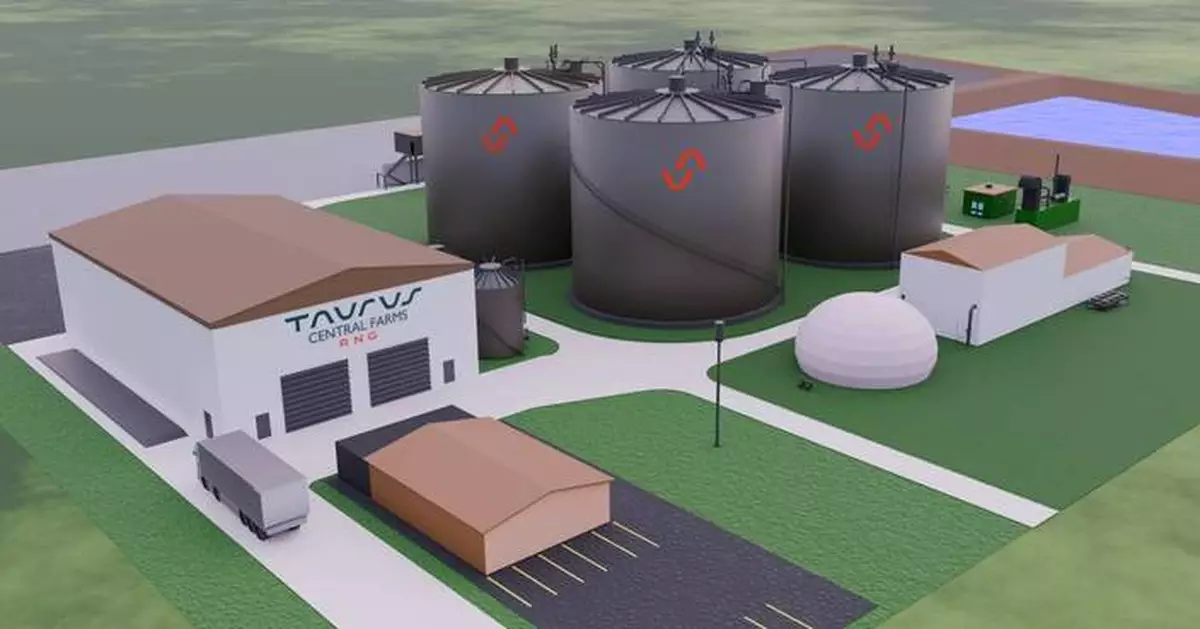
Through this innovative renewable energy production partnership with Kasko Cattle and KCL Cattle Company, Taurus RNG will utilize their deep process expertise in advanced anaerobic digestion, using a natural decomposition process to break down the manure and produce bio-methane, and avoiding it from escaping into the atmosphere. The result of the process is drop-in clean energy - Renewable Natural Gas (RNG) - which will be injected directly into the natural gas pipeline.
The facility will transform 130,000 tonnes of manure per year into 360,000 GJ of RNG (and a nutrient-rich digestate that serves as a sustainable fertilizer) while simultaneously capturing and sequestering biogenic CO2. The RNG from the Taurus RNG facility will generate enough energy to power 4500 homes, and it’s estimated the fossil fuel displaced will result in the reduction of emissions equivalent to removing 3,800 cars from the road.
“This anaerobic digestion and carbon sequestration facility represents a breakthrough in agricultural technology, turning a waste stream into a valuable resource, enhancing sustainable farming and redefining the value of feedlot manure for cattle operations,” said Abrary.
The facility will officially break ground this summer and it is estimated the construction will be completed and the facility will be fully operational by January 2028.
About Taurus Canada Renewable Natural Gas Corp:
Taurus RNG is leading the development of waste-to-renewable natural energy facilities in North America, specializing in carbon-negative energy created from complex and varied inputs such as manure and agricultural organics. The Team has delivered more than 50 projects globally, and is based in Vancouver, BC.
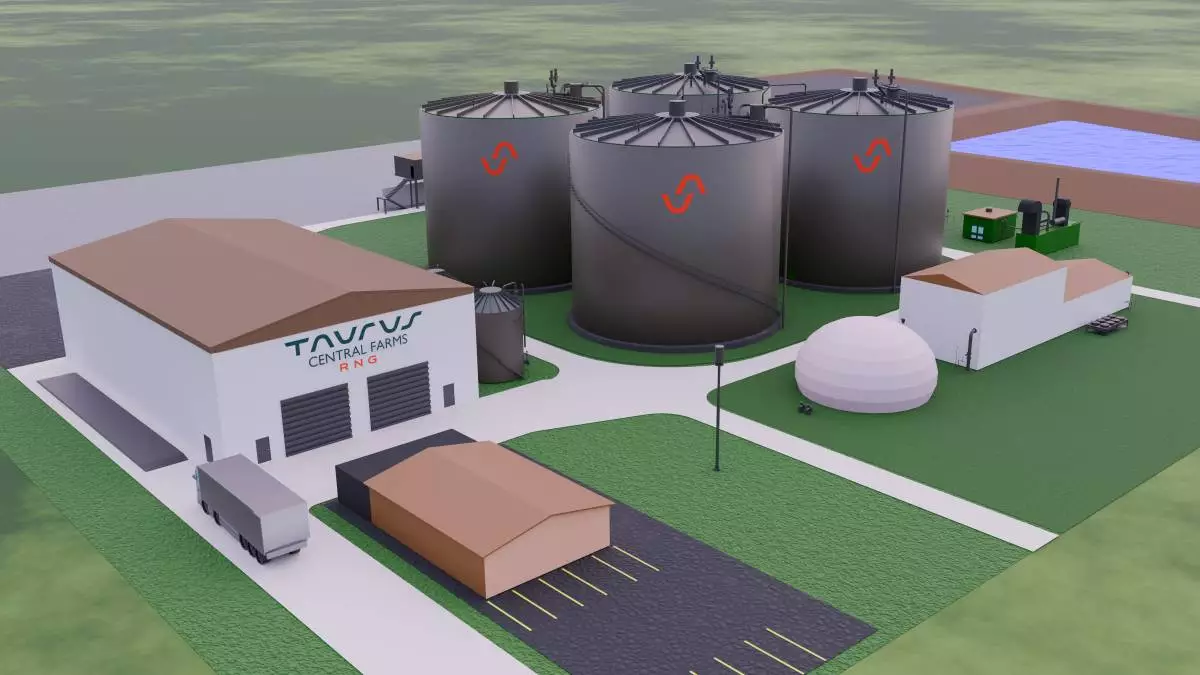
From manure to energy and valuable nutrients: 130,000 tonnes of manure per year will be transformed into 360,000 GJ of Renewable Natural Gas (RNG) at a Taurus RNG facility constructed on site at the Kasko Home Lot in Coaldale, Alberta. This will be the world's first integrated Anaerobic Digestion and Carbon Sequestration Facility to produce RNG exclusively from local livestock manure.
PARIS (AP) — Novak Djokovic placed ice packs around his neck and on top of his head during changeovers to keep cool amid the Paris heat wave at the French Open on Wednesday.
The 39-year-old Djokovic was pushed by 74th-ranked French player Valentin Royer — who is 15 years younger than him — for more than 3½ hours before he reached the third round with a 6-3, 6-2, 6-7 (7), 6-3 victory.
For the fourth straight day of this year’s tournament, the temperature rose beyond 32 degrees Celsius (90 Fahrenheit).
When Djokovic won a key point early in the fourth set with a forehand that he whipped around the net post from far off the court, the 24-time Grand Slam champion waved his arms toward the crowd inside Court Philippe-Chatrier.
Djokovic wasted a chance to close the match out earlier when he missed a backhand long in the third-set tiebreaker then required four more match points in his final service game before a forehand from Royer finally landed in the net to conclude a long rally.
Before arriving in Paris, Royer had earned only one tour-level win across 11 tournaments he played this season.
Djokovic came to Roland Garros with questions over his form after getting beat in his only clay-court match before the tournament. He lost to Croatian qualifier Dino Prizmic at the Italian Open after two months out due to a right shoulder injury.
But Djokovic is playing himself back into form after coming back from a set down to beat Giovanni Mpetshi Perricard, another Frenchman, in a first-round match that lasted nearly three hours.
Djokovic improved to 14-0 in his career against Frenchmen at Roland Garros and reached the third round in Paris for a 21st straight year. He raised the Coupe des Mousquetaires trophy in 2016, 2021 and 2023.
One duo of Djokovic fans inside the main stadium held up a sign with a goat on it — for “Greatest of All Time” — that read “39 is the new 29.”
Up next for Djokovic is potentially a bigger test against either 19-year-old Brazilian Joao Fonseca or the 20-year-old Prizmic, who were playing later. Fonseca has been touted as a future Grand Slam contender, while Djokovic himself pointed to big things ahead for Prizmic after their meeting in Rome.
Later, second-seeded Alexander Zverev was playing Tomas Machac in the night session.
Elena Rybakina, this year’s Australian Open winner, was beaten by Ukrainian opponent Yuliia Starodubtseva 3-6, 6-1, 7-6 (4).
Also advancing were in-form Ukrainians Elina Svitolina and Marta Kostyuk, who are coming off trophies at the Madrid Open and Italian Open, respectively.
The seventh-seeded Svitolina beat Kaitlin Quevedo 6-0, 6-4 to extend her winning streak to eight matches. The 15th-seeded Kostyuk beat Katie Volynets 6-7 (4), 6-3, 6-3 to extend her winning streak to 13 matches.
Four-time champion Iga Swiatek improved her career record at Roland Garros to 42-3 by eliminating 35th-ranked Sara Bejlek 6-2, 6-3.
Swiatek won Roland Garros in 2020, 2022, 2023 and 2024.
Swiatek next faces Magda Linette in the first all-Polish meeting at Roland Garros in the professional era (since 1968). Linette eliminated 2017 champion Jelena Ostapenko 6-2, 2-6, 6-2.
Also, 11th-seeded Belinda Bencic beat American opponent Caty McNally 6-4, 6-0.
AP tennis: https://apnews.com/hub/tennis
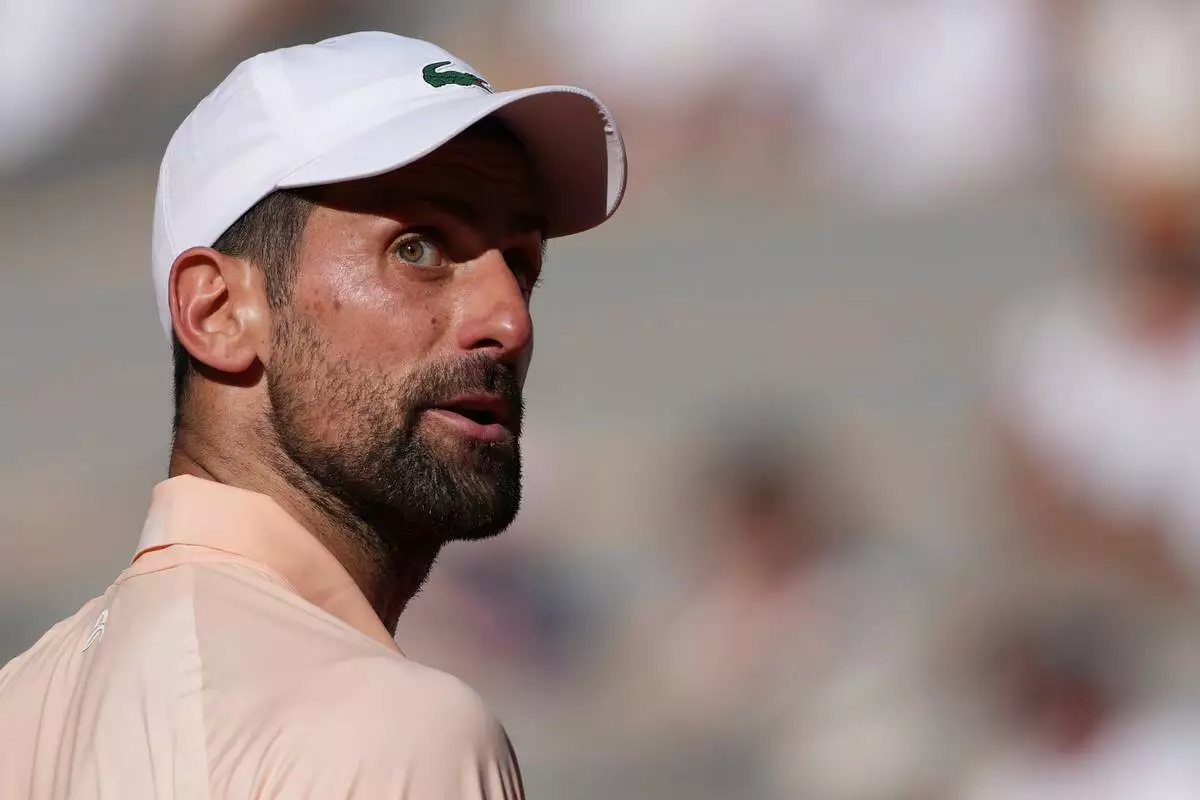
Novak Djokovic of Serbia reacts as he plays against Valentin Royer of France during their second round men's singles tennis match at the French Open tennis tournament in Paris, Wednesday, May 27, 2026. (AP Photo/Thibault Camus)
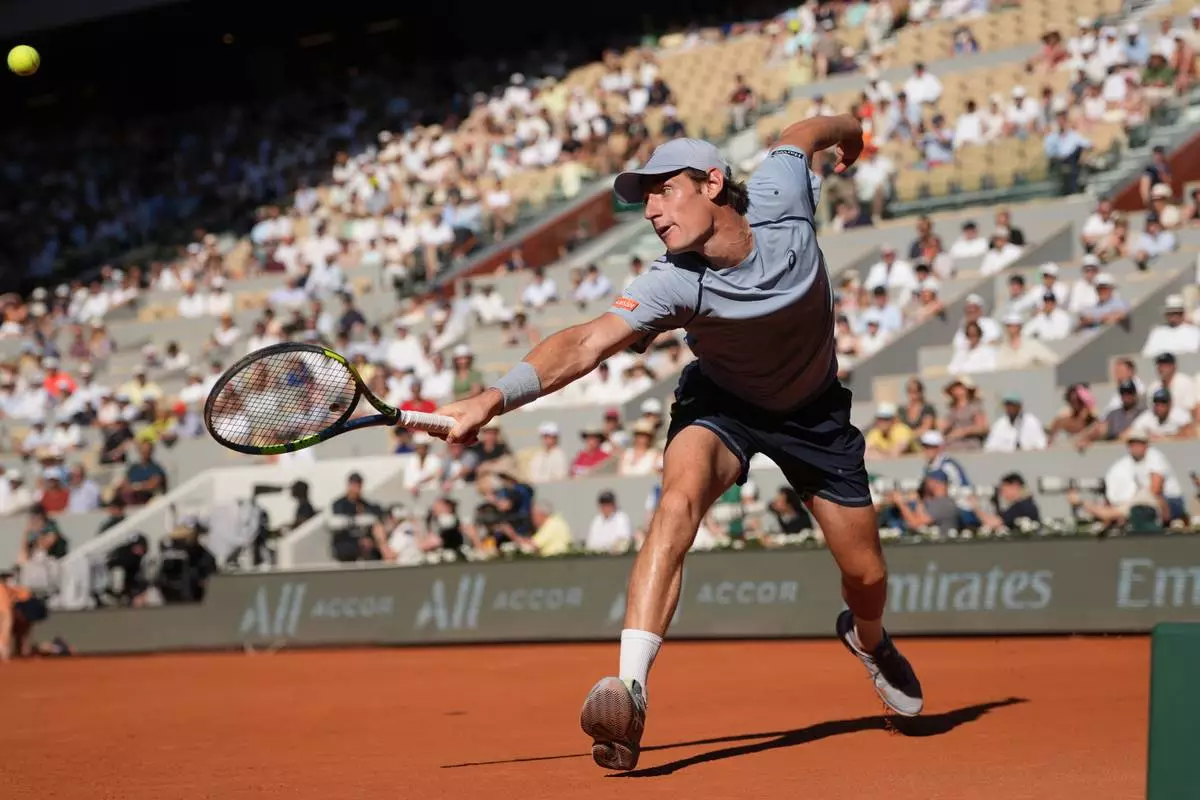
Valentin Royer of France returns to Novak Djokovic of Serbia during their second round men's singles tennis match at the French Open tennis tournament in Paris, Wednesday, May 27, 2026. (AP Photo/Thibault Camus)
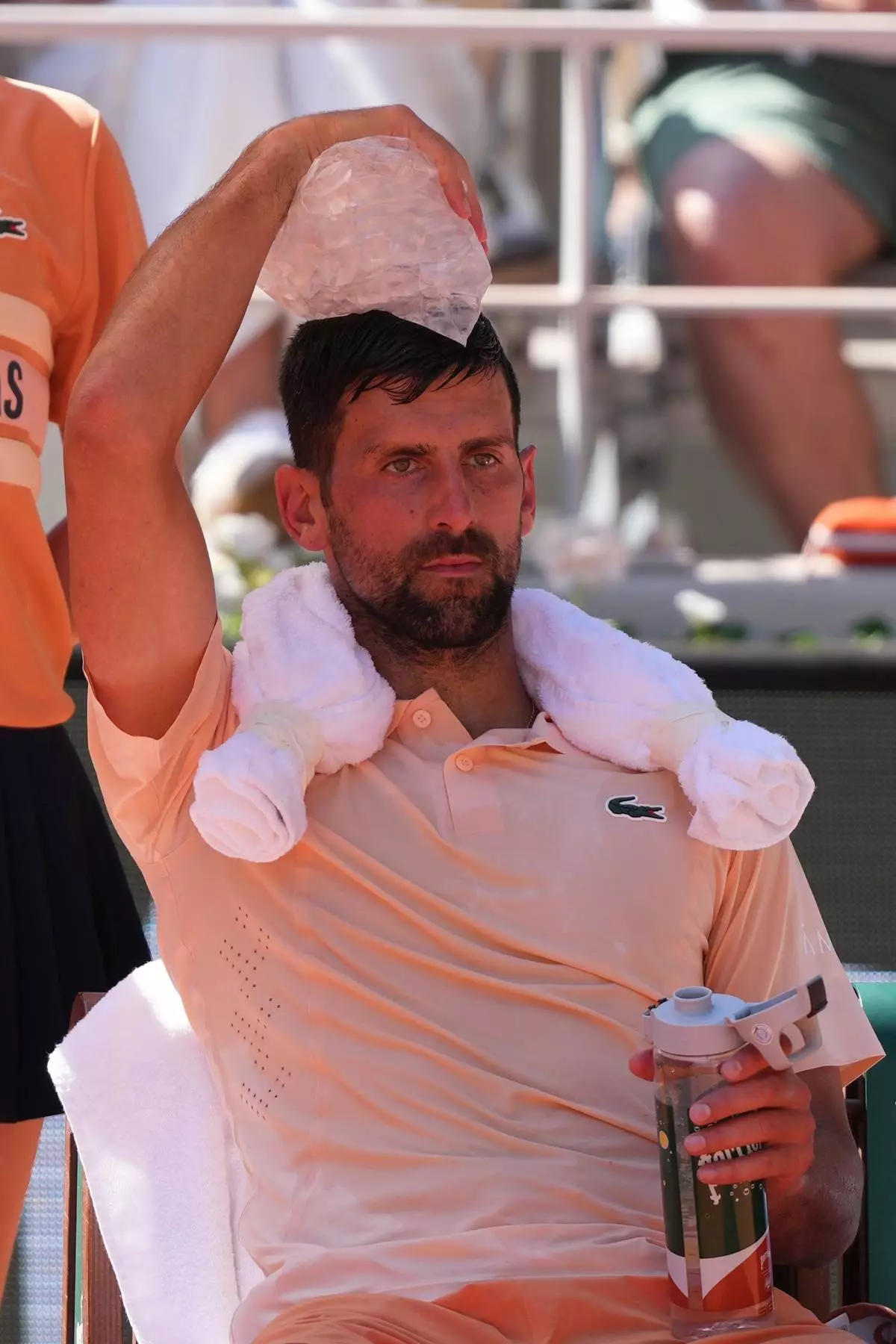
Novak Djokovic of Serbia cools himself with the ice during a break of the second round men's singles tennis match against Valentin Royer of France at the French Open tennis tournament in Paris, Wednesday, May 27, 2026. (AP Photo/Thibault Camus)
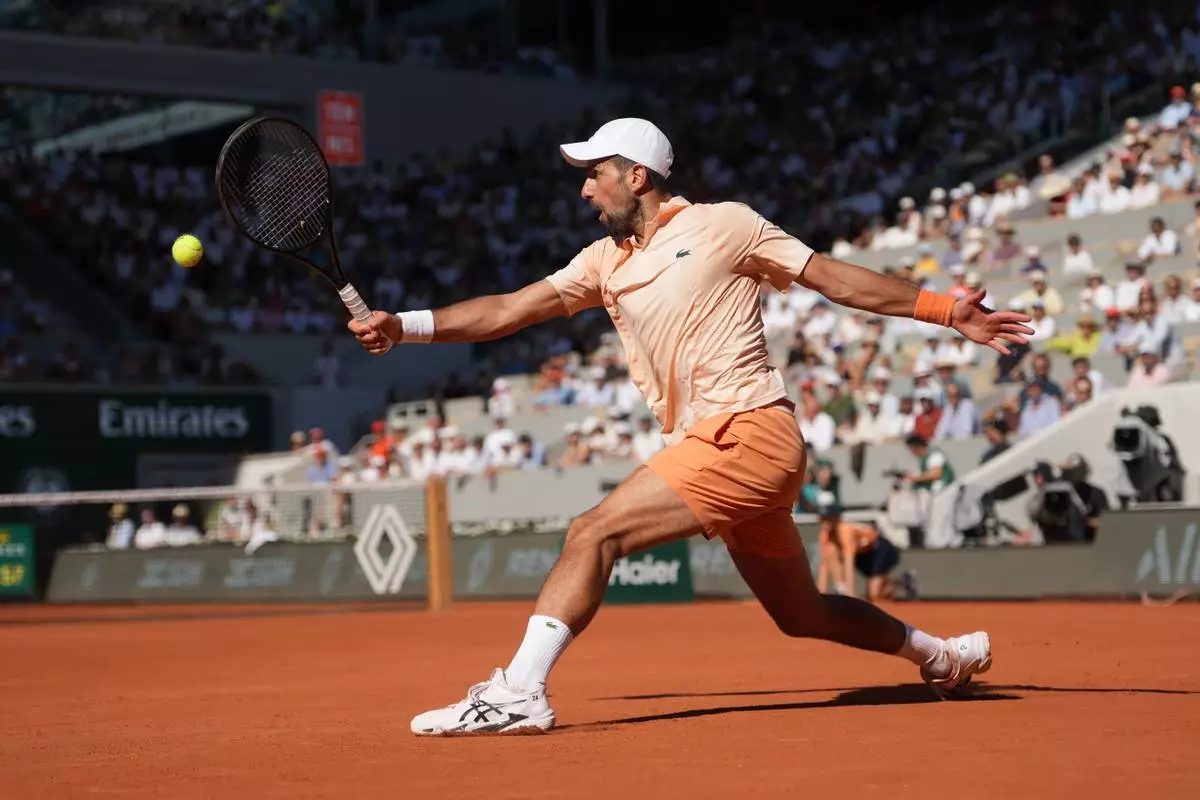
Novak Djokovic of Serbia returns to Valentin Royer of France during their second round men's singles tennis match at the French Open tennis tournament in Paris, Wednesday, May 27, 2026. (AP Photo/Thibault Camus)
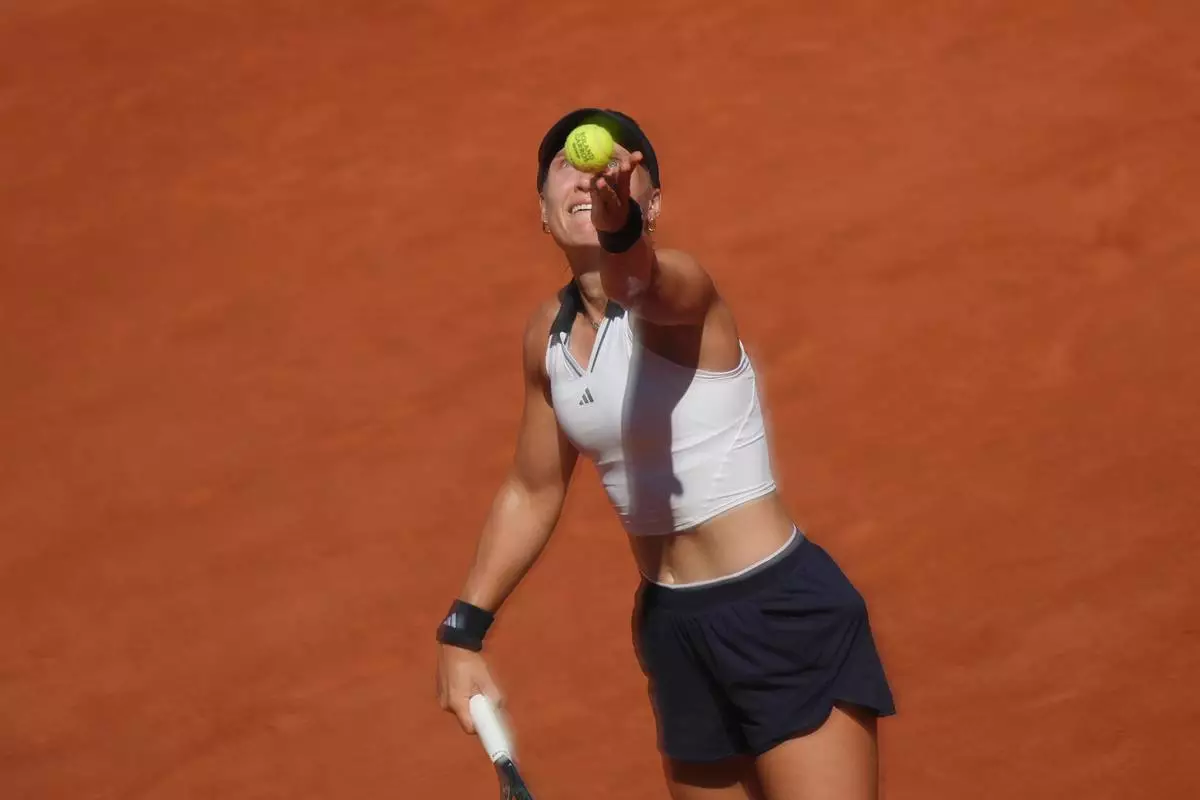
Yuliia Starodubtseva of Ukraine serves to Elena Rybakina of Kazakhstan during their second round women's singles tennis match at the French Open tennis tournament in Paris, Wednesday, May 27, 2026. (AP Photo/Aurelien Morissard)
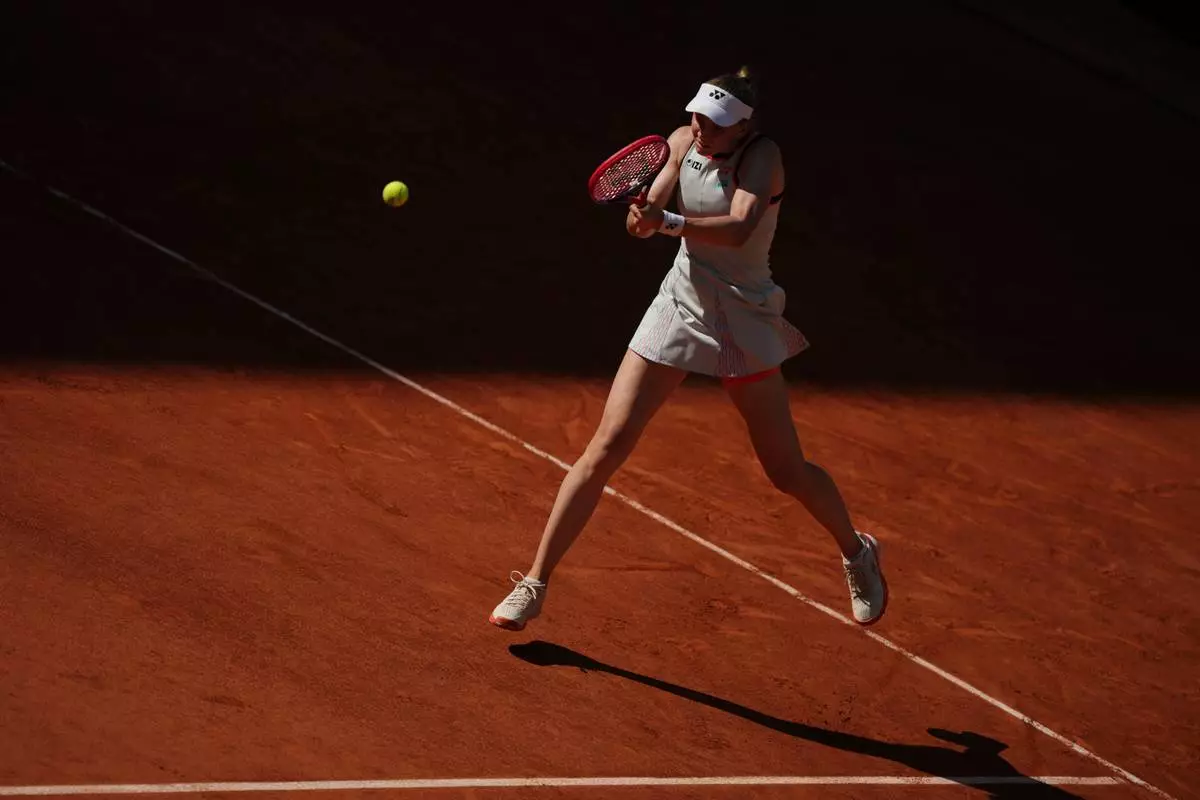
Elena Rybakina of Kazakhstan returns to Yuliia Starodubtseva of Ukraine during their second round women's singles tennis match at the French Open tennis tournament in Paris, Wednesday, May 27, 2026. (AP Photo/Aurelien Morissard)
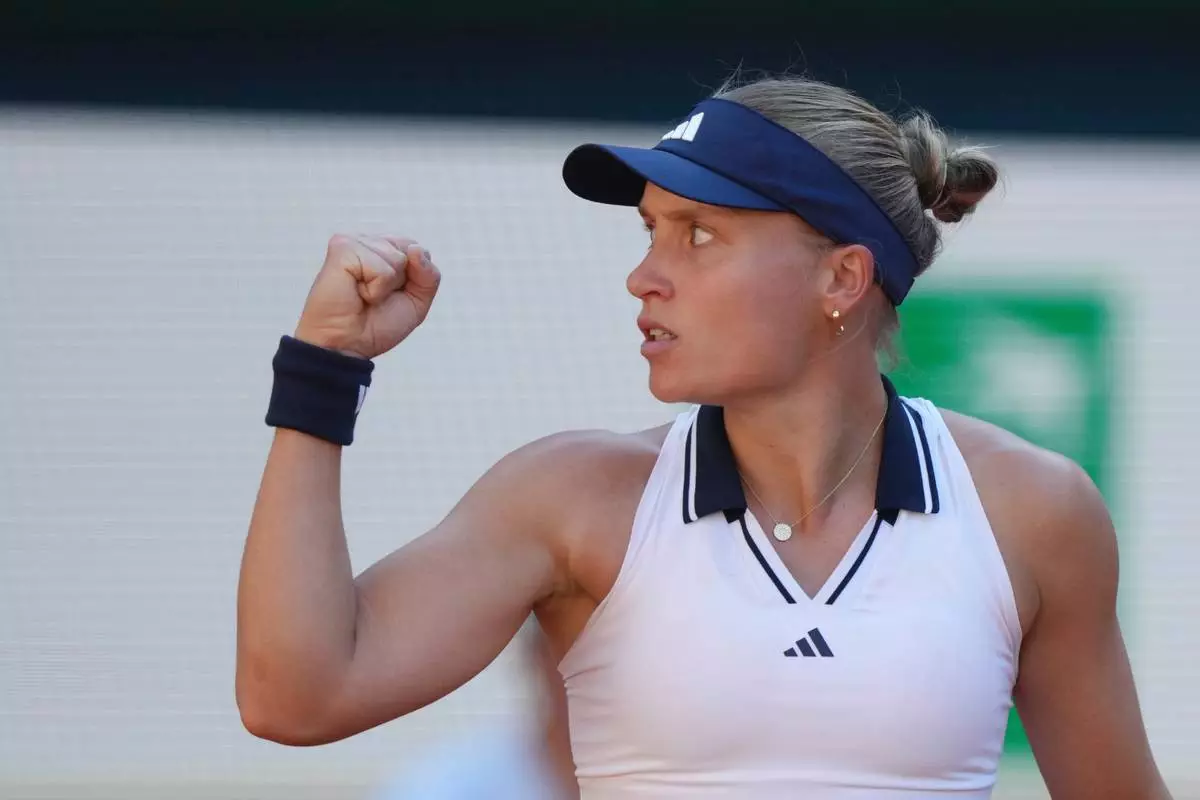
Yuliia Starodubtseva of Ukraine reacts as she plays against Elena Rybakina of Kazakhstan during their second round women's singles tennis match at the French Open tennis tournament in Paris, Wednesday, May 27, 2026. (AP Photo/Aurelien Morissard)
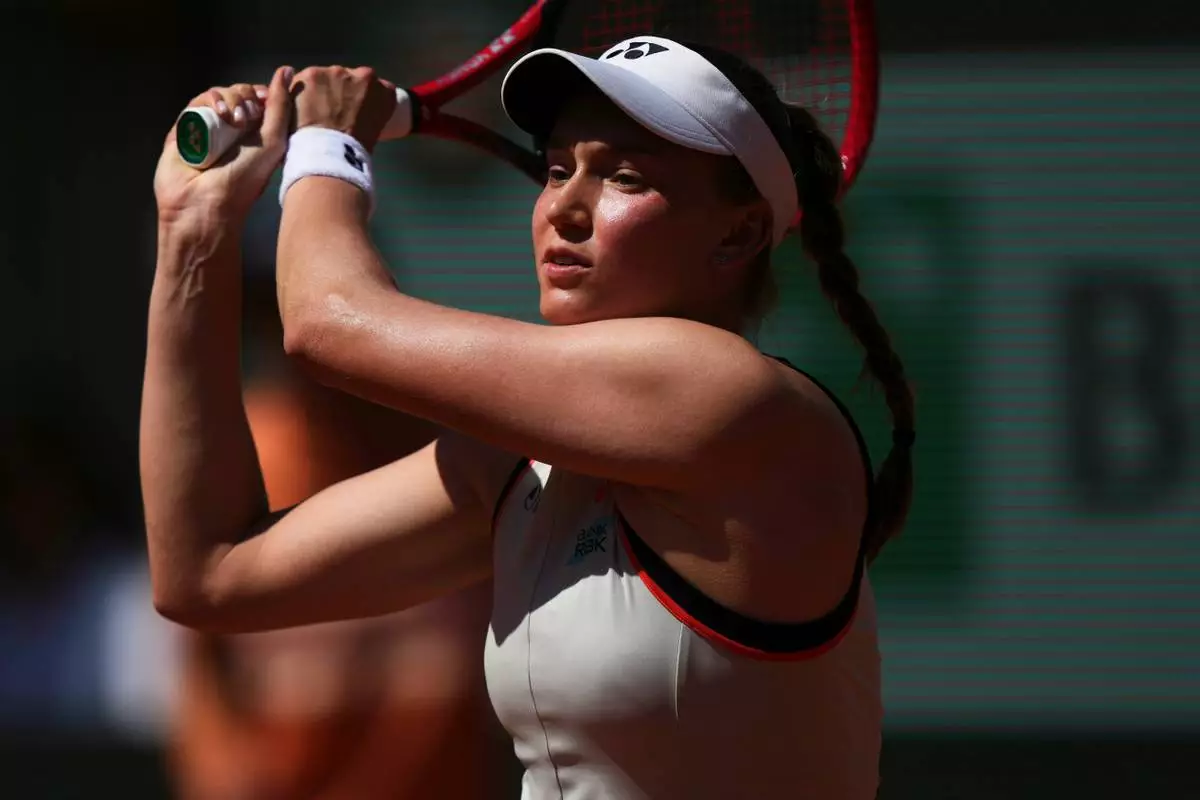
Elena Rybakina of Kazakhstan returns to Yuliia Starodubtseva of Ukraine during their second round women's singles tennis match at the French Open tennis tournament in Paris, Wednesday, May 27, 2026. (AP Photo/Aurelien Morissard)
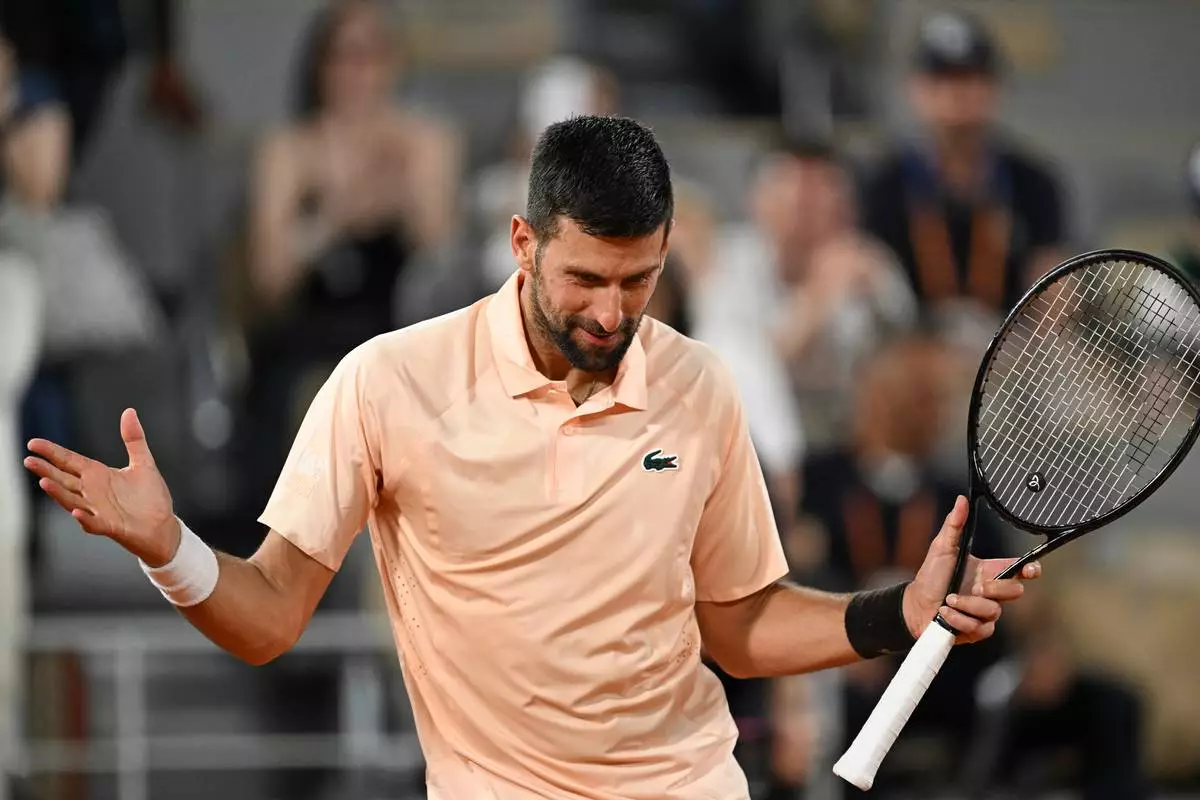
Novak Djokovic of Serbia celebrates after winning the first round men's singles tennis match against against Giovanni Mpetshi Perricard of France at the French Open tennis tournament in Paris, Sunday, May 24, 2026. (AP Photo/Emma Da Silva)
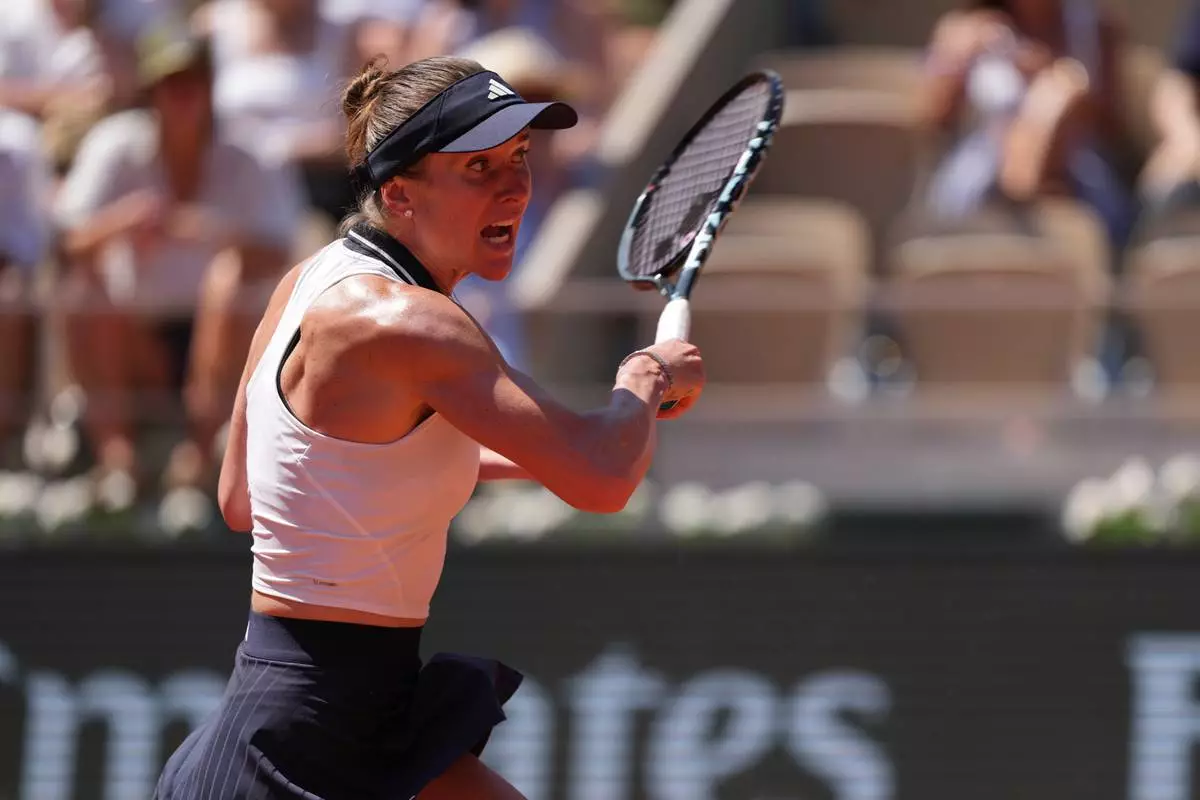
Elina Svitolina of Ukraine returns to Kaitlin Quevedo of Spain during their second round women's singles tennis match at the French Open tennis tournament in Paris, Wednesday, May 27, 2026. (AP Photo/Thibault Camus)
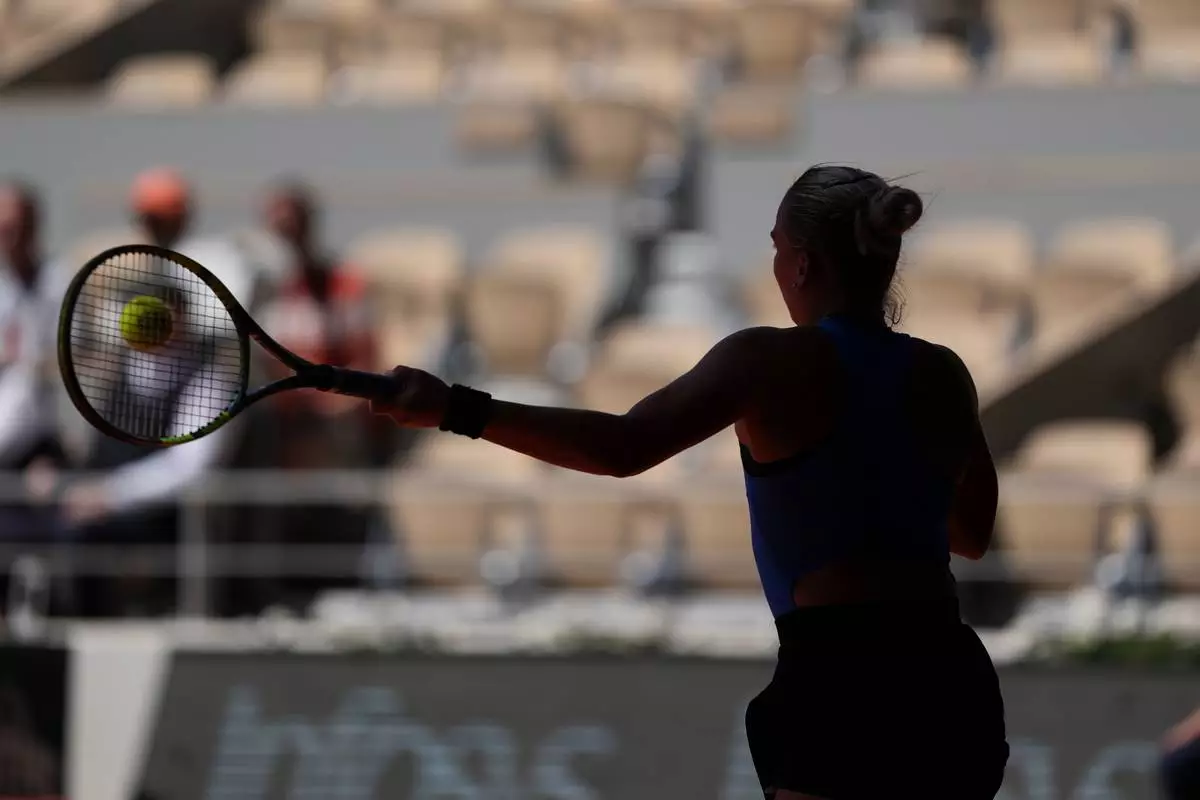
Sara Bejlek of the Czech Republic returns to Iga Swiatek of Poland during their second round women's singles tennis match at the French Open tennis tournament in Paris, Wednesday, May 27, 2026. (AP Photo/Thibault Camus)
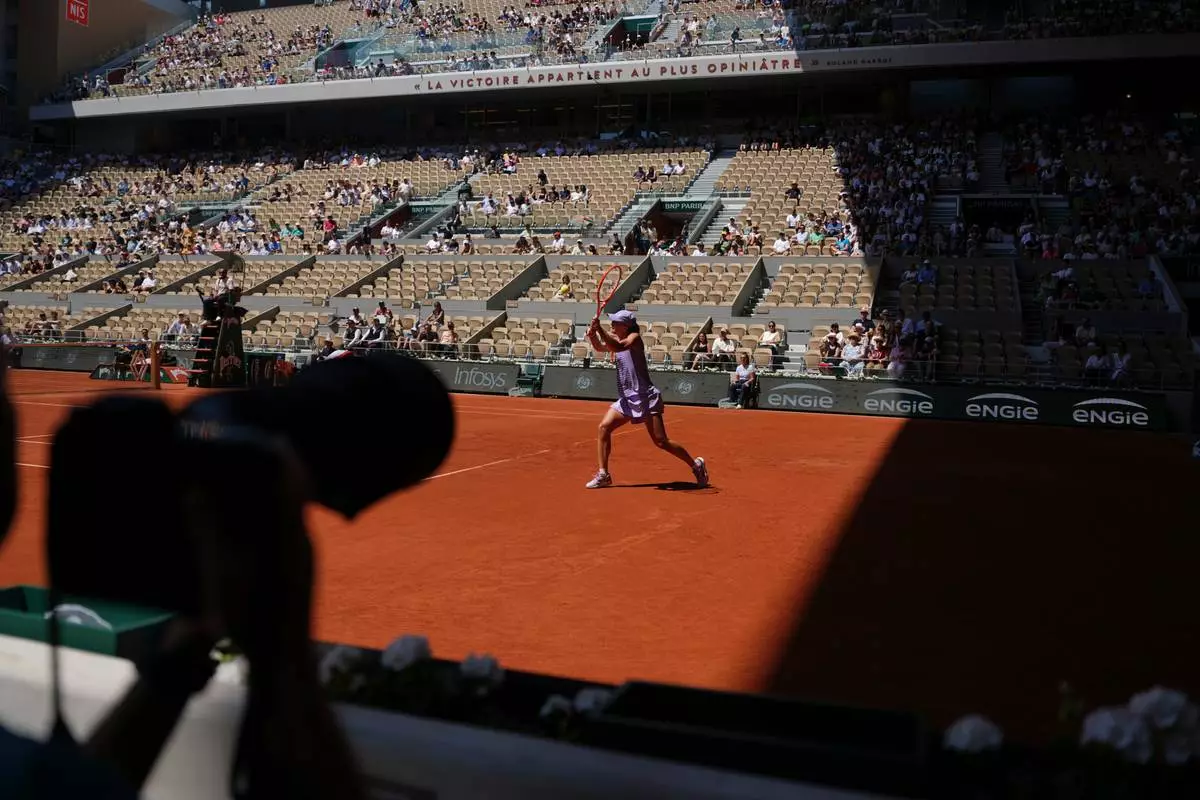
Iga Swiatek of Poland returns to Sara Bejlek of the Czech Republic during their second round women's singles tennis match at the French Open tennis tournament in Paris, Wednesday, May 27, 2026. (AP Photo/Thibault Camus)
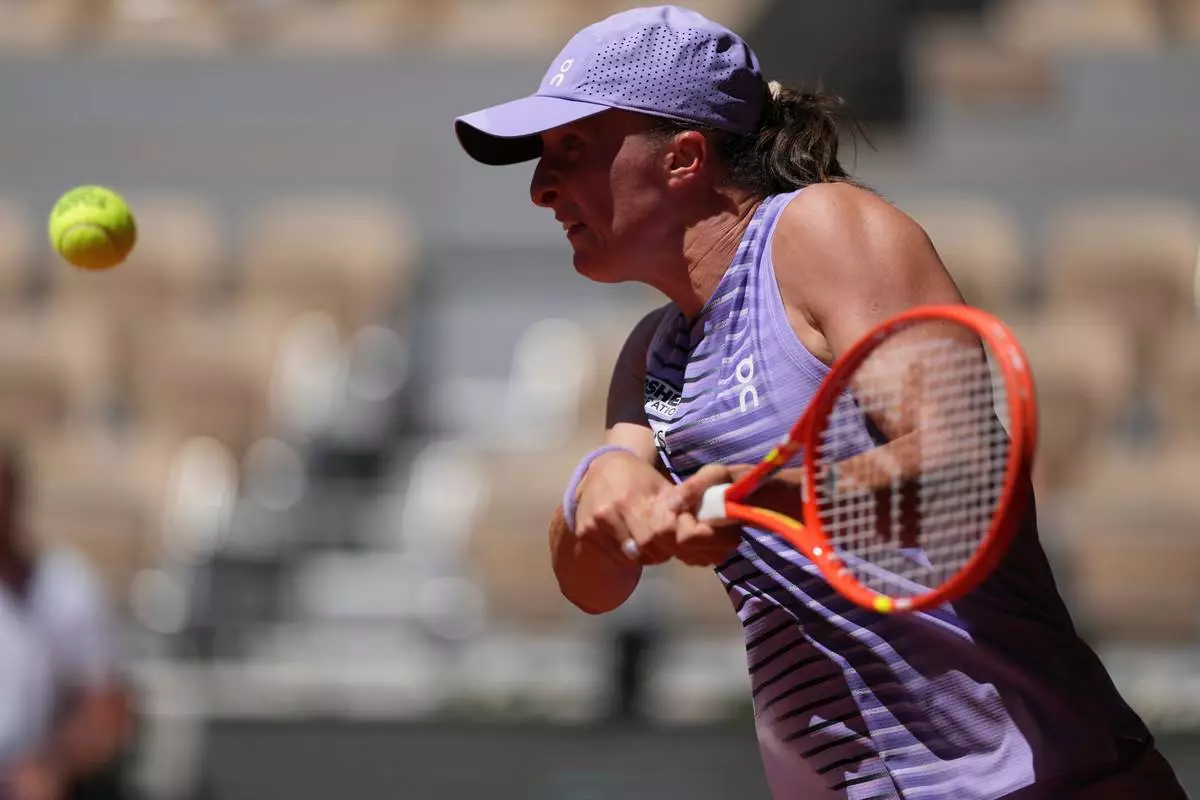
Iga Swiatek of Poland returns to Sara Bejlek of the Czech Republic during their second round women's singles tennis match at the French Open tennis tournament in Paris, Wednesday, May 27, 2026. (AP Photo/Thibault Camus)