DH continues to step up enforcement actions against illegal use of pharmacy logo and title with approach of Chinese New Year holidays
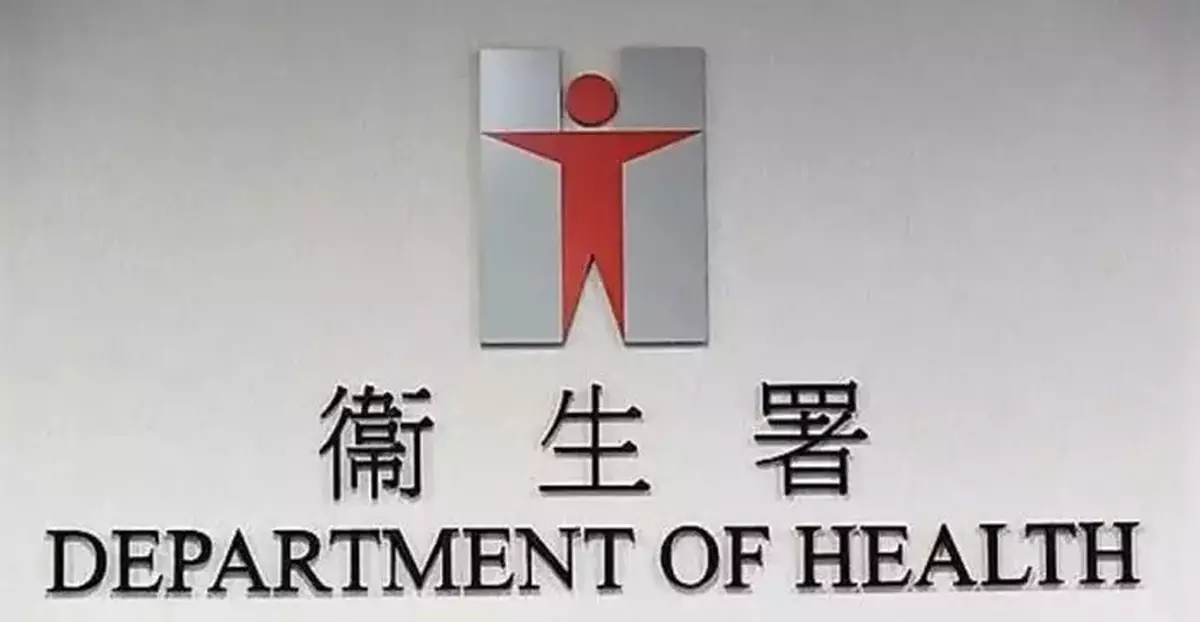
With the Chinese New Year holidays approaching, the Department of Health (DH) today (February 13) announced that it will continue to step up inspections of Authorized Sellers of Poisons (ASPs), commonly known as pharmacies, and Listed Sellers of Poisons, commonly known as medicine companies, throughout Hong Kong, particularly in tourist areas, to monitor their compliance with the laws and the relevant codes of practice. Last year (2025), approximately 9 600 inspections of these premises were conducted to combat illegal practices. The DH will continue to enhance enforcement actions against the illegal use of logos and titles of pharmacies and carry out follow-up investigations of suspected violations.These efforts aim to safeguard public health. The DH also reminded the public, including tourists, to verify the pharmacy logo (see Annex 1) in the prescribed form when purchasing medicines.
Stepping up inspections and enforcement
---------------------------
Last year, seven limited companies and a proprietor of a retailer, all of which were not pharmacies, were convicted of displaying a logo resembling the prescribed form of a pharmacy at their premises and were fined from $3,500 to $10,000. Two other limited companies, which were also not pharmacies, committed the same offence and were convicted and fined $5,000 and $32,000 respectively in January this year.
According to the Pharmacy and Poisons Ordinance (Cap. 138), only persons authorised by the Pharmacy and Poisons Board of Hong Kong as ASPs are allowed to conduct the relevant retail business of selling poisons at premises registered by the Board, including poisons listed in Part 1 and Part 2 of the Poisons List at Schedule 10 to the Pharmacy and Poisons Regulations (Cap. 138A). Displaying a logo in the prescribed form of a pharmacy or a logo, which resembles the logo in the prescribed form at premises other than the registered premises of a pharmacy, or using the Chinese term "" or the terms such as "pharmacy", "dispensary", or "drug-store" in connection with any business engaged in the retail sale of poisons, commits an offence. The maximum penalty upon conviction is a fine of $100,000 and two years' imprisonment.
The use of a pharmacy logo or its title as stipulated by the Ordinance is applicable to all retailers, including those that are not licensed by the Board. The DH reminded non-pharmacy businesses to refrain from illegitimate use and will continue to collect intelligence through different channels. If any retailer is suspected of illegally displaying a pharmacy logo in the prescribed form or pharmacy title, the DH will follow up and carry out an investigation immediately and conduct joint operations with relevant departments when necessary.
Label for ASPs and "Licence Scanner"
------------------------------------------
To enable the public to identify registered pharmacies, the DH has formulated a label (see Annex 2) for identification of ASPs, and the labels have been sent to each pharmacy for display in a conspicuous position in the pharmacy.Members of the public and tourists can download the eHealth app from the website (app.ehealth.gov.hk) and use the "Licence Scanner" on its homepage to scan the QR code displayed at the pharmacy. For registered pharmacies, the message "This is a QR Code issued for licensed pharmacy" will appear alongside details of that particular registered pharmacy. Members of the public can also visit thewebsiteof the DH's Drug Office for educational materials on "'Pharmacies' in Hong Kong", as well as the names and addresses of all licensees including ASPs.
In addition, to help Mainland visitors distinguish pharmacies in Hong Kong, the DH also detailed points to note when buying medicines from pharmacies in Hong Kong on its official WeChat account (www.chp.gov.hk/en/static/108354.html).
The Department of Health (DH), Photo source: reference image