LOS ANGELES (AP) — In the arid, cracked desert ground in Southern California, a tiny bee pokes its head out of a hole no larger than the tip of a crayon.
Krystle Hickman crouches over with her specialized camera fitted to capture the minute details of the bee’s antennae and fuzzy behind.
“Oh my gosh, you are so cute,” Hickman murmurs before the female sweat bee flies away.
Hickman is on a quest to document hundreds of species of native bees, which are under threat by climate change and habitat loss, some of it caused by the more recognizable and agriculturally valued honey bee — an invasive species. Of the roughly 4,000 types of bees native to North America, Hickman has photographed over 300. For about 20 of them, she's the first to ever photograph them alive.
Through photography, she wants to raise awareness about the importance of native bees to the survival of the flora and fauna around them.
“Saving the bees means saving their entire ecosystems,” Hickman said.
On a Saturday in January, Hickman walked among the early wildflower bloom at Anza Borrego Desert State Park in San Diego County, a few hundred miles southeast of Los Angeles, where clumps of purple verbena and patches of white primrose were blooming unusually early due to a wet winter.
Where there are flowers, there are bees.
Hickman has no formal science education and dropped out of a business program that she hated. But her passion for bees and keen observation skills made her a good community scientist, she said. In October, she published a book documenting California's native bees, partly supported by National Geographic. She's conducted research supported by the University of California, Irvine, and hopes to publish research notes this year on some of her discoveries.
“We’re filling in a lot of gaps,” she said of the role community scientists play in contributing knowledge alongside academics.
On a given day, she might spend 16 hours waiting beside a plant, watching as bees wake up and go about their business. They pay her no attention.
Originally from Nebraska, Hickman moved to Los Angeles to pursue acting. She began photographing honey bees in 2018, but soon realized native bees were in greater danger.
Now, she's a bee scientist full time.
“I really think anyone could do this,” Hickman said.
Melittologists, or people who study bees, have traditionally used pan trapping to collect and examine dead bee specimens. To officially log a new species, scientists usually must submit several bees to labs, Hickman said.
There can be small anatomical differences between species that can’t be photographed, such as the underside of a bee, Hickman said.
But Hickman is vehemently against capturing bees. She worries about harming already threatened species. Unofficially, she thinks she's photographed at least four previously undescribed species.
Hickman said she’s angered “a few melittologists before because I won’t tell them where things are.”
Her approach has helped her forge a path as a bee behavior expert.
During her trip to Anza Borrego, Hickman noted that the bees won’t emerge from their hideouts until around 10 a.m., when the desert begins to heat up. They generally spend 20 minutes foraging and 10 minutes back in their burrows to offload pollen, she said.
“It’s really shockingly easy to make new behavioral discoveries just because no one’s looking at insects alive,” she said.
Hickman still works closely with other melittologists, often sending them photos for identification and discussing research ideas.
Christine Wilkinson, assistant curator of community science at the Natural History Museum in Los Angeles, said Hickman was a perfect example of why it's important to incorporate different perspectives in the pursuit of scientific knowledge.
“There are so many different ways of knowing and relating to the world,” Wilkinson said. “Getting engaged as a community scientist can also get people interested in and passionate about really making change.”
There’s a critically endangered bee that Hickman is particularly determined to find — Bombus franklini, or Franklin’s bumblebee, last seen in 2006.
Since 2021, she’s traveled annually to the Oregon-California border to look for it.
“There’s quite a few people who think it’s extinct, but I’m being really optimistic about it,” she said.
Habitat loss, as well as competition from honey bees, have made it harder for native bees to survive. Many native bees will only drink the nectar or eat the pollen of a specific plant.
Because of her success in tracking down bees, she’s now working with various universities and community groups to help find lost species, which are bees that haven’t been documented in the wild for at least a decade.
Hickman often finds herself explaining to audiences why native bees are important. They don’t make honey, and the disappearance of a few bees might not have an apparent impact on humans.
“But things that live here, they deserve to live here. And that should be a good enough reason to protect them,” she said.
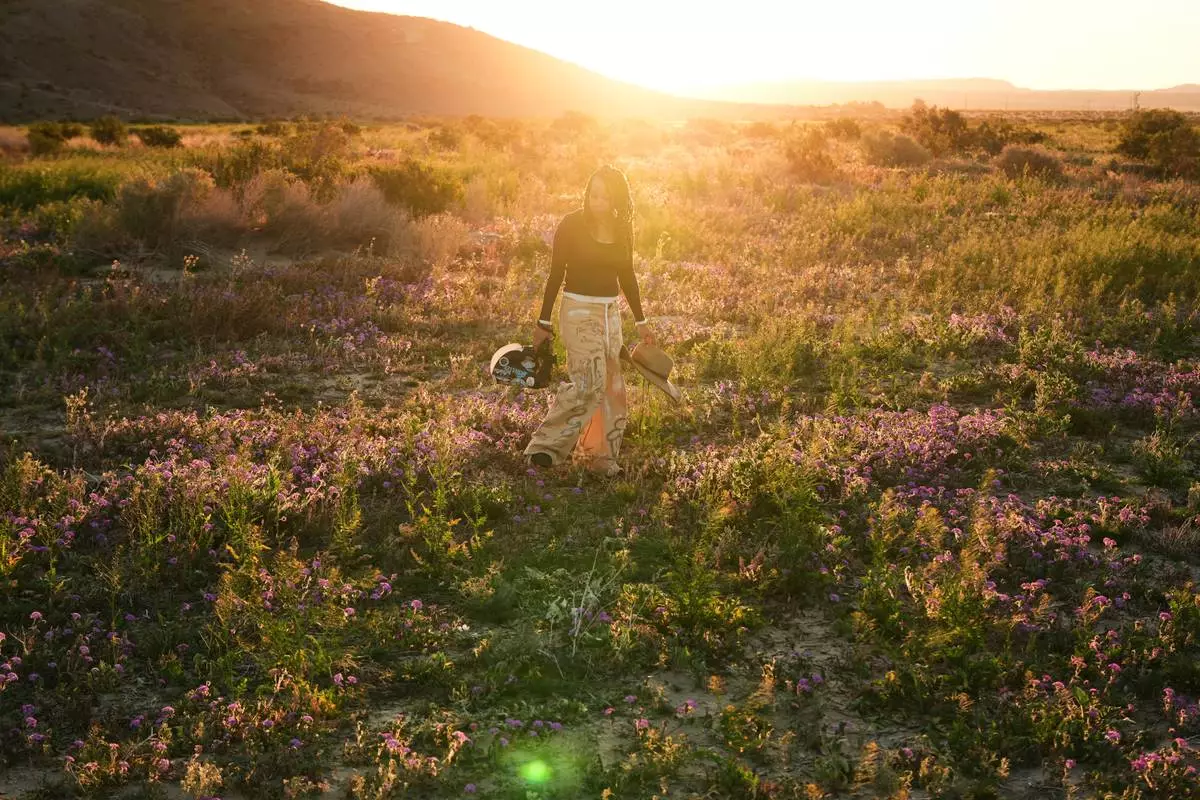
Photographer Krystle Hickman walks in a field of wildflowers while photographing wild bees at Anza-Borrego Desert State Park in San Diego County, Calif., on Saturday, Feb. 7, 2026. (AP Photo/Damian Dovarganes)
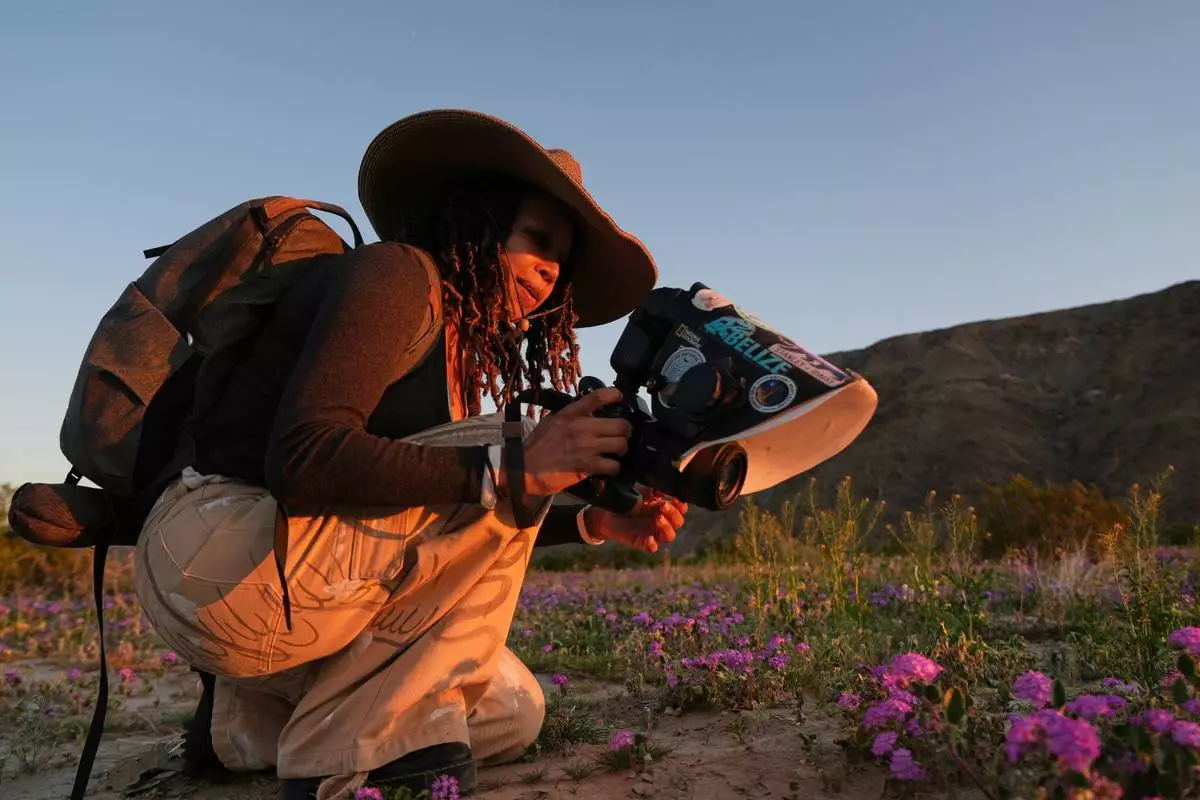
Photographer Krystle Hickman photographs wild bees as desert sunflowers blanket the valley floor at Anza-Borrego Desert State Park in San Diego County, Calif., on Saturday, Feb. 7, 2026. (AP Photo/Damian Dovarganes)

Photographer Krystle Hickman photographs wild bees as desert sunflowers blanket the valley floor at Anza-Borrego Desert State Park in San Diego County, Calif., on Saturday, Feb. 7, 2026. (AP Photo/Damian Dovarganes)
Launch preparations have begun for the Artemis II mission, NASA’s planned lunar fly-around by four astronauts that will be the first moon trip in 53 years.
Tensions were high as hydrogen fuel started flowing into the rocket hours ahead of the planned launch. Dangerous hydrogen leaks erupted during a countdown test earlier this year, forcing a lengthy flight delay.
The launch team needs to load more than 700,000 gallons of fuel (2.6 million liters) into the 32-story Space Launch System rocket on the pad before the Artemis II crew can board.
The 32-story Space Launch System rocket is poised to blast off Wednesday evening with a two-hour launch window beginning at 6:24 p.m. EDT at Kennedy Space Center in Florida.
Artemis astronauts Reid Wiseman, Victor Glover, Christina Koch and Jeremy Hansen will be on board. They’ll hurtle several thousand miles beyond the moon, hang a U-turn and then come straight back. No circling around the moon, no stopping for a moonwalk — just a quick out-and-back lasting less than 10 days. NASA promises more boot prints in the gray lunar dust, but not before a couple practice missions.
Unlike the Apollo missions that sent astronauts to the moonfrom 1968 through 1972, Artemis’ debut crew includes a woman, a person of color and a Canadian citizen.
Artemis II is the opening shot of NASA’s grand plans for a permanent moon base. The space program is aiming for a moon landing near the lunar south pole in 2028.
The Latest:
The wind is picking up at Cape Canaveral, more clouds are appearing and rain is expected in about two hours. But there is no lightning threat, NASA says, and there’s still an 80% chance the weather will be good enough to launch.
L-minus tracks the overall time to liftoff, counting down the days, hours and minutes away before the planned blastoff. It doesn’t include built-in holds, or pauses — that’s T-minus time.
The T-minus countdown in the final 10 minutes is where nerves tense up and hearts start pounding. Automated software kicks off a series of highly choreographed milestones. During this period, the clock can be stopped if a problem is spotted and restarted if it’s fixed in time.
T-0 is the moment of liftoff — zero — when the boosters ignite and the rocket begins its journey.
NASA has a narrow time frame each month to fly to the moon.
The Earth and moon must be aligned just so to achieve the proper trajectory for the mission. In any given month, there’s only about a week when Artemis II astronauts can lift off.
The Orion capsule needs to get a check of its life-support and other systems in near-Earth orbit. If that goes well, Orion will fire its main engine to hurtle toward the moon, taking advantage of the moon and Earth’s gravity to get there and back in a slingshot maneuver that requires little if any fuel.
Orion also needs sunlight for power and can’t be in darkness for more than 90 minutes at a time. Plus NASA wants to minimize heating during reentry at flight’s end.
The latest launch window runs through April 6. The next opportunity opens on April 30.
The hydrogen tank of the rocket’s core stage is 100% filled. NASA said no significant leaks have been observed so far in fueling. It was hydrogen leaks that prevented the rocket from flying in February.
The alarm clocks just went off in Kennedy Space Center’s crew quarters.
That means it’s rise and shine for the three Americans and one Canadian who are about to become the first lunar visitors in more than 53 years.
They have a long day ahead of them, whether they launch or not.
After breakfast, they’ll start suiting up. NASA’s launch window opens at 6:24 p.m. and lasts a full two hours.
Launch director Charlie Blackwell-Thompson is wearing green as are many of the controllers alongside her in the firing room.
Green represents “go” for NASA, a color symbolizing good luck.
The team is monitoring the fueling of the 322-foot moon rocket, set to blast off Wednesday evening.
A plush toy named Rise will ride with the Artemis II astronauts around the moon, carrying the names of more than 5.6 million people.
Rise is what’s known as a zero gravity indicator, which gives the astronauts a visual cue of when they reach space.
The design was inspired by the iconic “Earthrise” photo during Apollo 8, showing the planet as a shadowed blue marble from space in 1968.
Rise was selected from more than 2,600 contest submissions. It was designed by Lucas Ye of California.
Commander Reid Wiseman and his crew tucked a small memory card into Rise before the toy was loaded into the Orion capsule. The card bears the names of all those who signed up with NASA to vicariously tag along on the nearly 10-day journey.
“Zipping that little pocket on the bottom of Rise was kind of the moment that put it all together for me,” Wiseman said. “We are going for all and by all. It’s time to fly.”
NASA is fueling the new rocket that will send four astronauts to the moon.
Launch teams have begun pumping more than 700,000 gallons (2.6 million liters) of liquid hydrogen and liquid oxygen into the Space Launch System rocket at Kennedy Space Center in Florida.
It’s the latest milestone in the two-day countdown that kicked off on Monday when launch controllers reported to duty.
It will take at least four hours to fully load the rocket before astronauts climb aboard for humanity’s first flight to the moon since Apollo 17 in 1972.
The two-hour launch window opens at 6:24 p.m. EDT.
▶ Read more about Apollo vs. Artemis
The Americans who blazed the trail to the moon more than half a century ago were white men chosen for their military test pilot experience.
The Artemis II crew includes a woman, a person of color and a Canadian, products of a more diversified astronaut corps.
▶ Read more about Christina Koch, Victor Glover, Jeremy Hansen and Reid Wiseman
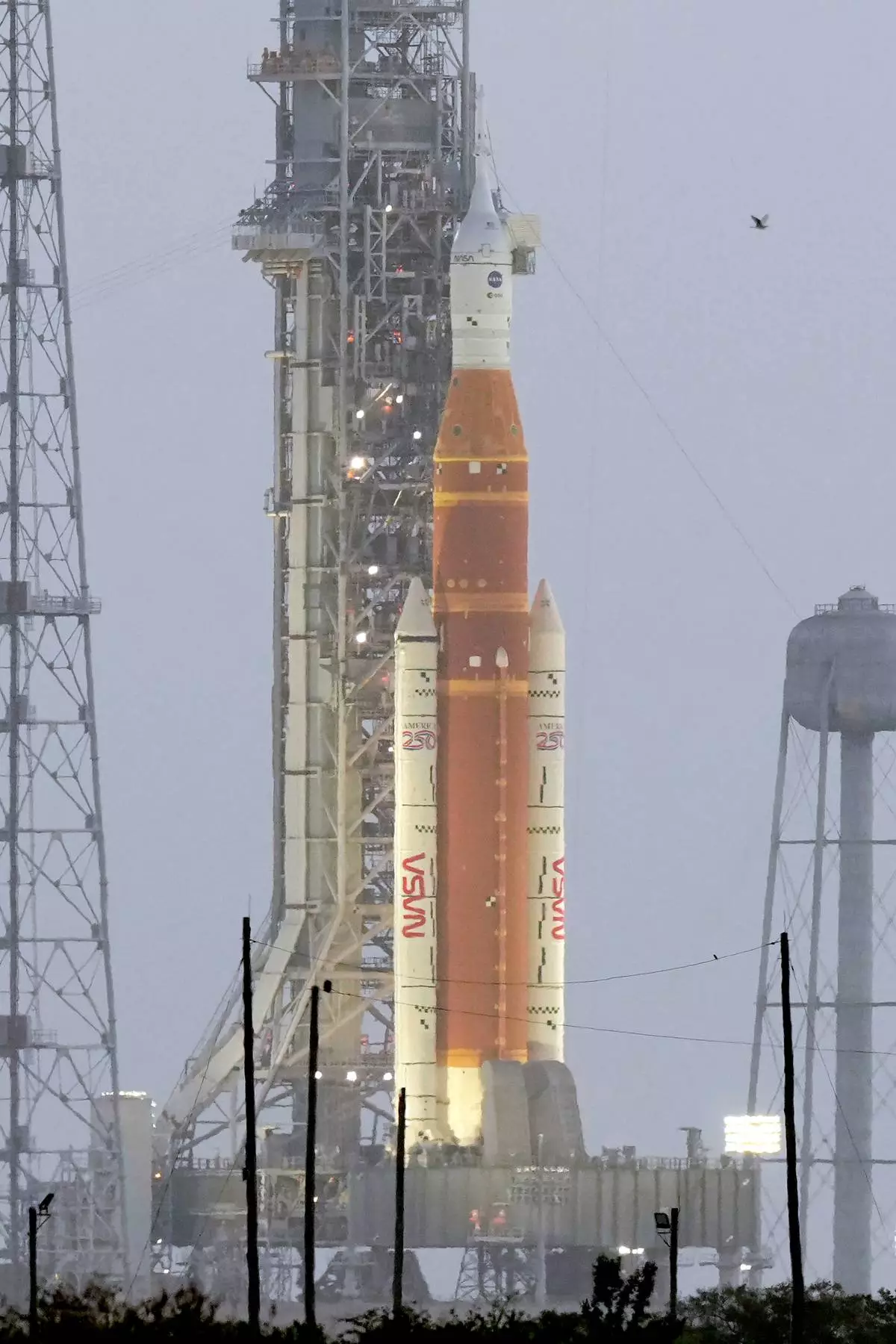
NASA's Artermis II moon rocket sits on Launch Pad 39-B at the Kennedy Space Center hours ahead of planned liftoff Wednesday, April 1, 2026, in Cape Canaveral, Fla. (AP Photo/Chris O'Meara)
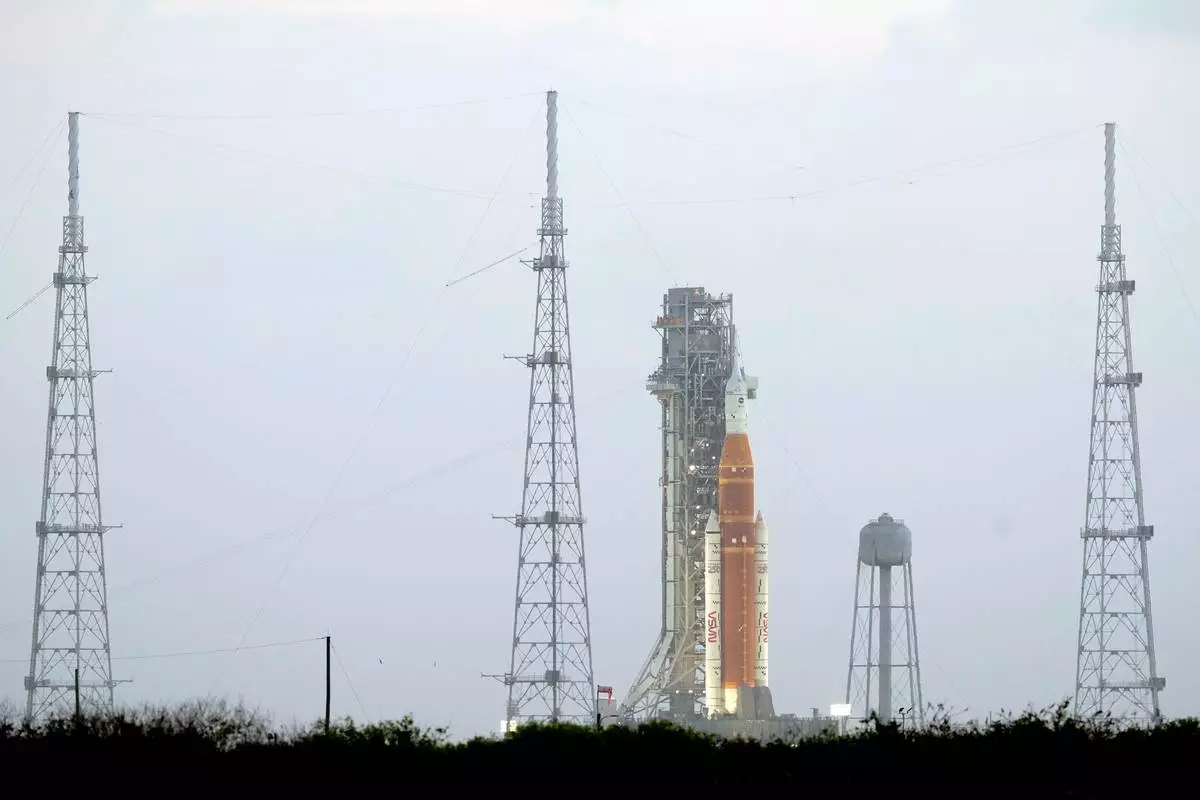
NASA's Artermis II moon rocket sits on Launch Pad 39-B at the Kennedy Space Center hours ahead of a planned launch attempt Wednesday, April 1, 2026, in Cape Canaveral, Fla. (AP Photo/Chris O'Meara)
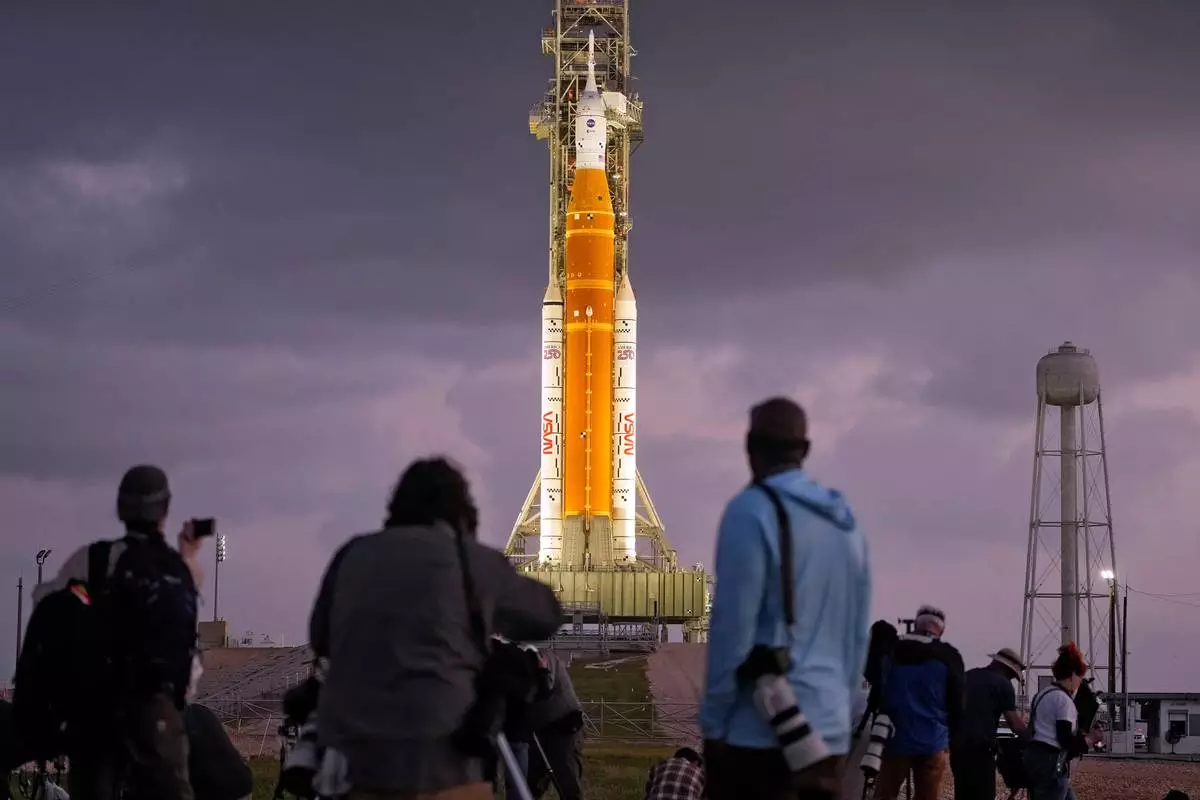
Photographers set up remote cameras near NASA's Artermis II moon rocket on Launch Pad 39-B just before sunrise at the Kennedy Space Center Tuesday, March 31, 2026, in Cape Canaveral, Fla. (AP Photo/Chris O'Meara)