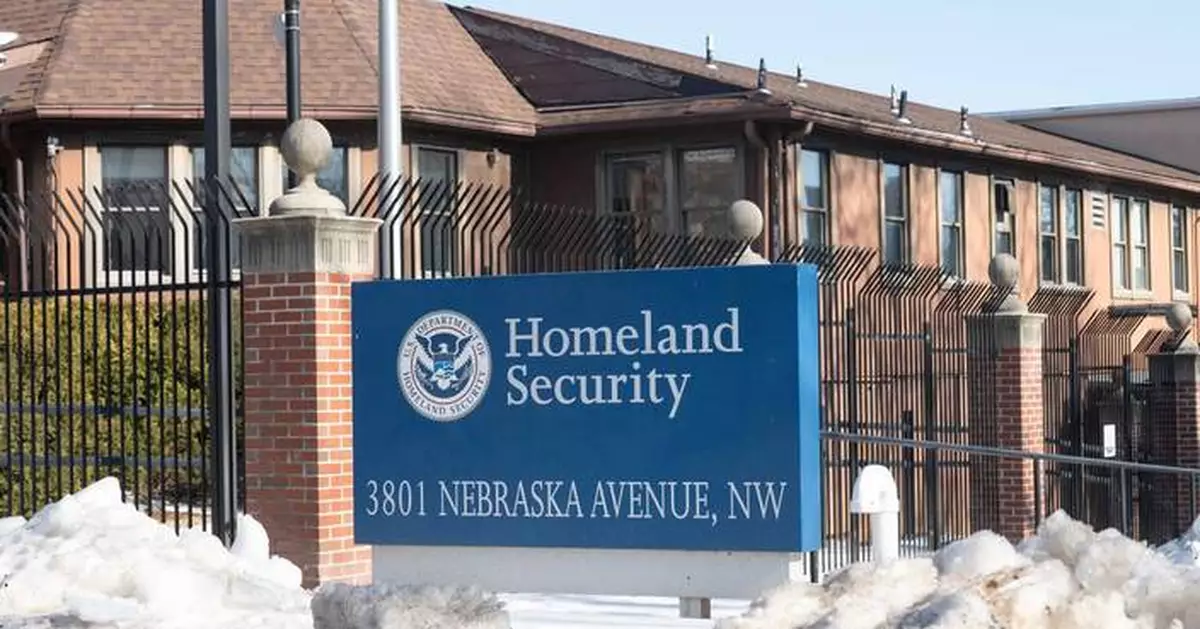
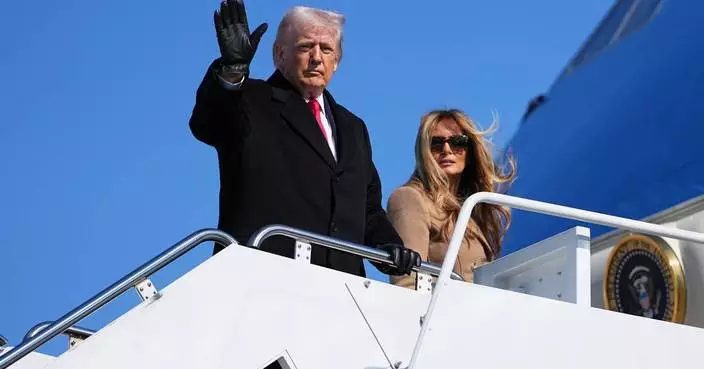
Another shutdown for parts of the federal government is expected this weekend as lawmakers debate new restrictions on President Donald Trump's immigration enforcement agenda.
Funding for the Department of Homeland Security is set to expire Saturday. Democrats say they won't help approve more funding until new restrictions are placed on federal immigration operations after the fatal shooting of Alex Pretti and Renee Good in Minneapolis last month.
The White House has been negotiating with the Democrats, but the two sides failed to reach a deal by the end of the week, guaranteeing that funding for the department will lapse.
Unlike the record 43-day shutdown last fall, the closures will be narrowly confined, as only agencies under the DHS umbrella — like Immigration and Customs Enforcement and Customs and Border Protection — will be affected. Still, depending on how long the shutdown lasts, some federal workers could begin to miss paychecks.
Services like airport screening could also suffer if the shutdown drags on for weeks.
At the Transportation Security Administration, about 95% of employees are deemed essential. They will continue to scan passengers and their bags at the nation’s commercial airports. But they will work without pay until the funding lapse is resolved, raising the possibility that workers will being calling out or taking unscheduled leave. Many TSA workers already faced financial stress last year.
“Some are just now recovering from the financial impact of the 43-day shutdown” said Ha Nguyen McNeill, a senior official performing the duties of TSA administrator. “Many are still reeling from it.”
Essentially, it's because Trump acquiesced to Democrats' request that Homeland Security funding be stripped from a broader spending package to allow more time for negotiation over demands for changes to immigration enforcement, like a code of conduct for federal agents and a requirement that officers show identification. Homeland Security was temporarily funded only through Feb. 13.
The rest of the federal government is funded through Sept. 30. That means most federal programs are unaffected by the latest shutdown, including food assistance, and pay for most federal workers and for service members will continue uninterrupted.
The funding lapse affects the Department of Homeland Security and its constellation of agencies, including U.S. Immigration and Customs Enforcement, U.S. Customs and Border Protection, the Secret Service and the Federal Emergency Management Agency.
The vast majority of employees at the Secret Service and U.S. Coast Guard will continue their work, though they could also miss a paycheck depending upon the shutdown's length.
At the Federal Emergency Management Agency, the shutdown will disrupt the agency's ability to reimburse states for disaster relief costs. Some workers will be furloughed, limiting the agency's ability to coordinate with state and local partners, and training for first responders at the National Disaster and Emergency Management University in Maryland will be disrupted.
Republicans have pointed out that the work of ICE and CBP will mostly continue unabated during a shutdown, despite Democratic demands for changes at those agencies.
That's because Trump's tax and spending cut bill passed by Republicans last year provided ICE with about $75 billion and CBP with about $65 billion, money those agencies can continue to tap for Trump's deportation operations.
It’s up to each federal agency to designate which of its employees are “essential” or “excepted,” both of which mean the same thing in this case. They keep working during a shutdown, typically without getting paid until government funding is back in place.
Some examples of “essential” employees are military personnel, security screeners at airports and law enforcement officers. There can be a wide range, from positions deemed critical for public safety to those authorized by law to continue even without new funding.
Most of the more than 270,000 people employed by Homeland Security are deemed essential, meaning that they stay on the job even during a shutdown. For the fall 2025 shutdown, more than 258,000 DHS employees were in that category, and about 22,000 — or 5% of the agency's total employee base — were furloughed.
Lawmakers have been particularly concerned about the potential impact on the TSA and airports.
Senate Republican Leader John Thune has warned that “there’s a very good chance we could see more travel problems” similar to last year's shutdown. As staffing shortages grow, airports may reduce the number of open security lanes or close checkpoints altogether to relieve pressure on an already strained workforce.
During last year’s lapse in funding, unpaid TSA workers increasingly called in sick or stayed home as missed paychecks made it harder for workers to cover basic expenses. The strain was visible on the ground: About a month into the shutdown, TSA closed two checkpoints at Philadelphia International Airport.
“The longer the shutdown goes on, the more severe the impact on our TSA workforce,” the agency said at the time.
Associated Press writers Rio Yamat and Kevin Freking contributed to this report.
Meg Kinnard can be reached at http://x.com/MegKinnardAP.
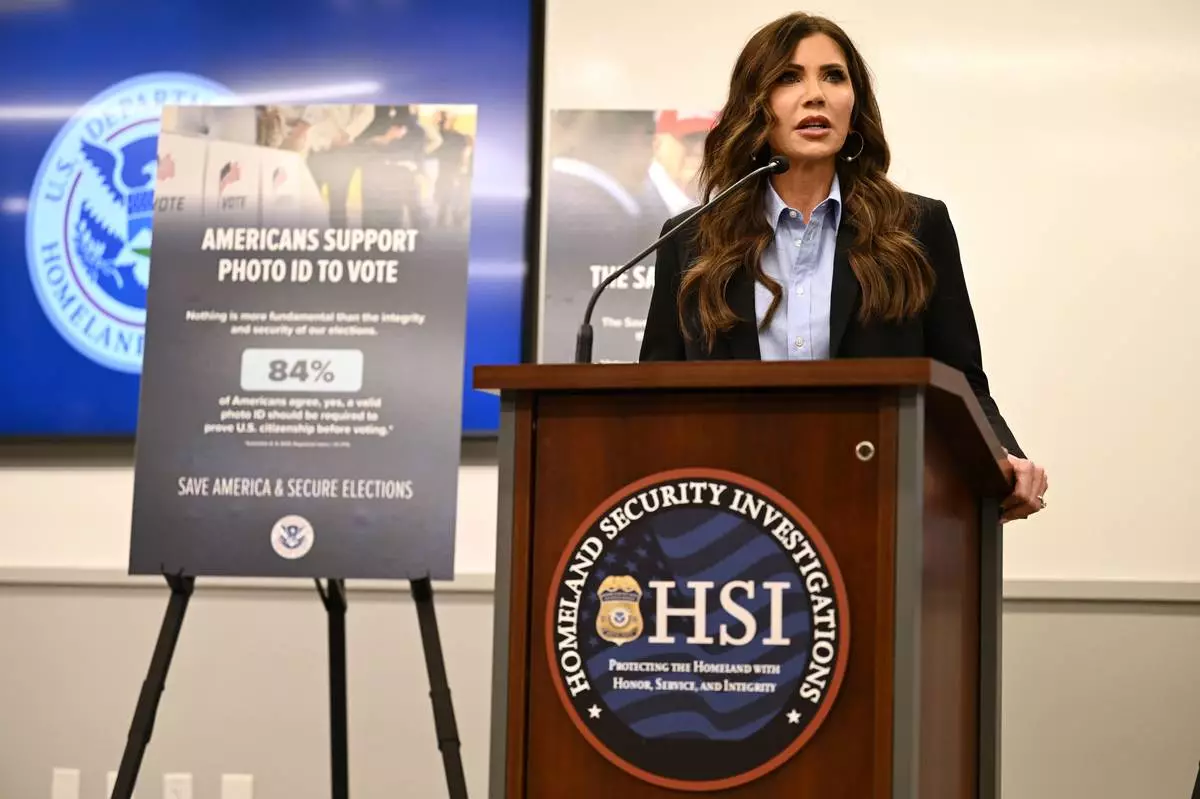
Homeland Security Secretary Kristi Noem speaks to press Friday, Feb. 13, 2026, in Scottsdale, Ariz. (AP Photo/Caitlin O'Hara)
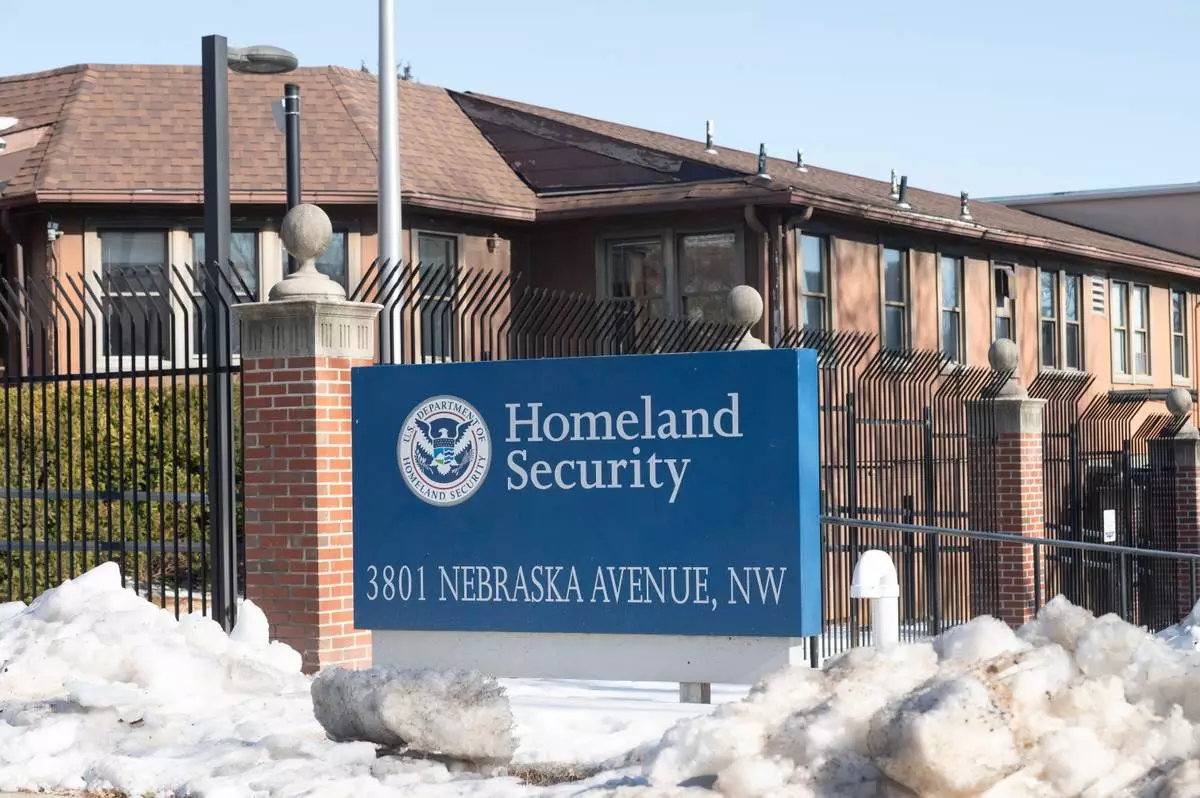
A Department of Homeland Security (DHS) facility is seen in Washington, Friday, Feb. 13, 2026. (AP Photo/Cliff Owen)
MINNEAPOLIS (AP) — The Trump administration's drawdown of its immigration enforcement surge in the Twin Cities area has been met with relief, but state and city officials say small businesses and immigrant communities are still reeling.
Thousands of officers were sent to the Minneapolis and St. Paul area for Operation Metro Surge. The Department of Homeland Security said it was its largest immigration enforcement operation ever and dubbed it a success, but the crackdown came under increasing criticism as the situation grew more volatile.
The shooting deaths of U.S. citizens Renee Good and Alex Pretti by federal officers drew condemnation and raised questions over officers' conduct, prompting changes to the operation.
Minnesota Gov. Tim Walz and Minneapolis Mayor Jacob Frey, both Democrats, said the damage would be lasting and called on the federal government to help pay the costs.
“This unprecedented federal escalation has upended daily life, it has eroded trust and inflicted a whole lot of harm on the operation that we need to provide as a city," Frey said Friday. “Minneapolis taxpayers should not be left to foot the bill of this situation that has been created by the federal government.”
The mayor and other Minneapolis officials outlined the ways the crackdown has strained the finances of residents, businesses and the city itself. Expenses such as staff overtime and street cleanups cost the city an extra $6 million in January, they said.
The city estimates that small businesses have lost tens of millions of dollars in revenue, and thousands of hotel room were cancelled, Frey said. Furthermore, an estimated tens of thousands of people, including school-age children, are in need of support services such as rent and food assistance.
It's the federal government's responsibility in any emergency to assist in the recovery, Frey said, noting it was “all the more important” when federal agencies caused the damage.
Following Thursday's announcement, some residents held a vigil at a makeshift shrine that went up where Good was shot in Minneapolis.
Mark Foresman, an attendee from the suburb of St. Louis Park, said he is skeptical that the agents will leave.
“The Trump administration has created an atmosphere of distrust for government in general," he said, suggesting the Trump administration’s tactics seemed designed to sow fear. “They’ve repeatedly been caught in lies.”.
John Schnickel, a local who attended the vigil, disputed Trump officials' claims that Immigration and Customs Enforcement officers or the operation had made Minnesota safer.
“I don’t even want one ICE person here, if they act the way they’ve been acting,” said Schnickel. “They talk about how the murder rate is down, and yet they’ve added two people to it,” he said.
Most U.S. adults say they think Trump’s immigration policies have gone too far, according to a recent AP-NORC poll.
Border czar Tom Homan told reporters Thursday that “extensive engagement” with state and local officials allowed for a formal end to the operation. The White House had long accused Minnesota of protecting criminals from deportation with so-called sanctuary laws.
President Donald Trump softened his tone and dispatched Homan to reduce tensions after the Jan. 24 killing of Pretti, saying that he and Walz were on a “similar wavelength” after weeks of barbs between the two leaders.
Homan on Thursday highlighted examples of newfound cooperation with state and local entities, including law enforcement being increasingly responsive to requests for assistance and agreements on how jails handle deportable inmates.
Minnesota's state prison system and many of its county jails have long shared information with federal immigration authorities so they can take custody of arrested immigrants.
The major exception is the Hennepin County Jail, which serves Minneapolis and doesn’t work with immigration authorities unless an arrest warrant has been signed by a judge. Hennepin County Sheriff Dawanna Witt, who oversees the jail, insisted Friday that no policies had changed.
Frey, meanwhile, emphasized Friday that his position hasn't changed despite Homan's indication that agreements with state and city leaders had been made.
“We do not enforce federal immigration law, period. We do not cooperate with ICE or any agency around enforcement of federal immigration law, period,” Frey said.
Homan announced last week that 700 federal officers would leave Minnesota immediately, but that still left more than 2,000 in the state. He said Thursday that a “significant drawdown” was already underway and would continue through next week.
He didn't specify how many officers would remain, but he said enforcement would continue in the Twin Cities. Todd Lyons, ICE's acting director, said during a congressional hearing Thursday that the agency was still searching for about 16,840 people in Minnesota who have final orders of removal.
Homan also said mass deportations will continue across the country, and that officers leaving Minnesota will report back to their stations or be assigned elsewhere.
The focus on the Twin Cities, which Trump had pushed for partly because of fraud allegations involving Somali residents, followed increased deployments in big cities and small towns run by Democrats, including Los Angeles, Chicago, Charlotte and New Orleans.
Even though the Twin Cities operation is ending, the fallout will continue.
The Trump administration is trying to secure votes in Congress to prevent Department of Homeland Security funding from expiring at the end of the week, with Democratic lawmakers demanding restraints on immigration officers following Good and Pretti’s killings.
And there are ongoing federal investigations into the shooting of Pretti.
The effects of the Minnesota crackdown are also still playing out in court, as federal prosecutors pursue high-profile cases against protesters and deportation cases slowly proceed.
A federal judge issued a temporary emergency order Thursday, finding that immigrants detained at a federal building in Minnesota have too many barriers to legal counsel.
Former CNN host turned independent journalist Don Lemon pleaded not guilty to federal civil rights charges Friday, accused in a protest at a Minnesota church where an ICE official is a pastor.
Fingerhut reported from Des Moines, Iowa. Associated Press reporters Tim Sullivan in Minneapolis and Sarah Raza in Sioux Falls, South Dakota, contributed to this report.
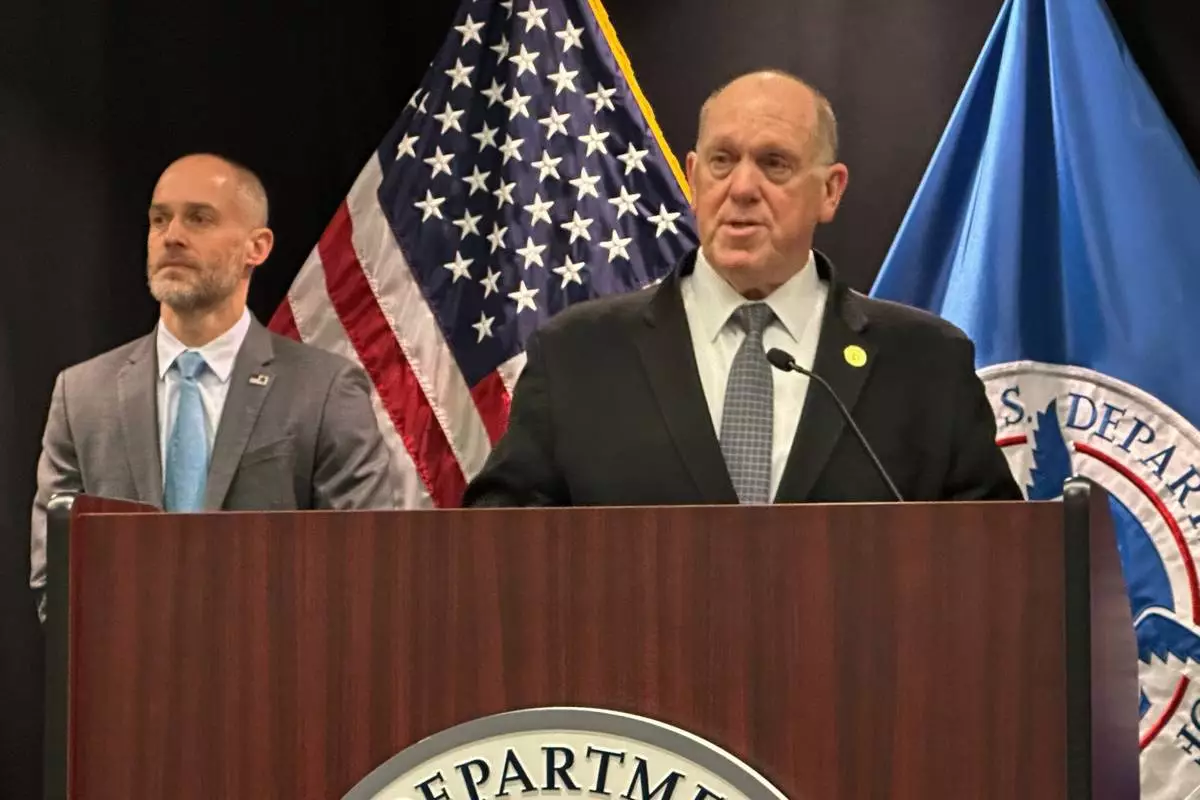
CORRECTS CREDIT TO STEVE KARNOWSKI - White House border czar Tom Homan holds a news conference at the Bishop Whipple Federal building on Thursday, Feb. 12, 2026 in Minneapolis. (AP Photo/Steve Karnowski)