NEW YORK--(BUSINESS WIRE)--Feb 13, 2026--
Perfect Corp., the leading provider of AI and AR beauty and fashion technology solutions, today announced its participation in the DeveloperWeek 2026 Hackathon, taking place in-person at the San Jose Convention Center (February 18–20, 2026) and online from February 2–20, 2026.
This press release features multimedia. View the full release here: https://www.businesswire.com/news/home/20260213020958/en/
As part of the Global Hackathon Challenge, Perfect Corp. will award $2,500 in cash prizes to two winners who design and build immersive web or mobile experiences using Perfect’s AI and AR-powered API suite. The competition will recognize projects that demonstrate real-world consumer and retail value through innovative use of AI.
The Perfect Corp. Hackathon Challenge will award:
Participants are required to integrate at least one Perfect Corp. API and create a working prototype experience, complete with a project page, screenshots, and a 1–3 minute demo video showcasing the solution end-to-end.
Perfect Corp.’s flexible, pay-as-you-go API model makes it easy for brands, startups, retailers, medical spas, and independent business owners to integrate enterprise-grade AI experiences without heavy development resources or large upfront investments. The APIs are designed for fast implementation, scalability, and measurable ROI, enabling businesses to deliver highly personalized consumer experiences at speed.
Empowering Developers with Best-In-Class API Tools to Democratize AI in Beauty, Skin & Fashion
Hackathon participants are encouraged to explore creative and unexpected applications of Perfect Corp.’s API suite, which include:
To support developers, Perfect Corp. is offering 1,000 free API units to help teams rapidly prototype and test their ideas.
Driving the Future of AI-Powered Consumer Experiences Through Powerful API Technology
“We are excited to collaborate with the global developer community at DeveloperWeek 2026,” said Alice Chang, Founder and CEO of Perfect Corp. “AI-powered personalization is no longer a luxury — it is an expectation. Through our API suite, we are democratizing access to advanced AI and AR technologies, enabling developers to build immersive, intelligent consumer experiences that solve real-world needs in beauty, fashion, retail, and beyond. We look forward to seeing the creativity and innovation that emerges from this year’s hackathon.”
By participating in DeveloperWeek 2026 Hackathon, Perfect Corp. continues its commitment to advancing agentic AI assistants, generative AI technologies, and scalable API solutions that empower developers and brands to meet the evolving expectations of modern consumers.
How to Participate
Developers can register via the DeveloperWeek 2026 Hackathon page on DevPost and must be pre-registered on both Eventbrite and DevPost to compete. The hackathon officially kicked off online on February 2, 2026, with in-person programming taking place February 18–20, 2026.
To register and claim 1,000 free API units ($179 value) and begin building, visit:
https://developerweek-2026-hackathon.devpost.com/
About Perfect Corp.
Perfect Corp. (NYSE: PERF) is a global leader in AI and AR technology, redefining creativity across beauty, fashion, skincare, and digital content creation. Its YouCam suite of apps has been downloaded over 1.1 billion times globally, empowering users to create, edit, and express themselves through photo, video, and generative AI tools. The YouCam platform also includes a powerful web-based editor and a suite of developer APIs, providing creators, brands, and technology partners with seamless access to content creation capabilities across platforms.
For brands and professionals, Perfect Corp. offers an award-winning portfolio of enterprise technologies, including virtual try-on experiences for makeup, hair, jewelry, watches, and fashion accessories, as well as AI-powered skin and hair analysis.
With a brand portfolio that includes YouCam and Skincare Pro, and a network of over 800 global brand partners, Perfect Corp. is transforming the beauty experience through personalized, immersive, and intelligent innovation.
For more information, visit perfectcorp.com and follow @Perfect-Corp.

Perfect Corp. Provides APIs to DeveloperWeek Hackathon, Inviting Developers to Build Next Generation AI-Driven Consumer Experiences
BOGOTA, Colombia (AP) — Against a backdrop of rising global tensions and energy market instability, governments from around 50 countries will gather Friday in Colombia’s Caribbean city of Santa Marta for a summit aimed at accelerating the shift away from fossil fuels.
The April 24–29 conference, co-hosted by Colombia and the Netherlands, will bring together ministers, subnational governments, academics and civil society groups to discuss how to move beyond oil, gas and coal while ensuring the transition is “just, orderly and equitable,” organizers said.
The meeting reflects growing frustration among some governments and advocates that decades of U.N. climate negotiations have failed to directly address fossil fuel production — the main driver of global warming — prompting the Santa Marta summit to push the issue outside formal talks.
Organizers say the gathering is intended to open space for a politically sensitive debate that has long been avoided in international climate negotiations.
“It is definitely a political space. We are opening a space for discussion that does not exist,” Colombia’s environment minister, Irene Vélez Torres, told The Associated Press in an interview ahead of the summit.
Unlike formal U.N. climate negotiations, the meeting is not expected to produce binding commitments. Instead, officials say the goal is to generate a set of proposals and build coalitions of countries willing to move faster on phasing out fossil fuels.
“We’ve also seen climate action unfortunately fall down the list of government priorities,” said Claudio Angelo, head of international policy at the Observatorio do Clima think tank in Brazil.
Nations from Europe, Latin America, Africa and Asia, many of which play key roles in fossil fuel production or consumption, will attend. The United States and Saudi Arabia — two of the world’s largest oil producers — will not, underscoring divisions between countries pushing for a faster transition and those more closely tied to fossil fuel interests.
Under the Paris Agreement — the 2015 global climate accord — countries set their own emissions targets, meaning no international process can compel governments to phase out fossil fuels.
The summit is part of a broader push to move climate diplomacy beyond emissions targets and toward directly confronting fossil fuel production — a politically sensitive issue that has long divided countries.
Some advocates say new approaches are needed to close what they see as a major gap in global climate policy.
“Fossil-free zones turn global climate goals into concrete geographic decisions,” said Andrés Gómez of the Fossil Fuel Treaty Initiative, referring to proposals to designate areas where oil, gas and coal extraction would be off-limits, particularly in ecologically sensitive regions.
Indigenous leaders involved in the process say they are pushing governments attending the Santa Marta summit to adopt fossil-free zones as part of their transition plans.
“For Indigenous peoples, stopping fossil fuel extraction is not only a climate imperative — it is essential to defending our territories, our governance systems and our right to self-determination,” said Juan Carlos Jintiach, executive secretary of the Global Alliance of Territorial Communities, a coalition of Indigenous and local community organizations representing millions of people across forest regions worldwide.
He added that governments must move “from commitments to implementation” by integrating fossil-free zones into national energy transition plans.
Analysis by advocacy groups shows that oil and gas concessions already overlap with vast areas of tropical forest and Indigenous territories, underscoring the scale of the challenge.
The conference comes at a time of heightened geopolitical uncertainty, including the war in Iran, which has disrupted global energy markets and threatened supply through the Strait of Hormuz — a critical route for roughly a fifth of the world’s oil.
The resulting price spikes are already being felt far beyond energy markets.
“Oil prices don’t just stay in energy markets — they move straight into people’s lives,” said Mary Robinson, former president of Ireland and a leading climate justice advocate expected to attend the Santa Marta conference, speaking at a press conference ahead of the event.
“Impacts are hitting the most vulnerable hardest, as always, while oil companies reap windfall profits,” she said.
In her interview, Vélez said such instability should accelerate — rather than delay — the transition.
“The crisis — and let’s call it what it is — the war in the Middle East has triggered a global crisis,” she said. “In this case, I believe the movement should be toward radicalizing the green agenda and the transitions.”
Some analysts warn that supply shocks could push countries to increase fossil fuel production in the short term, even as they commit to long-term climate goals — highlighting the tension between energy security and climate action.
That tension is particularly visible in Latin America, where many economies rely heavily on oil, gas and mining exports even as governments position themselves as climate leaders. Colombia, one of the region’s top oil producers and home to roughly 6% of the Amazon rainforest, depends on crude exports for a significant share of government revenue and foreign income.
At the same time, Colombian President Gustavo Petro’s government has pledged to halt new oil exploration and push for a global phaseout of fossil fuels.
“Economic and fiscal dependence is a problem, and it is perhaps the main challenge we face,” Vélez said.
Financial constraints are also expected to shape discussions. Many developing countries face high levels of public debt and limited fiscal space, making it difficult to invest in renewable energy and other elements of the transition.
Civil society groups say that without reforms to the global financial system, these constraints will continue to slow progress.
“Moving away from fossil fuels requires, without a doubt, a careful economic and energy transition plan,” said Carola Mejía of the Latin American and Caribbean Network for Economic, Social and Climate Justice.
Gabriella Bianchini of Global Witness said the stakes go beyond climate alone.
“As people everywhere suffer the consequences of oil-driven conflict, it’s never been clearer that the world needs to leave the fossil fuel era behind,” she said. “Santa Marta is a chance for governments and communities to grab the bull by the horns and take action toward a greener, more equitable and peaceful world.”
She added that while U.N. climate talks remain crucial, they have repeatedly struggled to deliver meaningful progress on fossil fuels.
“Santa Marta represents space for governments to work on the one plan we know will stave off the worst impacts of climate breakdown: a rapid and just transition away from fossil fuels,” Bianchini said.
Observers say a key question will be whether the meeting can produce a clearer political signal on an issue that has remained largely unresolved in global climate talks.
“If we think about it, the conference is that turning point where, collectively, we decide to be on the right side of history,” environment minister Vélez said.
The Associated Press’ climate and environmental coverage receives financial support from multiple private foundations. AP is solely responsible for all content. Find AP’s standards for working with philanthropies, a list of supporters and funded coverage areas at AP.org.
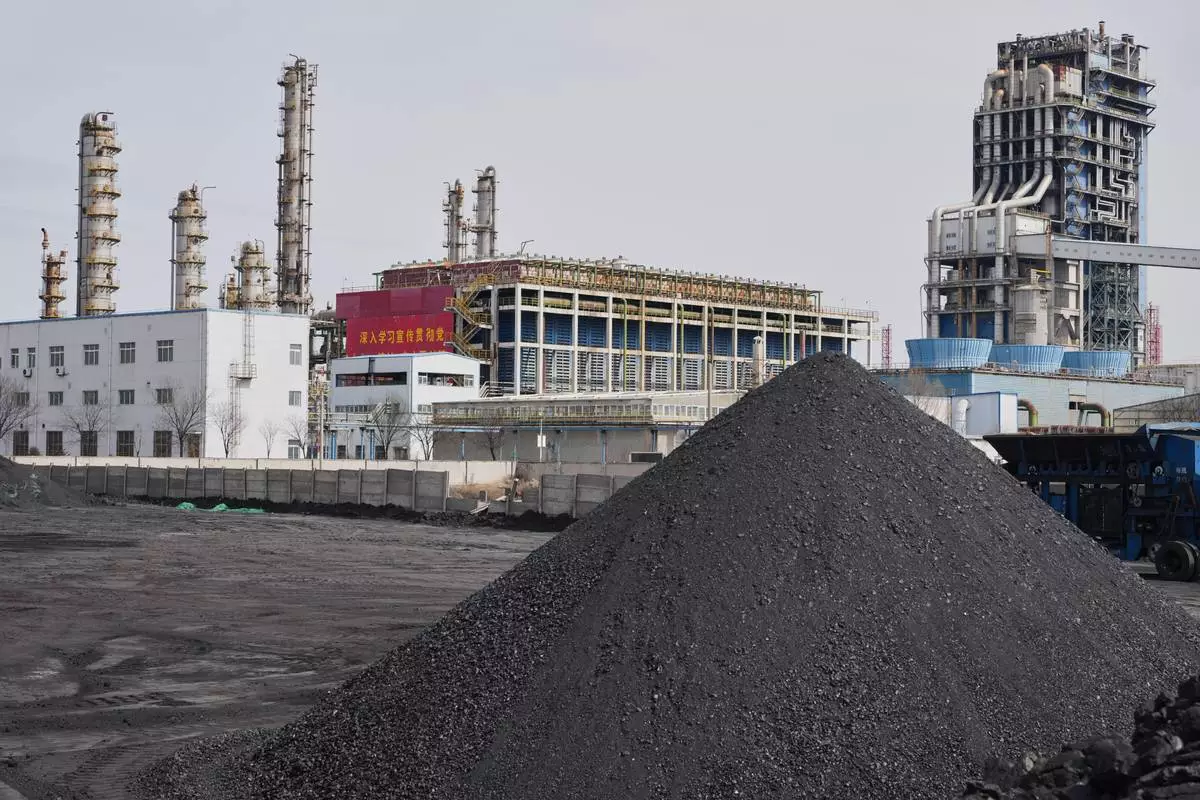
Coal piles sit near a chemical plant in Datong, China, Saturday, March 14, 2026. (AP Photo/Ng Han Guan)
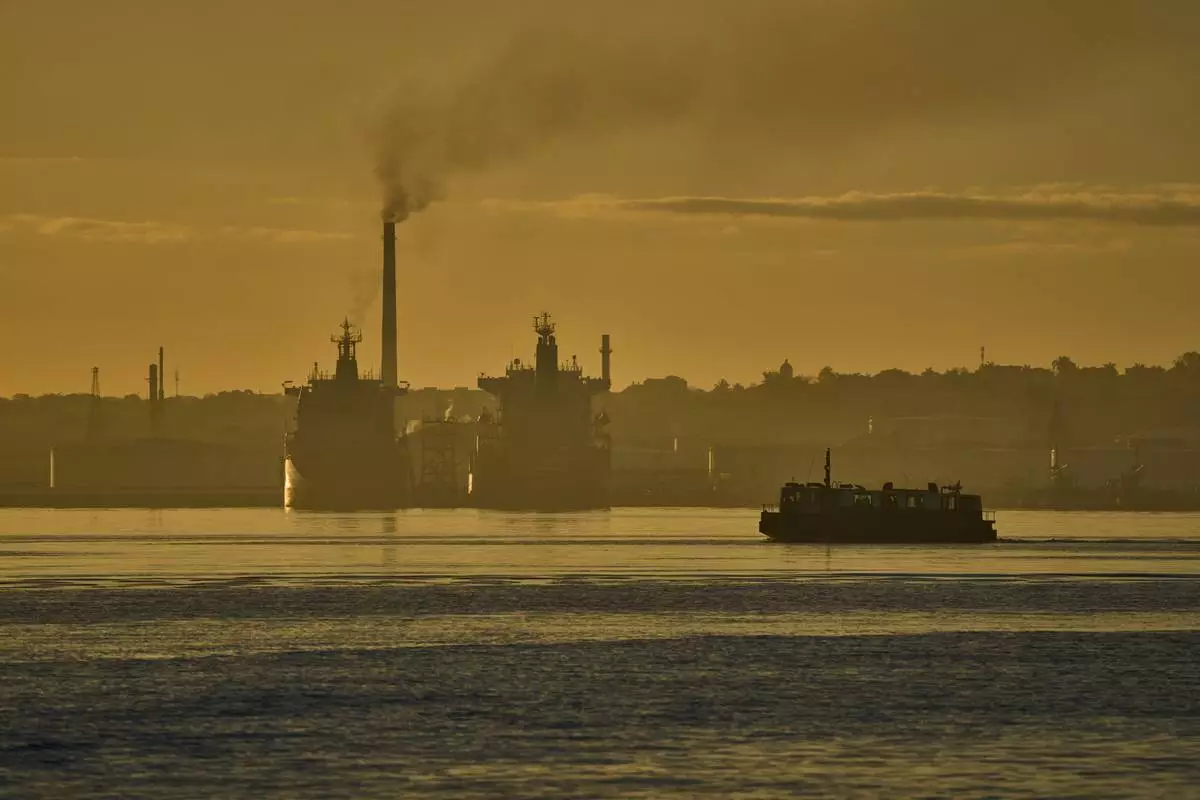
FILE - A ferry crosses Havana Bay past the Nico Lopez oil refinery where tankers are anchored in Havana Bay, Cuba, March 24, 2026. (AP Photo/Ramon Espinosa, File)
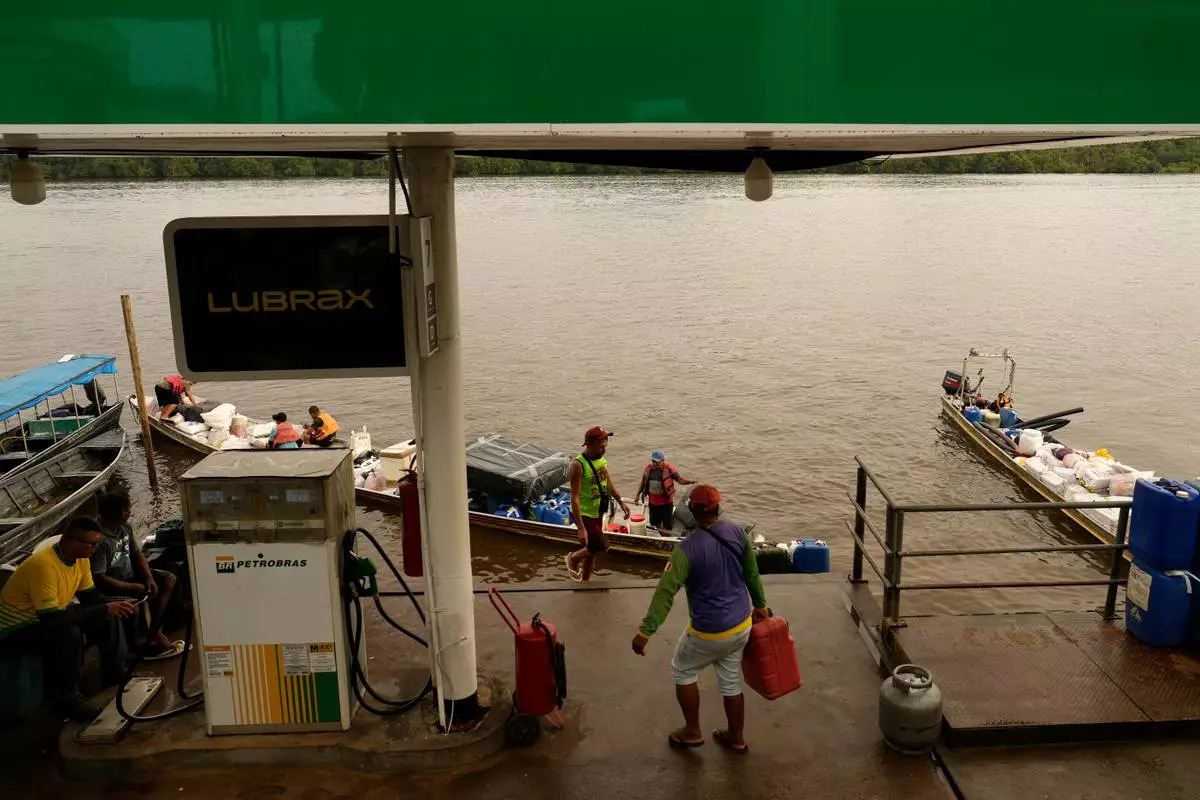
FILE - Boatmen operating Catraia, a traditional boat used on the Oiapoque River, prepare for the crossing with a load of gasoline canisters filled at a Petrobras gas station in a port in the city of Oiapoque, Amapa state, Brazil, March 10, 2026. (AP Photo/Eraldo Peres, File)
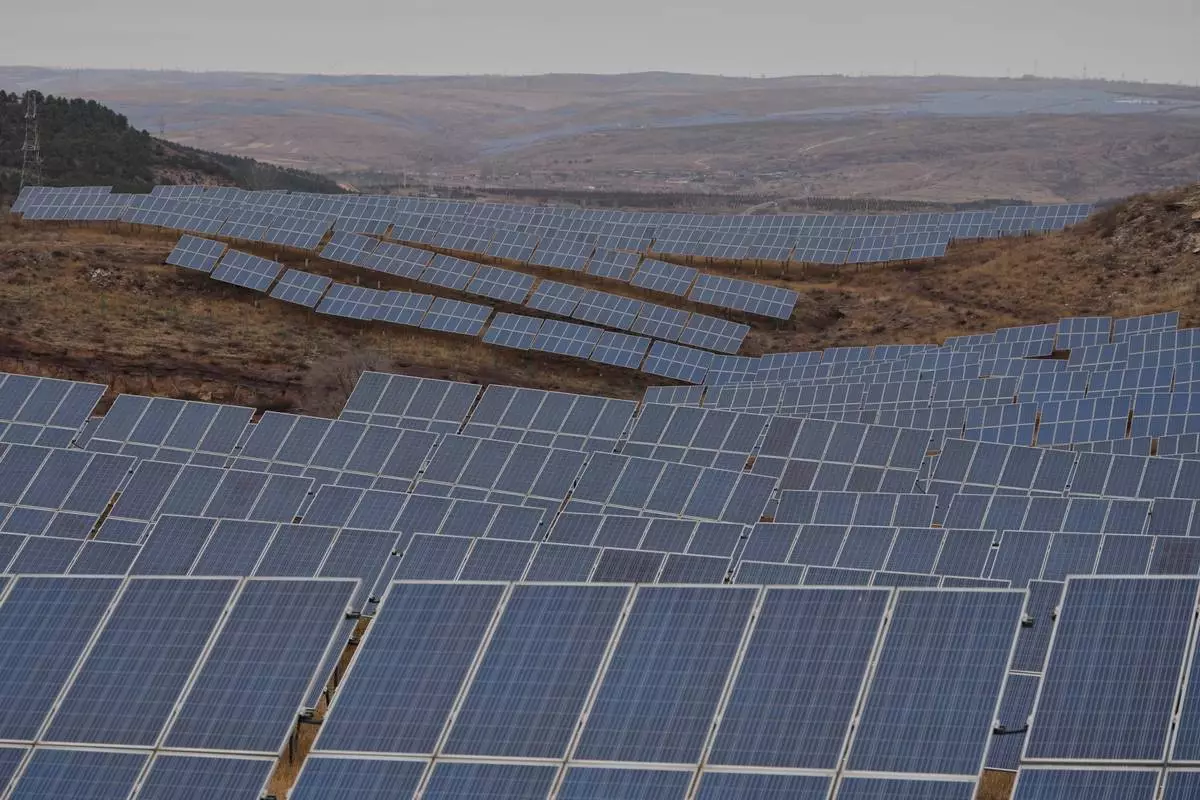
A solar farm operates in Datong, China, Friday, March 13, 2026. (AP Photo/Ng Han Guan)
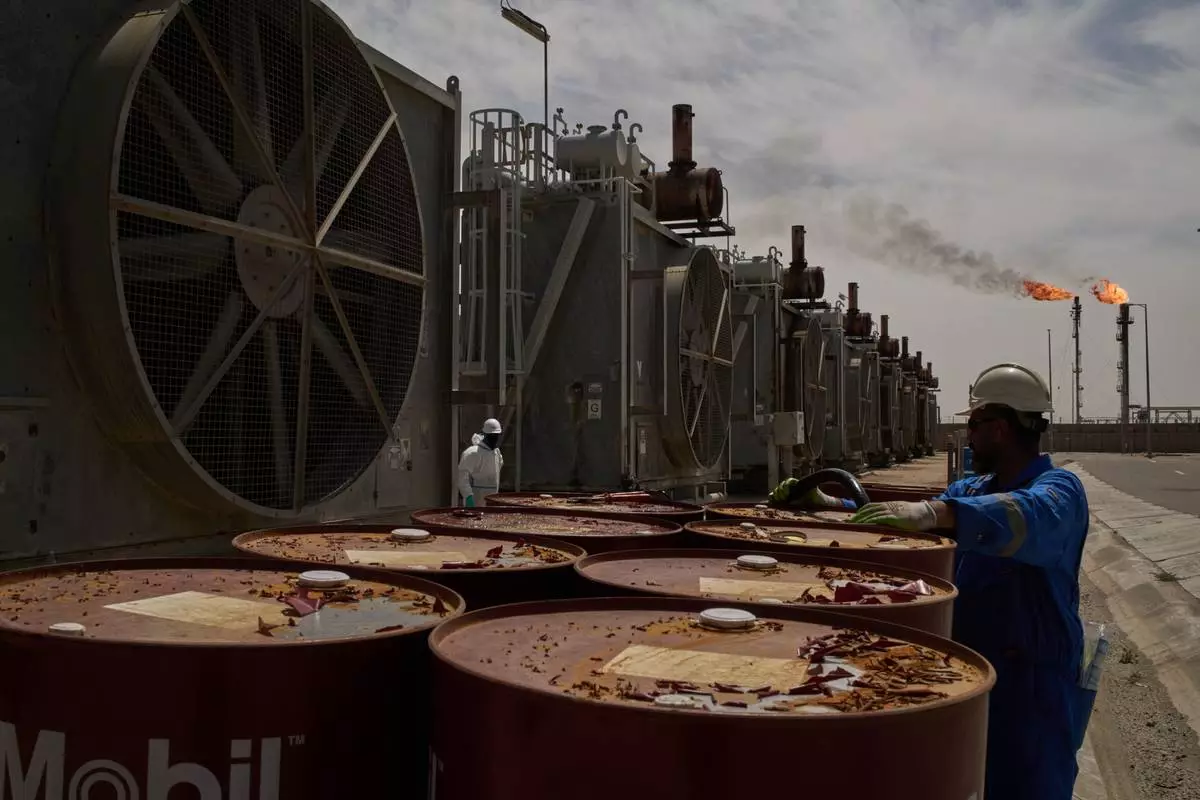
FILE - A worker collects engine oil as he works at a degassing station at Zubair oil field near Basra, Iraq, March 28, 2026. (AP Photo/Leo Correa, File)