Amazon's smart doorbell maker Ring has terminated a partnership with police surveillance tech company Flock Safety.
The announcement follows a backlash that erupted after a 30-second Ring ad that aired during the Super Bowl featuring a lost dog that is found through a network of cameras, sparking fears of a dystopian surveillance society.
But that feature, called Search Party, was not related to Flock. And Ring's announcement doesn't cite the ad as a reason for the “joint decision" for the cancellation.
Ring and Flock said last year they were planning on working together to give Ring camera owners the option to share their video footage in response to law enforcement requests made through a Ring feature known as Community Requests.
“Following a comprehensive review, we determined the planned Flock Safety integration would require significantly more time and resources than anticipated,” Ring's statement said.
“The integration never launched, so no Ring customer videos were ever sent to Flock Safety.”
Flock reiterated that it never received Ring customer videos — and that ending the planned integration was a mutual decision that allows both companies to “best serve their respective customers.” In a statement, Flock added that it “remains dedicated to supporting law enforcement agencies with tools that are fully configurable to local laws and policies.”
Flock is one of the nation’s biggest operators of automated license-plate reading systems. Its cameras are mounted in thousands of communities across the U.S., capturing billions of photos of license plates each month. The company has faced public outcry amid the Trump administration’s aggressive immigration enforcement crackdown. But Flock maintains that it does not partner with Immigration and Customs Enforcement (ICE), or contract out with any subagency of the Department of Homeland Security for direct access to its cameras. The company paused pilot programs with Customs and Border Protection and Homeland Security Investigations last year.
Still, Flock says it doesn’t own the data captured by its cameras, its customers do. So if a police department, for example, chooses to collaborate with a federal agency like ICE, “Flock has no ability to override that decision,” the company notes on its website.
Beyond the Flock partnership, Amazon has faced other surveillance concerns over its Ring doorbell cameras.
In the Super Bowl ad, a lost dog is found with Ring's Search Party feature, which the company says can “reunite lost dogs with their families and track wildfires threatening your community.” The clip depicts the dog being tracked by cameras throughout a neighborhood using artificial intelligence.
Viewers took to social media to criticize it for being sinister, leaving many wondering if it would be used to track humans and saying they would turn the feature off.
The Electronic Frontier Foundation, a nonprofit that focus on civil liberties related to digital technology, said this week that Americans should feel unsettled over the potential loss of privacy.
“Amazon Ring already integrates biometric identification, like face recognition, into its products via features like ‘Familiar Faces’ which depends on scanning the faces of those in sight of the camera and matching it against a list of pre-saved, pre-approved faces," the Foundation wrote Tuesday. “It doesn’t take much to imagine Ring eventually combining these two features: face recognition and neighborhood searches.”
Democratic Sen. Edward Markey of Massachusetts also urged Amazon to discontinue its “Familiar Faces” technology.
In a published letter addressed to Amazon CEO Andrew Jassy, Markey wrote that the backlash to the Super Bowl commercial “confirmed public opposition to Ring’s constant monitoring and invasive image recognition algorithms.”
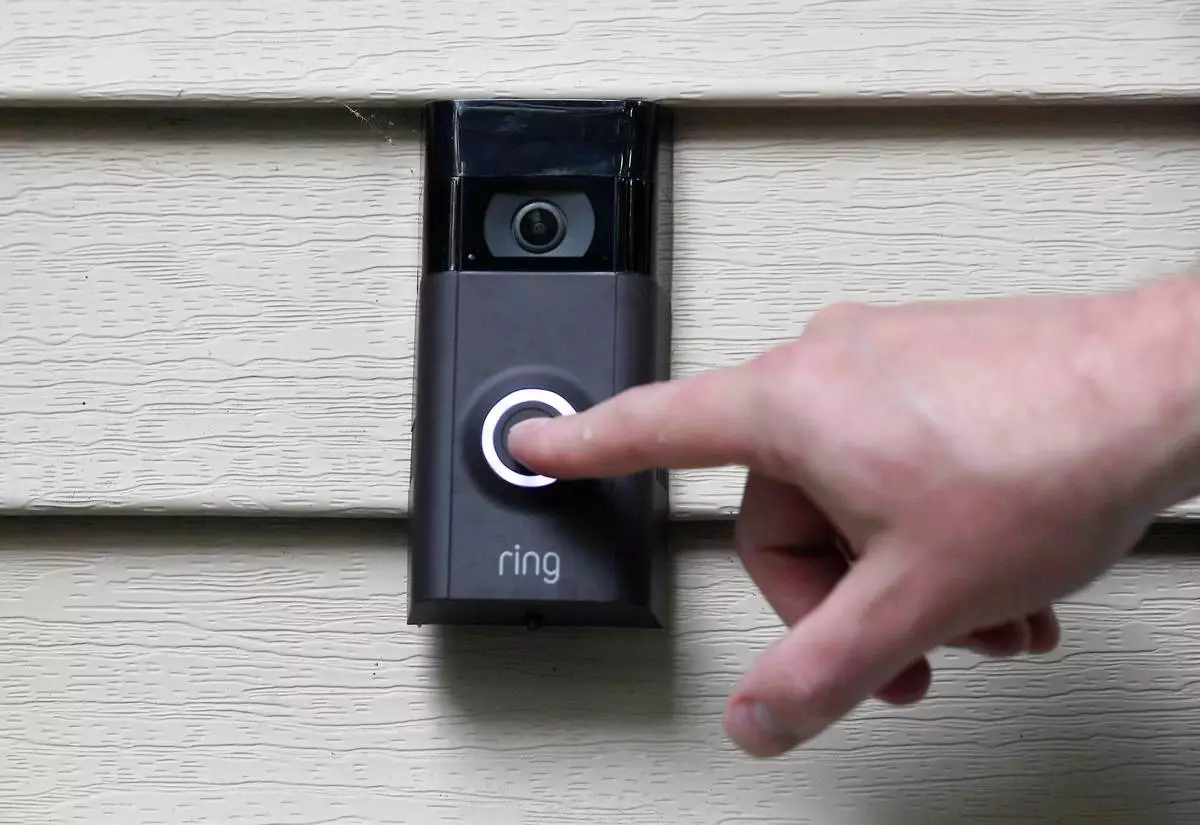
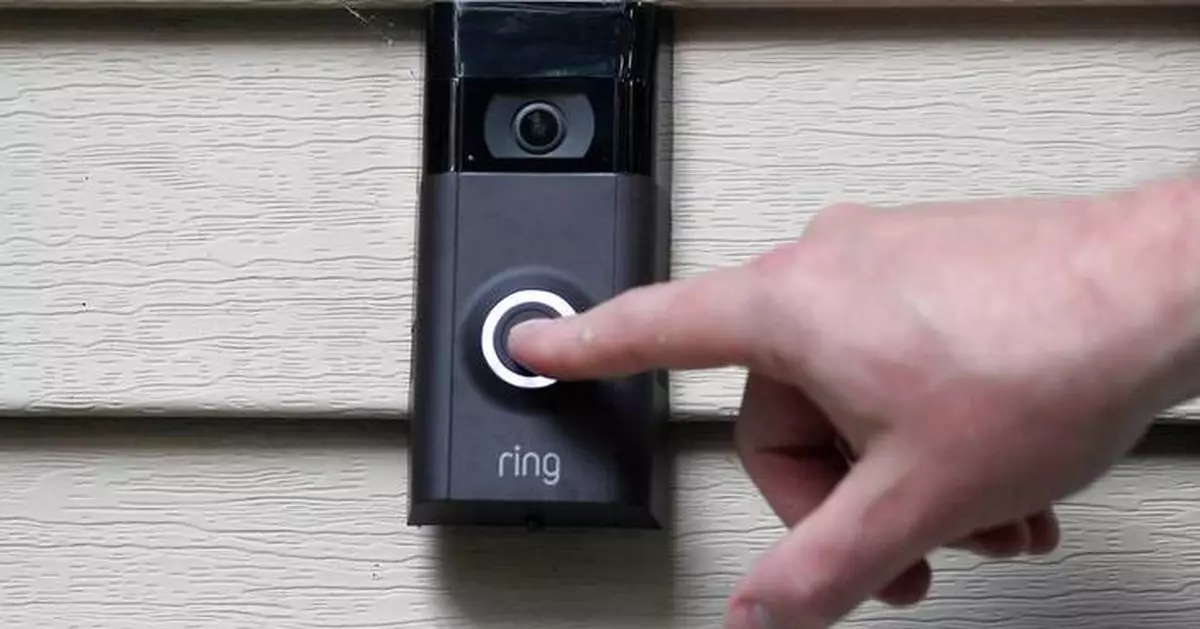
FILE - A person pushes the doorbell on their Ring doorbell camera, July 16, 2019, in Wolcott, Conn. (AP Photo/Jessica Hill, File)
NEW YORK (AP) — This is not the run-up to the midterm elections that Republicans wanted.
A year and a half after winning the White House by promising to lower costs and end wars, Donald Trump is a wartime president overseeing surging energy costs and an escalating overseas conflict.
The war in Iran was largely unpopular even before an American fighter jet was shot down in Iran, a development that dominated headlines on Friday and contradicted Trump’s claim that Tehran's military capabilities have been all but destroyed. One crew member has been rescued.
Earlier in the week, the Republican president offered little clarity to a nation eager for answers during a prime-time address from the White House, his first since the U.S. and Israel attacked Iran more than a month ago, simultaneously suggesting that the war was ending and expanding.
“Thanks to the progress we’ve made, I can say tonight that we are on track to complete all of America’s military objectives shortly, very shortly,” Trump said. “We’re going to hit them extremely hard over the next two to three weeks.”
Trump's comments come roughly six months before voters across the nation begin to cast ballots in elections that will decide control of Congress and key governorships for Trump’s final two years in office. For now, Republicans, who control all branches of government in Washington, are bracing for a painful political backlash.
“You’re looking at an ugly November,” warned veteran Republican pollster Neil Newhouse. “At a point in time when we need every break possible to hold the House and Senate, our edge is being chipped away.”
It’s hard to overstate how dramatically the political landscape has shifted.
At this time last year, many Republican leaders believed there was a path to preserve their narrow House majority and easily hold the Senate. Now they privately concede that the House is all but lost and Democrats have a realistic shot at taking the Senate.
Republicans are also struggling to coalesce around a clear midterm message on Iran.
The Republican National Committee has largely avoided the war in talking points issued to surrogates over the last month. The leaders of the party's campaign committees responsible for the House and Senate declined interview requests. Many vulnerable Republican candidates sidestep the issue, unwilling to defend or challenge Trump publicly.
The president remains deeply popular with Republican voters, and he has vocal supporters like Sen. Lindsey Graham of South Carolina.
“That was the best speech I could’ve hoped for,” he wrote on social media after Trump's address on Wednesday evening. Graham said Trump “gave the American people a clear and coherent pathway forward.”
Trump made little effort to sell the conflict to Americans before the initial attack. Five weeks later, at least 13 U.S. service members have been killed and hundreds more injured. Thousands more troops have converged on the region, and the Pentagon requested $200 billion in new funding.
The Strait of Hormuz, a key passage for a fifth of the world’s oil, remains closed. The average price for a gallon of gasoline in the U.S. was $4.08 on Thursday, according to AAA, almost a full dollar higher than on President Joe Biden's last day in office.
On Wednesday, Trump insisted that gas prices would fall quickly once the war concluded but offered no solution for reopening the Strait of Hormuz. Instead, he invited skeptical U.S. allies to do it themselves.
He insisted that the war would be worth it.
“This is a true investment in your grandchildren and your grandchildren’s future,” Trump said. “When it’s all over, the United States will be safer, stronger, more prosperous and greater than it has ever been before.”
Former Rep. Marjorie Taylor Greene, a Georgia Republican who was once among Trump's most vocal allies in Congress, lashed out against his Iran policy.
“I wanted so much for President Trump to put America First. That’s what I believed he would do. All I heard from his speech tonight was WAR WAR WAR,” she wrote on social media. “Nothing to lower the cost of living for Americans.”
About 6 in 10 U.S. adults say the U.S. military action in Iran has “gone too far,” according to AP-NORC polling from March. Roughly a third approve of how he’s handling Iran overall.
The possibility of sending U.S. forces into Iran also appears politically unpalatable.
About 6 in 10 adults are “strongly” or “somewhat” opposed to deploying U.S. troops on the ground to fight Iran. That includes about half of Republicans. Only about 1 in 10 favor deploying troops.
At the same time, Trump’s approval ratings have remained consistently weak. About 4 in 10 Americans approve of how he’s handling the presidency, roughly in line with how it’s been throughout his second term.
Republican strategist Ari Fleischer, a senior aide in former President George W. Bush’s administration, acknowledged that Trump has not received the polling bump in this war that Bush got after invading Iraq.
Bush, of course, worked to build public backing for the Iraq War before going in. Immediately after the 2003 invasion, Bush's popularity soared, as did the stock market.
Public sentiment and the economy soured only after the conflict stretched on. It ultimately spanned more than eight years, spawning a generation of anti-war Republicans — and sowing the seeds of Trump's “America First” foreign policy.
“My hope is that the Trump experience is the exact opposite of the Bush experience,” Fleischer said.
He said Trump must win the war decisively and quickly to avoid a further backlash, saying there could be a “very significant political upside if things end well, oil comes down and markets rally.”
Fleischer added that Trump's actions will matter much more than his words.
“Ultimately, he is not going to get judged on his persuasion or his explanations or his assertions, he’s going to get judged on results,” he said.
Associated Press writer Linley Sanders in Washington contributed to this report.
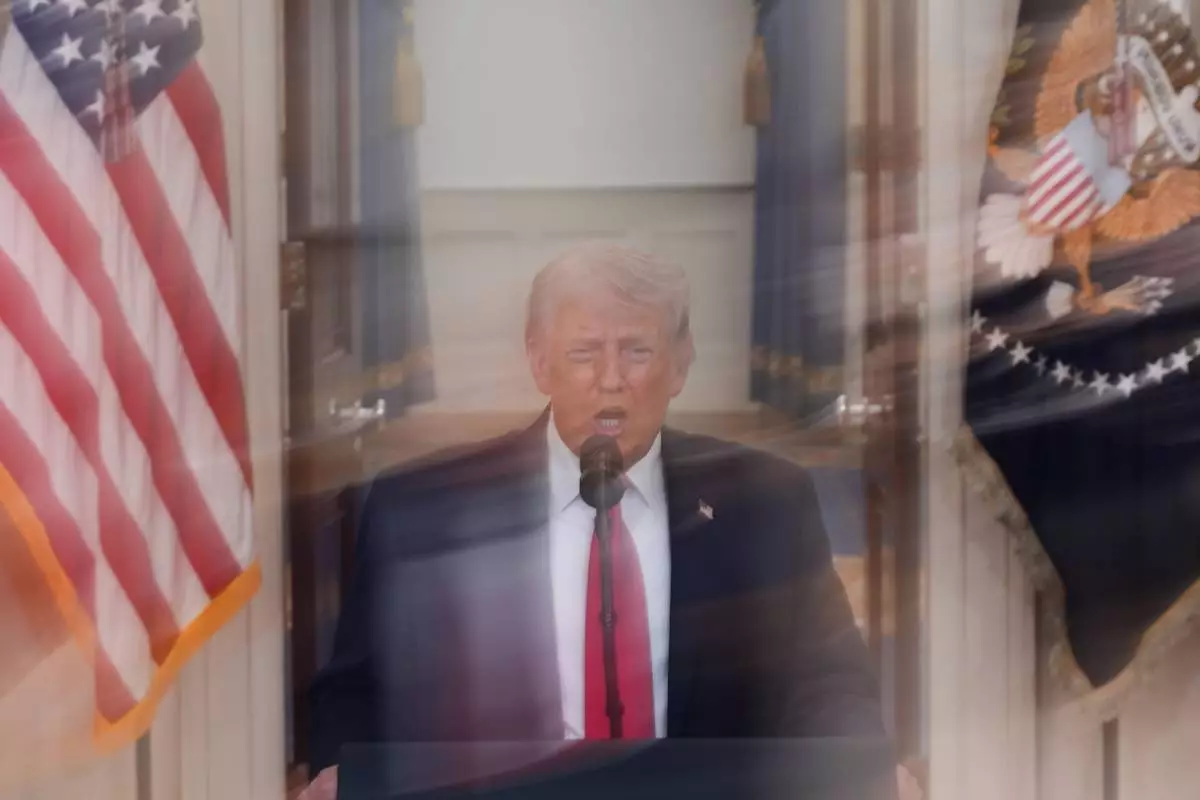
In this image made with a long exposure, President Donald Trump speaks about the Iran war from the Cross Hall of the White House on Wednesday, April 1, 2026, in Washington. (AP Photo/Alex Brandon, Pool)