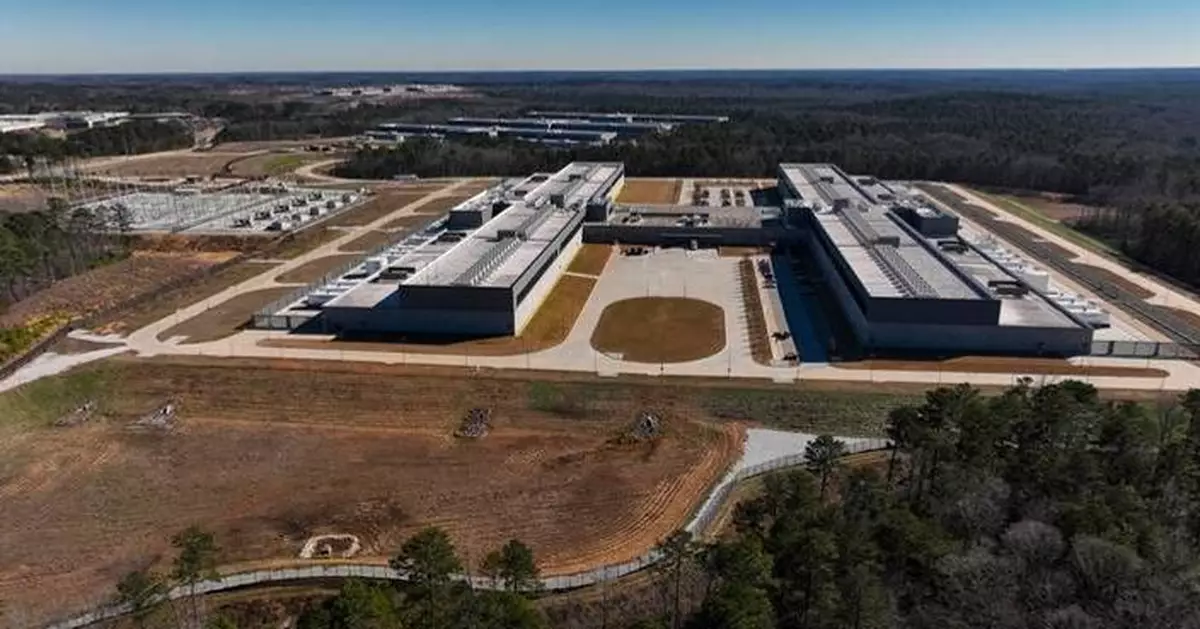
ATLANTA (AP) — Georgia state lawmakers spent months debating ideas to curb the impact of data centers. But as their annual legislative session ended Thursday, they did nothing.
Now with election season upon them, lawmakers are returning home to find local communities up in arms against the warehouses full of computers that power artificial intelligence.
“I think they failed us, that's what I think” said Judy Mullis, an activist fighting plans for a data center near Newnan, southwest of Atlanta. “I think they had the opportunity to do the right thing, and they didn't. I'm so tired of them prioritizing big money.”
Georgia has become one of the country's top sites for new data centers, thanks to utilities eager to sell electricity and tax breaks estimated to cost state and local governments nearly $3 billion in the year beginning July 1.
That gold rush has inflamed opposition, even in areas where business-friendly Republicans dominate local politics. Democrats hope to harness that anger to gain ground in the battleground state, a potential model as the party plots a path back to power around the country in the midterm elections.
Last year, opposition to data centers and discontent over rising electricity rates helped Democrats win upset victories over incumbent Republicans in statewide elections for the Georgia Public Service Commission, which regulates utilities. This year, they want to win the governor's office for the first time in 24 years and advance toward a majority in the 180-member state House.
Cyndie Hutchings, another activist, said local opposition to data centers has the potential to swing elections. She's running as a Democrat to oust Vance Smith, a longtime Republican state representative, in a district southwest of Atlanta.
“They tell me that they are lifelong Republican voters, but this has changed the way they’re looking at everything,” Hutchings said.
Mullis said she's one of them. She said she used to be a Republican but wants to elect officials who will act on data centers, and she voted for Democrats “for the first time ever” in the utility commission race.
Georgia lawmakers never seriously considered calls for a moratorium on new data centers. But they did debate stricter rules to protect other electricity ratepayers from shouldering costs from the developments.
The Public Service Commission passed rules last year that the five commissioners said would protect customers of Georgia Power Co., the state’s only private electric utility, from paying for generation or transmission investments needed to serve data centers. But commissioners also approved a huge expansion in electric generating capacity by Georgia Power, which is a subsidiary of Atlanta-based Southern Co.
The utility said fears of higher rates are misplaced, pointing to an electricity rate freeze and projections that revenue from data centers could help reduce future rates.
“Data center growth in our state means large energy users pay more so you pay less,” spokesperson Matthew Kent said in a statement Friday. “Georgia Power is able to leverage that growth to lower costs for everyone.”
But critics continue to warn that residential and other customers could end up on the hook, saying more action is needed
“The No. 1 concern that we heard pretty much consistently across the board was the residential ratepayers, they were concerned about costs that would be inflicted on them from the infrastructure investments and data centers and their rates going up based on the basic supply-and-demand principles,” said state Rep. Brad Thomas, a Republican who chaired a special committee looking at resource usage.
One legislative idea was to write existing commission rules into law. But Republican state Sen. Chuck Hufstetler said current language is “extremely weak and doesn’t protect the consumers," and he teamed up with Democrats earlier in the session to try to force stronger language earlier in the session.
The move was blocked when Republican Senate leaders — including Lt. Gov. Burt Jones, who is running for governor — abruptly adjourned that day, prompting howls from Democrats.
Efforts to restrict tax breaks for data centers also fell short despite widespread interest from lawmakers.
Republican Gov. Brian Kemp vetoed a bill to end data center tax breaks in 2024, but the issue took on fresh urgency as their value has ballooned into the billions. The House, though, never took up Senate proposals to curtail tax breaks.
Jones has been accused of favoring data centers because his family owns an interest in a real estate development that's courting the big computer centers. A spokesperson didn't immediately respond to an email and text message seeking comment Friday.
Others see the strong political influence of Georgia Power or the big money backing the data centers, which can boost property tax revenue at a time when local governments are under pressure to cut taxes for other property owners.
“They had a choice, and they chose big business,” said Mark Woodall, a lobbyist for the Sierra Club.
Democrats see an opportunity to offer themselves as a different choice.
“We need to get people into the state legislature to undo this legislation that’s enabling all of this,” Hutchings said.
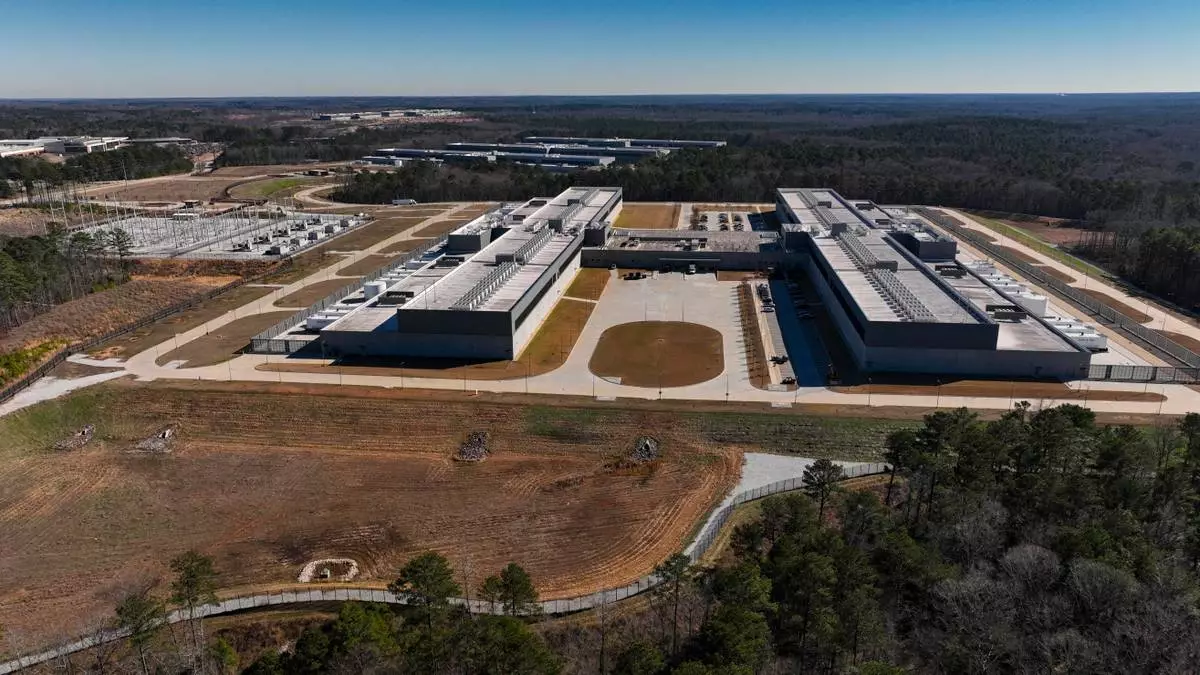
FILE - Meta's Stanton Springs Data Center is seen Tuesday, Jan. 13, 2026, in Newton County, East of Atlanta. (AP Photo/Mike Stewart, File)
NASHVILLE, Tenn. (AP) — A new Tennessee law has eased up on two longstanding financial hurdles for people with felony sentences who want their voting rights back, including a unique requirement among states that they must have fully paid their child support costs.
The Republican-supermajority Legislature approved the Democratic-sponsored change, which now lets people prove they have complied for the last year with child support orders, such as payment plans. The legislation also unties the payment of all court costs from voting rights restoration.
Advocates for years have sought various changes to Tennessee’s voting rights restoration system at the statehouse and in court. They say loosening these two rules marks the biggest rollback of restrictions to voting rights restoration in decades.
“This is huge and this is history,” said Keeda Haynes, senior attorney for the advocacy group Free Hearts led by formerly incarcerated women like her.
Most Republicans voted for it and Democrats supported it unanimously. The law took effect immediately upon Republican Gov. Bill Lee's signature last week.
“I think people are at a point where they want to just remove the barriers out of the way and allow people to be fully functional members of society,” said Democratic House Minority Leader Karen Camper, a bill sponsor.
In 2023 and early 2024, the state shelved a paperwork process that didn’t require going to court and decided gun rights were required to restore the right to vote. Election officials said a court ruling made the changes necessary, though voting rights advocates said officials misinterpreted the order.
Last year, lawmakers untangled voting and gun rights. But voting rights advocates opposed some of the bill's other provisions, such as keeping the process in the courts, where costs can rack up if someone isn't ruled indigent.
Easing up on the financial requirements uncommonly split legislative Republicans. For instance, Senate Speaker Randy McNally voted against it, while House Speaker Cameron Sexton supported it, noting that people aren't getting forgiveness on making their payments.
“They need to continue paying that, and as long as they do, then there’s a possibility (to restore their voting rights)," Sexton said. "I really think that’s harder for people to argue against than maybe what something else was.”
Republican Rep. Johnny Garrett, who voted no, said in committee his vote would hinge on whether “there still can be an (child support) arrearage owed beyond that 12 months.”
For some, backed-up child support payments could reach hundreds or thousands of dollars, and court costs could be hundreds or thousands more, said Gicola Lane, Campaign Legal Center's Restore Your Vote community partnership senior manager.
Advocates credited their narrowed focus, omitting goals such as automatic restoration of rights, no longer tying restitution payments to voting rights, or offering a path for certain people to restore their right who are permanently disenfranchised, including those convicted of voter fraud or most murder charges.
The bill passed the Senate last year and the House this year.
Lawmakers gave the child support requirement final passage in 2006 within an overhaul bill that also created a voting rights restoration process outside of court. Critics said the child support rule penalized impoverished parents.
Democrats were then narrowly hanging onto legislative leadership in both chambers. Republicans held a slim Senate majority but GOP defectors voted for a Democratic speaker.
Last year marked the dismissal of a nearly five-year-old federal lawsuit over Tennessee’s voting-rights restoration system. Free Hearts and the Campaign Legal Center represented plaintiffs in the long-delayed case, which saw some election policy changes along the way.
Roughly 184,000 people have completed supervision for felonies and their offenses don't preclude them from restoring their voting rights, according to a plaintiffs expert’s 2023 estimate in the lawsuit. About one in 10 were estimated to have outstanding child support payments, and more than six in 10 owed court courts, restitution or both, the expert said.
Both Republican and Democratic-led states have eased the voting rights restoration process in recent years. Some states have added complexities.
In Florida, after voters approved a constitutional amendment in 2018 restoring the right to vote for people with felony convictions, the Republican-controlled Legislature watered that down by requiring payment of fines, fees and court costs.
Voting rights are automatically restored upon release in nearly half of states. In 15 others, it occurs after parole, probation or a similar period and sometimes requires paying outstanding court costs, according to the National Conference of State Legislatures. In Maine and Vermont, people with felonies keep their voting rights in prison, the NCSL says.
Ten other states including Tennessee require additional government action. Virginia ’s governor must intervene to restore voting rights of people convicted of felonies. In some states, including Tennessee, certain conviction types render someone ineligible.
However, Virginia lawmakers this year have passed a proposed state constitutional amendment to ask voters whether they want automatic voting rights restoration after someone is released from prison. Kentucky lawmakers have proposed a similar change for voters' consideration that would automatically restore voting rights after certain completed sentences, including probation.
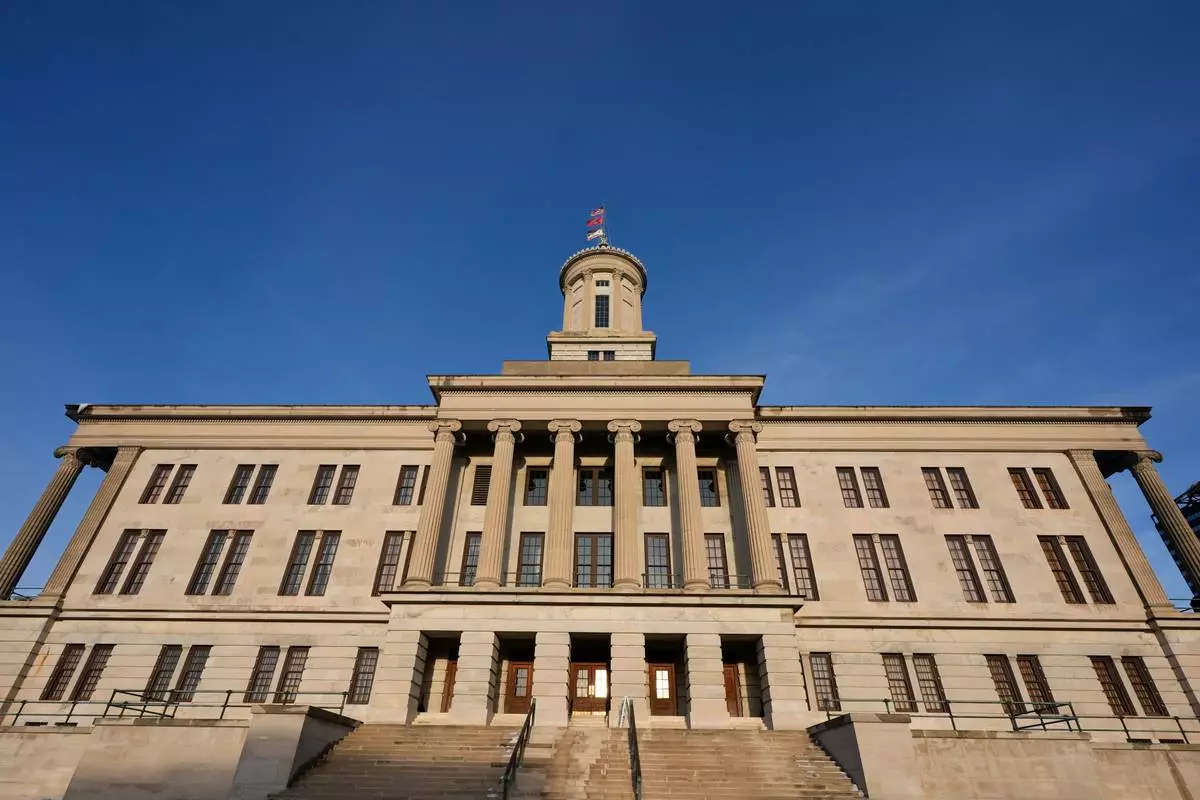
FILE - The Tennessee Capitol is seen, Jan. 22, 2024, in Nashville, Tenn. (AP Photo/George Walker IV, File)