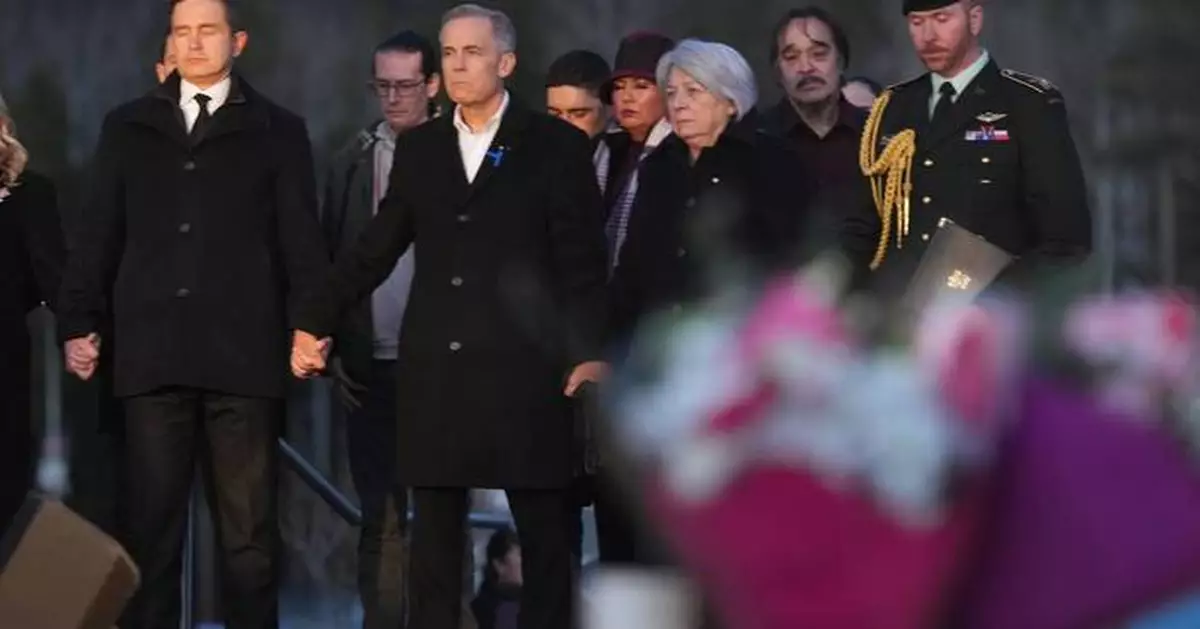
VANCOUVER, British Columbia (AP) — Canadian Prime Minister Mark Carney and the country’s main opposition leader held hands Friday as they paid tribute to the victims of one of the worst mass shootings in the country’s history at a vigil in a devastated British Columbia town.
Carney and Opposition Conservative leader Pierre Poilievre joined hands as an Indigenous leader sang a prayer outside the town hall in Tumbler Ridge.
Click to Gallery
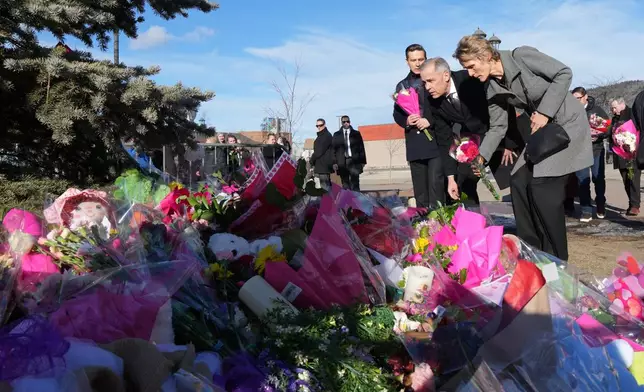
Canada's Prime Minister Mark Carney and his wife Diana Fox Carney place flowers at a memorial for the victims of a mass shooting, in Tumbler Ridge, B.C., Friday, Feb. 13, 2026. (Christinne Muschi/The Canadian Press via AP)
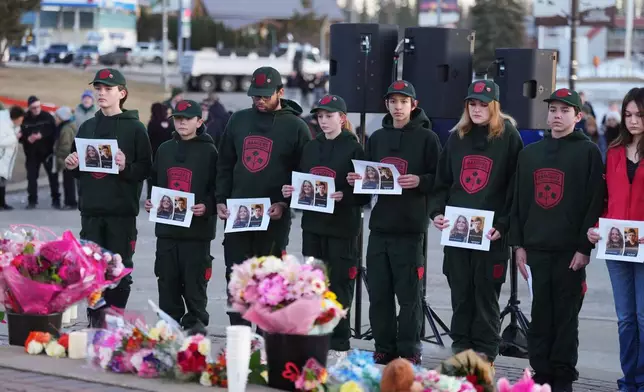
People hold photos of victims to a vigil for the victims of a mass shooting, in Tumbler Ridge, B.C., Friday, Feb. 13, 2026. (Christinne Muschi/The Canadian Press via AP)
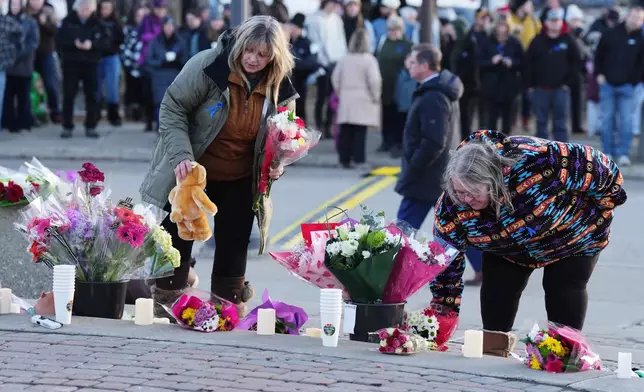
People bring flowers and stuffed animal to a vigil for the victims of a mass shooting, in Tumbler Ridge, B.C., Friday, Feb. 13, 2026. (Christinne Muschi/The Canadian Press via AP)
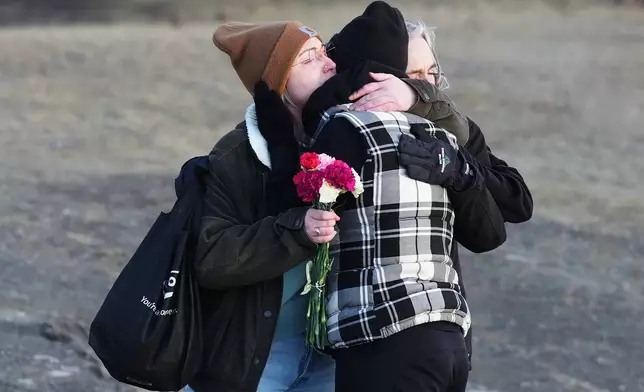
People comfort each other at a vigil for the victims of a mass shooting, in Tumbler Ridge, B.C., Friday, Feb. 13, 2026. (Christinne Muschi/The Canadian Press via AP)
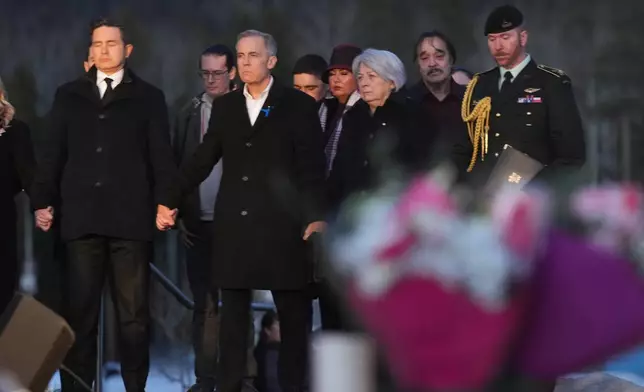
From left to right, Leader of the Official Opposition of Canada Pierre Poilievre, Prime Minister Mark Carney and Governor General of Canada, Mary Simon join hands while attending a vigil for the victims of a mass shooting, in Tumbler Ridge, B.C., Friday, Feb. 13, 2026. (Christinne Muschi/The Canadian Press via AP)
Carney and Poilievre also spoke. The prime minister named each of the six people killed at Tumbler Ridge Secondary School and said the mother and brother of the shooter who were killed also “deserve to be mourned.”
Authorities said the 18-year-old alleged shooter, identified as Jesse Van Rootselaar, killed her 39-year-old mother, Jennifer Jacobs, and 11-year-old stepbrother, Emmett Jacobs, in their home on Tuesday before heading to the nearby Tumbler Ridge Secondary School and opening fire, killing five children and an educator before killing herself.
Carney said he sat with people who are “living through something no one should ever have to endure.”
“When you wake up tomorrow, and the world feels impossible, know that millions of Canadians are with you. When the cameras leave and the quiet sets in — know that we will still be here,” Carney said.
A crowd of hundreds attended the vigil. Some held photos of loved ones they lost.
Carney said the community has always been defined by people caring for each other.
“And when the unimaginable happened on Tuesday, you were there again. First responders at the school within two minutes. Teachers shielding their children,” he said.
Poilievre commended Carney for his “tremendous grace.” Canada’s political leaders flew from Ottawa together.
British Columbia Premier David Eby said the students of the school won’t ever have to return to the building if they don’t want to.
“I will promise that not one of you will ever be forced to go back to that school. We will provide a safe place for you to go back to school,” Eby said.
Authorities on Thursday identified those killed at the school as Kylie Smith, Abel Mwansa, Zoey Benoit and Ticaria Lampert, all age 12, as well as 13-year-old Ezekiel Schofield and assistant teacher Shannda Aviugana-Durand, 39.
Maya Gebala, 12, who was wounded in the head and neck, and Paige Hoekstra, 19, who also suffered bullet wounds, remain hospitalized in Vancouver.
Dwayne McDonald, the deputy commissioner of the Royal Canadian Mounted Police in British Columbia, said earlier Friday that the alleged shooter did not appear to be searching for a specific target at the school.
“This suspect was, for lack of a better term, hunting,” McDonald said. “They were prepared and engaging anybody and everybody they could come in contact with.”
McDonald described a “chaotic” scene at the school when police arrived, with fire alarms sounding and a person yelling out a window that the suspect was upstairs.
“They entered the school, proceeded to go up the stairwell, and were met with gunfire,” he said. “It was a matter of seconds after that there was more gunfire, not as we know now, having reviewed video, directed at any persons. Then the suspect took their life.”
McDonald said from the time the suspect encountered police there were no further injuries to students at the school.
Four guns were seized, two from the family home and two from the school, he said.
The attack was Canada’s deadliest since 2020, when a gunman in Nova Scotia killed 13 people and set fires that left another nine dead.
School shootings are rare in Canada, which has strict gun-control laws. The government has responded to previous mass shootings with gun-control measures, including a recently broadened ban on all guns it considers assault weapons.
Gillies reported from Toronto.
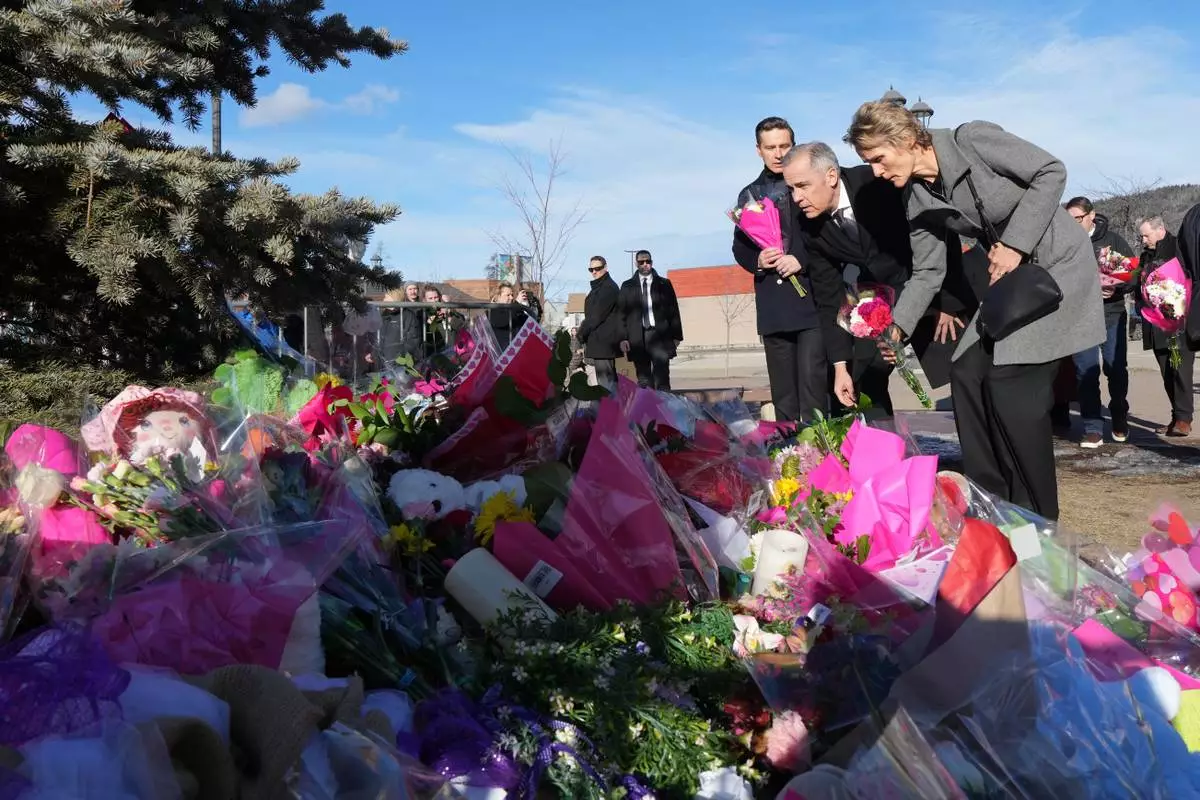
Canada's Prime Minister Mark Carney and his wife Diana Fox Carney place flowers at a memorial for the victims of a mass shooting, in Tumbler Ridge, B.C., Friday, Feb. 13, 2026. (Christinne Muschi/The Canadian Press via AP)
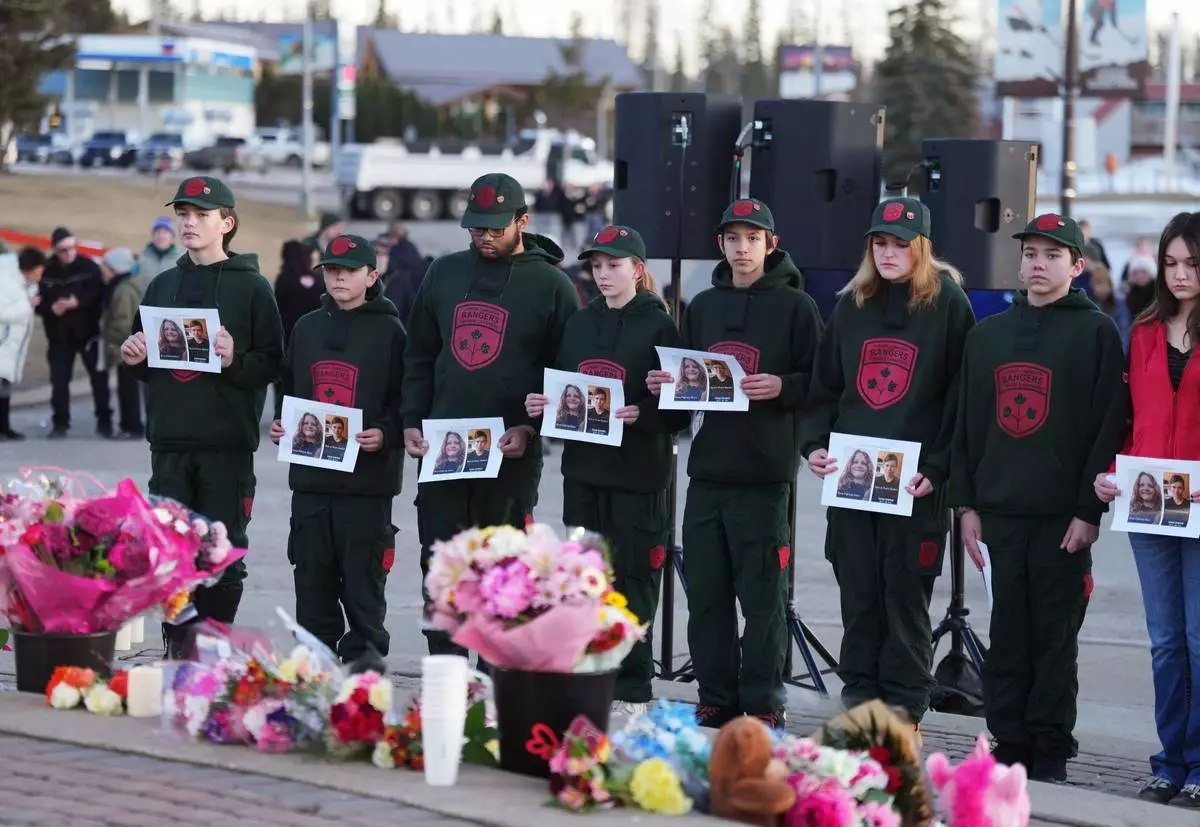
People hold photos of victims to a vigil for the victims of a mass shooting, in Tumbler Ridge, B.C., Friday, Feb. 13, 2026. (Christinne Muschi/The Canadian Press via AP)
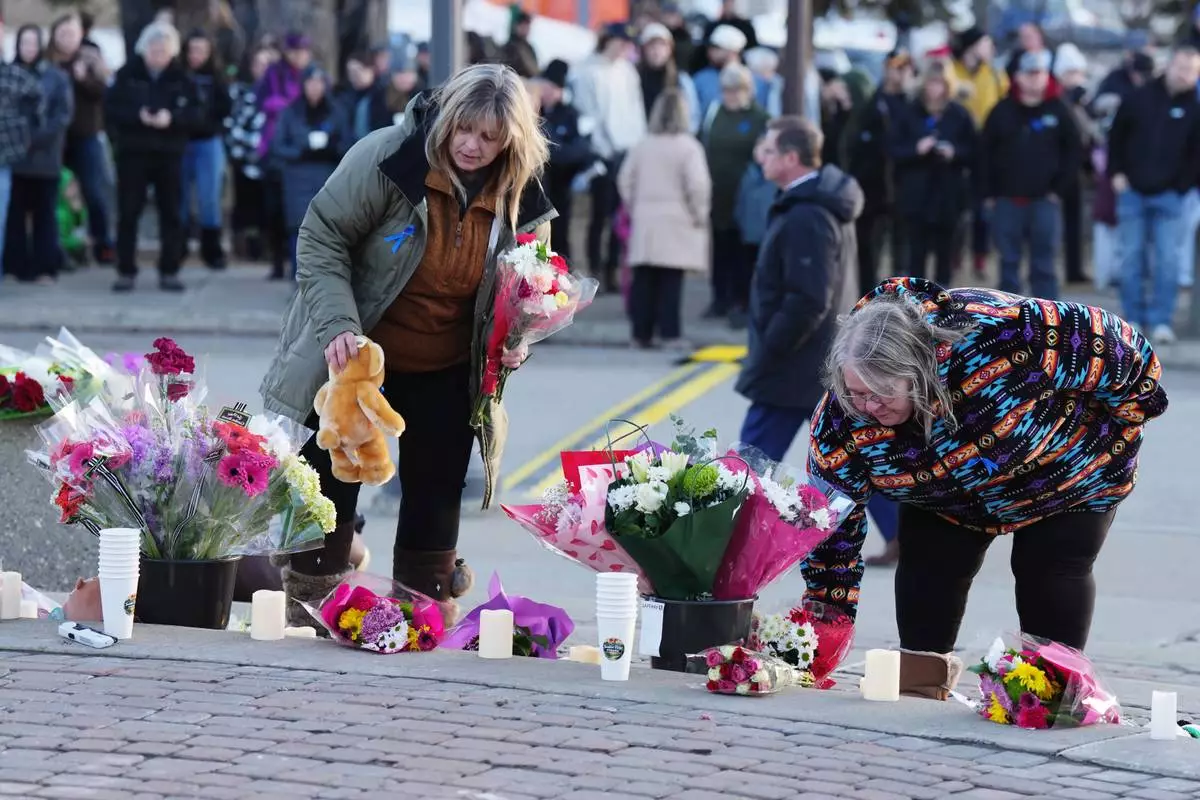
People bring flowers and stuffed animal to a vigil for the victims of a mass shooting, in Tumbler Ridge, B.C., Friday, Feb. 13, 2026. (Christinne Muschi/The Canadian Press via AP)
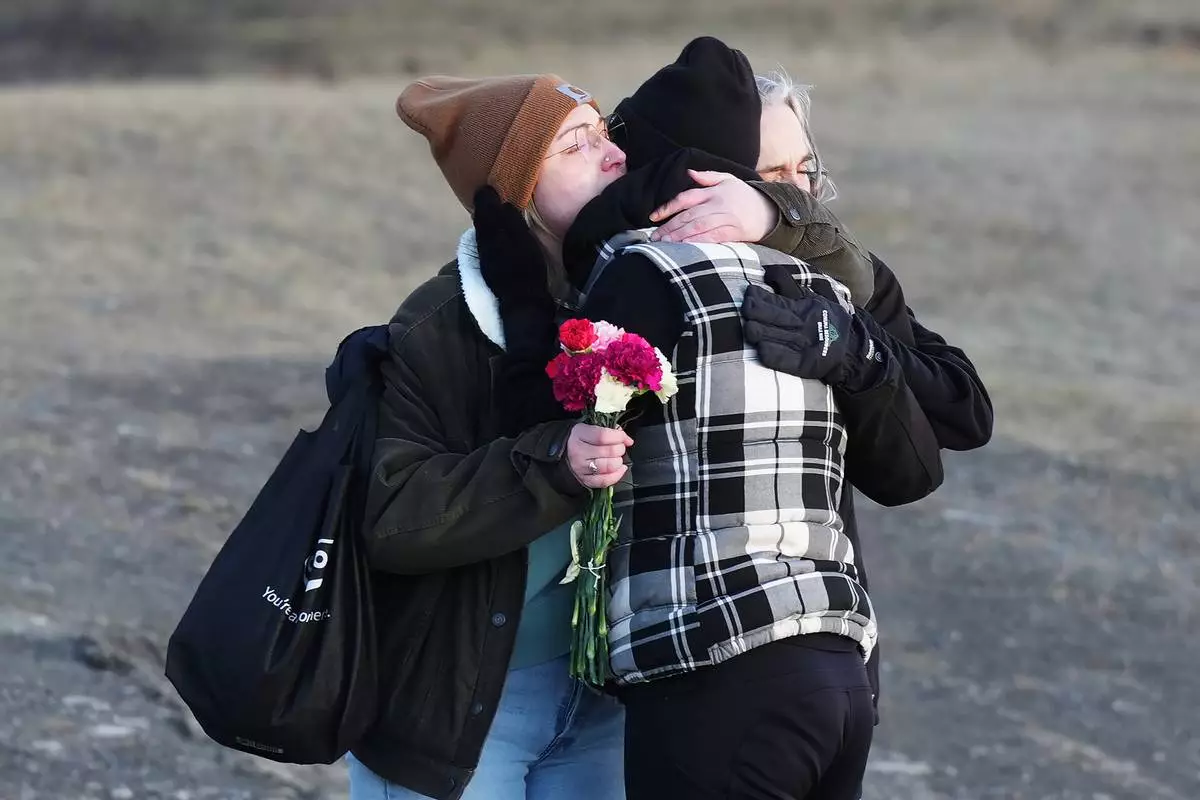
People comfort each other at a vigil for the victims of a mass shooting, in Tumbler Ridge, B.C., Friday, Feb. 13, 2026. (Christinne Muschi/The Canadian Press via AP)
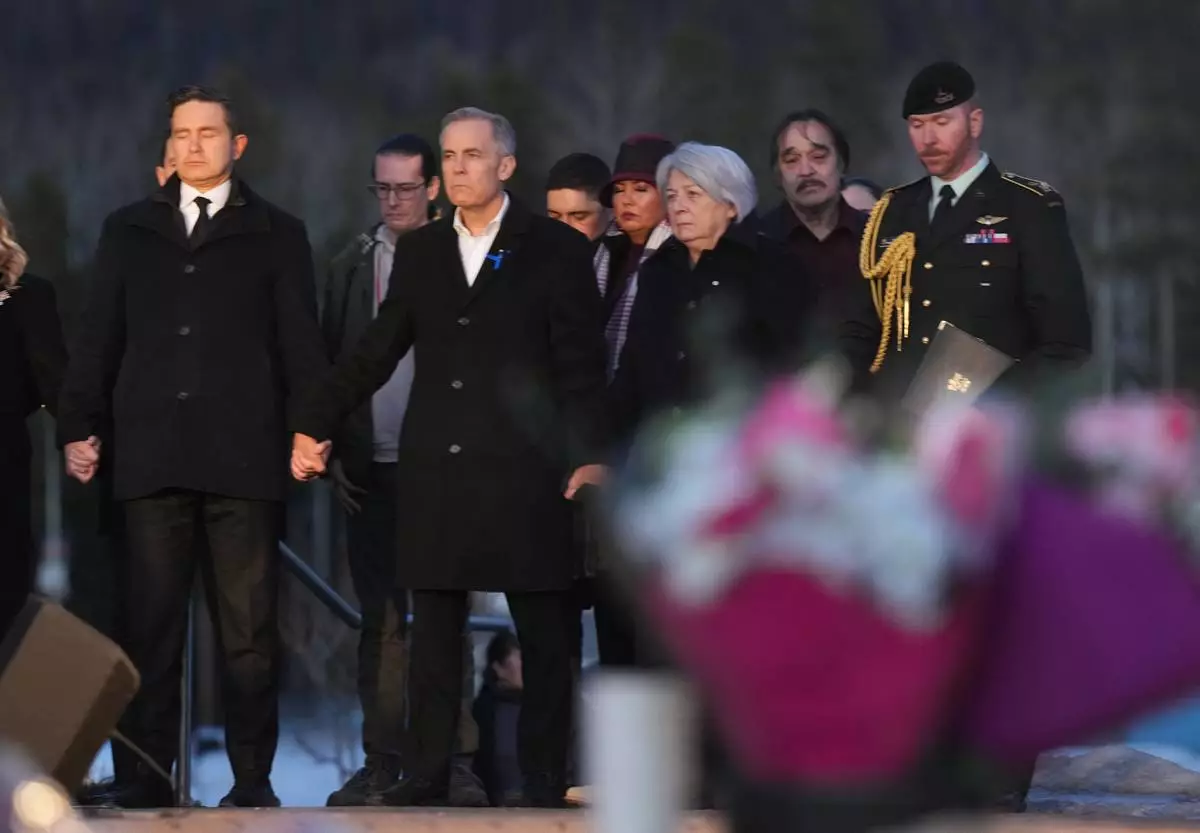
From left to right, Leader of the Official Opposition of Canada Pierre Poilievre, Prime Minister Mark Carney and Governor General of Canada, Mary Simon join hands while attending a vigil for the victims of a mass shooting, in Tumbler Ridge, B.C., Friday, Feb. 13, 2026. (Christinne Muschi/The Canadian Press via AP)