DAYTONA BEACH, Fla. (AP) — Denny Hamlin has a plan for improving racing at Daytona International Speedway, and it involves going faster.
He already has spoken to NASCAR executives about it, too.
Hamlin shared his idea for fixing the Daytona 500, which has become a fuel-mileage event since the debut of the Next Gen car in 2022, with everyone else after celebrating his first victory as a team owner in “The Great American Race.”
“There’s a way, but we’re going to have to increase the speeds by a lot,” said Hamlin, who finished 31st in the 500 on Sunday but made it to victory lane with Tyler Reddick at 23XI Racing. “You’re going to make it where handling matters. That’s going to spread the field, that’s going to make it to where … it’ll look a little more like racing from the past.”
The latest iteration of NASCAR’s stock car is a safer version of anything previously seen in the series. But it also delivers slower laps at superspeedways like Daytona and Talladega and leaves cars bunched up like never before.
“As long as (NASCAR’s) insurance company is OK with it, you’re going to have to speed up the cars because right now we’re so planted in the racetrack that we could just run in this really tight pack,” Hamlin said.
Hamlin met with NASCAR earlier this week and discussed letting teams devise a racing package they could test during the exhibition Clash if it returns to Daytona next year. If it works, the tweaks could potentially be rolled out before 2028.
“You won’t see any fuel saving,” Hamlin said. “You’re just going to see people hanging on. That would be the only fix.”
Reddick’s crew chief, Billy Scott, was less confident that the fuel-mileage strategy would be altered.
“I doubt there’s a fix to it because we’re just going to figure out the next way to exploit it, and I don’t know that it needs to be fixed,” Scott said. “It would be like asking if you need to change how chess is played.”
With the evolution of the Cup Series car creating little chance of manipulating parts and pieces, teams now rely more on making up spots on pit road on race day. They put new tires on less often and try to save fuel by running less-than-full throttle. The end result is a scenario that takes less time to fill gas tanks during stops.
But it also can create lulls in the early and middle parts of race stages.
“On one hand, it’s good because our strategy worked out perfectly,” said 2023 Daytona 500 winner Ricky Stenhouse Jr., who finished second Sunday. “We stuck to it. It was brutal riding around there for a while. Not sure what the Toyotas were doing, but I think that made the race pretty boring there for a while for the fans. It was chaos after they pitted.”
Hamlin’s idea could work. It’s at least worth considering.
“Everybody is trying to react off each other and figure out a way to get in the front at the right time, and that depends on whether cautions fly,” Scott said. “… To me, from where we stand, that’s a very enjoyable part of it.”
AP auto racing: https://apnews.com/hub/auto-racing
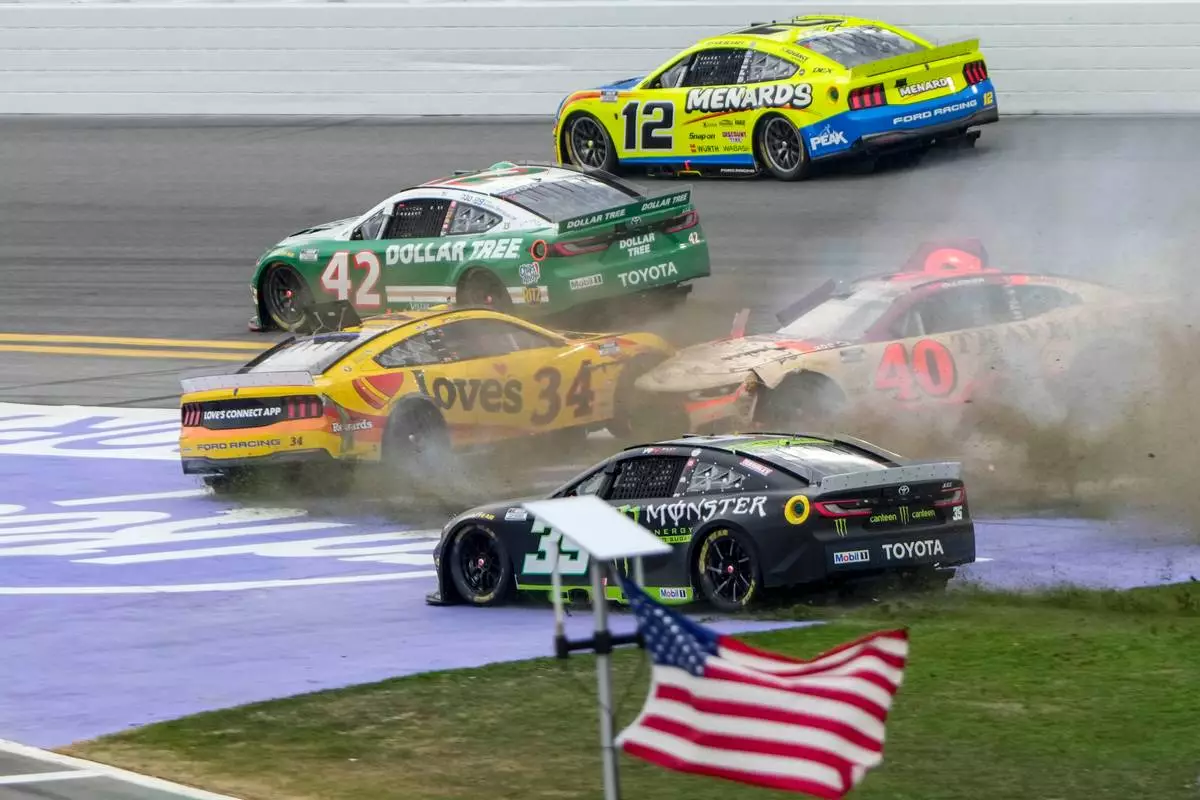
Riley Herbst, (35), Justin Allgaier, (40), Todd Gilliland, (34), John Hunter Nemechek, (42) and Ryan Blaney, (12) collide during the NASCAR Daytona 500 auto race at Daytona International Speedway, Sunday, Feb. 15, 2026, in Daytona Beach, Fla. (AP Photo/John Raoux)
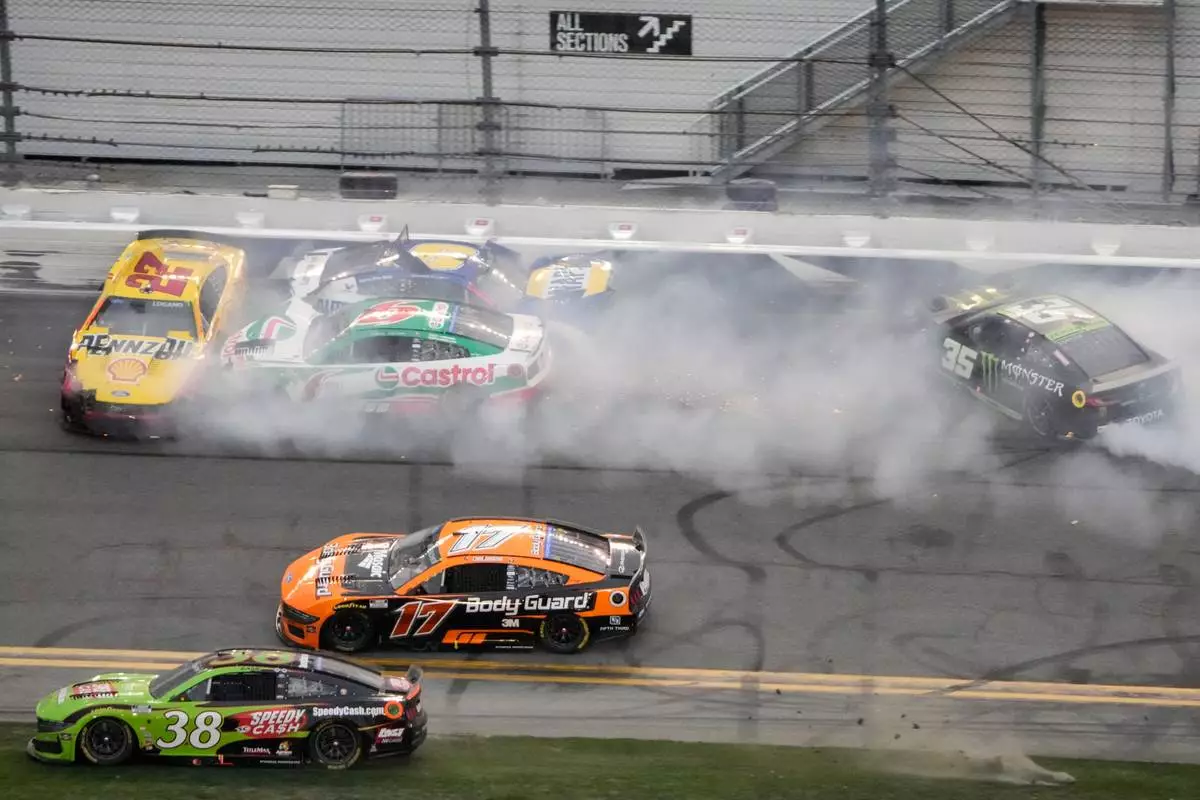
Cars crash on the checkered flag during the NASCAR Daytona 500 auto race at Daytona International Speedway, Sunday, Feb. 15, 2026, in Daytona Beach, Fla. (AP Photo/John Raoux)
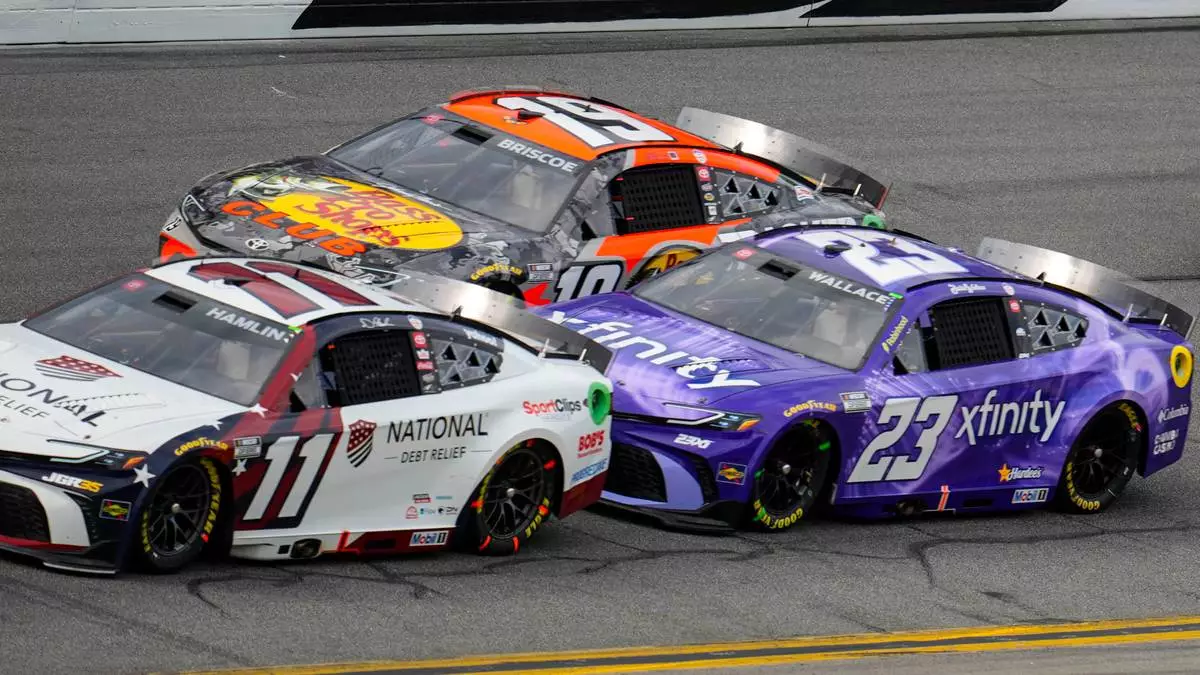
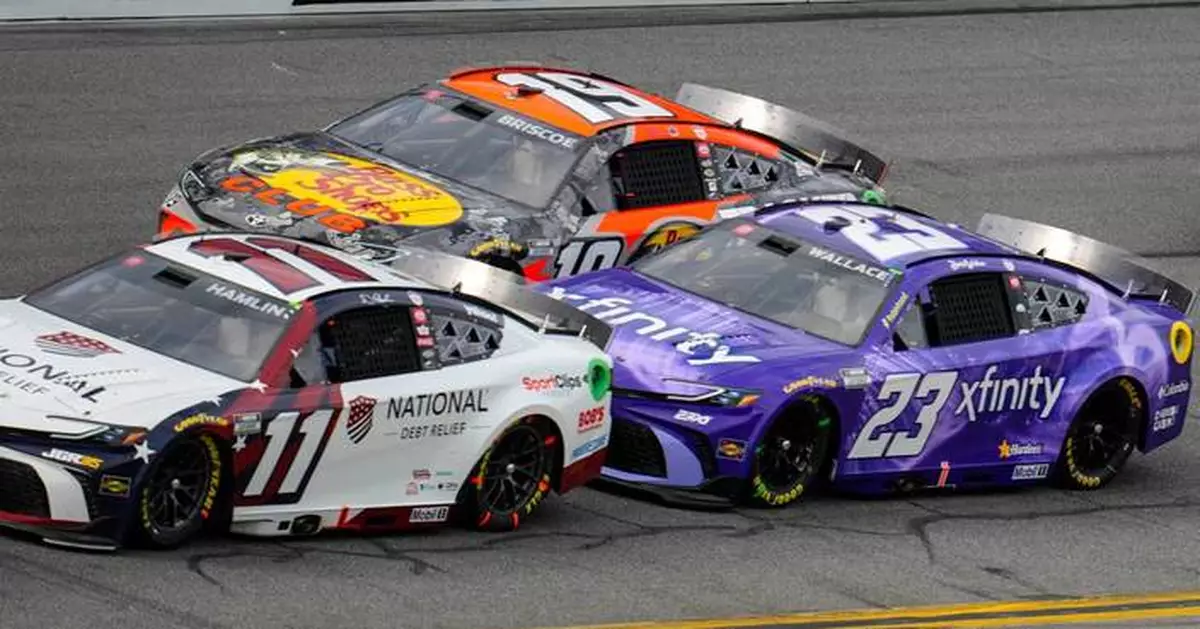
Denny Hamlin, (11), Bubba Wallace, (23) and Chase Briscoe, (19) run during the NASCAR Daytona 500 auto race at Daytona International Speedway, Sunday, Feb. 15, 2026, in Daytona Beach, Fla. (AP Photo/Mike Stewart)
BARCELONA, Spain (AP) — Brazil’s President Luiz Inácio Lula da Silva is starting a two-day visit to Spain on Friday where he and his Spanish counterpart Pedro Sánchez will meet with other leaders, mostly of mid-to-small-sized countries, who are concerned with the fate of the democratic order and the rise of the populist far right.
Lula and Sánchez are both outspoken in their criticism of U.S. President Donald Trump, who has threatened both with punitive tariffs. They are considered standard-bearers of progressive or liberal politics on their respective continents, where reactionary parties and far-right populism have been on the rise for years.
Lula and Sánchez, along with ministers from their cabinets, will meet at a former royal palace in Barcelona on Friday when they are expected to sign agreements regarding their economies, technology and social policies.
Their bilateral meeting will be prelude for the following day’s double dose of gatherings when Lula and Sánchez confer with other leaders at two events inside a sprawling conference center in Spain’s second city.
The first gathering on Saturday is the IV Meeting in Defense of Democracy. The event was launched by Brazil and Spain in 2024 as a forum to exchange ideas aimed at combating the “extremism, polarization and misinformation” that undermines participatory democracy, the organizers say. The first two editions of this event were held at the United Nations and the previous one was in Santiago, Chile, last year.
While both Lula and Sánchez have spoken out against many of Trump's positions and policies, including his decision to attack Iran along with Israel, Lula said that the multilateral summit should not been seen in that vein.
“This is not going to going to be an anti-Trump meeting,” Lula told Spanish newspaper El País on Thursday. “We are going to discuss the state of democracy, to see what went wrong and what we have to do to repair it.”
This edition will include the presence of European Council president Antonio Costa, Mexican president Claudia Sheinbaum, South African president Cyril Ramaphosa, Colombia president Gustavo Petro, and other leaders of countries from Uruguay and Lithuania to Ghana and Albania.
Sheinbaum’s participation comes after Spain’s King Felipe VI ironed out a longstanding diplomatic dispute regarding Spain’s colonial past when he recently acknowledged the Spanish conquest of the Americas had led to the “abuse” of native peoples.
At a time that Latin America has felt a rightward political swing and mounting pressure by the Trump administration, Sheinbaum has become one of the most powerful leftist voices in the hemisphere. She enjoys soaring approval in Mexico and has been able to strike a careful balance between maintaining a strong relationship with Trump, while pushing back on key issues like Latin American sovereignty.
Many of the leaders from the first event will stay put for the inaugural Global Progressive Mobilization, held at the same venue later on Saturday. The gathering of left-leaning politicians and policymakers was launched after Sánchez and former Swedish Prime Minister Stefan Löfven, who is now President of the Party of European Socialists, discussed the idea at a meeting of European Socialists last year.
Sánchez and Lula will both give speeches at the event, which is expected to have 3,000 attendees, including U.S. Democratic Senator Chris Murphy, and feature round tables dedicated to issues ranging from wage inequality to how to improve election results for progressives.
The meeting comes amid a busy week for Sánchez, who just returned from meeting with Chinese President Xi Jinping, his fourth trip to Beijing in just over three years.
Sánchez's government declared its airspace closed to U.S. planes being used in the Iran war, and said it is not allowing the U.S. to use jointly operated military bases in southern Spain for actions related to the war.
Earlier this week, Lula released a video message expressing “deep solidarity” with Pope Leo XIV following public criticisms made by Trump after the pontiff slammed the Iran war.
Pol Morillas, director of the Barcelona-based foreign affairs think tank CIDOB, said that the gatherings are meant to be a show of force by traditional democratic leaders who have seen how the populist far-right has successfully forwarded its messages of anti-migration and economic nationalism through international gatherings.
Morillas also sees the meetings in the context of the speech by Canadian Prime Minister Mark Carney that shook the Davos economic forum in January on the importance of so-called “middle powers” seeking out new strategies to deal with a world of aggressive superpowers.
Lula, Sánchez and other leaders at the events “share the understanding that the world is not just for the great powers,” Morillas told The Associated Press.
AP writers Megan Janetsky in Mexico City and Mauricio Savarese in Sao Paulo, Brazil, contributed.
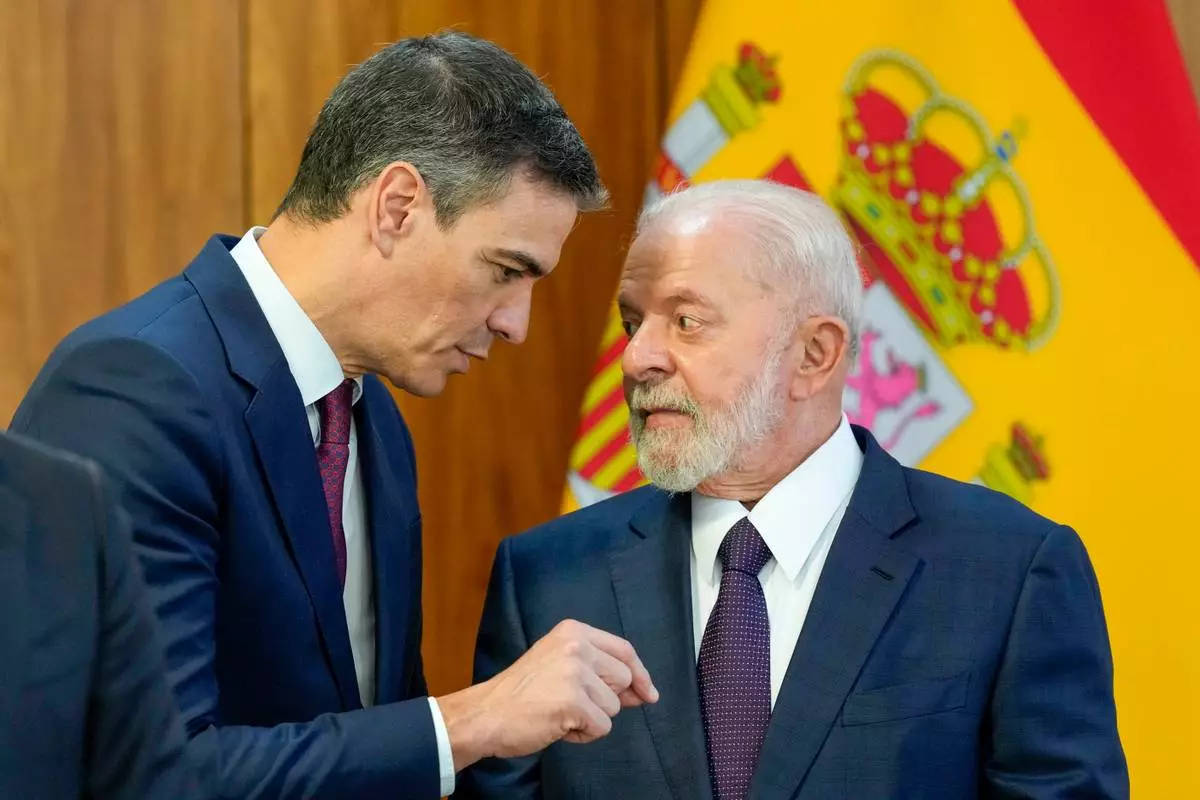
FILE -Spain's Prime Minister Pedro Sanchez, left, speaks with Brazil's President Luiz Inacio Lula da Silva during their joint statement at Planalto presidential palace in Brasilia, Brazil, March 6, 2024. (AP Photo/Eraldo Peres, File)