Skip to Content Facebook Feature Image

Oscar-winning filmmaker Frederick Wiseman dies, leaving legacy of American institutions

ENT

Oscar-winning filmmaker Frederick Wiseman dies, leaving legacy of American institutions
ENT

ENT

Oscar-winning filmmaker Frederick Wiseman dies, leaving legacy of American institutions

2026-02-17 09:56 Last Updated At:10:00

NEW YORK (AP) — Frederick Wiseman, the celebrated director of “Titicut Follies” and dozens of other documentaries whose in-depth, unadorned movies comprised a unique and revelatory history of American institutions, died Monday at age 96.

The death was announced in a joint statement from his family and from his production company, Zipporah Films. Additional details were not immediately available.

“He will be deeply missed by his family, friends, colleagues, and the countless filmmakers and audiences around the world whose lives and perspectives were shaped by his unique vision,” the statement said.

Among the world's most admired and influential filmmakers, Wiseman won an honorary Academy Award in 2016 and completed more than 35 documentaries, some several hours long. With subjects ranging from a suburban high school to a horse race track, his work was aired on public television, screened at retrospectives, spotlighted in festivals, praised by critics and fellow directors and preserved by the Library of Congress.

Wiseman was in his mid-30s before he made his first full-length movie, but was soon ranked with — and sometimes above — such notable peers as D.A. Pennebaker and Robert Drew for helping to establish the modern documentary as a vital and surprising art form.

Starting with “High School" and the scandalous “Titicut Follies," he patented a seamless, affecting style, using a crew so tiny that Wiseman served as his own sound engineer. The results led to acclaim, amusement, head-shaking, finger-pointing and — with “Titicut Follies" — prolonged legal action.

“I don't set out to be confrontational, but I think sometimes the content of the movie runs against people's expectations and fantasies about the subject matter," Wiseman told Gawker in 2013.

Wiseman's vision was to make “as many films as possible about different aspects of American life," and he often gave his documentaries self-explanatory titles: “Hospital," “Public Housing," “Basic Training," “Boxing Gym." But he also dramatized how people functioned within those settings: an elderly welfare applicant begging for assistance, a military trainee complaining of harassment, a doctor trying to coax coherent answers out of a dazed heroin addict, sales clerks at Neiman Marcus rehearsing their smiles.

“The institution is also just an excuse to observe human behavior in somewhat defined conditions,” Wiseman told The Associated Press in 2020. “The films are as much about that as they are about institutions."

For “Titicut Follies," which premiered in 1967, Wiseman visited the Massachusetts-based Bridgewater State Hospital for the criminally insane. He amassed footage of nude men being baited by sadistic guards and one inmate being force-fed as he lies on a table, liquid pouring down a rubber hose shoved into his nose. The images were so appalling and embarrassing that state officials successfully restricted its release, giving the film exalted status among those determined to see it.

In “High School," released in 1968, Wiseman recorded daily life in a suburban Philadelphia school. He filmed a student being questioned about whether he has permission to make a phone call, an English teacher earnestly analyzing the lyrics of Simon & Garfunkel's “The Dangling Conversation," an awkward sex education class in which boys are told the more active they are, the more insecure they must be.

“What we see in Fred Wiseman's documentary ... is so familiar and so extraordinarily evocative that a feeling of empathy with the students floods over us," The New Yorker's Pauline Kael wrote. “Wiseman extends our understanding of our common life the way novelists used to."

Wiseman made movies without narration, prerecorded soundtracks and title cards. But he disputed, forcefully, that he was part of the “cinema verite" movement of the 1960s and '70s, calling it a “pompous French term that has absolutely no meaning."

He also differed with how others interpreted his viewpoint. While Oscar-winner Errol Morris dubbed him “the undisputed king of misanthropic cinema," Wiseman insisted that he was not a muckraker out to correct injustice. He saw himself as a subjective, but fair-minded and engaged observer who discovered through the work itself how he felt about a given project, combing through hundreds of hours of footage and unearthing a story — sometimes despairing, sometimes hopeful. For “High School II," he visited a school in East Harlem in the 1990s, and was impressed by the commitment of the teachers and administrators.

“I think it's as important to document kindness, civility and generosity of spirit as it is to show cruelty, banality and indifference," Wiseman said when he accepted his honorary Oscar.

He was as adventurous in his 80s and 90s as he was in his 30s, making “Crazy Horse" about the erotic Parisian dance revue, the four-hour “At Berkeley," about the California state university, and the 2 1/2 hour “Monrovia, Indiana” about an aging rural community. Wiseman also had a long career in theater, staging plays by Samuel Beckett and William Luce among others and adapting his movie “Welfare" into an opera. In 2025, he had brief acting roles in two acclaimed movies — as a poet in “Jane Austen Wrecked My Life” and off-screen as a radio announcer in “Eephus."

Much of his own work was made through Zipporah, named for his wife, who died in 2021. They had two children.

Wiseman was born in Boston, his father a prominent attorney, his mother an administrator at a children's psychiatric ward and a would-be actor who entertained her son with stories and imitations. His education was elite despite attending schools with Jewish quotas — Williams College and Yale Law School — and his real life experiences were invaluable for the movies he would end up making.

In the 1950s and early '60s, he worked in the Massachusetts attorney general’s office, was a court reporter in Fort Benning, Georgia; and Philadelphia, a research associate at Brandeis University and a lecturer at Boston Law School. Drafted into the Army in 1955 and stationed in Paris, he picked up some practical film knowledge by shooting street scenes with a Super 8 camera.

“I reached the witching age of 30 and figured I better do something I liked,” Wiseman told the AP in 2016. “It was just a few years after the technological developments that it made it possible to shoot synchronous sound ... so that opened up the world for filmmaking. And there were so many good subjects that hadn't been filmed, as there still are.”

His new career began with narrative drama. He read William Miller's “The Cool World," a novel about young Black people on the streets of Harlem, called up the author and acquired rights. Wiseman served as producer of the low-budget, 1964 adaptation that was directed by Shirley Clarke, and he became confident that he could handle a movie himself.

While teaching at Boston Law School, Wiseman organized class trips to the nearby Bridgewater facility. In 1965, he wrote to officials there, proposing a film — ultimately “Titicut Follies” — that would give the “audience factual material about a state prison but will also give an imaginative and poetic quality that will set it apart from the cliche documentary about crime and illness."

Around the time the movie was screened at the New York Film Festival, the state of Massachusetts sought an injunction, alleging that Wiseman had violated the prisoners' privacy. For more than 20 years, Wiseman was permitted to show “Titicut Follies" only in prescribed settings such as libraries and colleges. The ban was finally relaxed when Superior Court Judge Andrew Meyer in Boston first ruled that the documentary could be shown to the general public if faces were blurred, then, in 1991, lifted all restrictions.

“I have viewed the film and agree that it is a substantial and significant intrusion into the privacy of the inmates shown in the film," Meyer wrote in his initial opinion in 1989. “However, I also regarded 'Titicut Follies' as an outstanding film, artistically and thoughtfully edited with great social and historical value.

“Another observation about the film: It is true."
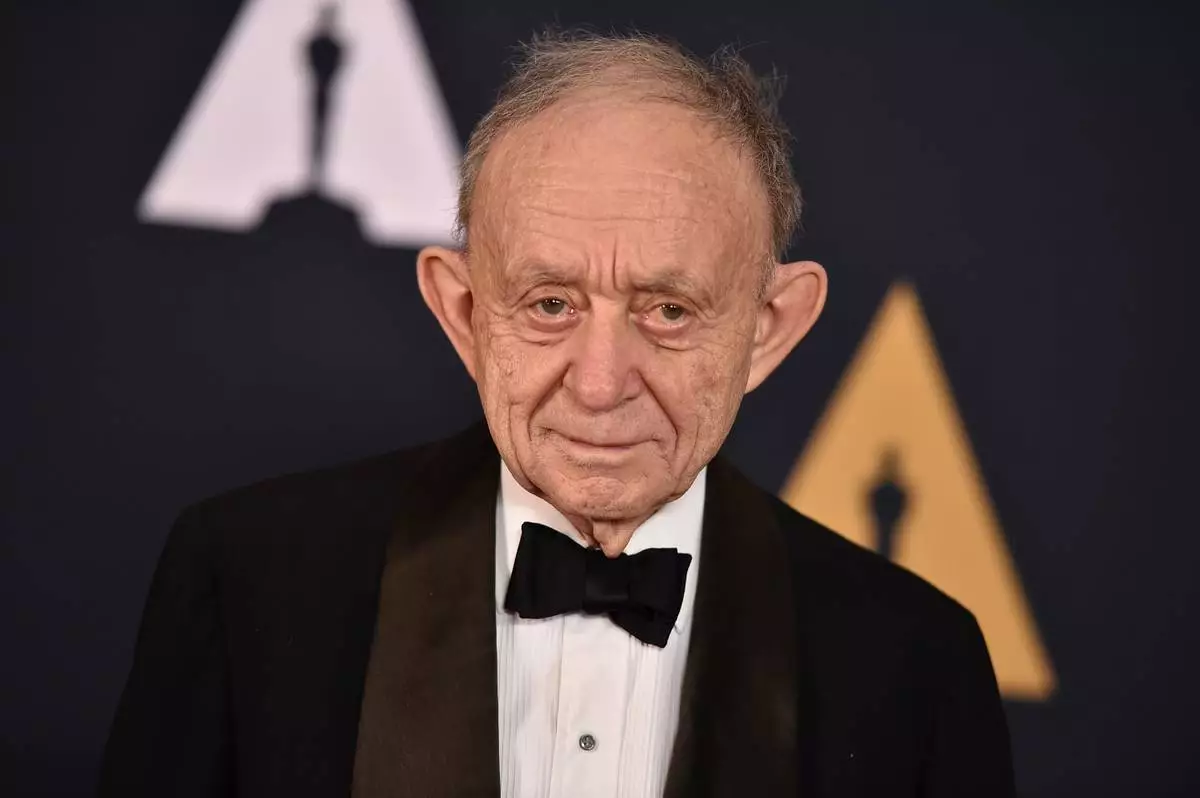
FILE - Frederick Wiseman arrives at the 2016 Governors Awards, Nov. 12, 2016, in Los Angeles. (Photo by Jordan Strauss/Invision/AP, File)
FILE - Frederick Wiseman arrives at the 2016 Governors Awards, Nov. 12, 2016, in Los Angeles. (Photo by Jordan Strauss/Invision/AP, File)
BUDAPEST, Hungary (AP) — U.S. Secretary of State Marco Rubio on Monday enthusiastically endorsed Hungarian Prime Minister Viktor Orbán 's bid to serve a fifth straight term after the April elections, emphasizing during a visit to Budapest the strong personal relationship between the nationalist leader and U.S. President Donald Trump.

Orbán, who has led Hungary since 2010, is one of Trump’s most vocal supporters in the European Union, and has actively curried the U.S. president’s favor leading up to the April 12 vote in which he will face the toughest challenge of his last 16 years in power.

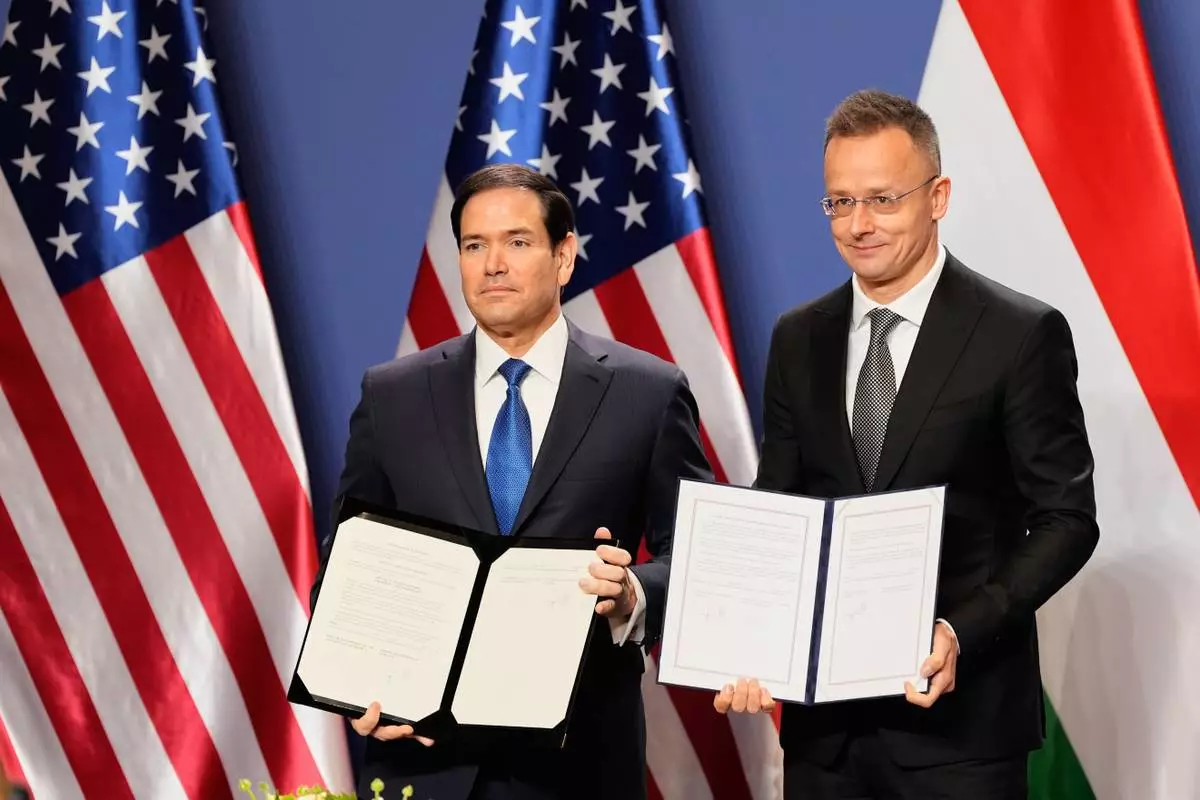
Rubio was in the Hungarian capital for meetings with Orbán and his government where he signed an agreement on U.S.-Hungarian civilian nuclear cooperation that includes the possible purchase of compact nuclear reactors — known as small modular reactors or SMRs — as well as U.S.-supplied nuclear fuel and spent fuel storage technology.

At a news conference, Rubio said U.S.-Hungary relations — which both he and Orbán described as experiencing a “golden age” under Trump — go beyond mere diplomatic cooperation.

“I’m going to be very blunt with you," Rubio said. "The prime minister and the president have a very, very close personal relationship and working relationship, and I think it has been beneficial to our two countries.”

“That person-to-person connection that you’ve established with the president has made all the difference in the world in building this relationship,” Rubio continued, addressing Orbán. “President Trump is deeply committed to your success because your success is our success.”

Rubio's stop in Hungary followed a visit to Slovakia on Sunday after he previously attended the Munich Security Conference in Germany.

Led by euroskeptic populists who oppose support for Ukraine and vocally back Trump, Slovakia and Hungary are both friendly territory for Rubio in his push to shore up energy agreements with both Central European countries.

Widely considered Russian President Vladimir Putin’s most reliable advocate in the EU, Orbán has maintained warm relations with the Kremlin despite its war against Ukraine while building ties with Trump and his MAGA — short for the 2016 Trump campaign slogan “Make America Great Again” — movement.

Orbán has remained firmly committed to purchasing Russian energy despite efforts by the EU to wean off such supplies, and received an exemption from U.S. sanctions on Russian energy after a November meeting in the White House with Trump.

Rubio would not specify on Monday how long that exemption would last as the EU plans to phase out Russian fossil fuels entirely by the end of 2027.

Apparently trusting that his political and personal affinity with Trump could pay even greater dividends, Orbán and his government have sought to woo the U.S. leader to Hungary before the pivotal April elections — hoping such a high-profile visit and endorsement would push Orbán, who is trailing in most polls, over the finish line.

On Monday, Orbán told Rubio that his government is ready to host any future trilateral peace summit among the United States, Russia and Ukraine, and that Trump has an “open invitation” to Budapest.

He also claimed that Ukraine and its president, Volodymyr Zelenskyy, were seeking to interfere in Hungary’s elections by criticizing Orbán’s opposition to providing weapons or financial aid to Kyiv and threats to block Ukraine’s eventual membership in the EU.

Many in MAGA and the broader conservative world view Hungary as a shining example of successful conservative nationalism, despite the erosion of its democratic institutions and its status as one of the EU's poorest countries.

Orbán has riffed on Trump's popular slogan and declared that he and his movement seek to “Make Europe Great Again.”

In turn, Trump has praised Orbán’s firm opposition to immigration, exemplified by a fence his government erected on Hungary’s southern border in 2015 as hundreds of thousands of refugees fled Syria and other countries in the Middle East and Africa.

Other U.S. conservatives admire Orbán’s hostility to LGBTQ+ rights. His government last year banned the popular Budapest Pride celebration and allowed facial recognition technology to be used to identify anyone participating despite the ban. It has also effectively banned same-sex adoption and same-sex marriage, and disallowed transgender individuals from changing their sex in official documents.

Budapest has hosted several annual iterations of the Conservative Political Action Conference, or CPAC, and another was hastily rescheduled this year to fall in March, just before Hungary's elections.

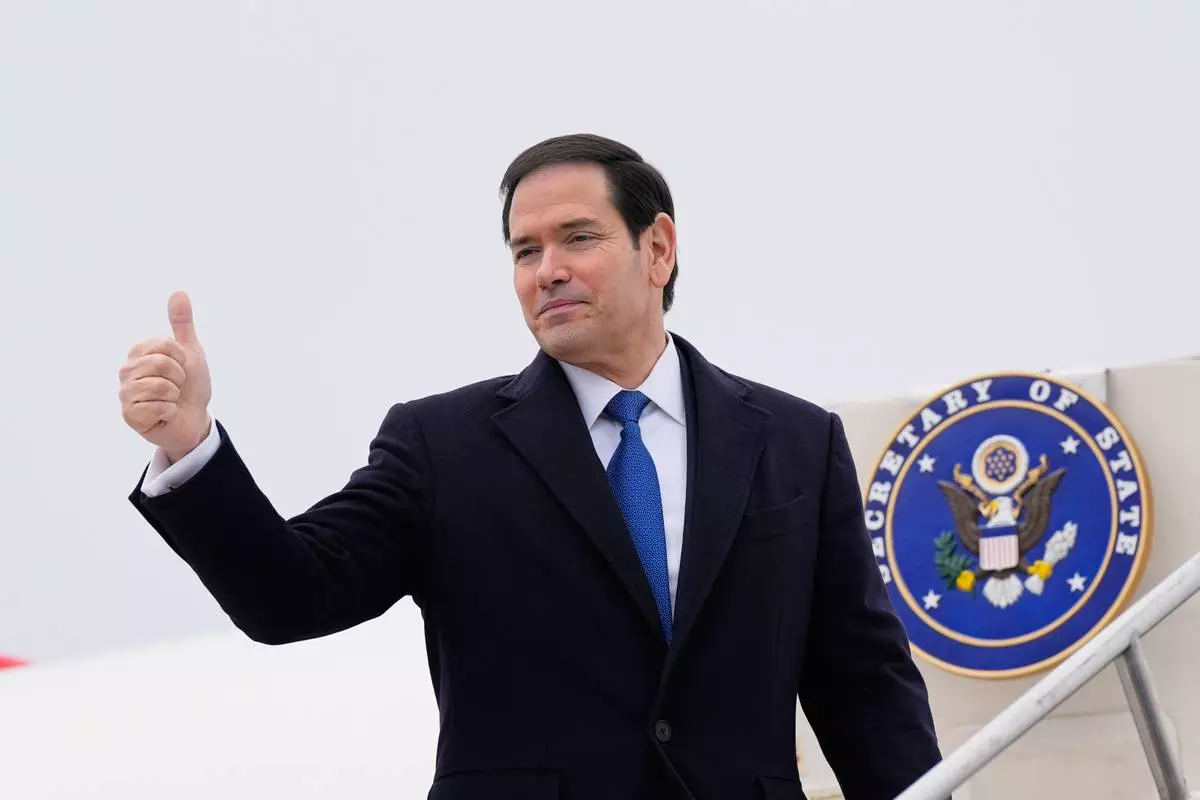
U.S. Secretary of State Marco Rubio gives a thumbs up as he departs at the Liszt Ferenc International Airport in Budapest, Hungary, Monday, Feb. 16, 2026. (AP Photo/Alex Brandon, Pool)

U.S. Secretary of State Marco Rubio gives a thumbs up as he departs at the Liszt Ferenc International Airport in Budapest, Hungary, Monday, Feb. 16, 2026. (AP Photo/Alex Brandon, Pool)

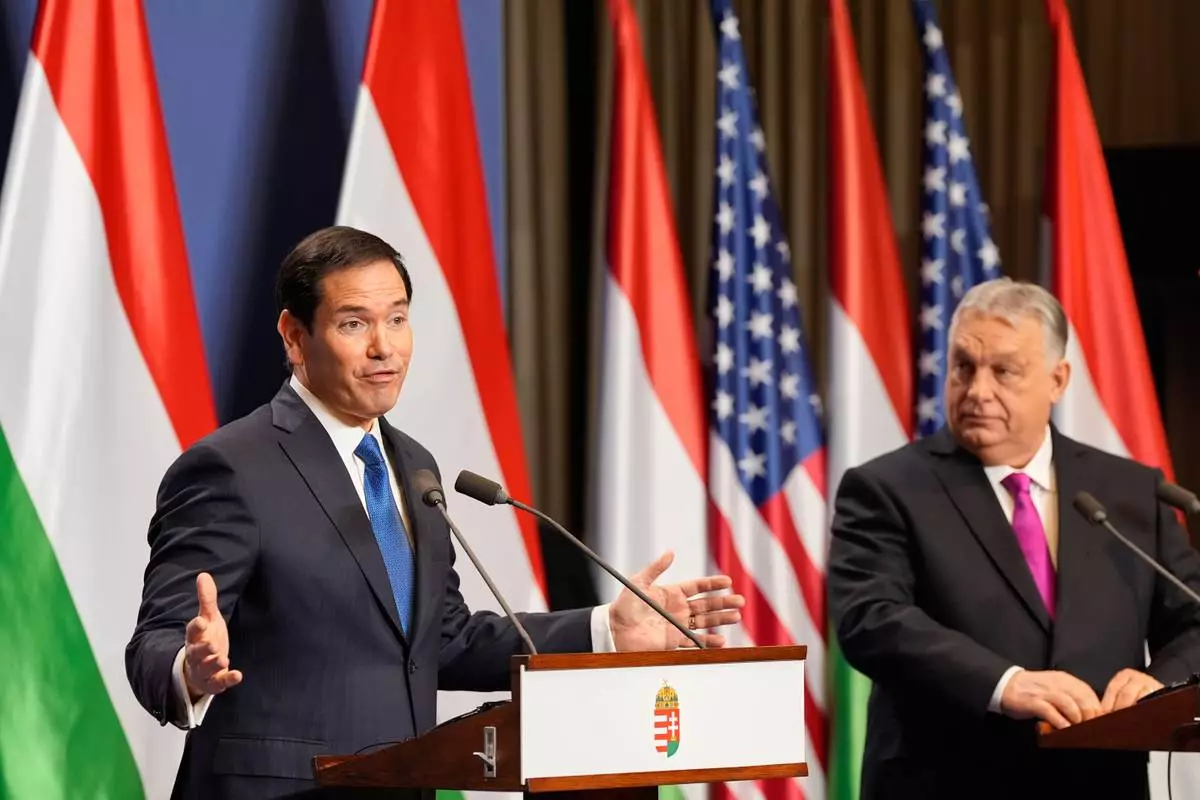
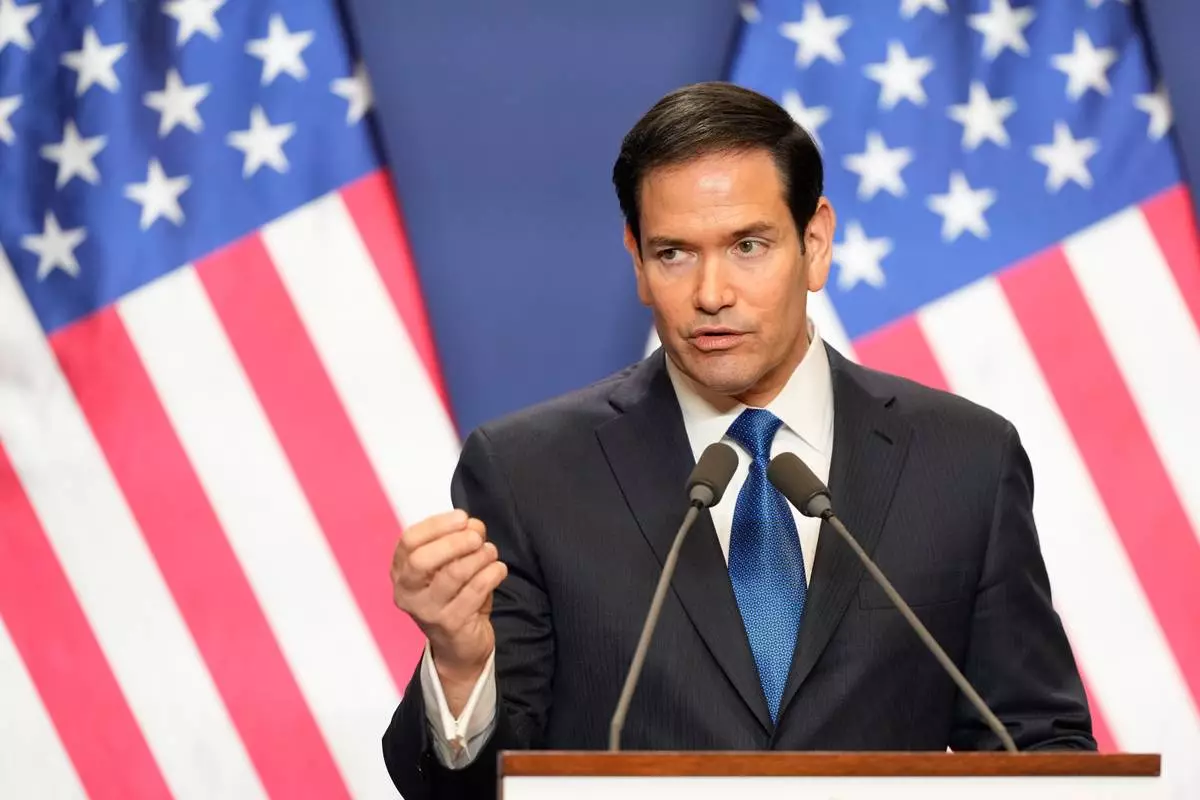
U.S. Secretary of State Marco Rubio speaks during a joint news conference with Hungary's Prime Minister Viktor Orban in Budapest, Hungary, Monday, Feb. 16, 2026. (AP Photo/Alex Brandon, Pool)

U.S. Secretary of State Marco Rubio speaks during a joint news conference with Hungary's Prime Minister Viktor Orban in Budapest, Hungary, Monday, Feb. 16, 2026. (AP Photo/Alex Brandon, Pool)

U.S. Secretary of State Marco Rubio, left, and Hungary's Foreign Minister Peter Szijjarto pose with documents after signing the U.S-Hungary Intergovernmental Agreement on Civil Nuclear Cooperation in Budapest, Hungary, Monday, Feb. 16, 2026. (AP Photo/Alex Brandon, Pool)

U.S. Secretary of State Marco Rubio, left, and Hungary's Foreign Minister Peter Szijjarto pose with documents after signing the U.S-Hungary Intergovernmental Agreement on Civil Nuclear Cooperation in Budapest, Hungary, Monday, Feb. 16, 2026. (AP Photo/Alex Brandon, Pool)

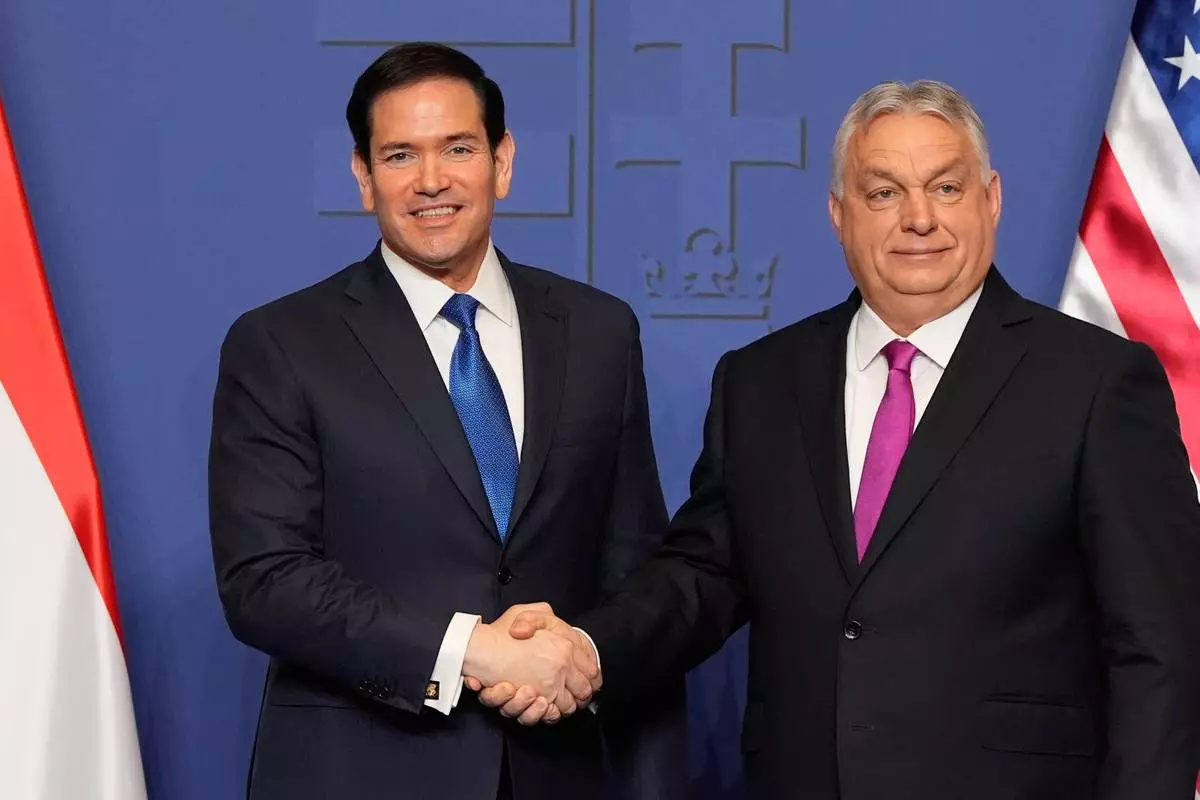
U.S. Secretary of State Marco Rubio, left, and Hungary's Prime Minister Viktor Orban shake hands after a news conference in Budapest, Hungary, Monday, Feb. 16, 2026. (AP Photo/Alex Brandon, Pool)

U.S. Secretary of State Marco Rubio, left, and Hungary's Prime Minister Viktor Orban shake hands after a news conference in Budapest, Hungary, Monday, Feb. 16, 2026. (AP Photo/Alex Brandon, Pool)

U.S. Secretary of State Marco Rubio, left, and Hungary's Prime Minister Viktor Orban hold a joint news conference in Budapest, Hungary, Monday, Feb. 16, 2026. (AP Photo/Alex Brandon, Pool)

U.S. Secretary of State Marco Rubio, left, and Hungary's Prime Minister Viktor Orban hold a joint news conference in Budapest, Hungary, Monday, Feb. 16, 2026. (AP Photo/Alex Brandon, Pool)

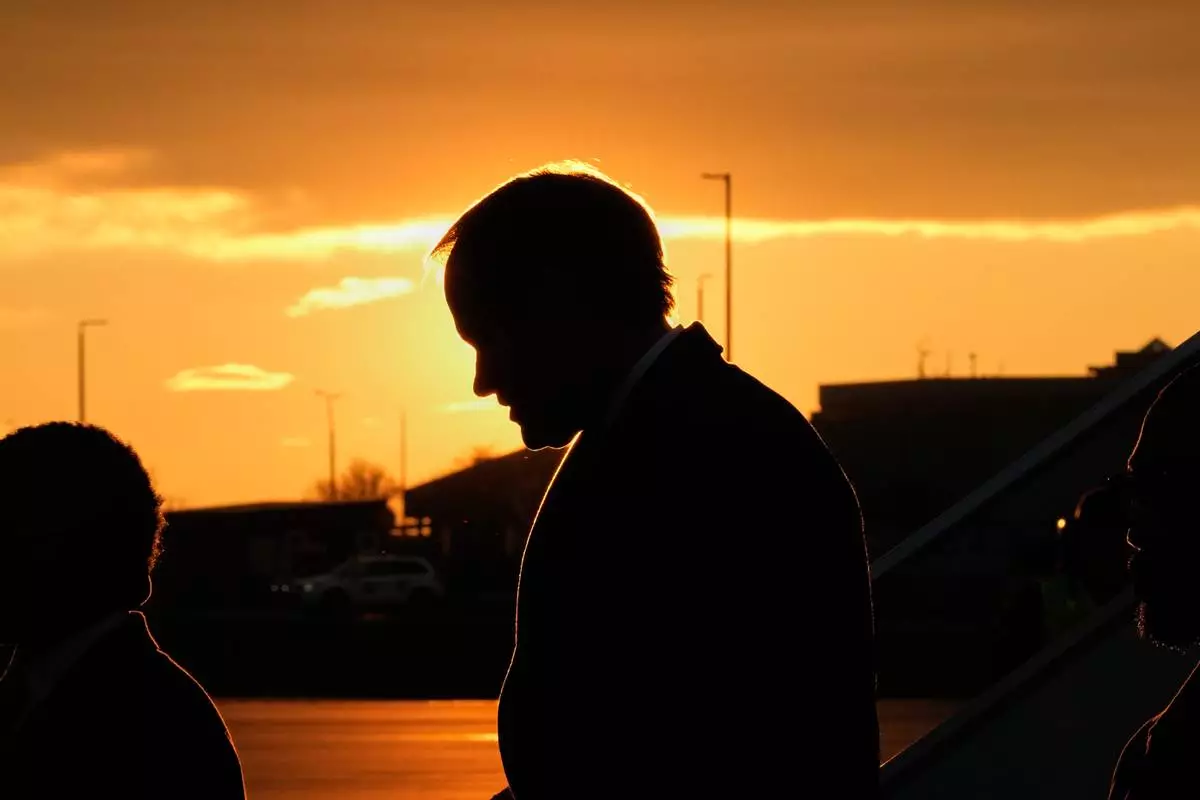
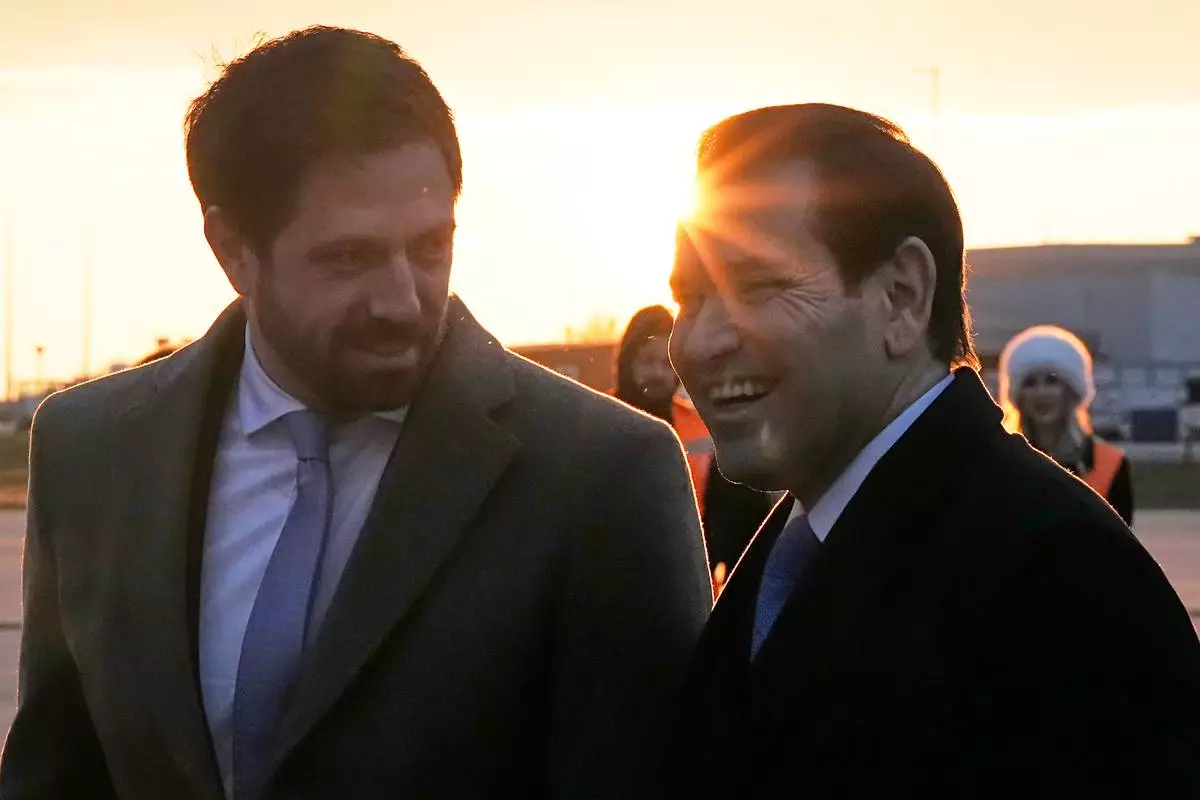
U.S. Secretary of State Marco Rubio, silhouetted against the setting sun, arrives at the Liszt Ferenc International Airport in Budapest, Hungary, Sunday, Feb. 15, 2026. (AP Photo/Alex Brandon, Pool)

U.S. Secretary of State Marco Rubio, silhouetted against the setting sun, arrives at the Liszt Ferenc International Airport in Budapest, Hungary, Sunday, Feb. 15, 2026. (AP Photo/Alex Brandon, Pool)

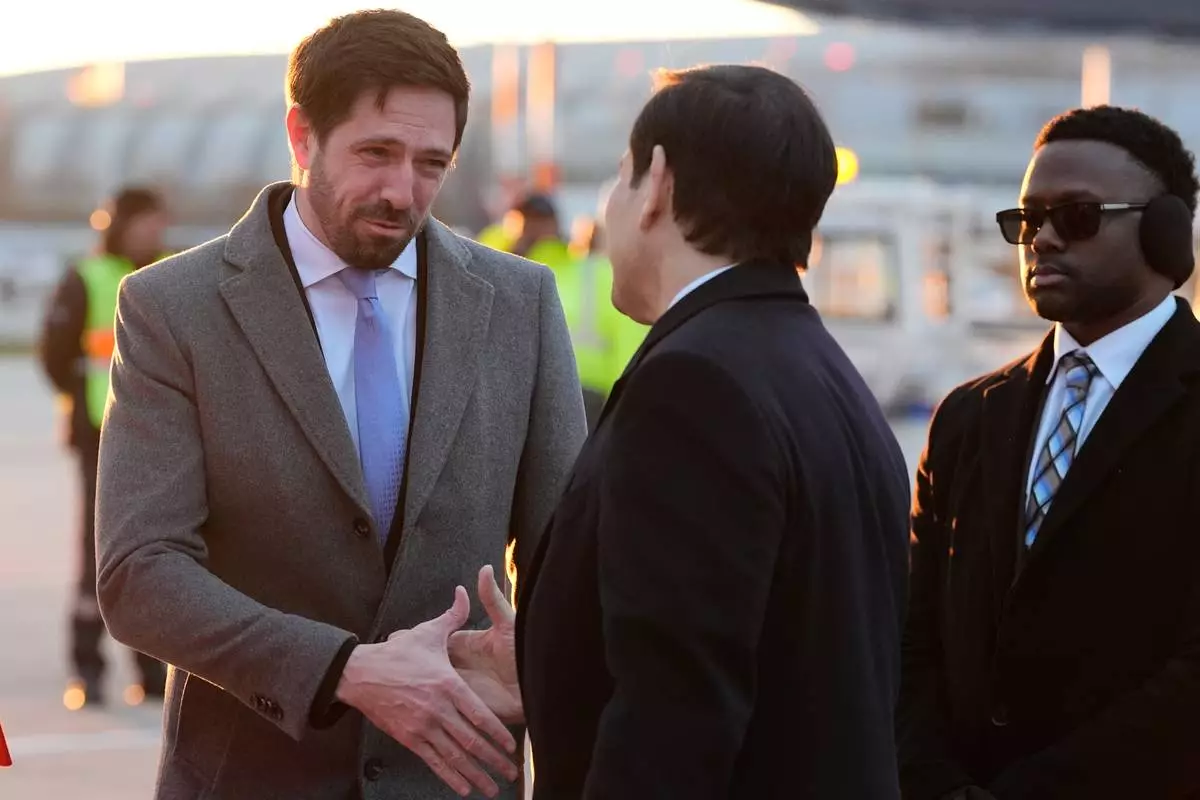
U.S. Secretary of State Marco Rubio shakes hands with Hungary's Deputy Foreign Minister Levente Magyar, left, upon landing at the Liszt Ferenc International Airport in Budapest, Hungary, Sunday, Feb. 15, 2026. (AP Photo/Alex Brandon, Pool)

U.S. Secretary of State Marco Rubio shakes hands with Hungary's Deputy Foreign Minister Levente Magyar, left, upon landing at the Liszt Ferenc International Airport in Budapest, Hungary, Sunday, Feb. 15, 2026. (AP Photo/Alex Brandon, Pool)

U.S. Secretary of State Marco Rubio speaks to Hungary's Deputy Foreign Minister Levente Magyar, left, upon landing at the Liszt Ferenc International Airport in Budapest, Hungary, Sunday, Feb. 15, 2026. (AP Photo/Alex Brandon, Pool)

U.S. Secretary of State Marco Rubio speaks to Hungary's Deputy Foreign Minister Levente Magyar, left, upon landing at the Liszt Ferenc International Airport in Budapest, Hungary, Sunday, Feb. 15, 2026. (AP Photo/Alex Brandon, Pool)

Recommended Articles