MILAN (AP) — Anastasia Kucherova, a Russian living in Milan, voiced her opposition to Russia’s war against Ukraine with a highly symbolic, if anonymous, act: Carrying the Ukraine team placard during the opening ceremony of the Milan Cortina Winter Games.
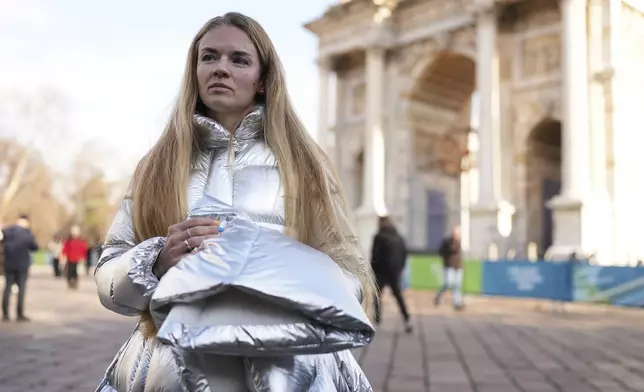
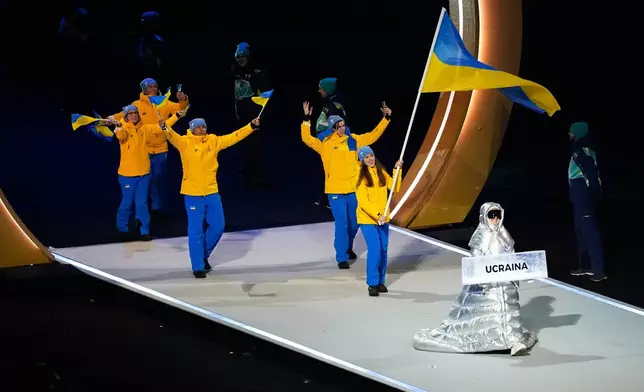
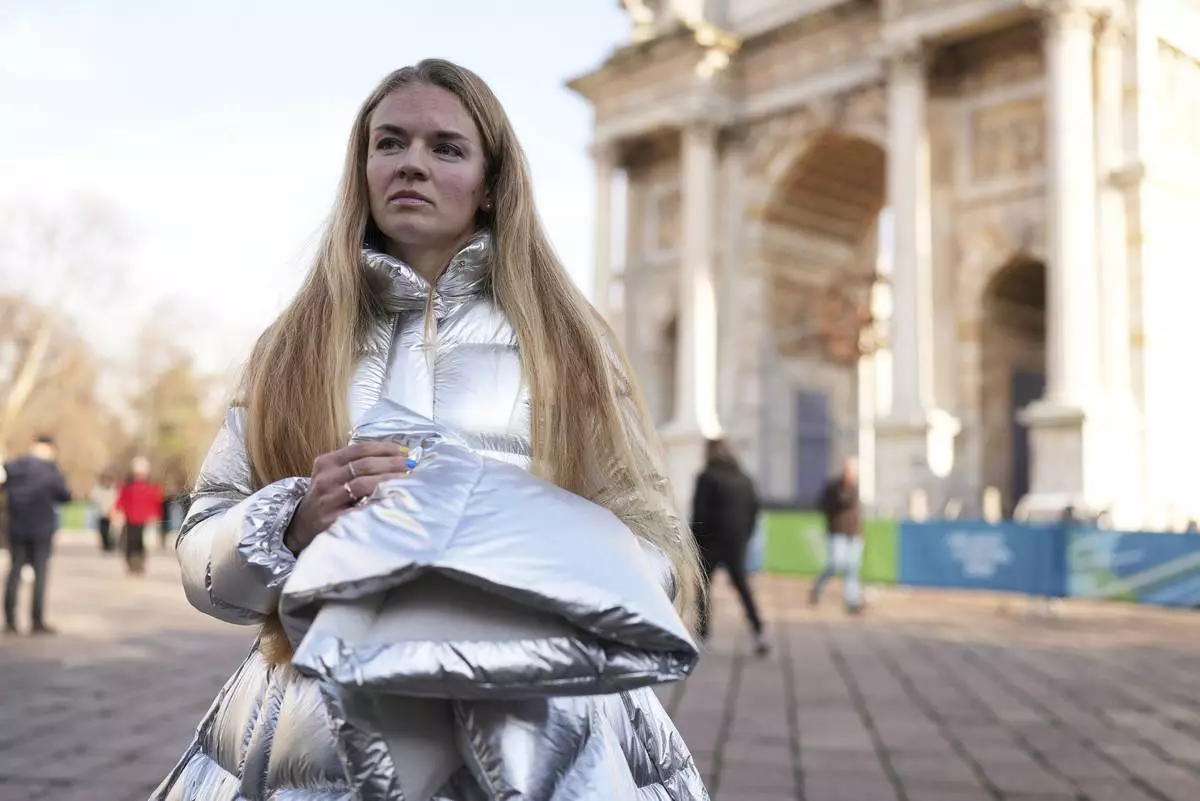
Kucherova was swathed in a long, hooded silver puffer coat, her eyes covered with dark glasses — like all the other placard bearers for the 92 nations competing in the Olympics. The Ukraine sign was illuminated for the crowd to read.
Click to Gallery
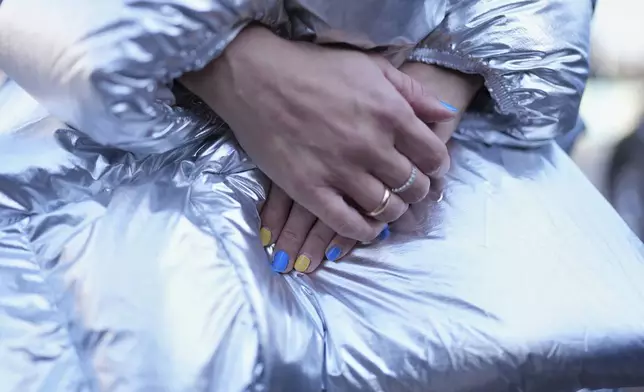
Anastasia Kucherova with her fingernails painted in the colors of the Ukrainian flag, stands near the Arco della Pace during the 2026 Winter Olympics, in Milan, Italy, Monday, Feb. 16, 2026. (AP Photo/Andrea Rosa)
Anastasia Kucherova stands near the Arco della Pace during the 2026 Winter Olympics, in Milan, Italy, Monday, Feb. 16, 2026. (AP Photo/Andrea Rosa)
Athletes from Ukraine attend the Olympic opening ceremony at the 2026 Winter Olympics, in Milan, Italy, Friday, Feb. 6, 2026. (AP Photo/Petr David Josek)
Anastasia Kucherova stands near the Arco della Pace during the 2026 Winter Olympics, in Milan, Italy, Monday, Feb. 16, 2026. (AP Photo/Andrea Rosa)
At first the country assignments were going to be random, but later the choreographer asked if the volunteers had preferences, and Kucherova chose Ukraine.
Kucherova, an architect who has been living in Milan for 14 years, was unrecognizable, and her nationality was not announced to the public when she led the five Ukrainian athletes competing in Milan into San Siro stadium to resounding cheers.
She first revealed her role to her 879 Instagram followers and then in an interview with The Associated Press.
“When you walk by the side of these people you realize they have every human right to feel hatred towards any Russian,’’ she told the AP on Monday. “Still, I think it’s important to do even a small action to show them that maybe not all the people are thinking the same way."
For Kucherova, speaking about her small act of resistance on the second anniversary of the poisoning death of dissident Alexei Navalny is a way of reminding the world that the war continues, even as life elsewhere goes on.
“Ukrainians don’t have any possibility to avoid these thoughts or to ignore the existence of war. So it is their reality. They keep loving each other, getting married or doing sports, coming to the Olympics. But all of this is happening (against) a devastating background.”
Without being told that Kucherova was Russian, the athletes immediately recognized her origins and addressed her in Russian. That was a sign for Kucherova of “some profound connection” between Russians and Ukrainians “that obviously could live on if not for the war.”
The Milan delegation was led by flag bearer Yelyzaveta Sydorko, a short track speedskater, and included figure skater Kyrylo Marsak. Both athletes have fathers who are fighting on the front lines in a war that is nearing its fourth anniversary.
“There is literally no word you can say that can undo the harm that these people have already suffered, and there is no word that can come in close to forgiveness,’’ said Kucherova.
Right before walking into the stadium, “I turned around — I didn’t know what to say to them — but I just said that the entire stadium is going to give them the standing ovation.’’ The Ukrainians appeared skeptical, she said.
When the cheers came, Kucherova said it felt like the entire stadium was “recognizing their independence, recognizing their will for freedom, their courage in making it all the way to the Olympics.”
She cried, silently, behind her glasses.
Kucherova hasn't visited Russia since 2018, but understands that she is taking a risk by defying the regime.
“I have to be worried about this, and I’m supposed to be scared about this. And I cannot guarantee that me speaking out will not harm any people I know,’’ she said. “But what I think is that if I, living in a democratic country and enjoying all the freedoms, if I am scared, this means that the regime has won.”
Kucherova held the sign for another delegation, Denmark, which also received a rousing ovation for that nation's resistance of U.S. threats to take over Greenland, a self-governing Danish territory.
“Yes, this is a coincidence, but I pondered over it,” Kucherova said.
AP Winter Olympics: https://apnews.com/hub/milan-cortina-2026-winter-olympics
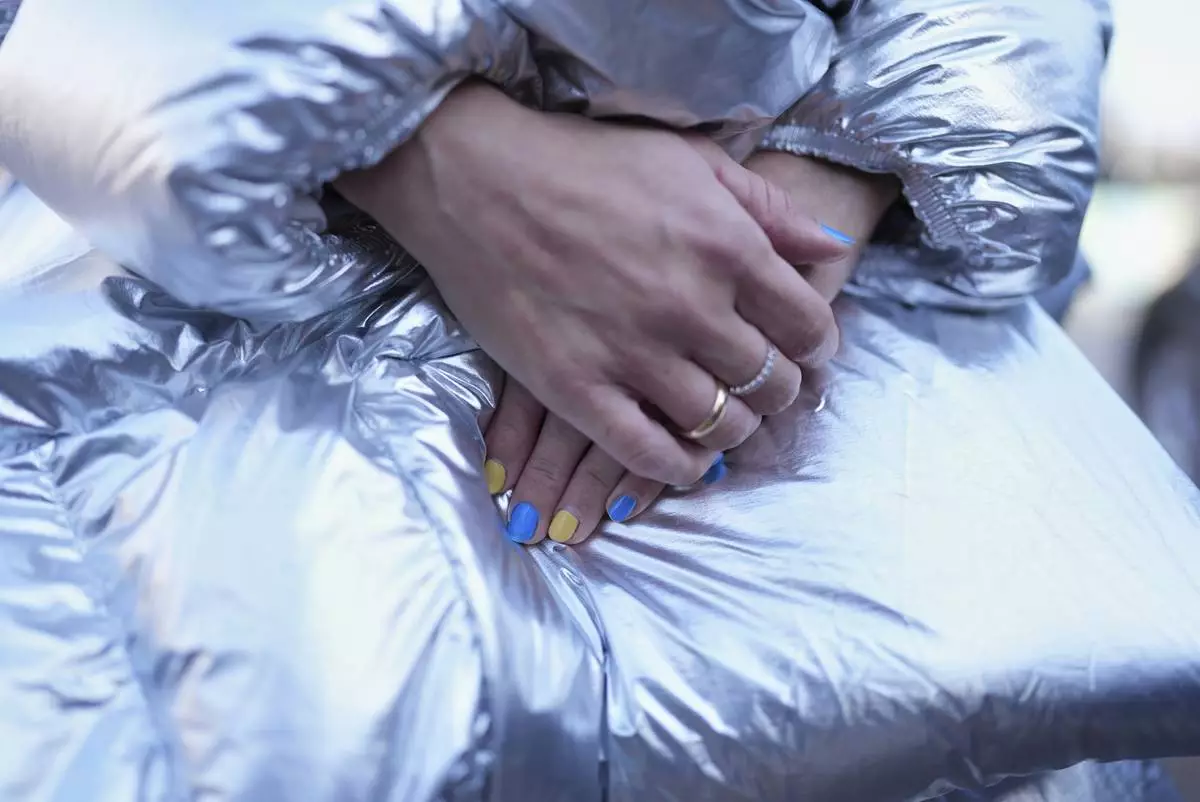
Anastasia Kucherova with her fingernails painted in the colors of the Ukrainian flag, stands near the Arco della Pace during the 2026 Winter Olympics, in Milan, Italy, Monday, Feb. 16, 2026. (AP Photo/Andrea Rosa)
Anastasia Kucherova stands near the Arco della Pace during the 2026 Winter Olympics, in Milan, Italy, Monday, Feb. 16, 2026. (AP Photo/Andrea Rosa)
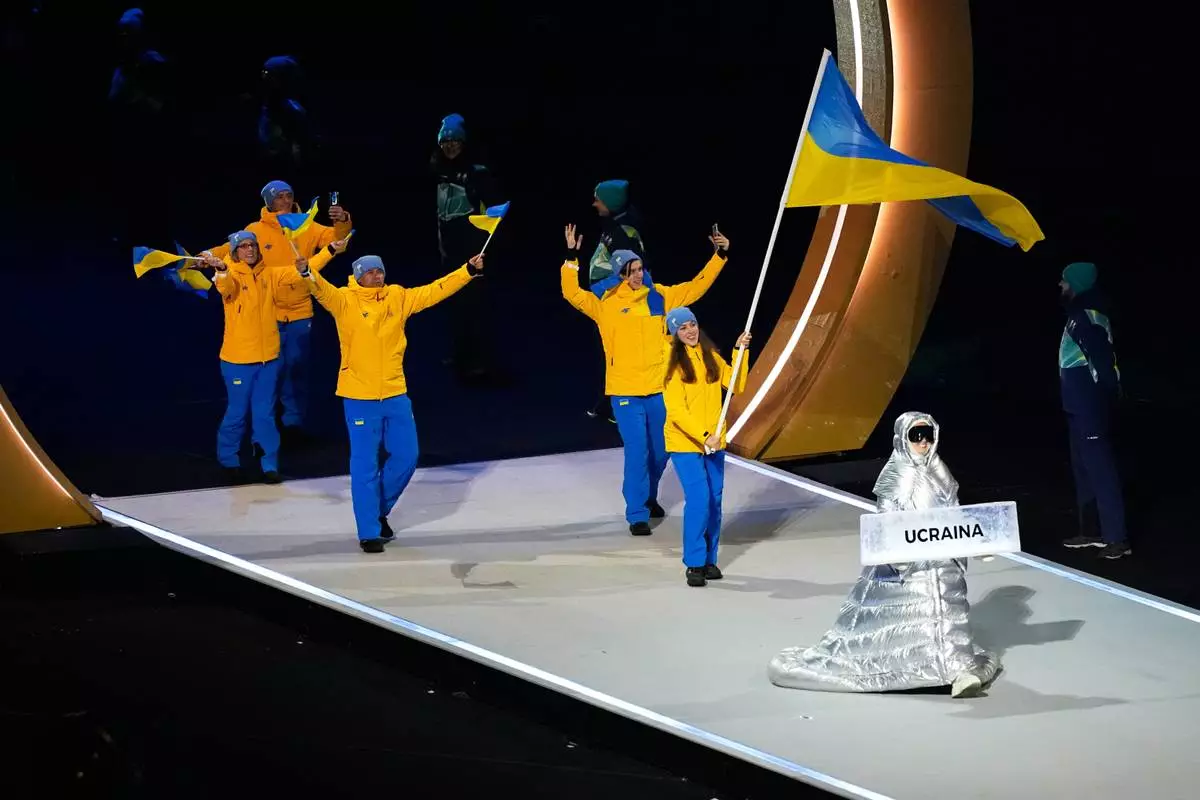
Athletes from Ukraine attend the Olympic opening ceremony at the 2026 Winter Olympics, in Milan, Italy, Friday, Feb. 6, 2026. (AP Photo/Petr David Josek)
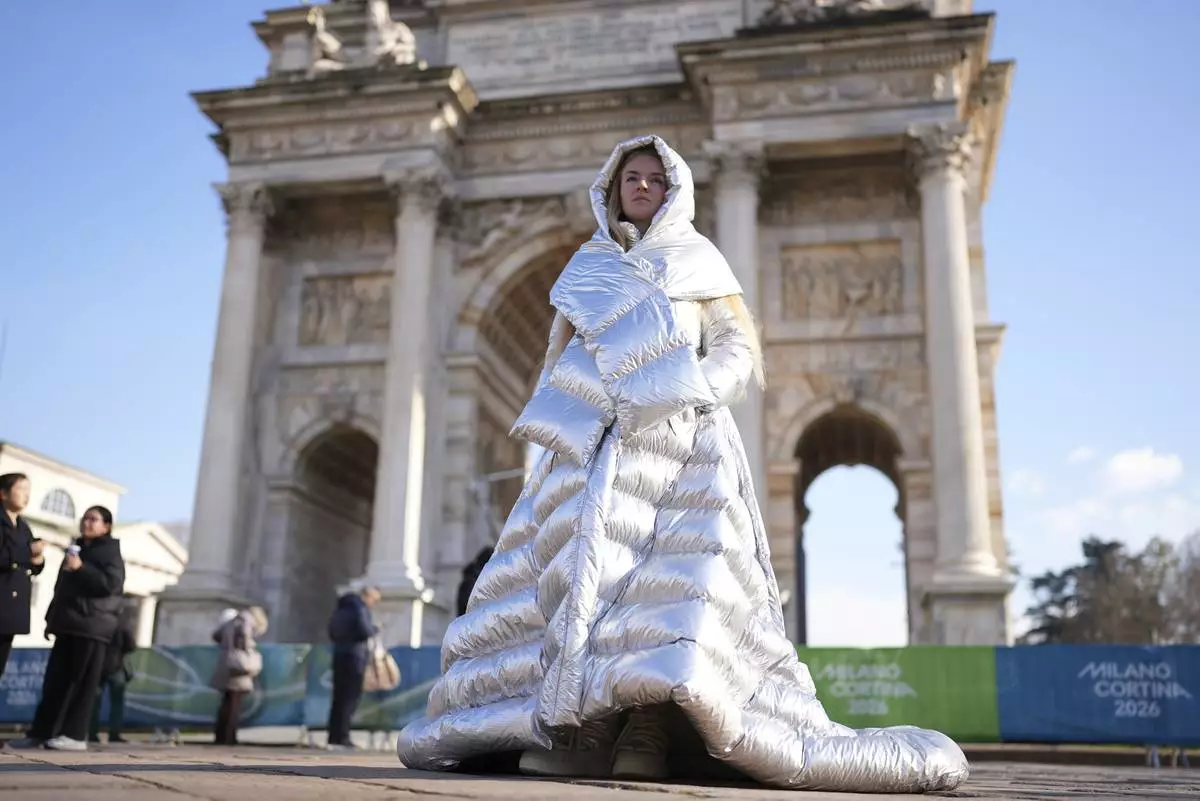
Anastasia Kucherova stands near the Arco della Pace during the 2026 Winter Olympics, in Milan, Italy, Monday, Feb. 16, 2026. (AP Photo/Andrea Rosa)
MELBOURNE, Australia (AP) — The Australian government will not repatriate from Syria a group of 34 women and children with alleged ties to the militant Islamic State group, Prime Minister Anthony Albanese said Tuesday.
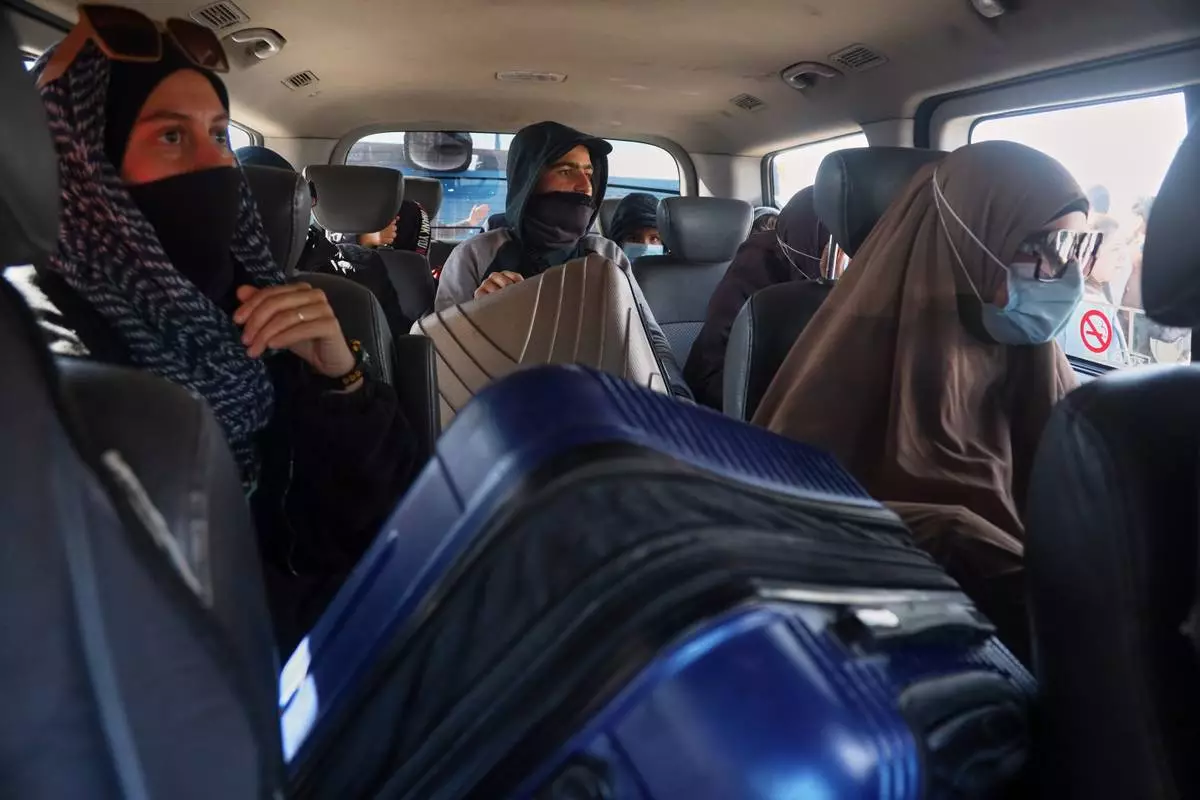
The women and children from 11 families were supposed to fly from Syria to Australia, but Syrian authorities on Monday turned them back to Roj detention camp because of procedural problems, officials said.
Only two groups of Australians have been repatriated with government help from Syrian camps since the fall of the Islamic State group in 2019. Other Australians have also returned without government assistance.
Albanese would not comment on a report that the latest women and children had Australian passports.
“We’re providing absolutely no support and we are not repatriating people,” Albanese told Australian Broadcasting Corp. in Melbourne.
“We have no sympathy, frankly, for people who traveled overseas in order to participate in what was an attempt to establish a caliphate to undermine, destroy, our way of life. And so, as my mother would say, ‘You make your bed, you lie in it,’” Albanese added.
In his remarks, Albanese was referring to the IS militants' capture of wide swaths of land more than a decade ago that stretched across a third of Syria and Iraq, territory where the extremists established their so-called caliphate.
At the height of its control, IS declared the city of Raqqa its capital, with jihadis from foreign countries traveling to Syria to join the IS. Over the years, they had families and raised children there.
Opposition leader Angus Taylor demanded Albanese explain whether his government had considered banning the Australians from returning. So-called temporary exclusion orders enable a government minister to prevent high-risk citizens located overseas from returning to Australia for up to two years.
“These are individuals who chose to associate with a terrorist caliphate. This is not aligned with the values we as Australians believe in — democracy, the rule of law, our basic freedoms including freedom of religion,” Taylor told reporters.
“The door must be shut to people who do not believe in those things,” Taylor added.
Asked about using temporary exclusion orders in this case, Albanese did not directly answer. “What we will do on national security issues is we deal with it appropriately upon advice” of security agencies, Albanese told reporters.
Albanese noted that the child welfare-focused international charity Save the Children had failed to establish in Australia’s courts that the Australian government had a responsibility to repatriate citizens from Syrian camps.
After the federal court ruled in the government's favor in 2024, Save the Children Australia chief executive Mat Tinkler argued the government had a moral, if not legal, obligation to repatriate families.
Albanese said if the latest group made their way to Australia without government help, they could be charged.
Under Australian law, it was an offense punishable by up to 10 years in prison to travel to Raqqa in Syria and elsewhere in the caliphate without a legitimate reason from 2014 to 2017.
“It’s unfortunate that children are impacted by this as well, but we are not providing any support. And if anyone does manage to find their way back to Australia, then they’ll face the full force of the law, if any laws have been broken,” Albanese added.
The Islamic State group was defeated by a U.S.-led coalition in Iraq in 2017, and in Syria two years later, but IS sleeper cells still carry out deadly attacks in both countries. During the battles against IS, thousands of extremists and tens of thousands of women and children linked to them were taken to detention camps.
Manager Hakmiyeh Ibrahim of the Roj camp in northeastern Syria told The Associated Press that relatives of the Australians said the Australian government had prepared the camp residents' passports and travel paperwork and suggested that their families collect those documents.
The last group of Australians to be repatriated from Syrian camps arrived in Sydney in October 2022.
They were four mothers, former partners of Islamic State supporters, and 13 children.
Australian officials had assessed the group as the most vulnerable among 60 Australian women and children held in Roj camp, the government said at the time.
Eight children of two slain Australian IS fighters were repatriated from Syria in 2019 by the conservative government that preceded Albanese’s center-left Labor Party administration.
The issue of IS supporters resurfaced in Australia after the killings of 15 people at a Jewish festival at Bondi Beach on Dec. 14 — attackers allegedly inspired by IS.
Some countries are repatriating their citizens with alleged IS links from Syria while others are not. Iraq has repatriated most of its citizens, who accounted for the largest number of detainees, after Syrians. The United States, Germany, Britain, France, Italy, the Netherlands, Belgium and Canada have all repatriated citizens from Syrian camps.
Last year, families repatriated from Roj camp included German, British and French nationals.
Separately, thousands of accused IS militants who were held in detention centers in northeastern Syria have been transferred to Iraq by the U.S. military to stand trial there.
Associated Press journalist Hogir Al Abdo in Qamishli, Syria, contributed to this report.
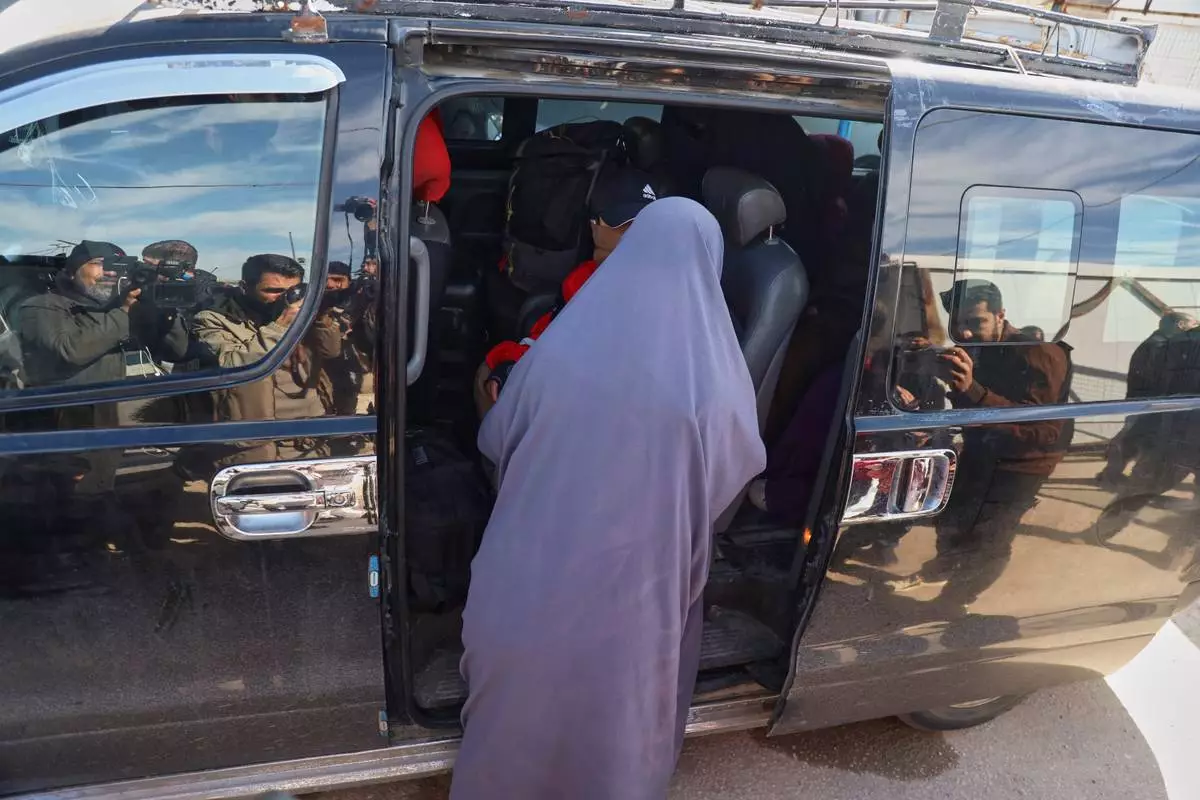
Family members of suspected Islamic State militants who are Australian nationals board a van heading to the airport in Damascus during the first repatriation operation of the year, at Roj Camp in eastern Syria, Monday, Feb. 16, 2026. Thirty-four Australian citizens from 11 families departed the camp. (AP Photo/Baderkhan Ahmad)
Family members of suspected Islamic State militants who are Australian nationals sit in a van heading to the airport in Damascus during the first repatriation operation of the year, at Roj Camp in eastern Syria, Monday, Feb. 16, 2026. Thirty-four Australian citizens from 11 families departed the camp. (AP Photo/Baderkhan Ahmad)
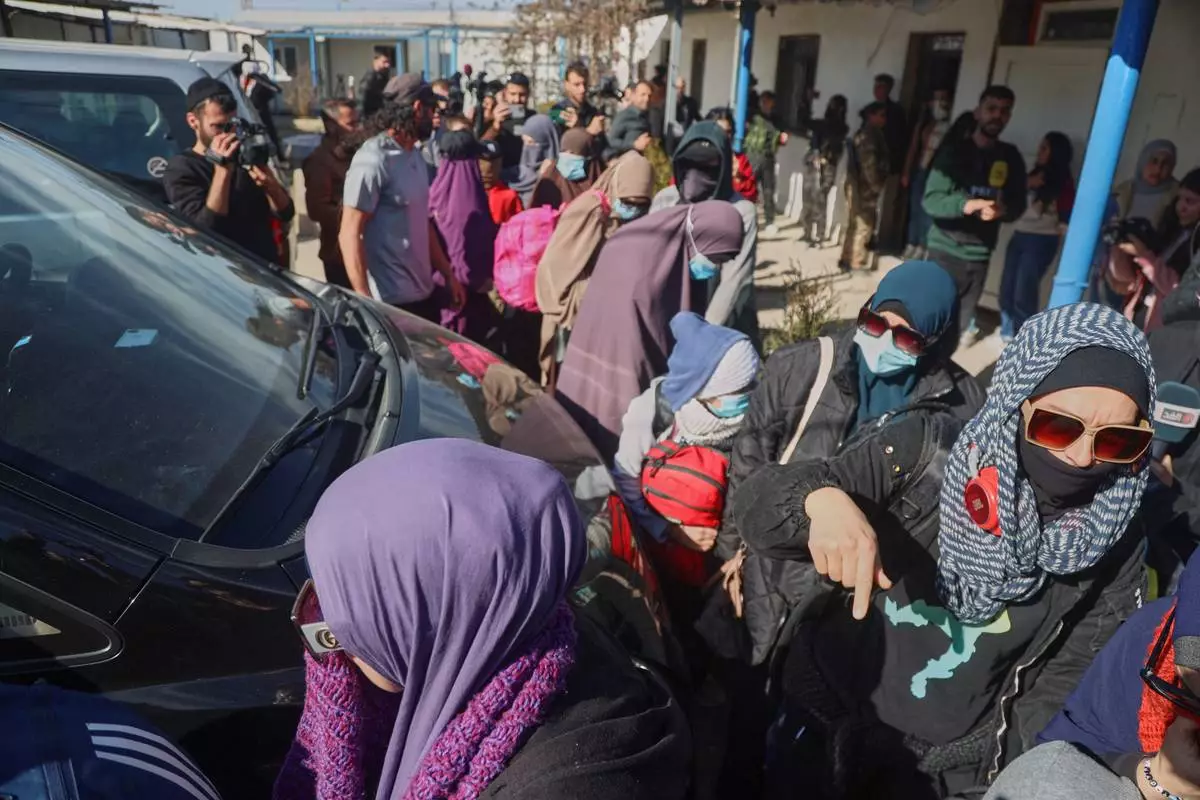
Family members of suspected Islamic State militants who are Australian nationals walk toward a van bound for the airport in Damascus during the first repatriation operation of the year at Roj Camp in eastern Syria, Monday, Feb. 16, 2026. Thirty-four Australian citizens from 11 families departed the camp. (AP Photo/Baderkhan Ahmad)
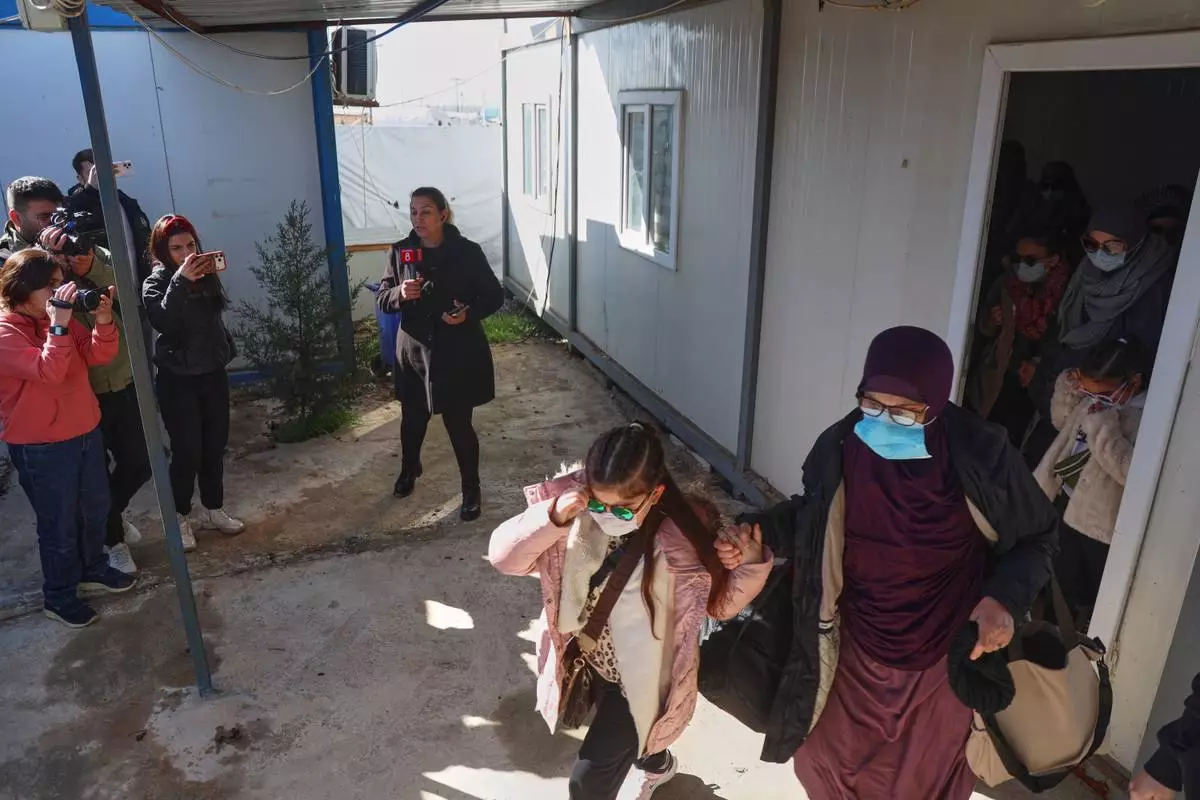
Family members of suspected Islamic State militants who are Australian nationals walk toward a van bound for the airport in Damascus during the first repatriation operation of the year at Roj Camp in eastern Syria, Monday, Feb. 16, 2026. Thirty-four Australian citizens from 11 families departed the camp. (AP Photo/Baderkhan Ahmad)
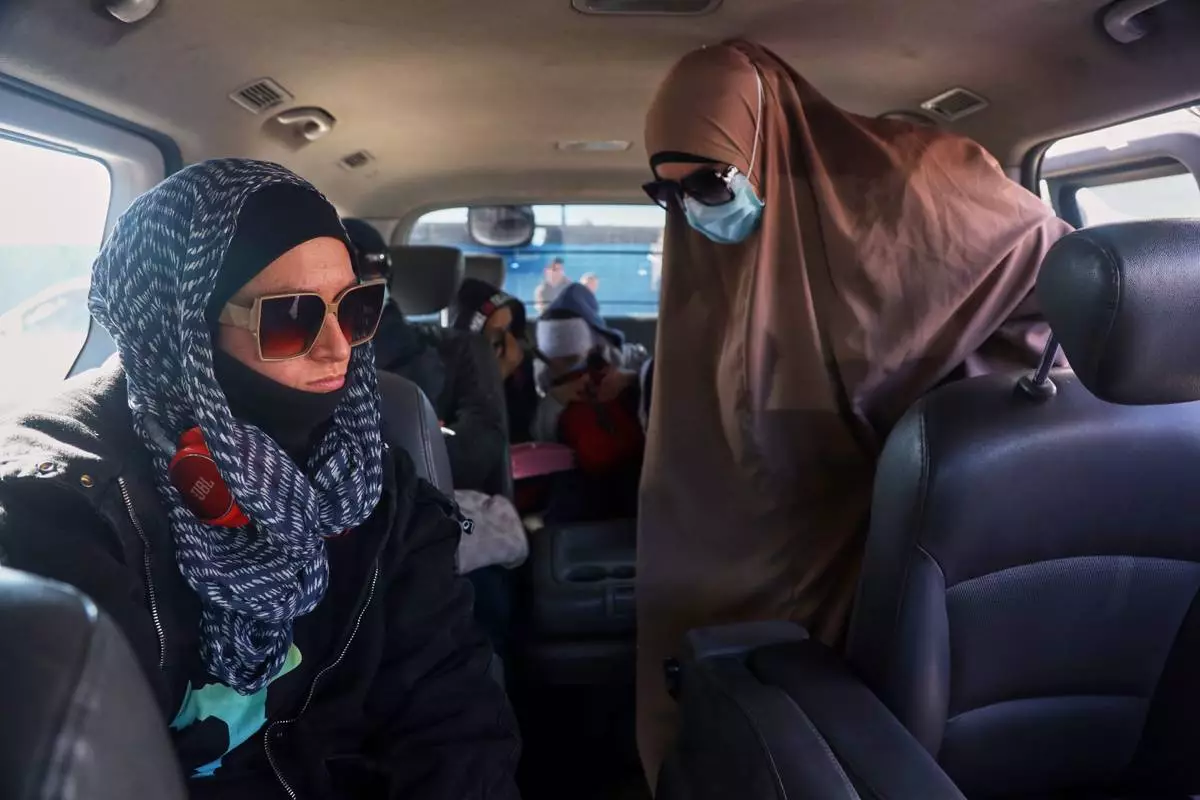
Family members of suspected Islamic State militants who are Australian nationals board a van heading to the airport in Damascus during the first repatriation operation of the year, at Roj Camp in eastern Syria, Monday, Feb. 16, 2026. Thirty-four Australian citizens from 11 families departed the camp. (AP Photo/Baderkhan Ahmad)