MADRID (AP) — A fire broke out in a top-floor storage room at an apartment building in northeastern Spain, killing five children who were trapped inside the room and injuring five other people elsewhere in the building, officials said Tuesday.
The fire started around 9 p.m. Monday in Manlleu, a town of about 21,000 people in the Catalonia region north of Barcelona, and the victims who died were identified as minors who ranged in age from 14 to 17 and who did not live in the building, Catalan police said.
Police were investigating the cause of the fire and the reason why the children were not able to escape the room. Police declined to say whether they were looking into the case as a possible homicide.
Among the injured elsewhere in the building, four were later released from hospitals while one other didn’t require hospitalization, emergency services said.
Catalonia’s regional leader, Salvador Illa, expressed his condolences for the dead and their families on X, saying he was “deeply saddened by the death of five people.”

FILE - The Spanish flag flies during a memorial for coronavirus (COVID-19) victims in Madrid, Spain, Friday, Oct. 23, 2020. (AP Photo/Manu Fernandez, File)
GENEVA (AP) — Iran announced the temporary closure of the Strait of Hormuz on Tuesday for live fire military drills in a rare show of force as its negotiators held another round of indirect talks with the United States over its disputed nuclear program.
It was the first time Iran has announced the closure of the key international waterway, through which 20% of the world’s oil passes, since the U.S. began threatening Iran and rushing military assets to the region. It was not immediately clear if the strait had been closed, but such a rare and perhaps unprecedented move could further escalate tensions that threaten to ignite another war in the Middle East.
As the talks began, Iran’s state media announced that Iranian forces had fired live missiles toward the Strait and would close it for several hours for “safety and maritime concerns.” Supreme Leader Ayatollah Ali Khamenei meanwhile warned that “the strongest army in the world might sometimes receive such a slap that it cannot get back on its feet."
Iran's foreign minister later adopted a different tone, expressing optimism about the talks and saying “a new window has opened" for reaching an agreement.
“We are hopeful that negotiations will lead to a sustainable and negotiated solution which can serve the interests of relevant parties and the broader region,” Abbas Araghchi told a U.N. disarmament conference after leading the Iranian delegation at the talks held in Geneva.
He added that Iran "remains fully prepared to defend itself against any threat or act of aggression,” and that the consequences of any attack on Iran would not be confined to its borders.
He made no specific mention of the military drills or the closure of the Strait of Hormuz.
U.S. President Donald Trump, who scrapped an earlier nuclear agreement with Iran during his first term, has repeatedly threatened to use force to compel Iran to agree to constrain its nuclear program. Iran has said it would respond with an attack of its own. Trump has also threatened Iran over the killing of protesters.
The first round of talks Feb. 6 were held in Oman, an Arab Gulf country that has long served as a regional mediator. The latest were held inside the residence of the Omani envoy to Geneva, with the sides meeting separately with mediators.
Trump’s envoys Steve Witkoff and Jared Kushner led the U.S, delegation.
Araghchi, who led the Iranian side, also said he met with Director-General Rafael Grossi of the International Atomic Energy Agency, the U.N. nuclear watchdog agency, on Monday in Geneva. The Iranian minister said they discussed the agency's role in helping to achieve an agreement.
Oman's Foreign Minister Badr Albusaidi said there had been “good progress towards identifying common goals and relevant technical issues.”
Talking to reporters Monday night aboard Air Force One on his way to Washington, U.S. President Donald Trump said he planned to be involved in the talks, at least indirectly. “I think they want to make a deal. I don’t think they want the consequences of not making a deal," he said.
The U.S. is also hosting talks between envoys from Russia and Ukraine in Geneva on Tuesday and Wednesday, days ahead of the fourth anniversary of the all-out Russian invasion of its neighbor.
Iran said its Revolutionary Guard started a drill early Monday in the Strait of Hormuz, the Persian Gulf and the Gulf of Oman, which are crucial international shipping routes. It was the second time in recent weeks that Iran has held a live fire drill in the Strait of Hormuz.
The semiofficial Tasnim news agency, which is close to the paramilitary Revolutionary Guard, said missiles launched inside Iran and along its coast had struck their targets in the strait as part of the drills.
Khamenei meanwhile stepped up his warnings to the U.S. over its buildup of military forces in the region.
“Of course a warship is a dangerous apparatus, but more dangerous than the warship is the weapon that can sink the warship into the depths of the sea,” Khamenei said, according to Iranian state TV.
He also warned the U.S. that “forcing the result of talks in advance is a wrong and foolish job."
Last week, Trump said the USS Gerald R. Ford, the world’s largest aircraft carrier, was being sent from the Caribbean Sea to the Mideast to join other warships in the region.
The Ford will join the USS Abraham Lincoln and its accompanying guided-missile destroyers, which have been in the region for over two weeks. U.S. forces shot down an Iranian drone that approached the Lincoln on the same day last week that Iran tried to stop a U.S.-flagged ship in the Strait of Hormuz.
Gulf Arab nations have warned any attack could spiral into another regional conflict in a Mideast still reeling from the Israel-Hamas war.
The Trump administration is seeking a deal to limit Iran’s nuclear program and ensure it does not develop nuclear weapons. Iran says it is not pursuing weapons and has so far resisted demands that it halt uranium enrichment on its soil or hand over its stockpile of highly-enriched uranium.
The U.S. and Iran were in the middle of months of meetings when Israel’s launch of a 12-day war against Iran back in June halted the talks. The U.S. bombed Iranian nuclear sites during that war, likely destroying many of the centrifuges that spun uranium to near weapons-grade purity. Israel’s attacks decimated Iran’s air defenses and targeted its ballistic missile arsenal as well.
Iran has insisted its nuclear program is for peaceful purposes. Before the June war, Iran had been enriching uranium up to 60% purity, a short, technical step away from weapons-grade levels.
Iran is marking 40 days, the traditional Muslim mourning period, since one of the deadliest days in the crackdown on protests that swept the country last month. Activists say at least 7,015 people have been killed, many in a bloody crackdown overnight between Jan. 8 and 9.
The U.S.-based Human Rights Activists News Agency, which offered the latest figures, has been accurate in counting deaths during previous rounds of unrest in Iran and relies on a network of activists in the country to verify deaths.
The Associated Press has been unable to independently assess the death toll, given authorities have disrupted internet access and international calls in Iran.
This story has been corrected to fix a misspelling of Khamenei.
Liechtenstein reported from Vienna. Associated Press writers Melanie Lidman in Tel Aviv, Israel, and Darlene Superville in Washington contributed to this report.
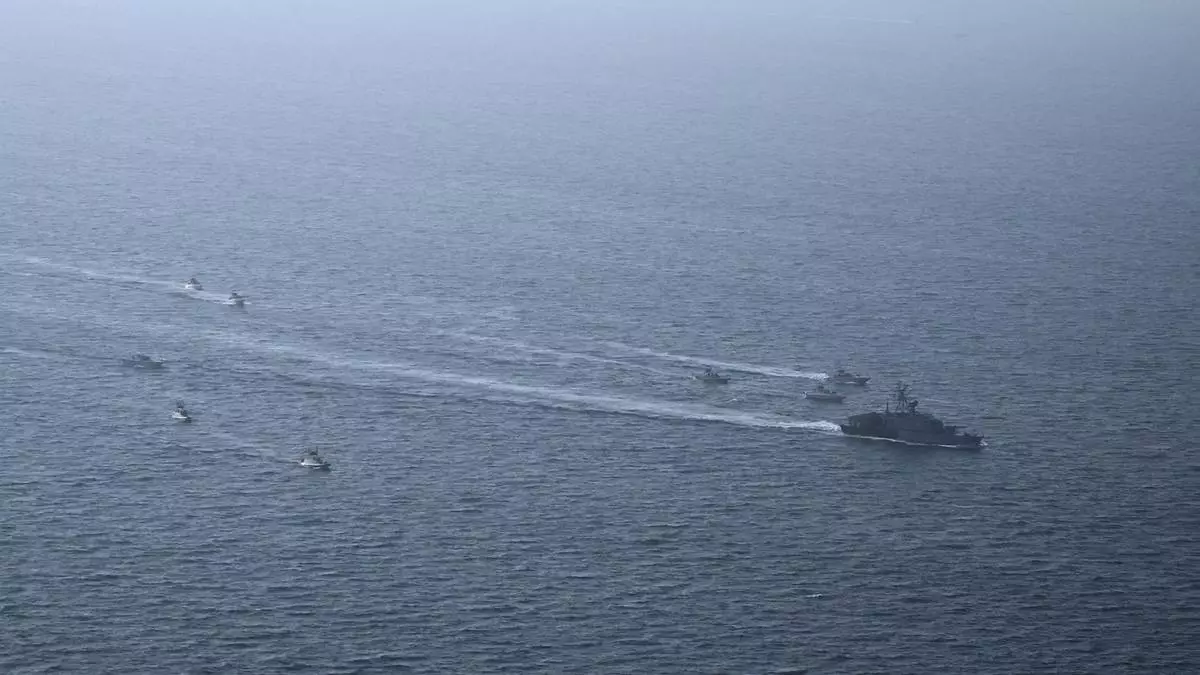
In this image provided by Sepahnews of the Iranian Revolutionary Guard on Feb. 16, 2026, shows the Iranian Revolutionary Guard's drill in the Persian Gulf on Monday, Feb. 16, 2026. (Sepahnews via AP)
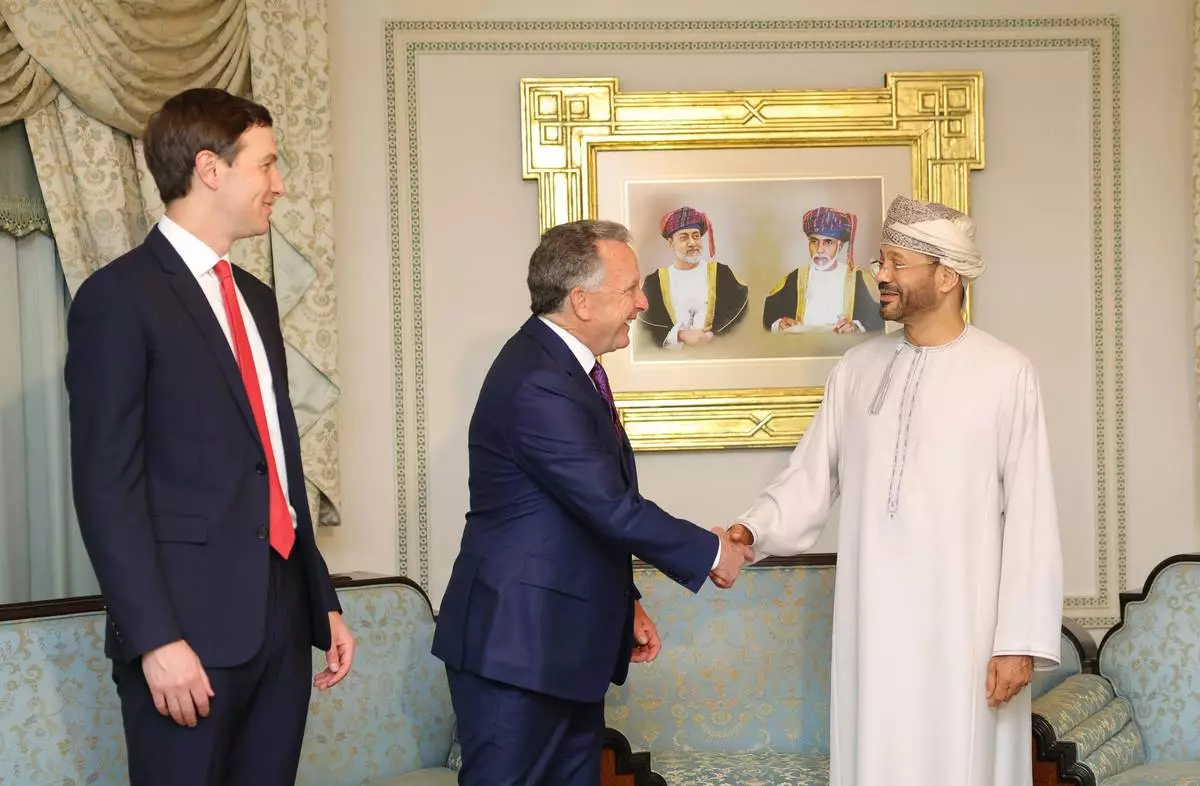
FILE - In this photo released by the Oman's Foreign Ministry, Steve Witkoff, White House special envoy, center, shakes hands with Oman's Foreign Minister Sayyid Badr Albusaidi, accompanied by Jared Kushner, left, during a meeting prior to Iran and U.S. negotiations in Muscat, Oman, Friday, Feb. 6, 2026. (Oman Foreign Ministry via AP, File)
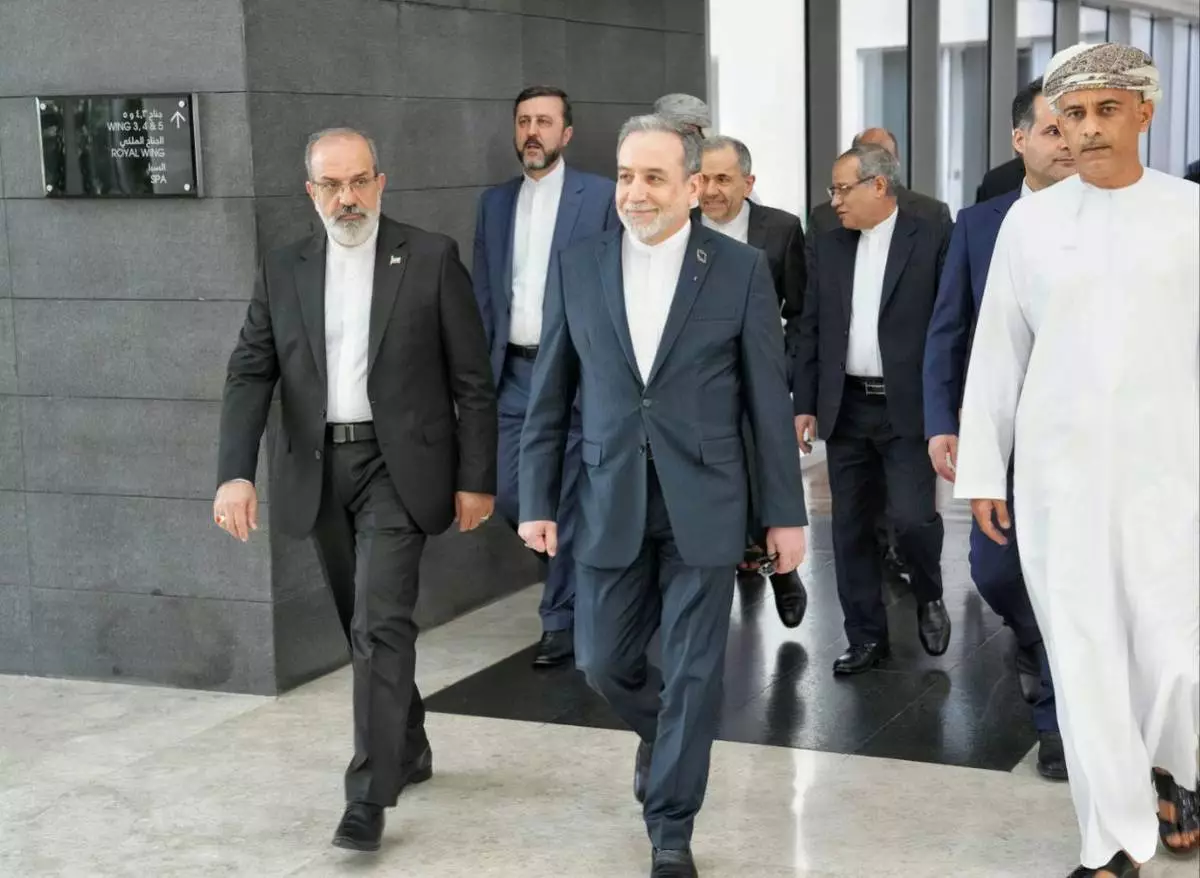
FILE - In this photo released by the Iranian Foreign Ministry, Iranian Foreign Minister Abbas Araghchi, center, heads to the venue for talks between Iran and the U.S., in Muscat, Oman, Friday, Feb. 6, 2026. (Iranian Foreign Ministry via AP, File)
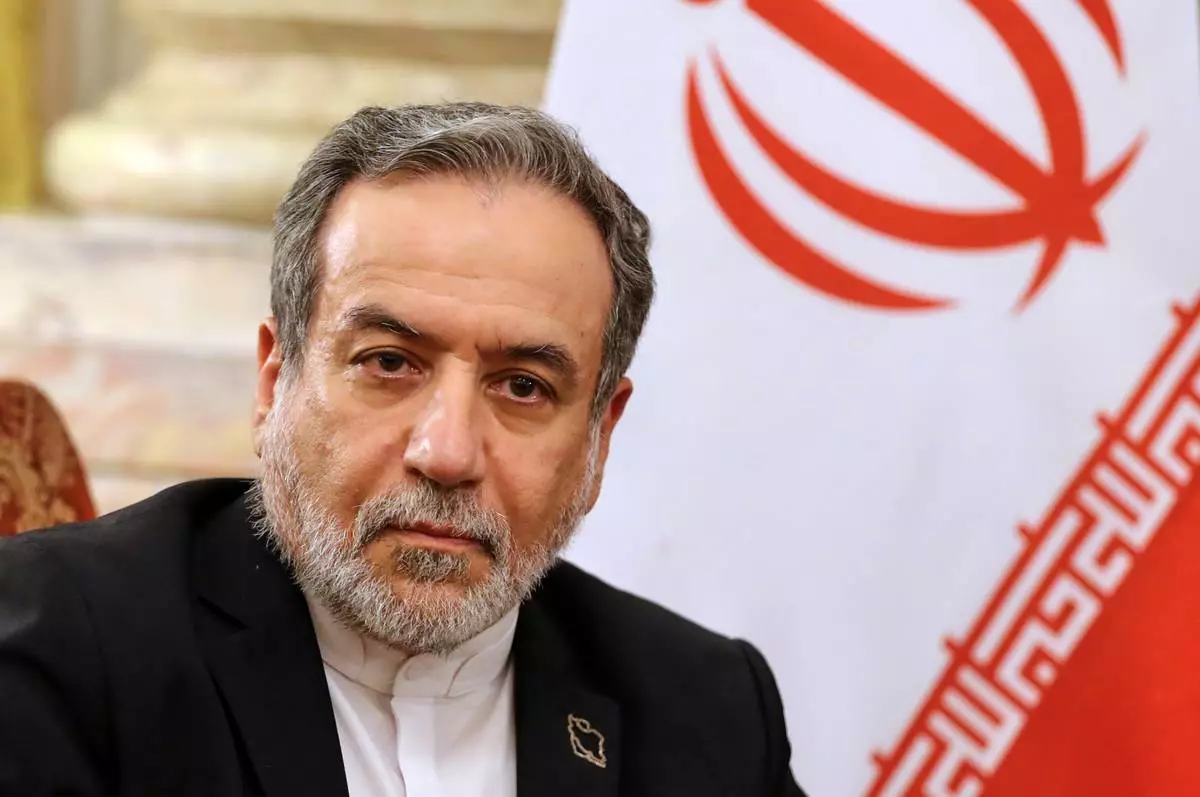
FILE - Iranian Foreign Minister Abbas Araghchi looks on during a meeting with Director General of the International Atomic Energy Agency (IAEA) Rafael Grossi, and Egyptian Foreign Minister Badr Abdelatty, at Tahrir Palace in Cairo, Tuesday, Sept. 9, 2025. (AP Photo/Khaled Elfiqi, File)
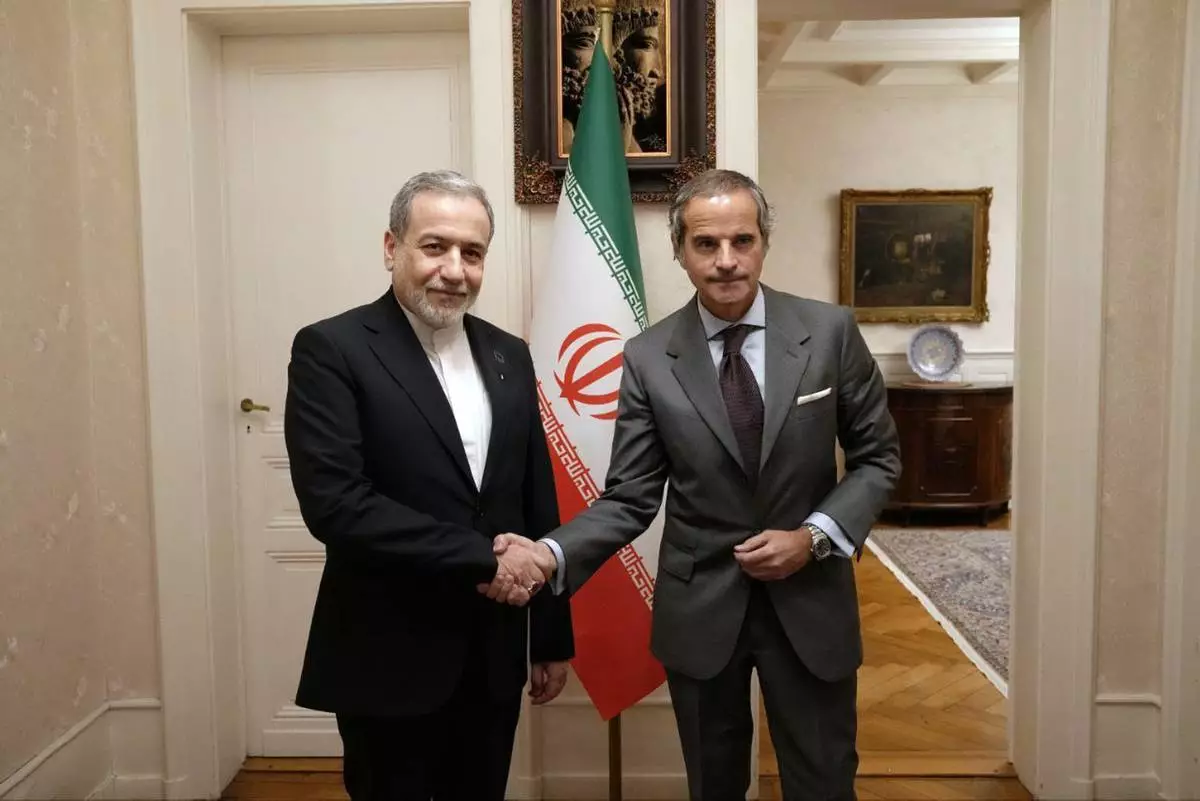
In this photo released by the Iranian Foreign Ministry, Iranian Foreign Minister Abbas Araghchi, left, shakes hands with International Atomic Energy Agency (IAEA) Director-General Rafael Grossi during their meeting in Geneva, Switzerland, Monday, Feb. 16, 2026. (Iranian Foreign Ministry via AP)
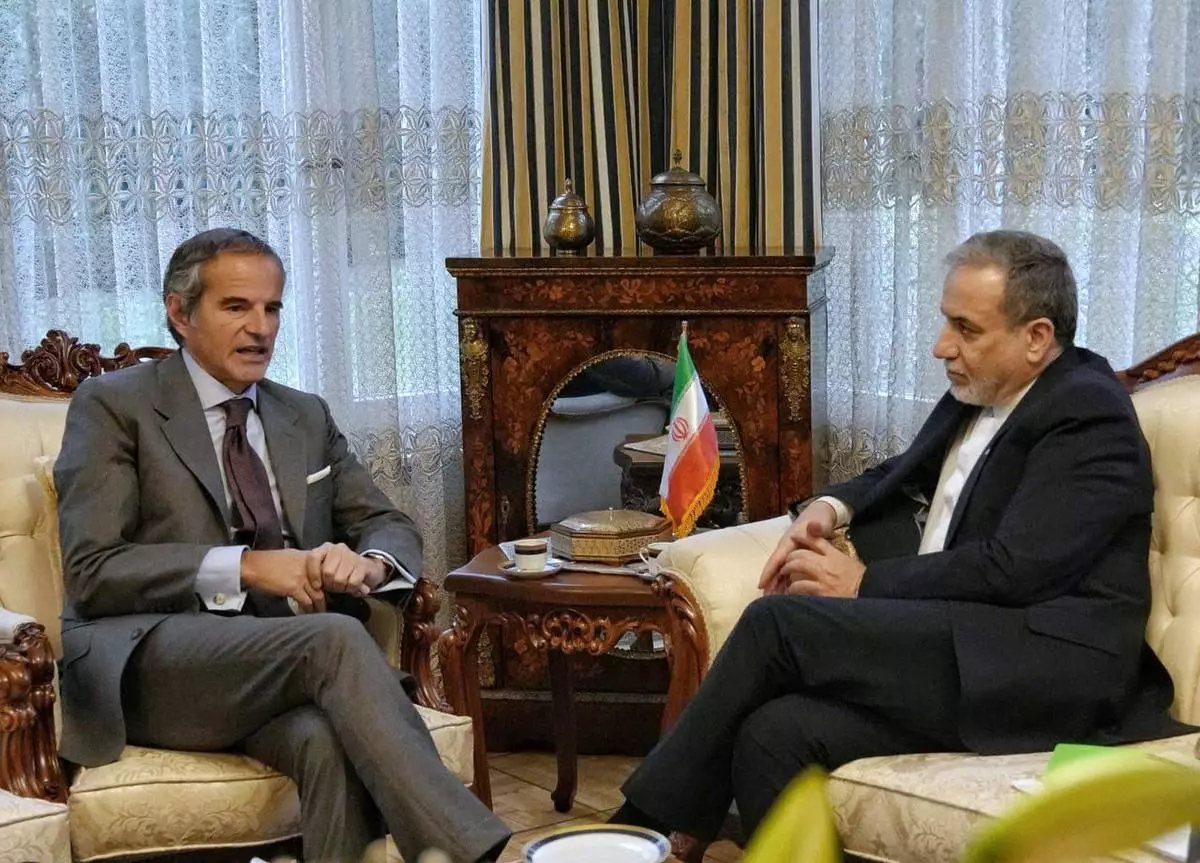
In this photo released by the Iranian Foreign Ministry, Iranian Foreign Minister Abbas Araghchi, right, and International Atomic Energy Agency (IAEA) Director-General Rafael Grossi, left, hold a meeting in Geneva, Switzerland, Monday, Feb. 16, 2026. (Iranian Foreign Ministry via AP)