China is seeing a surge in movie-related consumption during this year's Spring Festival holiday, also the most lucrative box office window in the country's film market, that began on Feb 15.
In recent years, China has rolled out policies to support the film industry's integration with tourism, dining, retail and many other areas of consumption, aiming to turn the popularity of films into a sustainable, multifaceted economic driver. And the efforts are paying off, with the gradual transformation of the movie industry from a purely box-office-driven model to a "film-plus" consumption ecosystem.
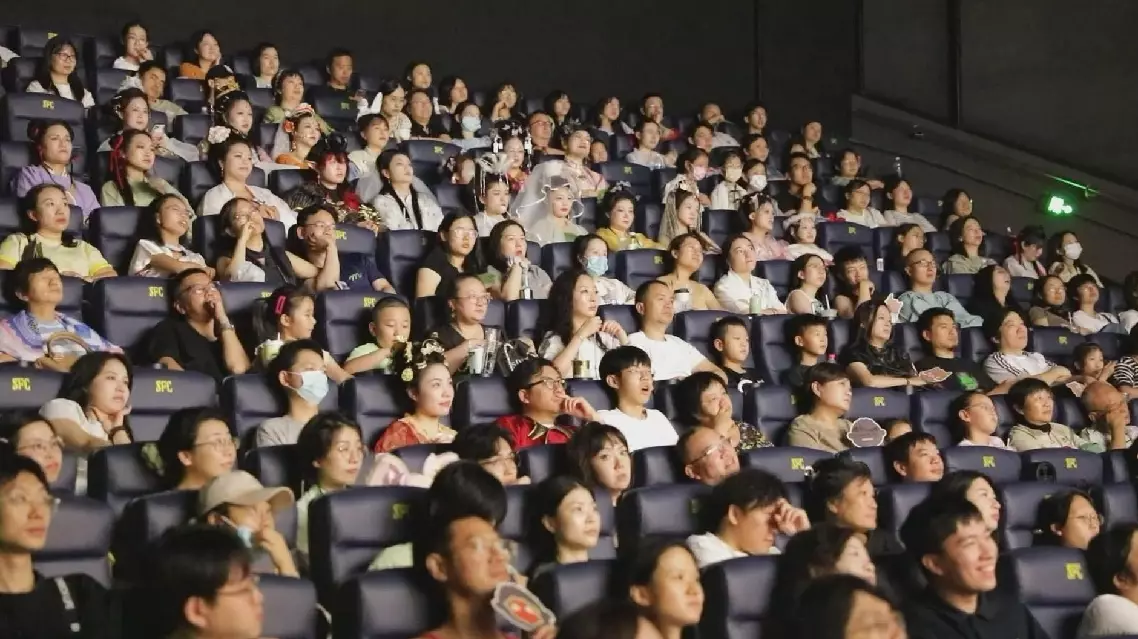
Across the country this holiday season, cinemas are packed with viewers, stores are experiencing booming licensed product sales, film parks are receiving increased numbers of visitors, and iconic movie shooting locations are drawing an influx of tourists.
On Tuesday, the first day of the Chinese New Year of the Horse, the country's film industry released six movies, including the espionage thriller "Scare Out", the racing sequel "Pegasus 3", the epic martial arts film "Blades of the Guardians", the animated adventure "Panda Plan: The Magical Tribe", the family-friendly "Boonie Bears: Every Year with a Bear", and the fantasy adventure "Per Aspera Ad Astra."
Moviegoers have access to a rich variety of formats, including CINITY and IMAX, with all six titles offering the cutting-edge CINITY versions.
"Watching movies during the Spring Festival holiday has become a new custom for us young people. And this holiday, I'm interested in a lot of films," said Xie Fan, a moviegoer in Yiyang City of central China's Hunan Province.
This year, Chinese local authorities are allocating 2.05 billion yuan (over 295 million U.S. dollars) in funds to directly benefit the public through the distribution of consumption vouchers, subsidies, and cash envelopes during the Spring Festival holiday.
At a shopping mall in Hunan, customers with their movie ticket stubs can enjoy special deals for dining, shopping, entertainment, and other consumption experiences, as local shopping malls feel more incentivized to roll out preferential measures during the holiday.
"During the Spring Festival holiday, our entire shopping mall are handing out over 5,000 gifts to draw more people to our cinemas and stores and help further stimulate the consumption market," said Xue Xuan, marketing manager at a local shopping mall in Hunan.
Film parks in major Chinese cities are also organizing parades featuring popular film characters, flash mob concerts, creative cultural shows, distinctive Spring Festival fairs, and many other film-related activities to attract visitors of all ages.
"We are integrating diverse commercial activities and initiatives that benefit the people to build a full-scene cultural and tourism consumption format that promises citizens and tourists new experiences during the Spring Festival holiday," said Zhang Xiangdong, who heads the Planning Department of the Shaanxi Xiying Cultural Tourism Development Co., Ltd.
Retail sales of IP-licensed consumer merchandise stand as another major focus of the efforts to build a "film-plus" consumption ecosystem. This holiday has seen the launch of more toys, apparel, collectibles, and other branded items based on well-known film characters.
"The Spring Festival holiday season is the most lucrative box office window with surging numbers of moviegoers and a very diverse customer base. During this time, we usually launch a large number of IP-licensed products. This year, merchandise themed around 'Boonie Bears' are particularly popular with the youngsters," said Li Jinlei, business manager for film derivatives at the Wanda Cinema Line Corp, referring to the popular animation franchise.
China's official Spring Festival holiday lasts nine days till Feb 23 this year.
Spring Festival holiday sees surge in film-related consumer spending