RALEIGH, N.C.--(BUSINESS WIRE)--Feb 17, 2026--
Caidya, a leading global, mid-sized CRO focused on accelerating clinical development for innovative biopharmaceutical companies, today announced the appointment of Michael Clay as chief operating officer (COO). Clay will lead Caidya’s global operational delivery, client engagement model, and execution strategy, further strengthening the company’s ability to serve innovative biopharma sponsors across the U.S., Europe, and Asia-Pacific.
This press release features multimedia. View the full release here: https://www.businesswire.com/news/home/20260217431202/en/
Clay brings a distinguished track record in global project delivery and site relationship strategy. He has led large-scale global programs across 60+ countries and built high-performing delivery organizations known for operational rigor and sponsor trust.
Notably, Clay has extensive leadership experience across Asia-Pacific, where speed, regulatory nuance, and close site collaboration are critical to success. His hands-on approach to site partnerships and regional execution aligns closely with Caidya’s distinct global footprint and its strong presence in China — an increasingly vital region for innovative biotech development and patient access.
Most recently, Clay served as senior vice president, Global Project Delivery at Fortrea, where he oversaw more than 500 global clinical trials. His career includes positions as COO and senior operations roles at other global CROs and site management organizations. His expertise in aligning sponsors, sites, and cross-functional teams will further enable Caidya to deliver integrated, agile solutions tailored to the evolving needs of biotech innovators.
“Mike’s leadership strengthens one of our most important differentiators — our ability to combine global reach with regional expertise, particularly across APAC and China,” said Barbara Lopez Kunz, CEO, Caidya. “His deep understanding of site engagement, global execution, and sponsor partnership will help us scale while preserving the agility, accountability, and transparency our clients value.”
“I’m excited to join Caidya at a time when global clinical development is becoming more interconnected and more complex,” said Clay. “Caidya is strategically positioned to help sponsors accelerate programs while maintaining quality and patient focus.”
Clay’s appointment supports Caidya’s continued evolution as a globally integrated, mid-sized CRO that delivers partner-level collaboration rather than transactional execution. Caidya’s distinct APAC infrastructure and experienced regional leadership provide sponsors with a differentiated pathway to access diverse patient populations and execute complex, multi-regional trials with confidence.
This hire continues Caidya’s commitment to grow and strengthen its global team of operational, therapeutic, and commercial leaders. Recent additions include oncology and hematology SME, Edward Dow, M.D.; head of BD Europe, Mario Bautista; and several new commercial executives across the U.S. averaging over 20 years’ life science experience.
About Caidya
Caidya is a global, clinical research organization (CRO) that partners with biopharma innovators to advance breakthrough therapies for patients with unmet medical needs. Built to adapt at the speed of science, Caidya operates as a product development partner, integrating seamlessly with sponsors, bringing ownership, transparency, and agility to complex clinical programs.
With direct presence in more than 20 countries and conducting studies across over 50 countries and regions Caidya offers a distinct global footprint across the Americas, Europe, and APAC, including deep capabilities in China. This cross-border strength enables sponsors to access diverse patient populations, navigate regional regulatory pathways, and execute global trials with confidence. Caidya’s specialized therapeutic and operational expertise spans oncology and hematology, rare and pediatric diseases, and other complex indications where scientific precision and patient-centric execution are critical. By combining global scale with mid-sized agility, Caidya delivers high-quality data, accelerated timelines, and a superior partnership experience from early development through post-approval.

Michael Clay, Caidya's Chief Operating Officer
Lawmakers and the White House offered no signs of compromise over the holiday weekend in their battle over oversight of federal immigration officers that has led to a pause in funding for the Department of Homeland Security. A partial government shutdown began Saturday after congressional Democrats and President Donald Trump ’s team failed to reach a deal on legislation to fund the department through September.
Democrats are demanding changes to how immigration operations are conducted after the fatal shootings of U.S. citizens Alex Pretti and Renee Good by federal officers in Minneapolis last month.
Unlike the record 43-day shutdown last fall, the closures are narrowly confined, affecting only agencies under the DHS umbrella, including the Transportation Security Administration, U.S. Coast Guard, U.S. Immigration and Customs Enforcement and U.S. Customs and Border Protection. But the work of ICE and CBP will mostly continue unabated, thanks to billions in funding from Trump’s 2025 tax and spending cut law.
The latest:
The partial shutdown began Saturday after congressional Democrats and the White House failed to reach a deal on legislation to fund DHS through September.
Congress is on recess until Feb. 23, and both sides appear dug into their positions. The impasse affects agencies such as the Transportation Security Administration, the Federal Emergency Management Agency, U.S. Coast Guard, the Secret Service, U.S. Immigration and Customs Enforcement, and U.S. Customs and Border Protection.
Democrats want changes to how immigration operations are conducted after the fatal shootings of two U.S. citizens by federal officers last month. They also want to require immigration agents to wear body cameras and mandate judicial warrants for arrests on private property.
White House border czar Tom Homan said the administration was unwilling to agree to Democrats’ demands that federal officers clearly identify themselves, remove masks during operations and display unique ID numbers.
The work at ICE and CBP goes on unabated because Trump’s tax and spending cut law from 2025 provided billions more to those agencies that can be tapped for deportation operations.
▶ Read more about what’s happening with the shutdown
Trump remembered Jackson in a social media post, calling him a “good man, with lots of personality, grit, and ‘street smarts.’”
The Republican president also described Jackson as “very gregarious -Someone who truly loved people!”
“He loved his family greatly, and to them I send my deepest sympathies and condolences. Jesse will be missed! Trump wrote.
It’s up to each federal agency to designate which of its employees are “essential” or “excepted,” both of which mean the same thing in this case. They keep working during a shutdown, typically without being paid until government funding is restored.
Some examples of “essential” employees are military personnel, airport security screeners and law enforcement officers. There can be a wide range, from positions deemed critical for public safety to those authorized by law to continue even without new funding.
Most of the more than 270,000 people employed by DHS are deemed essential, meaning that they stay on the job even during a shutdown. For the fall 2025 shutdown, more than 258,000 DHS employees were in that category, and about 22,000 — or 5% of the agency’s total employee base — were furloughed.
Other agencies affected are the Secret Service and the Federal Emergency Management Agency.
The vast majority of employees at the Secret Service and U.S. Coast Guard will continue their work, though they could miss a paycheck depending on the shutdown’s length.
At FEMA, the shutdown will disrupt the agency’s ability to reimburse states for disaster relief costs. Some workers will be furloughed, limiting the agency’s ability to coordinate with state and local partners. Training for first responders at the National Disaster and Emergency Management University in Maryland will be disrupted.
Essentially, it’s because Trump acquiesced to Democrats’ request that Homeland Security funding be stripped from a broader spending package to allow more time for negotiation over demands for changes to immigration enforcement, such as a code of conduct for federal agents and a requirement that officers show identification. DHS was temporarily funded only through Friday.
The rest of the federal government is funded through Sept. 30. That means most federal programs are unaffected by the latest shutdown, including food assistance, and pay for most federal workers and for service members will continue uninterrupted.
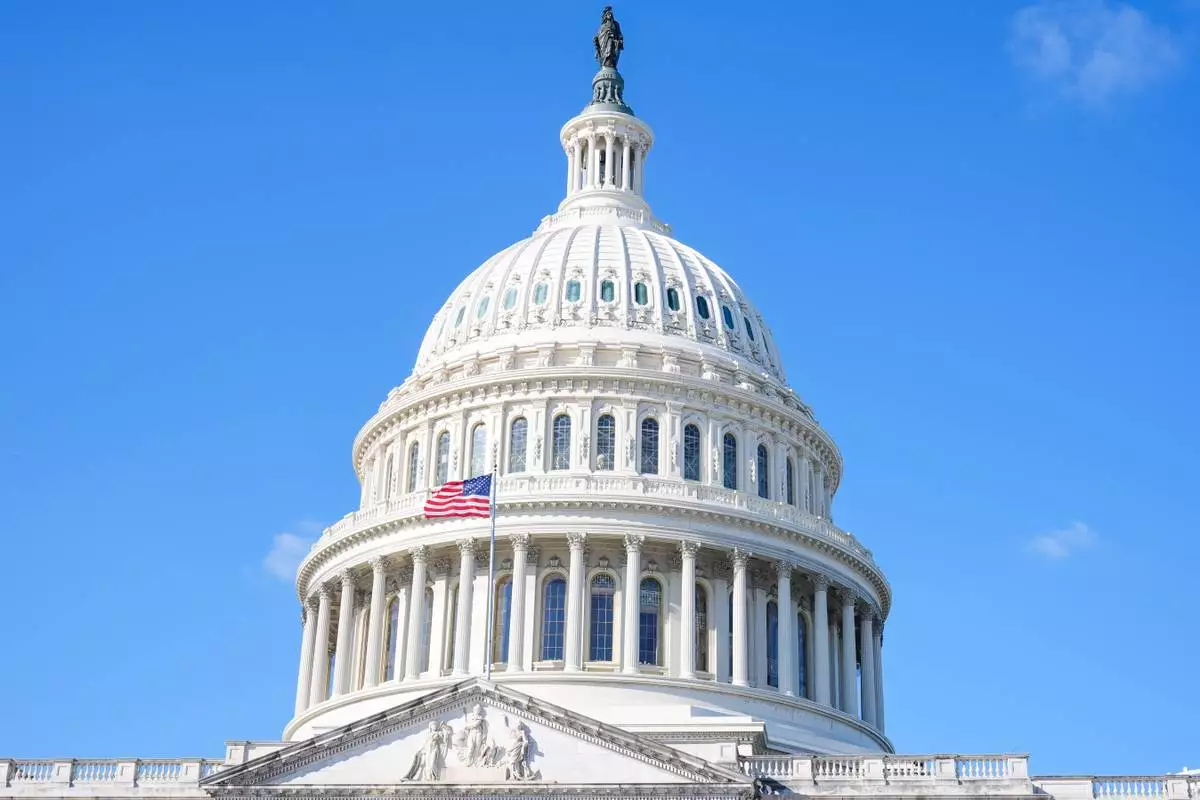
The U.S. Capitol is seen Friday, Feb. 13, 2026, in Washington. (AP Photo/Mariam Zuhaib)