CINCINNATI--(BUSINESS WIRE)--Feb 17, 2026--
ProAmpac, a global leader in flexible packaging and material science, announces the expansion of its ProActive Recyclable® RP-2000 High Barrier Series. This curbside recyclable, fiber-based packaging platform is designed to help brands transition away from traditional non-recyclable high-barrier multilayer structures, such as paper/foil, paper/metalized polyethylene terephthalate (METPET), and certain film laminations. The RP-2000 platform provides strong barriers to oxygen and moisture, making it well-suited for sensitive dry food products such as oatmeal, granola, cereal, spices, snacks, dried fruits, and nuts.
This press release features multimedia. View the full release here: https://www.businesswire.com/news/home/20260217779741/en/
“Supporting the growing Fiberization of Packaging ® movement, and as adoption of fiber-based structures accelerates, it is critical that ProAmpac continues to expand the functional performance envelope of paper-based materials. These technologies enable brands to transition to curbside recyclable packaging while maintaining required barrier properties, package integrity, and filling-line efficiency,” said Hesam Tabatabaei, chief technology officer at ProAmpac.
Designed for flexibility across common package styles, the RP-2000 High Barrier Series is available in different pouch formats and rollstock, maintaining strong performance throughout the package's life. Its durable construction offers excellent flex-crack resistance and maintains its barrier properties during handling and folding. It also offers high-quality printing capabilities, enabling brands to create distinctive designs on natural kraft, bleached, or clay-coated paper.
“RP-2000 High Barrier platform was created to give brands a drop-in curbside recyclable solution with minimum adjustment on filling lines and has successfully trialed on a super high-speed HFFS line running up to 900 packs per minute,” says Adam Edinger, global innovation engineer for ProAmpac. “It delivers dependable performance in a fiber-based format that aligns with today’s expectations.”
For more information about ProAmpac’s sustainable packaging solutions, please contact Marketing@ProAmpac.com or visit ProAmpac.com.
About ProAmpac
ProAmpac is a leading global flexible packaging company with a comprehensive product offering. We provide creative packaging solutions, industry-leading customer service and award-winning innovation to a diverse global marketplace. ProAmpac’s approach to sustainability – ProActive Sustainability -- provides innovative sustainable flexible packaging products to help our customers achieve their sustainability goals. We are guided in our work by five core values that are the basis for our success: Integrity, Intensity, Innovation, Involvement, and Impact. Cincinnati-based ProAmpac is owned by Pritzker Private Capital along with management and co-investors. For more information, visit ProAmpac.com or contact Media@ProAmpac.com.
About Pritzker Private Capital
Pritzker Private Capital partners with middle-market companies based in North America with leading positions in the manufactured products and services sectors. The firm’s differentiated, long-duration capital base allows for efficient decision-making, broad flexibility with transaction structure and investment horizon, and alignment with all stakeholders. Pritzker Private Capital builds businesses for the long term and is an ideal partner for entrepreneur- and family-owned companies. Pritzker Private Capital is a signatory to the United Nations Principles for Responsible Investment (PRI). For more information, visit PPCPartners.com.

ProAmpac's RP-2000MHB Series
Lawmakers and the White House offered no signs of compromise over the holiday weekend in their battle over oversight of federal immigration officers that has led to a pause in funding for the Department of Homeland Security. A partial government shutdown began Saturday after congressional Democrats and President Donald Trump ’s team failed to reach a deal on legislation to fund the department through September.
Democrats are demanding changes to how immigration operations are conducted after the fatal shootings of U.S. citizens Alex Pretti and Renee Good by federal officers in Minneapolis last month.
Unlike the record 43-day shutdown last fall, the closures are narrowly confined, affecting only agencies under the DHS umbrella, including the Transportation Security Administration, U.S. Coast Guard, U.S. Immigration and Customs Enforcement and U.S. Customs and Border Protection. But the work of ICE and CBP will mostly continue unabated, thanks to billions in funding from Trump’s 2025 tax and spending cut law.
The latest:
Conservation and historical organizations have sued the Trump administration over National Park Service policies that the groups say erase history and science from America’s national parks.
A lawsuit filed in Boston says orders by Trump and Interior Secretary Doug Burgum have forced park service staff to remove or censor exhibits that share factually accurate and relevant U.S. history and scientific knowledge, including about slavery and climate change.
The suit was filed Tuesday by a coalition that includes the National Parks Conservation Association, American Association for State and Local History, Association of National Park Rangers and Union of Concerned Scientists. It comes as a federal judge on Monday ordered that an exhibit about nine people enslaved by George Washington must be restored at his former home in Philadelphia.
▶ Read more about the lawsuit
Betsy Nicholas, president of the Potomac River Keeper Network, a conservation group that has monitored the river, said the organization welcomes the recent White House interest in the health of what she called “the nation’s river.”
“We’re glad to be getting that kind of attention for restoring the river,” she said.
She said it was her understanding that the federal government has been involved since the leak occurred last month, working with Maryland, Washington and DC Water to oversee the repairs. She also noted the organization is working closely with the others to test the water.
“Here is what the federal government can do: funding,” she said. “This happened because of underinvestment in repairing old infrastructure. Sixty-year-old pipe burst.”
DC Water, a utility based in Washington, said the EPA’s assistant administrator for water toured the site last week and was briefed on the repairs.
The U.S. military has killed 11 people in strikes on three boats that were allegedly smuggling drugs in the Caribbean Sea and eastern Pacific Ocean, U.S. Southern Command said in a statement Tuesday.
Like most of the military’s statements on the 40-plus strikes over the past year, Southern Command said they targeted alleged drug traffickers along known smuggling routes late Monday. Southern Command said two vessels carrying four people each were struck in the eastern Pacific, while a third boat with three people was hit in the Caribbean.
The military did not provide evidence that the vessels were ferrying drugs, but posted videos that showed boats being destroyed.
The president kept up his drumbeat against leaders in Maryland, Virginia and the District of Columbia over a sewage spill in the Potomac River that could be one of the largest in U.S. history.
A January pipe rupture sent sewage into the river that runs through the nation’s capital region. Trump demanded in a social media post Tuesday that local leaders “must get to work, IMMEDIATELY” to clean up the spill.
“If they can’t do the job, they have to call me and ask, politely, to get it fixed,” Trump said. “The Federal Government is not at all involved with what has taken place, but we can fix it.”
Trump is blaming local leaders despite a D.C.-based water authority and the federal government having jurisdiction over the broken pipe. It’s under the oversight of the U.S. Environmental Protection Agency.
Trump also used the spill to blame Democrats for the ongoing partial shutdown, even though the EPA is fully operational. The president has said the Federal Emergency Management Agency, which is affected by the shutdown, will play a key role in coordinating the response.
It’s hard to predict whether, when or where security screening snags might pop up. Transportation Security Administration officers are expected to work without pay while lawmakers remain without an agreement on DHS’ annual funding.
But even a handful of unscheduled TSA absences could quickly lead to longer wait times at smaller airports, for example, if there’s just a single security checkpoint. Shortages of TSA officers also could slow the screening of checked luggage behind the scenes.
Experts say flight delays are also possible even though air traffic controllers are not affected by the shutdown.
What can travelers do to prepare?
▶ Read more about the partial government shutdown and air travel
In guidance issued last week to all U.S. embassies and consulates abroad, the State Department said it “strongly objects” to the proposal being discussed by the U.N. General Assembly and that its adoption “could pose a major threat to U.S. industry.”
The draft resolution sponsored by Vanuatu is being circulated among the 193-member General Assembly and stems from a landmark advisory opinion by the U.N.’s top court last July.
The International Court of Justice said countries could be in violation of international law if they fail to take measures to protect the planet from climate change, and nations harmed by its effects could be entitled to reparations.
The proposal includes adopting a national climate action plan to limit global temperature rise to below 1.5 degrees Celsius; phasing out subsidies for fossil fuel exploration, production and exploitation; and urging those in violation to “provide full and prompt reparation for damage.”
▶ Read more about the proposal
The partial government shutdown began Saturday, with Congress scheduled to be out of Washington until Feb. 23, as Democrats and the White House remain dug in over funding for DHS.
Late Monday, Senate Democrats delivered their latest counteroffer to the White House and Republicans, according to a spokesperson for Senate Democratic Leader Chuck Schumer. No additional details were released.
The move follows a White House counterproposal earlier this month that Schumer dismissed as not being serious, offered in response to Democrats’ own 10-point plan outlining their priorities for a funding agreement.
The pledges will be formally announced when board members gather in Washington on Thursday for their first meeting, he said.
He did not detail which member nations were making the pledges for reconstruction or would contribute personnel to the stabilization force.
Rebuilding the Palestinian territory will be a daunting endeavor. The United Nations, World Bank and European Union estimate that reconstruction of the territory will cost $70 billion. Few places in the Gaza Strip were left unscathed by more than two years of Israeli bombardment.
The ceasefire deal calls for an armed international stabilization force to keep security and ensure disarmament of the militant Hamas group, a key demand of Israel. Thus far, few countries have expressed interest in taking part in the proposed force.
The Oct. 10 U.S.-brokered ceasefire deal attempted to halt a more than 2-year war between Israel and Hamas. While the heaviest fighting has subsided, Israeli forces have carried out repeated airstrikes and frequently fired on Palestinians near military-held zones.
It is not clear how many of the more than 20 members of the Board of Peace will attend the first meeting.
▶ Read more about the Board of Peace and its upcoming meeting
It was the first time Iran has announced the closure of the key international waterway, through which 20% of the world’s oil passes, since the U.S. began threatening Iran and rushing military assets to the region. It marks a further escalation in a weekslong standoff that could ignite another war in the Middle East.
As the talks began, Iran’s state media announced that it had fired live missiles toward the Strait and would close it for several hours for “safety and maritime concerns.”
Iranian state TV later said the talks wrapped up after almost three hours.
Iranian state TV reported earlier that negotiations would be indirect and would focus only on Iran’s nuclear program and not domestic policies.
U.S. President Donald Trump has repeatedly threatened to use force to compel Iran to agree to constrain its nuclear program. Iran has said it would respond with an attack of its own. Trump has also threatened Iran over the killing of protesters.
▶ Read more about the talks between Iran and the US
The partial shutdown began Saturday after congressional Democrats and the White House failed to reach a deal on legislation to fund DHS through September.
Congress is on recess until Feb. 23, and both sides appear dug into their positions. The impasse affects agencies such as the Transportation Security Administration, the Federal Emergency Management Agency, U.S. Coast Guard, the Secret Service, U.S. Immigration and Customs Enforcement, and U.S. Customs and Border Protection.
Democrats want changes to how immigration operations are conducted after the fatal shootings of two U.S. citizens by federal officers last month. They also want to require immigration agents to wear body cameras and mandate judicial warrants for arrests on private property.
White House border czar Tom Homan said the administration was unwilling to agree to Democrats’ demands that federal officers clearly identify themselves, remove masks during operations and display unique ID numbers.
The work at ICE and CBP goes on unabated because Trump’s tax and spending cut law from 2025 provided billions more to those agencies that can be tapped for deportation operations.
▶ Read more about what’s happening with the shutdown
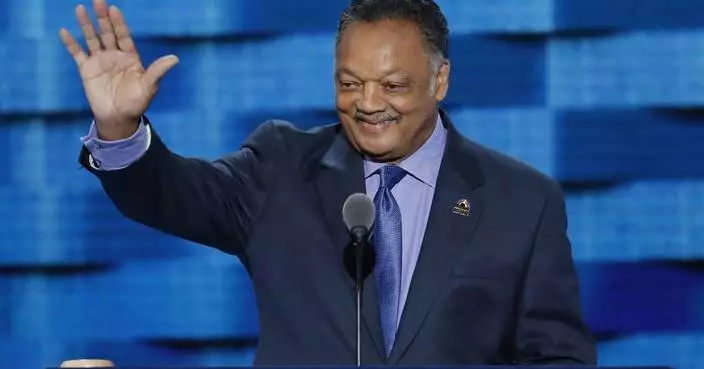
Trump remembered Jackson in a social media post, calling him a “good man, with lots of personality, grit, and ‘street smarts.’”
The Republican president also described Jackson as “very gregarious -Someone who truly loved people!”
“He loved his family greatly, and to them I send my deepest sympathies and condolences. Jesse will be missed! Trump wrote.
It’s up to each federal agency to designate which of its employees are “essential” or “excepted,” both of which mean the same thing in this case. They keep working during a shutdown, typically without being paid until government funding is restored.
Some examples of “essential” employees are military personnel, airport security screeners and law enforcement officers. There can be a wide range, from positions deemed critical for public safety to those authorized by law to continue even without new funding.
Most of the more than 270,000 people employed by DHS are deemed essential, meaning that they stay on the job even during a shutdown. For the fall 2025 shutdown, more than 258,000 DHS employees were in that category, and about 22,000 — or 5% of the agency’s total employee base — were furloughed.
Other agencies affected are the Secret Service and the Federal Emergency Management Agency.
The vast majority of employees at the Secret Service and U.S. Coast Guard will continue their work, though they could miss a paycheck depending on the shutdown’s length.
At FEMA, the shutdown will disrupt the agency’s ability to reimburse states for disaster relief costs. Some workers will be furloughed, limiting the agency’s ability to coordinate with state and local partners. Training for first responders at the National Disaster and Emergency Management University in Maryland will be disrupted.
Essentially, it’s because Trump acquiesced to Democrats’ request that Homeland Security funding be stripped from a broader spending package to allow more time for negotiation over demands for changes to immigration enforcement, such as a code of conduct for federal agents and a requirement that officers show identification. DHS was temporarily funded only through Friday.
The rest of the federal government is funded through Sept. 30. That means most federal programs are unaffected by the latest shutdown, including food assistance, and pay for most federal workers and for service members will continue uninterrupted.
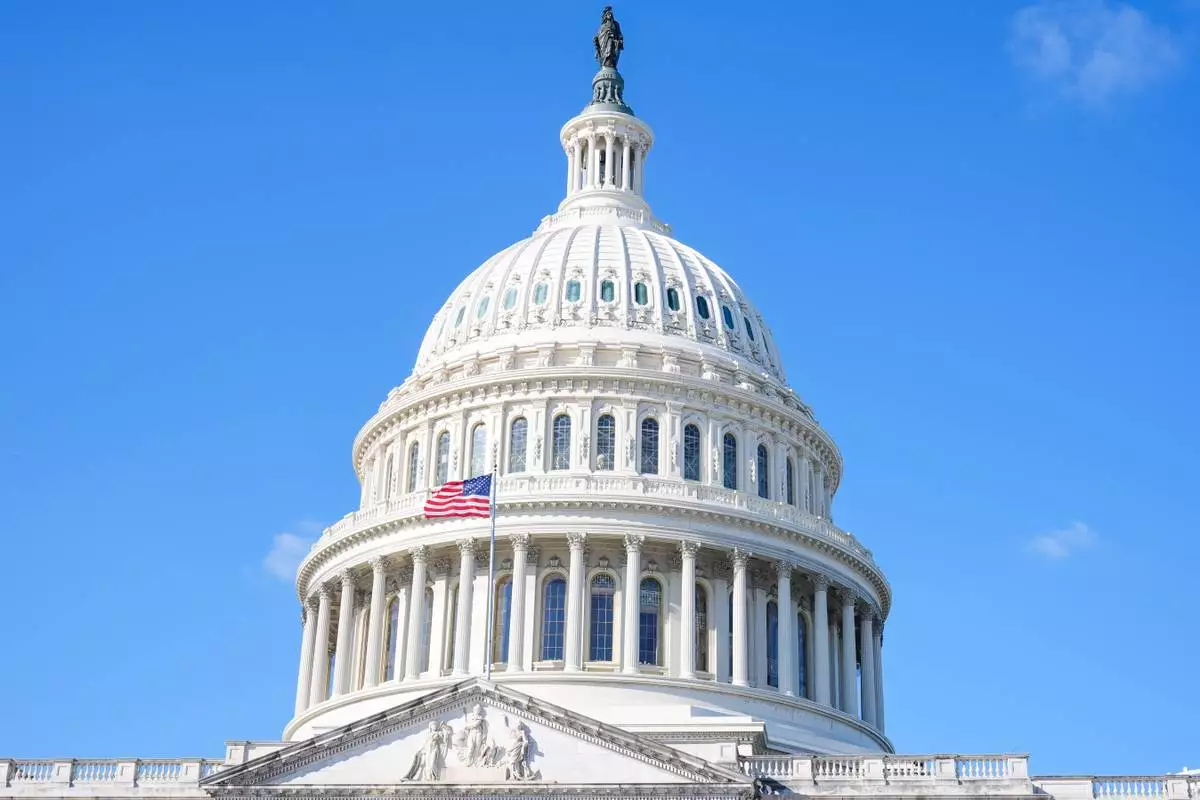
The U.S. Capitol is seen Friday, Feb. 13, 2026, in Washington. (AP Photo/Mariam Zuhaib)