Home energy storage provider showcases a new rapid shutdown safety feature shaped by installer and homeowner feedback
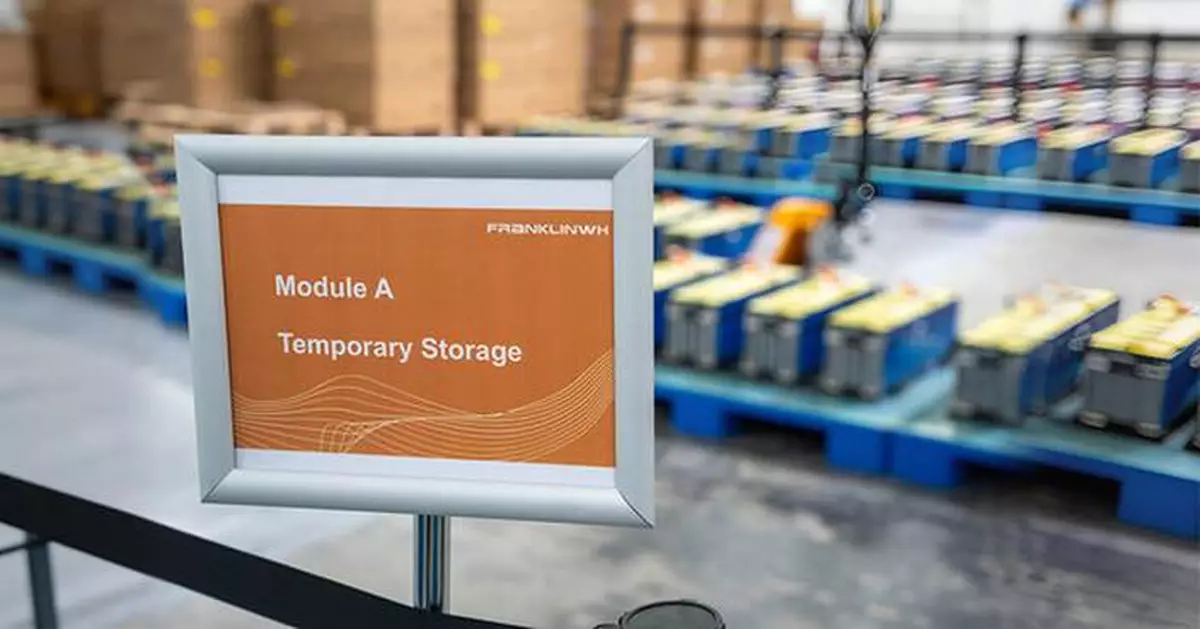
SAN DIEGO, Feb. 18, 2026 /PRNewswire/ -- FranklinWH Energy Storage Inc., a leading provider of whole-home energy management and storage solutions, will use Intersolar and Energy Storage North America to spotlight expanded U.S. manufacturing, workforce growth, and ongoing improvements across its residential energy storage platform.
The company is on track to double manufacturing output at its Santa Clara, California, facility in 2026. The factory uses AI-enabled production tools to streamline assembly, improve product availability, and reduce delivery times for installers. To support that growth, FranklinWH is expanding its manufacturing workforce, strengthening distribution capacity nationwide, and broadening sales coverage as part of its long-term commitment to the U.S. market.
"FranklinWH is not slowing down, in fact we're doubling manufacturing of our energy storage systems at our California factory, expanding distribution centers nationwide for faster delivery to installers, and continuing to grow our team," said FranklinWH CEO and Co-founder Gary Lam. "Our focus is long-term. We are investing in people, production, and partner support to meet rising demand for home energy resilience."
FranklinWH says product development continues to be driven by installer and homeowner feedback. The company reports ongoing system-level improvements to its aPower 2 and aPower S batteries, even as those products remain well established in the field.
"At FranklinWH, installer feedback is built into our design process from the start," Lam said. "Even as aPower S and aPower 2 are widely deployed, we continue to refine the system based on real-world use. Our goal is to make installation smoother, system performance stronger and long-term ownership simpler."
One example of that field-driven approach is the FranklinWH RSD Duo (RSD Duo), a new safety enhancement being shown at Intersolar. Standard RSDs have a single circuit, while the RSD Duo has two parallel circuits for added reliability and safety. If one circuit malfunctions, the RSD Duo continues to operate as a rooftop shutdown device. The solution provides a streamlined, code-compliant method for exceeding rooftop solar safety requirements. It integrates with FranklinWH Systems, helps reduce installation time and supports compliance with national electrical code requirements without adding unnecessary complexity.
"The RSD Duo came directly from conversations with installers and homeowners who work with these systems every day," Lam said. "Contractors told us they needed hardware that helps them move faster without sacrificing safety. Homeowners told us they want systems that perform reliably when the grid is stressed. This is one example of how we turn feedback into practical improvements."
FranklinWH is also increasing participation in utility demand and grid services programs in key regions across the United States. In many areas, utilities now offer substantial incentives for qualified home energy storage systems, along with performance-based payments when stored energy supports the grid during peak demand periods.
FranklinWH will offer live demonstrations and product discussions at Booth 2904 throughout Intersolar.
For more information, visit www.franklinwh.com.
About FranklinWH
FranklinWH Energy Storage is the manufacturer of the FranklinWH System, a next-generation home energy management and storage solution. Headquartered in the San Francisco Bay Area, FranklinWH's team brings decades of experience across energy system design, manufacturing, sales, and installation. The company is AVL-listed with multiple financial institutions and continues to empower homeowners to achieve true energy freedom. Learn more at franklinwh.com.
** The press release content is from PR Newswire. Bastille Post is not involved in its creation. **
FranklinWH Signals U.S. Growth and Field-Focused Innovation at Intersolar
|
National Comprehensive Cancer Network publishes new guidelines for Pediatric Soft Tissue Sarcomas, focused on rhabdomyosarcoma.
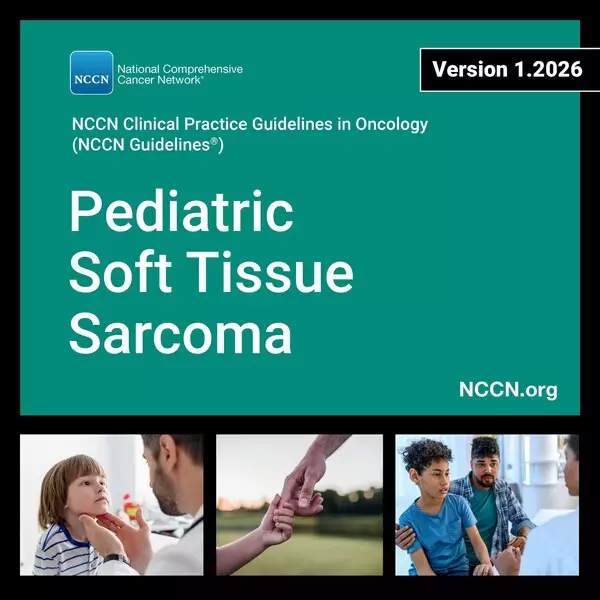
PLYMOUTH MEETING, Pa., Feb. 18, 2026 /PRNewswire/ -- The National Comprehensive Cancer Network® (NCCN®) today published new NCCN Clinical Practice Guidelines in Oncology (NCCN Guidelines®) for Pediatric Soft Tissue Sarcomas. This is the 7th NCCN Guidelines® for a pediatric cancer, expanding the overall library to cover 91 topics in cancer care. The guidelines present the latest evidence-based, expert consensus-driven recommendations for nearly every type of cancer plus prevention, screening, survivorship, and supportive care. NCCN Guidelines are updated at least once a year and help cancer care providers worldwide to attain the best possible outcomes.
The new NCCN Guidelines® for Pediatric Soft Tissue Sarcomas is now available for free at NCCN.org. They focus on a subtype called rhabdomyosarcoma (RMS) which is the most common type of soft tissue sarcoma in people under 20. RMS represents nearly 5% of all childhood cancers.
"Most cancers that occur in children are fundamentally different from cancers occurring in adults," explained Stephen Skapek, MD, Duke Cancer Institute, Chair of the NCCN Guidelines Panel for Pediatric Soft Tissue Sarcoma. "RMS can be divided into specific subtypes that are driven by different genetic changes that can influence outcomes. Those changes and other clinical and pathology features are all incorporated into the multi-faceted treatments. That's why it was essential to form a group of leading, multi-disciplinary experts from across the country to put together a roadmap for diagnosing, risk stratifying, and treating these patients."
"Children are most likely to be diagnosed with RMS at a very young age, toddlers or early elementary school," added Panel Vice-Chair Douglas Hawkins, MD, Seattle Children's. "When treating someone so young, you are not looking to just prolong survival, the goal is a full cure with minimal side effects and zero recurrence."
RMS is tricky to diagnose; it can be located almost anywhere on the body. When it presents in the head, neck, or limb, it can show up as a lump with or without pain. Other times it occurs on an internal organ, which might cause problems for breathing or urination. There are three major risk groups with varying survival rates. The intensity of the treatment, which typically includes chemotherapy, surgery, and radiation therapy, must be tailored to the risk group as well as the age and the patient's developmental stage, which might be influenced by the treatment. The new NCCN Guidelines explain how to provide treatment in a way that balances the goal of cure with the need to minimize acute side effects, such as severe infections, and long-term effects that could bring additional problems at some point in the future.
All NCCN Guidelines are available for free download via NCCN.org or through the Virtual Library of NCCN Guidelines® App. They were downloaded more than 18.4 million times in 2025. Numerous independent studies associate guideline-concordant care with better outcomes and lower costs. Learn more at NCCN.org/guidelines.
About the National Comprehensive Cancer Network
The National Comprehensive Cancer Network® (NCCN®) is a not-for-profit alliance of leading cancer centers devoted to patient care, research, and education. NCCN is dedicated to defining and advancing quality, effective, equitable, and accessible cancer care and prevention so all people can live better lives. The NCCN Clinical Practice Guidelines in Oncology (NCCN Guidelines®) provide transparent, evidence-based, expert consensus-driven recommendations for cancer treatment, prevention, and supportive services; they are the recognized standard for clinical direction and policy in cancer management and the most thorough and frequently-updated clinical practice guidelines available in any area of medicine. The NCCN Guidelines for Patients® provide expert cancer treatment information to inform and empower patients and caregivers, through support from the NCCN Foundation®. NCCN also advances continuing education, global initiatives, policy, and research collaboration and publication in oncology. Visit NCCN.org for more information.
Media Contact:
Rachel Darwin
267-622-6624
darwin@nccn.org
National Comprehensive Cancer Network publishes new guidelines for Pediatric Soft Tissue Sarcomas, focused on rhabdomyosarcoma.
PLYMOUTH MEETING, Pa., Feb. 18, 2026 /PRNewswire/ -- The National Comprehensive Cancer Network® (NCCN®) today published new NCCN Clinical Practice Guidelines in Oncology (NCCN Guidelines®) for Pediatric Soft Tissue Sarcomas. This is the 7th NCCN Guidelines® for a pediatric cancer, expanding the overall library to cover 91 topics in cancer care. The guidelines present the latest evidence-based, expert consensus-driven recommendations for nearly every type of cancer plus prevention, screening, survivorship, and supportive care. NCCN Guidelines are updated at least once a year and help cancer care providers worldwide to attain the best possible outcomes.
The new NCCN Guidelines® for Pediatric Soft Tissue Sarcomas is now available for free at NCCN.org. They focus on a subtype called rhabdomyosarcoma (RMS) which is the most common type of soft tissue sarcoma in people under 20. RMS represents nearly 5% of all childhood cancers.
"Most cancers that occur in children are fundamentally different from cancers occurring in adults," explained Stephen Skapek, MD, Duke Cancer Institute, Chair of the NCCN Guidelines Panel for Pediatric Soft Tissue Sarcoma. "RMS can be divided into specific subtypes that are driven by different genetic changes that can influence outcomes. Those changes and other clinical and pathology features are all incorporated into the multi-faceted treatments. That's why it was essential to form a group of leading, multi-disciplinary experts from across the country to put together a roadmap for diagnosing, risk stratifying, and treating these patients."
"Children are most likely to be diagnosed with RMS at a very young age, toddlers or early elementary school," added Panel Vice-Chair Douglas Hawkins, MD, Seattle Children's. "When treating someone so young, you are not looking to just prolong survival, the goal is a full cure with minimal side effects and zero recurrence."
RMS is tricky to diagnose; it can be located almost anywhere on the body. When it presents in the head, neck, or limb, it can show up as a lump with or without pain. Other times it occurs on an internal organ, which might cause problems for breathing or urination. There are three major risk groups with varying survival rates. The intensity of the treatment, which typically includes chemotherapy, surgery, and radiation therapy, must be tailored to the risk group as well as the age and the patient's developmental stage, which might be influenced by the treatment. The new NCCN Guidelines explain how to provide treatment in a way that balances the goal of cure with the need to minimize acute side effects, such as severe infections, and long-term effects that could bring additional problems at some point in the future.
All NCCN Guidelines are available for free download via NCCN.org or through the Virtual Library of NCCN Guidelines® App. They were downloaded more than 18.4 million times in 2025. Numerous independent studies associate guideline-concordant care with better outcomes and lower costs. Learn more at NCCN.org/guidelines.
About the National Comprehensive Cancer Network
The National Comprehensive Cancer Network® (NCCN®) is a not-for-profit alliance of leading cancer centers devoted to patient care, research, and education. NCCN is dedicated to defining and advancing quality, effective, equitable, and accessible cancer care and prevention so all people can live better lives. The NCCN Clinical Practice Guidelines in Oncology (NCCN Guidelines®) provide transparent, evidence-based, expert consensus-driven recommendations for cancer treatment, prevention, and supportive services; they are the recognized standard for clinical direction and policy in cancer management and the most thorough and frequently-updated clinical practice guidelines available in any area of medicine. The NCCN Guidelines for Patients® provide expert cancer treatment information to inform and empower patients and caregivers, through support from the NCCN Foundation®. NCCN also advances continuing education, global initiatives, policy, and research collaboration and publication in oncology. Visit NCCN.org for more information.
Media Contact:
Rachel Darwin
267-622-6624
darwin@nccn.org
** The press release content is from PR Newswire. Bastille Post is not involved in its creation. **
New Guidelines from NCCN Detail Fundamental Differences in Cancer in Children Compared to Adults