GAZA CITY, Gaza Strip (AP) — Palestinians in Gaza are preparing to welcome the Muslim holy month of Ramadan under a fragile ceasefire deal, but many say the challenges of their daily lives and the losses of the Israel-Hamas war are dampening the typically festive spirit.
“There is no joy after we lost our family and loved ones,” said Gaza City resident Fedaa Ayyad. “Even if we try to cope with the situation, we can’t truly feel it in our hearts. … I am one of those who cannot feel the atmosphere of Ramadan.”
Click to Gallery
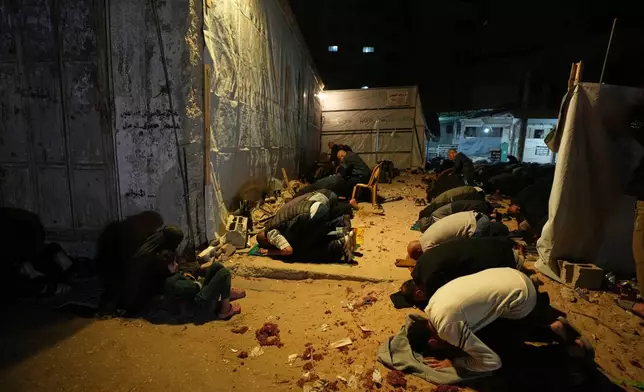
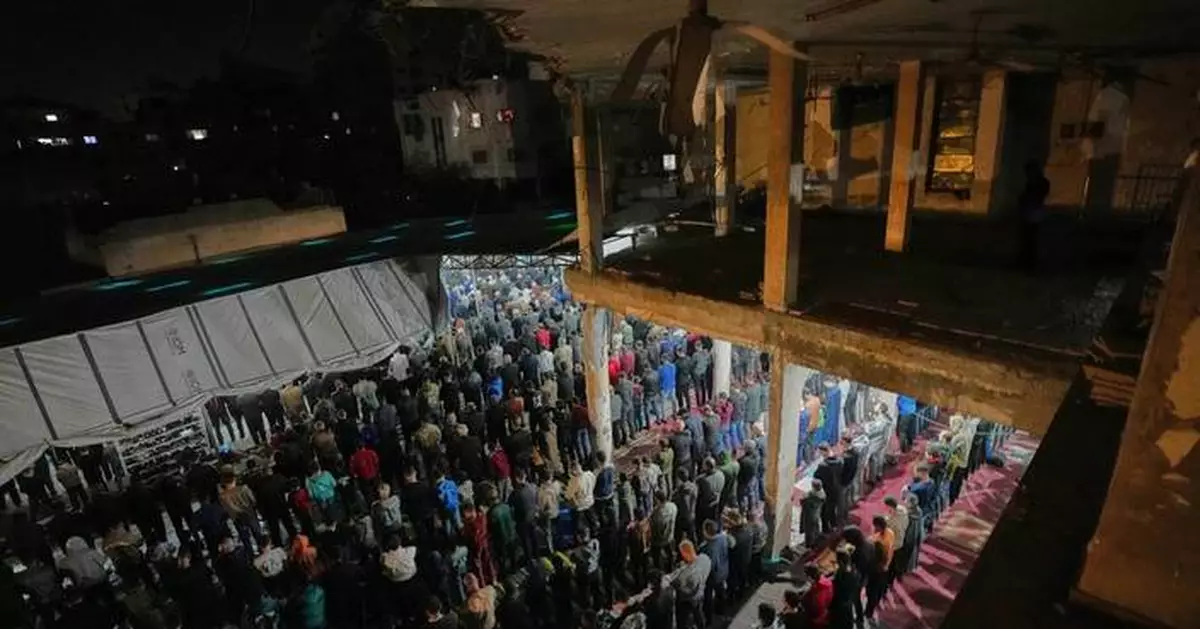
Muslim worshippers perform evening Tarawih prayer on the first night of the holy fasting month of Ramadan at the Alkanz Mosque, which was damaged during the Israel–Hamas war, in Gaza City, Tuesday, Feb. 17, 2026. (AP Photo/Jehad Alshrafi)
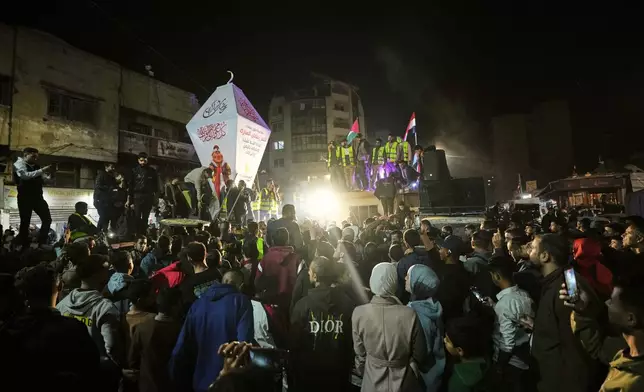
Palestinians celebrate the start of the holy fasting month of Ramadan in Gaza City, Tuesday, Feb. 17, 2026. (AP Photo/Jehad Alshrafi)
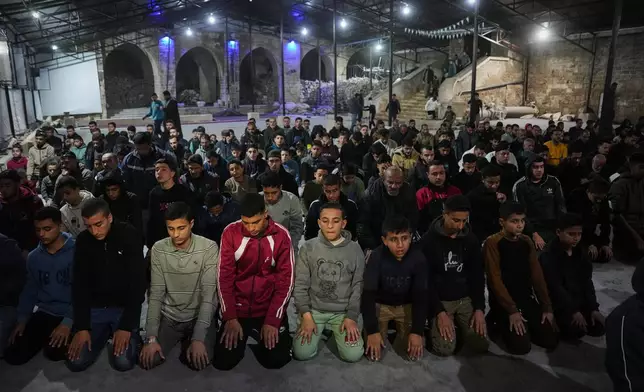
Muslim worshippers perform evening Tarawih prayer on the first night of the holy fasting month of Ramadan at the Great Omari Mosque, which was damaged during the Israel–Hamas war, in Gaza City, Tuesday, Feb. 17, 2026. (AP Photo/Abdel Kareem Hana)
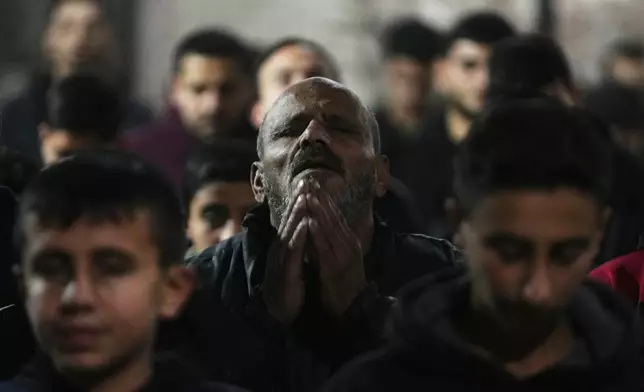
Muslim worshippers perform evening Tarawih prayer on the first night of the holy fasting month of Ramadan at the Great Omari Mosque, which was damaged during the Israel–Hamas war, in Gaza City, Tuesday, Feb. 17, 2026. (AP Photo/Abdel Kareem Hana)
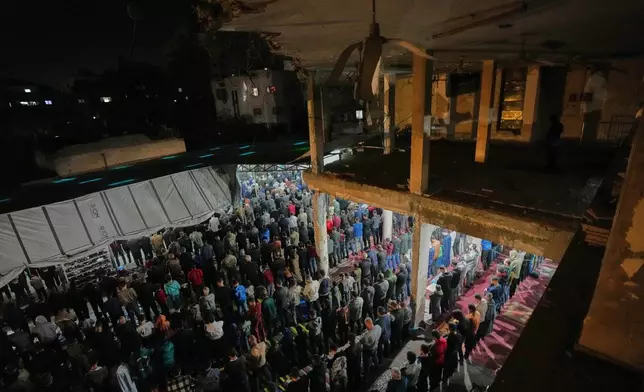
Muslim worshippers perform evening Tarawih prayer on the first night of the holy fasting month of Ramadan at the Alkanz Mosque, which was damaged during the Israel–Hamas war, in Gaza City, Tuesday, Feb. 17, 2026. (AP Photo/Jehad Alshrafi)
In Gaza, the first day of the holy month is Wednesday. During Ramadan, observant Muslims fast daily from dawn to sunset. In normal circumstances, the month often brings families and friends together to break their fast in joyous gatherings. For Muslims, it’s a time for increased worship, religious reflection and charity.
Circumstances in Gaza are far from normal. Israel’s military offensive has killed more than 72,000 Palestinians, according to Gaza’s Health Ministry, and caused widespread destruction and displaced most of the territory’s residents. Israel launched the offensive after Hamas-led militants killed some 1,200 people, mostly civilians, and took another 251 hostage in their attack on Oct. 7, 2023.
As Gaza residents visited markets this week, some lamented that economic woes cast a pall on the month.
“There is no cash among the people. There is no work. It’s true that it is Ramadan, but Ramadan requires money,” said Gaza City resident Waleed Zaqzouq. He said merchants should consider people’s financial hardships.
Before the war, “people lived a dignified life,” he said. “The situation has completely changed in the war, meaning people have been devastated and worn down.”
The Oct. 10 U.S.-brokered ceasefire deal attempted to halt more than two years of war between Israel and Hamas. While the heaviest fighting has subsided, there has been almost daily Israeli fire in Gaza.
Israeli forces have carried out repeated airstrikes and frequently fire on Palestinians near military-held zones, killing more than 600 Palestinians, according to Gaza health officials. The ministry, which is part of the Hamas-led government, maintains detailed casualty records that are seen as generally reliable by U.N. agencies and independent experts. But it does not distinguish between civilians and militants.
Militants have carried out shooting attacks on Israeli troops, and Israel says its strikes are in response to that and other violations. Four Israeli soldiers have been killed.
Gaza’s winter has highlighted the grim conditions of the displaced residents and the many needs of the enclave and its people. Severe cold has caused child deaths in Gaza, and torrential rain has flooded displacement camps and collapsed already badly damaged buildings.
“There is much that has changed from this Ramadan to Ramadan before the war,” said Raed Koheel, who lives in Gaza City. “In the past, the atmosphere was more delightful. The streets were lit up with decorations. All streets had decorations. Our children were happy.”
Still, amid the hardships, some in the Gaza Strip have worked to bring a taste of Ramadan’s festivities.
Surrounded by ruins and crumbled buildings in Khan Younis, calligrapher and artist Hani Dahman dipped his brush in paint and wrote “Welcome, Ramadan” in Arabic as children watched.
“We are here in Khan Younis camp, trying to bring happiness to the hearts of children, women, men and entire families,” Dahman said. “We are … sending a message to the world that we are people who seek life.”
Strands of Ramadan decorations were hung among the ruins. Mohammed Taniri watched the decorations take shape.
“When they provide such beautiful, simple decorations, it brings joy to the children,” he said. “Despite all the hardships, they are trying to create a beautiful atmosphere.”
Associated Press writer Mariam Fam in Cairo contributed to this report.
Associated Press religion coverage receives support through the AP’s collaboration with The Conversation US, with funding from Lilly Endowment Inc. The AP is solely responsible for this content.
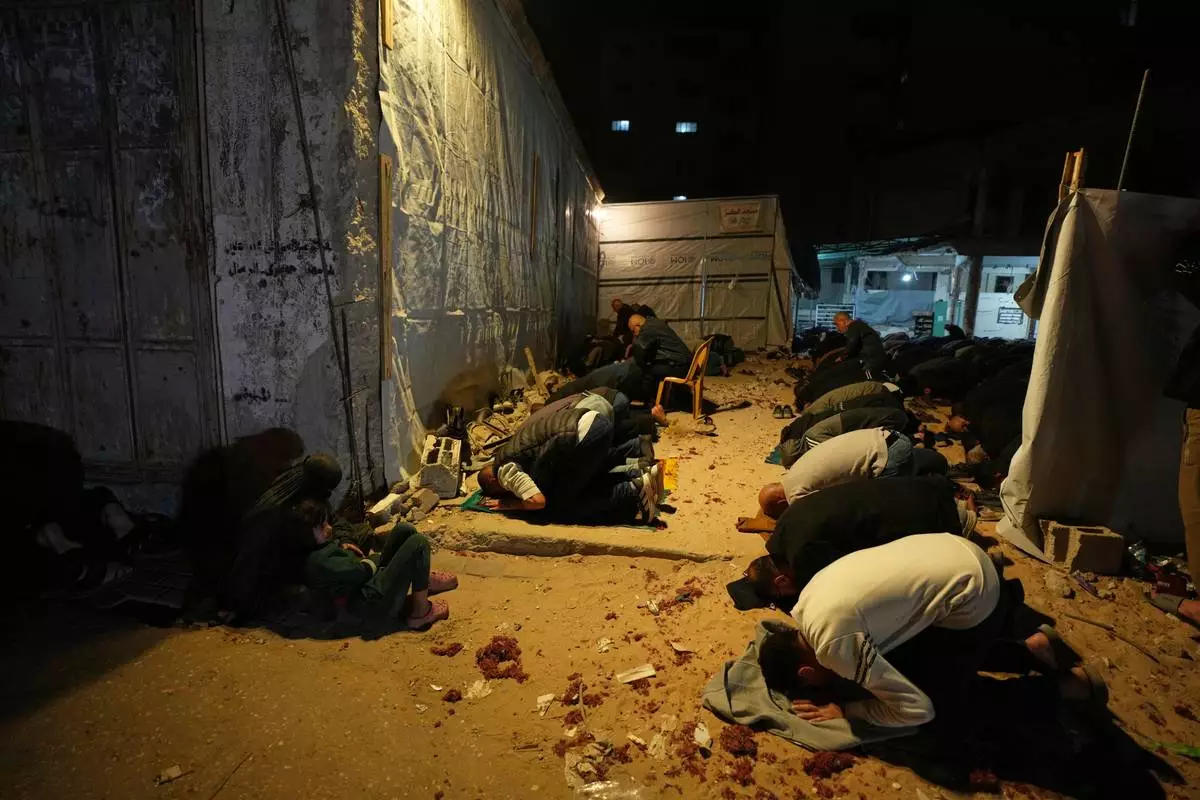
Muslim worshippers perform evening Tarawih prayer on the first night of the holy fasting month of Ramadan at the Alkanz Mosque, which was damaged during the Israel–Hamas war, in Gaza City, Tuesday, Feb. 17, 2026. (AP Photo/Jehad Alshrafi)
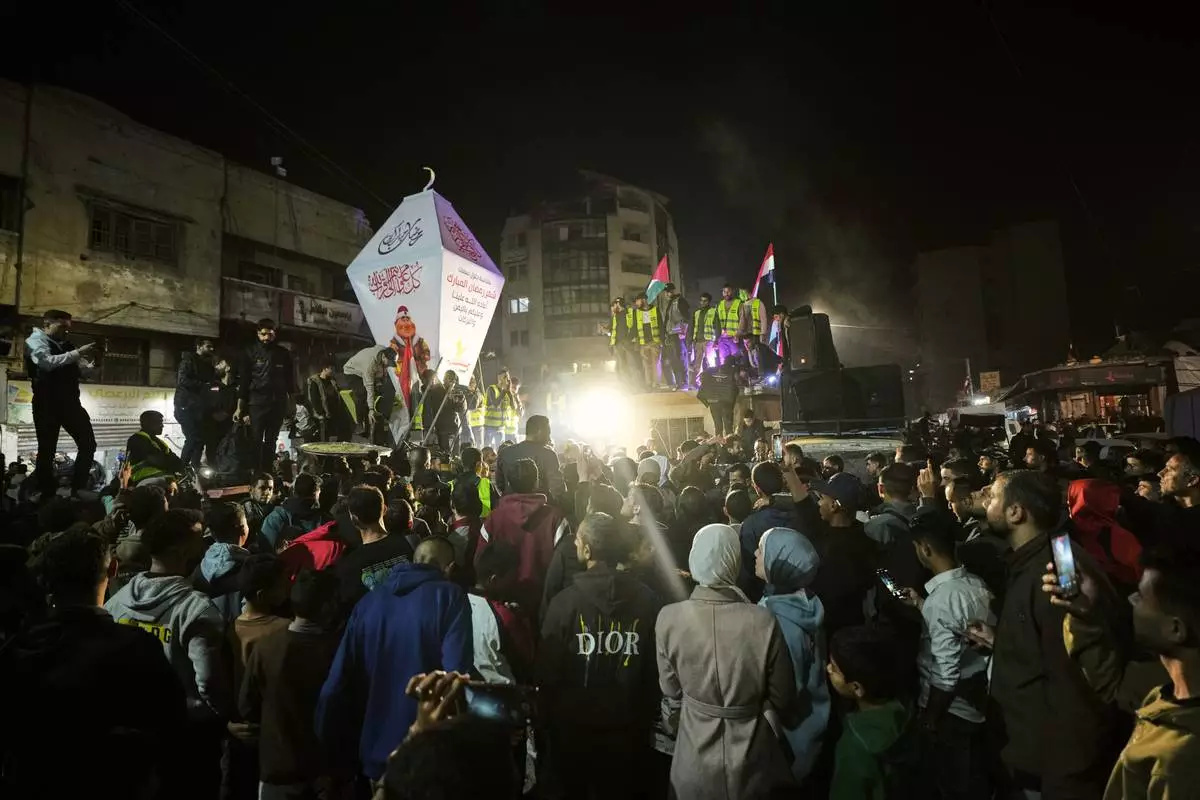
Palestinians celebrate the start of the holy fasting month of Ramadan in Gaza City, Tuesday, Feb. 17, 2026. (AP Photo/Jehad Alshrafi)
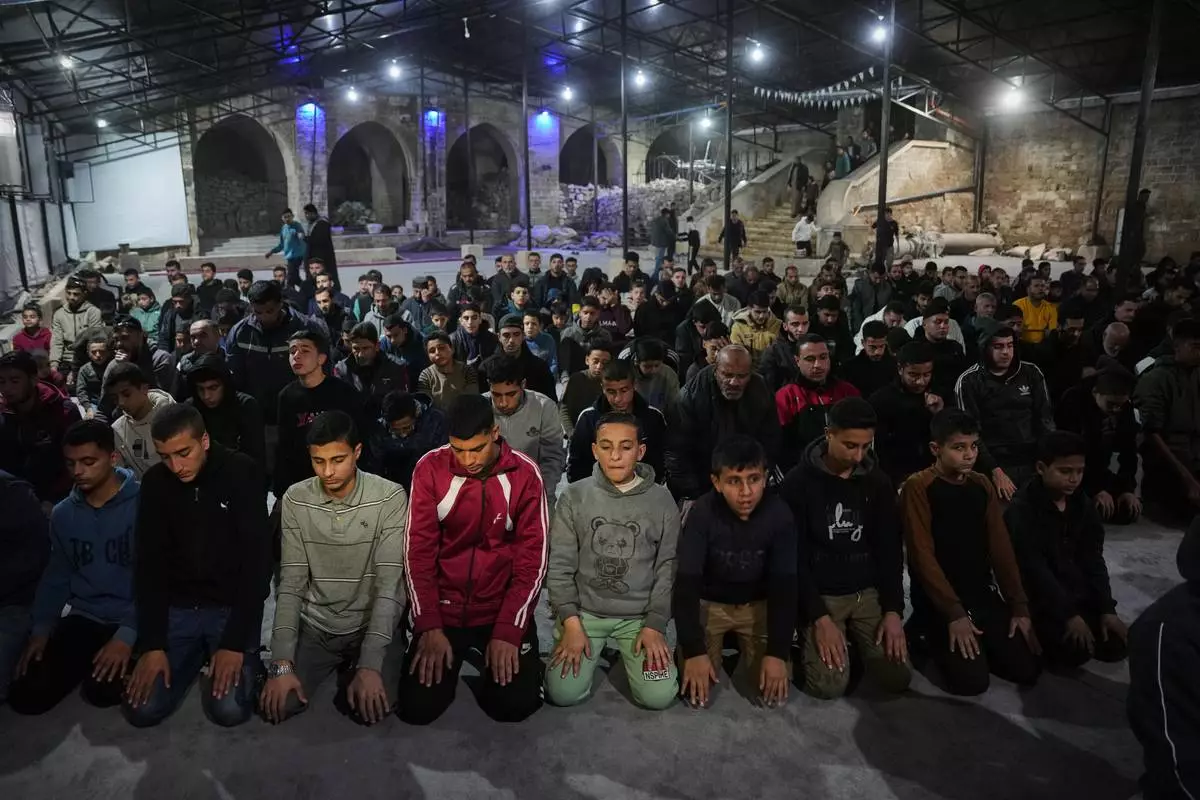
Muslim worshippers perform evening Tarawih prayer on the first night of the holy fasting month of Ramadan at the Great Omari Mosque, which was damaged during the Israel–Hamas war, in Gaza City, Tuesday, Feb. 17, 2026. (AP Photo/Abdel Kareem Hana)
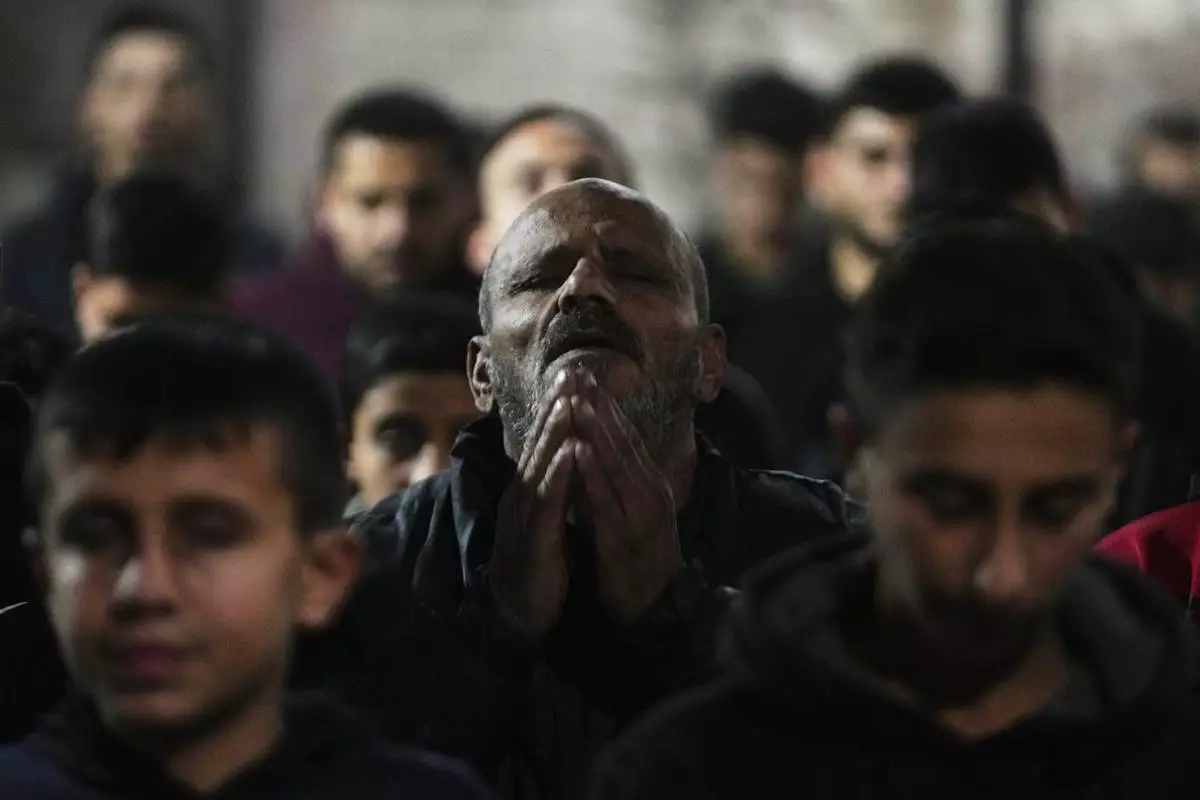
Muslim worshippers perform evening Tarawih prayer on the first night of the holy fasting month of Ramadan at the Great Omari Mosque, which was damaged during the Israel–Hamas war, in Gaza City, Tuesday, Feb. 17, 2026. (AP Photo/Abdel Kareem Hana)
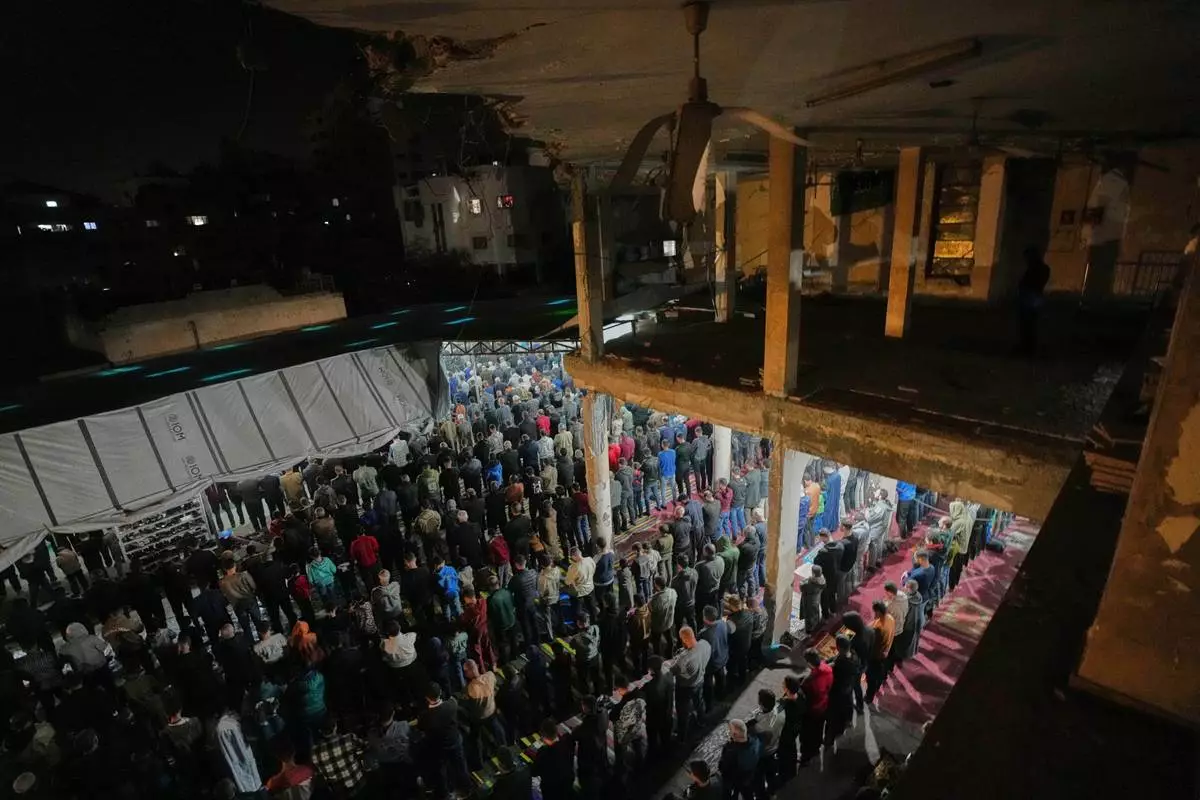
Muslim worshippers perform evening Tarawih prayer on the first night of the holy fasting month of Ramadan at the Alkanz Mosque, which was damaged during the Israel–Hamas war, in Gaza City, Tuesday, Feb. 17, 2026. (AP Photo/Jehad Alshrafi)