New York's skyline glowed with a festive touch on Sunday evening as the Dream Wheel, widely known as the "Eye of New York," was illuminated in dazzling red to mark the Chinese New Year and the arrival of the Year of the Horse.
Towering over "American Dream" -- the largest shopping and entertainment complex in the northeastern United States -- the landmark ferris wheel is the complex's crowning architectural feature.
As hundreds of guests and local residents counted down in unison at a lighting ceremony, the Dream Wheel gradually lit up, erupting in a brilliant and celebratory Chinese red. The radiant display painted the sky above the venue, sending blessings for the Year of the Horse -- symbolizing hope, good fortune, and strength -- across the greater New York area.
"It's a great pleasure to have the Chinese people to be near us. I've been in China myself more than 20 times and I love Chinese people -- really respect the Chinese people very much. Happy New Year to all of the Chinese people," said Galmez, an invited guest.
The promotional video for the China Media Group (CMG)'s 2026 Spring Festival Gala was also screened at the event. The festive visuals captured the attention of local shoppers and tourists, many of whom paused to watch and pulled out their phones to record the special moment.
As the reach of the Gala's promo extends to more iconic overseas landmarks, Chinese New Year traditions are being shared with global audiences in increasingly vivid and accessible ways -- bringing the warmth of the festival closer to people around the world.
"New Year is to -- you build it upon each other to make the world a better place. It's a new start, like a new day always is, but it's a Year of the Horse now. You're valuable people. You're amazing, beautiful, talented people who have carried tradition and art form down to us. We appreciate that greatly," said Morgan, a local resident.
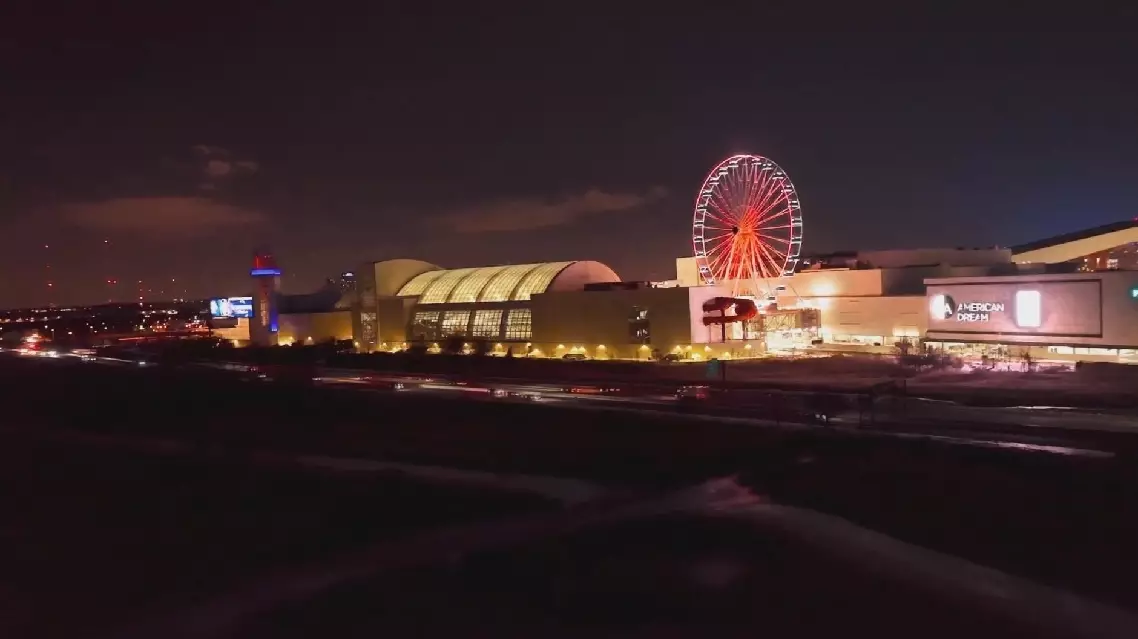
"Dream Wheel" lit in red to celebrate Chinese New Year in New York
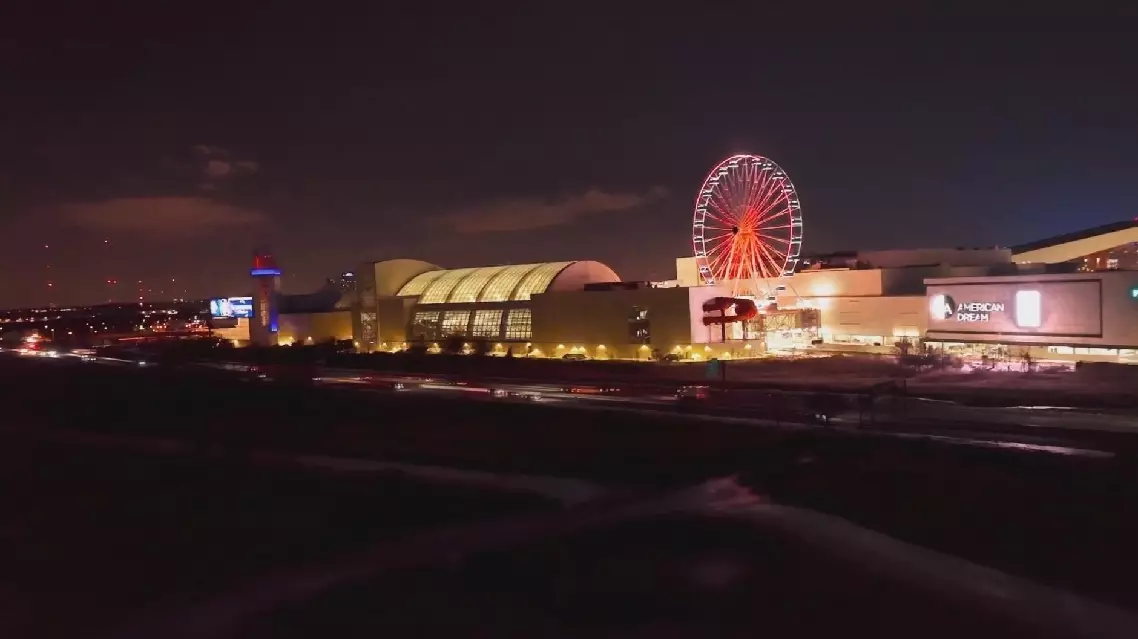
"Dream Wheel" lit in red to celebrate Chinese New Year in New York
Artists have reimagined ancient themes through a modern lens at the 60th Venice Biennale China National Pavilion Exhibition, now underway in Shanghai.
The main feature of the exhibition is a fully immersive project by artist Che Jianquan, who has placed consecutive screens placed side by side to present his two-decade-long documentation of the same pavilion since 2003.
Through his lens, the artist captures the pavilion, as it emerges and disappears amidst mist and clouds, evoking the aesthetic of misty landscapes in traditional Chinese ink paintings.
"At the beginning, I wanted to use painting to document my feeling, but later I realized that painting was somewhat powerless. So, starting in 2003, I began using the earliest video equipment to start recording. What I care about more is a place—a very small location—and the unique connection it has within that field to history and to the culture of that region. I think this is something I hope to achieve: through a seemingly ordinary scene, to uncover the stories behind it, as well as its possible influence on both the past era and the present," said Chen.
Established in 1895, the Venice Biennale is one of the premier events in the global art world. This year, the China National Pavilion Exhibition, under the theme "Atlas: Harmony in Diversity," presents not only the documentary archives of 100 Chinese paintings held overseas, but also seven contemporary artworks created by seven Chinese artists exploring themes, such as architecture, landscapes, figures, flora and fauna.
"The core of the Venice Biennale is contemporary art, reflecting the spirit of the present era—yet the present and history cannot be separated. This exhibition is rooted in the tradition of Chinese painting across dynasties, drawing from over 20,000 individual works that took us twenty years to collect globally," said Wang Xiaosong, an artist and the curator of the exhibition.
"Notably, we discovered that more than 3,000 of these paintings had been lost overseas, which we spent two decades retrieving through digital tools. This is how we engage with traditional art: through each artist's reflection and a new understanding of the relationship between the ancients, the present, and the future," he added.
Wang drew special attention to a piece by the modern artist Qiu Zhenzhong, who he said merges the art of Chinese gardens with calligraphy using traditional methods to showcase contemporary issues such as environmental and ecological change.
"It's like a dialogue with nature," Wang said.
The exhibition in Shanghai is the final stop of the national tour, following the legs in the southwest Chinese city of Chongqing and the southern Chinese city of Guangzhou, and will run until May 31.
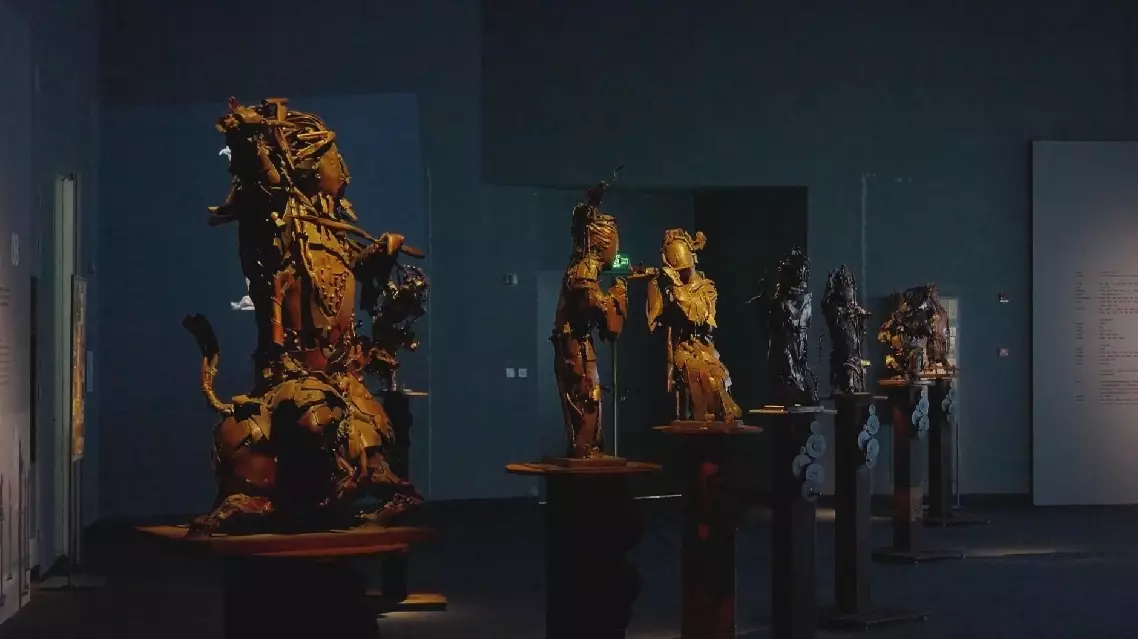
Exhibition in Shanghai bridges contemporary art with centuries of Chinese artistic tradition