BUDAPEST, Hungary (AP) — Hungary is suspending its shipments of diesel to neighboring Ukraine until interruptions to Russian oil supplies via a pipeline that crosses Ukrainian territory are resolved, Hungary's foreign minister said Wednesday.
Russian oil shipments to Hungary and Slovakia have been interrupted since Jan. 27 after what Ukrainian officials say were Russian attacks that damaged the Druzhba pipeline, which carries Russian crude into Central Europe.
Hungary and Slovakia, which have both received a temporary exemption from a European Union policy prohibiting imports of Russian oil, have accused Ukraine — without providing evidence — of deliberately holding up supplies.
In a video posted on social media Wednesday, Hungarian Foreign Minister Péter Szijjártó said the interruption to oil deliveries was "a political decision made by the Ukrainian president himself.”
Ukraine has denied such accusations.
Szijjártó added that Hungary has enough oil reserves to last more than three months, and that its energy security was assured.
As nearly every country in Europe has significantly reduced or entirely ceased Russian energy imports, Hungary — an EU and NATO member — has maintained and even increased its supply of Russian oil and gas since Moscow launched its war in Ukraine in February 2022.
Hungary's nationalist Prime Minister Viktor Orbán has long argued Russian fossil fuels are indispensable for its economy and that switching to energy sourced from elsewhere would cause an immediate economic collapse — an argument some experts dispute.
Widely seen as the Kremlin's biggest advocate in the EU, Orbán has vigorously opposed the bloc’s efforts to sanction Moscow over its invasion, and blasted attempts to hit Russia’s energy revenues that help finance the war.
Facing what promises to be the most challenging election of his last 16 years in power in April, Orbán has launched an aggressive anti-Ukraine and anti-EU campaign, seeking to convince voters that the neighboring country poses an existential risk to Hungary and that he is the only guarantor of its safety.
Following the interruption to Druzhba oil supplies at the end of January, Hungary's government asked neighboring Croatia to allow Russian oil delivered by sea to be pumped to refineries in Hungary and Slovakia via the Adria pipeline.
Croatia's Economy Minister Ante Šušnjar has said his country would not allow energy supplies in Central Europe be threatened, but pushed back on Hungary's request.
Writing on social media site X on Monday, Šušnjar said there are “no technical excuses left for staying tied to Russian crude for any EU country.”
“A barrel bought from Russia may appear cheaper to some countries, but helps fund war and attacks on Ukrainian people,” he wrote.
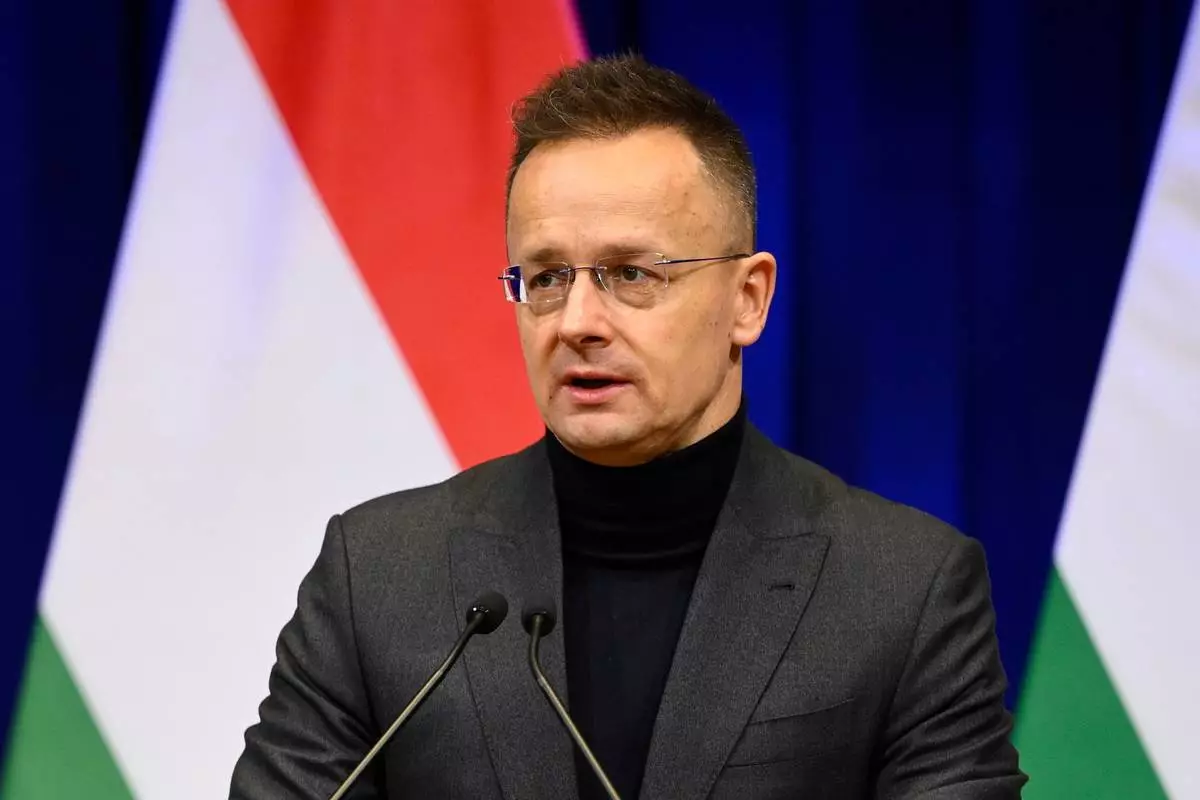
Hungary's Minister of Foreign Affairs and Trade Peter Szijjarto holds a press conference following a cabinet meeting in Budapest, Hungary, Wednesday, Feb. 18, 2026. (Boglarka Bodnar/MTI via AP)

Hungary's Minister of Foreign Affairs and Trade Peter Szijjarto holds a press conference following a cabinet meeting in Budapest, Hungary, Wednesday, Feb. 18, 2026. (Boglarka Bodnar/MTI via AP)
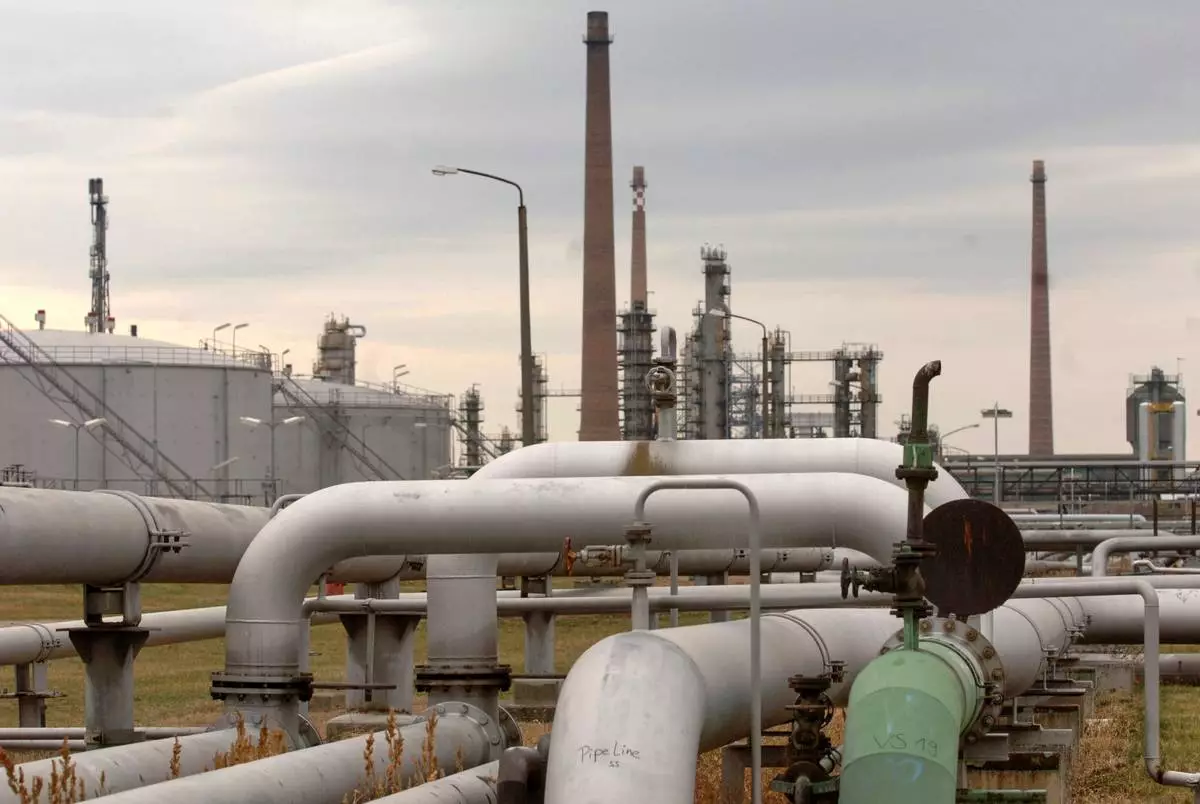
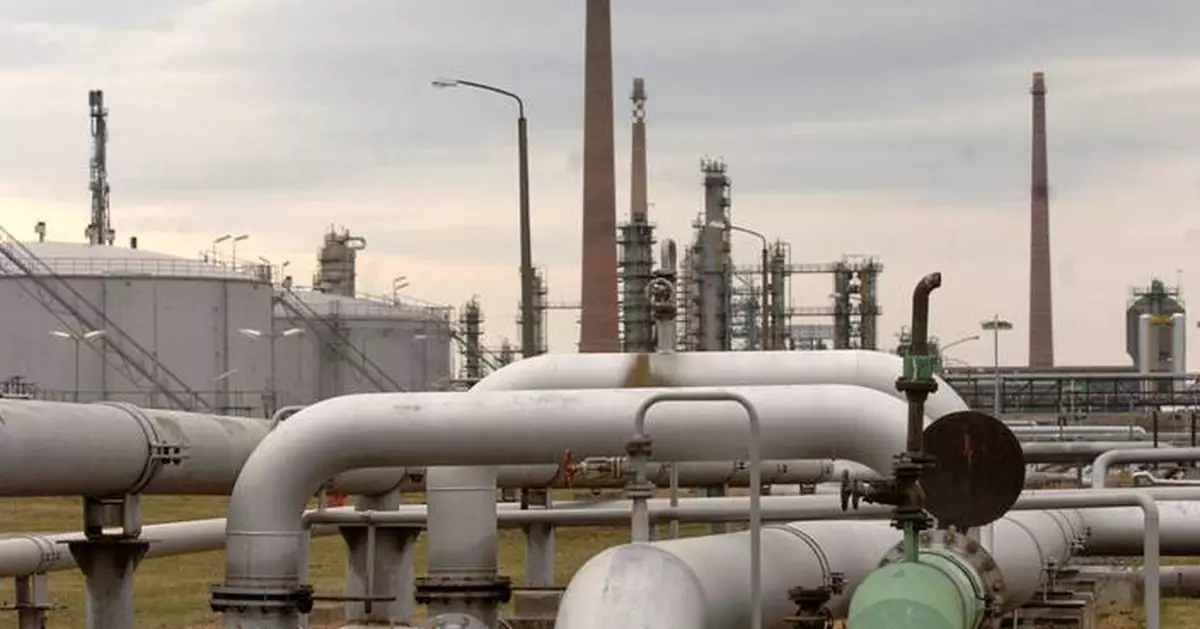
FILE - A general view of a pumping station at the end of the Druzhba oil pipeline in the east German refinery PCK in Schwedt, Wednesday, Jan. 10, 2007. (AP Photo/Sven Kaestner, File)
CORTINA D'AMPEZZO, Italy (AP) — Mikaela Shiffrin closed her eyes, gave a deep breath and took a big step back onto the top of an Olympic podium.
The American skiing standout was a gold medalist at the Winter Games once again — and she couldn’t quite believe it.
Shiffrin put in two dominant runs in gorgeous conditions amid the jagged peaks of the Dolomites to win the women's slalom by a massive 1.50 seconds, ending her eight-year medal drought at the Winter Games and showing why she is widely regarded as the greatest Alpine skier of all time.
In emotional scenes after the race, the 30-year-old Shiffrin was embraced by Camille Rast of Switzerland, who took silver, and bronze-medalist Anna Swenn Larsson before fighting back tears as she approached her mom and coach, Eileen, for a long, deep hug next to the finish area.
Through it all, Shiffrin said, she never stopped thinking about her father, Jeff, who died at the age of 65 in an accident at the family home in Colorado in February 2020.
“This was a moment I have dreamed about — I’ve also been very scared of this moment,” Shiffrin said. "Everything in life that you do after you lose someone you love is like a new experience. It’s like being born again.
“And I still have so many moments where I resist this. I don’t want to be in life without my dad,” she added, her voice trembling. “And maybe today was the first time that I could actually accept this, like, reality.”
The victory made Shiffrin the first American skier to win three Alpine golds and was the third-largest margin of victory in a women’s Olympic slalom — the event she won as a fresh-faced teenager in Sochi in 2014 to underline her status as a skiing star.
Twelve years later, having lost her father, having failed to meet huge expectations at the 2022 Olympics, having become the most successful World Cup skier of all time with a record 108 victories and then having overcome the two biggest crashes of her career and an ensuing battle with post-traumatic stress disorder, she delivered again in her favorite race.
In a sense, her skiing career had just come full circle.
“Maybe,” she added, “just today, I realized what happened to me in Sochi.”
At the medal ceremony, she shook both of her hands as she was about to receive her gold medal, clearly overcome by emotion. When it was placed around her neck, she looked down at it almost in disbelief.
Maybe it was a release of all the pressure on Shiffrin after she failed to win an Olympic medal in eight races since adding gold and silver to her collection in Pyeongchang in 2018.
A nightmarish 0-for-6 performance in Beijiing was followed in Cortina d’Ampezzo this year by a fourth-place finish with Breezy Johnson in the team combined, in which Shiffrin placed 15th in the slalom portion, and an 11th place in the giant slalom.
It was fodder for the “keyboard warriors,” Shiffrin acknowledged, but she ignored all of them.
Shiffrin has now won three golds and a silver at the Olympics to add to her record total on World Cup wins — it's 108 and counting, including 71 in slalom. There's also world titles in slalom (four), giant slalom and super-G to fill out arguably the greatest career in Alpine racing.
“In another league,” was how Larsson put it.
Shiffrin led by 0.82 seconds after the first run on a mostly flat course that Team USA officials described to her over the radio as a “high-tempo ripper.”
There was one wobble when she struck a gate and for a fraction of a second, it appeared she was headed for another Olympic disappointment.
Not this time.
She snapped back into form to post a time, in the No. 7 bib, no one could get near.
“When I saw one second (behind) after the first run," Rast said, "I was like, ‘OK, the gold is gone.'"
While she attempted to nap before her second run, Shiffrin said she started to cry because she was thinking about her dad.
“And then,” she added, “I was thinking about the fact that I actually can show up today, and honestly say in the start gate that I have all the tools that are necessary to do my best skiing, and to earn that moment.”
Given her emotions, Shiffrin's second run was impressively smooth as she got through the tough top section without a hitch and pushed through the slower middle section.
When she leaned forward to cross the line, Shiffrin had the largest margin of victory in any Olympic Alpine skiing event since 1998.
“I felt every range of emotion in the last three months, the last four months, the last four years, the last eight years,” Shiffrin said. “There’s so many different journeys I’ve been on to just be here today."
AP Olympics: https://apnews.com/hub/milan-cortina-2026-winter-olympics
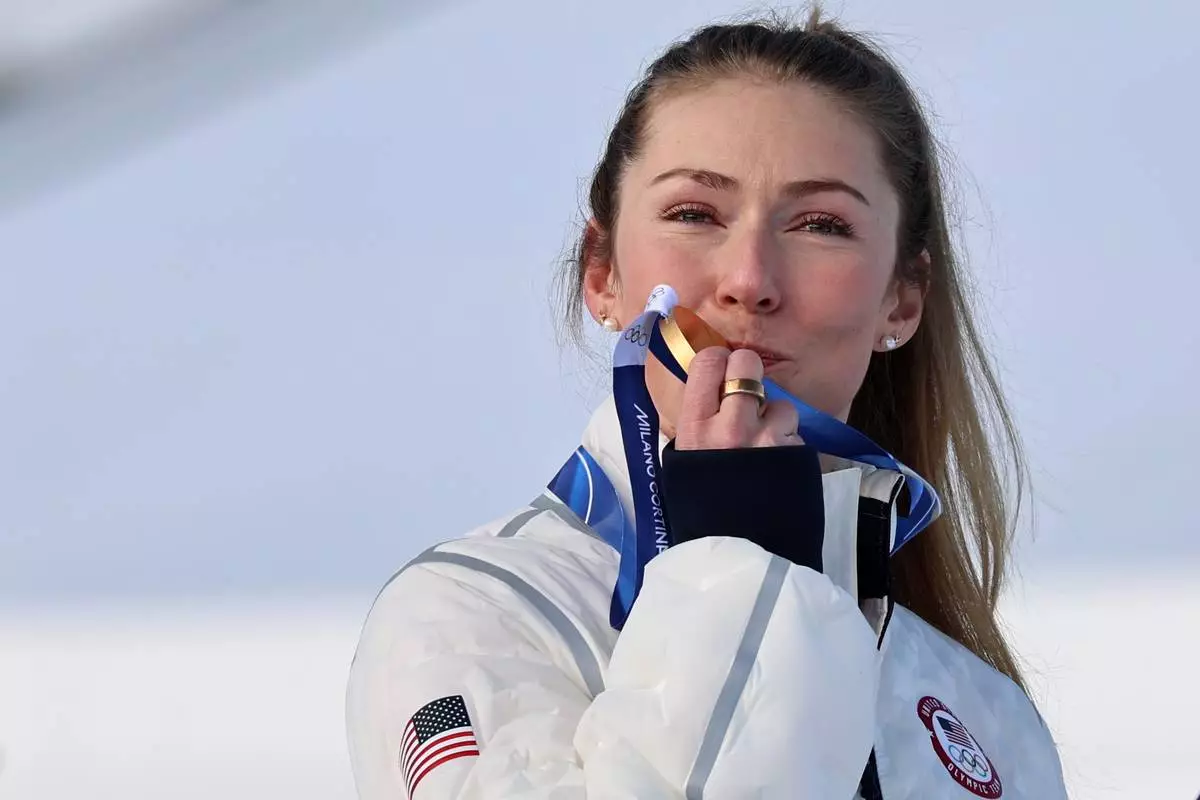
United States' Mikaela Shiffrin kisses the gold medal of the alpine ski, women's slalom race, at the 2026 Winter Olympics, in Cortina d'Ampezzo, Italy, Wednesday, Feb. 18, 2026. (AP Photo/Marco Trovati)

United States' Mikaela Shiffrin celebrates winning the gold medal of the alpine ski, women's slalom race, at the 2026 Winter Olympics, in Cortina d'Ampezzo, Italy, Wednesday, Feb. 18, 2026. (AP Photo/Marco Trovati)

United States' Mikaela Shiffrin shows her gold medal of the alpine ski, women's slalom race, at the 2026 Winter Olympics, in Cortina d'Ampezzo, Italy, Wednesday, Feb. 18, 2026. (AP Photo/Robert F. Bukaty)
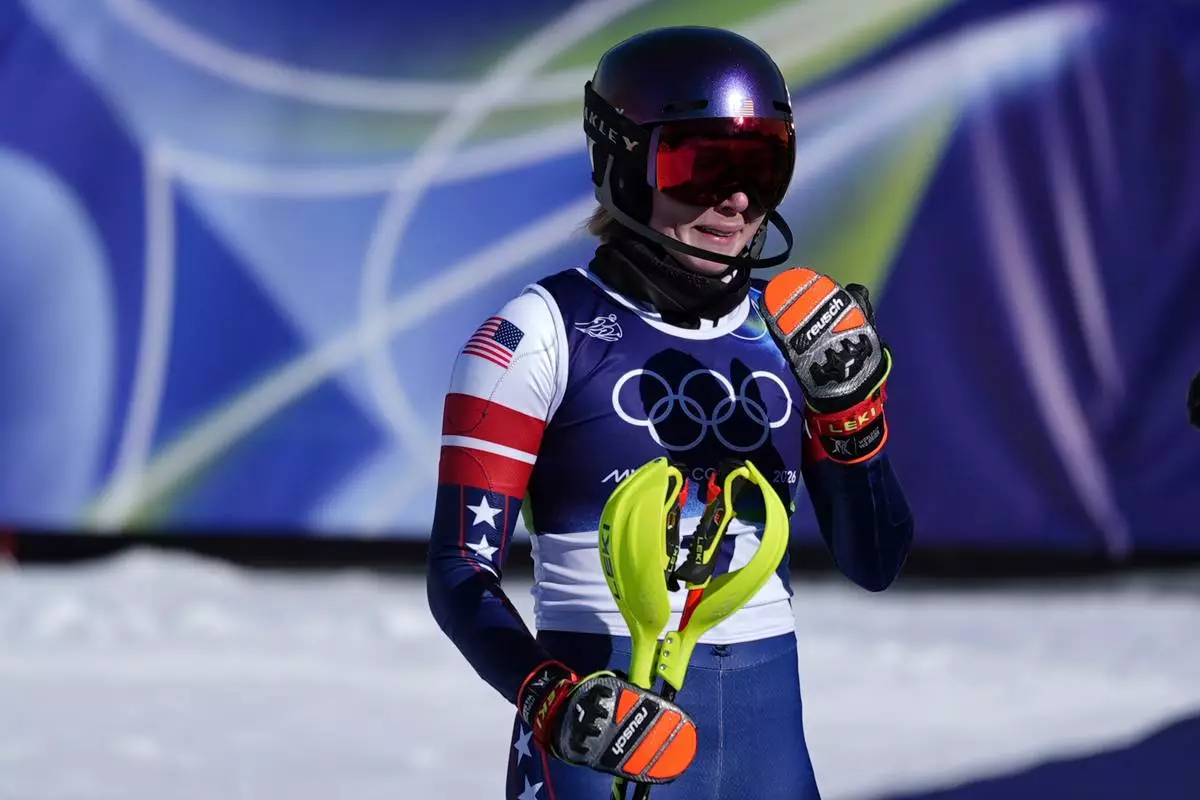
United States' Mikaela Shiffrin is overcome with emotion after winning an alpine ski, women's slalom race, at the 2026 Winter Olympics, in Cortina d'Ampezzo, Italy, Wednesday, Feb. 18, 2026. (AP Photo/Jacquelyn Martin)
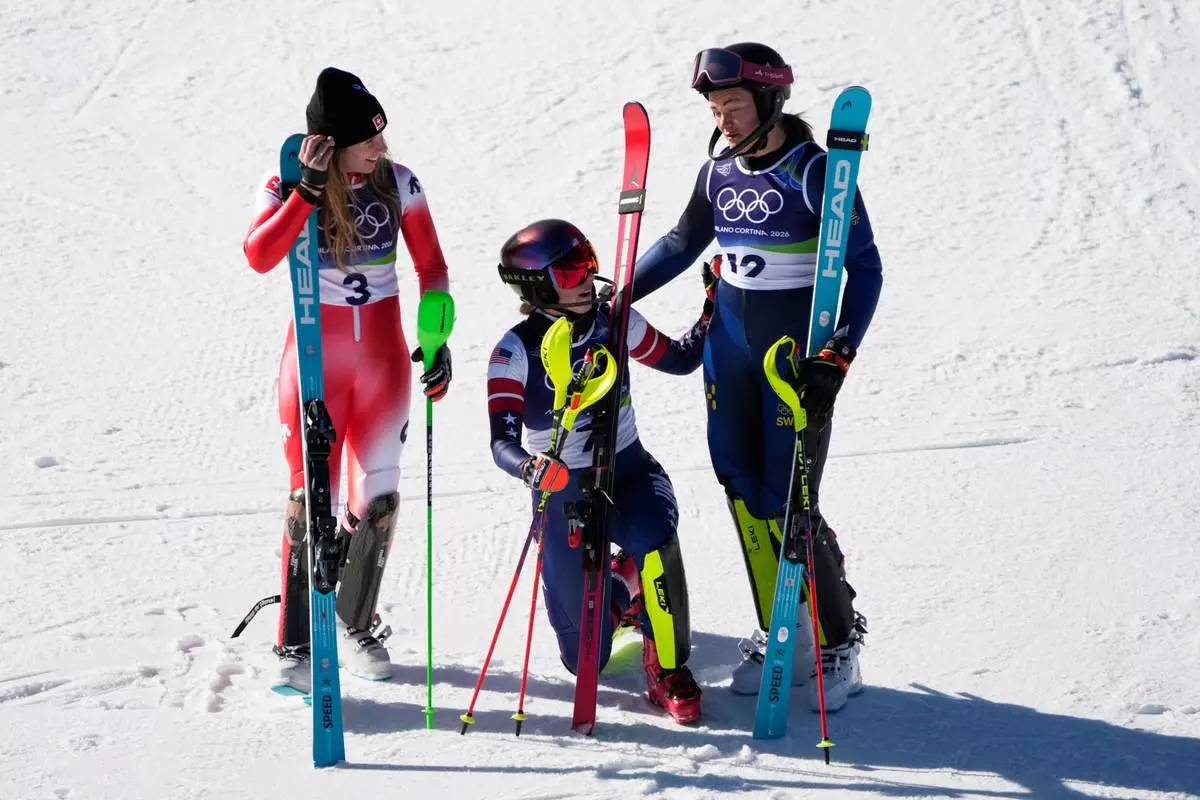
United States' Mikaela Shiffrin, center, winner of an alpine ski, women's slalom race, celebrates with second-placed Switzerland's Camille Rast, left, and third-placed Sweden's Anna Swenn Larsson, at the 2026 Winter Olympics, in Cortina d'Ampezzo, Italy, Wednesday, Feb. 18, 2026. (AP Photo/Andy Wong)
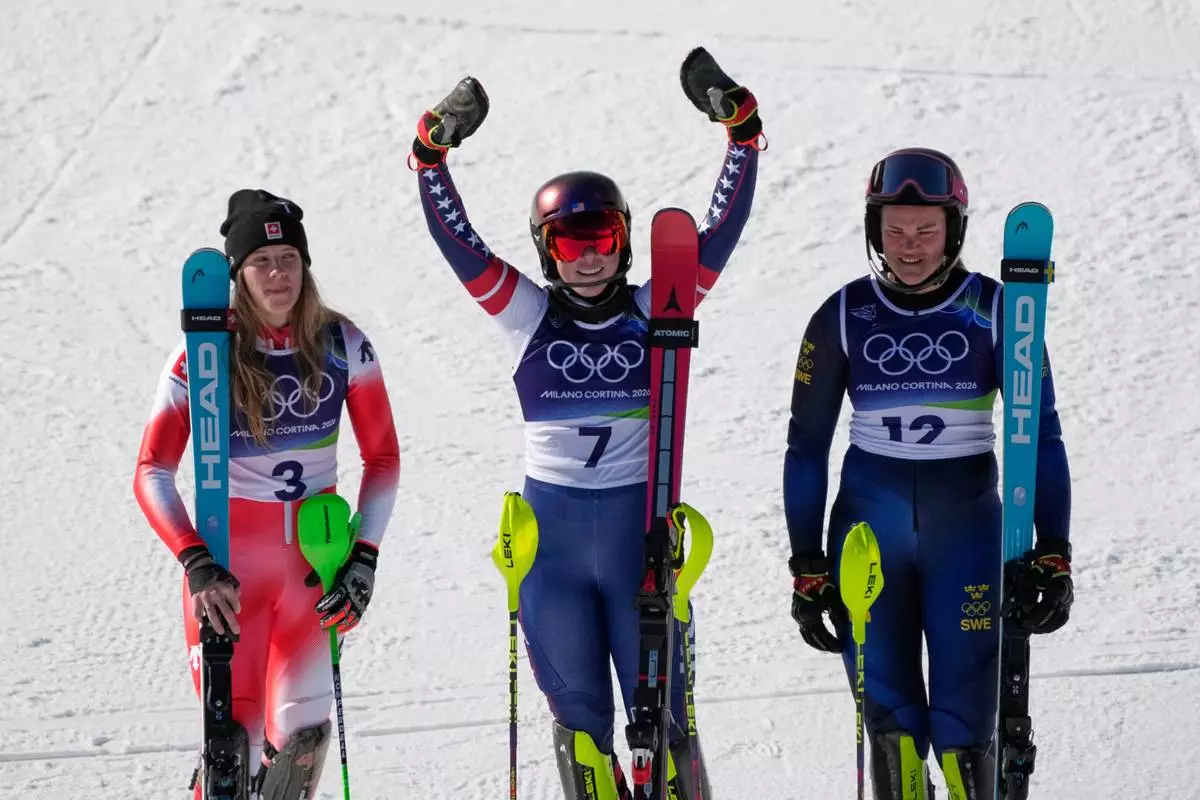
United States' Mikaela Shiffrin, center, winner of an alpine ski, women's slalom race, celebrates with second-placed Switzerland's Camille Rast, left, and third-placed Sweden's Anna Swenn Larsson, at the 2026 Winter Olympics, in Cortina d'Ampezzo, Italy, Wednesday, Feb. 18, 2026. (AP Photo/Andy Wong)
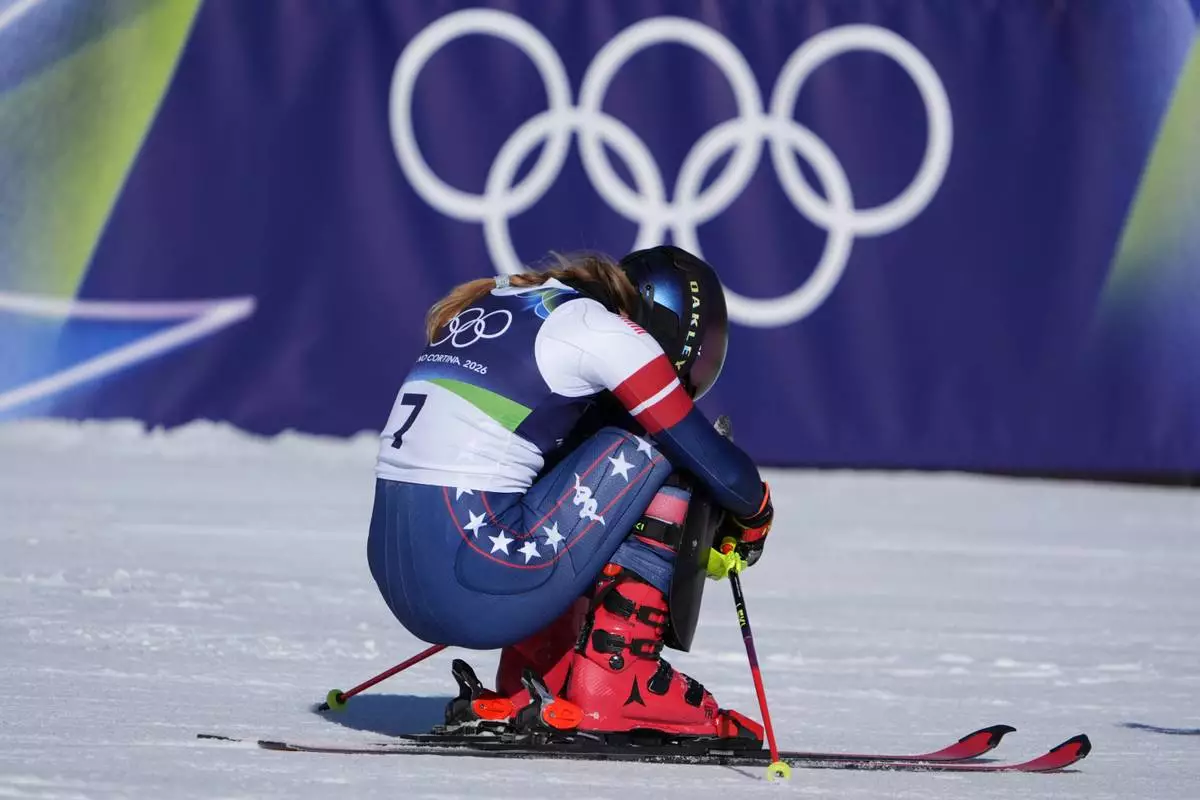
United States' Mikaela Shiffrin celebrates at the finish area of an alpine ski, women's slalom race, at the 2026 Winter Olympics, in Cortina d'Ampezzo, Italy, Wednesday, Feb. 18, 2026. (AP Photo/Jacquelyn Martin)
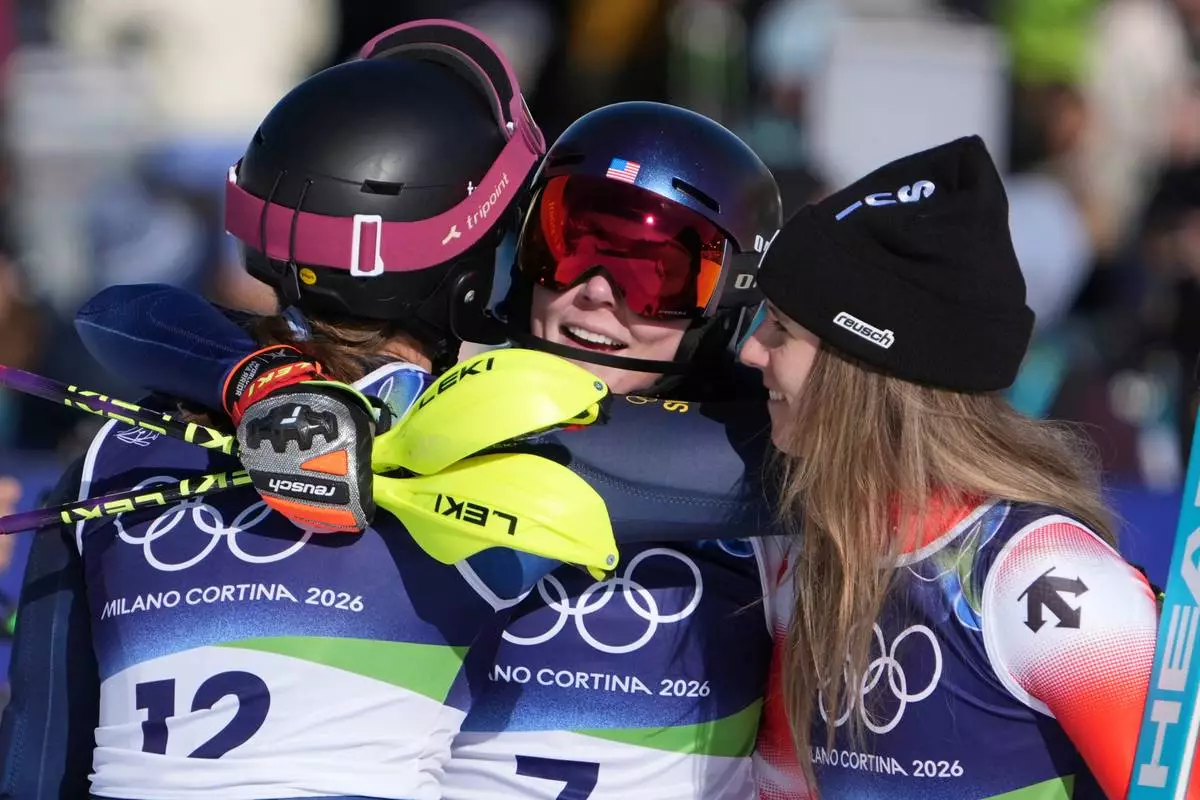
United States' Mikaela Shiffrin, center, winner of an alpine ski, women's slalom race, is congratulated by second-placed Switzerland's Camille Rast, right, and third-placed Sweden's Anna Swenn Larsson, at the 2026 Winter Olympics, in Cortina d'Ampezzo, Italy, Wednesday, Feb. 18, 2026. (AP Photo/Jacquelyn Martin)
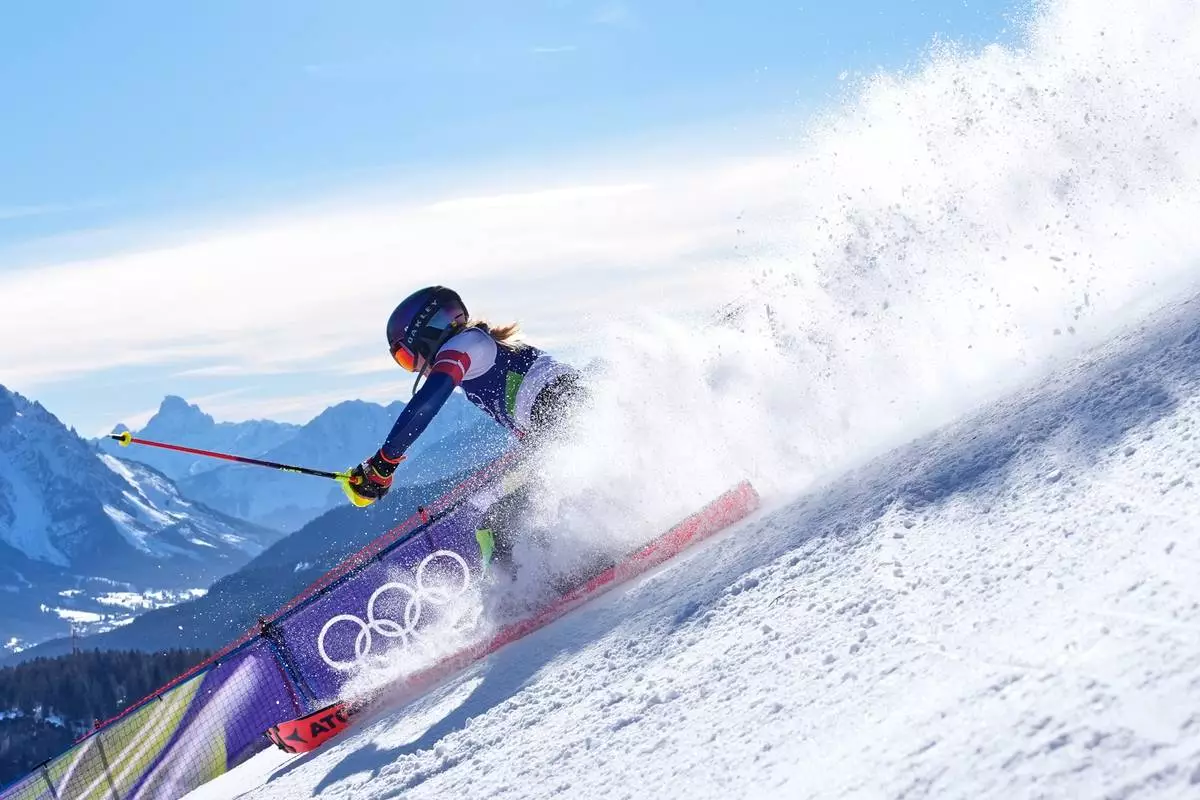
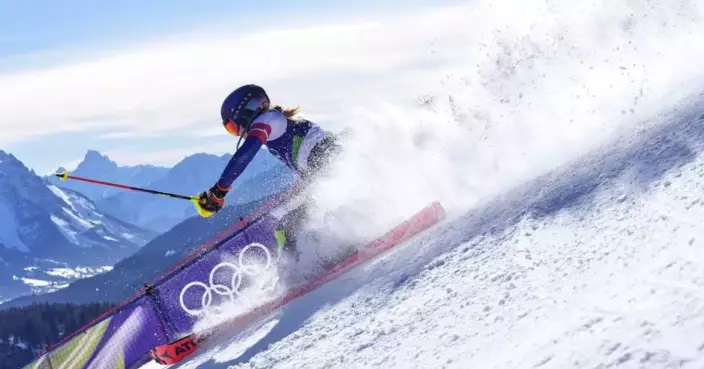
United States' Mikaela Shiffrin speeds down the course during an alpine ski, women's slalom race, at the 2026 Winter Olympics, in Cortina d'Ampezzo, Italy, Wednesday, Feb. 18, 2026. (AP Photo/Robert F. Bukaty)
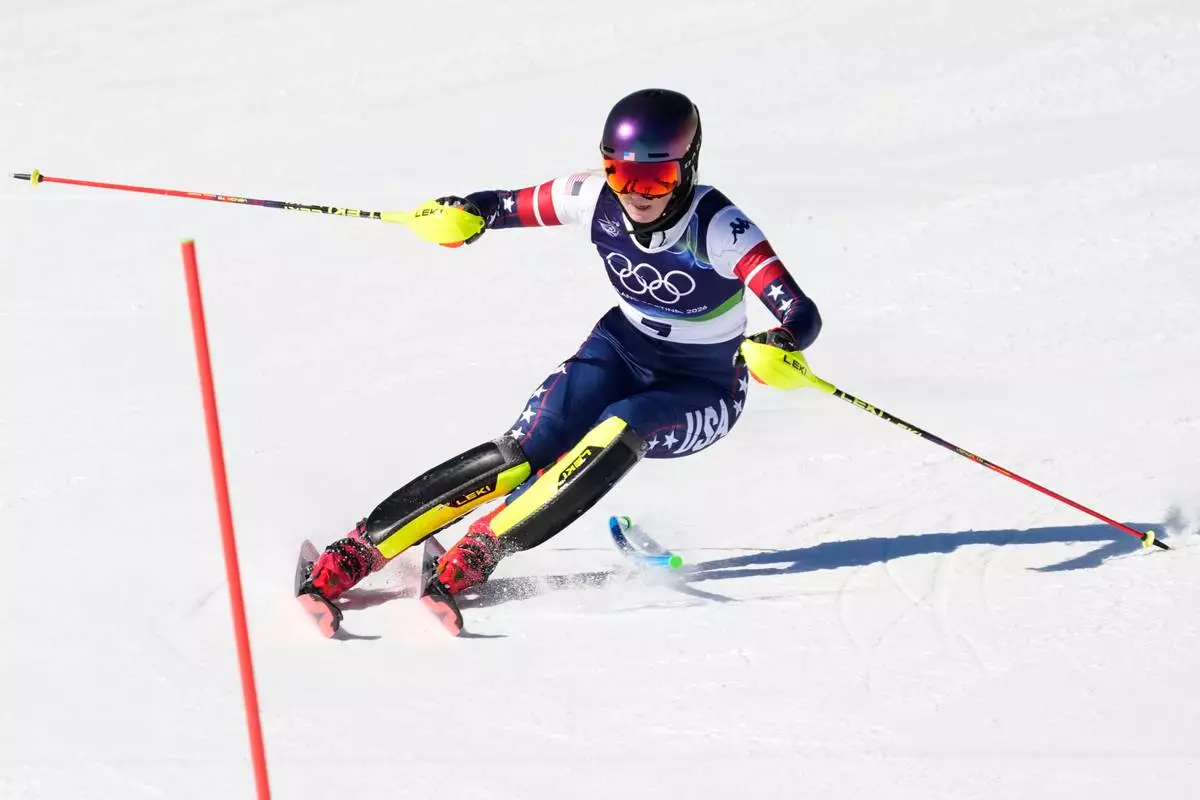
United States' Mikaela Shiffrin arrives at the finish area of an alpine ski, women's slalom race, at the 2026 Winter Olympics, in Cortina d'Ampezzo, Italy, Wednesday, Feb. 18, 2026. (AP Photo/Andy Wong)
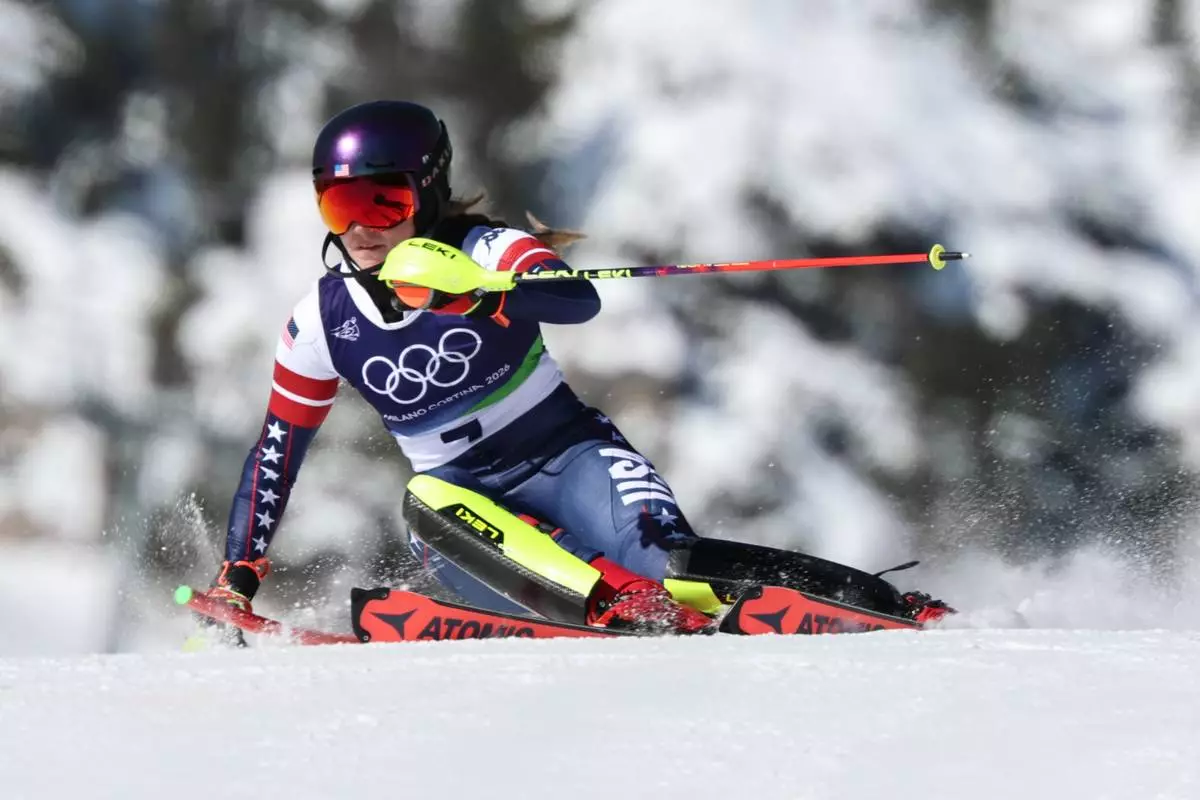
United States' Mikaela Shiffrin speeds down the course during an alpine ski, women's slalom race, at the 2026 Winter Olympics, in Cortina d'Ampezzo, Italy, Wednesday, Feb. 18, 2026. (AP Photo/Marco Trovati)
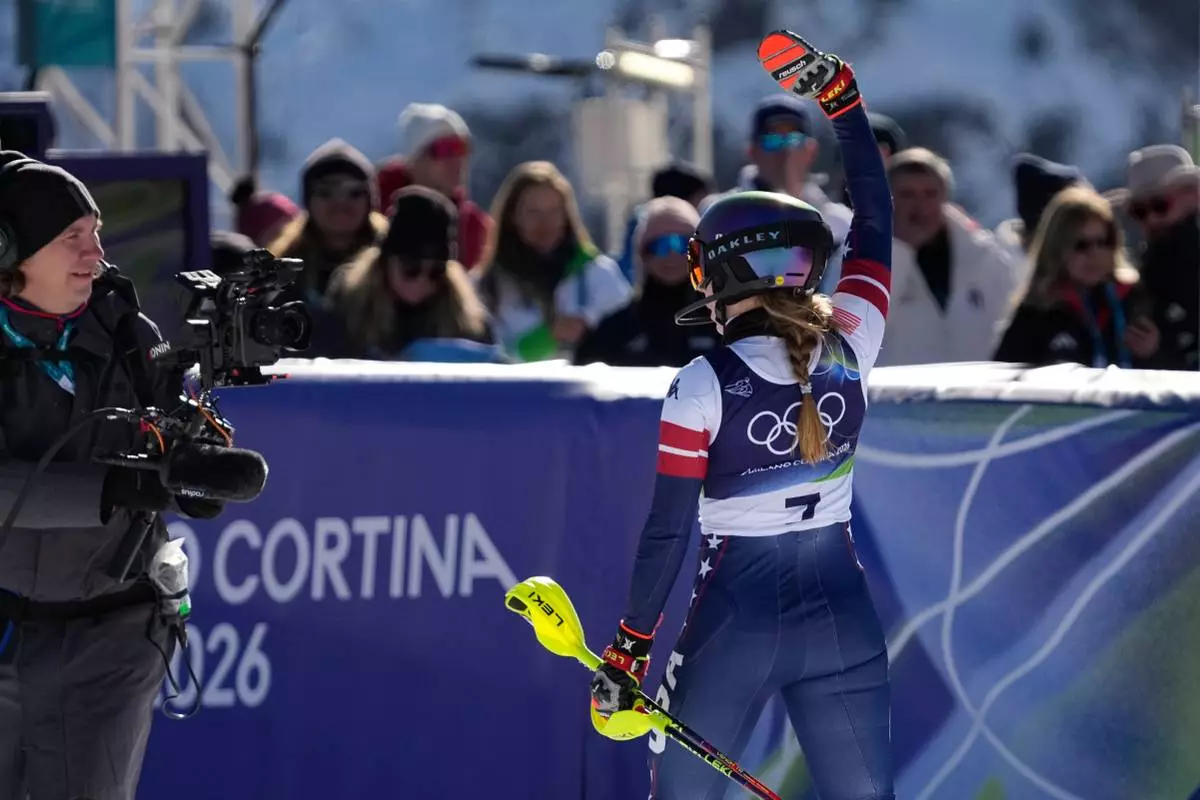
United States' Mikaela Shiffrin at the finish area of an alpine ski, women's slalom race, at the 2026 Winter Olympics, in Cortina d'Ampezzo, Italy, Wednesday, Feb. 18, 2026. (AP Photo/Andy Wong)
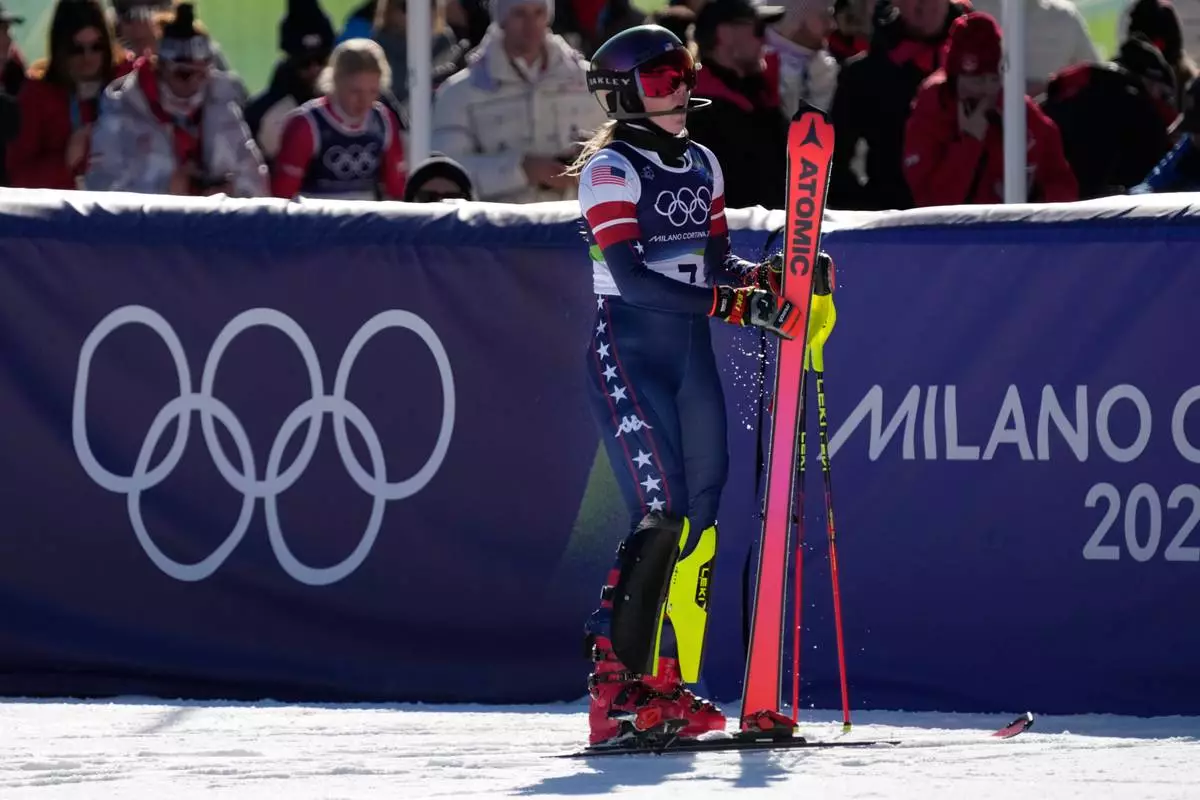
United States' Mikaela Shiffrin at the finish area of an alpine ski, women's slalom race, at the 2026 Winter Olympics, in Cortina d'Ampezzo, Italy, Wednesday, Feb. 18, 2026. (AP Photo/Andy Wong)
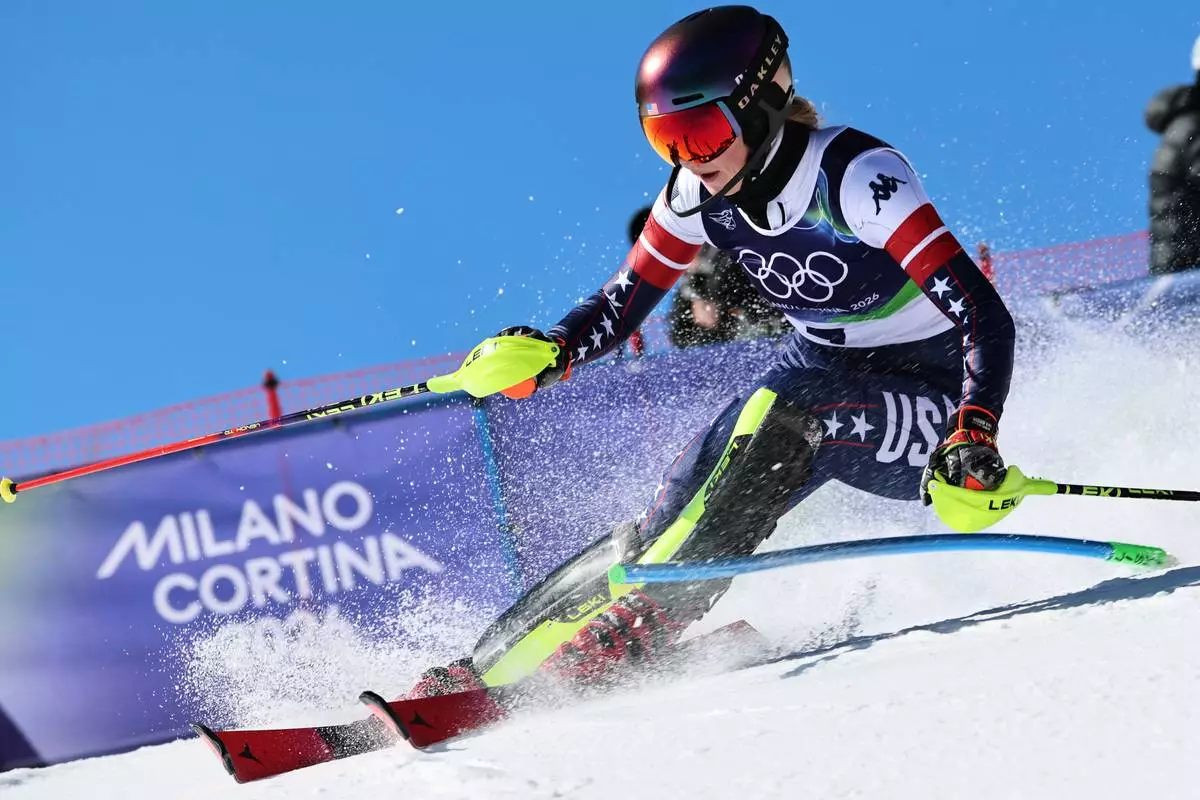
United States' Mikaela Shiffrin speeds down the course during an alpine ski, women's slalom race, at the 2026 Winter Olympics, in Cortina d'Ampezzo, Italy, Wednesday, Feb. 18, 2026. (AP Photo/Marco Trovati)